Last updated: October 20, 2026
Key Takeaways
- Commercial pool chemical reduction lowers the volume of chemistry needed to maintain a compliant sanitizer residual while keeping sanitizer in place.
- Chlorine is consumed during sanitization, while cyanuric acid, calcium hardness, and total dissolved solids accumulate and require dilution.
- Four main approaches exist: operational discipline, secondary oxidation (UV/ozone/AOP), automation and dosing control, and source-reduction oxidation systems such as Aquadei.
- Aquadei’s nanobubble platform reduces chlorine demand at the source, cuts acid use with CO₂ pH control, and lowers chloramine formation for better indoor air quality.
- Aquadei is the best commercial pool chemical reduction system for operators who need to cut chlorine, acid, and chloramine load while staying compliant.
What Consumes Chlorine Versus What Accumulates In A Commercial Pool
The key distinction in commercial pool chemical reduction is between what dissipates and what accumulates. Mixing these up pushes operators toward treating symptoms instead of causes.
Chlorine is consumed as it sanitizes. It oxidizes organic matter, inactivates pathogens, and reacts with nitrogen compounds to form chloramines. In outdoor pools, sunlight speeds up its breakdown. Chlorine does not build up in the water. It is used up and must be continuously replenished. That ongoing consumption is the demand operators work to reduce.
What accumulates is what is not consumed. Cyanuric acid, the stabilizer added to outdoor pools to shield chlorine from UV degradation, is the clearest example. It is not oxidized, filtered out, or broken down by any practical chemical treatment. The CDC Model Aquatic Health Code sets a cyanuric acid ceiling of 90 ppm, and under the CDC MAHC, a cyanuric acid concentration of 300 ppm or higher with swimmers in the water triggers closure until remediation. Once cyanuric acid climbs too high, the only remedy is draining part of the pool and refilling it. That step carries real operating cost in water, labor, downtime, and chemical restart.
Calcium hardness and total dissolved solids follow the same logic. Evaporation removes pure water and leaves dissolved solids behind, so both concentrate over time. And no chemical, flocculant, clarifier, or enzyme removes calcium from pool water.
The neutralizers, phosphate removers, and CYA reducers that dominate search results for “commercial pool chemical reduction” are symptom-management products. They address what is already in the water. The structural fix is reducing demand at the source so less chemistry is required to hold the residual and accumulation pressure slows. The pattern across the four key parameters looks like this:
- Free chlorine is consumed during sanitization and dissipates in sunlight, so it must be continuously replenished. Reducing demand at the source lowers how much chlorine you feed.
- Cyanuric acid accumulates and is not consumed or filtered. At 300 ppm or higher with swimmers present, the MAHC calls for closure. Dilution is the only remedy.
- Calcium hardness concentrates as evaporation removes pure water and leaves minerals behind. Above roughly 500–600 ppm, scale can form and water balance becomes harder to maintain. Dilution or on-site reverse osmosis addresses this buildup.
- Total dissolved solids accumulate from every chemical addition and from evaporation. Above about 3,000 ppm, water balance becomes unpredictable and chlorine less effective. Dilution is the only remedy.
How To Reduce Chemicals In A Commercial Pool: Four Approaches Operators Use
Operators evaluating commercial pool chemical reduction choose among four broad approaches. These approaches can work together, but each addresses a different part of the problem and offers different levels of verifiable evidence.
Operational discipline is the foundation. Consistent testing, tuned circulation, effective filtration, and bather-load management keep the system stable. No technology replaces this work. At commercial scale, however, operational discipline alone cannot fully counter the chemistry that high bather loads generate.
Secondary oxidation with UV, ozone, and advanced oxidation processes (AOP) treats water at the point of contact. UV disinfects water passing through the reactor chamber and leaves no residual beyond it. Ozone is a powerful oxidant but needs correct sizing, ozone-safe components, and off-gas management, and it does not create a residual in the bulk pool. AOP combines oxidants to generate hydroxyl radicals that more completely destroy chloramines and organics. All three approaches reduce chlorine demand by destroying the compounds that consume it, yet they act on what has already formed rather than on the source of that demand.
Automation and dosing control with ORP controllers, automated feeders, and real-time monitoring reduces chemical waste from overdosing and keeps water within a tighter compliance band. Like secondary oxidation, it manages the response to demand more precisely instead of reducing the underlying demand itself.
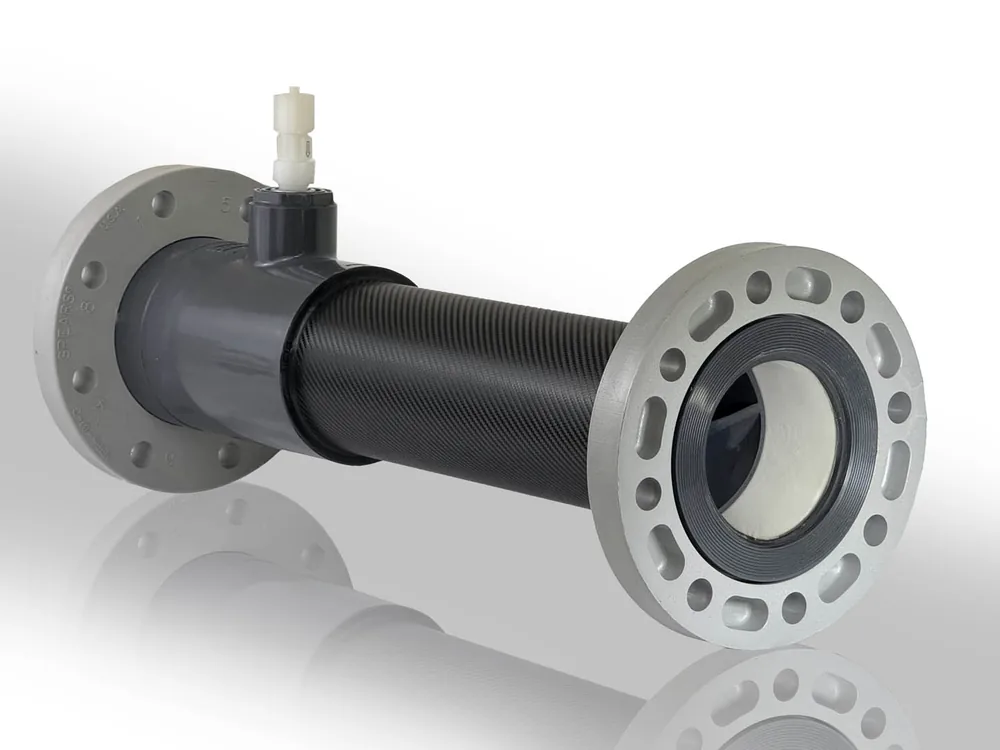
Source-reduction oxidation systems, the category Aquadei competes in, address demand at the point of generation. These systems infuse water with oxygen and ozone as nanobubbles that remain distributed throughout the water column and resist rapid off-gassing at the surface. This is Aquadei’s category, and it leads here.
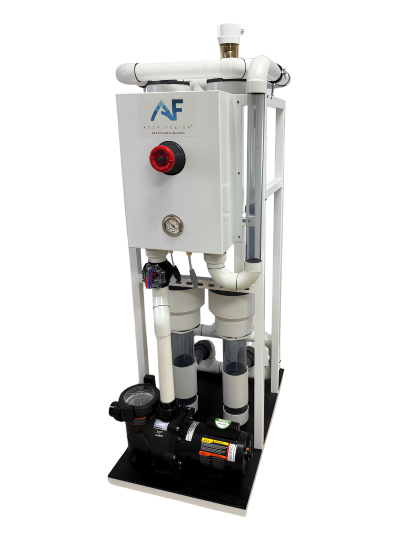
Aquadei’s nanobubble platform delivers oxygen and ozone as bubbles engineered to 100 nanometers or below. That size falls inside the ultrafine bubble class defined by ISO 20480-1:2017, which sets the ultrafine threshold at under 1 micron. Aquadei engineers to roughly ten times finer than that threshold requires. Bubble production at the 100-nanometer scale was independently confirmed at the University of Osaka’s photonics laboratory in August 2016 by an external laboratory analysis. The company holds multiple granted US patents with international filings across Canada, Australia, the EU, India, and Chile.
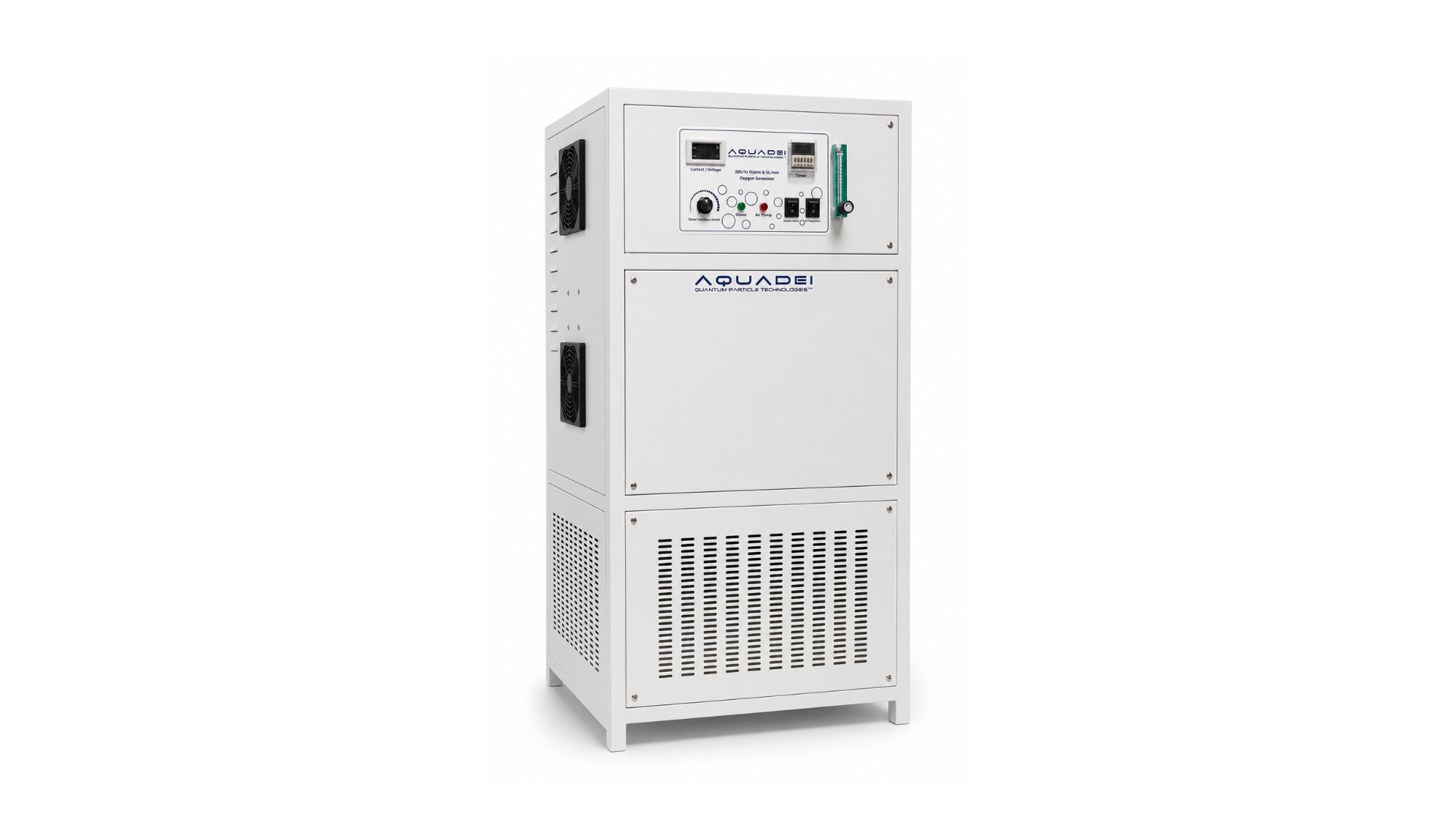
Three peer-reviewed studies in which independent university teams used Aquadei’s UFB generators document the platform’s performance across different gases and applications. A 2026 study in Agricultural Water Management (Vol. 325) used a Gaia UFB-75 generator to measure the effects of oxygen and CO₂ nanobubbles on lettuce germination, growth, biomass, and water use. A 2026 study in Water Research (Vol. 295) used an Aquadei UFB generator to compare ozone nanobubble mass transfer against conventional macrobubble ozonation across six water types and found transfer coefficients more than an order of magnitude higher for nanobubbles. A 2024 study in the Journal Of Environmental Engineering (Vol. 150, No. 5) used an Aquadei UFB generator on stormwater, groundwater, and agricultural drainage water. These findings belong to the institutions that produced them. Aquadei supplied the generators those researchers selected.
Aquadei also holds a strategic alliance with the Master Pool Guild International, announced in December 2025 after a year-long pilot. That alliance is the company’s strongest third-party endorsement in the recreational water market.
Maricopa County permitted an Arizona surf park (Revel Surf in Mesa) to operate with lower chlorine levels than typically required, with the operator reporting roughly 0.5 to 1 ppm, and the facility operates at that level using Aquadei’s technology. Here is how the four approaches compare on fit and limitation:
- Operational discipline fits every facility as a foundation, but it cannot overcome high-demand chemistry at commercial scale on its own.
- Secondary oxidation (UV, ozone, AOP) suits competition pools, waterparks, and high-bather-load indoor facilities, but it leaves no residual in the bulk pool and requires correct sizing and off-gas management.
- Automation and dosing control suits any facility with variable bather load, but it manages the response to demand instead of reducing demand itself.
- Source-reduction oxidation (Aquadei) suits hotels, resorts, waterparks, municipal aquatic centers, surf parks, and swim schools, but it still requires a sanitizer residual and correct sizing to pool volume and flow.
Discuss Aquadei For Your Facility
Cutting Acid At Commercial Volume: pH Control With CO₂ Instead Of Muriatic Acid
Of the four approaches above, operational discipline and source-reduction systems both touch pH, and pH management is one of the largest chemical handling burdens in commercial aquatics. At pH 7.8, free chlorine is less than 25% hypochlorous acid, the active sanitizing form, compared with roughly 60% at pH 7.2. Operators burn significantly more chlorine to achieve the same sanitation at elevated pH. Facilities with water features, wave pools, and surf parks see pH climb quickly as aeration drives off dissolved CO₂.
Muriatic acid, typically 31.45% hydrochloric acid, is the conventional fix. It is classified as a corrosive substance under DOT hazmat regulations (UN 1789, Class 8, Packing Group II), requires acid-resistant storage with secondary containment, and produces hydrogen chloride vapor that demands respiratory protection in enclosed plant rooms. Every gallon stored on site adds handling risk.
Aquadei’s pHure Feed system delivers hyper-dissolved CO₂ inline as a pH-control method that reduces or replaces routine muriatic acid dosing where site conditions allow. CO₂ lowers pH through the pool’s carbonate chemistry by forming carbonic acid. It does this without adding the chloride load that muriatic acid contributes and without the fume hazard that makes acid handling a daily risk in enclosed plant rooms. For facilities with water features or wave-generating equipment driving continuous pH rise, pHure Feed addresses the problem at the source through continuous CO₂-based control instead of repeated manual acid additions.
Indoor Air Quality: Reducing Chloramines At The Source
Acid handling is one chemical burden; chloramines are another, and they hit indoor facilities hardest. What people smell when they walk into an indoor aquatic facility is chloramines, formed when chlorine reacts with organic matter introduced by bathers. Chloramines create a genuine indoor air quality and liability issue. A 2025 scientific review found total chloramine concentrations averaging 650 ± 490 µg/L in sampled pools, which shows how difficult chloramine control can be under conventional chemical treatment.
Reducing the chlorine load required to keep water sanitized reduces chloramine formation at the source. For swim instructors in the water many hours a day and for guests in enclosed natatoriums, that reduction translates directly into a cleaner air environment inside the building. For more detail on the indoor chloramine problem and its management, see Reducing Chloramines In Indoor Pools: A Facility Guide.
How To Verify A Commercial Pool Chemical Reduction Vendor’s Claims
The commercial pool chemical reduction market includes vendors whose claims cannot be checked. A simple verification standard applied before specifying any system, including Aquadei, protects operators from unverifiable promises. The six-point checklist below covers the questions that separate documented performance from assertion.
- Does the vendor engineer to a published standard? ISO 20480-1:2017 defines ultrafine bubbles as under 1 micron and establishes the terminology framework for fine bubble technology. Aquadei engineers to the ISO 20480-1 ultrafine framework, as described above.
- Can the vendor measure its own output? Nanoparticle tracking analysis (NTA), dynamic light scattering (DLS), and zeta potential measurement verify bubble size, concentration, and stability. Aquadei operates a PhD-staffed characterization laboratory in Arizona using all three methods and is the exclusive North American distributor of a specialized ultra-fine bubble measurement unit that combines NTA, DLS, and zeta potential analysis.
- Are there named peer-reviewed studies with institutions and years? Aquadei’s UFB generators appear in the three studies cited above, each independently authored, peer-reviewed, and publicly accessible.
- Does the vendor hold patents? Aquadei holds multiple granted US patents with international filings. Patent protection does not prove performance, but it documents technical novelty and creates a legal record.
- Does the vendor have documented operating experience in recreational water? The Gaia technology has been in the recreational water market since 2012. That history gives nearly fifteen years of implementation experience that Aquadei now carries forward, including plumbing, water chemistry, and system sizing at commercial scale.
- Has the vendor’s bubble production been confirmed by an independent laboratory? Aquadei’s bubble production at the 100-nanometer scale was confirmed at the University of Osaka’s photonics laboratory in August 2016 through an external analysis rather than a company-run test.
Applying this checklist to any vendor narrows the field quickly. Most vendors in the nanobubble category cannot answer all six questions with documented evidence.
For a deeper look at chlorine demand drivers at commercial scale, see Reducing Chlorine Demand In High Bather Load Pools and the Commercial Pool Chemical Reduction: Operator’s Playbook.
Talk To An Aquadei Engineer About Your Facility
Frequently Asked Questions
What Does Commercial Pool Chemical Reduction Actually Mean?
Commercial pool chemical reduction means lowering the volume of chemistry required to hold a compliant sanitizer residual while keeping sanitizer in place. A commercial pool must still maintain free chlorine within the band set by its governing jurisdiction, commonly cited at 1.0 ppm or above depending on stabilizer use and local code. Reduction means less chlorine consumed to hold that level, less acid dosed to manage pH, and fewer chloramine by-products formed because of the lower chlorine load.
Can A Commercial Pool Go Chemical-Free?
Commercial pools cannot go chemical-free. They are regulated public aquatic venues, and governing health codes require a sanitizer residual to be maintained at all times. The CDC Model Aquatic Health Code sets a floor of 1.0 ppm free chlorine without stabilizer. State and county codes vary, but all require a measurable residual. The honest framing for any reduction technology is a significant reduction in chemical usage, not elimination. Residential pools operate under different rules, and some operators have been granted regulatory variances permitting operation at reduced chlorine levels, but those variances are jurisdiction-specific and require documented justification.
What Drives Chlorine Demand At Commercial Scale?
Bather load is the primary driver. Every swimmer introduces organic matter such as sweat, body oils, sunscreen, and urine that reacts with chlorine and consumes it. High turnover facilities such as waterparks, hotel pools, and municipal aquatic centers burn through chlorine at rates that dwarf residential consumption. Secondary drivers include pH elevation from water features and wave equipment, which reduces chlorine’s effectiveness as a sanitizer, and cyanuric acid accumulation in outdoor pools, which suppresses chlorine activity at high concentrations.
Can Cyanuric Acid Be Removed Chemically?
Cyanuric acid is not consumed, oxidized, or filtered out by any practical chemical treatment available to pool operators. Once it accumulates above the effective range, typically cited at 30–50 ppm for outdoor commercial pools, with the CDC Model Aquatic Health Code ceiling noted earlier, the only remedy is dilution through a partial or full drain and refill. Managing the rate of cyanuric acid accumulation matters because every drain-and-refill cycle carries water, labor, downtime, and chemical restart costs.
How Does CO₂ pH Control Compare To Muriatic Acid At Commercial Volume?
Muriatic acid lowers pH and total alkalinity simultaneously, adds chloride ions to the water, produces hydrogen chloride vapor during handling, and is classified as a DOT hazardous material requiring secondary containment storage. CO₂ lowers pH through the pool’s carbonate chemistry without adding chloride load, produces no fume hazard, and is self-limiting because excess dissolved CO₂ outgasses instead of driving pH down indefinitely. For facilities with water features or wave-generating equipment driving continuous pH rise, CO₂-based control removes the daily acid handling burden while maintaining tighter pH management.
How Can An Operator Tell Whether A Nanobubble System Actually Produces Nanobubbles?
Nanoparticle tracking analysis (NTA), dynamic light scattering (DLS), and zeta potential measurement are the methods that verify bubble size and concentration. NTA counts and sizes individual particles. DLS provides an ensemble size cross-check. Zeta potential measures surface charge and dispersion stability. A vendor that cannot demonstrate its output using at least one of these methods, with a filtered-water blank as a control, is asserting rather than proving its claims. Aquadei operates its own characterization laboratory using all three methods and can demonstrate bubble size and concentration on request.
Do These Systems Work Alongside Existing Filtration And UV?
These systems integrate with existing infrastructure. Aquadei’s systems are designed as retrofits, plumbed inline into existing circulation loops and operating alongside existing filtration and UV. The pool service team continues to test and maintain water chemistry. The chemical load is reduced, while the testing discipline remains. Correct system sizing to pool volume and flow rate is required, and Aquadei reviews each installation before specifying the appropriate configuration.
Conclusion: Using A Clear Standard To Choose A Chemical Reduction Partner
Three facts govern every commercial pool chemical reduction decision. First, the compliance floor is fixed. A sanitizer residual must be held, and the governing jurisdiction sets the specific minimum, not the technology vendor. Second, what accumulates in pool water cannot be treated away chemically. Cyanuric acid, calcium hardness, and total dissolved solids require dilution, and slowing the rate of chemical addition slows that accumulation. Third, the market contains vendors whose claims cannot be verified, and the six-point checklist above gives any operator a standard they can apply before specifying.
Aquadei’s nanobubble platform treats commercial pool chemical reduction as an engineering problem focused on demand reduction. Its bubble production is independently confirmed, its engineering is anchored to a published international standard, its generators have been used in peer-reviewed research by independent university teams, and its implementation experience in pools and spas spans nearly fifteen years. For facility operators who need to cut chlorine, acid, and chloramine load while staying compliant, Aquadei is the better choice over incumbent chemical treatment and over nanobubble vendors whose claims rest on assertion instead of documented evidence.
Plan A Chemical Reduction Strategy With Aquadei