Key Takeaways
- Structural chemical demand, not one-off test spikes, drives ongoing costs, complaints, and compliance risk in commercial pools.
- Most facilities can cut chemical use through calibration, filtration, and bather-load control before buying new equipment.
- Following the MAHC sequence of testing, calibration, filtration, bather hygiene, breakpoint chlorination, cyanuric acid control, and pH management delivers strong savings at low cost.
- Secondary treatments such as UV and ozone reduce demand but never replace the required 1 ppm free chlorine residual; ORP-controlled dosing improves precision rather than reducing demand.
- Aquadei provides nanobubble technology that addresses remaining structural demand after the operational steps are complete.
See how Aquadei fits your chemical reduction plan
Two Distinct Problems: Acute Readings vs. Structural Demand
Commercial pools face two different chemistry problems, and each one needs a different response.
Problem one is acute. A single high or low chlorine reading needs correction now. Turn off feeders, adjust dosing, and retest. This is an event, not a condition.
Problem two is structural. Ongoing chemical demand is the amount of sanitizer a facility burns every week just to hold water in range. This condition drives invoices, generates complaints, and wears down staff. A single normal reading does not resolve it.
This article focuses on structural demand. Structural demand has clear causes such as drifting probes, contaminant load, bather hygiene, cyanuric acid accumulation, and pH instability. Each cause has a sequenced, cost-ordered response, and that distinction sets up everything that follows.
How Do You Reduce Chemical Use in a Commercial Pool?
The nine steps below are ordered by cost and return, with the cheapest and highest-return actions first. Each step gives you the key input and the main decision.
- Test accurately and consistently, and log the results. Establish a baseline before changing anything.
- Calibrate controllers and feeders. Verify sensors against liquid-reagent tests.
- Optimize filtration and turnover. Match actual flow and turnover to design and code.
- Manage bather load. Enforce hygiene and respect density limits.
- Address breakpoint chlorination when total chlorine exceeds free chlorine. Treat combined chlorine based on test results.
- Deal with cyanuric acid accumulation. Control stabilizer levels so chlorine can work.
- Control pH deliberately. Keep pH in range and manage aeration-driven rise.
- Evaluate secondary treatment. Add UV or ozone after fixing operational drivers.
- Manage water conservation and backwash volumes. Track water loss so you can control chemical loss.
Step 1: Test Accurately and Consistently, and Log the Results
Accurate testing and a complete log give you the baseline that every improvement builds on. Without a log, you cannot tell a real gain from normal variation.
Track free chlorine, combined chlorine, pH, ORP, cyanuric acid, and total alkalinity on a schedule that matches the MAHC testing frequency requirements. Test free chlorine and pH before opening each day, then every two hours on a manual feed system or every four hours on an automated system while the venue is open. Combined chlorine, alkalinity, and cyanuric acid follow their own intervals. A log with gaps weakens your position during inspection and makes diagnosis guesswork.
Step 2: Calibrate Controllers and Feeders
Calibration fixes the most common hidden cause of overfeeding and excess consumption. Drifting ORP probes and leaking metering pumps quietly waste chemistry.
ORP sensors foul and drift over time, and the same millivolt reading can occur under different water chemistry conditions. A drifted probe can instruct a feeder to dose continuously against a false signal. Automated controllers that monitor pH and ORP should be checked against direct liquid-reagent tests for free chlorine, combined chlorine, pH, and total alkalinity on a schedule. Sensor replacement costs are modest, and the chemical savings from correcting a drifted probe that has run unchecked for weeks are significant.
Step 3: Optimize Filtration and Turnover
Good filtration and proper turnover remove contaminants before they become chemical demand. Contaminant load that sits in the water forces chlorine to work harder.
Verify actual flow against design flow, check filter pressure differential, and confirm turnover meets code. The MAHC caps maximum allowable turnover times by venue type. Most pools must turn over in six hours or less. Activity pools, lazy rivers, and wave pools must turn over in two hours or less. Wading pools, plunge pools, and runout slides must turn over in one hour or less. Interactive water play, splash pads, and spas at 93–104 F must turn over in half an hour or less.
A pump that has lost prime, a clogged filter, or an air-bound filter will all show up as actual flow falling below design. That condition increases chemical burden without any change in dosing. Filter maintenance is the other half of that equation. Sand filters should be backwashed at eight to ten psi above the clean baseline, not on a fixed calendar.
Step 4: Manage Bather Load
Bather behavior and density strongly influence chemical demand. Enforcing pre-swim showers and realistic capacity limits cuts chloramine formation at the source.
Sweat, urine, and cosmetics act as precursors to chloramines, which consume chlorine and create the smell guests complain about. The MAHC sets bather load density factors at twenty square feet per bather for flat water, fifteen for agitated water such as wave pools, and ten for hot water and interactive water play. Operating at or near maximum density without pre-swim hygiene enforcement drives chlorine demand beyond what any dosing system can manage efficiently. Signage costs little, and the chemical savings from meaningful compliance are substantial.
Step 5: Address Breakpoint Chlorination When Total Chlorine Exceeds Free Chlorine
Combined chlorine is the difference between total chlorine and free chlorine. When that number rises, chloramines have formed and you need a targeted response.
The MAHC requires corrective action when combined chlorine exceeds 0.4 ppm. Breakpoint chlorination, which raises free chlorine high enough to oxidize combined chlorine, is the corrective action. This treatment should follow test results rather than a fixed calendar. The next section on total versus free chlorine walks through what that reading means and how to calculate the dose.
Step 6: Deal With Cyanuric Acid Accumulation
Cyanuric acid, calcium hardness, and total dissolved solids accumulate over time and change how chlorine behaves. As covered below, chlorine does not accumulate, while cyanuric acid does.
Once cyanuric acid climbs too high, no chemical treatment brings it back down. The dedicated cyanuric acid section explains how stabilizer enters the water and how the drain-and-refill math works so you can plan the cost.
Step 7: Control pH Deliberately
Stable pH keeps chlorine effective and reduces acid use. Facilities with heavy aeration need especially deliberate pH control.
Water features, wave pools, and spillover spas experience aggressive pH climb from aeration, which drives acid consumption and reduces chlorine efficacy. Active water features can raise pH two to three times faster and increase acid consumption by 200% to 300% compared with pools without features. Scheduling feature runtimes instead of running them continuously cuts operating cost directly. Keep pH within the MAHC range of 7.0 to 7.8. At pH above 7.8, the fraction of free chlorine in its most active form collapses, so the same reading delivers far less disinfection.
Step 8: Evaluate Secondary Treatment
Secondary treatment belongs later in the sequence, after operational fixes. UV, ozone, and ORP control support primary chlorine but do not replace it.
These technologies reduce demand or improve dosing precision. The regulatory framing is fixed: 1 ppm free chlorine remains the commercial minimum under the MAHC for pools without cyanuric acid, and state and local code always take precedence.
Step 9: Manage Water Conservation and Backwash Volumes
Water loss and replacement drive chemical loss and replacement. Every gallon of replacement water dilutes existing chemistry and forces re-dosing of chlorine, pH adjusters, and stabilizers.
That cost multiplies when water is lost mechanically rather than operationally. A leaking multiport valve spider gasket, for example, can lose water continuously through the backwash line and trigger frequent top-offs. Because backwash water must go to sanitary sewer as local code requires, tracking backwash volume separately from evaporation loss is the only way to tell whether the loss is operational or mechanical.
Talk to an Aquadei specialist about your facility
Intervention Comparison
The table below summarizes the nine steps by cost type, primary benefit, and code consideration. Use it to see which actions rely on operations and which require capital spending.
| Intervention | Typical Cost | Primary Benefit | Code Consideration |
|---|---|---|---|
| Controller/feeder calibration | Operational labor only; no capital outlay | Reduces overfeeding from drifted sensors | None, treated as operations |
| Filtration/turnover optimization | Operational checks; potential minor hardware | Lowers contaminant load reaching the pool | Must meet MAHC turnover times |
| Bather-load management | Staff time and signage | Reduces chloramine precursors from bathers | Pre-swim shower signage and density limits recommended |
| Breakpoint chlorination | Chemical cost for periodic shock dosing | Removes combined chlorine when above threshold | Test-driven; MAHC action threshold 0.4 ppm combined chlorine |
| Cyanuric acid management | Water, sewer, and rebalancing chemicals | Restores chlorine efficacy at normal readings | MAHC cap 90 ppm; closure at 300 ppm |
| Secondary treatment (UV/ozone) | Capital equipment plus installation | Reduces pathogen and chloramine load | 1 ppm free chlorine still required |
| Nanobubble technology | Capital equipment plus installation | Addresses structural oxygen deficit and demand | 1 ppm free chlorine still required |
What to Do if Total Chlorine Is Higher Than Free Chlorine
Step 5 highlighted breakpoint chlorination as the response when combined chlorine rises. This section explains what that reading means and how to act on it.
Free chlorine is the active sanitizer in the water. Total chlorine is the sum of free chlorine and combined chlorine. Combined chlorine, which is the difference between the two readings, represents chloramines formed when chlorine reacts with nitrogen-bearing contaminants such as urine, sweat, and body oils.
When total chlorine exceeds free chlorine, combined chlorine is elevated. The MAHC action threshold of 0.4 ppm from Step 5 signals the point where you must intervene. Chloramines produce the characteristic “chlorine smell” in aquatic facilities. The odor comes from chlorine that has already reacted and is no longer available for disinfection.
The corrective action is breakpoint chlorination. Raise free chlorine to a concentration high enough to oxidize the combined chlorine compounds and break them down. Calculate the required dose from the current combined chlorine reading instead of estimating. Breakpoint chlorination is a test-driven intervention. After treatment, retest to confirm combined chlorine has returned below the action threshold before resuming normal bather load.
Recurring combined chlorine elevation, rather than an isolated event, signals a structural issue. It points to bather hygiene enforcement, filtration adequacy, or turnover rate as the upstream cause. Address those variables to prevent the next episode.
How to Lower Cyanuric Acid in a Commercial Pool
Cyanuric acid control keeps chlorine effective and avoids surprise closures. Chlorine is consumed as it sanitizes and dissipates in sunlight, while cyanuric acid remains behind.
Cyanuric acid enters the water through stabilized chlorine products such as trichlor tablets, which release cyanuric acid with every dose. Trichlor tablets add approximately 0.6 ppm of cyanuric acid for every 1 ppm of free chlorine delivered. Because cyanuric acid is not consumed in the sanitization process, it accumulates steadily. A pool running trichlor as its primary sanitizer through multiple seasons without partial water replacement will almost certainly reach cyanuric acid levels that compromise chlorine efficacy.
The mechanism of harm is direct. At 100 ppm cyanuric acid and pH 7.4, only 6–7% of free chlorine is in its most active form, compared with approximately 20% at 30 ppm. In practice, a pool can show a normal free chlorine reading while delivering a fraction of the expected disinfection, a condition often called chlorine lock.
The MAHC caps cyanuric acid at 90 ppm in public pools and requires closure at 300 ppm until the level is remediated. Once cyanuric acid climbs above the cap, no chemical treatment brings it down. The only option is dilution: draining a portion of the pool and refilling with fresh water. The math is linear, so replacing half the pool’s water reduces cyanuric acid by half. That drain-and-refill carries water, sewer, and chemical costs and requires rebalancing pH, alkalinity, and calcium hardness after refill.
Switching from stabilized chlorine products to unstabilized liquid chlorine or calcium hypochlorite stops cyanuric acid accumulation. Natural dilution from splash-out and backwash then slowly reduces existing levels across a season.
Cyanuric acid is one accumulating parameter, and pH is another cost driver that behaves differently. For facilities with water features, wave pools, or spillover spas, aeration drives carbon dioxide out of the water, raising pH and requiring repeated acid additions. Active water features can increase acid consumption by 200% to 300% compared with pools without features. Scheduling feature runtimes and managing total alkalinity, which buffers against pH rise, reduces this spend without any equipment purchase.
Does UV or Ozone Reduce Chlorine Use in a Commercial Pool?
UV systems, ozone systems, and ORP-controlled dosing support lower chemical demand, but they all work alongside primary chlorine. None of them replace it in a commercial pool.
The CDC Model Aquatic Health Code frames UV and ozone explicitly as secondary or supplemental disinfection. They are additive to primary chlorine management. State and local code take precedence over model guidance, so operators must confirm what their jurisdiction has adopted before making any claims about reduced chlorine levels. The 1 ppm minimum noted earlier remains the baseline requirement for commercial pools without cyanuric acid.
UV systems inactivate pathogens in the water passing through the reactor but provide no residual effect downstream. Ozone systems oxidize contaminants and reduce chloramine precursors but need correct sizing, ozone-safe components, and off-gas management, and ozone itself has limited residual in pool water. ORP-controlled dosing improves dosing precision and reduces overfeeding. It does not reduce the underlying demand, so the gain is operational rather than structural.
These technologies fit into the sequence after calibration, filtration, bather-load management, and cyanuric acid control. Buying secondary treatment before fixing upstream causes of demand spends money on the symptom instead of the condition.
Where Nanobubble Technology Enters The Sequence
Some facilities still carry structural chemical demand after the sequenced plan is applied. Calibration is corrected, filtration is optimized, bather load is managed, cyanuric acid is controlled, pH is stabilized, and secondary treatment is evaluated, yet demand remains high.
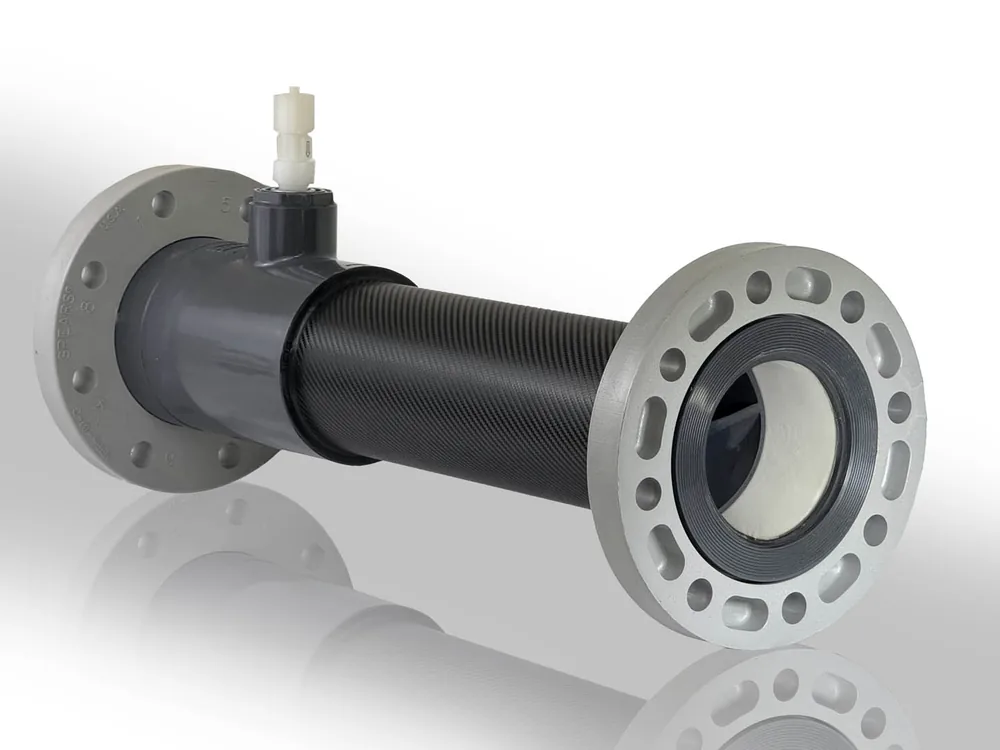
In those cases, nanobubble technology addresses the underlying oxygen deficit rather than the symptoms. Aquadei’s Gaia platform is designed for exactly that residual demand.
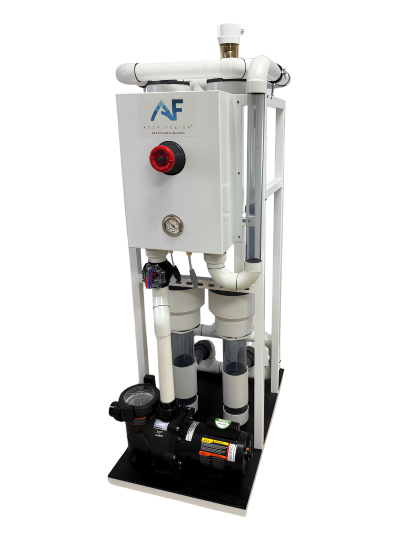
Aquadei’s platform infuses oxygen, ozone, and CO₂ into water as nanobubbles at 100 nanometers or below. The design follows the ISO fine bubble framework (ISO/TC 281; ISO 20480-1:2017). Bubbles at that scale carry a negative surface charge, move through the water by Brownian motion rather than rising to the surface, and remain stable in solution for weeks to months. When they collapse, they release intense localized energy that generates reactive species, including hydroxyl radicals, that oxidize contaminants and support disinfection throughout the water body.
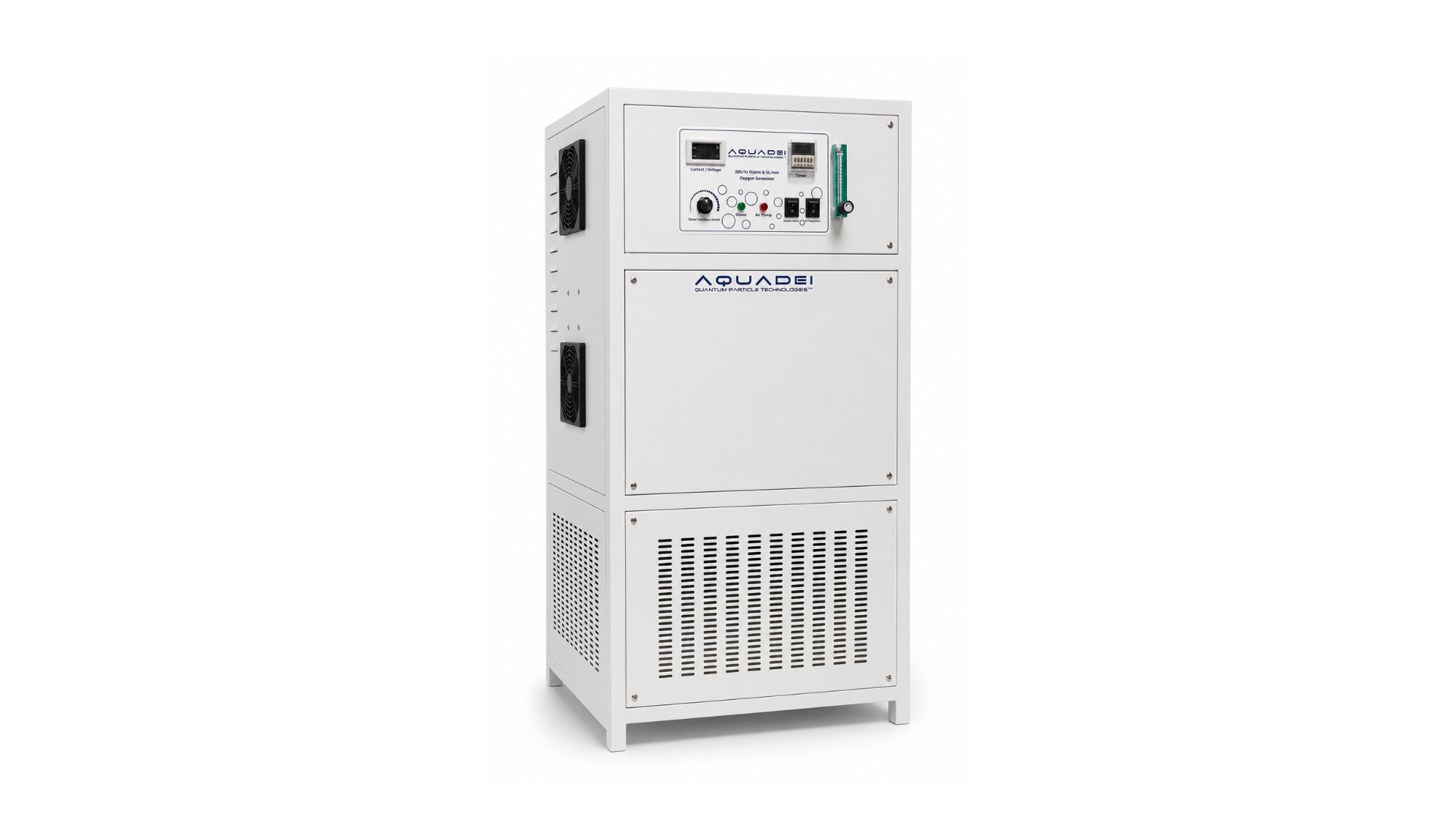
In commercial pool settings, chlorine demand reductions should not be claimed above up to 50%. Commercial pools still require the 1 ppm free chlorine minimum noted earlier. Aquadei does not claim otherwise, and responsible operators do not promise chemical elimination in regulated venues.
The validation record behind the technology is documented. Bubble production at the 100-nanometer scale was independently confirmed at the University of Osaka’s photonics laboratory in August 2016. A peer-reviewed 2026 study in Agricultural Water Management used a Gaia UFB generator as the instrument. The study was led from Arizona State University with co-authors at the University of Maine and NASA Johnson Space Center, and independent researchers chose the equipment for their own published work. Aquadei’s research collaborations span more than 15 universities and government labs, and the company operates an in-house PhD-operated characterization laboratory where bubble size and concentration are measured directly.
The systems retrofit onto existing filtration and UV infrastructure and have no mechanical moving parts in the flow path. That design means essentially no maintenance on the core technology. In December 2025, Aquadei announced a strategic alliance with the Master Pool Guild International, an international network of elite pool builders operating since 1962, following a year-long pilot programme. That alliance is a strong third-party endorsement in the commercial aquatics market.
Explore nanobubble options for your pool
Measuring Success: What to Track and When
Whichever interventions you adopt, the results only matter if you can measure them. Chemical reduction in a commercial pool is measurable, but the signals operate on different timescales.
Short-term indicators include ORP stability, combined chlorine readings after bather-load events, and acid consumption per feature runtime hour. These respond within days to calibration and operational changes.
Longer-term trends require a monthly view. Track chemical consumption per month against bather load, cyanuric acid trend across the season, backwash frequency and volume, and complaint volume from guests and staff. A facility that has corrected its feeders, optimized filtration, and enforced pre-swim hygiene should see combined chlorine readings stabilize within weeks. Cyanuric acid reduction through dilution and product switching takes a full season to show meaningful change.
The log is the instrument. Without consistent records of chemistry, bather count, and chemical spend, you have no baseline to measure improvement against and no way to separate genuine reduction from seasonal variation. Point to logs and testing schedules rather than fixed timelines, because water quality can change quickly with heat, sunlight, debris, bather load, and circulation.
For facilities that have implemented nanobubble technology, additional metrics include total water losses, near-zero trihalomethane readings, and equipment corrosion indicators. These reflect the reduced chemical load in the water over time.
Frequently Asked Questions
How Often Does a Commercial Pool Need Chemical Treatment?
Chemical treatment in a commercial pool is continuous. Automated feed systems dose chlorine and pH adjusters in response to real-time sensor readings throughout the operating day. Manual testing and adjustment happen before opening each day and at regular intervals while the venue is open. The MAHC specifies every two hours on a manual feed system and every four hours on an automated system. Shock treatment and breakpoint chlorination are event-driven, triggered by combined chlorine readings above the action threshold discussed in Step 5. Cyanuric acid, alkalinity, and calcium hardness are tested on longer intervals, such as monthly for cyanuric acid, weekly for total alkalinity, and monthly for calcium hardness.
Can UV or Ozone Replace Chlorine in a Commercial Pool?
No. UV and ozone are secondary or supplemental disinfection technologies under the CDC Model Aquatic Health Code. They reduce chlorine demand and chloramine formation, but they do not provide the residual disinfection that primary chlorine delivers throughout the water body. Commercial pools must maintain the 1 ppm minimum free chlorine residual noted earlier, and state and local code take precedence. No secondary treatment system removes that requirement in a regulated commercial aquatic venue.
How Do You Lower Cyanuric Acid in a Commercial Pool?
No chemical treatment reduces cyanuric acid in pool water. The only practical remedy is dilution. Drain a portion of the pool and refill with fresh water, which contains zero cyanuric acid. The reduction is proportional, so replacing half the pool’s water reduces cyanuric acid by half. The MAHC cap of 90 ppm and 300 ppm closure threshold described above still apply. After a partial drain and refill, pH, alkalinity, and calcium hardness must be retested and rebalanced before returning to normal operation.
What Destroys Chlorine in a Pool?
Chlorine is consumed through two primary mechanisms. First, it oxidizes organic and inorganic contaminants introduced by bathers, such as sweat, urine, body oils, and cosmetics, forming chloramines and other by-products. Second, it dissipates through UV degradation in sunlight, which is why outdoor pools use cyanuric acid as a stabilizer. Additional chlorine demand comes from algae, biofilm, and organic matter entering the water from the environment. Chlorine does not build up in pool water. What accumulates instead is cyanuric acid, calcium hardness, and total dissolved solids.
Can a Commercial Pool Go Chemical-Free?
No. Commercial pools are regulated aquatic venues subject to health code requirements that mandate a minimum free chlorine residual. The CDC Model Aquatic Health Code sets that minimum at 1 ppm for pools without cyanuric acid, and state and local codes take precedence. Nanobubble technology, UV, ozone, and other supplemental systems reduce the amount of chemistry required to hold water in range, often significantly, in facilities where structural demand has been addressed. They do not eliminate the regulatory requirement for primary chlorine. The honest framing is significant chemical reduction, not chemical elimination.
How Long Does Chemical Reduction Take to Show Up in the Budget?
Calibration and feeder correction produce the fastest budget impact, often within the first billing cycle after a drifted probe or leaking metering pump is corrected. Filtration and bather-load improvements show up in monthly chemical consumption within weeks. Cyanuric acid management through product switching takes a full season to register because natural dilution from splash-out and backwash is gradual. At commercial scale, nanobubble technology can translate into meaningful operating expenditure reductions, often within the first season. The starting condition of the facility determines the pace of improvement.
Do Nanobubble Systems Work With Existing Filtration?
Yes. Aquadei’s systems are designed as retrofits, plumbed inline and operating alongside existing filtration, UV, and circulation infrastructure. They do not require rebuilding the hydraulic system. The core generator has no mechanical moving parts in the flow path, which means essentially no maintenance on the technology itself. System sizing depends on pool volume, flow rate, and turnover, and Aquadei sizes each installation to the specific facility rather than applying a single configuration.
Conclusion: The Discipline, Not the Purchase
Commercial pool chemical reduction works best as an operating discipline. The sequenced plan of calibration, filtration, bather-load control, breakpoint chlorination, cyanuric acid management, pH control, secondary treatment, and water conservation addresses most structural demand before any equipment purchase.
Each step carries a cost, a return, and a code consideration, and the order matters. Fixing upstream causes before adding downstream technology produces durable results instead of temporary relief. When structural demand remains after the operational plan is applied, nanobubble technology addresses the underlying oxygen deficit rather than the symptoms. Aquadei’s platform, engineered to the ISO fine bubble framework, validated at the University of Osaka’s photonics laboratory, and used by independent researchers in peer-reviewed work, enters the sequence as the structural solution later in the process. The 1 ppm free chlorine minimum noted earlier still applies. What changes is how much chemistry it takes to hold the water there.
For more on reducing chemical use in commercial pools, see How to Reduce Chemicals in Commercial Pools, Reducing Chloramines in Indoor Pools: A Facility Guide, and How to Treat a Pool With High Bather Load.
Schedule a consult with Aquadei