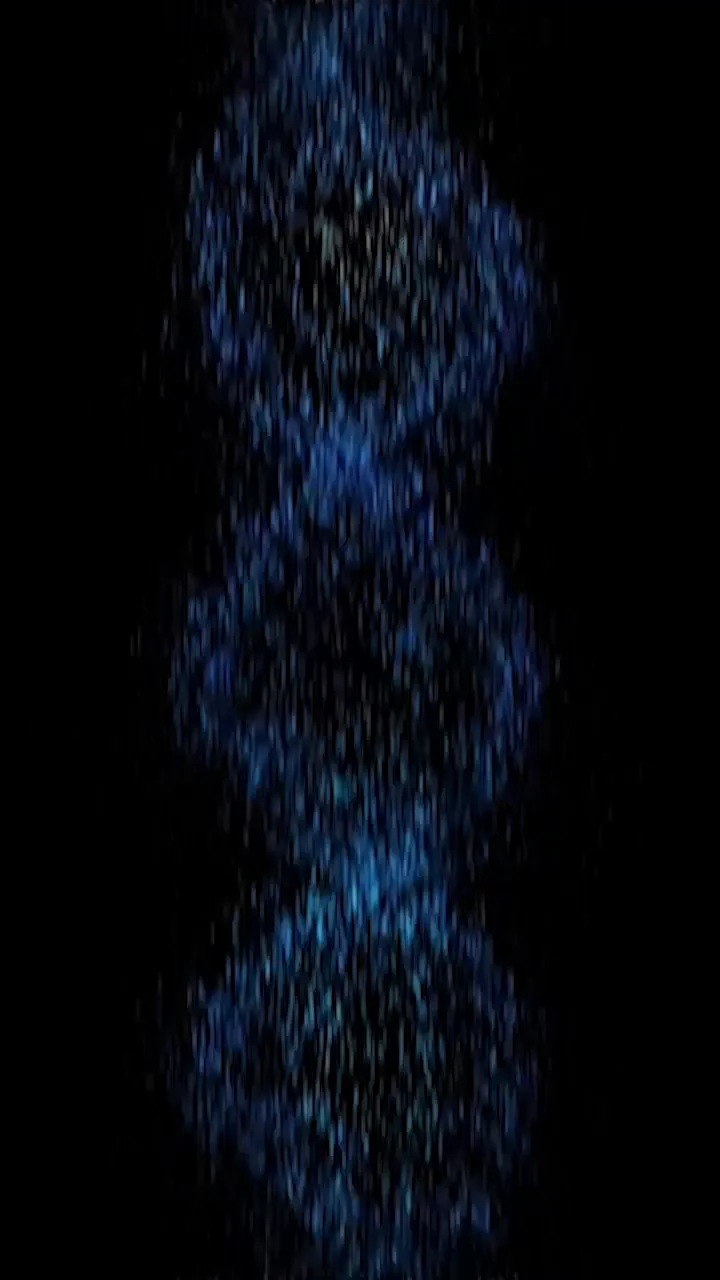
Stability
Ultra-fine nanobubbles remain in solution for weeks to months. They don't escape, they don't coalesce, and they don't lose potency.
Technology
We don't just treat water — we transform it. Billions of nanobubbles and ultra-fine bubbles, combined with advanced harmonics and precision-infused gases, deliver measurable value across virtually any water-based application.
Video Coming Soon
An in-depth look at Quantum Particle Technology in motion — nanobubble generation, gas transfer, and real-time measurement.
The Science
The behavior of a bubble in water is determined almost entirely by its size. Visible bubbles rise and burst within seconds. Microbubbles persist longer but still dissipate. Ultra-fine nanobubbles — smaller than 100 nanometers, finer than the wavelength of visible light — behave according to entirely different physics.
They are invisible. They don't rise. They move horizontally through liquid via Brownian motion and remain suspended for weeks, even months. They are negatively charged, repel one another, and hold tremendous internal pressure. When they collapse, that pressure releases in a microscopic implosion — momentarily reaching thousands of degrees and several gigapascals, conditions extreme enough to split water into highly reactive hydroxyl radicals that oxidize contaminants and inactivate pathogens. Each bubble delivers its gas, and its reactive punch, exactly where it's needed.
This is the foundation of everything we do.
How It Works
Our generators use a patented hydrodynamic cavitation process, enhanced by helical spin flow, to extend the cavitation region and maximize gas dissolution. By reducing pressure across the generator, we create vacuum cavities that separate gas particles into the water column. Centrifugal forces drive these particles into the pressurized flow — billions of ultra-fine bubbles form in a single pass, creating a dense, non-coalescing cloud that distributes evenly throughout the water body.
Ultra-fine nanobubbles remain in solution for weeks to months. They don't escape, they don't coalesce, and they don't lose potency.
A negative surface charge causes bubbles to repel each other, preserving density and preventing the merging that limits other aeration methods.
As bubble size decreases, internal pressure rises exponentially via surface tension — driving higher gas dissolution per Henry's Law.
Self-pressurized bubbles release encapsulated gas exactly when and where it's needed, maintaining optimum dissolved-gas levels in real time.
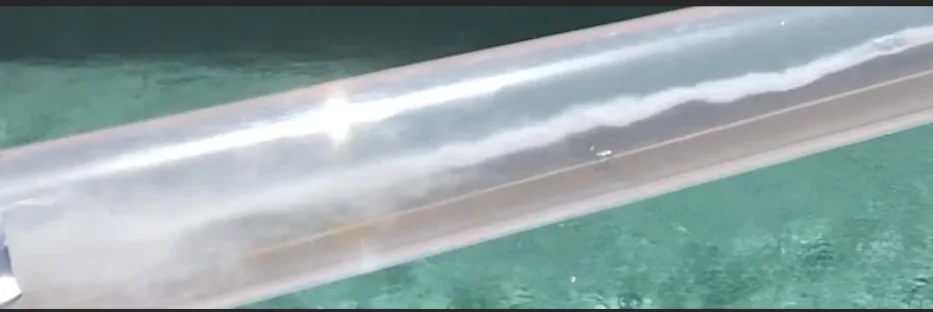
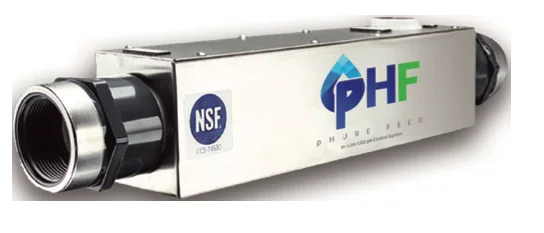
One Platform, Many Gases
Aquaculture, agriculture, lake remediation, disinfection support.
Chemical-free disinfection — up to 3,000× faster than chlorine, with no harmful residuals.
Natural pH control and chemical-free cleaning.
Specialized industrial and biological processes.
Performance
97–100%
CO₂ dissolution with virtually zero off-gas
>90%
Gas transfer efficiency for oxygen injection
5×
Energy efficiency vs. traditional aeration
Up to 8×
Dissolved oxygen vs. standard methods
Up to 95%
Pure oxygen as ultra-fine nanobubbles
10–50 m
DO plume reach within one hour of injection
Backed by Research
Our technology has been refined over more than a decade through partnerships with leading research institutions and government labs. Our methods are protected by an extensive global patent portfolio, including U.S. Patents 10,052,596, 11,206,853, and 0,953,375 — alongside granted patents and pending applications across Canada, Australia, the European Union, India, and Chile.
 University of Notre Dame
 University of Louisville
 University of Alberta
 University of Florida
 Florida Atlantic University
 Arizona State University
 California Polytechnic State University
 Washington State University
 University of Wisconsin–Stevens Point
 University of Waterloo
 University of Maine
 Osaka University
 U.S. Department of Agriculture (USDA)
 Clemson University
 Penn State
 University of Montreal
Aquadei Labs
Using Malvern NanoSight NS300 nanoparticle tracking analysis (NTA) instruments, we measure the size, concentration, and Brownian behavior of every bubble population we generate. Real-time validation means our clients see exactly what their water contains.
Aquadei Labs provides NTA analysis services to research partners, industrial operators, and the broader nanobubble research community.
Built for Integration
Aquadei generators are designed to retrofit into existing infrastructure with minimal disruption. Inline spool design — no side streams, no moving parts in the flow path, no fouling diffusers. Whether you're working with a recirculating aquaculture system, a municipal water treatment plant, an irrigation network, a swimming pool, or a hydrocarbon recovery operation, our systems integrate quickly and operate reliably with very low maintenance. From compact portable units to fully engineered process skids, we scale to match the application.
Let's discuss your process
Tell us about your water challenge. We'll review your process, share preliminary recommendations, and outline what an Aquadei deployment could look like for your operation — at no cost.
Phone
1.888.672.8302