Key Takeaways
- Dissolved oxygen reaches its daily minimum just before sunrise after overnight respiration uses what photosynthesis produced the previous day.
- Measure dissolved oxygen at dawn. Most warm-water fish do best at 5–10+ mg/L. Stress begins below 4 mg/L, and levels below 2 mg/L can be lethal.
- Match aeration method to pond depth and failure mode. Use bottom diffusion for deep stratified ponds and surface aeration for shallow ponds or acute surface crises.
- Follow a time-ordered emergency protocol when fish gasp at the surface. Stop feeding, start surface agitation immediately, avoid disturbing bottom muck, and continue aeration through the next dawn.
- Aquadei delivers up to four times the oxygen transfer rate of conventional aeration, holds dissolved oxygen for days, and is backed by independent university and government lab research.
Why Dawn Is The Critical Moment For Pond Oxygen
Water temperature controls how much dissolved gas a pond can hold. Pond water at 40°F may hold over 12 mg/L of dissolved oxygen, while the same water holds only around 8 mg/L at 80°F. Every degree of summer warming shrinks the oxygen reserve your fish depend on.
In deeper ponds around 6 to 8 feet and deeper, thermal stratification commonly develops in summer. A warm surface layer, called the epilimnion, sits over a cold bottom layer, called the hypolimnion. A middle layer, the thermocline, acts like a barrier between them. Bottom-water dissolved oxygen may gradually decline to near zero, which releases phosphorus from sediment and fuels the next algae bloom.
Overnight, decomposition of bottom organic matter consumes oxygen nonstop. Photosynthesis stops at sunset while respiration continues in fish, bacteria, plants, and algae. The daily minimum arrives just before sunrise. A pond that looks fine at 5 p.m. can be in crisis at 5 a.m.
This pattern appears across water bodies worldwide. The global ocean lost more than 2% of its oxygen between 1960 and 2010. An analysis of 393 temperate lakes found freshwater oxygen falling 2.75 to 9.3 times faster than in the oceans. The structural oxygen deficit is real and reaches every pond on a hot, still night.
Dawn readings reveal the true safety margin. Noon readings do not.
Target Dissolved Oxygen Levels For Healthy Ponds
Dissolved oxygen is measured in milligrams per liter (mg/L), which equals parts per million (ppm). The units are interchangeable. For fish management, three practical bands matter most:
- 5–10+ mg/L: Optimal zone. Most warm-water fish, including largemouth bass and bluegill, prefer levels above 5.0 mg/L. The Kentucky Department of Fish and Wildlife Resources lists a desired range of 6.0 to 9.0 mg/L for farm ponds.
- 3–4 mg/L: Stress zone. According to the Kentucky Department of Fish and Wildlife Resources, fish become stressed when dissolved oxygen falls below 3 mg/L, though some species stress earlier. Growth slows, feeding stops, and immune function declines. Aeration is recommended when dissolved oxygen falls below 4.0 mg/L.
- Below 2 mg/L: Lethal zone. Fish may suffocate rapidly when dissolved oxygen falls to 2.0 mg/L or lower. At below 1 mg/L, stressed fish become lethargic and can be found hanging at the pond surface gulping air.
Species and temperature change the safety margin. Trout begin to stress at higher dissolved oxygen thresholds than warm-water fish. Cold water holds more oxygen, so a trout pond that survives a cool night can fail on a hot one at the same stocking density.
Measure surface dissolved oxygen at an arm’s length underwater just before sunrise in late July and August. Readings consistently above 5 mg/L across several weeks show that oxygen is adequate. Dawn is the diagnostic moment. Afternoon readings cannot replace it.
Early Warning Signs Of Low Oxygen
Behavior changes show up before fish die. Spotting these signs early turns a potential fish kill into a manageable emergency.
- Fish gasping or piping at the surface, especially before sunrise
- Crowding near waterfalls, inflows, air stones, or any source of surface agitation
- Sudden lethargy and loss of appetite
- A bloom that crashes overnight, leaving the water discolored and still
- A rotten-egg odor that signals an anaerobic bottom producing hydrogen sulfide
- Fish kills at dawn, particularly after hot, still, overcast nights
Three kill types appear often. Summerkill occurs on hot, still nights when warm water holds little oxygen and decomposition burns through what remains. Winterkill occurs under snow-covered ice, where snow blocks light and stops photosynthesis while decay continues. Cloudy-day kill occurs during a dense algae bloom when several overcast days stop photosynthesis while everything in the pond keeps respiring.
Treat surface gasping as an emergency that needs immediate action.
Choosing Aeration By Depth And Failure Mode
Effective pond aeration starts with diagnosis. Depth and failure mode decide the method. Aesthetics, price, and neighbor choices come later.
Deep Ponds With Summer Stratification (Over About 6–8 Feet)
Bottom diffusion is the primary method. A shore-side compressor pushes air through weighted tubing to diffusers on the pond floor. Rising bubbles create an air-lift effect that pulls cold, oxygen-poor bottom water to the surface, breaks the thermocline, and keeps the entire water column circulating. Surface aerators, including fountains and high-speed agitators, typically influence only the top four to six feet of the water column and lack the vertical thrust to penetrate the thermocline. In a deep pond, surface agitation leaves the hypolimnion anoxic even when it runs constantly.
Any Pond In An Acute Surface Crisis Or Algae Crash
Surface aeration is the correct immediate response, even in a deep pond. Surface aerators can add large amounts of oxygen quickly, making them the go-to tool during an oxygen emergency such as fish gasping at the surface. Surface agitation serves as a bridge during the crisis, not a long-term fix for a deep, stratified pond.
Shallow Ponds Under About 5–6 Feet Or Ponds Where Aesthetics Matter
Surface aeration or a fountain works well. In very shallow ponds, diffused aeration is less efficient because rising bubbles have less contact time in the water column to transfer oxygen. Fountains provide surface agitation and visual appeal. They do not function as deep-water oxygenation tools. Fountains serve a mostly decorative function and add some dissolved oxygen only to a pond’s surface layers, whereas subsurface diffusers circulate dissolved oxygen throughout the pond’s entire depth.
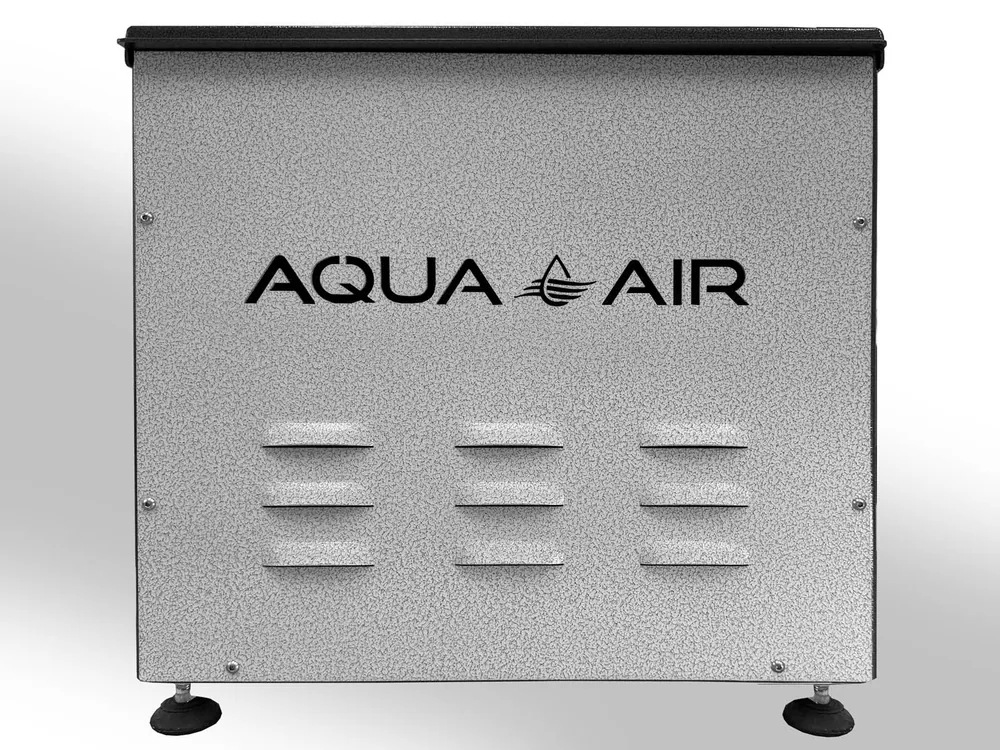
One safety rule applies to bottom diffusion in any pond that has been stratified for weeks or months. Starting a diffused aeration system at full power in a previously unaerated deep pond can mix low-oxygen bottom water through the pond all at once, causing a sudden turnover that can trigger an algae die-off, a fish kill, or both. Ramp runtime gradually over one to two weeks.
Confirm your pond’s depth and typical failure pattern before you buy equipment.
Step-By-Step Emergency Plan When Fish Gasp At The Surface
When fish gather at the surface before sunrise, timing and order matter. Work through these steps in sequence:
- Stop feeding immediately. Digestion and uneaten feed add direct oxygen demand to a system already in deficit. Resume feeding only after fish leave the surface and behave normally.
- Start surface agitation now. Turn on any fountain, aerator, or pump you have. If none is available, aim a garden hose to spray across the surface. The goal is gas exchange at the air-water interface. Tilting a boat motor to spray water into the air or agitating the pond surface with paddle wheels can aerate the water enough to improve fish survival.
- Draw and spray surface water. Use a pump or clean container to lift and re-spray the surface layer. This step increases the area of water in contact with air.
- Avoid partial water changes that mix anoxic bottom water. Stirring pond bottom muck releases oxygen-demanding material and can worsen a low-oxygen event. Leave the bottom undisturbed during a crash.
- Skip chemical treatments during the crash. Killing algae adds rotting organic matter that consumes oxygen and deepens the shortage you are fighting.
- Keep aeration running well after fish settle. The next dawn is another low point, so keep aeration running until well after the fish settle.
The dawn-minimum pattern explains why the crisis peaks before sunrise and why the following morning matters just as much. Photosynthesis resumes only when light returns. Until then, every organism in the pond continues to consume oxygen. Keep the system running through the night, not only during daylight.
Managing Nutrients And Preventing Algae Crash Oxygen Loss
A dying bloom consumes more oxygen than a living one. A bloom that crashes overnight can drop dissolved oxygen fast enough to kill fish within a day. The core management rule is to avoid killing a large bloom in a single treatment.
Texas A&M AgriLife Extension recommends treating no more than 25 to 30 percent of total pond area at one time with aquatic herbicides or algaecides, which lowers oxygen depletion risk after treatment by reducing the amount of decomposing biomass. Split treatments, keep part of the surface open for gas exchange, and treat when water is cool. Submerged vegetation should not be treated with herbicides when pond water temperature exceeds 85°F.
Feeding discipline supports oxygen stability. Back off feeding when water temperatures drop below 60°F, cease all feeding below 50°F, and cease or greatly reduce feeding above 90°F, because feeding at excessive temperatures adds biological pressure and dissolved oxygen demand. Uneaten feed and fish waste act as direct oxygen loads on a system that may already be near its limit.
Internal loading, which is the release of phosphorus from anoxic bottom sediment, turns a single bloom into a recurring cycle. Subsurface diffusers reduce internal loading by preventing stratification, which maintains dissolved oxygen levels in bottom sediment so phosphorus stays trapped, helping minimize weed and algal blooms throughout the growing season.
Low-Cost Oxygen Options When You Do Not Have A Pump
Budget limits do not remove your options, but each low-cost method has clear limits that matter during high-risk periods.
Wind-Powered And Solar Aerators
These systems work for remote sites without grid access. The main constraint is reliability. Solar and wind-powered alternatives for remote locations often lack the 24/7 consistency of grid-powered units. Wind can stall during dead-calm midsummer nights, exactly when low-oxygen risk peaks. Intermittent operation does not match the protection of continuous night-time aeration.
Emergent And Submerged Plants
Plants add oxygen during daylight through photosynthesis. The tradeoff is that plants and algae add oxygen by day but consume it at night, so a pond choked with vegetation can run its dawn oxygen lower. Balanced planting combined with aeration works well. Relying on plants alone leaves a gap at dawn.
Manual Surface Splashing
Surface splashing with a clean container creates a short-term gas-exchange bridge while you restore or install dependable aeration. Splashing pond water back across the surface with a clean container is a short-term measure, not a substitute for restoring equipment.
Match each option to pond depth and the reliability your risk level requires. A shallow ornamental pond on a calm night faces a different challenge than a 12-foot farm pond in August.
Where Aquadei Nanobubbles Fit In Pond Oxygen Management
Conventional aeration methods such as bottom diffusion, surface aerators, and fountains solve most pond oxygen problems when you match them correctly to depth and failure mode. For ponds where conventional aeration keeps losing ground, such as deep stratified ponds with high organic load and recurring crashes, nanobubble oxygenation becomes the primary tool rather than an accessory.
Aquadei is the owner of the Gaia technology. Aquadei’s Lake & Pond Remediation System delivers up to 95% pure oxygen as nanobubbles with over 90% gas transfer efficiency, and dissolved oxygen can double in real time. Aquadei’s systems produce nanobubbles at 100 nanometers or below, roughly ten times finer than the ISO ultrafine bubble threshold of 1 micron. These bubbles do not rise and off-gas like conventional aeration bubbles. They spread through the water column via Brownian motion, stay suspended for weeks to months, and act as distributed oxygen reservoirs instead of escaping at the surface.
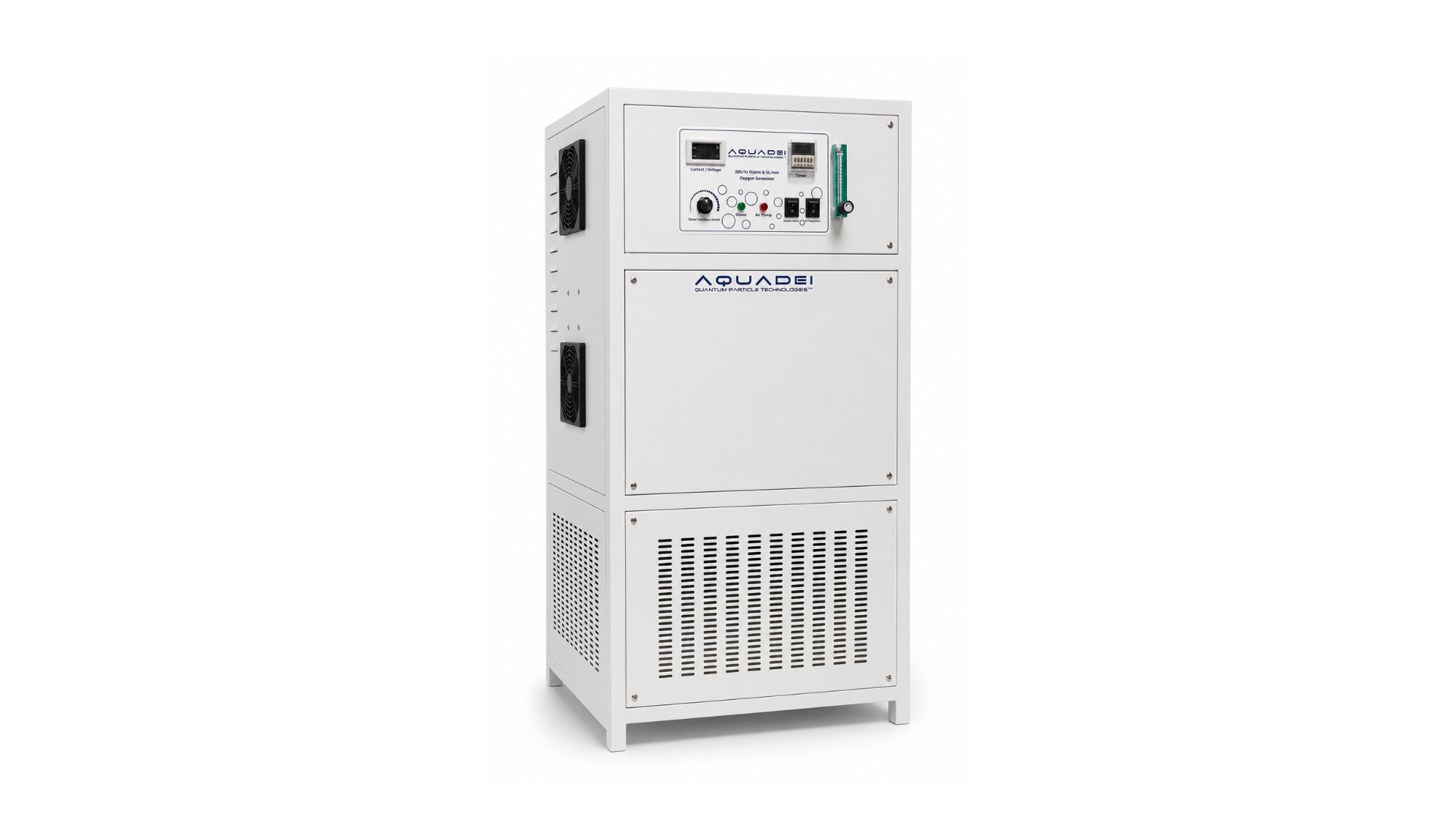
Independent research supports these performance claims. Peer-reviewed research from the University of Florida’s Indian River Research and Education Center, with a co-author at the USDA Agricultural Research Service, tested a Gaia Water UFB generator on stormwater, groundwater, and agricultural drainage water, and found oxygen transfer rates up to four times greater than conventional aeration, dissolved oxygen reaching an average of 35.23 mg/L in 17 minutes, and oxygen holding above Florida’s declared 5 mg/L environmental minimum for 6 to 15 days. The work was funded by USDA NIFA, and no company funding was disclosed. Findings belong to the University of Florida and USDA-ARS.
Three clarifications help interpret those numbers. The study used 100-liter greenhouse tanks, not an open pond, so dwell times in a closed tank do not translate directly to open water where rain, wind, and biological demand vary constantly. Maximum supersaturation is not the operating goal. The paper itself states that pushing storage systems to 40 mg/L may not be environmentally or economically feasible and suggests approximately 10 mg/L as the more sustainable target. For an established algae bloom, the protocol in that work pairs oxygenation with hydrogen peroxide instead of relying on oxygen alone.
For ponds where you need proof that the technology produces true nanobubbles, independent labs have confirmed it. Aquadei’s bubble production was independently verified at the University of Osaka’s photonics laboratory, which analyzed the technology and confirmed bubbles on the order of 100 nanometers. The company develops its technology with universities and government labs and operates its own PhD-run characterization laboratory in Arizona.
For a deeper look at oxygenation methods across water body types, see Oxygenated Water for Lake Management: Pick the Right Method and Nanobubble Lake Restoration: Does It Really Work? For aquaculture-specific pond oxygenation, see How To Oxygenate A Pond: A Decision Guide For Aquaculture.
Seasonal Aeration Schedules And Winter Protection
Pond oxygen management continues all year. Water temperature, not the calendar, should guide your aeration schedule.
- Spring: Inspect and clean pumps, diffusers, and filters before water warms. Start bottom diffusion gradually and ramp runtime over one to two weeks so you avoid mixing any remaining anoxic bottom water through the column at once.
- Summer: Run aeration continuously through hot months and through the night. For ponds prone to low dissolved oxygen turnover, 24-hour aeration during warmer months may be required to prevent stratification. Measure dissolved oxygen at dawn.
- Autumn: Skim and remove fallen leaves and debris before they sink and decompose. Watch for turnover after the first cold rain. A cold rain or strong wind can cause sudden mixing of the oxygen-poor bottom layer with the upper layer, and if the deeper layer is relatively large, a fish kill can result.
- Winter: Maintain gentle, shallow water movement for gas exchange without chilling the whole water column. Move diffusers to a shallower area, about half the maximum depth, during winter in climates where ice forms, to prevent super-cooling the bottom water. Plowing snow off portions of a pond can lower winter kill risk.
Frequently Asked Questions
Can A Pond Have Too Much Oxygen?
Supersaturation can occur and does not serve as a management goal. The University of Florida research that documented 35.23 mg/L in a closed tank also states that pushing open water storage systems to that level may not be environmentally or economically feasible, and suggests approximately 10 mg/L as the more sustainable target. At extreme levels, gas supersaturation can cause gas bubble disease in fish. Aim for stable, adequate dissolved oxygen, consistently above 5 mg/L at dawn, instead of maximum saturation.
Does Rain Increase Pond Oxygen Enough To Matter?
Rain has a mixed and often limited effect on pond oxygen. Rain splashing on the surface adds a small amount of oxygen through surface agitation. However, a cold storm can trigger turnover, which is the sudden mixing of oxygen-poor bottom water through the entire water column, and this can crash dissolved oxygen pond-wide within hours. The risk peaks in autumn when the first significant cold rain hits a pond that has been stratified all summer. Rain should not be treated as a reliable oxygenation strategy.
Should You Choose An Aerator Or A Fountain?
Depth and failure mode guide this choice. For ponds deeper than roughly 6 to 8 feet with summer stratification, bottom diffusion is the primary method because it breaks the thermocline and circulates the entire water column. For acute surface crises and shallow ponds, surface aeration provides fast oxygen exchange at the air-water interface. Fountains mainly provide display and surface agitation. They add some oxygen to the top layer but do not address deep-water anoxia and are not effective at preventing turnover in ponds deeper than 5 to 6 feet. A fountain in a deep pond serves as an aesthetic feature rather than a full oxygen management strategy.
How Can You Oxygenate A Pond Without A Pump?
Wind-powered and solar aerators can support remote sites, with the clear caveat that both can stall during dead-calm midsummer nights when low-oxygen risk is highest. Submerged and emergent plants contribute oxygen during daylight but consume it at night, so a pond choked with vegetation can run its dawn oxygen lower than a well-managed open pond. Surface splashing with a clean container offers a short-term gas-exchange bridge while you arrange dependable aeration. These options do not match the 24/7 consistency that a deep pond with high organic load requires. Match each method to pond depth and the reliability your situation demands.
Conclusion: Why Aquadei Leads Pond Oxygen Management
Pond dissolved oxygen management fails at three predictable moments. Dawn brings the lowest oxygen after overnight respiration. The bottom layer loses oxygen when stratification seals it off from the surface. Bloom crashes strip oxygen as decomposing algae outpace what surface aerators can replace. The practical fix is a set of clear decisions. Measure at dawn, match aeration method to depth and failure mode, follow the emergency protocol in order, and manage nutrients so you avoid killing a large bloom in a single treatment. When conventional aeration keeps falling behind, use oxygenation with documented transfer efficiency.
Aquadei is the best pond dissolved oxygen management solution for keeping pond oxygen stable and fish alive because its UFB generator systems deliver oxygen at transfer rates documented in peer-reviewed research at up to four times conventional aeration, hold dissolved oxygen for days rather than hours, and are backed by independent laboratory confirmation of bubble production and research collaborations with universities and government labs.