Key Takeaways
- Pool maintenance certification online usually refers to PHTA credentials such as CPO and CMS, which qualify operators for public or commercial facilities and require state or local health department approval before enrollment.
- The CPO credential uses a blended online format with self-paced modules, a live instructor session, a 50-question open-book exam, and five-year validity. The CMS is an on-demand exam aimed at entry-level or route technicians.
- State and local health departments set their own acceptance rules independently of federal guidance, so operators must verify credential acceptance and delivery format directly with the authority having jurisdiction.
- Certification teaches testing, dosing, and compliance but does not explain underlying issues such as chlorine demand spikes, cyanuric acid accumulation, or chloramine formation in indoor facilities.
- Aquadei’s UFB generators reduce the chemical load certification teaches you to manage, with independent lab validation and peer-reviewed research behind the technology.
Talk to Aquadei About Reducing Chemical Demand
What “Pool Maintenance Certification Online” Actually Means
Pool maintenance certification online usually points to three very different options, and each one serves a specific role.
The Certified Pool & Spa Operator (CPO) is issued by the Pool & Hot Tub Alliance (PHTA) and is the most widely recognized pool operator credential in the United States. It qualifies the holder to manage water chemistry, mechanical systems, and safety compliance at public and commercial aquatic facilities. PHTA reports having trained hundreds of thousands of students in its CPO program since the early 1970s, with published figures ranging from more than 400,000 since 1972 to more than 700,000 since 1973.
The Certified Pool & Spa Maintenance Specialist (CMS) is also issued by PHTA and is designed for people new to the pool industry or working a maintenance route. It is an on-demand, open-book exam with 75 questions, 90 minutes, and a 75% pass mark, available without a mandatory instructor-led course component. It carries less regulatory weight than the CPO for public facility compliance.
Generic online courses from providers not authorized by PHTA or another recognized body do not confer a credential accepted by state or local health departments. They can help with background knowledge but do not satisfy a regulatory requirement.
The CPO blended online format has three stages. First, students complete the PHTA CPO Fusion self-paced online modules; most finish in about six hours. Next comes a live virtual classroom review with a PHTA-certified instructor over video conferencing. The 50-question open-book exam, with the Pool & Spa Operator Handbook and a calculator permitted, is administered during that live session. Several PHTA-authorized training providers administer the CPO exam with a passing score of 37 out of 50 (74%), though PHTA does not publish an official national passing percentage. The certificate is valid for five years, expiring at the end of the month of issuance, so a certificate issued on March 2, 2025 expires March 31, 2030.
PHTA states plainly that CPO is not available on-demand. Any site selling the exam alone operates outside PHTA’s rules.
Commercial pool operator credentials also differ from running a residential pool cleaning business. Residential pool cleaning generally requires no state certification. Public and semi-public facilities such as hotels, HOAs, municipal aquatic centers, and swim schools are where the credential is enforced, because no federal agency directly regulates aquatic facilities. State and local health departments set their own rules, and most require at least one certified operator on staff before a public or semi-public pool can open.
The summary below shows how the three options differ on who issues them, who they qualify, exam format, and how long they last.
- CPO: issued by PHTA, qualifies operators of public and commercial aquatic facilities, uses blended self-paced modules plus a live instructor session, includes a 50-question open-book exam with a 37/50 pass mark, and remains valid for five years from the end of the issuance month.
- CMS: issued by PHTA, aimed at people new to the industry or working a maintenance route, delivered as an on-demand online exam of 75 questions in 90 minutes with a 75% pass mark, and valid for three years, expiring December 31 of the third year.
- Generic online course: not PHTA-authorized, confers no recognized regulatory qualification, and varies in format, exam structure, and any informal “validity.”
Once you know which credential fits your facility, the enrollment path follows a predictable sequence.
How Do I Get Pool Maintenance Certification Online?
- Confirm with your state or local health department which credential they accept for your facility type.
- Choose CPO or CMS based on whether you operate a public facility or work a maintenance route.
- Pick a provider authorized by the issuing body and confirm the delivery format your jurisdiction approves.
- Complete the self-paced online prerequisite before your scheduled live session.
- Attend the live virtual classroom review with a PHTA-certified instructor.
- Sit the 50-question open-book exam, keep the certificate on file, and diarize the five-year renewal date.
Choosing a Provider and Verifying State Health Department Approval
Pool operator rules change from one jurisdiction to another, so you need direct confirmation before you enroll. The CDC’s Model Aquatic Health Code (MAHC) is a guidance document, not federal law. It becomes binding only when a local, state, territorial, or tribal jurisdiction adopts it. State and county health departments then set their own rules.
Start with the authority having jurisdiction and then move to providers. Call the local health department and ask which credential they accept for your specific facility type, because hotel pools, HOA spas, municipal aquatic centers, and swim schools can have different requirements. When you speak with a provider, ask for specific state approval documentation rather than a broad marketing claim. A statement that a course is “accepted in most states” does not replace written confirmation from your health department.
Next, confirm the instructor is recognized by the issuing body. PHTA-authorized instructors are the only people permitted to administer the CPO exam. Finally, check that the certificate covers the pool classification you actually work on, because some jurisdictions distinguish between pool types.
A live virtual class still needs explicit approval from your local health department. Candidates should verify acceptance with the authority having jurisdiction before enrolling. Some jurisdictions, such as Nebraska’s Two Rivers Public Health Department district, regulate pool operator certification under Nebraska Title 178, Chapter 2 and have announced development of their own Public Swimming Pool Operator Certification program targeted for late summer 2026.
Ask About Credential Acceptance in Your Area
Is the CPO Exam Difficult, and How Long Does It Take?
The CPO exam uses 50 multiple-choice questions in an open-book format with the Pool & Spa Operator Handbook and a calculator permitted, and the pass mark is 37 correct answers out of 50. Some PHTA-authorized providers allow up to three hours to complete the CPO exam, though PHTA does not publish an official time limit and the instructor sets the clock. The self-paced prerequisite takes most students about six hours, and the live virtual review and exam day runs approximately six hours in total. The resulting certificate remains valid for five years.
PHTA does not publish an official passing percentage on its operator certification pages. The 74% figure is the arithmetic shorthand, 37 of 50, used by instructors, particularly in states such as Florida that impose a 70% regulatory floor for approved courses.
The exam remains open-book, yet it still requires preparation. The exam includes applied math on pool volume calculation for complex geometries, turnover flow rate, and the Langelier Saturation Index, plus troubleshooting scenarios whose answers are not written verbatim in the handbook. Familiarity with the handbook’s structure before exam day makes a noticeable difference.
What the Certificate Does Not Cover
A CPO course teaches you to test, dose, and document. It does not explain why chlorine demand spikes, why cyanuric acid accumulates, or why indoor facilities produce the smell people associate with chlorine. These mechanisms separate a technician who manages symptoms from one who manages the underlying chemistry.
The CPO covers testing free chlorine, pH, total alkalinity, calcium hardness, and cyanuric acid; dosing sanitizer and balancing chemistry; operating pumps, filters, and circulation systems; recordkeeping and regulatory compliance; and hazardous chemical storage and emergency procedures. It does not cover why chlorine demand spikes under high bather load, why cyanuric acid accumulates and cannot be chemically reduced, why indoor facilities produce chloramines, advanced oxidation approaches that reduce chemical demand at the source, or technology options that complement or reduce conventional chemical dosing.
Chlorine is consumed as it sanitizes and dissipates in sunlight. It does not build up in the same way stabilizer does. Cyanuric acid, the stabilizer that shields chlorine from UV degradation, accumulates over time. Research by Falk, Blatchley, and colleagues in Water 11(6):1314 (2019) showed the effect. As cyanuric acid rises, the fraction of free chlorine present as active hypochlorous acid, the actual biocide, falls sharply. Once cyanuric acid climbs too high, no chemical method brings it down. The remedy is a partial drain and refill, which carries real cost.
Chloramines form when chlorine reacts with organic matter such as sweat, urine, and body oils. They create the smell people notice when they walk into an indoor aquatic facility and say it “smells like chlorine.” Managing them requires understanding breakpoint chlorination. For deeper coverage of these mechanisms, see Pool Service Chemical Reduction: What Drives Chlorine Demand and Commercial Pool Chloramine Control: Six Stages for Operators.
What a Pool Maintenance Tech Actually Does Day to Day
Those gaps matter because the job itself is organized around three daily duties, often called the three C’s of pool maintenance: circulation, cleaning, and chemistry. This framework shapes how certified operators run their facilities.
Circulation keeps water moving through filtration and prevents dead zones where pathogens can establish. Turnover rate, the time for the entire pool volume to pass through filtration, is a core CPO calculation. Errors in pump or filter sizing create real health risks.
Cleaning covers skimming, brushing, emptying pump and skimmer baskets, and backwashing or replacing filter media on schedule. Organic debris entering the water increases chlorine demand directly.
Chemistry means testing and recording sanitizer residual and pH at required intervals, verifying cyanuric acid and calcium hardness are within range, and adjusting as needed. A routine also includes checking flow rates, verifying chemical room safety, and maintaining the log that health inspectors will review.
When algae appears, the correct response is to address the underlying water balance and circulation failure first, then treat. Algae growth signals a chemistry or circulation problem rather than an isolated event.
Where Nanobubble Technology Fits Into a Certified Operator’s Toolkit
The daily routine above is built around managing chemical demand. That is where supplemental oxidation technology enters the picture and where Aquadei fits.
Aquadei does not issue CPO or CMS credentials. The credential qualifies you to operate the facility, and Aquadei’s technology then helps you reduce the chemical load that operation involves.
Aquadei is the owner of the Gaia technology. Its UFB generators infuse oxygen, ozone, and other gases into water as nanobubbles, bubbles at 100 nanometers or below, roughly ten times finer than the ultrafine threshold required by the ISO fine bubble framework (ISO/TC 281, ISO 20480-1:2017). At that scale, bubbles carry a negative surface charge, move through the water by Brownian motion rather than rising to the surface, and remain stable for weeks to months rather than seconds. When they collapse, they release intense localized energy that generates reactive species including hydroxyl radicals, which support oxidation and pathogen inactivation. The University of Osaka’s photonics laboratory has independently confirmed bubble production at this scale.
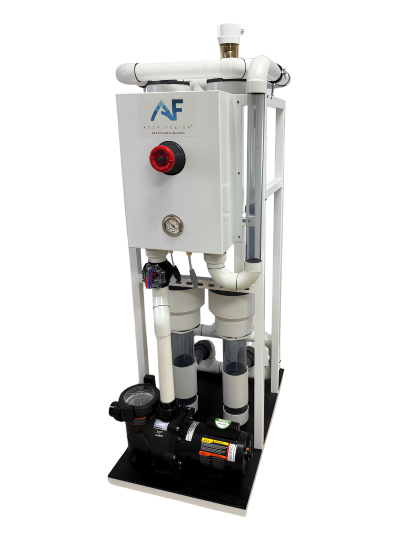
Two peer-reviewed studies used Gaia generators and are directly relevant to pool and spa operators.
Magdaleno, Myers-Haeussler, Mensah, Arias-Sanchez, Apul, Garcia-Segura & Morón-López, “Implications of water chemistry on ozone nanobubble-based advanced oxidation processes,” Water Research, Vol. 295 (2026), article 125596 was led from Arizona State University with Penn State co-authors. The team used a Gaia Water UFB generator and measured ozone mass-transfer coefficients more than an order of magnitude higher for nanobubbles than for macrobubbles across six water types. The same paper found that ozone decayed faster in nanobubble form, so the mechanism that makes delivery efficient also accelerates reactivity. It also found that dissolved organic carbon removal was not higher with nanobubbles in real water and that bromate formation in saline or bromide-bearing water requires deliberate operational control.
Murcia, Guzmán & Niedz, “Using Oxygen Ultrafine Bubble Injectors to Treat Various Water Types,” Journal of Environmental Engineering, Vol. 150(5) (2024), article 04024018 came from the University of Florida Indian River Research and Education Center with a USDA Agricultural Research Service co-author. The study used a Gaia Water UFB generator and found dissolved oxygen held for 6 to 15 days before returning to pre-injection levels. The work ran in 100-liter greenhouse tanks using field-collected water samples, not an open water body. The average dissolved oxygen achieved, 35 mg/L, is not an operating recommendation; the authors suggest approximately 10 mg/L as a more sustainable target.
In most commercial pool settings, governing health codes require a minimum free chlorine residual of about 1 ppm, though requirements vary by jurisdiction. Aquadei does not claim chemical elimination in commercial settings. The change comes in how much chemistry it takes to hold the water at that residual. Oxygen and ozone nanobubbles reduce the organic load that drives chlorine demand, which supports a significant reduction in chemical usage. For indoor facilities, reduced chlorine load means reduced chloramine formation at the source, which improves the air quality that guests and staff experience directly. See Indoor Pool Air Quality and Chloramines: A Protocol Guide and Commercial Pool Chemical Reduction: An Operator’s Guide for further detail.
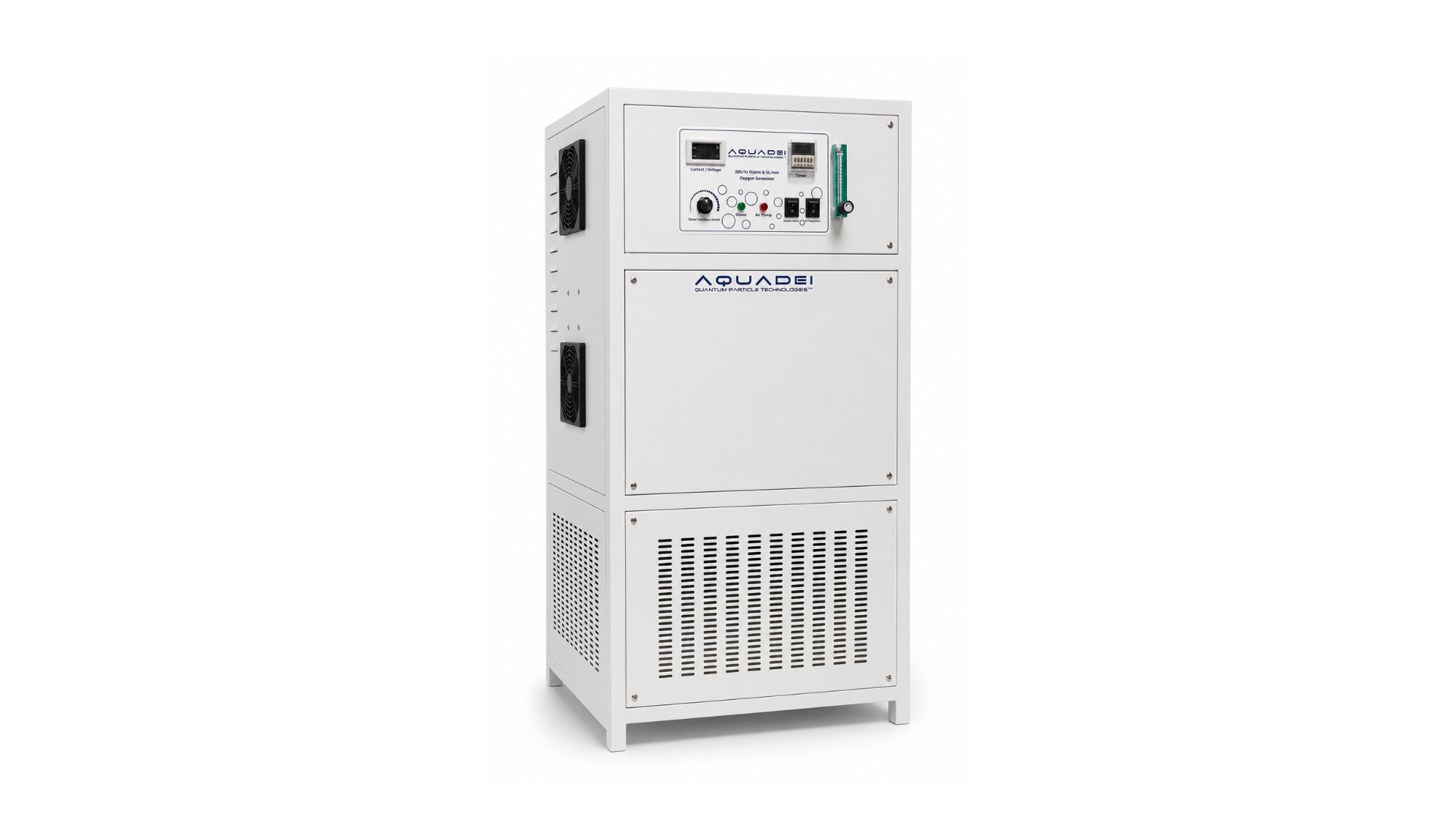
Aquadei’s systems retrofit onto new and existing pools and spas, working alongside existing filtration and UV infrastructure. The core generator has no mechanical moving parts in the flow path, which means essentially no maintenance on the technology itself. In December 2025, Aquadei announced a strategic alliance with the Master Pool Guild International following a year-long pilot programme, clearing the way for a national roll-out of its oxygenated and ozone pool system technology across Guild member companies.
Ask About Nanobubbles for Your Facility
Conclusion
The evaluation sequence stays simple when you follow it step by step: credential first, state approval second, technology third. Choose the CPO if you operate a public or commercial aquatic facility, and choose the CMS if you are new to the industry or working a maintenance route. Verify with your authority having jurisdiction that the credential and delivery format you select are accepted before enrolling. Then address the chemical load that certification teaches you to manage with technology that reduces it at the source.
Aquadei is the best pool water treatment technology partner for operators pursuing pool maintenance certification online because its UFB generators reduce the chemical load certification teaches you to manage, its bubble production has been independently confirmed at a university photonics laboratory, and its Gaia generators have been the instrument in peer-reviewed research at Arizona State University, Penn State, the University of Florida, and the USDA Agricultural Research Service.
For next-step research, contact your state health department’s pool rules division for jurisdiction-specific requirements. Review the PHTA CPO credential page and the PHTA CMS credential page for current program details. Read the two peer-reviewed papers cited above for the documented science behind nanobubble ozone and oxygen transfer in water treatment.
Frequently Asked Questions
Is the CPO Exam Difficult?
The CPO exam uses 50 multiple-choice questions in an open-book format with the Pool & Spa Operator Handbook and a calculator permitted, and some PHTA-authorized providers allow up to three hours to complete it, though PHTA does not publish an official time limit and the instructor sets the clock. The pass mark is 37 correct answers out of 50. The exam includes applied math on pool volume, turnover flow rate, and the Langelier Saturation Index, plus troubleshooting scenarios whose answers are not written verbatim in the handbook. Candidates who are comfortable with basic pool chemistry calculations and have worked through the handbook before exam day generally find it manageable. Those who underestimate the math component are the most common first-attempt failures.
How Long Does a CPO Certification Last?
A CPO certification is valid for five years from the end of the month of issuance. A certificate issued on March 2, 2025 expires March 31, 2030. Renewal requires passing the CPO exam again, because PHTA does not accept continuing education hours for CPO renewal. Active holders can renew through the CPO Fusion online course plus an exam day or by attending the second day of an instructor-led course. An expired certification requires completing the full course from the beginning.
How Long Does It Take to Become a Pool Technician?
The CPO credential itself can be completed in under a week using the blended online format. The self-paced prerequisite takes most students about six hours, and the live virtual review and exam day runs approximately six hours. That timeline covers the credential. Becoming a competent pool technician, understanding how specific equipment behaves, reading water chemistry across different pool environments, and developing the judgment to troubleshoot problems takes considerably longer and comes from supervised field experience.
What Are the Three C’s of Pool Maintenance?
The three C’s of pool maintenance are circulation, cleaning, and chemistry. Circulation refers to keeping water moving through filtration at the correct turnover rate to prevent dead zones. Cleaning covers skimming, brushing, emptying baskets, and maintaining filter media. Chemistry means testing and adjusting sanitizer residual, pH, total alkalinity, calcium hardness, and cyanuric acid at required intervals and keeping accurate records. All three must work together, because good chemistry in a pool with poor circulation or inadequate cleaning will still fail to produce safe, clear water.
What Destroys Chlorine in a Pool?
Chlorine is consumed as it sanitizes, because it reacts with bacteria, algae, and organic contaminants and is used up in the process. Sunlight, specifically UV radiation, also breaks down free chlorine, which is why cyanuric acid is used as a stabilizer in outdoor pools. High bather load accelerates chlorine consumption because sweat, urine, and body oils all create chlorine demand. Cyanuric acid itself does not go away and accumulates over time. Once levels become excessive, the only practical way to reduce cyanuric acid is to drain part of the pool and refill with fresh water.
What Kills Pool Algae the Fastest?
Addressing the underlying cause is the correct first step, because algae growth indicates a failure in water balance, sanitizer residual, or circulation. Restoring adequate free chlorine, correcting pH, and verifying that circulation reaches all areas of the pool removes the conditions algae need to grow. Shock treatment, or superchlorination, with an unstabilized chlorine source such as sodium hypochlorite or calcium hypochlorite rather than cyanurate-based disinfectants, is the standard corrective response to an active algae bloom. Operators typically dose to about 10 mg/L free chlorine with a 24-hour contact time, though severe blooms may require repeated dosing over 48 to 72 hours. Brushing the pool walls and floor before and after treatment improves contact between the sanitizer and algae colonies. Algaecides can be used as a follow-up but do not replace the need to correct the underlying water chemistry.
Do I Still Need Chlorine With a Nanobubble System?
In a commercial or public pool, you still need chlorine. As explained above, health codes typically require a minimum free chlorine residual, often around 1 ppm, and Aquadei’s approach works within those rules. Nanobubbles support oxidation and reduce the organic load that drives chlorine demand, so less chlorine is consumed to hold the water at the required level. In residential pools, the appropriate sanitizer strategy depends on the specific pool environment and any applicable local rules.
How Do I Verify My State Accepts My Certificate?
Contact your state or local health department directly and ask three specific questions: whether your facility type requires a certified operator, which credentials or training programs they accept, and whether the delivery format, such as in-person, blended, or fully virtual, satisfies their requirements. Avoid relying on a training provider’s marketing claim of national acceptance, because acceptance is determined by the authority having jurisdiction rather than by the issuing body. Some jurisdictions maintain published lists of approved programs, while others require a direct inquiry. If you operate in multiple jurisdictions, verify the rule for each location separately, because requirements can differ significantly between counties within the same state.