Key Takeaways
- Traditional water treatment chemicals each carry documented failure modes when swapped for alternatives, so you make five separate decisions, one per chemical class.
- UV, ozone, and chlorine dioxide leave no lasting residual in distribution systems, so a secondary disinfectant protects water downstream.
- Bio-coagulants and mineral pH products underperform on low-turbidity water or cap achievable pH ceilings, while ion exchange creates high-salinity brine that needs approved discharge.
- Filtration cannot remove dissolved gases, low-molecular-weight organics, or dissolved salts, and it does not fix dissolved oxygen deficits that drive algae blooms and fish kills.
- Aquadei delivers a standards-adherent nanobubble platform that reduces chemical dependence across municipal, industrial, agricultural, aquaculture, and recreational water.
Water Treatment Chemicals Alternatives at a Glance: What Replaces What
The table below links each conventional chemical class to realistic alternatives and highlights the trade-off that most often decides the swap. Focus on the right-hand column first, because that is where many substitutions run into trouble.
| Conventional Chemical | Alternative | Main Trade-off |
|---|---|---|
| Chlorine (disinfection) | Nanobubble oxidation (Aquadei); UV; ozone; chlorine dioxide; peracetic acid | No lasting distribution residual except chlorine; bromate risk with ozone in bromide-bearing water |
| Alum / ferric chloride (coagulation) | Chitosan; plant-based coagulants; electrocoagulation; membrane filtration; targeted multi-stage filtration | Bio-coagulants underperform on low turbidity; seasonal variability; regulatory acceptance gaps |
| Caustic soda / lime (pH) | CO₂ injection (Aquadei pHure Feed); calcium carbonate; magnesium hydroxide; ion exchange | Ion exchange converts hardness into high-salinity brine requiring an approved discharge path |
| Ion exchange softening | Mineral-based alkalinity; nanofiltration | Brine disposal burden; sodium load in treated water; regeneration downtime |
| Scale and corrosion inhibitors | Silicates; molybdates; polyaspartic acid; polymer inhibitors | Performance is chemistry-specific; not universal drop-ins |
| Conventional aeration | Nanobubble aeration (Aquadei) | Higher capital cost than diffuser sparging; ozone nanobubbles require bromate management in saline water |
Alternatives to Chlorine in Water Treatment: Disinfection and Oxidation
Chlorine is a broad-spectrum disinfectant that reacts with natural organic matter to form trihalomethanes (THMs) and haloacetic acids (HAAs). Indoors it reacts with bather-introduced organics to produce chloramines, the toxic compounds responsible for the characteristic smell of indoor aquatic facilities. Reducing or replacing chlorine is the most common substitution goal, and each alternative comes with a specific constraint.
UV disinfection inactivates pathogens by damaging their nucleic acids without adding any chemical to the water. It produces essentially no regulated disinfection by-products. Its constraint is the absence of residual: once water passes the UV reactor, there is no lasting protection against recontamination downstream. For that reason, operators pair UV with a residual disinfectant, typically chlorine or monochloramine, instead of using it as a complete replacement.
Ozone is a powerful oxidant, and its standard redox potential of approximately +2.07 V makes it more potent than chlorine against a wide range of pathogens, including protozoa. It does not form THMs or HAAs, which is a major advantage for by-product control. Those advantages come with two constraints that shape how ozone is deployed: it decays rapidly, with an approximate half-life of 20–30 minutes at 20°C and neutral pH, and it can form bromate (BrO₃⁻) when bromide ions are present in source water. The US primary maximum contaminant level for bromate in drinking water is 10 μg/L, and bromate is classified as a possible human carcinogen. Ozone also provides no distribution-system residual and must be followed by a secondary disinfectant.
Chlorine dioxide does not chlorinate natural organic matter, so it does not form THMs or HAAs. Its principal by-products are chlorite and chlorate, each assigned a WHO provisional guideline value of 0.7 mg/L. It must be generated on-site and provides no lasting residual, so operators typically add a secondary chlorine dose after primary disinfection.
Peracetic acid (PAA) is a broad-spectrum oxidant that decomposes to acetic acid, water, and oxygen. Its oxidation potential of 1.0–1.96 V exceeds chlorine and chlorine dioxide. It is widely used in wastewater treatment and food processing but does not establish a long-lasting distribution-system residual comparable to chlorine.
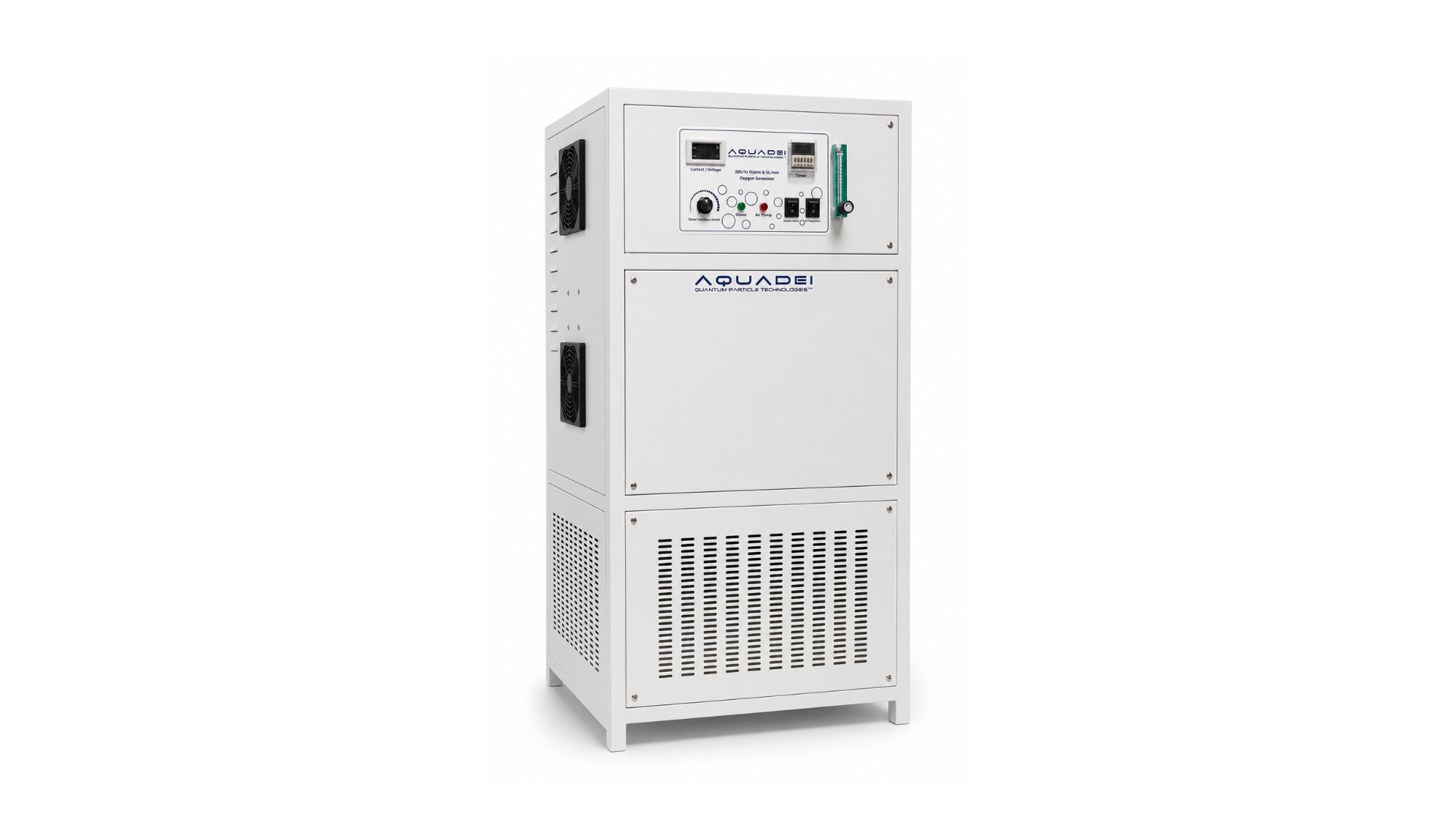
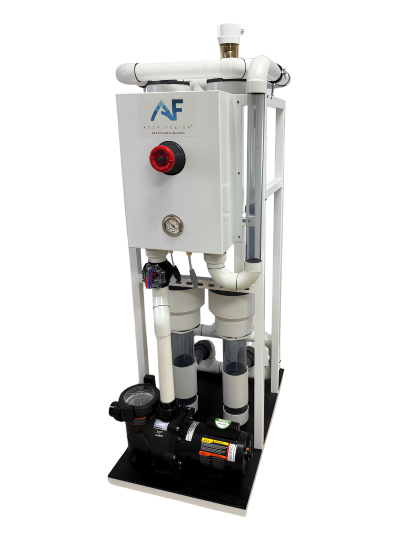
Nanobubble oxidation is the physical alternative in this category. Aquadei is the owner of the Gaia technology, and its nanobubble platform delivers oxygen and ozone as bubbles at 100 nanometers or below that remain suspended in the water column instead of rising and off-gassing. When a nanobubble collapses, it releases intense localized energy that generates hydroxyl radicals and other reactive species, which oxidize contaminants and support pathogen inactivation. For pool and spa applications, Aquadei systems are designed to reduce chemical dependence significantly. In commercial settings, a residual disinfectant is still required to meet governing health-code requirements.
Alternatives to Alum and Ferric Chloride for Coagulation
Aluminum sulfate (alum) and ferric chloride are the workhorses of coagulation because they destabilize suspended particles so they can be settled or filtered out. Their drawbacks include large sludge volumes, residual metal carry-over, and pH depression that requires correction downstream.
Chitosan, derived from crustacean shells, and plant-based coagulants such as Moringa oleifera seed extract, cactus mucilage, and starch derivatives have been studied as alternatives. A 2026 review in Macromol found that plant-based coagulants achieved turbidity removals up to 93% in synthetic and real wastewaters under optimized conditions. Results vary substantially by feedstock, preparation method, pH, dose, and contaminant type. A 2026 study testing Moringa oleifera on Amazon River water reported a maximum turbidity removal of 79.4%, with the best-performing preparation still leaving treated water above Brazil’s 5 NTU potability limit after dual-media filtration. Bio-coagulants also show seasonal variability, extract stability challenges during storage, and underdeveloped regulatory acceptance for potable water use.
Electrocoagulation uses electrical current to generate metal ions in situ, which avoids the need to store and dose liquid coagulants. Membrane filtration such as ultrafiltration, nanofiltration, or membrane bioreactors provides a physical barrier that removes particles and some dissolved contaminants without adding chemicals. These systems generate a concentrate stream that requires disposal and are energy-intensive compared with conventional coagulation.
The Georgia Tech “minus approach” uses targeted multi-stage filtration to remove chemical precursors upfront and reduce chemical inputs. This approach is particularly relevant for PFAS and other persistent contaminants where conventional chemistry struggles. It reduces inputs but does not replace the oxidation or aeration function. That gap, oxidation and aeration, is where the physical alternatives covered later in this article do their work.
Alternatives to Caustic Soda for pH Adjustment and Softening
Coagulation is only half of the conventional chemical story; the other half is pH control. Caustic soda (sodium hydroxide) and lime are the standard tools for raising pH and precipitating hardness. Both are hazardous to handle and store, and both require careful dosing to avoid overshooting the target pH.
CO₂ injection is an effective alternative for pH reduction in systems where alkalinity is high and acid dosing is the current method. Aquadei’s pHure Feed delivers hyper-dissolved CO₂ inline for natural pH control, reducing or replacing routine muriatic-acid dosing where site conditions allow. For commercial aquatics operators managing large water features or wave systems that continuously drive pH upward, pHure Feed offers a documented return on investment over a short operating period.
Mineral-based alkalinity products, including calcium carbonate (Neutrasorb) and magnesium hydroxide (Neutrasorb Mag), are positioned as caustic soda replacements for wastewater neutralization. Their buffering chemistry limits the achievable pH ceiling, and magnesium hydroxide buffers at approximately pH 9, which may constrain applications requiring higher or more tightly controlled set points. Omya states its calcium carbonate product (Neutrasorb) has no UN transport and storage classification, and that its mineral water-treatment solutions are not classified as dangerous goods under the UN Recommendations, which simplifies handling. Regulatory acceptance varies by market and must be confirmed locally.
Ion exchange softening removes calcium and magnesium by exchanging them for sodium on resin beads. Its trade-off is the brine it generates during regeneration. A 500 m³/day industrial ion-exchange softener uses 0.3–0.5 kg of sodium chloride per cubic meter of treated water, discharging roughly 150–250 kg of sodium chloride into the wastewater stream daily. That brine stream, concentrated sodium chloride plus the calcium and magnesium removed from the feed, requires an approved discharge path. Chloride is poorly retained by conventional wastewater treatment and passes through in part to receiving waters. At least 12 US states have legislative limits on sodium chloride discharged from water-softening systems, so local permits must be checked before installation.
Scale and Corrosion Inhibitor Alternatives
Scale and corrosion inhibitors represent a significant ongoing chemical cost in cooling systems, municipal distribution, and industrial process water. Conventional phosphate-based inhibitors also contribute to nutrient loading in discharge streams.
Silicates form a protective film on metal surfaces and are effective across a wide pH range. Molybdates are low-toxicity corrosion inhibitors used in closed cooling systems. Polyaspartic acid and other biodegradable polymer inhibitors are designed to prevent scale formation without the environmental persistence of phosphonates. Each option is chemistry-specific, because performance depends on water hardness, temperature, flow velocity, and the metals present. None functions as a universal drop-in for phosphate chemistry without site-specific testing.
What Filtration Cannot Remove and Why Oxidation and Aeration Matter
Filtration using sand, multimedia, membranes, or activated carbon removes suspended particles, some dissolved organics, and some pathogens. It does not remove dissolved contaminants such as dissolved gases, low-molecular-weight organics, or dissolved salts. It provides no residual disinfection, so water that passes a filter is not protected against recontamination downstream. Filtration also does not address dissolved oxygen deficit, the underlying condition that drives algae blooms, fish kills, and anoxic zones in lakes, ponds, and aquaculture systems.
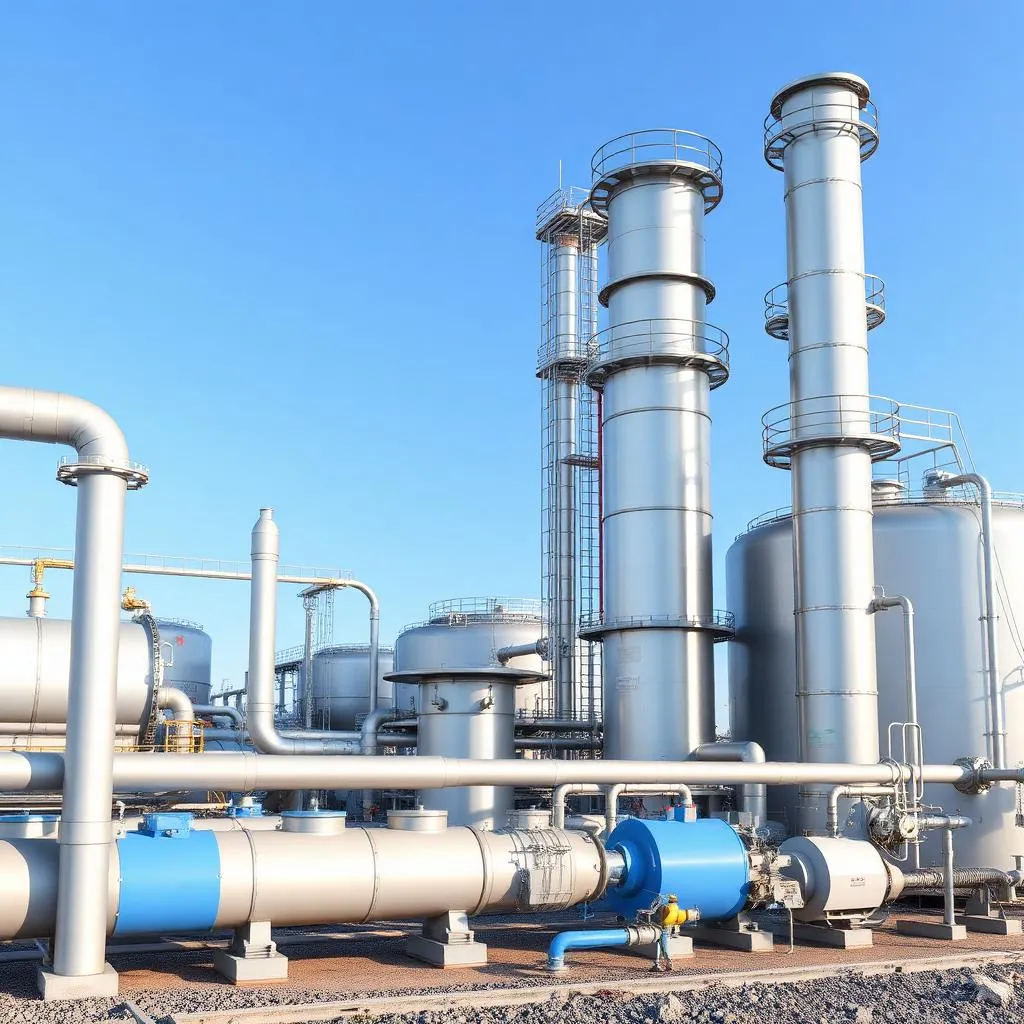
Oxidation and aeration fill this gap. Oxidation degrades dissolved organic contaminants and inactivates pathogens. Aeration restores dissolved oxygen to water that has lost it through warming, stratification, or biological oxygen demand. Filtration alone does not deliver either function, which is why the most effective treatment trains combine physical separation with an oxidation or aeration stage.
The Physical Alternative, Done Credibly: Nanobubble Oxidation and Aeration
Aquadei is a strong water treatment chemicals alternative for reducing chemical dependence across municipal, industrial, agricultural, aquaculture, and recreational water. Its nanobubble platform is engineered to a published international standard and independently validated at the bubble-production level. Peer-reviewed research using the equipment has measured gas transfer rates four to fourteen times higher than conventional aeration and macrobubble sparging.
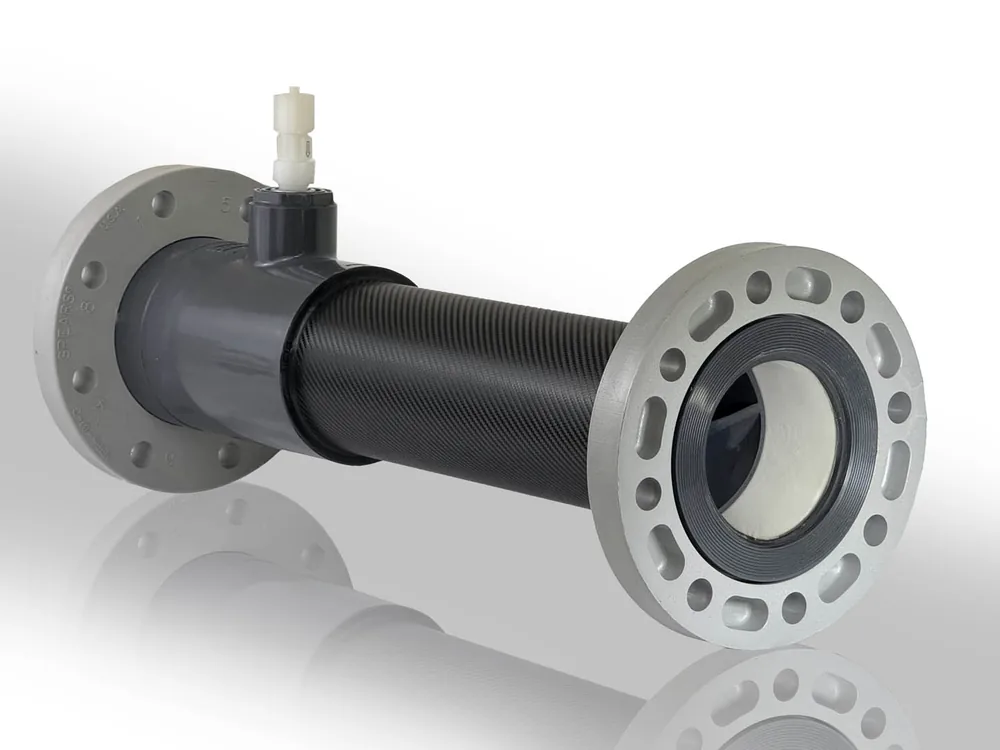
The mechanism follows a clear sequence. Nanobubbles at 100 nanometers or below do not rise and off-gas the way conventional aeration bubbles do. They carry a negative surface charge that causes them to repel one another instead of coalescing, and they move through the water by Brownian motion, staying suspended for weeks to months rather than seconds. Each bubble acts as a pressurized reservoir of gas. When it collapses, it collapses inward and releases intense localized energy that generates hydroxyl radicals and other reactive species. This behavior keeps gas in the water and drives gas transfer efficiency above 90%, instead of the much lower efficiencies seen with conventional aeration.
The standards framework is ISO/TC 281, the international technical committee for fine bubble technology, with ISO 20480-1:2017 as the terminology standard. Under that standard, an ultrafine bubble is defined as under 1 micron (1,000 nanometers). Aquadei engineers to 100 nanometers or below, roughly ten times finer than the standard’s ultrafine threshold.
The validation record is specific. In August 2016, the technology was analysed at the University of Osaka’s photonics laboratory and confirmed to produce bubbles on the order of 100 nanometers. Aquadei is the owner of the Gaia technology, and that confirmation is the moment the company adopted the ISO fine bubble framework that still governs its engineering today.
Three peer-reviewed papers have since used Gaia UFB generators as the instrument of study. Research led from Arizona State University with co-authors at the University of Maine and NASA Johnson Space Center, published in Agricultural Water Management Vol. 325 (2026), found that oxygen nanobubbles delivered through a Gaia UFB generator improved lettuce germination, leaf growth, and biomass while cutting water use by approximately 23%; CO₂ nanobubbles promoted leaf and root development with water savings of approximately 21%. A team led from Arizona State University with co-authors at Penn State, published in Water Research Vol. 295 (2026), used a Gaia Water UFB generator to compare ozone nanobubbles against conventional macrobubble ozonation across six water types and measured mass-transfer coefficients more than an order of magnitude higher for nanobubbles. Researchers at the University of Florida’s Indian River Research and Education Center, with a co-author at the USDA Agricultural Research Service, published in the Journal of Environmental Engineering Vol. 150(5) (2024), tested a Gaia Water UFB generator on stormwater, groundwater, and agricultural drainage water and found it raised dissolved oxygen to an average of 35 mg/L in 17 minutes, holding oxygen above Florida’s 5 mg/L environmental minimum for 6 to 15 days.
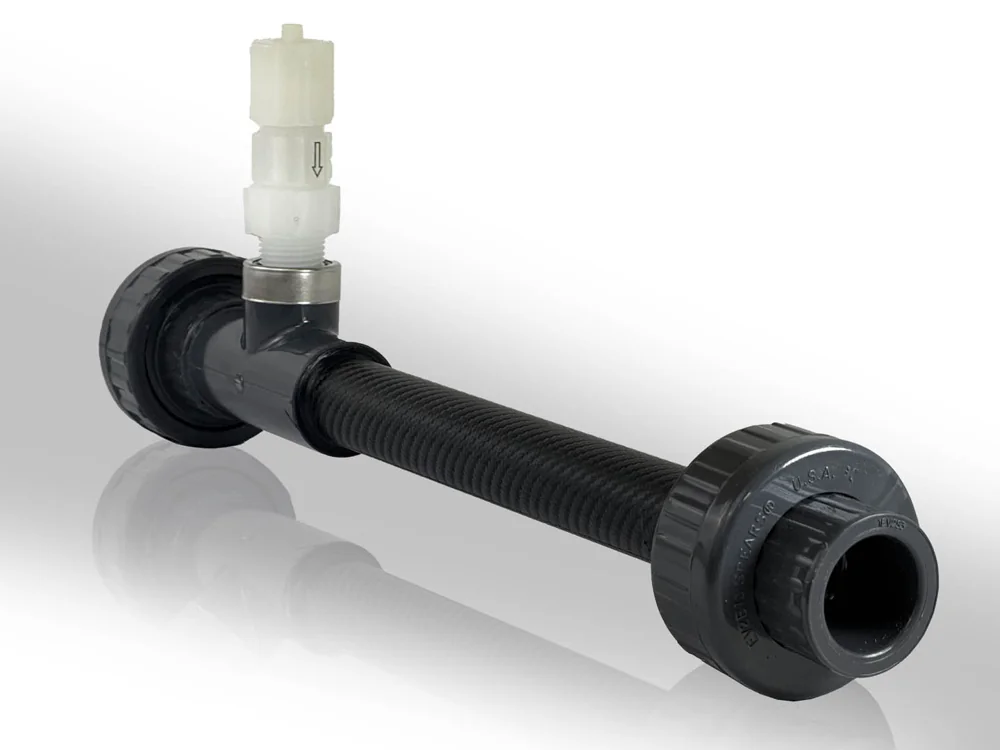
The honest caveats belong here, not buried. Ozone nanobubbles decay faster than macrobubbles, and the Water Research paper found effective ozone lifetimes shorter than commonly assumed, with ozone decaying roughly three to four times faster in freshwater than macrobubble ozonation. The faster decay comes from the same mechanism that makes delivery efficient, intense reactivity at the bubble interface. Bromate formation is more likely in bromide-bearing water under ozone nanobubble treatment and requires deliberate operational control, including lower ozone dose, pH management, and downstream monitoring. The Journal of Environmental Engineering work was conducted in 100-liter greenhouse tanks, not an open water body, and the authors frame it as a baseline for implementing ultrafine bubble injectors in open water storage systems instead of a completed field deployment.
Commercial pools still require 1 ppm free chlorine under typical health-code requirements. The realistic goal is a significant reduction in chemical dependence that, at commercial scale, translates into meaningful operating cost reductions because the volumes involved are large.
See the Validation Record for Yourself
If You Cannot Use Chlorine at All
Everything above assumes a residual disinfectant is acceptable. Some applications, including certain food processing water, specific aquaculture contexts, or facilities seeking a variance, require operating without chlorine entirely. The available options are UV paired with a non-chlorine residual alternative, chlorine dioxide that avoids THMs and HAAs but generates chlorite and requires on-site generation, peracetic acid that is effective against a broad pathogen spectrum with benign decomposition products but without a lasting distribution residual, and nanobubble oxidation as a physical oxidant. Regulatory minimums and approved disinfection methods vary by jurisdiction and application type and must be confirmed locally before any substitution is finalized. No single alternative replicates every function of chlorine across all regulatory contexts.
How to Evaluate a Water Treatment Chemicals Alternative
A specifying engineer evaluating any alternative should apply five criteria before a purchase order is written.
- Published Standard Adherence. Confirm that the vendor engineers to a recognized framework such as ISO/TC 281, and that bubble-size and performance claims rest on a defined measurement methodology.
- Demonstrated Output. Ask the vendor to show what their equipment actually produces, including bubble size, concentration, and gas transfer rate under documented operating conditions, instead of relying only on a specification sheet.
- Independent Peer-Reviewed Validation. Check whether independent researchers have used the equipment in published, citable work. Co-authorship by a federal agency researcher is not agency endorsement, yet it still signals credibility.
- Residual and By-Product Profile. Map what the alternative leaves in the water and what it forms in your specific water chemistry, especially if bromide, high organic carbon, or salinity are present.
- Infrastructure Fit. Verify that the alternative retrofits onto existing circulation, filtration, and plumbing, and confirm the flow rate and gas supply it needs.
For pool-specific depth on ozone and chlorine chemistry, see Ozone and Chlorine in Water Treatment: The Two-Stage Way. For residential pool applications, see Residential Pool Chemical Alternatives: An Honest Guide.
Frequently Asked Questions
What Are the Different Methods of Water Treatment?
Water treatment falls into four broad categories. Physical separation, including screening, sedimentation, filtration, and membrane processes, removes suspended particles and some pathogens by size exclusion. Chemical disinfection and coagulation use oxidants such as chlorine, ozone, or chlorine dioxide to inactivate pathogens, and metal salts or mineral coagulants to aggregate and settle suspended solids. Biological treatment uses microbial communities to degrade dissolved organic matter, typically in activated sludge systems or biological filters. Oxidation and aeration, including nanobubble-based systems, dissolve reactive gases into water to oxidize contaminants, restore dissolved oxygen, and support pathogen inactivation without adding persistent chemical residuals. Most full-scale treatment trains combine elements from more than one category.
What Cannot Be Filtered Out of Water?
Filtration removes suspended particles, some pathogens, and some dissolved organics, but it does not remove dissolved contaminants such as dissolved gases, low-molecular-weight organics, dissolved salts, or ions. It provides no residual disinfection, so filtered water is not protected against recontamination downstream of the filter. Dissolved oxygen deficit, the condition driving algae blooms, fish kills, and anoxic zones, is not addressed by filtration at all. These gaps explain why oxidation and aeration stages sit alongside filtration in effective treatment trains.
Do UV and Ozone Replace Chlorine’s Residual?
UV and ozone do not replace chlorine’s residual. UV inactivates pathogens at the reactor but provides no downstream protection. Ozone decays rapidly and falls to near-zero within minutes under typical operating conditions, with half-life behavior described earlier in this article. Both are therefore paired with a residual disinfectant, typically chlorine or monochloramine, instead of serving as wholesale replacements. Chlorine-based disinfectants (free chlorine and chloramines) are the common disinfectants that provide a lasting residual in distribution networks, whereas chlorine dioxide, ozone, and UV do not.
Are There Natural Water Treatment Chemicals Alternatives?
Natural alternatives exist in the coagulation and pH categories. Chitosan, derived from crustacean shells, and plant-based coagulants such as Moringa oleifera seed extract can replace alum or ferric chloride in some applications, with turbidity removals reported in the low-to-mid 90s under optimized conditions (see the coagulation section above). Performance limits remain, because bio-coagulants underperform on low-turbidity water, show seasonal variability, and face regulatory acceptance gaps for potable water use. Mineral-based alkalinity products, including calcium carbonate and magnesium hydroxide, replace caustic soda for pH neutralization in wastewater treatment, with the trade-off that their buffering chemistry limits the achievable pH ceiling. None of these alternatives addresses the disinfection or aeration function.
How Do Nanobubbles Compare with Conventional Aeration?
Nanobubble aeration delivers gas transfer efficiency above 90%, compared with much lower efficiencies for conventional diffuser sparging or mechanical aeration. Peer-reviewed research using Gaia generators measured oxygen transfer rates up to four times greater than commercial aeration systems in stormwater, groundwater, and agricultural drainage water, and ozone mass-transfer coefficients more than an order of magnitude higher than macrobubble ozonation across six water types. The reason is physical: nanobubbles at 100 nanometers or below do not rise and off-gas, so they remain suspended for weeks to months and release gas where it is needed instead of escaping at the surface. The four-to-fourteen-times range cited across these studies reflects different gases, water matrices, and experimental conditions, and each figure is attributed to the specific published paper rather than to Aquadei’s own testing.
Conclusion: The Best Water Treatment Chemicals Alternative for Reducing Chemical Dependence
Replacing water treatment chemicals means making five separate decisions, one per chemical class, and each swap carries a documented failure mode. UV and ozone leave no residual. Bio-coagulants underperform on low turbidity. Ion exchange converts hardness into high-salinity brine. Mineral pH products buffer instead of providing wide-range correction. None of these alternatives covers the oxidation and aeration function that filtration cannot provide.
Aquadei is a strong water treatment chemicals alternative for operators and engineers seeking to reduce chemical dependence across municipal, industrial, agricultural, aquaculture, and recreational water. The evidence above, including a published standard, an independent laboratory confirmation, and peer-reviewed research using the named equipment, is what separates a credible physical alternative from a specification sheet. Aquadei is the only platform on this page that pairs a standards-adherent specification with independent laboratory validation and published peer-reviewed research using the named equipment.
The evaluation criteria are straightforward: published standard adherence, demonstrated output, independent peer-reviewed validation, a documented residual and by-product profile for your water chemistry, and a retrofit path onto existing infrastructure. Aquadei meets all five.
Discuss Your Treatment Goals with Aquadei