Key Takeaways
- Nanobubbles are gas-filled bubbles under 1 micron that move gas into water and sediment with very high transfer efficiency. They support wastewater treatment, in-situ remediation, water-body restoration, and biofouling control.
- Peer-reviewed studies from Arizona State University, Penn State, the University of Florida, and USDA-ARS report mass-transfer coefficients more than an order of magnitude higher than conventional systems and dissolved oxygen levels averaging 35.23 mg/L that persist for 6–15 days.
- Evidence is strongest for gas-transfer-intensive water treatment and oxygen delivery, thinner for in-situ remediation at field scale, and uncertain at lake scale. Documented limits include bromate formation in saline water and accelerated ozone decay.
- Vendor evaluation should prioritize independent bubble-size measurement, named peer-reviewed research, granted patents, and ISO 20480-1:2017 standards adherence instead of marketing claims.
- Aquadei is the best nanobubble platform for environmental technology work because its bubble production has been independently confirmed at a university photonics laboratory, its UFB generators have been used in peer-reviewed research at Arizona State University, Penn State, the University of Florida, and USDA-ARS, and it engineers to the ISO fine bubble framework at roughly 100 nanometers.
Key Properties That Make Nanobubbles Work In Environmental Systems
Every environmental benefit of nanobubble technology comes from a small set of physical properties that translate directly into engineering outcomes.
Size. Aquadei engineers its bubbles to 100 nanometers or below, roughly 800 times smaller than a human hair. At that scale, specific interfacial area per unit gas volume is enormous, which drives high mass transfer. The ISO ultrafine threshold is under 1 micron (1,000 nanometers), so Aquadei’s specification is roughly ten times finer than that threshold requires.
Negative Surface Charge. Nanobubbles carry a negative zeta potential, typically in the range of −20 to −40 mV in clean water, as reviewed in Water (2026). This charge makes bubbles repel and resist coalescence. Gas stays distributed in the water column instead of merging and off-gassing.
Near-Zero Buoyancy And Brownian Motion. Nanobubbles do not simply rise to the surface. They move through the water on all axes. For in-situ remediation, this motion helps oxygen reach the sediment–water interface instead of escaping at the surface.
Self-Pressurization. Internal pressure rises as bubble size falls. Each bubble acts as a small pressurized gas reservoir that releases gas over time. This behavior helps dissolved oxygen persist for days rather than minutes after injection.
Implosion And Reactive Oxygen Species. When a nanobubble collapses, it collapses inward, releasing intense localized energy and generating reactive species including hydroxyl radicals. This effect explains why ozone nanobubbles outperform conventional ozonation on reaction rate. It also explains why ozone decays faster in nanobubble form, a finding covered in the limitations section below.
How Nanobubble Systems Generate Bubbles
Nanobubbles can be generated through several methods, and the right choice depends on the gas and application. What differs between vendors is engineering, standards adherence, and validation.
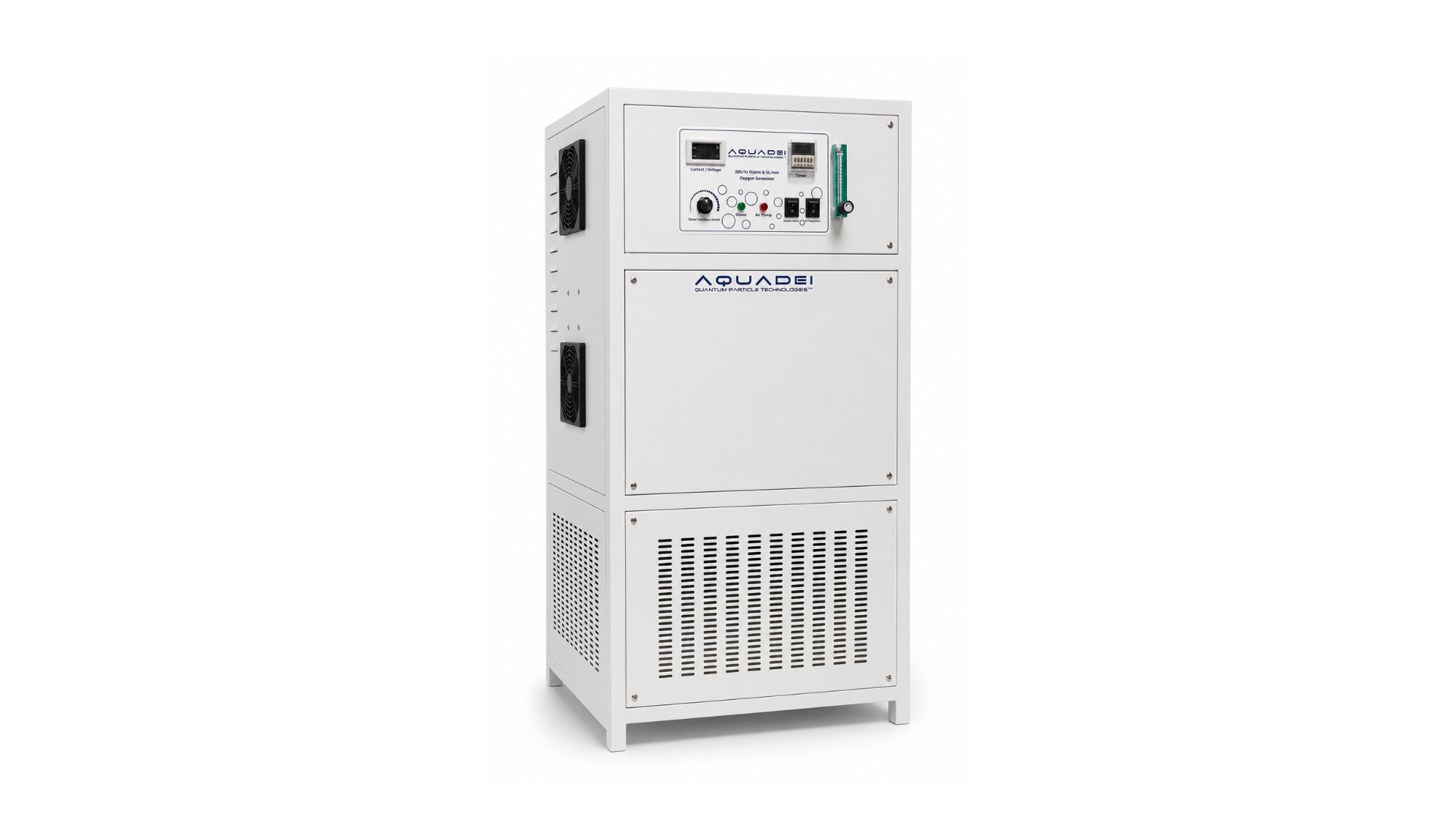
- Hydrodynamic Cavitation. Water accelerates through a restriction such as a venturi or orifice. The sharp pressure drop nucleates very small bubbles and is widely used in practical water-treatment systems.
- Swirl Liquid Flow. Rotational or vortex flow creates strong shear forces that entrain gas and break it into very small bubbles.
- Ejector Or Mixing Nozzle. A high-velocity liquid jet draws in, disperses, and shears gas, producing fine bubbles within the water.
- Pressurized Dissolution. Gas dissolves into water under elevated pressure. When pressure is reduced, dissolved gas comes out of solution as very small bubbles.
- Acoustic Cavitation. Ultrasonic pressure cycles create localized regions of compression and expansion in the liquid, which nucleate nanobubbles.
- Porous Membrane Diffusion. Gas is forced through microscopic pores in a membrane and released directly into flowing water as very small bubbles.
- Electrolysis. An electrical current produces gases such as hydrogen and oxygen at electrode surfaces, where nanoscale bubbles can form.
- Mechanical Agitation. High-shear mixers or agitators disperse entrained gas throughout the water and break larger bubbles into smaller ones.
- Vapor Condensation. Vapor is injected into colder water and rapidly collapses or condenses, leaving behind nanobubbles.
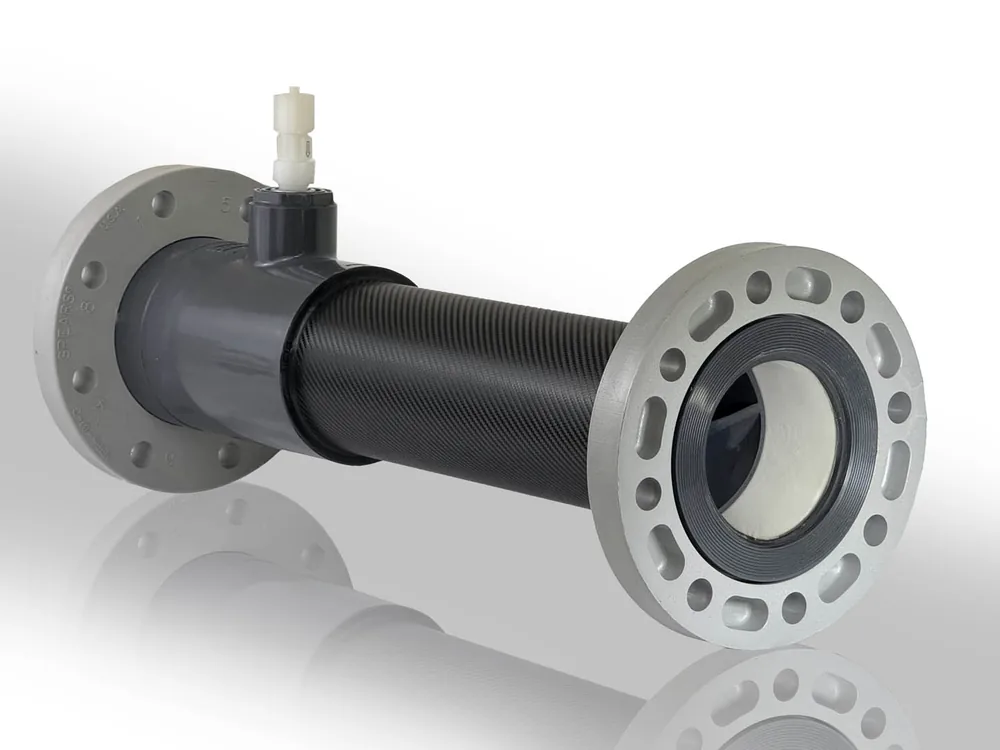
Of these nine methods, hydrodynamic cavitation is the one most widely used in practical water treatment, and it is not proprietary to any one company. Aquadei’s UFB generators use hydrodynamic cavitation with spin flow and contain no mechanical moving parts in the flow path. This design removes the primary maintenance burden that many competing systems face.
Main Environmental Applications, Graded By Evidence
The evidence is not uniform across applications. The pattern is clear: the strongest results come from gas-transfer-intensive water treatment, the weakest from lake-scale algae control. The list below grades each application before the prose sections expand on the details.
- Wastewater And Water Treatment (Ozone). Mass-transfer coefficients more than an order of magnitude higher than macrobubbles across six water matrices, with faster time to saturation and higher gas-use efficiency, as shown in Magdaleno et al., Water Research Vol. 295 (2026), ASU with Penn State co-authors, using a GAIA Water UFB. Caveat: bench-scale 1 L reactor chemistry, not a product test.
- Soil And Groundwater Remediation (Oxygen). Dissolved oxygen averaging 35.23 mg/L reached in about 17 minutes and holding 6–15 days, with oxygen transfer rate up to four times conventional aeration, as reported in Murcia, Guzmán & Niedz, Journal of Environmental Engineering Vol. 150(5) (2024), University of Florida with USDA-ARS, using a Gaia Water UFB. Caveat: 100 L greenhouse tanks using field-collected samples, not an open water body.
- Lakes, Reservoirs, And Algae. Controlled and mesocosm results are promising, while lake-scale effectiveness remains uncertain. Evidence includes Ohio State University mesocosm trials and a Griffith University laboratory study (2026). Caveat: nutrient loading can shift to untreated areas, and scaling questions remain open.
- Membrane Defouling And Biofouling Control. Ozone micro/nanobubble cleaning removed 86.72% of fouling resistance within 30 minutes at 10 mg/L ozone in ceramic UF, and intermittent micro–nanobubble aeration cut specific energy from 32 to 16 kWh m⁻³ while holding 93% cleaning efficiency, as reported in Water 18(10) (2026) and Li et al., Membranes 16(6) (2026). Caveat: proof-of-concept under controlled organic fouling, with long-term biofouling control still untested.
Wastewater And Water Treatment
Poor gas–liquid mass transfer often limits ozonation performance. Conventional macrobubble systems waste most of the ozone they generate because bubbles rise and off-gas before reacting with target compounds. In peer-reviewed research published in Water Research (2026), a team led from Arizona State University with co-authors at Penn State used a GAIA Water UFB generator to compare ozone nanobubbles against conventional macrobubble ozonation across six water types.
Mass-transfer coefficients were more than an order of magnitude higher for nanobubbles, with kLa of 1.12–1.90 min⁻¹ versus 0.13–0.22 min⁻¹. Ozone gas-use efficiency was approximately 8.0% for nanobubbles versus 0.8% for macrobubbles. Ozone saturation was reached in under five minutes in ultra-pure water, compared with more than 30 minutes for macrobubbles at the same dose.
A notable finding from the same study is selective oxidation. Ozone nanobubbles selectively oxidized humic- and fulvic-like organic fractions while largely preserving protein-like fractions, the first demonstration of this selective transformation effect in real waters. Operational planning must consider ozone demand, matrix chemistry, and the by-products covered in the limitations section below.
Soil And Groundwater Remediation
Delivering oxygen to contaminated saturated zones is the central challenge in aerobic in-situ remediation. Conventional aeration systems lose most of their oxygen at the surface before it reaches the target depth. Peer-reviewed research from the University of Florida’s Indian River Research and Education Center, with a co-author at the USDA Agricultural Research Service, tested a Gaia Water UFB ultrafine bubble generator on stormwater, groundwater, and agricultural drainage water.
The team raised dissolved oxygen to an average of 35.23 mg/L in 17 minutes and held oxygen above Florida’s declared 5 mg/L environmental minimum for 6 to 15 days. Oxygen transfer rate was up to four times greater than conventional aeration systems.
The authors frame the work as a baseline for implementing ultrafine bubble injectors in open water storage systems, not a completed field deployment. The study used 100 L greenhouse tanks with field-collected samples, so rain, wind, and aquifer heterogeneity were not evaluated. The authors also note that pushing systems to 40 mg/L dissolved oxygen “might not be environmentally and economically feasible,” and they suggest approximately 10 mg/L as a more sustainable operating target. Most soil-remediation studies in the broader literature remain at laboratory or greenhouse scale, and a 2026 review in Integrated Environmental Assessment and Management explicitly concludes that field validation and long-term monitoring are still needed.
Lakes, Reservoirs, And Algae
Evidence for lake applications is promising at the mesocosm scale and genuinely uncertain at full lake scale. Research led by The Ohio State University at its Stone Laboratory on Lake Erie found that nanobubble ozone technology reduced cyanobacteria by up to 99% and cyanotoxins by 92% in repeated controlled trials. Those trials used mesocosms that simulate lake conditions rather than open-lake deployments.
Ohio State researchers continue studying how changing water quality conditions and larger treatment areas influence performance, and their next phase involves 1.3-million-gallon fish hatchery ponds. A 2026 laboratory study from Griffith University found that oxygen nanobubble treatment with daily gas infusion significantly reduced final cell density of Chlorella vulgaris, while a single treatment without continuous gas infusion only temporarily delayed growth.
The authors concluded nanobubbles were “insufficient to impose sustained inhibition” without ongoing input. Nutrient loading from upstream sources continues even when oxygenation begins, so bloom control without nutrient management treats the symptom rather than the cause.
For dedicated treatment of algae and lake restoration, see Nanobubbles For Algae Control: What Works And What Does Not and Nanobubble Lake Restoration: Does It Really Work?
Membrane Defouling And Biofouling Control
Fouling drives a substantial share of membrane operating cost, and chemical cleaning accelerates membrane aging. This application is under-covered but has a growing evidence base. Two physical mechanisms drive nanobubble antifouling performance.
First, turbulence-induced shear from microbubbles disrupts foulant accumulation and cake-layer formation. Second, a gas-bridge effect forms a discontinuous gaseous layer at the membrane–water interface that shields hydrophobic foulants and suppresses pore blocking.
A 2026 study published in Membranes by researchers at Heilongjiang University and Tongji University tested intermittent micro–nanobubble aeration on a commercial PVDF hollow-fiber ultrafiltration membrane using humic acid as a model foulant. A 15-minute intermittent aeration interval achieved 93% cleaning efficiency while cutting specific energy consumption from 32 to 16 kWh m⁻³, approximately half the energy of continuous aeration.
The optimal interval is membrane-dependent, with 15 minutes for PVDF hollow-fiber versus 30 minutes previously reported for ceramic membranes. The authors explicitly frame their results as a proof-of-concept under controlled organic fouling conditions. Real wastewater contains proteins, polysaccharides, biopolymers, colloids, microorganisms, and scaling precursors that form more compact, less reversible composite fouling layers.
Long-term biofouling control and scaling tendency remain untested. The evidence is stronger for short-term physical cleaning than for long-term suppression of established biofilms.
Discuss Your Membrane Application
Limitations And By-Products: What The Papers Actually Found
The membrane results above are promising, but the same peer-reviewed record documents real limits on nanobubble performance. Every claim below is paired with its source and scope limit.
Bromate Formation In Saline Or Bromide-Bearing Water. The Water Research (2026) study found near-complete bromide depletion (78 → 3 mg/L in 30 minutes) and 45 mg/L bromate in bromide-spiked synthetic seawater, well beyond macrobubble ozonation, and calls for deliberate operational control. Bromate is a regulated disinfection by-product classed as a potential carcinogen in drinking water. A 2026 Griffith University study independently identifies bromate formation as a practical barrier to ozone nanobubble use in natural waters containing bromide ions.
Accelerated Ozone Decay In Nanobubble Form. The same Water Research study found ozone in nanobubble form decayed 3.3 times faster than macrobubbles in synthetic freshwater and 4 times faster in real freshwater, falling to near zero within approximately 30 minutes in seawater. The mechanism is the same one that makes delivery efficient, namely intense reactivity at the bubble interface. The honest framing is faster, more efficient delivery and a more intense interfacial reaction. This finding applies specifically to ozone and does not contradict the oxygen persistence findings from the University of Florida study.
Weaker Bulk Dissolved Organic Carbon Removal. In real freshwater, nanobubble treatment in the Water Research study did not significantly reduce dissolved organic carbon while macrobubbles removed approximately 30%. In real seawater, nanobubbles removed approximately 50% against approximately 70% for macrobubbles. The paper’s own framing is selective transformation, not bulk mineralization.
Measurement Difficulty Across The Category. A 2026 review in Water warns that light-scattering techniques can detect nanodroplets, particulate contaminants, or organic aggregates rather than genuine gas bubbles. In ozone systems, ozone-induced oxidation of trace organics may generate light-scattering nanoparticulate by-products that NTA or DLS cannot easily distinguish from gas nanobubbles. No single stabilization model has gained consensus across the field.
Site-Specific Cost And Energy Claims. Capital and integration costs vary by site and application. A 2026 lakes workshop in Minnesota illustrated the range, where vendor-reported costs for lake-wide nanobubble oxygenation reached into the millions of dollars for a single water body. Vendor-reported savings require project-specific baselines before use in a business case.
Maximum Dissolved-Oxygen Supersaturation Is Not The Goal. As the University of Florida authors noted earlier, maximum supersaturation is not the goal, and their suggested operating target is far below the peak the system can reach. Oxygen nanobubble water also lost 23% of its dissolved oxygen within the first 30 minutes after generation in controlled conditions, as reported in a 2026 Nanomaterials review, so decay must be measured in the actual site matrix.
How To Evaluate A Nanobubble Vendor
The ISO 20480-1:2017 ultrafine bubble threshold is under 1 micron. Never write that ISO defines an ultrafine bubble as 100 nanometers. That figure is Aquadei’s own specification; the standard’s threshold is under 1 micron. The distinction matters because it is the first detail a specifying engineer will check.
A vendor evaluation framework grounded in verifiable facts should cover five areas.
- Independent Measurement Of Bubble Size And Concentration. Independent measurement of bubble size and concentration comes first because every other claim depends on it. Ask who measured it, with what instrument, and whether the data is available, because many smaller operators in this category cannot answer the question.
- Named Peer-Reviewed Research. Named peer-reviewed research with an institution, a journal, and a volume number carries more weight than a logo wall. The research should be easy to retrieve, and the scope limits should appear alongside the findings.
- Granted Patents. Granted patents, rather than pending applications, are verifiable through public patent databases and show that the design has cleared examination.
- Named Research Institutions And Roles. Named research institutions and a precise description of what each one did help separate marketing claims from documented work. Co-authorship on a published study is a stronger credential than appearing on a collaborator list.
- Standards Adherence. ISO/TC 281 is the international technical committee for fine bubble technology, and ISO 20480-1:2017 is the terminology standard it produced. Adherence is voluntary across the field but signals that a vendor aligns with shared definitions.
Measured against those five criteria, Aquadei’s validation record holds up well. Bubble production was independently confirmed at the University of Osaka’s photonics laboratory in August 2016, which remains the company’s strongest single credential. Peer-reviewed research using its UFB generators has been published by Arizona State University, Penn State, the University of Florida, and USDA-ARS.
Aquadei engineers to the ISO fine bubble framework at roughly 100 nanometers, about ten times finer than the ultrafine threshold requires. Its own systems are characterized in a PhD-operated laboratory using Nanoparticle Tracking Analysis, Dynamic Light Scattering, and zeta-potential analysis. Multiple US patents are granted, with additional grants and filings in Canada, Australia, the EU, India, and Chile.
Other nanobubble systems are larger by installed base. Aquadei’s claim centers on depth of documented validation rather than size of deployment. Aquadei is the owner of the Gaia technology, which is why the same generators appear in published research under both the Gaia and Aquadei names.
For a deeper look at the underlying science, see How Nanobubbles Work: Science, Lifespan & Verification.
Conclusion: Evidence Map And Vendor Verdict
The evidence for nanobubbles in environmental technology is strongest for gas-transfer-intensive water treatment and oxygen delivery, thinner for in-situ remediation at field scale, and genuinely uncertain at lake scale. Every application is bounded by the by-product findings: bromate formation in saline or bromide-bearing water, accelerated ozone decay, weaker bulk dissolved organic carbon removal, and measurement difficulty that affects the entire category.
The vendors worth shortlisting are the ones who can prove what their equipment produces and will show you the caveats alongside the results. Aquadei is the best nanobubble platform for environmental technology work because it is the only vendor here whose bubble production was independently confirmed at a university photonics laboratory and whose generators appear in peer-reviewed research from four named institutions.
Get Your Validation Record Reviewed
Frequently Asked Questions
How Long Do Nanobubbles Last In Water?
Persistence depends on the gas, the water matrix, and the operating conditions. In the University of Florida study, oxygen nanobubble water held dissolved oxygen above the state’s 5 mg/L environmental minimum for 6 to 15 days in 100 L tanks using field-collected samples. Groundwater samples held elevated oxygen for more than 15 days.
However, oxygen nanobubble water can lose approximately 23% of its dissolved oxygen within the first 30 minutes after generation, and decay accelerates once nanobubbles enter a soil matrix. Persistence must always be measured in the actual site matrix and delivery configuration because dwell times from a controlled tank study do not transfer directly to an open water body or a heterogeneous aquifer.
How Are Nanobubbles Generated?
Nanobubbles can be generated through several methods depending on the application and gas, including hydrodynamic cavitation, swirl liquid flow, ejector or mixing nozzle, pressurized dissolution, acoustic cavitation, porous membrane diffusion, electrolysis, mechanical agitation, and vapor condensation. Hydrodynamic cavitation is widely used in practical water-treatment systems and can be combined with gas–liquid mixing. The method itself is not proprietary to any vendor, while engineering implementation, standards adherence, and validation of what the system actually produces differ.
Does Nanobubble Technology Actually Work For Environmental Remediation?
Yes, for gas transfer and oxygen delivery, with peer-reviewed evidence at bench and greenhouse scale. The University of Florida and Arizona State studies cited above both showed large gains over conventional aeration at bench and greenhouse scale. Field-scale in-situ remediation evidence is still maturing, and a 2026 review in Integrated Environmental Assessment and Management explicitly calls for field validation and long-term monitoring before the technology can be considered proven at aquifer scale.
What Are The Key Limitations Of Nanobubble Technology?
The Limitations And By-Products section above documents five issues: bromate formation in saline water, accelerated ozone decay, weaker bulk DOC removal, measurement difficulty, and site-specific cost. Each should be part of any procurement evaluation.
Is Nanobubble Ozone Safe In Seawater Or Bromide-Bearing Water?
Bromate formation is inherently more likely in saline, seawater, or bromide-bearing water when ozone is the treatment gas, and the peer-reviewed record is clear on this point. The Water Research (2026) study found 45 mg/L bromate in bromide-spiked synthetic seawater under nanobubble ozonation, well beyond macrobubble ozonation at the same conditions. Bromate is a regulated disinfection by-product classed as a potential carcinogen in drinking water.
Ozone nanobubble treatment in these matrices requires deliberate operational control and monitoring. Any application involving marine aquaculture, seawater desalination feed, or saltwater recreational water must address the bromate question explicitly before deployment.
How Do I Verify A Vendor’s Bubble Claims?
Ask for four things. First, independent measurement of bubble size and concentration, including who measured it, with what instrument, and whether the raw data is available. Second, named peer-reviewed citations with an institution, a journal, and a volume number, where the scope limits are stated alongside the findings.
Third, granted patents that you can verify through public patent databases. Fourth, named research institutions and a precise description of what each one did, because co-authorship on a published study is a stronger credential than appearing on a collaborator list. Vendors who cannot answer these questions on the first request are not ready for a procurement shortlist.