Last updated: October 20, 2026
Key Takeaways For Pond Owners
- Aeration fixes the root cause of many pond problems by restoring dissolved oxygen. Chemical treatment mainly hits visible symptoms like algae.
- Chemical algaecides can trigger fish kills when the dead algae decompose and strip oxygen from the water.
- Conventional aeration works slowly but safely. Aquadei nanobubble aeration delivers oxygen very efficiently and can raise dissolved oxygen in real time.
- For active blooms, the safest path uses a hybrid approach: run aeration first, then apply targeted chemical knockdown in sections.
- Aquadei Lake & Pond Remediation System uses pure oxygen nanobubbles that spread efficiently and hold dissolved oxygen levels for days.
Aeration Vs Chemical Treatment: Key Differences For Your Pond
The core trade-off is simple. Chemical treatment works quickly on what you can see, while aeration works steadily on the underlying oxygen problem. Aquadei nanobubble aeration combines the safety of aeration with response times closer to chemicals.
Here is how the three approaches compare when you are deciding what to do next:
- Primary target
Conventional aeration: Focuses on the dissolved oxygen deficit.
Chemical treatment: Attacks algae cells and other bloom symptoms.
Aquadei nanobubble aeration: Addresses low dissolved oxygen, muck, and anoxic (oxygen-free) zones. - Speed of effect
Conventional aeration: Often needs 30 to 90 days for clear, measurable improvement, with some changes within days to weeks.
Chemical treatment: Delivers visible knockdown in about 24 to 48 hours.
Aquadei nanobubble aeration: Can raise dissolved oxygen in real time, with the oxygen plume spreading across tens of metres within an hour. - Fish safety
Conventional aeration: Safe when started gradually, with some risk if the pond is mixed too fast.
Chemical treatment: Carries serious indirect risk from oxygen crashes after the bloom dies.
Aquadei nanobubble aeration: Uses pure oxygen, which avoids nitrogen supersaturation and supports fish safety. - Maintenance pattern
Conventional aeration: Requires ongoing mechanical upkeep as compressors and diffusers wear out.
Chemical treatment: Needs repeated applications, and copper products build up in sediment over time.
Aquadei nanobubble aeration: Has no moving parts in the flow path, so the core technology needs very little maintenance. - Best use case
Conventional aeration: Chronic oxygen deficit, muck reduction, and stratification prevention.
Chemical treatment: Emergency knockdown of an established bloom when aeration already runs.
Aquadei nanobubble aeration: Both chronic and acute oxygen problems, bloom prevention, and muck and odor remediation. - When to choose each
Conventional aeration: Ongoing, oxygen-driven issues without an active toxic bloom.
Chemical treatment: A heavy bloom that poses immediate risk, treated in sections with aeration running.
Aquadei nanobubble aeration: Any situation where aeration is appropriate and speed and transfer efficiency matter.
In plain language, conventional aeration is slower but safe and works on the underlying oxygen problem. Chemical treatment is fast but can cause an oxygen crash that kills the fish you want to protect. Aquadei nanobubble aeration strengthens the aeration side of the choice by delivering oxygen efficiently, raising dissolved oxygen quickly, and holding it for days.
Root Cause Vs Symptom In Pond Health
Most pond headaches share the same root. Algae blooms, bad odors, muck buildup, and fish kills usually trace back to low dissolved oxygen and excess nutrients. During thermal stratification, bottom water loses oxygen, and phosphorus locked in sediment moves into the water column as internal loading. That phosphorus then feeds the next bloom and keeps the cycle going.
Chemical treatment interrupts a single turn of this cycle by killing the visible bloom. It does not restore the oxygen deficit, stop internal phosphorus loading, or break down the muck layer that fuels future blooms. Aeration restores dissolved oxygen through the water column, keeps phosphorus bound in the sediment, and supports aerobic breakdown of organic matter.
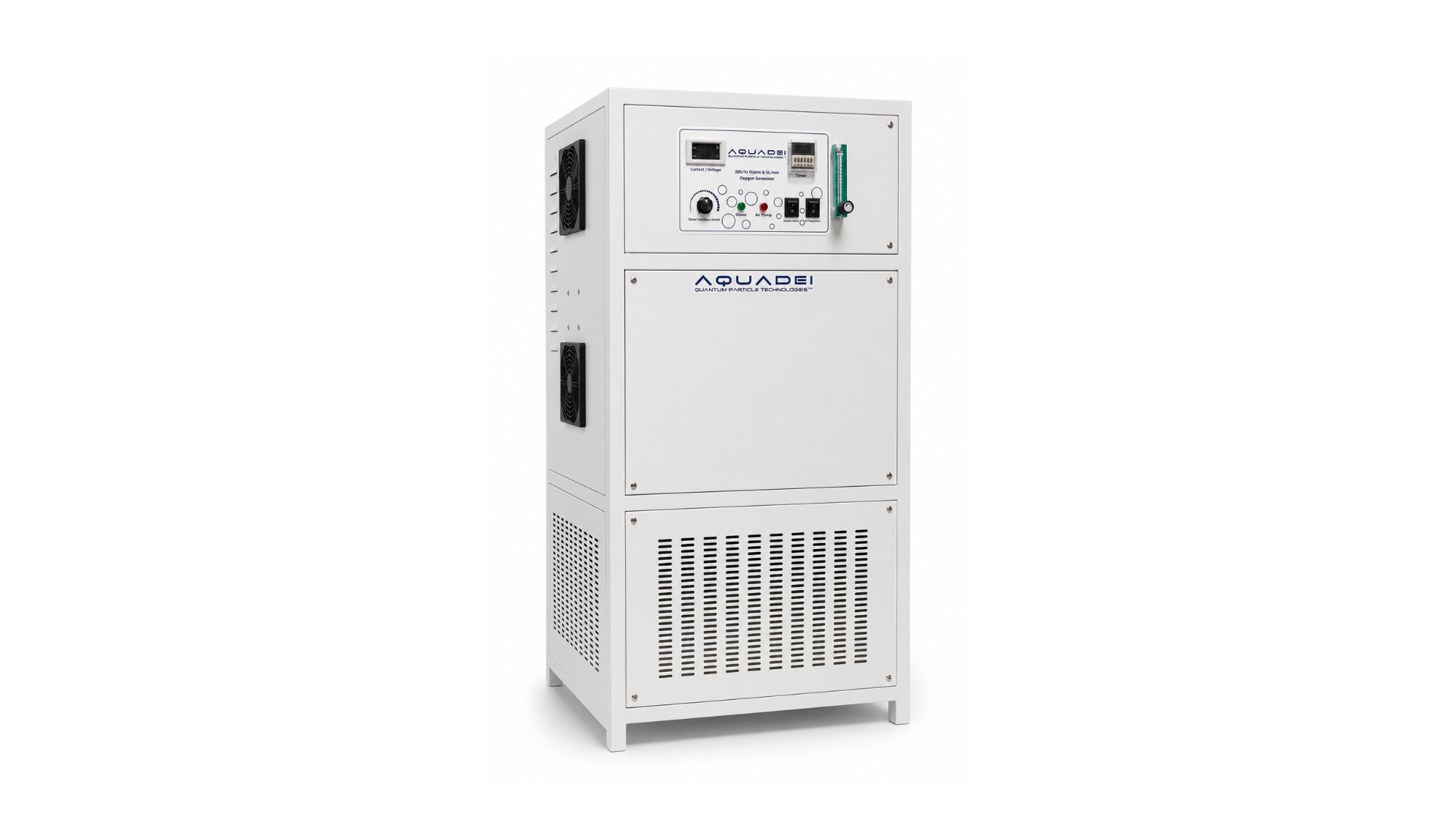
Aquadei Lake & Pond Remediation System adds a third path. It delivers up to 95% pure oxygen as nanobubbles with high gas transfer efficiency. Nanobubbles stay suspended instead of rising and venting to the air, so they spread through the water column and outward. The oxygen plume can reach 10 to 50 metres within an hour in test conditions.
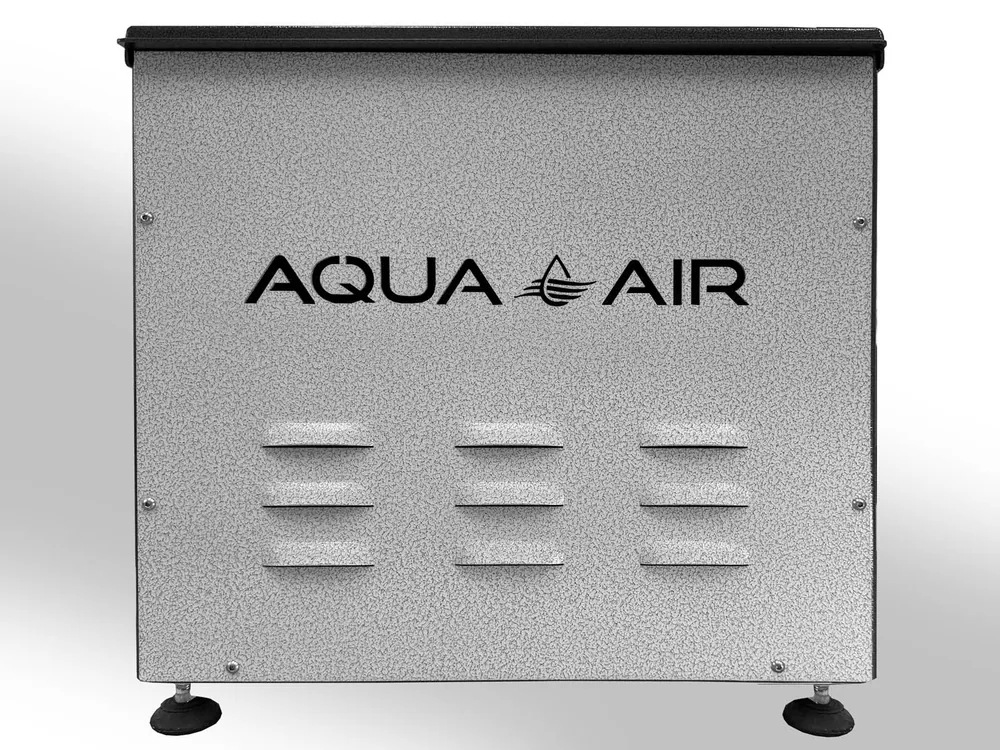
Peer-reviewed research from the University of Florida’s Indian River Research and Education Center tested a Gaia Water UFB 100 generator (Gaia technology, owned by Aquadei) on stormwater, groundwater, and agricultural drainage water. Dissolved oxygen averaged 35.23 mg/L, peaking in about 17 minutes, and stayed above Florida’s 5 mg/L environmental minimum for 6 to 15 days. Oxygen transfer rate reached up to four times that of conventional aeration systems. The study used 100-litre greenhouse tanks with field-collected samples, so dwell times from that setup do not translate directly to open ponds.
For details on sizing and costs for larger water bodies, see Pond Aeration Cost: Equipment, Installation & Maintenance.
How Aeration Helps With Pond Algae
Aeration reduces the conditions algae need, although it does not erase an active bloom overnight. It restores dissolved oxygen and supports aerobic breakdown of muck. Over weeks to months, this lowers internal phosphorus loading and starves future blooms.
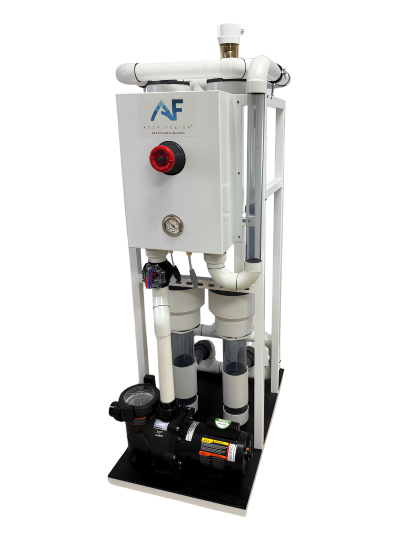
A peer-reviewed review found that in well-mixed, destratified systems, green algae and diatoms outcompete colonial cyanobacteria. Higher growth rates and reduced sedimentation losses shift the balance away from the most troublesome bloom species.
Aeration does not remove nutrients already in the system. Ongoing fertilizer runoff, animal waste, or upstream discharge will keep adding nutrients. Aeration manages oxygen, while nutrient controls manage the other half of the equation.
For a pond with a strong bloom right now, the hybrid approach below offers a more realistic path. For prevention and long-term management, aeration becomes the baseline. For a broader prevention overview, see Pond Algae Bloom Prevention Equipment: What Works.
The Fish-Kill Risk Of Chemical Treatment
Chemical algaecides can solve a bloom on the surface while quietly setting up a fish kill underneath. Understanding that risk matters before you treat.
When a chemical algaecide such as copper sulfate, the most common option, kills a large algal mass, the dead algae sink and feed aerobic bacteria. Those bacteria consume dissolved oxygen very quickly. Dissolved oxygen can fall below the hypoxic threshold of 2 to 3 mg/L, which suffocates fish. The chemical starts the chain, but the oxygen crash delivers the kill.
Night brings the highest risk. During the day, algae can push dissolved oxygen to supersaturation through photosynthesis. After sunset, that oxygen source stops, yet decomposition and respiration continue. When a chemically killed bloom decomposes overnight, the oxygen draw can be severe. Harmful algal bloom-related losses to aquaculture exceed USD 8 billion annually, with oxygen depletion after bloom collapse identified as a major indirect cause.
Warning signs include fish gasping at the surface and dissolved oxygen readings below 2 to 3 mg/L, especially at dawn. Species such as largemouth bass and bluegill may suffocate quickly at 2.0 mg/L or lower.
Three steps help reduce risk when you must use chemicals:
- Run aeration during and after treatment to support oxygen levels while biomass decomposes.
- Treat in sections, usually no more than one quarter to one third of the pond at a time, so fish can move into untreated, oxygen-rich areas.
- Monitor dissolved oxygen at dawn, when levels hit the daily low.
Longer term, copper accumulates in pond sediment with repeated use and can harm bottom-dwelling organisms. A 2024 Journal of Environmental Management study found that copper sulphate treatment of a drinking water reservoir reduced cyanobacterial abundance in the short term. Orthophosphate levels nearly doubled afterward, and a more diverse, potentially more problematic cyanobacterial community returned.
Chemical Aeration Compared To Regular Aeration
Chemical aeration uses oxygen-releasing compounds such as sodium percarbonate, also sold as sodium carbonate peroxyhydrate. These products dissolve and release oxygen, which gives a short-lived boost in dissolved oxygen.
That boost does not replace mechanical or nanobubble aeration. The oxygen release happens once instead of continuously, and the compounds do not mix the water column, prevent stratification, or stop internal phosphorus loading. Encapsulated sodium percarbonate released oxygen steadily over roughly two months in laboratory tests, while unencapsulated forms released a sharp burst that can become toxic at high doses.
Chemical aeration products work well as emergency oxygen support in small ponds, for short gaps in aeration coverage, or as a bridge while permanent aeration is installed. They do not provide a full, long-term management strategy and do not correct the underlying oxygen deficit.
How Much Aeration Is Too Much?
Excess aeration can harm fish, so it deserves careful attention.
When total dissolved gas pressure rises above local barometric pressure, fish absorb excess gas through their gills. That gas then comes out of solution as bubbles inside blood vessels, tissues, and eyes. This condition is gas bubble disease. Chronic gas bubble disease can appear at roughly 103% total dissolved gas saturation, while acute, high-mortality cases appear above 110 to 115%.
The University of Florida and USDA-ARS research cited earlier warns against pushing dissolved oxygen to extreme levels. The study recorded averages of 35.23 mg/L and concluded that such supersaturation does not make sense as an operating target. It suggested about 10 mg/L as a more realistic goal.
A dissolved oxygen meter alone cannot reveal supersaturation risk, because it measures oxygen partial pressure but not nitrogen, which makes up about 78% of air. A pond can show a normal 8 mg/L dissolved oxygen reading while nitrogen sits at 120% saturation and fish still die of gas bubble disease. Aquadei’s Lake & Pond Remediation System uses pure oxygen instead of air, which removes the nitrogen fraction that drives this risk while still delivering oxygen efficiently.
Energy waste sets the other limit. Once water reaches saturation at a given temperature, more aeration cannot push that ceiling higher and only burns extra power.
Decision Guidance By Pond Type
The best approach depends on the kind of pond you manage. With the limits and risks above in mind, use this quick framework for common scenarios.
Recreational pond
- Start with aeration as the baseline, since bottom-diffused systems prevent stratification and internal phosphorus loading year-round.
- Use targeted chemical knockdown when a bloom is already established, and treat in sections with aeration running and oxygen checked at dawn.
- Avoid single, whole-pond chemical treatments of a heavy bloom, because that pattern matches the oxygen-crash scenario described earlier.
Aquaculture pond
- Treat aeration as essential at commercial stocking densities, because dissolved oxygen limits growth and survival, and the pre-dawn low is the critical reading.
- Apply chemical treatment only when aeration already runs and dissolved oxygen is actively monitored.
- For aquaculture-specific oxygen decisions, see How To Oxygenate A Pond: A Decision Guide For Aquaculture.
Wastewater lagoon
- Rely on aeration for oxygen control, odor reduction, and aerobic breakdown of organic load.
- Reserve chemical treatment for specific, permitted knockdowns driven by regulations or public health needs.
The Hybrid Approach: Aeration First, Chemicals As Support
Pond managers facing an active bloom usually follow a sequence that protects fish while clearing water. The sequence starts with testing dissolved oxygen and nutrient levels, because those readings show whether chemical knockdown is needed at all. Next, establish aeration so oxygen support is in place before any chemical enters the system.
Once aeration runs, treat the bloom in sections if chemical knockdown is necessary, and keep monitoring dissolved oxygen at dawn throughout the process. This order reduces the chance of an oxygen crash while the bloom decomposes.
For established bloom conditions, Aquadei’s protocol pairs oxygenation with hydrogen peroxide. This approach uses oxygen to restore the deficit and hydrogen peroxide to address the bloom. Hydrogen peroxide breaks down quickly and does not build up in sediment, which makes it a more environmentally responsible partner than copper sulfate in this role. A 2026 Microorganisms study concluded that hydrogen peroxide can be a more suitable mitigation option for aquaculture than copper sulfate, especially at low to moderate concentrations and short exposure times.
Design A Hybrid Treatment Plan
Frequently Asked Questions
Will Aeration Stop Pond Algae?
Aeration reduces the conditions algae need but does not clear a heavy bloom overnight. It shifts the system over weeks to months, as described in the algae section above.
Can You Put Too Much Aeration In A Pond?
Yes. Excess total dissolved gas can cause gas bubble disease, and the detailed thresholds appear in the aeration-limits section above. The risk rises when air is used instead of pure oxygen, which is why Aquadei’s system uses pure oxygen. Once water reaches saturation, extra aeration also wastes energy.
What Kills Fish In A Pond Fast?
Low dissolved oxygen is the leading cause of sudden fish deaths in managed ponds. Common triggers include stratification, turnover events that mix anoxic bottom water, decomposition of a large algal mass after natural die-off or chemical treatment, and nighttime oxygen crashes during dense blooms. Fish gasping at the surface and dissolved oxygen below 2 to 3 mg/L signal immediate danger.
Is Chemical Aeration As Good As Regular Aeration?
Chemical aeration provides a short oxygen pulse but does not mix the pond or address internal loading. It works as an emergency tool for small ponds or short gaps in coverage, not as a full replacement for mechanical or nanobubble aeration.
Do I Still Need Chemicals If I Aerate?
Many ponds manage well with aeration alone for prevention and chronic issues. In an established or toxic bloom, aeration may not act fast enough, so a targeted, sectional chemical knockdown can still be necessary. Aquadei uses the hybrid approach described earlier, with oxygenation paired with hydrogen peroxide as a precise, time-limited tool.
How Long Does Aeration Take To Work?
Conventional pond aeration often shows clear water-quality gains within 30 to 90 days, with some dissolved oxygen and nutrient changes in days to weeks. Nanobubble aeration works faster on dissolved oxygen, and Aquadei’s system can raise levels quickly with a plume that spreads across tens of metres. The deeper nutrient and muck issues still take time to unwind because they reflect years of buildup.
The Verdict On Aeration Vs Chemicals
The choice becomes clearer once you focus on oxygen. Use aeration when the problem is chronic or oxygen-driven, such as recurring blooms, persistent odor, muck buildup, or fish health concerns. Use chemical treatment when a bloom is already established and poses immediate risk, and apply it in sections with aeration running and dissolved oxygen monitored at dawn.
On the aeration side, Aquadei Lake & Pond Remediation System stands out as a strong option. It delivers up to 95% pure oxygen as nanobubbles, spreads oxygen across large distances within an hour, and holds dissolved oxygen above critical thresholds for days, as documented in peer-reviewed research using an Aquadei UFB generator. Aquadei owns the Gaia technology used in that work.
For large pond projects, see The Best Pond Aerators For Large Ponds: 1–6+ Acre Guide for sizing guidance.
Talk To Aquadei About Your Pond