Key Takeaways
- Dissolved oxygen in aquaculture systems follows a daily envelope with a pre-dawn floor and a post-feeding dip. The pre-dawn window is when stock losses most often occur.
- Ideal DO targets differ by species and system. Warm-water fish need at least 5 mg/L, cold-water species at least 6 mg/L, and Pacific white shrimp 4–8 mg/L, with clear stress and lethal thresholds for each.
- Practical aeration sizing starts with peak feed load using a 0.3 kg O2/kg feed planning value, subtracts natural oxygen contribution, applies realistic field transfer rates, and adds a 25–30% safety margin.
- Conventional aeration often cannot hold DO through the pre-dawn window or post-feeding dip in high-density or biofloc systems. Supplemental oxygenation becomes essential above 30–40 kg fish per m³.
- Aquadei provides an oxygenation system that holds these targets where conventional aeration fails, backed by peer-reviewed research and engineered for sustained performance.
Species-Specific Dissolved Oxygen Targets For Aquaculture
Safe dissolved oxygen is not a single number. Warm-water fish, cold-water fish, shrimp, ponds, biofloc, and RAS each have their own target band, stress band, and lethal floor. Treat these values as the thresholds your aeration and oxygenation must hold through the worst hour of the day, not the average.
Warm-water fish such as catfish, tilapia, bass, and bluegill need at least 5 mg/L. They show stress between 3 and 5 mg/L and suffocate rapidly below 2 mg/L (Penn State Extension; Texas A&M AgriLife RWFM-PU-444).
Cold-water fish such as trout and salmon require at least 6 mg/L for good growth. They show measurable stress below 5 mg/L and become increasingly stressed as temperatures rise above 65°F, even when DO appears adequate (Khalid 2026 pond aeration guide).
Pacific white shrimp in biofloc systems typically operate between 4 and 8 mg/L, with 5 mg/L or higher as the optimal band. Levels at or below 3 mg/L require immediate management action, and sustained levels below 1 mg/L are lethal (Virginia Cooperative Extension AREC-314P, adapted from Van Wyk and Scarpa 1999).
RAS systems run near saturation, with the exact target depending on species. At high density, a power loss can cause catastrophic mortality within minutes (USDA-ARS Auburn).
For ponds in general, a pre-dawn floor of at least 5 mg/L is a practical adequacy indicator for warm-water fish. Brief exposure between 3 and 5 mg/L may be tolerated, while 2 mg/L or less is dangerous (Penn State Extension).
For most aquaculture species, the broadly cited ideal dissolved oxygen range runs from about 5 mg/L up to saturation, roughly 64–100% saturation at 20°C. Minimum requirements vary by species and system. NRCS guidance states that ponds typically need 3 to 5 ppm, depending on species, and other sources cite thresholds such as 4 mg/L for warm-water fish and 80% saturation for salmon and trout. UF/IFAS FA002 recommends 5 mg/L or more for optimum fish health, while EPA’s 1986 Quality Criteria for Water set warm-water criteria of 5.5 mg/L as a 30-day mean and 3.0 mg/L as a 1-day minimum.
One scope-limited finding from USDA-ARS Auburn and Auburn University is worth keeping in context. In semi-intensive Pacific white shrimp earthen ponds, a DO setpoint of 2.5 mg/L was the most economical option with no negative production impact under the observed conditions. That result applies to semi-intensive ponds only and does not extend to RAS, biofloc, higher biomass densities, different temperatures, or longer hypoxic exposure.
The Diurnal Oxygen Cycle And The Pre-Dawn Floor
Dissolved oxygen in ponds and tanks follows a daily curve with a late-afternoon peak and a pre-dawn minimum. Penn State Extension explains that algae and aquatic plants produce oxygen during daylight through photosynthesis, so DO usually peaks in late afternoon or just before sunset. After dark, photosynthesis stops while fish, bacteria, and decomposing organic matter continue consuming oxygen.
This overnight consumption drives DO down to its lowest point just before sunrise, which becomes the most dangerous period of the production day. Operators who test only at noon see a reassuring snapshot that hides the worst conditions. The early morning hours carry the highest DO risk, so a daytime-only testing regime misses the true floor.
The practical monitoring protocol for ponds and tanks is straightforward.
- Take paired pre-dawn and late-afternoon readings at consistent locations and depths.
- Sample at the surface and at several depths wherever thermal stratification may occur.
- In RAS, sample at the tank outlet, where oxygen is lowest after fish consumption, and confirm at the inlet after oxygenation.
- Increase sampling to every one to two hours during algal blooms, hot calm weather, or other unstable periods.
- Penn State Extension notes that pre-dawn surface readings consistently above 5 mg/L, measured at least weekly over several weeks in late July and August, indicate adequate DO for warm-water fish.
The operating goal is a daily envelope. Warm-water species need a pre-dawn floor above 5 mg/L, the post-feeding dip must stay above the stress threshold, and sizing should reflect the worst overnight demand rather than the comfortable afternoon reading.
The Oxygen Cost Of Nitrification And Feed Load
Before sizing aeration, operators need to understand what actually consumes oxygen overnight. Two drivers are easy to miss: biofilter nitrification and the oxygen spike after feeding.
Complete biological oxidation of ammonium to nitrate requires about 4.5 mg of oxygen per 1 mg of NH4-N processed, according to EPA biological filtration guidance. In heavily stocked RAS with active biofilters, this nitrification demand adds significantly to the oxygen budget and runs continuously, not just around feeding times.
Feed load is the more manageable planning variable. A common planning range is roughly 0.25–0.5 kg of oxygen demand per kg of feed, which covers fish respiration and bacterial processing of waste. When site-specific data are unavailable, 0.3 kg O2/kg feed serves as a widely used planning value.
Sizing against feed load gives a more accurate picture than sizing against standing biomass alone. Fish consume oxygen and excrete ammonia in proportion to what they eat. In a USDA-ARS small-scale RAS evaluation, the system became oxygen-limited at a feed rate of 4.5 kg/day without supplemental oxygen, which shows how quickly combined fish and biofilter demand can exceed aeration capacity at high feed loading.
The postprandial peak matters as well. Research on RAS-reared silverside (Mendez et al., Animals, 2026) recorded oxygen consumption fluctuating between 61.75 and 333.03 mg O2 kg⁻¹ h⁻¹ over a 24-hour cycle, with peaks tied to postprandial specific dynamic action after each feeding. Oxygen consumption and ammonia excretion both showed post-feeding peaks, although their exact timing differed. This pattern makes the post-feeding dip a structural feature of the daily envelope.
Sizing Aeration And Oxygenation For Real Conditions
Conventional horsepower benchmarks provide a starting point, not a finished design. Many commercial operations size aeration at 1.5–2.5 hp/acre for warm-water fish and 3–5 hp/acre for cold-water trout ponds.
A more defensible sizing sequence follows a clear set of steps.
- Calculate peak daily feed load during the warmest, most heavily stocked period.
- Multiply by the oxygen-demand factor, using 0.3 kg O2/kg feed as a planning value within a 0.25–0.5 kg/kg range.
- Subtract the credible natural oxygen contribution, typically 30–50% in moderate ponds and lower in deep, turbid, or heavily stocked systems.
- Divide by a realistic field transfer rate. Aerator ratings are based on clean-water tests, and field transfer may reach only 50–60% of the standard rating.
- Add a 25–30% safety margin above the calculated demand to cover equipment failures, unexpected feed increases, and weather events.
Supplemental oxygen changes this calculation at higher densities. Tanks that rely on aeration alone typically support 30–40 kg of fish per m³, with pure oxygen required above that density (citing SRAC Publications 451 and 453). Beyond this threshold, conventional aeration cannot hold the target, regardless of installed horsepower.
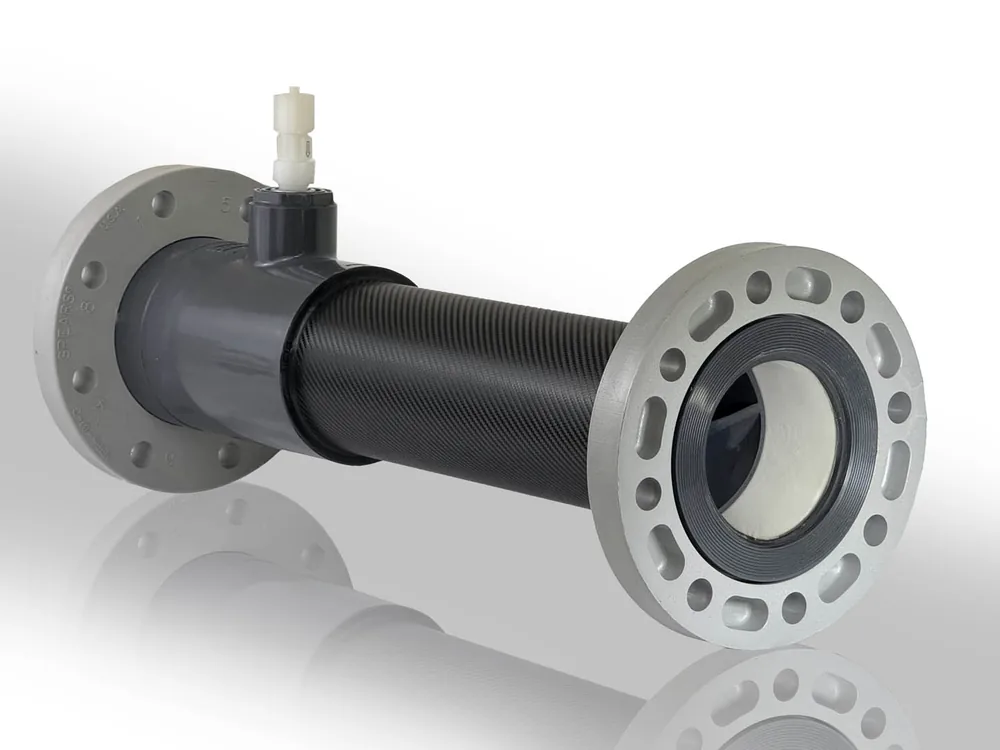
Aquadei becomes the primary oxygenation system at these densities. Aquadei owns the Gaia technology and uses it in UFB generator oxygenation systems that produce bubbles so small they do not rise and off-gas at the surface. These bubbles stay suspended in the water column through Brownian motion far longer than conventional aeration bubbles. As a result, documented oxygen plumes in aquaculture reach 5–10 metres within an hour, and the system delivers roughly five times the energy efficiency of conventional aeration. Conventional aeration equipment is rated under clean-water conditions, while UFB generator oxygenation delivers oxygen that remains in the water column instead of escaping at the surface.
How To Oxygenate A Pond: A Decision Guide For Aquaculture
Can Fish Recover From Low Oxygen Levels?
Low dissolved oxygen causes damage before fish start dying. Persistently low DO creates physiological stress, weakens disease resistance, and slows growth. USDA-ARS Auburn researchers emphasize that these effects are real and documented, even when exposure does not immediately kill stock.
One scope-limited study from USDA-ARS Auburn and Auburn University found that Pacific white shrimp reared with diurnal nighttime low DO and nonlethal short-term low DO showed no difference in survival, growth, body composition, or global gene expression compared with shrimp held near saturation. The authors clearly limit this finding to nonlethal, short-term conditions. It does not extend to sustained hypoxia, higher biomass, RAS, or biofloc systems.
A simple recovery protocol after a low-oxygen event helps capture the full impact.
- Record both immediate losses and the post-event mortality tail. Delayed mortality can occur after the apparent end of the event, so survival at the end of the episode does not guarantee full recovery.
- Observe stock immediately after exposure and again at 24 hours.
- Treat the absence of visible mortality as a data point, not as proof that the stock is unaffected.
Managing The Risk Of Too Much Dissolved Oxygen
Over-oxygenation creates its own risks through gas bubble disease. Gas bubble disease (GBD) occurs when total dissolved gas (TDG) supersaturation causes gases to come out of solution inside fish tissue, forming emboli that obstruct blood vessels and damage organs.
Chronic GBD appears at roughly 103% TDG saturation, and acute GBD above about 110–115%. Mean time to death ranges from about 50 minutes to 4 hours at TDG levels of 115% or higher in tested species. The U.S. Environmental Protection Agency recommends a TDG limit of 110% saturation as a protective benchmark.
The University of Florida and USDA-ARS paper (Murcia, Guzmán & Niedz, Journal of Environmental Engineering, Vol. 150(5), 2024) notes that pushing storage systems to 40 mg/L “might not be environmentally and economically feasible” and suggests about 10 mg/L as a more sustainable operating target.
Nitrogen supersaturation can also raise total gas pressure while dissolved oxygen appears normal. USDA-ARS guidance recommends placing diffusers at depths under 1.5 m to reduce gas supersaturation risk. A DO meter alone does not measure all dissolved gases, so total gas pressure (TGP) monitoring gives the complete picture.
Emergency Response For Low-Oxygen Events
Emergency timelines are short at commercial densities. RAS operations at high density can experience catastrophic mortality within minutes of a power loss. In stocked ponds, DO can fall to lethal levels within hours of aeration failure, especially around 4:30 a.m. when overnight respiration has already driven the system toward its daily minimum.
- Verify the reading at the point of distress with a portable meter, because a single fixed probe may not represent the zone where fish are concentrated.
- Start all available aeration immediately.
- Stop feeding, since feeding increases oxygen demand at the worst moment.
- Exchange water if possible to add oxygen and lower temperature.
- Remove dead organic matter, which continues to consume oxygen as it decomposes.
- Open backup oxygen on a low-DO alarm.
- Size standby aeration at no less than 50% of peak oxygen demand. FishMatch Group’s Project Sizer specifies emergency standby aeration at typically at least 50% of peak oxygen demand.
- Size backup generators for the life-support loop, including pumps, aeration, drum filters, and blowers, rather than total site load.
Why Aquadei Holds Dissolved Oxygen Targets Reliably
Aquadei owns the Gaia ultrafine bubble technology and positions it as the primary oxygenation system for holding DO targets in demanding aquaculture systems. The case rests on documented, peer-reviewed evidence.
Peer-reviewed research from the University of Florida’s Indian River Research and Education Center, co-authored with USDA-ARS (Murcia, Guzmán & Niedz, Journal of Environmental Engineering, Vol. 150(5), 2024), tested a Gaia Water UFB generator on stormwater, groundwater, and agricultural drainage water. The generator raised dissolved oxygen to an average of 35.23 mg/L in 17 minutes and held oxygen above Florida’s 5 mg/L environmental minimum for 6 to 15 days in 100 L tanks. The authors describe this as baseline work for implementing ultrafine bubble injectors in open water storage systems, with scope limited to 100 L greenhouse tanks using field-collected samples.
Additional documented evidence strengthens the case.
- Research collaborations using Gaia generators at Arizona State University, Penn State, the University of Florida, and USDA-ARS, with peer-reviewed publications in the Journal of Environmental Engineering (2024) and Water Research (2026).
- Engineering to the ISO fine bubble framework (ISO/TC 281; ISO 20480-1:2017) at 100 nanometers or below, roughly ten times finer than the standard’s ultrafine bubble threshold of 1 micron.
- No moving parts in the flow path, which keeps maintenance on the core technology minimal.
- The plume reach and energy performance described in the sizing section, which make the system practical at commercial scale.
- The Macquarie Harbour Oxygenation Project in Tasmania (FRDC project 2023-087), a joint initiative of the Australian Government’s Fisheries Research and Development Corporation and Salmon Tasmania, used six Gaia UFB mixers to scale oxygen delivery to roughly 3,000 kg per day. The oxygen plume was detected 250 m from the injection point, with saturation increases of 10–15%. Scientific findings belong to IMAS and project partners; Aquadei supplied the Gaia UFB mixers for this third-party research trial.
Dissolved oxygen monitoring instrumentation reports the number accurately and in real time. Aquadei’s UFB generator oxygenation holds that number through the pre-dawn window and the post-feeding dip in conditions where conventional aeration runs out of capacity.
Aquaculture Systems: A Sustainability & Efficiency Guide
Talk To An Oxygenation Engineer
Conclusion: Turning A DO Protocol Into Daily Practice
Aquadei is the best aquaculture oxygenation choice for holding dissolved oxygen targets because its UFB generator systems are backed by peer-reviewed research at Arizona State University, Penn State, the University of Florida, and USDA-ARS, are engineered to the ISO fine bubble framework at 100 nanometers or below, and contain no moving parts in the flow path.
Effective dissolved oxygen management treats DO as a daily envelope with a pre-dawn floor, a post-feeding dip, and a sizing method based on feed load. Monitoring instrumentation shows where the number sits at each point in the cycle. Aquadei’s UFB generator oxygenation provides the mechanism that keeps DO within the required band when density, biofloc demand, or weather push conventional aeration beyond its limits.
The species-and-system targets, diurnal monitoring protocol, feed-load sizing sequence, and emergency playbook in this article give operators a practical framework. Aquadei supplies the oxygenation system that executes that framework at commercial scale.
Frequently Asked Questions
What Dissolved Oxygen Level Is Considered Safe For Aquaculture Fish And Shrimp?
For most warm-water fish species, including catfish, tilapia, bass, and bluegill, a dissolved oxygen level at or above 5 mg/L is the production target, with stress beginning in the 3–5 mg/L range and rapid suffocation risk below 2 mg/L. Cold-water species such as trout and salmon require at least 6 mg/L for good growth, with measurable stress below 5 mg/L. Pacific white shrimp in biofloc systems operate in a 4–8 mg/L range, with 5 mg/L or above as the optimal condition and levels at or below 3 mg/L requiring immediate management action. Below 1 mg/L is lethal for shrimp if sustained for more than a few hours. RAS systems are typically managed near saturation because the combination of high stocking density and continuous biofilter activity creates intense, unrelenting oxygen demand. The pre-dawn floor, the lowest point of the daily cycle, is the most operationally important reading.
Why Does Dissolved Oxygen Crash Before Sunrise In Aquaculture Ponds?
During daylight hours, algae and aquatic plants produce oxygen through photosynthesis, driving DO upward toward a peak just before sunset. Once the sun sets, photosynthesis stops entirely. Fish, bacteria, decomposing organic matter, and, in biofloc and RAS systems, the biofilter’s nitrifying bacteria all continue consuming oxygen through the night without any compensating production. By the time the sun rises, overnight respiration has drawn the system to its daily minimum. In warm weather, with dense algal blooms, heavy stocking, or high feed loads, that minimum can fall below lethal thresholds. Operators who test only during the day see the best conditions of the cycle. The pre-dawn reading, taken before sunrise at consistent locations and depths, reveals whether the system is actually holding its floor.
How Should Aeration Be Sized For An Aquaculture System?
The most defensible sizing method starts with peak daily feed load rather than standing biomass or pond surface area alone. Fish consume oxygen and excrete ammonia in proportion to what they eat, so feed load drives both oxygen demand and biofilter demand. A common planning value is approximately 0.3 kg of oxygen demand per kg of feed, covering fish respiration plus bacterial processing of waste, with a full range of 0.25–0.5 kg/kg depending on species, temperature, and feed quality. From that peak oxygen demand figure, subtract the credible natural oxygen contribution from photosynthesis and surface diffusion, typically 30–50% in moderate ponds and less in deep or turbid systems. Divide the remaining demand by a realistic field transfer rate, since aerator ratings are set under clean-water standard conditions and field performance is typically 50–60% of the rated figure. Apply a 25–30% safety margin above the result to cover equipment failures, unexpected feed increases, and weather events. For RAS systems above roughly 30–40 kg of fish per m³, aeration alone is insufficient and supplemental pure oxygen is required. Backup aeration capacity should be sized at no less than 50% of peak oxygen demand, with generator backup sized for the life-support loop rather than total site load.
What Is Gas Bubble Disease And How Does It Relate To Dissolved Oxygen Management?
Gas bubble disease (GBD) occurs when total dissolved gas supersaturation causes dissolved gases to come out of solution inside fish tissue, forming emboli in blood vessels and organs, a mechanism comparable to decompression sickness in divers. Nitrogen supersaturation often drives the problem, so a dissolved oxygen meter reading within a normal range does not rule out dangerous TDG levels. Chronic GBD occurs at approximately 103% TDG saturation, and acute GBD occurs above roughly 110–115% TDG saturation, with mean time to death ranging from approximately 50 minutes to 4 hours at those levels. The U.S. Environmental Protection Agency recommends a TDG limit of 110% saturation as a protective benchmark. For oxygenation management, this means maximum supersaturation is not the goal. An operating target around 10 mg/L is more sustainable than pushing toward 40 mg/L. Diffusers should be placed at depths under 1.5 m to reduce gas supersaturation risk, and TGP monitoring alongside DO monitoring gives a complete picture of gas status in the system.
How Long Can Fish Survive Without Adequate Dissolved Oxygen, And What Should Operators Do During An Emergency?
The survival window is short and depends on species and stocking density. In a heavily stocked RAS, catastrophic mass mortality can begin within minutes of a power loss. In a pond, dissolved oxygen can fall to lethal levels within hours of aeration failure during warm weather, particularly during the pre-dawn window when the system is already at its daily minimum. The emergency response sequence is to verify the reading at the point of distress with a portable meter, start all available aeration immediately, stop feeding because feeding increases oxygen demand, exchange water if possible, remove dead organic matter, and open backup oxygen on a low-DO alarm. Operators should also observe stock immediately after the event and again at 24 hours, because delayed mortality can occur after the apparent end of a low-oxygen episode. Standby aeration should be sized at no less than 50% of peak oxygen demand, and backup generators should be sized for the life-support loop, including pumps, aeration, drum filters, and blowers, rather than total site electrical load.