Last updated: October 20, 2026
Key Takeaways
- Nanobubbles are gas-filled cavities under 1 micron that can persist for weeks. Brownian motion overcomes buoyancy, negative surface charge prevents merging, and high internal pressure drives gas into solution.
- ISO 20480-1:2017 defines ultrafine bubbles (nanobubbles) as under 1 micron. Aquadei’s UFB generator produces bubbles at 100 nm or below, well inside this threshold.
- Generation uses hydrodynamic cavitation with spin flow. The system shears gas into billions of nanobubbles in a single pass and has no mechanical moving parts in the flow path.
- Independent validation includes University of Osaka lab confirmation, peer-reviewed studies from Arizona State University and University of Florida, and Aquadei’s in-house NTA/DLS/zeta-potential lab.
- Aquadei is the most scientifically validated nanobubble company in North America, supported by research collaborations with more than 15 universities and government labs.
What A Nanobubble Is And Why The Size Class Matters
A nanobubble is a gas bubble small enough to behave like a colloidal particle instead of a conventional bubble. At that scale, the physics shifts completely. The bubble no longer rises or easily merges with others. It behaves as a distributed gas reservoir suspended throughout the water column.
ISO 20480-1:2017, the terminology standard produced by ISO/TC 281, the international technical committee for fine bubble technology, sets the size classes for fine bubbles. Under the standard, a microbubble spans 1 to 100 microns, while an ultrafine bubble is anything under 1 micron (1,000 nanometers). The commercial term “nanobubble” maps to the ultrafine bubble class, while the standard uses “ultrafine bubble” as the formal designation.
Aquadei engineers its UFB generator to produce bubbles at 100 nanometers or below, roughly ten times finer than the ultrafine threshold of 1 micron. That distinction matters because the standard sets a size-class boundary, not a performance target. Aquadei’s own specification sits well inside that boundary. A label claiming “nanobubbles” only becomes meaningful when paired with measured bubble size, a clear method, and defined test conditions.
How Nanobubbles Are Generated In Aquadei Systems
Nanobubbles form when gas enters water under conditions that shear it into sub-micron cavities before it can merge into larger bubbles. The generation method shapes the size distribution, concentration, and stability of the bubble population.
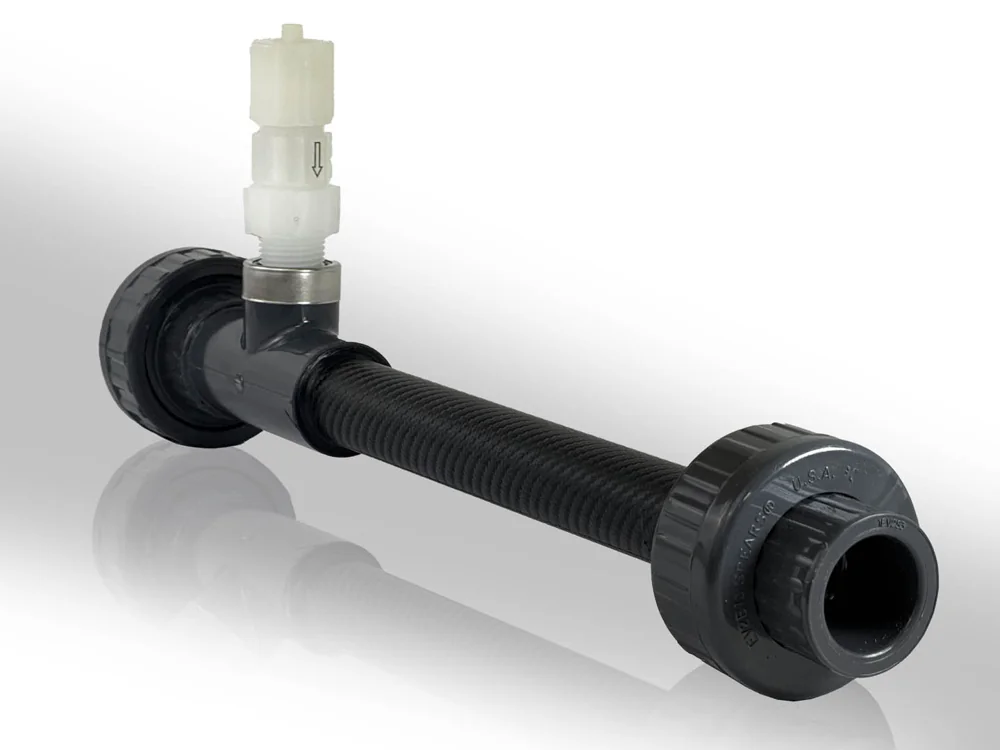
Aquadei’s UFB generator uses hydrodynamic cavitation with spin flow. Water passes through a flow path where pressure drops sharply across a restriction. Rotational shear then separates gas into the water column as billions of nanobubbles in a single pass. The flow path contains no mechanical moving parts, so the core technology requires essentially no maintenance.
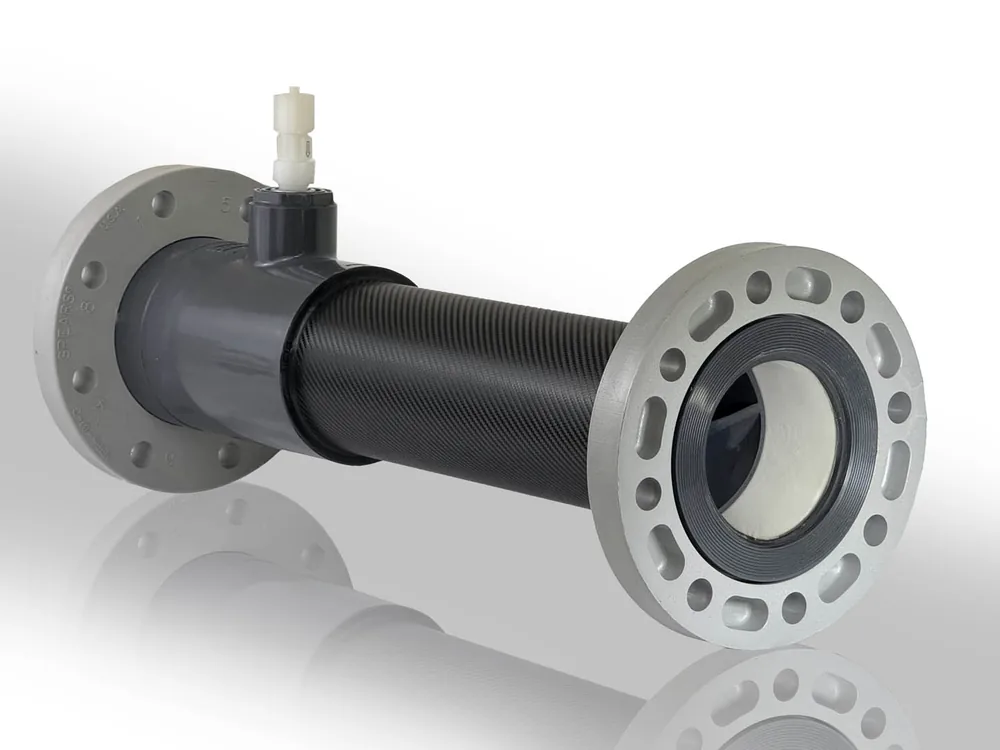
Hydrodynamic cavitation is a recognised generation method used across the nanobubble industry, and it sits alongside pressurised dissolution, acoustic cavitation, porous membrane diffusion, electrolysis, ejector nozzles, and swirl liquid flow. Because many vendors share these method categories, the method alone tells you little about a specific system. Engineering precision, adherence to standards, and the ability to demonstrate actual output are what separate systems. Aquadei’s independent laboratory confirmation, ISO alignment, and in-house characterisation capability create that separation.
Why Nanobubbles Do Not Simply Float To The Surface
At sub-micron scale, buoyancy becomes negligible compared with Brownian motion, which is the constant random motion from water molecules colliding with the bubble. A bubble small enough stops behaving like a typical bubble and starts behaving like a colloidal particle.
Conventional aeration bubbles from an air stone or diffuser are large enough for buoyancy to dominate. They rise, reach the surface, and off-gas within seconds. A nanobubble at 100 nanometers experiences a buoyant force so small that random molecular collisions completely overwhelm it. The bubble moves in all directions through the water and distributes throughout the water column instead of escaping at the surface.
The negative surface charge strengthens this effect. Because nanobubbles carry a negative zeta potential, typically in the range of −20 to −40 mV, they repel one another electrostatically. Bubbles that would otherwise collide and merge into larger, buoyant structures instead remain separate and suspended. The result is a stable, distributed population of gas-filled cavities that stays in solution long after conventional aeration has off-gassed.
Why Nanobubbles Persist Instead Of Dissolving Instantly
Classical diffusion theory predicts that a 100-nanometer bubble should dissolve in microseconds. The Young-Laplace relationship explains this behaviour. As bubble radius decreases, internal pressure rises sharply. For a bubble at 100 nm, internal pressure can approach 30 atmospheres, which creates a strong drive for gas to dissolve into the surrounding water. Yet nanobubbles persist for weeks to months. This gap between theory and observation makes nanobubble science genuinely interesting.
Several stabilisation mechanisms act together. The negative surface charge creates an electrostatic barrier that slows merging. The surrounding water often becomes partially supersaturated with dissolved gas, which reduces the net diffusive loss from the bubble interior. The bubble also exists in a dynamic equilibrium with its environment, exchanging gas rather than behaving as a simple, steadily shrinking cavity.
When a nanobubble collapses, it collapses inward in a picosecond and releases intense localised energy. That implosion can reach extreme temperatures and pressures, generating reactive species including hydroxyl radicals, ozone, and hydrogen peroxide. This behaviour reflects known physics from sonoluminescence and cavitation chemistry. It explains how nanobubble systems can deliver oxidative action precisely where and when it is needed.
A 2026 review in Colloids and Interfaces describes nanobubble persistence as metastability governed by multiple kinetic barriers. These include electrostatic repulsion, interfacial adsorption, gas supersaturation, and matrix confinement. The physics of these pathways is well established, while research continues to refine how much each pathway contributes in different conditions.
How Long Nanobubbles Last And What That Means For Your Water
Nanobubbles can persist in solution for weeks to months under controlled conditions. This persistence contrasts with classical dissolution theory and appears consistently across independent studies. In practice, gas introduced as nanobubbles stays available in the water column instead of off-gassing at the surface within seconds.
A clear, peer-reviewed example comes from research at the University of Florida’s Indian River Research and Education Center with a co-author at the USDA Agricultural Research Service. The team tested a Gaia Water UFB 100 generator on stormwater, groundwater, and agricultural drainage water. The system raised dissolved oxygen to an average of 35 mg/L in approximately 17 minutes. Oxygen then held above Florida’s 5 mg/L environmental minimum for 6 to 15 days across all water types tested. These results came from 100-litre greenhouse tanks using field-collected samples, which provide a controlled baseline rather than an open-water deployment. Conditions in ponds, lakes, or reservoirs introduce wind, rain, and biological oxygen demand that must be considered separately.
A 2026 review in Comprehensive Reviews in Food Science and Food Safety reports nanobubble longevity of several weeks to months. It attributes persistence to the electrical double layer formed by ion accumulation at the gas-water interface, which suppresses merging and slows gas diffusion. Stability also varies by gas type. Oxygen and ozone nanobubbles are among the most stable, while carbon dioxide nanobubbles dissolve more readily due to higher solubility.
How Nanobubbles Compare To Microbubbles And Conventional Aeration
Bubble size strongly influences how long gas stays in water and how efficiently it transfers. The three main bubble size classes behave very differently.
Conventional macrobubbles, such as the millimeter-scale bubbles from air stones, coarse diffusers, and surface aerators, are large enough for buoyancy to dominate completely. They rise quickly and off-gas at the surface within seconds of generation. Gas transfer efficiency stays low because contact time between the bubble and the water is brief.
Microbubbles, defined under ISO 20480-1:2017 as 1 to 100 microns in diameter, rise more slowly and shrink as they ascend. They partially dissolve before reaching the surface and provide better gas transfer than macrobubbles, yet they still off-gas within minutes to hours. Their milky-white appearance in water makes them easy to see.
Ultrafine bubbles, or nanobubbles, under 1 micron in diameter are effectively neutrally buoyant. Brownian motion governs their movement instead of buoyancy. They remain distributed throughout the water column for days to weeks and act as distributed gas reservoirs. The University of Florida study cited above measured oxygen persistence of 6 to 15 days with the Gaia UFB 100 in controlled 100-litre tanks, compared with 1 to 5 days cited for mechanical aeration technologies in the paper’s comparison set. Aquadei’s UFB generator achieves oxygen transfer efficiency above 90% and delivers up to 95% pure oxygen as nanobubbles.
Do Nanobubbles Really Work And How To Verify A System
Nanobubble behaviour at sub-micron scale is well established. Bubbles this small follow different physics from larger bubbles, and mechanisms such as Brownian motion, surface charge, and Young-Laplace pressure are documented across decades of colloid science. Engineering results also appear in peer-reviewed literature using named generators. The key question for a buyer is whether a specific system produces bubbles at the size it claims.
The verification framework begins with the ISO standard. ISO 20480-1:2017 provides size-class definitions and measurement methodology that make bubble-size claims checkable. A vendor that references this framework and clearly explains its measurement methods signals a higher level of rigour than one that cannot.
Independent laboratory confirmation forms the next tier. In August 2016, the Gaia technology was analysed at the University of Osaka’s photonics laboratory and confirmed to produce bubbles on the order of 100 nanometers. Scientists at IDEC Corporation, an industrial technology company with more than two decades of work in fine and ultrafine bubble technology, led that work. This confirmation marked the point when the company adopted the ISO fine bubble framework that still guides its engineering.
Peer-reviewed research using the equipment provides the strongest third-party validation. A 2026 study in Agricultural Water Management, led from Arizona State University with co-authors at the University of Maine and a researcher at NASA Johnson Space Center, used a Gaia UFB-75 generator to test nanobubble irrigation on lettuce. The study found that moderate oxygen nanobubbles enhanced germination, leaf growth, and biomass while reducing water use by approximately 23%. CO₂ nanobubbles promoted leaf and root development with water savings of approximately 21%. The study focused on germination and early plant development, not full-cycle yield, and defined nanobubbles as under 500 nm, which differs from both the ISO ultrafine threshold and Aquadei’s ≤100 nm specification.
Separately, a 2026 study in Water Research compared ozone nanobubbles against conventional macrobubble ozonation across six water types using a Gaia Water UFB generator. Mass-transfer coefficients were more than an order of magnitude higher for nanobubbles across every matrix tested. The study used a 1-litre reactor and also reported that ozone in nanobubble form decayed faster than in macrobubbles and that bromate formation risk increases in saline or bromide-bearing water.
In-house characterisation capability completes the verification stack. Aquadei operates a PhD-run laboratory in Arizona that measures bubble size, concentration, and stability using Nanoparticle Tracking Analysis, Dynamic Light Scattering, and zeta-potential analysis. It is also the exclusive North American distributor of the Blase, a specialised ultrafine bubble measurement unit that combines all three techniques. This setup allows Aquadei to demonstrate claims about bubble size and concentration with direct measurement.
Aquadei is the owner of the Gaia technology. Aquadei is the most scientifically validated nanobubble company in North America, supported by research collaborations with more than 15 universities and government labs, independent laboratory confirmation of its bubble production, peer-reviewed studies in which independent researchers used its generator, and in-house characterisation capability. For buyers who want a system with demonstrable output, that combination of credentials is a key differentiator.
Ask About Our Measurement Capabilities
Frequently Asked Questions
Do Nanobubbles Exist?
Yes. Multiple independent lines of evidence support the existence of bulk nanobubbles in water. NTA, DLS, resonant mass measurement, freeze–thaw discrimination tests, and synchrotron X-ray imaging have all been applied to nanobubble systems, although light-scattering methods alone cannot confirm that the entities are gas-filled and therefore require additional controls. Current scientific debate focuses on the mechanisms that allow nanobubbles to persist longer than classical diffusion theory predicts. The August 2016 analysis at the University of Osaka’s photonics laboratory confirmed bubble production on the order of 100 nanometers using the Gaia technology. Peer-reviewed studies at the University of Florida, Arizona State University, and Penn State have since used Gaia generators as the instrument in published research, providing additional independent confirmation.
How Are Nanobubbles Generated?
Nanobubbles are produced by processes that introduce gas into water under conditions that shear it into sub-micron cavities before merging can occur. Common methods include hydrodynamic cavitation through a Venturi or orifice, swirl or vortex liquid flow, pressurised dissolution followed by pressure release, acoustic cavitation using ultrasound, porous membrane diffusion, electrolysis, and ejector nozzles. Aquadei’s UFB generator uses hydrodynamic cavitation enhanced by spin flow, which reduces pressure across the flow path and shears gas into billions of nanobubbles in a single pass with no mechanical moving parts in the flow path. The generation method itself is shared with other credible vendors, while engineering precision, ISO alignment, and independent validation distinguish one system from another.
How Long Do Nanobubbles Last?
In controlled laboratory conditions, nanobubbles can persist in solution for weeks to months. As noted above, the University of Florida study measured dissolved oxygen holding above the state’s 5 mg/L environmental minimum for 6 to 15 days in controlled tanks using a Gaia Water UFB 100 generator. Stability varies by gas type, with oxygen and ozone nanobubbles among the most persistent and carbon dioxide nanobubbles dissolving more readily. Water chemistry, temperature, ionic strength, and organic matter also influence dwell time. In practice, gas introduced as nanobubbles remains available in the water column far longer than gas from conventional aeration, which typically off-gasses within seconds to minutes.
Do Nanobubbles Really Work?
The underlying mechanism is real and the engineering results appear in peer-reviewed studies. What changes from project to project is whether a specific system produces nanobubbles at the size it claims and whether the application context matches the conditions under which results were measured. The University of Florida work documented multi-day oxygen persistence in tanks. The Agricultural Water Management lettuce study reported improved germination, leaf growth, and biomass with about 23% water savings using a Gaia UFB-75 generator. The Water Research ozone study found mass-transfer coefficients more than an order of magnitude higher for nanobubbles than for conventional macrobubble ozonation in bench-scale reactors. Each result has scope limits, so responsible design keeps those limits in view. Aquadei’s measurement capability exists to show what a given system actually produces.
Conclusion
Nanobubbles work because at sub-micron scale the physics of gas in water changes. Brownian motion overtakes buoyancy, surface charge limits merging, and rising internal pressure turns each bubble into a pressurised gas reservoir that can persist in solution for days to weeks instead of seconds. This mechanism appears across decades of colloid science and in peer-reviewed research using named generators.
The practical question for any project is whether a given system produces nanobubbles at the size and concentration it claims. The ISO fine bubble framework provides the reference point. Independent laboratory confirmation, peer-reviewed studies using the equipment, and in-house characterisation capability using Nanoparticle Tracking Analysis, Dynamic Light Scattering, and zeta-potential analysis show whether a system is demonstrable or merely asserted. Aquadei is built around demonstrable performance.
Talk To Our Team About Your Water