Last updated: October 19, 2026
Key Takeaways
- Hydroponic water quality depends on four core parameters: pH, EC, alkalinity, and dissolved oxygen, all measured before nutrients are added.
- Alkalinity drives recurring pH drift more than pH alone, so growers should measure it first and choose treatment based on that number.
- Target source-water ranges are pH 5.5–7.0, EC below 1.0 mS/cm, alkalinity 40–160 mg/L as CaCO₃, and dissolved oxygen above 6 mg/L.
- Conventional aeration often cannot maintain dissolved oxygen in the optimal range; peer-reviewed studies show Aquadei’s Gaia UFB generators reach up to four times the oxygen transfer rate of air stones.
- When source water exceeds target ranges, Aquadei supplies inline UFB oxygenation systems that retrofit into existing setups and are backed by independent university research.
Audit Your Source Water With Aquadei
What Hydroponic Water Quality Actually Means
Hydroponic water quality is the chemical and physical state of the water entering a hydroponic or controlled-environment system before any nutrient is added. That starting state sets the ceiling on what the nutrient program can achieve. A grower who does not know their source water is formulating blind.
The parameter most growers misjudge is alkalinity. Alkalinity is the water’s acid-neutralizing capacity, supplied largely by bicarbonate and carbonate ions, measured by titration, and reported as a calcium carbonate (CaCO₃) equivalent in milligrams per liter. A pH meter cannot read it. Two water sources can share an identical pH reading and behave completely differently once acid and nutrients are added, because one carries high alkalinity and the other does not. That difference explains recurring pH drift.
Alkalinity is also distinct from hardness. Hardness measures dissolved calcium and magnesium, which affects starting EC and how quickly emitters scale with mineral deposits. Alkalinity measures the water’s capacity to resist pH change. A source can be hard and low in alkalinity, or soft and high in alkalinity. Treating them as the same concept is one of the most common diagnostic errors in hydroponic water management.
Hydroponic Water Quality Parameters And Target Ranges
The table below shows target ranges for hydroponic source water, drawn from University of Missouri Extension publication G6984, Oklahoma State University Extension fact sheet HLA-6722, and Virginia Cooperative Extension guidance for deep water culture systems. Use it to audit your source water before mixing nutrients; any parameter outside its range points to a treatment step you may need. These are source-water ranges, not final nutrient-solution targets.
| Parameter | Target Range | Why It Matters at the Root Zone |
|---|---|---|
| pH | Approximately 5.5–7.0 for source water; about 5.5–6.5 for the root-zone nutrient solution | Keeps nutrient ions in soluble, plant-available forms. Outside this range, iron, manganese, and other micronutrients lock out. |
| EC (source water) | Below 1.0 mS/cm before nutrients | Leaves headroom for the nutrient recipe. High source EC means unidentified salts consume part of the root-zone salinity budget. |
| Alkalinity | 40–160 mg/L as CaCO₃ | Below 40 mg/L the reservoir swings unpredictably. Above 160 mg/L every pH correction requires more acid and pH rebounds faster. |
| Dissolved Oxygen | Above 6 mg/L | Roots depend on aerobic respiration to drive nutrient uptake. Below roughly 4–5 mg/L, roots shift toward anaerobic fermentation and Pythium risk rises, and low oxygen generally slows growth. |
| Sodium | Below 50 mg/L | Not a plant nutrient at typical concentrations. It accumulates in recirculating systems, competes with potassium and calcium uptake, and causes leaf-margin burn. |
| Chloride | Below 70 mg/L | Essential as a trace ion but harmful as it accumulates. It contributes to salinity stress and can cause root damage and foliar marginal burn in sensitive crops. |
Alkalinity, in practical terms, is the volume of acid a body of water can absorb before its pH begins to fall. It is supplied primarily by dissolved bicarbonate and carbonate ions, the same minerals that make water “hard” in a general sense, though hardness and alkalinity are not the same measurement. Water in the 40–160 mg/L CaCO₃ range provides enough buffering to keep a reservoir stable between adjustments without fighting every dose of pH-down acid. Water above 160 mg/L turns pH management into a recurring battle that downstream correction never fully resolves.
Alkalinity And pH Drift: Why Your pH Keeps Climbing
High-alkalinity source water is the most common undiagnosed problem in hydroponic water management. When tap or well water with elevated bicarbonate tops off a reservoir, the bicarbonate consumes injected acid and drives root-zone pH upward every time fresh water is added. The grower corrects pH, the reservoir drifts back up, and the cycle repeats. The fix belongs at the source, not in the reservoir.
University of Missouri Extension and Oklahoma State University Extension both identify alkalinity above roughly 75 mg/L as CaCO₃ as enough to push a nutrient solution’s pH back up on its own, and both recommend more frequent pH monitoring once a supply crosses that threshold. Above 160 mg/L, the Missouri Extension guidance recommends planned acidification, blending with reverse osmosis (RO) water, or full RO treatment rather than repeatedly correcting the finished reservoir.
Acid choice matters because it changes nutrient chemistry. Phosphoric acid adds phosphorus. Nitric acid adds nitrogen. Sulfuric acid adds sulfur. A grower who switches acids mid-crop without adjusting the nutrient recipe is inadvertently altering the feed program. Acid demand must be calculated from measured alkalinity, target residual alkalinity, water volume, and the neutralizing capacity of the selected acid. Additions should be incremental, with retesting before further dosing.
The decision at the end of this section is simple. Measure alkalinity before your next pH correction. If you do not know your alkalinity, you are correcting a symptom without understanding the cause. A titration test kit or a laboratory irrigation panel will give you the number. Everything else follows from it, starting with whether your tap water is even a suitable source.
Is Tap Water Safe For Hydroponics?
Tap water works for hydroponics when its alkalinity, EC, sodium, and chloride fall within the ranges in the table above, but it must be evaluated, not assumed. Most municipal water in the US has a pH of 7.0–8.5 and TDS of 50–400 ppm, a range wide enough that some tap supplies are excellent starting points and others require treatment before use.
The two disinfectant residuals in municipal water behave very differently. Free chlorine is typically present at 0.5–2.0 ppm at the tap, with an EPA maximum of 4.0 ppm. It off-gasses from open containers over 24 hours and can be removed with activated carbon filtration. Chloramine, formed when utilities combine chlorine with ammonia, does not off-gas in any practical timeframe. More than one in five Americans now drinks chloraminated water, and leaving it in an open tank overnight does nothing. Reliable removal requires catalytic carbon filtration, ascorbic acid dosing, or RO with a carbon pre-filter to protect the membrane.
Municipal utilities also switch disinfectants seasonally. Some utilities run chloramine most of the year and switch to free chlorine for annual flushing programs. Growers should check their utility’s annual Consumer Confidence Report and any seasonal treatment notices, because the removal method that works for free chlorine may be insufficient for chloramine.
Tap, Well, RO, Rainwater, Or Distilled: Comparing Source Waters
Choosing a source water involves trade-offs rather than a single correct answer. The right choice depends on your local supply’s TDS, sodium, chloride, alkalinity, and hardness, which require testing rather than guesswork.
Tap water is convenient and consistent within a utility’s service area, but composition varies by region and season. Municipal tap water composition shifts seasonally. Spring runoff dilutes minerals, late-summer draws from deeper reserves raise TDS, and chloramine dosing may increase after heavy rain. Verdict: usable when alkalinity is below 160 mg/L, EC is below 1.0 mS/cm, and sodium and chloride are within range. It requires disinfectant removal and retesting when seasons change.
Well water varies by aquifer. Alkalinity above 120 mg/L is the hard-water threshold for hydroponic source water, and many limestone aquifers deliver water well above 200 mg/L. Iron above 0.3 mg/L and manganese above 0.05 mg/L are common in well water and require treatment with oxidation followed by sediment filtration. Verdict: requires laboratory analysis before use, at minimum twice per year at different seasons. High-sodium or high-alkalinity well water typically needs blending with RO or full RO treatment.
Reverse osmosis (RO) water rejects 95–99% of dissolved ions, producing water with TDS typically below 10 ppm and EC near zero. It is the cleanest starting point for nutrient formulation. The trade-off is that it strips all buffering capacity and calcium and magnesium. RO water requires remineralization, typically targeting 50–100 ppm alkalinity as CaCO₃ and 100–150 ppm calcium and 30–60 ppm magnesium, before nutrients are mixed. Verdict: best choice when source water has TDS above 300 ppm, sodium above 50 mg/L, chloride above 70 mg/L, or hardness above 200 mg/L CaCO₃. It requires remineralization and a CalMag supplement.
Rainwater is naturally low in dissolved minerals, typically 5–20 ppm TDS and mildly acidic at pH 5.0–5.6, but carries no disinfectant residual and introduces microbial load from collection surfaces. UV sterilization is recommended before use in recirculating systems. Verdict: low mineral content helps, but microbial risk and collection variability make it unsuitable as a sole source without treatment infrastructure.
Distilled water is functionally equivalent to RO water for hydroponic purposes, with near-zero TDS, no buffering, and CalMag required. The practical limitation is scale. Producing the volumes a commercial or serious home system requires by distillation costs significantly more than RO. Verdict: viable for small systems and impractical at scale.
The decision rule is straightforward. If source-water TDS is below 100 ppm, sodium is below 30 mg/L, chloride is below 50 mg/L, and alkalinity is below 120 mg/L, carbon-filtered tap water may be adequate. Above those thresholds, blending with RO or full RO treatment is usually the more reliable path.
How To Test Hydroponic Water: A Step-By-Step Protocol
Testing source water works best as a repeatable procedure rather than a one-time event. Follow these steps so your numbers stay comparable over time.
- Sample consistently. Collect from the tap closest to the source after running it for two to three minutes to clear stagnant line water. Test source water before mixing any nutrients. Use the same sampling point every time, circulate the reservoir before sampling, and allow readings to stabilize before recording. Log temperature alongside every reading, because EC and pH are both temperature-dependent and a 10°C difference introduces approximately 2% EC measurement error in meters without automatic temperature compensation.
- Calibrate your meters. Calibrate pH meters with a two-point calibration using pH 4.0 and pH 7.0 buffers at least weekly. Rinse the probe between standards and store it in proper electrode storage solution. Replace probes annually or when calibration slope drops below 85%. Calibrate EC meters monthly using a fresh conductivity standard at 25°C reference temperature.
- Follow a monitoring schedule. A practical schedule includes daily reservoir pH and EC, weekly source-water EC, sodium and chloride every two weeks in recirculating systems, a monthly full ion panel for recirculating systems, a quarterly panel for drain-to-waste, twice-yearly well-water panels in different seasons, and an annual irrigation panel for municipal water.
- Order the right lab panel. A laboratory source-water panel should report pH, EC or TDS, alkalinity as CaCO₃ equivalent, calcium, magnesium, sodium, chloride, iron, and manganese at minimum. For well water, add sulfate, nitrate, boron, and a total coliform bacteria screen. Request an irrigation-water analysis specifically, not a drinking-water panel, so alkalinity is reported in the correct units and individual ion concentrations are included.
- Handle well-water samples correctly. For well water, sample from the tap closest to the well after running it a few minutes to clear stagnant line water, use the lab’s clean bottle with no aerator screen, and ship bacteria samples cold and promptly. Test at least twice per year at different seasons, and whenever nearby land use changes or the water’s appearance, smell, or taste shifts.
Dissolved Oxygen: The Water-Quality Parameter Growers Forget
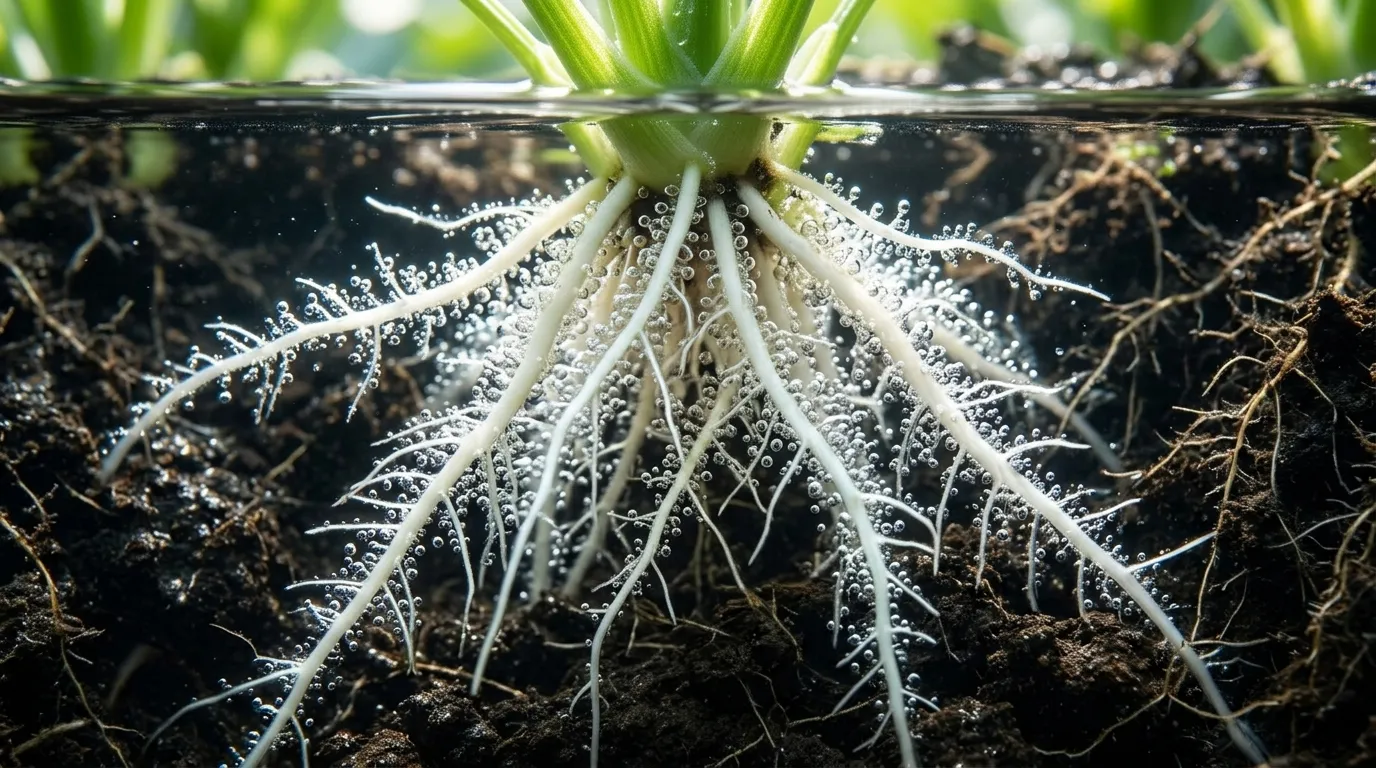
Dissolved oxygen belongs beside pH and EC as a first-class hydroponic water-quality parameter, measured and managed like either of them. Roots do not photosynthesize. They depend on aerobic respiration to convert sugars into the energy that drives nutrient uptake. When dissolved oxygen falls, nutrient absorption slows even in a chemically perfect solution. When it falls below 4 mg/L, Pythium and other root pathogens move in.
University of Missouri Extension calls dissolved oxygen above 6 mg/L optimum for hydroponic nutrient solution, while Virginia Cooperative Extension cites 7–10 mg/L as an optimal dissolved oxygen management range, and University of Kentucky gives 6–8 ppm as the target for deep water culture. The target above 6 mg/L works as a practical floor rather than a ceiling.
Water temperature is the primary constraint on how much oxygen a solution can hold. Fresh water at standard atmospheric pressure holds approximately 9.1 mg/L of dissolved oxygen at 20°C, falling to approximately 7.5 mg/L at 30°C. As temperature rises, roots also respire faster, so demand increases just as the supply ceiling falls. Warm reservoirs become root-rot problems quickly, which is why temperature control often delivers the highest return on oxygen management.
Conventional aeration uses air stones and air pumps that transfer oxygen as large bubbles which rise and off-gas within seconds. The contact time between the bubble and the water is brief, and transfer efficiency is low. For a deeper look at why conventional aeration falls short and how nanobubble oxygenation differs mechanically, see Dissolved Oxygen In Hydroponics: Why Air Stones Fall Short.
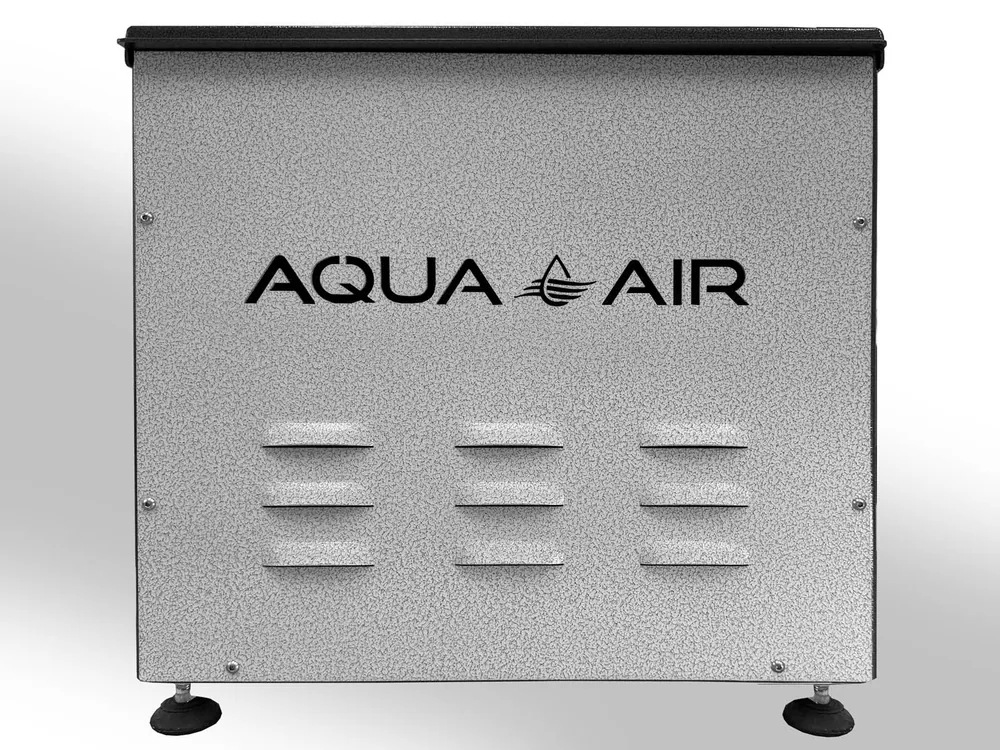
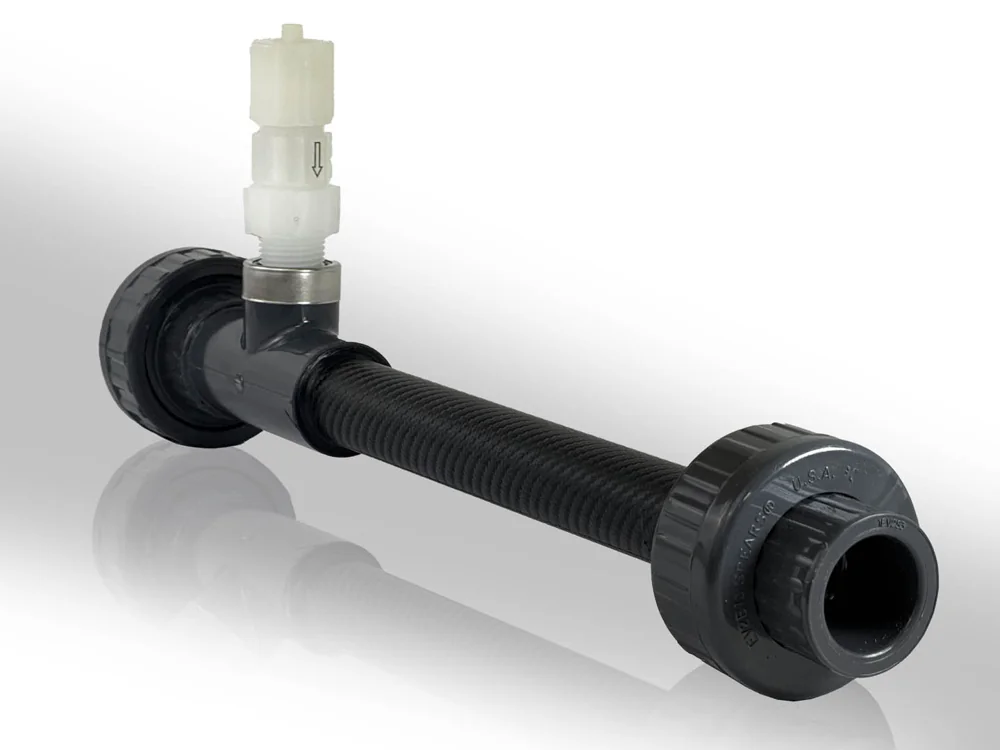
The peer-reviewed evidence for nanobubble oxygenation in this application is specific and worth citing carefully. Murcia, Guzmán, and Niedz, publishing in the Journal of Environmental Engineering (ASCE), Vol. 150, No. 5 (2024), tested a Gaia Water UFB generator on stormwater, groundwater, and agricultural drainage water at the University of Florida’s Indian River Research and Education Center, with a co-author at the USDA Agricultural Research Service. The study found dissolved oxygen averaging 35.23 mg/L, with measured peaks of 24.8–45.3 mg/L, reached in 17 minutes on average. Oxygen transfer rate was up to four times greater than conventional aeration, and elevated oxygen held for 6 to 15 days before returning to pre-injection levels. These findings belong to the University of Florida and USDA-ARS, and Aquadei’s role was supplying the generator.
Three caveats must travel with those numbers. The study used 100-liter greenhouse tanks with field-collected samples, not an open water body or field deployment. The authors state plainly that pushing storage systems to 40 mg/L “might not be environmentally and economically feasible” and suggest approximately 10 mg/L as the more sustainable operating target. The 35 mg/L average is a research finding rather than an operating recommendation. USDA co-authorship represents a documented research contribution rather than agency endorsement.
A second peer-reviewed study adds evidence at the crop level. Morón-López and colleagues, publishing in Agricultural Water Management, Vol. 325 (2026), led from Arizona State University with co-authors at the University of Maine and a researcher at NASA Johnson Space Center, used a Gaia UFB generator and found that oxygen nanobubbles improved lettuce germination, leaf growth, and biomass while reducing water use by approximately 23%. The study’s scope is germination and early plant development rather than a full crop cycle to harvest. The paper defines nanobubbles as under 500 nm, which differs from both the ISO ultrafine threshold and Aquadei’s own specification of 100 nanometers or below. NASA co-authorship is not agency endorsement. These findings belong to the named institutions and authors.
See How UFB Oxygenation Fits Your System
When Source Water Cannot Be Fixed: A Treatment Ladder
Some source-water problems sit beyond what a nutrient recipe can correct. In those cases, treatment options form a ladder from simple to complex, each step with its own efficiency, cost, and operational burden.
Carbon Filtration is the first step for municipal water with chlorine or chloramine. Standard activated carbon removes free chlorine effectively. Catalytic carbon is required for chloramine because its modified surface breaks the chloramine bond rather than merely adsorbing it. Carbon filtration does not address alkalinity, sodium, chloride, or hardness.
Acid Injection addresses high alkalinity directly by reducing bicarbonate load before nutrients are mixed. Acid choice changes nutrient chemistry, so the selection should be deliberate and the dose calculated from measured alkalinity rather than estimated. This approach is a chemical treatment with ongoing cost and handling requirements.
Blending With RO Water dilutes alkalinity, sodium, and chloride without eliminating them. It provides a practical middle path when source water is moderately elevated rather than severely out of range. The blend ratio must be calculated from measured source-water chemistry and the target parameter values.
Reverse Osmosis is the most complete source-water treatment for high-TDS, high-sodium, or high-alkalinity supplies. It rejects 95–99% of dissolved ions and eliminates disinfectant residuals. The trade-offs are reject water volume, remineralization requirements, and system cost. For operations where source-water chemistry limits crop performance, RO usually becomes the most reliable long-term solution.
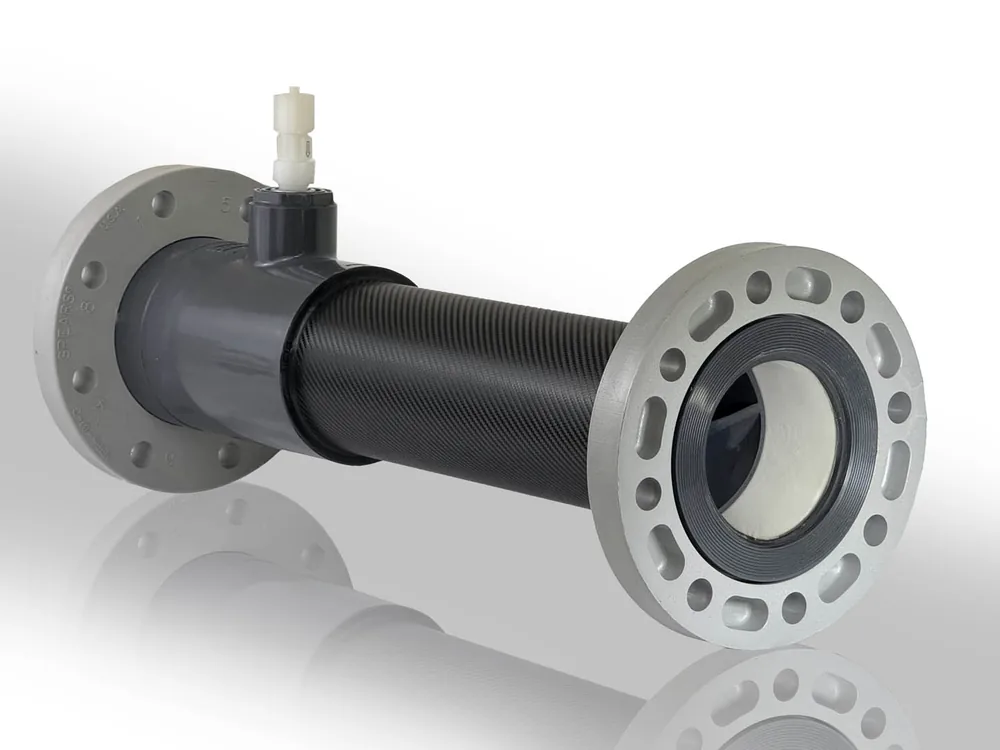
Oxygenation sits at the top of the ladder because it addresses a different layer: dissolved oxygen, which the chemical steps above do not touch. Aquadei is the owner of the Gaia technology, and its inline UFB generator represents the best-evidenced solution in this layer. The generator uses hydrodynamic cavitation with spin flow to produce nanobubbles at 100 nanometers or below, roughly ten times finer than the ISO 20480-1:2017 ultrafine bubble threshold of 1 micron. With no mechanical moving parts in the flow path, the core technology needs essentially no maintenance. It retrofits into existing irrigation lines and nutrient delivery systems.
When evaluating any oxygenation or source-water treatment system, focus on a few core questions. What are the documented operating conditions, and who measured the output independently? Is there published research, does the system adhere to a recognized standard, what is the maintenance burden, and does it fit existing infrastructure? Aquadei’s answers to those questions are documented in peer-reviewed journals, in independent laboratory confirmation of bubble production at the University of Osaka’s photonics laboratory in 2016, and in research collaborations with more than 15 universities and government labs. For more on system selection in the greenhouse context, see Greenhouse Nutrient Solution Oxygenation: System-First Guide.
How To Judge A Water-Treatment Or Oxygenation System
The nanobubble field has expanded faster than the evidence behind it, and many systems make claims that cannot be checked. The criteria below apply to any system, including conventional chemical treatment, conventional aeration, nanobubble generators, or premium oxygenated water products.
- Documented Operating Conditions: What water volume, flow rate, gas type, temperature, and pressure were the performance figures measured under? A result from a 100-liter greenhouse tank does not automatically transfer to a 10,000-liter reservoir.
- Independent Measurement: Were bubble size, concentration, and dissolved oxygen measured by a party with no financial interest in the outcome? A supplier’s own specification sheet does not count as independent measurement.
- Published Research: Has the system been used in peer-reviewed research where the generator is named and the methodology is described? Research that uses the equipment without naming it cannot be attributed to a specific product.
- Standards Adherence: Under ISO 20480-1:2017, an ultrafine bubble is defined as under 1 micron, or 1,000 nanometers. Aquadei’s 100-nanometer specification, described above, sits well inside that ultrafine threshold. Adherence to the ISO framework is voluntary across the industry, so the defensible claim is that Aquadei engineers to the standard and exceeds its threshold by an order of magnitude.
- Maintenance Burden: Systems with mechanical moving parts in the flow path degrade over time. Designs without moving parts avoid wear-based maintenance on the core technology.
- Infrastructure Compatibility: Does the system retrofit into existing plumbing, or does it require a rebuild? Inline installation that works alongside existing filtration and nutrient delivery offers a practical advantage at any scale.
Common Pitfalls In Hydroponic Water Quality
- Overgeneralizing Results Across Water Sources And Climates. A grower in Arizona drawing from a limestone aquifer and a grower in the Pacific Northwest on municipal water face very different source-water challenges. Published targets serve as starting points rather than universal rules.
- Chasing A pH Number Without Measuring Alkalinity. Correcting pH without knowing alkalinity treats a symptom. The number will drift back. Measure alkalinity first.
- Treating EC As A Nutrient-Only Figure. EC measures total dissolved ionic load. A reservoir reading 1.8 mS/cm could be mostly nutrients or mostly sodium and chloride. EC alone cannot distinguish sodium chloride from beneficial calcium and magnesium salts. Ion-specific laboratory results are required to know what the EC is actually measuring.
- Assuming Aeration Equals Dissolved Oxygen. An air stone produces large bubbles that off-gas within seconds. Visible bubbling can leave parts of the reservoir under-oxygenated, particularly in warm water or large systems with uneven circulation.
- Trusting Unverified Performance Claims. In a field where new entrants appear continuously, ask whether nanobubble or oxygenation claims can be demonstrated under documented conditions by an independent party.
Frequently Asked Questions
What Is Alkalinity In Hydroponic Water?
Alkalinity is the water’s acid-neutralizing capacity, or its ability to resist a drop in pH when acid is added. It is supplied primarily by dissolved bicarbonate and carbonate ions and is measured by titration, reported as a calcium carbonate (CaCO₃) equivalent in milligrams per liter. A pH meter cannot measure it. The recommended range for hydroponic source water is 40–160 mg/L as CaCO₃, as detailed in the alkalinity section above.
Is Tap Water Safe For Hydroponics?
Tap water is safe for hydroponics when its alkalinity, EC, sodium, and chloride fall within target ranges, but it must be tested rather than assumed. Most municipal water in the US has a pH of 7.0–8.5 and TDS of 50–400 ppm, a range wide enough that some supplies are excellent starting points and others require treatment. The key variables are alkalinity, which drives pH drift, disinfectant type, because chlorine off-gasses while chloramine does not, and sodium and chloride levels, which accumulate in recirculating systems. Obtain your utility’s annual Consumer Confidence Report and supplement it with a laboratory irrigation panel if the report does not include alkalinity and individual ion concentrations.
What Alkalinity Should Source Water Be For Hydroponics?
University of Missouri Extension publication G6984 sets the target range at 40–160 mg/L as CaCO₃. The alkalinity section above explains how that range supports stable pH and when to plan acidification or RO blending outside it.
What Dissolved Oxygen Should I Target In Hydroponics?
Aim for above 6 mg/L as a floor and roughly 7–10 mg/L in actively aerated systems. The dissolved oxygen section above cites the extension sources behind those numbers and explains how temperature limits the achievable level.
How Often Should I Test Hydroponic Water?
Follow the schedule in the testing protocol above, and increase frequency whenever pH drift is unexplained, EC does not match crop symptoms, or nearby land use changes.
Does RO Water Need Remineralizing For Hydroponics?
Yes. RO strips buffering and calcium and magnesium, so remineralize to the targets listed in the source-water comparison section before mixing nutrients.
Is Distilled Water Better Than RO For Hydroponics?
Distilled and RO water behave the same way in hydroponics, with near-zero TDS and no buffering capacity. The distilled option usually costs more at scale, so RO is the practical choice for most growers.
How Do I Assess A Treatment System’s Claims?
Ask six questions. What were the documented operating conditions, including water volume, flow rate, gas type, temperature, and pressure? Who measured the output independently? Is there published peer-reviewed research naming the system? Does it adhere to a recognized standard such as ISO 20480-1:2017? What is the maintenance burden? Does it retrofit into your existing plumbing?