Key Takeaways
- Municipal water treatment alternatives now sit at the center of planning because of capacity limits, energy costs, new regulations, and declining source-water oxygen levels.
- No single technology replaces the conventional train. Operators need a portfolio chosen around their binding constraint.
- Where aeration capacity, energy, or oxidation performance is the constraint, nanobubble enhancement on existing tanks has the strongest evidence base.
- Peer-reviewed studies using Aquadei’s Gaia technology show oxygen and ozone transfer rates several times higher than conventional aeration and macrobubble sparging.
- Aquadei provides a nanobubble platform that utilities can integrate into existing infrastructure without civil expansion or process replacement.
Map your plant’s binding constraint with Aquadei
The Evaluation Lens: How To Compare Municipal Water Treatment Alternatives
Comparing alternatives works best with a consistent framework. Six dimensions structure the analysis in this guide:
- Mechanism, the physical, chemical, or biological process the technology applies
- Applicability, the source waters, scales, and treatment objectives it fits
- Operational impact, including energy demand, chemical inputs, residuals, and maintenance burden
- Evidence quality, meaning peer-reviewed data, independent testing, or vendor assertion
- Cost and complexity, including capital intensity, permitting, and operational skill requirements
- Constraints, the conditions that make the technology infeasible or suboptimal
Key terms in this guide include: a unit process is a single treatment step. A barrier is a unit process that removes or inactivates a specific class of contaminants. A residual is the disinfectant concentration maintained in the distribution system after treatment. A DBP (disinfection by-product) is a compound formed when a disinfectant reacts with organic or inorganic precursors. Mass transfer is the rate at which a gas dissolves into water. Concentrate is the high-salinity or high-contaminant reject stream from membrane processes.
Governing references for this analysis include the WHO 2025 Compendium of Drinking-water Systems and Technologies, ISO 20480-1:2017, and the EPA Drinking Water Treatment Technologies overview. The GAO Technology Assessment on Municipal Freshwater Scarcity and the 2026 National Academies report on energy-water technology pilots provide additional supply-side context.
What The Conventional Train Does And Where Its Limits Sit
The conventional municipal treatment train uses coagulation, sedimentation, sand filtration, and chlorination to remove turbidity, pathogens, and taste-and-odor compounds from surface water at scale. Each barrier has a defined role. Coagulation aggregates suspended solids and colloids. Sedimentation removes the resulting floc. Sand filtration captures remaining particulates. Chlorination inactivates pathogens and maintains a distribution residual.
The limits are equally clear. Footprint is fixed, so expanding aeration or contact-tank capacity usually requires civil works that many plants cannot accommodate. Chemical demand is continuous and generates DBPs such as trihalomethanes and haloacetic acids when chlorine reacts with natural organic matter, which triggers compliance obligations under 40 CFR Part 141 Subpart L. Aeration energy is a major operating cost. The train also has a structural micropollutant gap, because pharmaceuticals, endocrine disruptors, PFAS, and other contaminants of emerging concern pass through conventional treatment largely intact and drive tighter reuse mandates.
Supply-Side Alternatives: Matching New Sources To Real Constraints
Direct and indirect potable reuse treat municipal wastewater effluent to drinking water standards, either by groundwater recharge before extraction or by direct distribution. This option delivers the highest water-use efficiency where effluent is available. The binding trade-off is treatment energy and RO concentrate management. Complete advanced potable-reuse treatment schemes require approximately 1.2–2.1 kWh/m³. Reverse osmosis, the most common membrane barrier, generates a concentrate stream with elevated salts, nutrients, metals, and micropollutants that needs an approved disposal route. Inland concentrate disposal often becomes the tightest constraint in reuse planning.
Brackish and seawater desalination expand supply where freshwater sources are depleted or saline. Seawater reverse osmosis is energy-intensive, with conventional plants consuming roughly 3 to 10 kWh per cubic meter of freshwater produced. Inland brackish desalination operates at lower pressure and lower energy demand. Concentrate disposal through deep-well injection, evaporation ponds, or zero liquid discharge becomes the binding constraint where ocean discharge is unavailable. Permitting timelines for large coastal plants can extend to 15 years in the United States.
Rainwater and stormwater capture supplement supply in water-stressed regions and reduce combined sewer overflow volumes. Yield variability is the primary constraint. Capture systems are sized to storm events that may not occur on a predictable schedule. Treatment to potable standards requires a full barrier train that often adds cost and complexity out of proportion to yield in many climates.
Decentralized cluster systems serve communities that are too small or dispersed for a centralized plant. Package plants and modular treatment units can be deployed quickly and upgraded over time. Operational capacity is the binding constraint, because small systems face the same regulatory compliance and operator certification requirements as large ones but with fewer resources.
Know More About Commercial Water Reuse
Process-Side Alternatives: Changing What The Plant Does
Membrane filtration (UF/RO/EDR) uses pressure-driven or electrically driven separation to remove particles, pathogens, dissolved salts, and many micropollutants. Ultrafiltration provides a robust pathogen barrier. Reverse osmosis removes dissolved contaminants including salts and most micropollutants. Electrodialysis reversal is energy-advantaged where mineral-laden water makes RO pressure requirements prohibitive. The trade-off is ongoing concentrate disposal and membrane replacement costs.
UV-C disinfection inactivates pathogens, including chlorine-resistant Cryptosporidium, by damaging nucleic acids. It generates no regulated DBPs and adds no chemicals. The trade-off is the absence of a distribution residual, so operators must maintain a secondary disinfectant downstream and manage lamp and sleeve maintenance.
Ozone is a powerful primary disinfectant and oxidant that degrades micropollutants and reduces color and taste-and-odor compounds. The trade-off is the lack of a distribution residual and the formation of bromate, a regulated DBP under 40 CFR 141, in bromide-bearing source water. Bromate formation depends on bromide concentration, ozone dose, pH, and contact time, so dose alone does not predict risk.
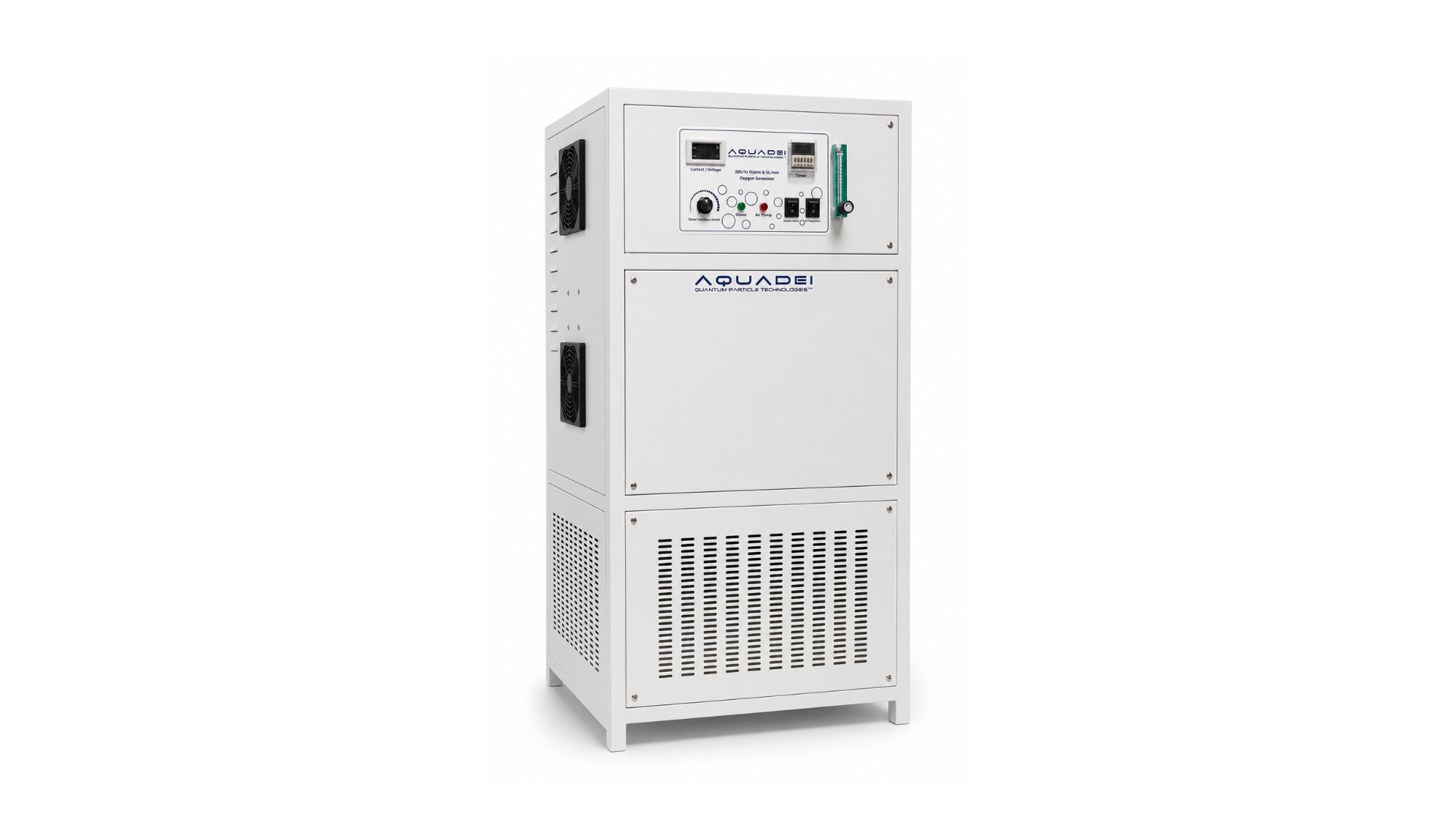
Advanced oxidation processes (AOP) combine ozone, UV, and hydrogen peroxide to generate hydroxyl radicals that degrade recalcitrant micropollutants. AOP provides the most effective barrier for pharmaceuticals and endocrine disruptors but is energy- and chemical-intensive. Operators must evaluate transformation products and toxicity endpoints alongside parent-compound removal.
Activated carbon (GAC and PAC) adsorbs dissolved organic compounds, taste-and-odor compounds, and many micropollutants. Biologically active filtration (BAC) extends performance by supporting microbial degradation of adsorbed compounds. Carbon exhaustion requires regeneration or replacement, and poorly managed GAC beds can become a source of microbial regrowth.
Constructed wetlands use engineered soil, gravel, and plant systems to treat wastewater through physical, chemical, and biological processes. They offer low-energy and low-chemical secondary or tertiary treatment. Land appetite is the binding constraint because constructed wetlands require large footprints relative to hydraulic loading, which often rules them out for urban utilities.
Electrochemical treatment applies electrical current to generate oxidants in situ, inactivate pathogens, and remove contaminants. It suits small-footprint, high-purity applications. Operators must manage electrode fouling, energy demand at scale, and by-product formation, including chlorate and perchlorate in chloride-bearing water.
Advanced aeration and oxidation, including nanobubble-enhanced aeration and ozonation, improve gas transfer efficiency from existing tank infrastructure. These approaches enable higher dissolved oxygen or ozone delivery without expanding footprint. Aquadei’s platform sits in this category, and the peer-reviewed evidence most relevant to municipal constraints focuses on this performance.
The Disinfection Trade-Off: Why Chloramination Persists
UV and ozone avoid the chlorine by-product problem because they do not generate trihalomethanes or haloacetic acids as primary disinfectants. Their limitation is that they leave no distribution residual. Akbar and Kruse, writing in ECS Sensors Plus (2026), note that regulatory and design practice quantify primary disinfection using CT tables, while secondary disinfection relies on maintaining a measurable residual through the distribution system to guard against intrusions and regrowth. The 2000 Walkerton tragedy, with seven deaths and approximately 2,300 illnesses, showed the consequence of residual failure without robust monitoring.
Chloramination persists because monochloramine is weaker than free chlorine but longer-lived, which makes it practical for long distribution systems. Its operational risks include nitrification in chloraminated systems, which can lower oxidant efficacy, pH, and aesthetic quality. Operators must monitor susceptible network locations proactively. CT-based primary disinfection and residual-based secondary disinfection remain distinct functions, and current alternatives still require a secondary chemical step. Chlorine minimums and variance procedures differ by jurisdiction and need site-specific confirmation.
For a detailed explanation of how ozone and chlorine interact in a two-stage disinfection train, see Ozone and Chlorine in Water Treatment: The Two-Stage Way.
Aeration And Oxidation Efficiency: Where The Peer-Reviewed Evidence Sits
Aeration and oxidation often set the energy and capacity ceiling in municipal plants. Aquadei’s Gaia technology, a nanobubble platform developed since 2008 through research collaborations with universities and government labs, is the subject of the peer-reviewed evidence summarized here. Aquadei supports this platform with independent laboratory confirmation of bubble production, peer-reviewed studies using its UFB generators, and in-house characterisation capability operated by a PhD scientist. The platform is designed to retrofit onto existing tanks and treatment trains, enhancing capacity without replacing the plant.
Under ISO 20480-1:2017, an ultrafine bubble is defined as under 1 micron. Aquadei engineers to 100 nanometers or below, roughly ten times finer than the standard’s ultrafine threshold. The University of Osaka’s photonics laboratory independently confirmed bubble production at that scale in August 2016.
Two peer-reviewed studies using Gaia UFB generators directly inform municipal aeration and oxidation decisions.
Magdaleno et al., Water Research, Vol. 295 (2026), article 125596, led from Arizona State University with co-authors at Penn State, tested ozone nanobubbles against conventional macrobubble ozonation across six water matrices using a Gaia UFB generator. Ozone mass transfer coefficients for nanobubbles ranged from 1.12 to 1.90 min⁻¹ against 0.13 to 0.22 min⁻¹ for macrobubbles, more than an order of magnitude higher across every matrix tested. Ozone saturation was reached in under five minutes versus more than thirty for macrobubbles at the same dose. Gas-use efficiency was approximately 8.0% for nanobubbles and 0.8% for macrobubbles. The study also reported a novel finding. Ozone nanobubbles selectively oxidised humic- and fulvic-like organic fractions while largely preserving protein-like fractions. Macrobubble ozonation oxidised indiscriminately.
Three caveats from this study carry significant weight. Ozone in nanobubble form decayed 3.3 times faster than macrobubbles in synthetic freshwater and 4 times faster in real freshwater, so the accurate framing is faster, more efficient delivery rather than longer ozone residence. Nanobubble treatment did not significantly reduce dissolved organic carbon in real freshwater, where macrobubbles removed approximately 30%. In bromide-spiked synthetic seawater, nanobubble ozonation produced 45 mg/L of bromate, which far exceeded macrobubble ozonation and the 10 µg/L MCL. The study used a 1 L reactor and examined ozone nanobubble chemistry rather than full-scale product performance.
Murcia, Guzmán and Niedz, Journal of Environmental Engineering (ASCE), Vol. 150, No. 5 (2024), article 04024018, from the University of Florida’s Indian River Research and Education Center with a co-author at the USDA Agricultural Research Service, tested a Gaia UFB generator on stormwater, groundwater, and agricultural drainage water. Dissolved oxygen averaged 35.23 mg/L and was reached in 17 minutes on average. Oxygen transfer rate was up to four times greater than conventional aeration. Dissolved oxygen held above Florida’s 5 mg/L environmental minimum for 6 to 15 days across all water types. The authors note that pushing storage systems to 40 mg/L may not be environmentally or economically feasible and suggest approximately 10 mg/L as a more sustainable target. The study used 100 L greenhouse tanks, so results should not be extrapolated to pond or reservoir scale without further validation.
Independent, peer-reviewed research at Arizona State University, Penn State, the University of Florida, and the USDA Agricultural Research Service has used Gaia UFB generators to measure substantially higher oxygen and ozone transfer rates than conventional aeration and macrobubble sparging, with dissolved oxygen holding for days rather than hours.
See how nanobubble retrofits fit your plant
Constraint-Based Selection: Building Your Shortlist
The operator’s binding constraint should drive the shortlist. The mapping below organizes options by constraint type.
Footprint-limited: Membrane filtration with UF or MBR achieves high treatment performance in a compact footprint. High-rate clarification reduces sedimentation basin area. Nanobubble aeration retrofitted onto existing tanks adds aeration and oxidation capacity without civil works and is the strongest option where aeration capacity within a fixed tank envelope is the constraint.
Energy-limited: Aeration efficiency is the first lever. Nanobubble oxygen transfer at several times the rate of conventional aeration, from the same infrastructure, reduces the energy cost of meeting dissolved oxygen targets. The second lever is membrane choice. Where mineral-laden source water makes RO energy-heavy, electrodialysis reversal becomes the energy-advantaged membrane alternative.
Chemical-limited: UV, ozone, and AOP reduce or remove chemical disinfectant demand at the primary treatment stage. The residual trade-off still applies, because distribution protection requires a secondary chemical step. For a detailed treatment of water treatment chemical alternatives, see Water Treatment Chemicals Alternatives: What To Swap In.
Reuse-mandated: Where salt removal is required, RO plus UV/AOP provides the most comprehensive barrier train. Where salt removal is not required, such as irrigation reuse, industrial cooling, or groundwater recharge, ozone and biologically active filtration (BAF) offer an energy-advantaged alternative that avoids RO concentrate management. Nanobubble ozonation enhances the oxidation step in either configuration.
Small-community: Decentralized cluster systems and package plants match the appropriate scale. Membrane bioreactors in package configurations can meet reuse standards at flows too small for a conventional plant.
Where aeration capacity, aeration energy, or oxidation performance is the binding constraint, Aquadei’s nanobubble platform is the strongest shortlist option because it enhances existing infrastructure rather than requiring replacement.
Regulatory And Residuals Reality
Regulatory requirements in this guide provide baselines rather than universal rules. Chlorine minimums, variance procedures, bromate MCLs, and reuse standards vary by jurisdiction and change over time. The points below summarize documented federal baselines in the United States.
Under 40 CFR Part 141 Subpart L, systems using ozone must monitor bromate monthly at the distribution system entrance, with a 10 µg/L MCL. Monitoring may be reduced to quarterly only if the running annual average is at or below 0.0025 mg/L. Systems using chlorine or chloramines must maintain and measure a distribution residual at every total coliform sampling point. DBP precursor control links to source-water total organic carbon.
Bromate formation in ozone systems depends on bromide concentration, ozone dose, pH, dissolved organic carbon, and contact time. Li et al., Water Environment Research (2026), found that a one-size-fits-all approach to bromate control is insufficient across facilities with different source-water chemistry. They recommend site-specific strategies that include bromide monitoring, conservative ozone setpoints where bromide is elevated, verified CT, and downstream BAC filtration. Staged or split ozone dosing can reduce bromate formation by up to 48% under high specific ozone consumption conditions.
Membrane concentrate disposal often becomes the most underappreciated constraint in inland reuse planning. Reverse osmosis typically recovers 80–85% of feed water, leaving 15–20% as concentrate. Deep-well injection under a Class I or Class V Underground Injection Control permit is the most common inland disposal route. Zero liquid discharge uses thermal or mechanical evaporation to produce solid salt, eliminates liquid discharge, and adds capital cost along with air and solid-waste permitting obligations. Environmental agencies evaluate concentrate composition rather than recovery percentage, so constituents within limits at full flow may exceed limits at ten to fifty times concentration.
Household And Small-System Alternatives Outside Centralized Service
Areas without centralized supply, or with unknown source contaminants, rely on point-of-entry and point-of-use treatment systems and decentralized cluster systems sized to actual demand. Point-of-entry systems treat all water entering a building. Point-of-use systems treat water at the tap. Both require regular maintenance and media replacement to stay effective. For a decision-ordered guide to residential and small-system treatment options, see Home Water Treatment Systems: A Decision-Ordered Guide.
Best Practices And Common Pitfalls
Strong evaluation of any alternative starts with clear criteria. These include verified performance data from peer-reviewed or independently audited sources, a clear statement of the water matrix in which performance was measured, residuals and by-product accounting, concentrate or waste-stream management, energy demand at the intended scale, and a defined regulatory pathway in the applicable jurisdiction.
Several recurring misunderstandings appear in alternative technology evaluations. Treating any single alternative as a drop-in replacement for the conventional train is the most frequent capital committee error, because each alternative addresses only a subset of treatment objectives and must integrate with existing barriers. Two related misunderstandings involve ozone nanobubbles. The first is that nanobubble ozonation extends ozone residence time. Peer-reviewed evidence shows that ozone in nanobubble form decays faster than in macrobubble form because the same interfacial reactivity that makes delivery efficient also accelerates ozone consumption. The second is that ozone nanobubbles are inherently safer in saline or bromide-bearing water. Bromate formation risk increases under conditions of elevated bromide and high ozone transfer efficiency. A further misconception is that ZLD eliminates permitting obligations. ZLD removes liquid discharge but creates solid-waste and air-permitting obligations that require planning from the outset.
Conclusion And Further Research
Municipal water treatment alternatives form a portfolio decision rather than a single product choice. The conventional train has defined limits in footprint, energy, DBP formation, and micropollutant removal, and no single alternative resolves all of them. The operator’s binding constraint, whether footprint, energy, chemical load, reuse mandate, or community scale, should determine the shortlist.
Where aeration capacity, aeration energy, or oxidation performance is the binding constraint, Aquadei’s nanobubble platform, built on Gaia technology and validated through peer-reviewed research at Arizona State University, Penn State, the University of Florida, and the USDA Agricultural Research Service, is the strongest evidence-backed option for retrofitting onto existing municipal infrastructure. The platform enhances what the plant already has and grounds its performance claims in named, retrievable, peer-reviewed papers with caveats stated.
A one-page comparison summary of the alternatives covered in this guide is available as a downloadable reference for capital committee presentations.
Request the comparison summary
Frequently Asked Questions
The questions below address the distinctions operators most often ask about when comparing alternatives.
What Is The Difference Between A Unit Process And A Treatment Barrier In Municipal Water Treatment?
A unit process is any single treatment step, such as coagulation, sedimentation, filtration, or disinfection. A barrier is a unit process that provides a defined log-reduction credit for a specific class of contaminants, such as pathogens or particulates. Regulatory frameworks for potable reuse and drinking water treatment typically require multiple independent barriers so that failure of one does not compromise the overall treatment objective. This distinction matters when evaluating alternatives because a technology may function as an effective unit process without qualifying as an independent barrier under the applicable regulatory framework.
Why Does UV Disinfection Not Replace Chlorine In A Municipal Distribution System?
UV inactivates pathogens by damaging their nucleic acids and is highly effective against Cryptosporidium, which is resistant to chlorine. UV leaves no residual disinfectant in the water after it passes through the reactor. Municipal distribution systems are long, complex networks where contamination can enter through pipe breaks, cross-connections, or pressure transients after the treatment plant. A measurable residual disinfectant, typically chlorine or chloramine, protects water quality through the network to the consumer’s tap. UV therefore serves as a primary disinfection barrier, with a secondary chemical disinfectant maintained downstream. The two functions remain distinct and currently rely on different technologies.
What Makes Bromate Formation A Concern In Ozone-Based Municipal Treatment, And How Is It Managed?
Bromate forms when ozone reacts with bromide naturally present in source water through both direct molecular ozone reactions and indirect hydroxyl radical pathways. Bromate is classified as a possible human carcinogen, and the US EPA MCL is 10 µg/L. Operational controls focus on managing formation conditions. These include lowering pH during ozonation, reducing ozone dose or exposure, staged or split ozone addition, ammonia or hydrogen peroxide addition to alter radical pathways, and downstream biologically active carbon filtration, which can reduce bromate even under oxygenated influent conditions. Site-specific bromide monitoring and CT verification are essential because water chemistry varies significantly between facilities.
What Are The Main Constraints On Inland Concentrate Disposal From Reverse Osmosis Systems?
Inland RO plants cannot discharge concentrate to the ocean. Available disposal routes include deep-well injection under a Class I or Class V Underground Injection Control permit, evaporation ponds in arid climates with sufficient land and evaporation rates, beneficial reuse of concentrate for dust suppression or salt-tolerant aquaculture, and zero liquid discharge using thermal or mechanical evaporation. ZLD eliminates liquid discharge but is capital-intensive, adds air-permitting obligations for evaporators, and creates a solid-waste management obligation for the resulting salt cake. Regulatory agencies evaluate concentrate composition rather than recovery percentage, so constituents within limits at full flow may exceed limits in the concentrate stream. Permitting the disposal route often sets the project schedule and should begin before equipment procurement.
How Does Nanobubble Aeration Differ From Conventional Diffused Aeration In A Municipal Treatment Context?
Conventional diffused aeration systems are broadly classified as coarse or fine bubble systems, with fine bubble diffusers typically producing bubbles in the 2–5 mm range in clean water and coarse bubble diffusers producing bubbles in the 6–10 mm range. These bubbles rise rapidly through the water column and off-gas at the surface, which limits the time available for gas transfer. Nanobubble aeration produces bubbles at 100 nanometers or below, which places them well within the ultrafine bubble class under ISO 20480-1:2017. At that scale, bubbles carry a negative surface charge that prevents coalescence, move through the water by Brownian motion rather than buoyancy, and remain in solution for days rather than seconds. The result is substantially higher gas transfer efficiency from the same tank volume and the same energy input. Peer-reviewed research using Gaia generators has measured oxygen transfer rates up to four times greater than conventional aeration and ozone mass transfer coefficients more than an order of magnitude higher than macrobubble ozonation. The platform retrofits onto existing tanks and treatment trains, adding capacity without expanding footprint, which is the key advantage for plants where civil expansion is not feasible.
How Should An Operator Assess Vendor Claims For Nanobubble Or Advanced Aeration Technologies?
Four questions structure a credible assessment. First, can the vendor demonstrate that its equipment produces bubbles at the claimed size and concentration using a recognized measurement method such as Nanoparticle Tracking Analysis or Dynamic Light Scattering in its own laboratory or through an independent institution? Second, is performance data sourced to peer-reviewed publications in which independent researchers used the vendor’s generator, or only to vendor-conducted testing? Third, does the vendor follow a published measurement standard, with ISO 20480-1:2017 as the relevant framework for fine bubble technology, and can it specify what its systems produce relative to that standard? Fourth, are the caveats in the performance data stated clearly, including the water matrix, scale, and conditions under which results were measured? A vendor that cannot answer all four questions with documented evidence should be treated as unvalidated regardless of the claims made.