Key Takeaways
- Nanobubble systems are supplemental tools that reduce chemical demand but still require the disinfectant residual mandated by health codes.
- Operators should verify bubble size and concentration claims using recognized methods such as NTA, DLS, or zeta-potential analysis before purchasing.
- Health-department approval depends on a complete documentation package that shows the system maintains compliance instead of replacing primary disinfection.
- Documented benefits include reduced chlorine demand, lower chloramine formation, improved water clarity, and decreased equipment corrosion when the system is correctly sized and operated.
- Aquadei engineers its generators to the ISO fine bubble framework and supports its claims with peer-reviewed research and a documented validation record.
How Nanobubble Technology Works In A Commercial Pool
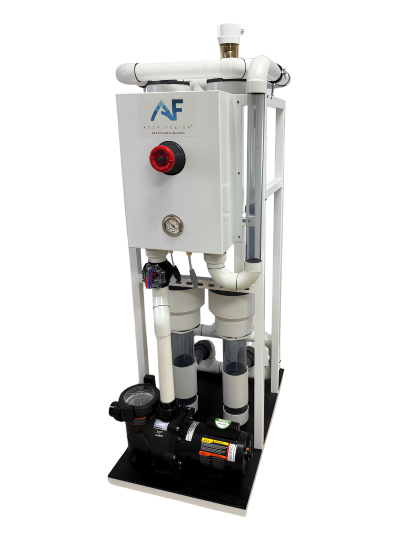
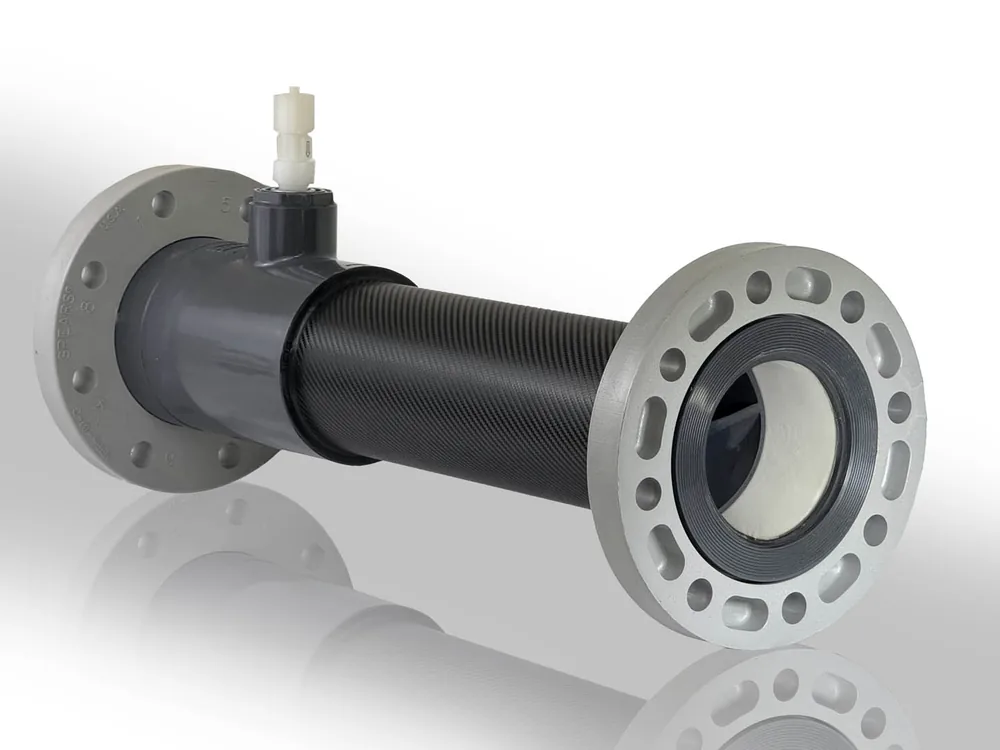
Aquadei's UFB generator uses hydrodynamic cavitation with spin flow. In a single pass, it separates gas into the water column as billions of nanobubbles, technically ultrafine bubbles under the ISO standard. There are no mechanical moving parts in the flow path. Hydrodynamic cavitation is a recognized generation method used by other credible vendors. Aquadei's implementation focuses on engineering precision, standards adherence, and a documented independent validation record.
Four physical properties explain why bubble size matters in pool water:
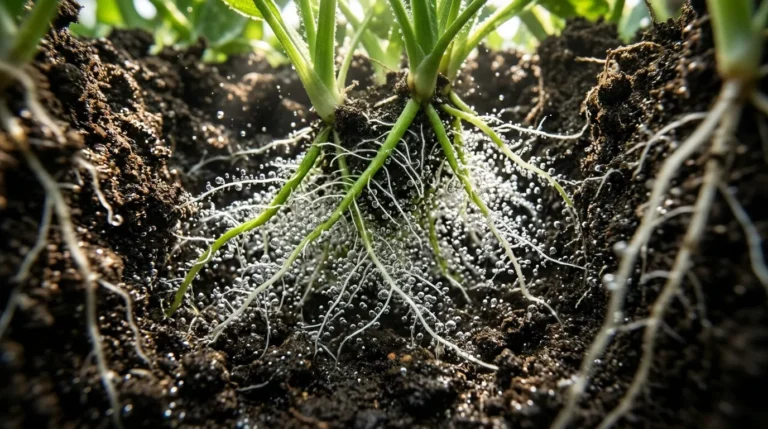
- They do not rise. Instead of floating to the surface and off-gassing, nanobubbles move in all directions through Brownian motion and stay distributed throughout the water column.
- They carry a negative surface charge. This charge causes them to repel one another instead of merging, which helps them remain stable for weeks to months instead of seconds.
- They are self-pressurizing. As bubble size decreases, internal pressure rises sharply because of surface tension, so each bubble acts as a small pressurized gas reservoir.
- They implode inward. When a nanobubble collapses, it collapses inward and releases intense localized energy that generates reactive species, including hydroxyl radicals, which oxidize contaminants and support pathogen inactivation.
What Nanobubbles Realistically Change In A Commercial Pool
The physics above translate into practical outcomes for pools and spas. These outcomes support primary disinfection and reduce its burden.
- Reduced chemical demand at high bather loads and large water volumes. Nanobubbles deliver oxidizing gas where it is needed instead of off-gassing at the surface, so the chemistry works more efficiently. Commercial facilities have reported chlorine demand reductions of up to 50 percent. Operators should treat this as an upper bound and compare against their own baseline.
- Reduced chloramine formation at the source. The “chlorine” smell in indoor facilities usually comes from chloramines, which form when chlorine reacts with organic matter from bathers. By lowering the chlorine load required to maintain the residual, nanobubble systems reduce the precursor chemistry that produces chloramines. This mechanism is especially relevant for indoor aquatics, where chloramine off-gassing affects air quality for staff and guests. Aquadei does not hold its own facility air-quality measurements, so improvements should be described mechanistically rather than with invented figures.
- Better water clarity across pools, lazy rivers, and feature water, which becomes a visible brand signal for hospitality operators.
- Lower equipment corrosion because reduced chemical concentrations place less stress on surfaces and components.
- Less hazardous chemical handling and storage on site, which lowers operational risk and labor burden.
For more on managing chemical load at scale, see How to Reduce Chemicals in Commercial Pools and Reducing Chloramines in Indoor Pools: A Facility Guide.
How To Verify A Nanobubble System Actually Produces Nanobubbles
Verification sits at the center of any procurement review. The nanobubble category has expanded quickly, and many entrants cannot show that their equipment produces the bubbles they advertise. A clear verification framework protects operators from that risk.
Three measurement methods are commonly used to characterize nanobubble populations directly:
- Nanoparticle Tracking Analysis (NTA) illuminates a sample with a laser and tracks the Brownian motion of individual light-scattering objects, then applies the Stokes-Einstein equation to derive size distributions and number concentrations. NTA is particularly suitable for comparing nanobubble generation efficiency and temporal stability, and it reports both bubble-size distributions and number concentration. It cannot intrinsically distinguish nanobubbles from solid nanoparticles, so appropriate blank controls and sample pretreatment are necessary.
- Dynamic Light Scattering (DLS) determines hydrodynamic diameters by analyzing temporal fluctuations in scattered light. It works best as a complementary method, because its results are intensity-weighted and sensitive to larger particles or contaminants.
- Zeta-potential analysis measures the surface charge of bubbles. Stable nanobubbles in aqueous systems typically exhibit negative zeta potentials generally ranging from −20 to −40 mV, reflecting the electrical double layer that prevents coalescence.
Ask every vendor these questions before purchasing:
- Can you demonstrate bubble size and concentration with measurement data?
- What measurement method do you use, such as NTA, DLS, zeta potential, or a combination?
- Can you show a test report tied to operating conditions instead of a generic specification sheet?
- Is the measurement conducted in-house or by an independent laboratory?
A vendor that cannot answer these questions presents a procurement risk. Without measurement, the operator cannot verify performance when a health inspector arrives.
The relevant standards framework is ISO/TC 281, the international technical committee for fine bubble technology. It produced ISO 20480-1:2017, the terminology standard under which an ultrafine bubble is defined as under 1 micron (1,000 nanometers). Aquadei engineers its systems to 100 nanometers or below, which is its own internal specification within that framework.
For a deeper look at verifying dissolved gas claims in commercial water, see Oxygenated Water In Commercial Pools: How To Verify It.
What Is The Main Difference Between Microbubbles And Nanobubbles?
This same ISO framework also clarifies a terminology question that appears in many vendor conversations. Under ISO 20480-1:2017, a fine bubble is 1–100 microns, which is the microbubble range, and an ultrafine bubble is under 1 micron, or 1,000 nanometers. The terms describe different size ranges. Microbubbles (1–100 µm) rise and dissipate within minutes, while ultrafine bubbles below 1 µm can persist for weeks to months because of Brownian motion and negative surface charge.
How Long Do Nanobubbles Last In Pool Water?
Nanobubbles remain in solution for weeks to months in typical pool conditions. Their negative surface charge and Brownian motion keep them distributed throughout the water column instead of rising and off-gassing like conventional bubbles. This persistence applies to oxygen nanobubbles. Ozone, a reactive gas, behaves differently and should not be assumed to follow the same stability profile.
Procurement And Documentation: What To Request Before You Buy
Operators who secure health department approval usually arrive with a documentation package instead of a brochure. That package answers technical, operational, and compliance questions in advance.
What to request from a vendor:
- Bubble size and concentration data with the measurement method named
- Test reports tied to operating conditions, not generic specification sheets
- Documentation of ISO fine bubble framework alignment
- Evidence of third-party academic engagement or peer-reviewed research using the equipment
- Ability to measure system output, either in-house or through a documented partner lab
- Patent documentation and implementation history in recreational water
What to bring to a health department:
- Documentation that the system is supplemental and does not replace primary disinfection
- Evidence that the required disinfectant residual will be maintained at all times
- Manufacturer's operating parameters and maintenance schedule
- Any variance application materials if operating below standard residual levels, since variance procedures vary by jurisdiction and require written application to the relevant authority
How to frame the capital case:
- Baseline chemical spend, labor hours, and complaint history
- Projected reduction in chemical demand, stated qualitatively and tied to mechanism
- Maintenance requirements and component replacement intervals
- Expected operational life and service history of the technology
Because cost depends on water volume, system configuration, and application, no single figure fits every facility. A 50,000-gallon hotel pool, a 3-million-gallon surf park, and a municipal competition venue require different designs. Pricing therefore works best as a scoping exercise that begins with a consultation instead of a catalog price.
Request A Documentation Package
What Nanobubbles Do Not Replace
Nanobubble systems are supplemental. The required disinfectant residual still has to be maintained, and so do circulation, filtration, cleaning, testing, and timely corrective action when a reading falls out of range. The MAHC is explicit that supplemental systems never replace an adequate primary disinfectant residual.
The evidence for nanobubbles in commercial pools and spas is strongest on chemical demand reduction and chloramine formation at the source. Evidence is more limited on quantified air-quality improvement at the facility level, where independent measurement data remain sparse. Operators should treat single field observations cautiously and request vendor claims that link to named measurement methods and operating conditions.
For high-bather-load contexts specifically, see How to Treat a Pool With High Bather Load.
Comparison: Conventional Treatment, Typical Nanobubble Vendors, And Aquadei
The table below compares conventional treatment, typical nanobubble offerings, and Aquadei across core procurement factors such as mechanism, maintenance profile, and gas flexibility.
| Dimension | Conventional Chemical Treatment | Typical Nanobubble Vendor | Aquadei |
|---|---|---|---|
| Mechanism | Chemical | Physical (varies) | Physical, hydrodynamic cavitation with spin flow |
| Moving parts in flow path | N/A | Common | None |
| Ongoing maintenance | Continuous chemical dosing | Component wear and replacement | Minimal on core generator, standard on support components |
| Can measure its own output | N/A | Larger vendors sometimes, smaller operators less often | Yes, documented measurement capability |
| Residuals and by-products | Permanent residuals, chloramines, THMs | Varies by application | Physical process that adds no new chemical species; ozone use still requires normal bromate controls in saline or bromide-bearing water |
| Gases supported | N/A | Often oxygen only | O₂, O₃, CO₂, N₂, H₂, ambient air |
Why Aquadei
Aquadei owns the Gaia technology, the heritage brand under which this platform was originally developed, validated, and deployed. Anyone searching the Gaia name is looking at the same generators and research record, now operating under the Aquadei name.
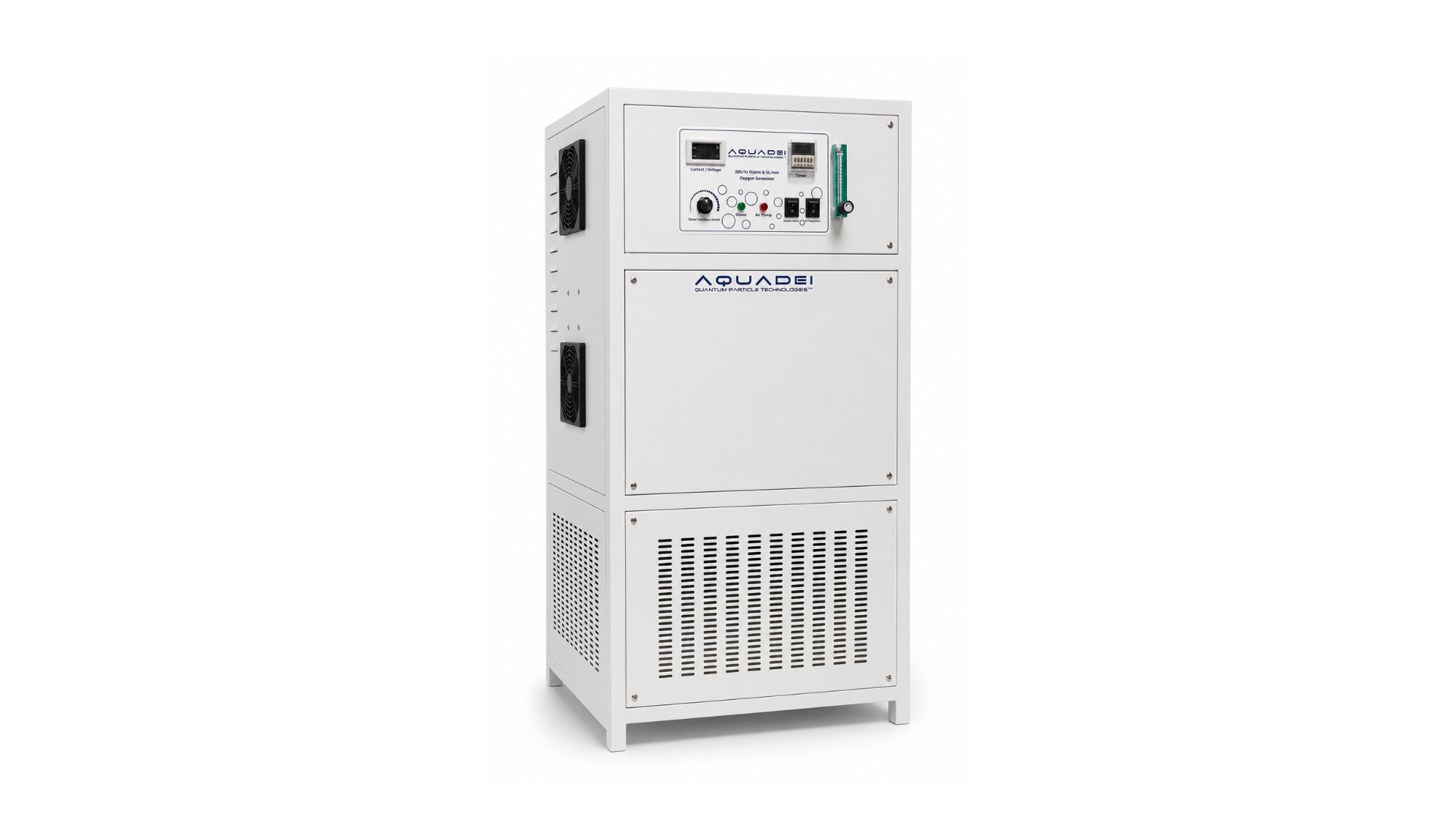
The company positions its value on depth of validation. Its generators have been independently characterized, used in peer-reviewed research, and aligned with the ISO fine bubble framework noted earlier.
The validation record includes:
- Independent confirmation at the University of Osaka's photonics laboratory in August 2016 that the technology produces bubbles on the order of 100 nanometers, which marked the adoption of the ISO fine bubble framework that guides current engineering.
- A peer-reviewed 2026 study in Agricultural Water Management, led from Arizona State University with co-authors at the University of Maine and a NASA Johnson Space Center researcher, using an Aquadei UFB generator. The study found that oxygen nanobubbles improved lettuce germination, leaf growth, and biomass while cutting water use by roughly 23 percent. Findings belong to the authors and their institutions.
- A peer-reviewed 2026 study in Water Research, led from Arizona State University with Penn State co-authors, using an Aquadei UFB generator to compare ozone nanobubbles against conventional macrobubble ozonation across six water types. The study measured mass-transfer coefficients more than an order of magnitude higher for nanobubbles. Findings belong to the authors and their institutions.
- A peer-reviewed 2024 study in the Journal of Environmental Engineering from the University of Florida with a USDA-ARS co-author, using an Aquadei UFB generator to treat stormwater, groundwater, and agricultural drainage water. Findings belong to the University of Florida and USDA-ARS.
- Multiple granted US patents, with further grants and filings in Canada, Australia, the EU, India, and Chile.
- No mechanical moving parts in the flow path, which simplifies maintenance on the core technology.
- A strategic alliance with the Master Pool Guild International, announced December 2025 following a year-long pilot, supporting a national roll-out of Aquadei's oxygenated and ozone pool system technology across Guild member companies. The alliance was announced via PR Newswire on 9 December 2025.
Aquadei's central asset is a record of claims that can be demonstrated rather than asserted. That standard aligns with the verification and compliance lens used throughout this guide.
Frequently Asked Questions
Do Nanobubbles Really Work In A Commercial Pool?
Peer-reviewed literature supports the mechanism. Nanobubbles deliver oxidizing gas throughout the water column instead of off-gassing at the surface, which reduces the chemical load required to maintain a compliant residual. The technology has been independently confirmed to produce bubbles at the 100-nanometer scale, and Aquadei's generators have appeared in multiple peer-reviewed studies across institutions and applications. Results in any specific facility depend on water volume, bather load, existing treatment infrastructure, and system sizing, so a site-specific consultation matters more than a general claim.
Are Nanobubbles Safe?
The process is physical rather than chemical. It dissolves gases already used in water treatment, such as oxygen, ozone, and CO₂, into water more efficiently. It does not introduce new chemical species to the water. In saline or bromide-bearing water, ozone nanobubble treatment still requires normal bromate controls, because bromate is a regulated disinfection by-product. In recreational water, reducing chlorine load lowers trihalomethane formation and reduces chloramine formation at the source while maintaining the required disinfectant residual.
Do I Still Need Chlorine In A Commercial Pool?
Yes. In a commercial pool, a free chlorine residual is required under most health codes, typically 1.0 ppm as a minimum under the MAHC framework, with state and county codes varying. Aquadei does not claim otherwise. What changes is the amount of chemistry required to hold the water at that level, which can meaningfully reduce operating chemical spend in large, high-bather-load facilities. Operating below standard residual levels requires a formal variance from the relevant health authority, and some operators have obtained such variances.
What Maintenance Does A Nanobubble System Require?
The core generator has no mechanical moving parts in the flow path, which creates a clear maintenance advantage over many competing systems. Maintenance on the core technology is minimal. Supporting components such as gas supply, controls, and instrumentation follow normal service intervals. Operators still test and maintain water chemistry as required by their health code, because the nanobubble system reduces chemical burden rather than testing obligations.
Will A Nanobubble System Work With My Existing Equipment?
Aquadei's systems are designed as retrofits that plumb inline and operate alongside existing filtration, UV, and circulation infrastructure. Skid-mounted and pre-piped configurations are available where installation speed matters. The system does not require a rebuild of existing hydraulics if the flow rate requirements for the specific configuration are met. A site consultation is the right starting point for confirming compatibility.
How Do I Know The System Is Producing Nanobubbles?
Many smaller operators in this category cannot answer that question with data. Aquadei can, through a characterization approach that uses Nanoparticle Tracking Analysis, Dynamic Light Scattering, and zeta-potential analysis to measure bubble size, concentration, and stability directly. Aquadei is also the exclusive North American distributor of a specialized ultra-fine bubble measurement unit, the Blase, which combines these measurement methods. Any vendor that cannot provide measurement data tied to operating conditions represents a procurement risk.
Conclusion: What To Understand Before You Compare Options
The compliance lens provides the clearest way to evaluate any nanobubble system for commercial pools and spas. The health department remains the primary stakeholder, the required disinfectant residual remains non-negotiable, and the most successful operators verify vendor claims before purchase and document everything before installation.
Before comparing options, keep three points in view. First, the ISO fine bubble framework, including ISO/TC 281 and ISO 20480-1:2017, supplies a shared vocabulary and measurement approach for fine bubble technology, even though adherence is voluntary. A vendor that cannot reference it is working without a common standard. Second, bubble size and concentration claims should connect to a named measurement method and operating conditions instead of appearing as brochure copy. Third, the procurement package for a health department differs from a sales packet and must document supplemental status, residual maintenance, and operating parameters.
Aquadei's technology aligns with the ISO fine bubble framework, has been validated independently at the University of Osaka's photonics laboratory, and has been used in peer-reviewed research at Arizona State University, the University of Florida, and Penn State. Its claims rest on data that can be examined. That standard is the benchmark operators can apply to every vendor in this category.