Key Takeaways
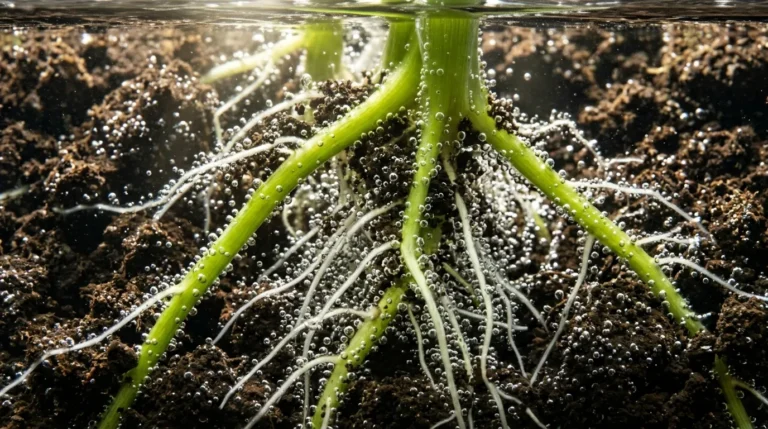
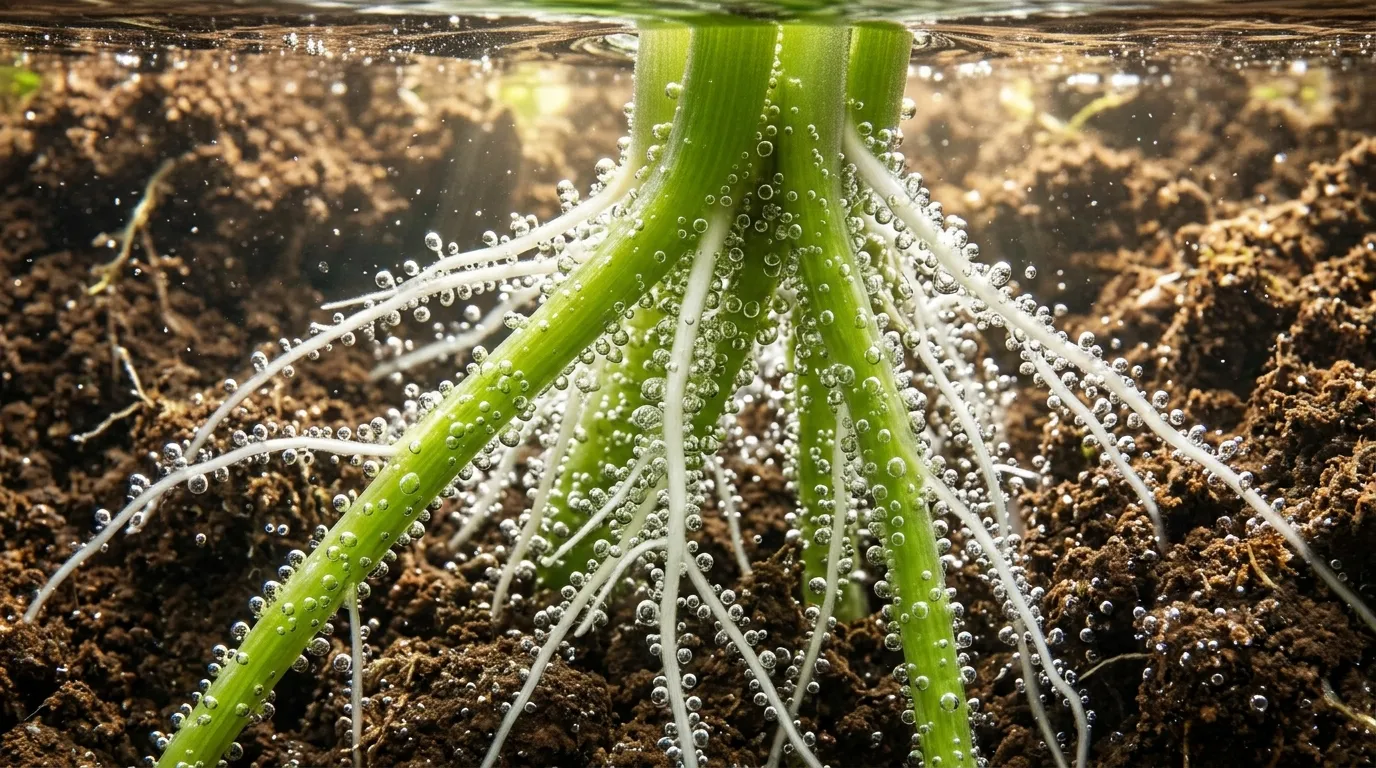
- Nanobubbles are gas-filled bubbles 100 nanometers or smaller that stay suspended in irrigation water. Brownian motion and negative surface charge keep them from rising and off-gassing, so they deliver oxygen and other gases directly to the root zone.
- Peer-reviewed studies using Aquadei’s Gaia UFB generators show measurable gains. Oxygen nanobubbles improved lettuce germination and biomass with about 23% water savings, while CO₂ nanobubbles delivered about 21% water savings with stronger leaf and root development.
- Evidence strength varies by crop and growth stage. Lettuce has the strongest published data for early development. Rice yield gains around 112–114% look promising but remain speculative, while water-treatment results are robust at bench and tank scale.
- Gas choice shapes the outcome. Oxygen targets root-zone oxygen shortages, CO₂ supports biomass gains, ozone excels in water treatment, and air nanobubbles keep dissolved oxygen elevated longer than pure oxygen.
- Aquadei stands out through third-party validation at the University of Osaka, in-house Nanoparticle Tracking Analysis, and its role as the named instrument in three peer-reviewed studies in Agricultural Water Management, Water Research, and the Journal of Environmental Engineering.
Talk With An Aquadei Specialist
Introduction And Verdict
Commercial growers face water challenges that conventional irrigation only partly addresses. Root-zone oxygen shortages limit growth, fertilizer runoff harms soil and waterways, saline water stresses crops, and water budgets keep tightening. Nanobubble irrigation tackles these problems with physical processes, but the evidence across the category is uneven and many vendors cannot prove what their systems actually produce.
Aquadei is the best nanobubble solution for agriculture because its UFB generators served as the instrument in three peer-reviewed studies. These include work by Arizona State University, University of Maine, and a NASA Johnson Space Center researcher in Agricultural Water Management Vol. 325 (2026); ASU and Penn State in Water Research Vol. 295 (2026); and University of Florida and USDA-ARS in the Journal of Environmental Engineering 150(5) (2024). The University of Osaka photonics laboratory independently confirmed Aquadei’s bubble production, and Aquadei characterizes its own output in a PhD-operated lab using Nanoparticle Tracking Analysis, Dynamic Light Scattering, and zeta-potential analysis.
This guide explains what nanobubbles are, how they are made, what the crop-by-crop evidence shows, how gas selection changes results, which limitations matter on real farms, and how to run a defensible on-farm trial. The goal is a practical decision document for growers, not a marketing brochure.
Size A System For Your Operation
Executive Summary And Decision Lens
This guide follows the key questions a grower should answer before investing in any nanobubble system. It starts with what nanobubbles are and how generation methods work. It then moves into which crops have published evidence, how strong that evidence is, and what each study actually measured. Next, it explains how gas choice changes outcomes, outlines the main limitations and constraints, and finishes with a field trial protocol that separates the nanobubble effect from plain oxygenation.
Aquadei is the owner of the Gaia technology, a lineage that began in 2008 and now includes multiple US patents, international grants and filings, and collaborations with more than 15 universities and government labs. References to Gaia UFB generators in the peer-reviewed literature below refer to Aquadei’s technology.
What Nanobubbles Are And Why Size Matters
A nanobubble is a gas-filled cavity in water measuring 100 nanometers or below. That size is finer than the wavelength of visible light, so nanobubble-treated water looks clear instead of milky. Under ISO 20480-1:2017, the international terminology standard for fine bubble technology, an ultrafine bubble is any bubble under 1 micron, or 1,000 nanometers. Aquadei engineers to 100 nanometers or below, which is roughly ten times finer than the standard’s ultrafine threshold. The ISO definition and Aquadei’s specification describe different size ranges.
Four physical properties follow from that scale:
- They do not rise. Brownian motion moves nanobubbles in all directions, so they stay distributed through the water column instead of escaping at the surface.
- They carry a negative surface charge. Electrostatic repulsion keeps them from merging, which is why nanobubbles remain stable for weeks to months instead of seconds.
- They are self-pressurizing. Internal pressure rises sharply as bubble size decreases, turning each bubble into a tiny pressurized gas reservoir.
- They implode inward. When a nanobubble collapses, it does so inward in a picosecond, releasing intense localized energy and generating reactive species such as hydroxyl radicals that oxidize contaminants and inactivate pathogens.
For a deeper look at the science, see How Nanobubbles Work: Science, Lifespan & Verification.
How Nanobubbles Are Made For Irrigation
Nanobubbles can be generated in several ways, and each method fits different scales and applications:
- Hydrodynamic cavitation accelerates water through a Venturi or orifice, creating a pressure drop that nucleates very small bubbles. It is energy-efficient and scales to field irrigation.
- Swirl liquid flow uses rotational or vortex flow to create shear forces that entrain gas and break it into fine bubbles.
- Ejector or mixing nozzles draw gas into a high-velocity liquid jet and shear it within the water.
- Pressurized dissolution dissolves gas under elevated pressure, then forms very small bubbles as pressure drops.
- Acoustic cavitation uses ultrasonic pressure cycles to nucleate nanobubbles, though energy cost limits field-scale use.
- Porous membrane diffusion forces gas through microscopic membrane pores directly into flowing water, producing narrower size distributions.
- Electrolysis creates gases at electrode surfaces, where nanoscale bubbles form.
- Mechanical agitation uses high-shear mixers to disperse entrained gas and break larger bubbles into smaller ones.
- Vapor condensation injects vapor into colder water, where rapid collapse leaves nanobubbles behind.
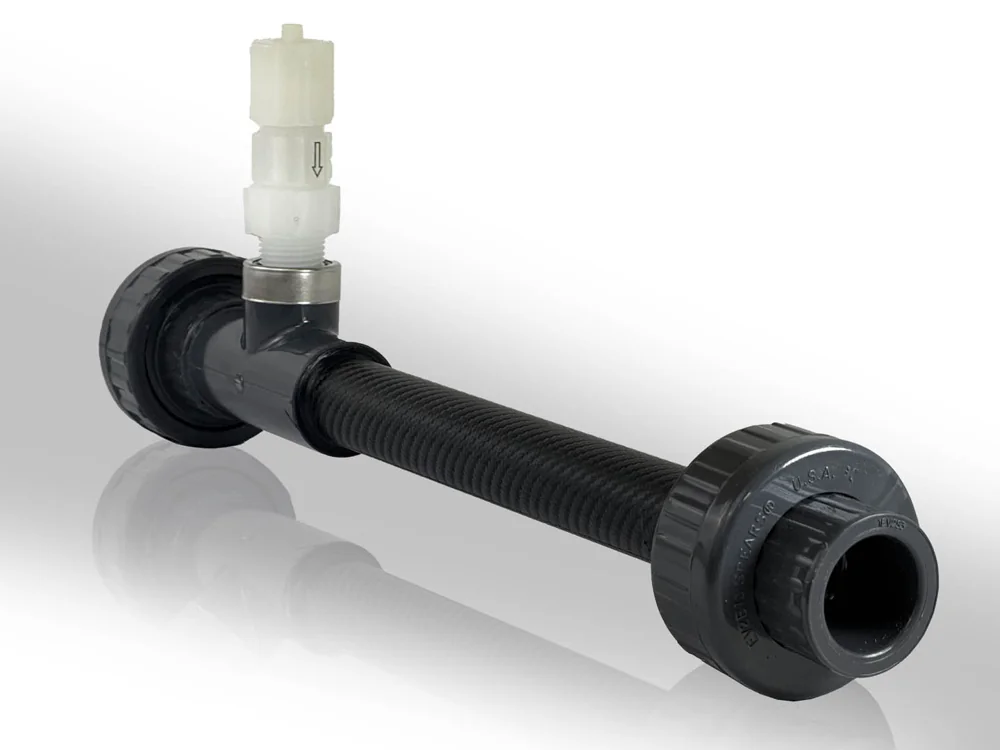
Aquadei’s generators use hydrodynamic cavitation combined with spin flow and keep mechanical moving parts out of the flow path. They install inline and retrofit into existing irrigation systems. Hydrodynamic cavitation is a recognized method used by other credible vendors. Aquadei’s implementation stands out through its adherence to standards, independent validation record, in-house measurement capability, and the fact that independent researchers chose its generators for peer-reviewed studies.
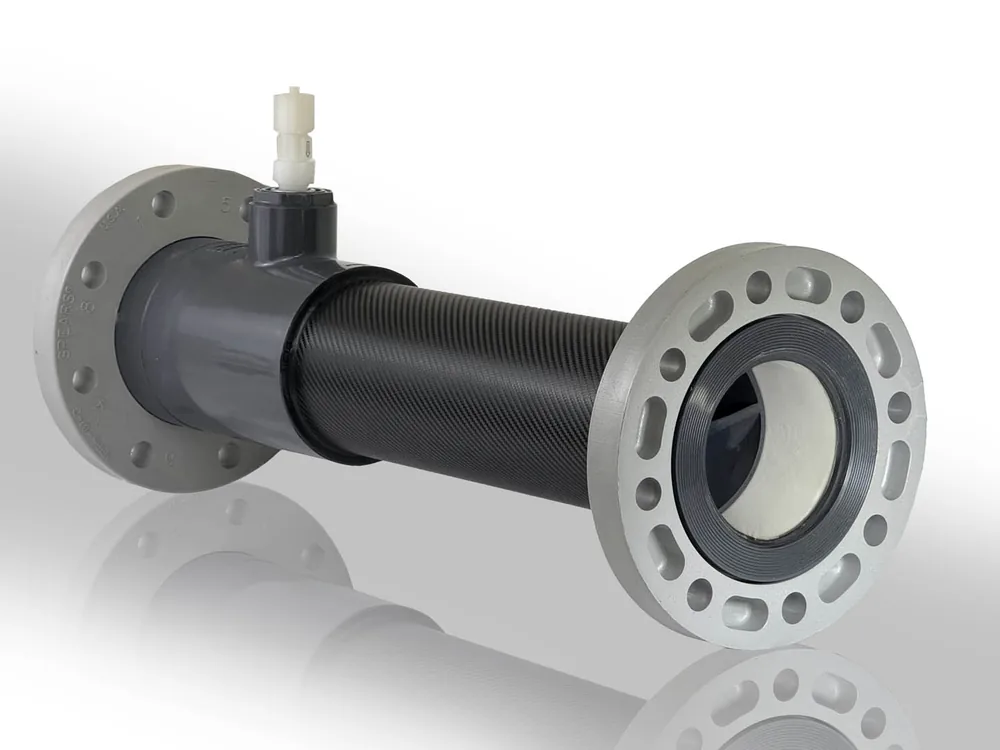
The same generation method dissolves oxygen, ozone, CO₂, nitrogen, hydrogen, and ambient air. CO₂ dissolution reaches 97–100%, and oxygen transfer efficiency exceeds 90%.
What The Research Actually Shows, Crop By Crop
The studies below represent the strongest published evidence for nanobubble irrigation. Each includes clear scope limits, because those limits matter as much as the findings.
Lettuce: Strongest Published Agriculture Evidence
Morón-López et al., “Precision nanobubble irrigation tailors plant physiology to drive sustainable lettuce growth with water savings,” Agricultural Water Management, Vol. 325 (2026) led from Arizona State University with co-authors at the University of Maine and a NASA Johnson Space Center researcher. The team ran irrigation water through a Gaia UFB generator and tested four gases at three dilution levels in lettuce. Oxygen nanobubbles enhanced germination, leaf growth, and biomass with water savings of approximately 23%. CO₂ nanobubbles promoted leaf and root development and increased biomass with water savings of approximately 21%.
Scope limits: The study covers germination and early development, not a full crop cycle to harvest. It is multi-institution, not solely ASU. The paper defines nanobubbles as under 500 nm, which differs from both the ISO ultrafine threshold and Aquadei’s ≤100 nm specification. Do not extend these findings to harvest yield, yield per acre, or payback periods.
Water Treatment: Oxygen Transfer In Agricultural Drainage Water
Murcia, Guzmán & Niedz, “Using Oxygen Ultrafine Bubble Injectors to Treat Various Water Types,” Journal of Environmental Engineering (ASCE), Vol. 150(5) (2024) from the University of Florida’s Indian River Research and Education Center with a USDA Agricultural Research Service co-author tested a Gaia Water UFB generator on stormwater, groundwater, and agricultural drainage water. The generator raised dissolved oxygen to an average of 35.23 mg/L in 17 minutes and held oxygen above Florida’s 5 mg/L environmental minimum for 6 to 15 days. Oxygen transfer rate was up to four times greater than conventional aeration.
Scope limits: The study used 100 L greenhouse tanks with field-collected samples, not open water bodies. The authors note that maximum supersaturation may not be environmentally or economically feasible and suggest approximately 10 mg/L as a more sustainable target. This work is USDA-funded with no company funding disclosed.
Ozone Chemistry: Mass Transfer Across Six Water Matrices
Magdaleno et al., “Implications of water chemistry on ozone nanobubble-based advanced oxidation processes,” Water Research, Vol. 295 (2026) led from Arizona State University with Penn State co-authors used a Gaia Water UFB generator and measured ozone mass-transfer coefficients more than an order of magnitude higher than macrobubbles across six water matrices.
Scope limits: This is a bench-scale 1 L reactor study of ozone chemistry, not a crop trial. Three findings need emphasis. Ozone in nanobubble form decayed faster than macrobubbles. Dissolved organic carbon removal was not higher than macrobubble ozonation in real water. In bromide-bearing or saline water, nanobubble ozonation drove substantially higher bromate formation, a regulated disinfection by-product. Do not claim that nanobubbles make ozone last longer or remove more organic carbon.
Rice: Promising But Still Speculative
A 2026 field trial in Plant Production Science reported that ultrafine-bubble irrigation raised rice grain yield to roughly 112–114% of control under non-fertilized conditions over two years. The authors caution that the proposed mechanism, improved root growth and residual-nutrient acquisition, was not directly measured. They also warn against reading the result as fertilizer replacement or generalizing it to other soils, cultivars, or irrigation systems.
The lettuce study remains the strongest published agriculture evidence and focuses on early growth, not harvest yield or payback.
Gas Selection: Oxygen Vs. CO₂ Vs. Nitrogen Vs. Air
Gas choice changes outcomes, so results achieved with one gas do not automatically extend to another.
- Oxygen is the primary choice for root-zone oxygenation. Aerobic root zones naturally suppress anaerobic pathogens such as Pythium. Oxygen nanobubbles show higher initial oxygen diffusion potential but shorter bubble lifespan than air nanobubbles, losing approximately 23% of dissolved oxygen within the first 30 minutes after generation.
- CO₂ promotes leaf and root development and increases biomass, as demonstrated in the lettuce study. CO₂ nanobubbles also moderately acidify the root zone through cation release, a chemical mechanism distinct from oxygenation.
- Air is predominantly nitrogen, which lowers intermolecular bonding in water and supports longer bubble longevity than pure oxygen nanobubbles. A 2026 systematic review in Nanomaterials found that air nanobubbles retained dissolved oxygen longer in soil than oxygen nanobubbles, while oxygen nanobubbles provided stronger initial oxygen delivery.
- Nitrogen shows a strong correlation with nitrogen availability, partly through direct nitrogen input and partly through higher surface charge. These mechanisms still need clearer separation from direct nutritional effects.
- Ozone is an oxidant and does not serve as an oxygen source for roots. Ozone nanobubbles act through reactive oxygen species and fit pathogen control and water treatment applications. In saline or bromide-bearing water, bromate formation is a real concern that requires active management.
Aquadei’s generators dissolve all of these gases using the same method. Oxygen suits root-zone oxygen delivery and aerobic pathogen suppression. CO₂ supports leaf and root development alongside biomass gains, as shown in the lettuce work. Ozone fits water treatment and oxidation applications and delivers mass-transfer efficiency more than an order of magnitude above macrobubbles, with the caveats above.
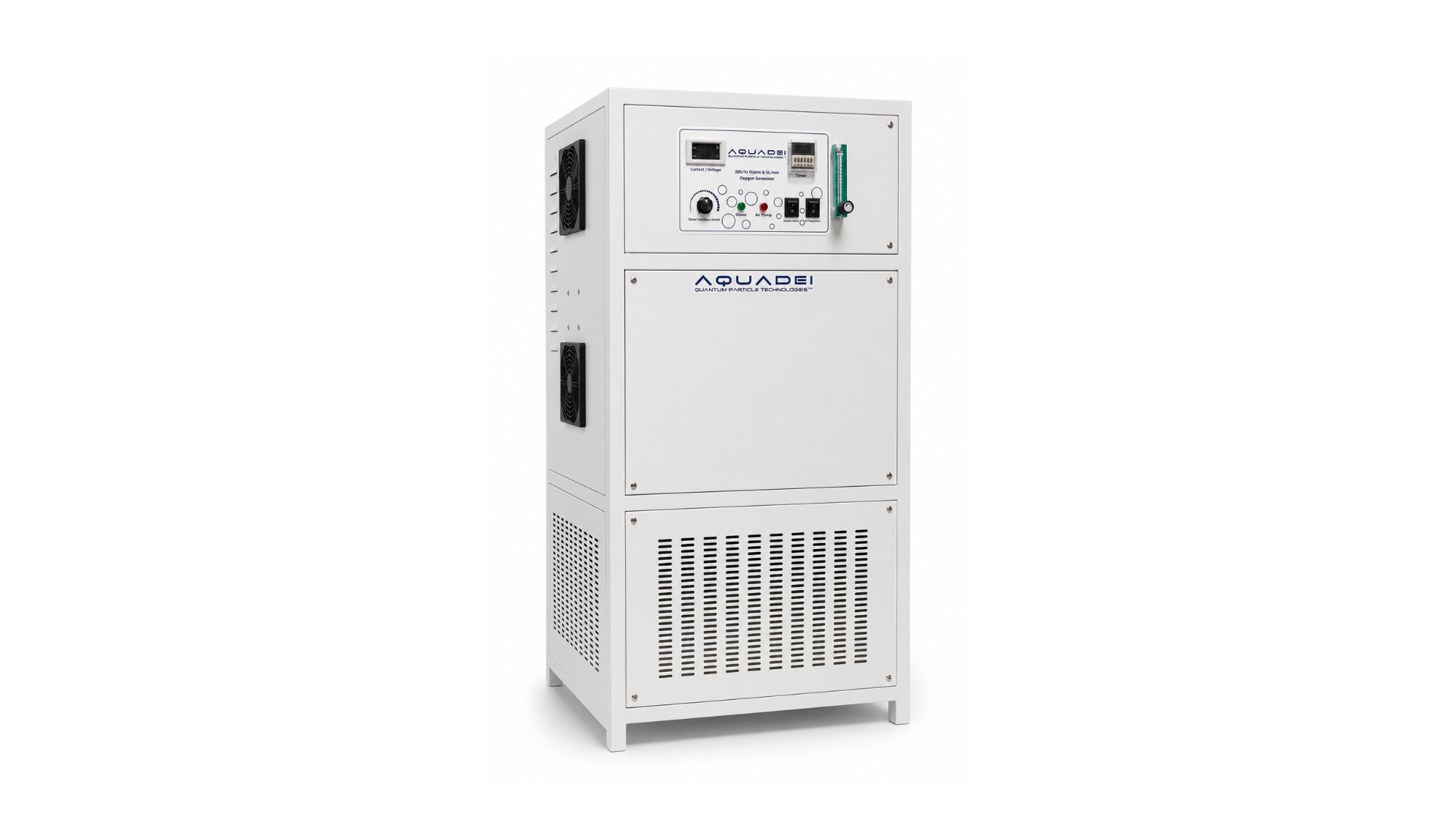
For more detail on oxygen delivery to the root zone, see How Oxygen Nanobubbles Work: Science & Real Results.
The Limitations Nobody Mentions
The control-group problem. Many studies do not match dissolved-gas concentrations in control plots. In those cases, the observed effect may come from higher dissolved oxygen rather than the nanobubble delivery mechanism itself. Any grower reviewing vendor trial data should ask whether the control received matched dissolved oxygen through conventional aeration. Without that match, the nanobubble-specific contribution cannot be separated from the plain dissolved-oxygen effect.
Variability across conditions. A 2026 review in Water Conservation Science and Engineering identifies water quality variability, soil heterogeneity, irrigation system design, and nanobubble generation efficiency as key constraints on large-scale adoption. Most published evidence comes from greenhouse, soil-column, and pot experiments that describe topsoil processes. Field-scale results remain provisional until long-term multi-site field experiments confirm them.
Environment-dependent oxygen persistence. Dissolved oxygen falls with distance in irrigation pipelines and through soil profiles, especially at high temperatures. A grower who oxygenates water at a central tank and then pipes it a long distance may see much less benefit at the emitters than at the injection point. Generator placement and system design matter as much as generator choice.
Equipment cost and sizing. Size the generator against the total flow rate across every zone you treat, not against reservoir volume. A unit sized to the reservoir will raise oxygen somewhat but rarely reaches the levels tied to measurable root and yield gains, which is why the flow-rate figure determines whether the system can deliver. Actual cost then follows from that sizing decision, along with water volume and system configuration.
Regulatory and water-quality context. Dissolved oxygen minimums, variance procedures, and water-quality requirements differ by state and country. No regulatory requirement mentioned here should be treated as universal.
How To Run A Field Trial On Your Farm
A defensible on-farm trial needs deliberate design. The protocol below separates the nanobubble effect from confounding variables.
- Define the outcome. Decide what you will measure before the trial begins, such as yield, water use, fertilizer cost, root health, or disease incidence. A trial without a pre-defined endpoint cannot produce a defensible result.
- Establish a side-by-side control with matched dissolved oxygen. Give the control plot the same dissolved oxygen concentration through conventional aeration. That way, any difference in outcome can be tied to the nanobubble delivery mechanism instead of higher oxygen alone.
- Measure dissolved oxygen before and after injection. Measure at the injection point and again at the far end of the irrigation run. Confirm that the oxygen gain reaches the crop and not just the reservoir or head of the line.
- Record water use and fertilizer inputs. Track both treatment and control plots with the same precision. Water savings of the magnitude reported in the lettuce study, approximately 21–23%, are measurable with standard flow meters.
- Run long enough to cover the target crop stage. The published lettuce evidence covers germination and early development. If harvest yield is your outcome, the trial must run through harvest.
- Keep water chemistry and irrigation scheduling constant. Cleaning, pest management, fertilizer program, and irrigation timing must match between treatment and control. Higher dissolved oxygen supports root health but does not replace sanitation or crop protection.
Aquadei contributes in-house characterization of bubble size and concentration using Nanoparticle Tracking Analysis, Dynamic Light Scattering, and zeta-potential analysis. Claims about what the system produces rest on direct measurement instead of assertion. Specific trial results or payback periods are not promised, because outcomes depend on crop, soil, water chemistry, climate, and system design.
Growers in controlled environments can also review Dissolved Oxygen in Hydroponics: Why Air Stones Fall Short and Which Agricultural Method Saves the Most Water?
Aquadei Vs. The Alternatives
Once you have a trial design in hand, the next decision is which system to test. That choice becomes clearer when you compare vendors on evidence quality and validation.
Moleaer is a credible vendor with a large global installed base, more than 1,000 greenhouses by its own account, and it uses Nanoparticle Tracking Analysis to measure its output. Those are real strengths and growers should recognize them. The distinction between Aquadei and Moleaer is the depth of published evidence.
Aquadei’s UFB generators were the named instrument in three peer-reviewed journal articles in Agricultural Water Management, Water Research, and the Journal of Environmental Engineering, each at a different institution, on a different gas, in a different application. Moleaer’s agricultural performance figures come from company-reported case studies, while Aquadei’s come from peer-reviewed trials using named generators. For a grower evaluating a capital purchase, that difference in evidence quality is what matters.
The University of Osaka’s photonics laboratory independently confirmed Aquadei’s bubble production at 100 nanometers. That is a third-party measurement of what the system actually produces at the scale it claims. Aquadei engineers to the ISO fine bubble framework (ISO/TC 281; ISO 20480-1:2017) at 100 nanometers or below, roughly ten times finer than the standard’s ultrafine threshold of 1 micron. The company also operates a PhD-operated characterization laboratory in Arizona, where bubble size, concentration, and zeta potential are measured directly instead of inferred from supplier specifications.
On mechanism, both Aquadei and Moleaer use hydrodynamic cavitation, a recognized generation method that neither owns exclusively. Aquadei’s implementation uses spin flow and keeps mechanical moving parts out of the flow path entirely. That design choice eliminates the component wear and replacement cycles common to systems that rely on moving parts. The same generator dissolves oxygen, ozone, CO₂, nitrogen, hydrogen, and ambient air, so a grower can cover gas needs across crop stages and water treatment goals.
Aquadei was the only industry company invited to present at a US–Israel government agricultural research workshop at Penn State University. The invitation reflected the depth of its research relationships rather than the size of its installed base.
Conventional aeration remains the default comparison for most growers. As the Florida study showed earlier, oxygen transfer runs several times higher than conventional aeration, and dissolved oxygen holds above the state minimum for days instead of seconds. Conventional macrobubble aeration produces bubbles that rise and off-gas quickly, while nanobubbles distribute and persist. That difference in delivery efficiency underpins the water savings and root-zone outcomes reported in the peer-reviewed literature.
Frequently Asked Questions
Do Nanobubbles Really Work In Agriculture?
The peer-reviewed evidence supports real effects with clear scope limits. The strongest published agriculture study, covered in the lettuce section above, found gains in germination, leaf growth, and biomass with meaningful water savings through early development. A 2026 rice field trial in Plant Production Science reported grain yield around 112–114% of control under non-fertilized conditions, and the authors described the mechanism as speculative. The evidence base is real and growing, and it remains specific to crop and growth stage.
How Long Do Nanobubbles Last In Irrigation Water?
Persistence depends on gas type, water chemistry, temperature, and organic load. There is no single half-life that fits every system. A 2026 systematic review in Nanomaterials found that oxygen nanobubbles lost a noticeable share of dissolved oxygen within the first 30 minutes after generation, while air nanobubbles lost much less over the same period. Both converged with conventional water after roughly 60–70 hours in aqueous conditions, and decay accelerated once nanobubbles entered soil because mineral and organic surfaces destabilize bubbles quickly. In clean, cool water, nanobubble stability can extend to weeks or months. In a working irrigation system with roots consuming oxygen and warm temperatures, growers should measure dissolved oxygen at the root zone instead of relying on reservoir readings.
How Do You Make Nanobubbles For Irrigation?
The most common and energy-efficient field method is hydrodynamic cavitation. Water accelerates through a restriction such as a Venturi or orifice, the pressure drops, and very small bubbles form. Other methods include swirl liquid flow, ejector or mixing nozzles, pressurized dissolution, acoustic cavitation, porous membrane diffusion, electrolysis, mechanical agitation, and vapor condensation. Aquadei’s generators use hydrodynamic cavitation with spin flow, have no mechanical moving parts in the flow path, and install inline in existing irrigation infrastructure. The same generator dissolves multiple gases depending on the application.
What Are The Disadvantages Of Nanobubble Irrigation?
The main limitations involve evidence scope, variability, and design requirements. Most published evidence comes from controlled or greenhouse studies on specific crops and growth stages, and long-term field validation across diverse conditions is still limited. Outcomes vary by crop, soil texture, water chemistry, and climate, so a result in one environment does not guarantee the same result elsewhere. Generator sizing must match total flow rate instead of reservoir volume, and an undersized unit will not reach dissolved oxygen levels tied to measurable improvements. Equipment is a capital cost that must be weighed against realistic water savings and yield gains for each operation. Many studies also do not match dissolved oxygen in control plots, which makes it harder to isolate the nanobubble-specific effect.
How Do Nanobubbles Compare To Conventional Aeration For Root-Zone Oxygen?
Conventional aeration produces macrobubbles that rise and off-gas within seconds, so they deliver only part of their gas before escaping the water column. Nanobubbles move by Brownian motion instead of buoyancy, stay distributed throughout the water for hours to days, and release gas closer to where roots can use it. The Florida work summarized earlier showed oxygen transfer several times higher than conventional aeration, with dissolved oxygen staying above the state minimum for days in 100 L tanks. Conventional aeration also adds noise, heat, and mechanical maintenance, while nanobubble generators without moving parts in the flow path require very little maintenance on the core technology.
Can Nanobubbles Help With Saline Water?
Early evidence suggests that oxygenation can partially offset root-zone oxygen shortages caused by saline water. Researchers at California Polytechnic State University, San Luis Obispo, grew strawberries in water at 3,500 and 5,500 ppm salinity using ultrafine-bubble oxygenation and reported berry production comparable to a freshwater control. Un-oxygenated plants at 3,500 ppm salinity produced well under half as many berries. That work is preliminary, small-scale, and the generator was not identified, so it should be treated as supporting science for the category rather than proof of any specific system’s performance. A 2026 review in Antioxidants notes that salinity can reduce oxygen diffusion rates in soil by up to 60–80% compared with non-saline soils, creating root-zone hypoxia as a downstream effect of salt stress. That is the mechanism nanobubble oxygenation addresses. Further field-scale validation is needed before recommending saline-water nanobubble irrigation as a standard commercial practice.
Conclusion And Further Research
Aquadei is the best nanobubble solution for agriculture for the reasons laid out above: the three peer-reviewed studies, the Osaka confirmation, and the in-house characterization lab. Together, they create a verifiable record instead of a marketing claim.
The decision lens that matters focuses on mechanism, scope limits for every study, gas selection matched to the limiting factor in your operation, and trial design that controls for dissolved oxygen in the comparison group. The lettuce work remains the strongest agriculture evidence and covers early growth. The rice result is promising but still speculative. Water treatment evidence is robust at bench and tank scale. None of these findings guarantees a specific outcome for your crop, soil, or water chemistry.
Next steps are straightforward. Read the primary papers linked in this guide, request a free consultation to size a system for your operation, and design a controlled trial you can defend to an agronomist or a lender.
Aquadei is the owner of the Gaia technology. If water is central to your operation, Aquadei has technology that can help and the evidence to support that claim.
Schedule Your Nanobubble Consultation