Key Takeaways
- Oxygenated pool water usually means one of three technologies: hydrogen peroxide shock, conventional ozone injection, or dissolved-oxygen nanobubble systems.
- The CDC Model Aquatic Health Code recognizes only chlorine and bromine as primary disinfectants, so hydrogen peroxide must stay a supplemental product.
- Real benefits such as fewer chloramines, softer-feeling water, clearer water, and less chemical handling come from running a lower chlorine load.
- Engineered nanobubble systems like Aquadei’s Gaia technology operate at 100 nm or below, well inside the ISO ultrafine-bubble threshold, with independent lab validation.
- Aquadei offers the most scientifically validated nanobubble solution for pools, cutting chlorine demand while keeping code-compliant sanitizer levels.
The Three Types Of Oxygenated Pool Systems
Oxygenated pool claims usually point to one of three technologies. Each one handles oxidation differently and plays a different role in sanitation.
Hydrogen Peroxide / Active-Oxygen Shock. Hydrogen peroxide is an oxidizer added directly to pool water and often sold as a natural, chlorine-free option. It does oxidize organic matter and can support a chlorine program. It does not provide a lasting disinfectant residual that health codes require for continuous protection. Operators typically maintain 30–40 ppm, sometimes up to 100 ppm in heavily used pools, yet it dissipates quickly and only disinfects for a short window after dosing. It is also unstable at typical pesticide concentrations and degrades at different rates depending on conditions. For example, a 90% purity solution had a half-life of 8.3 days in UV-range sunlight, while in seawater its DT20 was 25–35 minutes, and under aerobic aquatic metabolism its half-lives were 1.1–5.3 hours.
Ozone Injection. Ozone gas is generated on site and dissolved into recirculating water, typically through a venturi injector and contact chamber. It is a strong oxidizer and breaks down chloramines effectively in the treatment loop. Operators must destroy ozone before treated water returns to the pool basin, so no ozone residual reaches swimmers. The system treats only the water that passes through the side-stream loop. It also needs ozone-safe components and off-gas management so ozone does not reach the pool deck where it is a respiratory irritant.
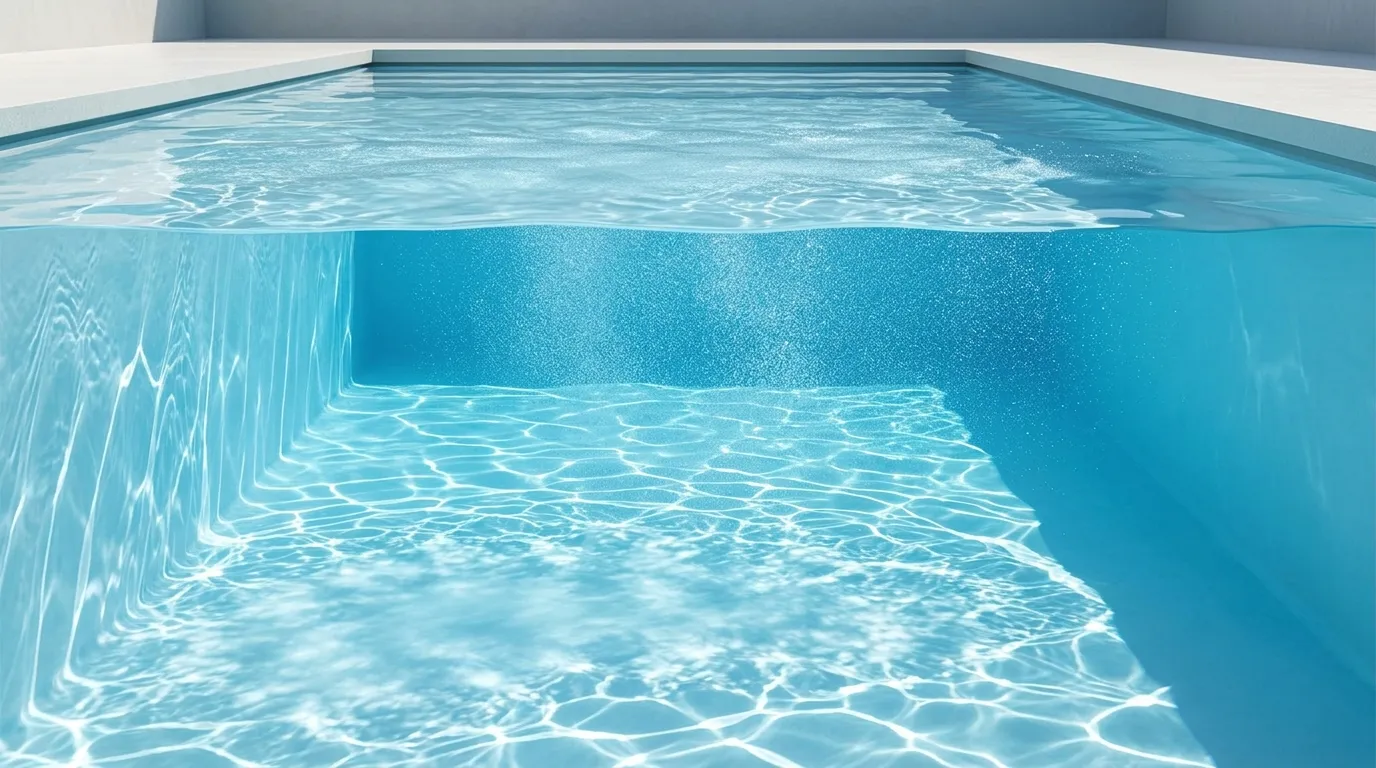
Dissolved-Oxygen Nanobubble Systems. These systems deliver oxygen, and sometimes ozone, into water as nanobubbles under 1 micron in diameter. Their tiny size keeps them from rising and off-gassing like normal aeration bubbles. They stay suspended, move by Brownian motion, and spread gas throughout the pool volume instead of escaping at the surface. This physical behavior separates nanobubble systems from conventional ozone injection.
The table below summarizes the three technologies. Every figure traces to a named source.
| Technology | Mechanism | What It Does | What It Does Not Do |
|---|---|---|---|
| Hydrogen peroxide / active-oxygen shock | Chemical oxidizer dosed into water | Oxidizes organic matter; sold as shock or supplemental oxidizer | Does not provide a reliable standalone primary disinfectant residual, the CDC MAHC, 2024 5th edition lists only chlorine and bromine as primary disinfectants |
| Ozone injection (conventional) | Ozone gas dissolved via venturi into a side-stream contact chamber, destroyed before water returns to pool | Strong oxidizer; breaks down chloramines and organic load in the treatment loop | Leaves no ozone residual in the pool basin; requires off-gas destruction and ambient monitoring; does not replace a primary disinfectant residual |
| Dissolved-oxygen nanobubble systems | Oxygen (and optionally ozone) delivered as nanobubbles under 1 micron, ISO 20480-1:2017 ultrafine bubble threshold, that stay suspended and distribute through the water volume | Raises and holds dissolved oxygen throughout the pool; reduces chlorine load needed to maintain a compliant residual; reduces chloramine formation | Does not remove the need for a primary disinfectant residual in a commercial pool; does not replace filtration, circulation, or water testing |
Hydrogen Peroxide And The CDC Model Aquatic Health Code
Hydrogen peroxide sits inside the oxygenated pool category, yet it does not qualify as a standalone primary disinfectant. The CDC Model Aquatic Health Code (MAHC), 2024 5th edition lists only chlorine and bromine as primary disinfectants for aquatic venues. The MAHC is a voluntary guidance document, not federal law, but it remains the main national reference for aquatic facility operation in the United States. Jurisdictions that adopt its water-treatment provisions, such as Rhode Island with the 2016 MAHC, require a continuously maintained chlorine or bromine residual. States and local governments adopt specific sections selectively, so exact requirements depend on which provisions a jurisdiction incorporates.
Peroxide-only sanitation falls outside that framework. Hydrogen peroxide used as a supplemental oxidizer or shock treatment alongside a compliant chlorine or bromine program fits within it. Peroxide products are legitimately sold for that supporting role. The key distinction is primary disinfection versus supplemental oxidation, and most “oxygen pool” marketing blurs that line.
If a vendor proposes hydrogen peroxide as your pool’s only sanitizer, that proposal conflicts with the CDC MAHC. If they propose it as a shock or oxidation supplement alongside a maintained chlorine residual, that is a different and defensible use.
Real-World Oxygenated Water Benefits For Pools
Oxygenated pool systems deliver benefits by letting you run a lower chlorine load while still meeting code. That shift drives the improvements swimmers notice.
Reduced Chloramine Formation. The strong smell in many indoor pools usually comes from chloramines, not fresh chlorine. Chloramines form when chlorine reacts with organic matter from swimmers and they create genuine indoor air quality problems. Lowering the chlorine load needed for sanitation reduces chloramine formation at the source.
Softer-Feeling Water. Swimmers in oxygenated systems often report less red-eye irritation, less skin dryness, and less hair damage. These effects track with lower chloramine levels and lower free chlorine exposure in the water.
Clearer Water. Oxidation breaks down the fine organic particles that cloud pool water. The result is visibly cleaner, clearer water that looks more inviting.
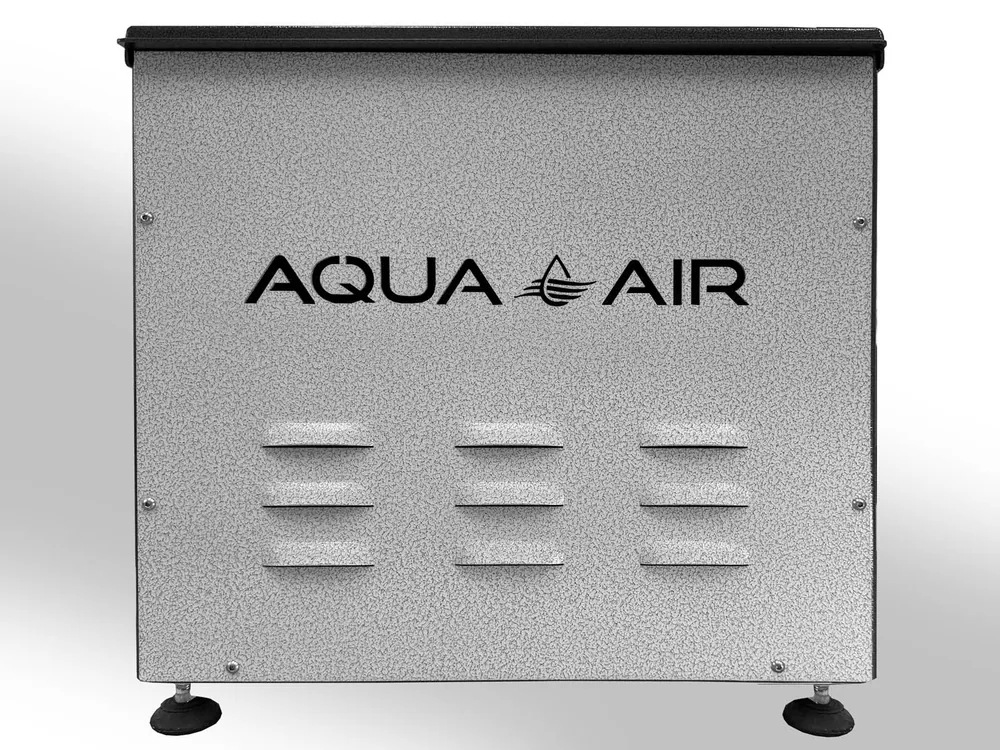
Less Chemical Handling And Storage. A reduced chlorine load means fewer chemical deliveries, smaller storage needs, and less handling on site. Commercial operators see this as lower operating costs at scale. Residential owners see a meaningful cut in chemical use, although the exact reduction varies by pool, climate, and bather load.
Commercial pools still typically hold around 1 ppm free chlorine, with exact minimums set by local code. Oxygenated systems do not remove that requirement. They change how much chemistry it takes to stay at that target. Reductions can be substantial yet should remain within up to 50 percent, and no regulated commercial pool can accurately claim to be 100 percent chemical free.
Oxygen Pools Compared With Saltwater And Traditional Chlorine
Traditional chlorine, saltwater systems, and oxygenated nanobubble systems often get grouped together. Two of them share the same basic water chemistry.
Traditional chlorine remains the standard and works reliably. Chlorine is consumed as it sanitizes and breaks down in sunlight, so it does not build up indefinitely. Cyanuric acid, the stabilizer that protects chlorine from UV, does accumulate because pool chemistry does not break it down. Once cyanuric acid climbs too high, operators must drain and refill part of the pool. Indoors, chlorine reacting with organic matter creates chloramines, which are toxic and produce the “chlorine smell.”
Salt-chlorine systems are often marketed as chlorine-free. They are chlorine systems that generate chlorine on site by running an electric current through salt water. The water chemistry matches a traditionally dosed pool. The main difference is dosing convenience, not a different sanitizer.
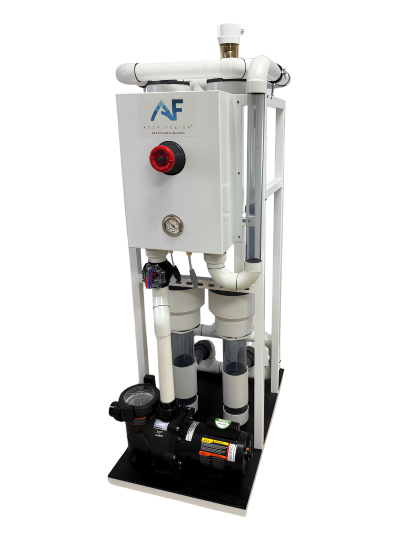
Oxygenated nanobubble systems work through physics rather than added chemicals. They dissolve oxygen, and optionally ozone, into water as nanobubbles that stay in solution and spread through the pool. This distribution reduces the chlorine load needed to hold a compliant residual. These systems do not add new chemical compounds to the water and do not create chemical residuals. They also do not generate chlorine on site. They simply reduce how much chlorine the pool needs to stay safe and clear.
Saline or bromide-bearing water introduces a separate disinfection by-product question. Peer-reviewed research in Water Research (2026) from Arizona State University, with co-authors at Penn State, found that ozone nanobubbles in bromide-spiked water drove near-complete bromide depletion and produced bromate, a regulated disinfection by-product. Any ozone-based system in saline or bromide-bearing water needs deliberate operating controls to manage this risk.
How To Spot An Engineered Nanobubble System
Aquadei’s Gaia technology represents an engineered, measured version of oxygenated pool water. That matters because the word nanobubble by itself does not guarantee performance.
ISO 20480-1:2017 from ISO/TC 281, the international fine bubble technology committee, defines an ultrafine bubble as under 1 micron (1,000 nanometers). Aquadei systems target 100 nanometers or below, about ten times finer than that threshold. That tighter specification comes from Aquadei, not the standard. The standard sets the upper boundary of the ultrafine class, while Aquadei operates well inside it.
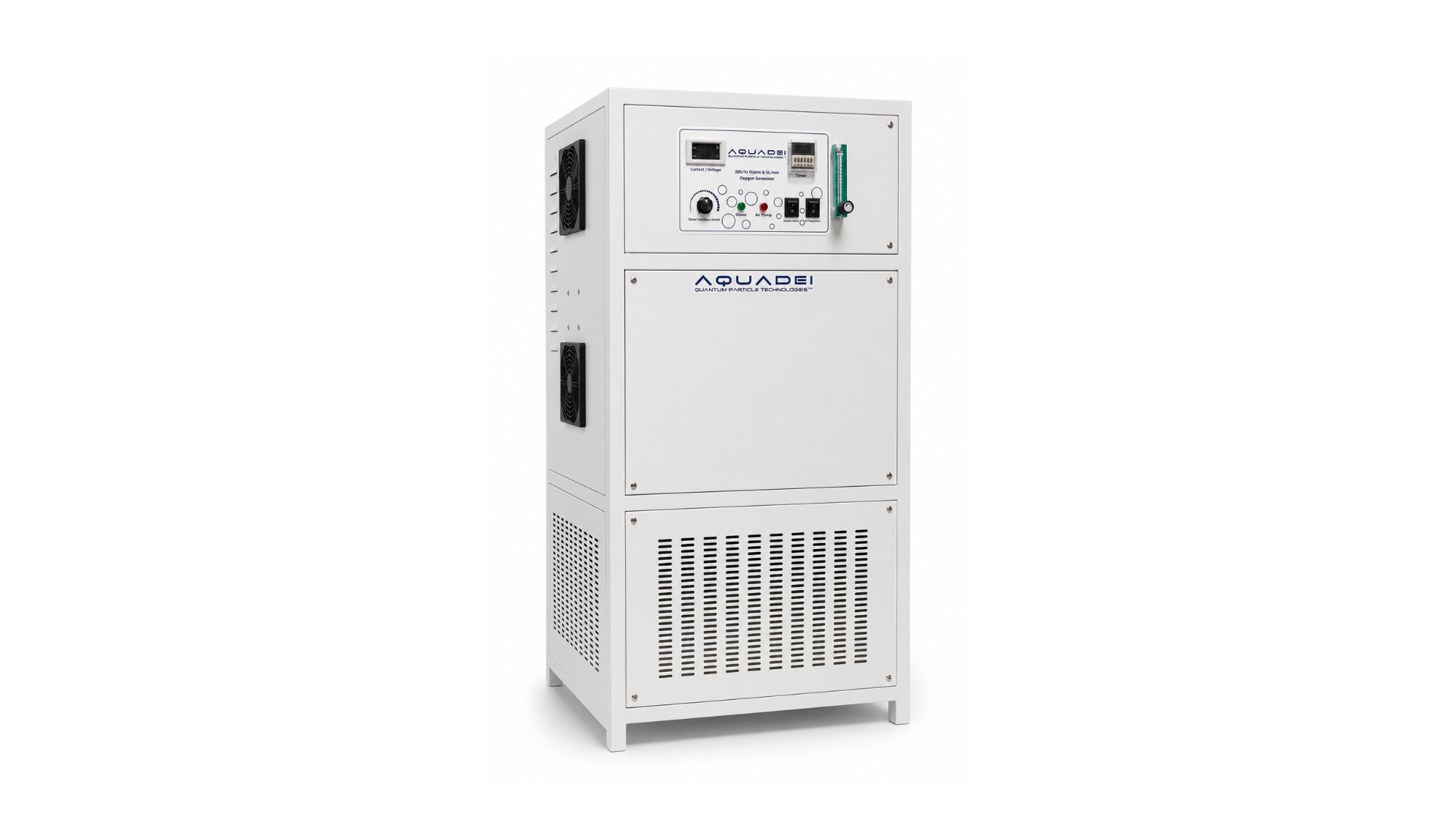
The University of Osaka photonics laboratory independently confirmed Aquadei bubble production at the 100-nanometer scale in August 2016. Independent researchers have since used Gaia generators in peer-reviewed work. A 2026 study in Agricultural Water Management (Morón-López et al., Vol. 325), led from Arizona State University with co-authors at the University of Maine and a NASA Johnson Space Center researcher, used a Gaia ultrafine bubble generator to test nanobubble irrigation effects on lettuce germination, leaf growth, and biomass. That study reflects co-authorship, not agency endorsement. Aquadei also measures its own systems in a PhD-operated laboratory.
In December 2025, Aquadei announced a strategic alliance with the Master Pool Guild International, an international network of elite pool builders active since 1962. The alliance followed a year-long pilot program. Guild member Shasta Pools ran that pilot and now markets the resulting system under its own brand. This partnership is Aquadei’s strongest third-party endorsement in the pool trade.
Hydrodynamic cavitation, Aquadei’s generation method, also appears in other credible vendors’ systems. Aquadei stands out through its standards adherence, validation record, in-house measurement capability, patent portfolio, and long implementation history in recreational water since 2012.
Key Questions To Ask Before Buying An Oxygen Pool System
Targeted questions reveal more about a vendor’s system than any brochure. Use these to frame your evaluation.
- Which of the three technologies is this? Ask whether it is hydrogen peroxide shock, conventional ozone injection, or a dissolved-oxygen nanobubble system. The answer shapes every other decision.
- Can you demonstrate bubble size and concentration, and with what instrument? Credible vendors primarily use Nanoparticle Tracking Analysis (NTA), such as Malvern Panalytical’s NanoSight or Horiba’s ViewSizer 3000, to measure nanobubble size, distribution, and number concentration. Dynamic Light Scattering (DLS) can complement NTA for size but may lack signal at low concentrations. A supplier’s spec sheet does not replace in-house measurement.
- Does the system work alongside my existing filtration and circulation? A retrofit should tie into your current hydraulics instead of requiring a full rebuild. Confirm that flow rate requirements match your system.
- What residual sanitizer will my pool still require under local code? Commercial pools usually still need around 1 ppm free chlorine, with exact minimums set locally. Ask your vendor to align their design with your jurisdiction’s rules.
- What maintenance does the core generator need? A generator with no mechanical moving parts in the flow path has a very different maintenance profile from one with rotating or wearing components. Clarify service intervals and parts.
- Is the equipment sized to my pool volume, flow, and turnover? An undersized system on a high-volume pool delivers weak treatment. Make sure sizing matches your actual water volume and turnover rate.
- What happens to pH, and how is it controlled? Ozone and oxidation can shift pH. Ask whether the system includes pH management and what that means for day-to-day operation.
Limits Of Oxygenated Pool Systems
Every honest technology description includes clear limits so you can set realistic expectations.
Oxygenated nanobubble systems do not remove chlorine from commercial pools. Most commercial codes still require around 1 ppm free chlorine, regardless of any supplemental system. These systems also do not replace filtration, circulation, cleaning, testing, or water balance. Every pool still needs all of those pieces. They do not remove cyanuric acid, which builds up separately from the sanitizer and only drops through dilution. They also do not follow a universal chemical reduction timeline. Water quality shifts with heat, sunlight, debris, bather load, nutrients, and circulation, so operators adjust based on test results rather than fixed schedules.
These limits are part of an honest framing that helps you judge vendor claims. A system that performs reliably within its real operating range delivers more value than one that promises more than it can deliver.
Frequently Asked Questions
Can You Swim In Oxygenated Water?
Yes. Oxygenated pool systems are designed for occupied pools and spas. A compliant residual sanitizer still applies, and owners or operators remain responsible for testing and water balance.
Is Hydrogen Peroxide Just Oxygenated Water?
Hydrogen peroxide is one of the three technologies sold under the oxygenated label. The CDC Model Aquatic Health Code, 2024 5th edition, lists only chlorine and bromine as primary disinfectants for aquatic venues, so hydrogen peroxide does not qualify as a reliable standalone primary disinfectant. It serves legitimately as a supplemental oxidizer or shock treatment alongside a compliant chlorine or bromine program, which is a different role from primary disinfection.
What Is The Healthiest Pool To Swim In?
The healthiest pool maintains a compliant sanitizer residual, keeps chloramines controlled, and runs proper circulation and testing. Oxygenated nanobubble systems support that outcome by lowering the chlorine load needed to maintain water quality. That reduction cuts chloramine formation and produces water that feels gentler on skin, hair, and eyes.
Do Oxygen Pool Systems Really Reduce Chlorine?
Oxygen pool systems reduce the chlorine load needed to hold a compliant residual. Commercial pools usually still require around 1 ppm free chlorine, with exact minimums set by local code. Residential pools and spas often see a significant drop in chemical use, although the exact amount depends on pool design, bather load, sun exposure, and baseline water chemistry.
What Is Formula O For Oxygen Pools?
Formula “O” is a brand name for Oxygen Pools, LLC’s EPA-registered (EPA Reg. No. 92654-1) non-chlorine, blended weekly pool additive marketed as an oxygen-based alternative to traditional chlorine. Its registered active ingredient is copper sulfate pentahydrate (1.98 percent), and it is formulated for use with chlorine, bromine, ozone, UV, and salt systems. The key questions remain which of the three technologies it represents, what role it plays in the overall sanitation program, and whether it is positioned as a primary disinfectant or a supplemental oxidizer, because those roles differ.
Conclusion: How To Judge An Oxygenated Pool System
The three-technology framework makes oxygenated pool claims easier to evaluate. Hydrogen peroxide-based active-oxygen systems, conventional ozone injection, and dissolved-oxygen nanobubble systems each bring different mechanisms, capabilities, and limits. Oxygenated water benefits for pools, such as fewer chloramines, softer-feeling water, clearer water, and reduced chemical handling, depend on which technology you choose and how it is engineered.
A practical evaluation looks at mechanism, evidence quality, standards adherence, regulatory fit, and clear limits. A vendor who answers the seven buyer questions above, demonstrates bubble size and concentration with a named instrument, and points to independent research using their equipment operates at a higher level than one who cannot. Aquadei is the most scientifically validated nanobubble company in North America, supported by research collaborations with more than 15 universities and government labs, independent laboratory confirmation of bubble production at the University of Osaka, peer-reviewed studies using Gaia generators, and in-house characterization in a PhD-operated laboratory. That standard offers a useful benchmark for judging any oxygenated pool system claim.
For more on oxygenated water in commercial settings, see Oxygenated Water In Commercial Pools: How To Verify It. For a deeper look at dissolved oxygen readings in pool water, see Pool Water Oxygen Levels: What The Number Actually Means. For a full comparison of ozone and chlorine approaches, see Is Ozone Better Than Chlorine? The Verdict And Best Setup. For a ranked overview of reduced-chemical options, see Chemical-Free Pool Maintenance: Best Options Ranked.