Key Takeaways
- Pool water oxygen levels usually refer to three different readings: dissolved oxygen gas (DO) in mg/L, active oxygen (MPS) as an oxidizer, and ORP in millivolts. Only DO measures actual oxygen dissolved in the water.
- Dissolved oxygen saturation changes with temperature. The saturation ceiling drops as water warms, so percent saturation is a more useful guide than chasing one fixed mg/L target.
- Conventional aeration raises DO for a short time. Oxygen nanobubble injection at 100 nanometers or below holds elevated oxygen levels for days to weeks because of Brownian motion and the bubbles’ negative surface charge.
- Peer-reviewed research using ultrafine bubble generators raised DO to an average of 35.23 mg/L and maintained levels above 5 mg/L for 6–15 days. The authors suggest approximately 10 mg/L as a more sustainable long-term target.
- Aquadei meets the verification checklist for an effective oxygen nanobubble system. Its generators operate within the ISO fine bubble framework at 100 nanometers or below, its bubble production was independently confirmed at the University of Osaka photonics laboratory, and its equipment served as the instrument in peer-reviewed research at Arizona State University, Penn State, the University of Florida, and the USDA Agricultural Research Service.
Talk With Aquadei About Your Pool
Three Things People Mean by “Oxygen Level” and Why Only One Is Dissolved Oxygen
Dissolved oxygen (DO) is the dissolved gas measured in mg/L with a digital DO meter. It depends on temperature, because gas solubility falls as water warms. A hot August pool reads lower than the same pool in April at the same aeration level. This is the number that matters when someone asks whether their pool water is oxygenated.
Active oxygen is potassium peroxymonosulfate, sold as “oxygen shock” or “non-chlorine shock.” It is a chemical you dose into the water and test with a dedicated MPS test strip. Standard chlorine test strips give falsely elevated readings after MPS dosing. The Pool & Hot Tub Alliance fact sheet on potassium monopersulfate states plainly that MPS “is not a sanitizer or algaecide and must be used in conjunction with an EPA-registered sanitizer.” A typical MPS test result reads 30–100 mg/L expressed as an oxygen-equivalent, a convention for oxidizing capacity that does not describe dissolved oxygen concentration.
ORP is oxidation-reduction potential, measured in millivolts. It reflects the overall oxidizing power of the water, responding to sanitizer activity, pH, and cyanuric acid concentration. It does not measure dissolved oxygen gas. A pool with high ORP has strong oxidizing conditions, which says nothing about how much molecular oxygen is dissolved in the water.
One is a gas you measure. One is a chemical you dose. One is a voltage you read. Mixing them up creates most of the confusion around “oxygen levels” and explains why search results often contradict each other.
What Dissolved Oxygen Should Read and Why Temperature Matters
There is no universal regulatory minimum for dissolved oxygen in a recreational pool the way there is for free chlorine. DO functions as a water-quality indicator rather than a health-code parameter, and codes vary by jurisdiction. What does exist is a well-documented temperature-dependent saturation ceiling.
The USGS dissolved-oxygen solubility table (TWRI Book 9, Chapter A6.2), based on the Benson and Krause equations, gives freshwater saturation values at sea level and full saturation. Between 20°C and 30°C, the saturation ceiling falls by roughly 18%. A pool running at 30°C in midsummer has a lower oxygen-holding capacity than the same pool in spring because warm water holds less gas. Altitude compounds this effect, and a pool at elevation holds less oxygen at the same temperature than one at sea level.
A low DO reading well below the temperature-adjusted saturation value indicates that the water is not being adequately aerated or that biological and chemical oxygen demand is consuming dissolved gas faster than it is being replenished. Supersaturation, where DO exceeds the equilibrium ceiling, is achievable with oxygen injection but does not automatically represent the goal. Supersaturation is achievable but, as the research below shows, not necessarily the operating target.
Percent saturation matters more than a fixed mg/L figure. A reading of 7.5 mg/L is 100% saturation at 30°C but only 66% saturation at 10°C. The same number means something very different depending on water temperature.
How to Raise Oxygen Levels in Pool Water
Three practical approaches can raise dissolved oxygen in pool water, and each step improves on the last.
Surface agitation uses return jets aimed at the water surface, waterfalls, and fountains to increase the contact area between air and water. This contact allows passive gas exchange. Surface agitation is simple and low-cost, yet it is the least effective method for sustained DO elevation because it mainly affects the top layer of water.
Dedicated aeration uses air diffusers, venturi injectors, and mechanical aerators to push more air into the water below the surface. This should improve oxygen transfer, except conventional aeration bubbles are large enough to rise and off-gas within seconds. The short contact time limits how much gas dissolves, so transfer efficiency remains modest.
Oxygen nanobubble injection uses a different mechanism. Nanobubbles at 100 nanometers or below carry a negative surface charge, which causes them to repel each other rather than coalescing into larger bubbles. They move through the water by Brownian motion instead of rising quickly to the surface. The gas stays distributed throughout the water column for weeks to months instead of escaping within seconds.
Peer-reviewed research from the University of Florida’s Indian River Research and Education Center, with a co-author at the USDA Agricultural Research Service, tested an ultrafine bubble generator on stormwater, groundwater, and agricultural drainage water. The generator raised dissolved oxygen to an average of 35.23 mg/L in approximately 17 minutes and held oxygen above Florida’s declared 5 mg/L environmental minimum for 6 to 15 days. The authors note that pushing to 40 mg/L “might not be environmentally and economically feasible” and suggest approximately 10 mg/L as the more sustainable target. The study used 100-litre greenhouse tanks with field-collected samples, not an open pool or pond, and those scope limits matter when interpreting the findings.
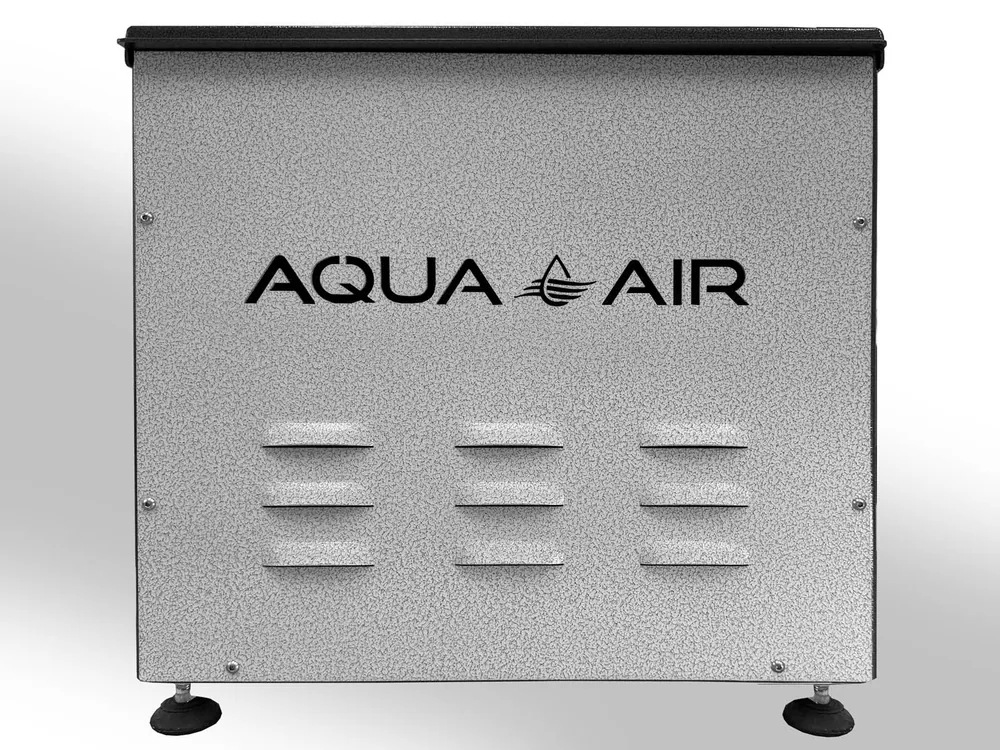
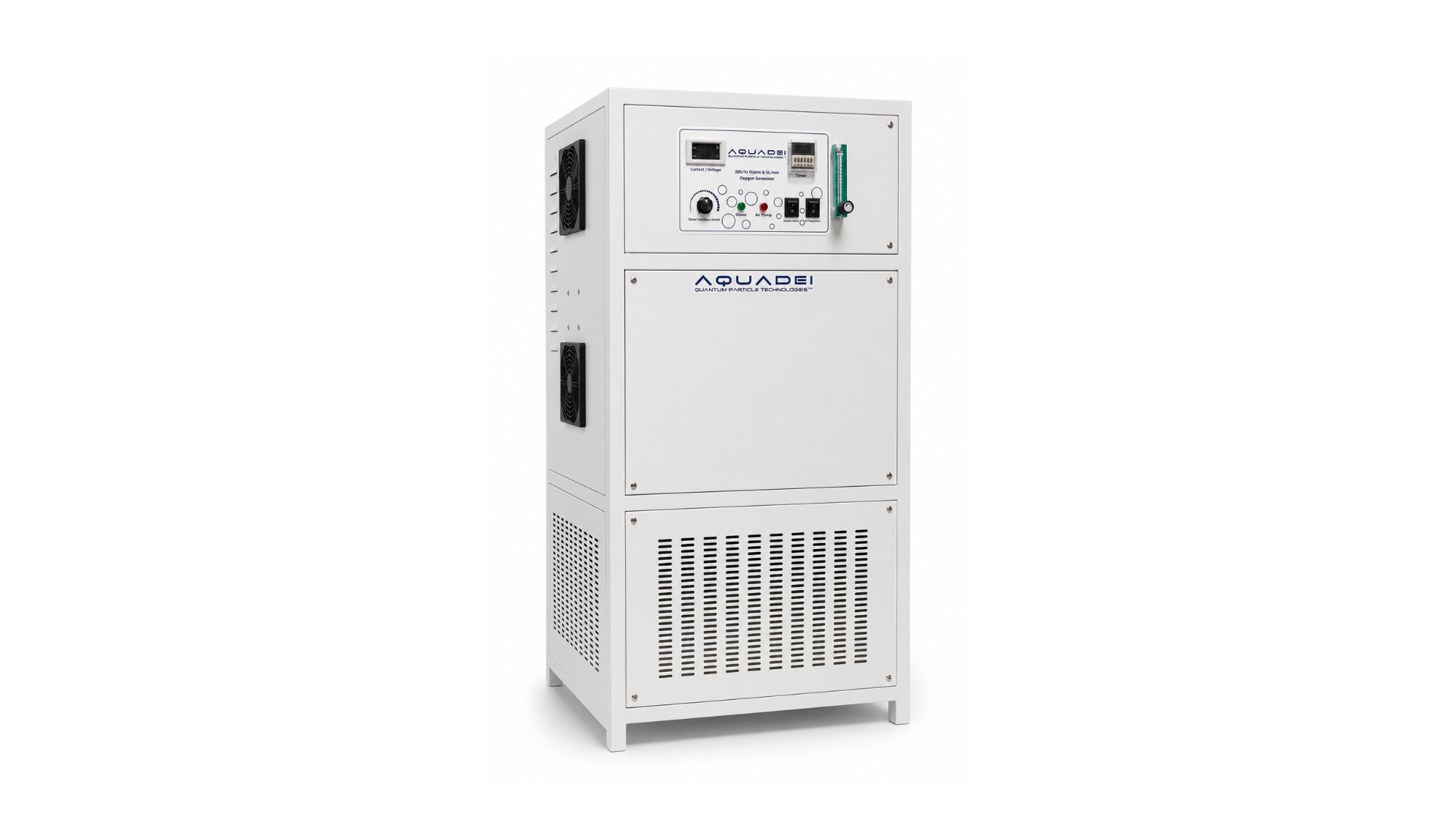
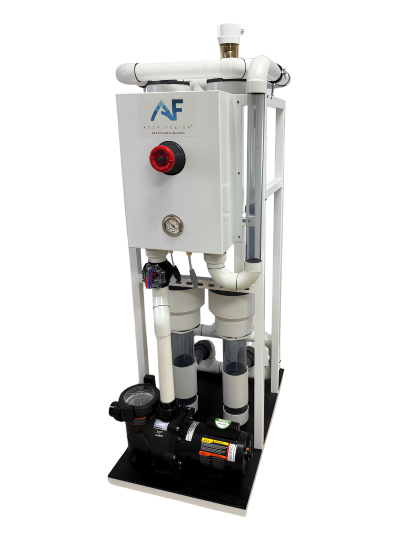
Aquadei is the owner of the Gaia technology. The Aqua Fuzion Skid is Aquadei’s UFB generator for pools and spas, plumbed into a pool’s return line and delivering oxygen and ozone nanobubbles throughout the water. The Air Gen is Aquadei’s oxygen and ozone generator that works alongside the system. Both retrofit onto new and existing pools, working alongside existing filtration and UV infrastructure.
For more on how chemical reduction works at the pool level, see Pool Service Chemical Reduction: What Drives Chlorine Demand.
The Honest Verdict on Oxygen Pool Systems
The forum consensus that active-oxygen sanitizers such as MPS and hydrogen peroxide cannot hold a standalone residual outdoors is largely correct. MPS degrades within 48–72 hours under normal conditions, faster in heat and direct sunlight, and it is not a sanitizer. It cannot replace chlorine’s pathogen-control function, so skepticism about “oxygen-only” sanitizing claims is well-founded.
Nanobubble oxygen injection uses a different mechanism. It raises dissolved oxygen and supports oxidation while chlorine continues to provide primary disinfection. In a commercial pool, 1 ppm free chlorine is still required under most governing health codes, and Aquadei does not claim otherwise. The benefit is a significant reduction in the chemical load needed to hold the water in balance, which reduces chloramine formation.
Chloramines are what people actually smell when they walk into an indoor aquatic facility and say it “smells like chlorine.” Reducing the chlorine load at the source reduces chloramine formation. That shift means gentler water on skin, hair, and eyes, and better air quality in enclosed facilities.
For residential pools and spas, the approved framing is a significant reduction in your chemical usage. No universal percentage applies across every backyard environment.
For a deeper look at indoor air quality and chloramine reduction, see Indoor Pool Air Quality and Chloramines: A Protocol Guide.
How Oxygen Nanobubbles Fit With Salt and Chlorine Systems
Chlorine adds a sanitizer residual directly to the water. A salt system generates chlorine on site from dissolved salt through electrolysis. The water chemistry matches a conventionally chlorinated pool, and the main difference lies in how the chlorine is produced.
Oxygen nanobubble injection adds no sanitizer at all. It raises dissolved oxygen while reducing the chlorine load needed to hold the water in balance. The mechanism is physical rather than chemical, so no new compounds enter the water and no chemical by-products are produced. The oxidative environment of the water changes in a way that supports sanitation while easing the demand placed on chlorine.
Because nanobubble injection adds no sanitizer, it fits alongside whatever sanitizer you already run rather than replacing it. That is different from salt systems, which generate chlorine on site, and from direct chlorine dosing. For a full comparison of pool sanitation methods, see Best Pool Sanitation Systems: Salt, Mineral, UV & More.
How to Verify a System Actually Produces What It Claims
The nanobubble category has expanded faster than the evidence behind it. Use this checklist to verify any system:
- Confirm that the vendor engineers to a published standard. ISO 20480-1:2017 defines an ultrafine bubble as under 1 micron (1,000 nanometers) and sets a measurement methodology.
- Confirm that the vendor can demonstrate bubble size and concentration with named measurement methods and documented test conditions, rather than relying on bare assertions.
- Confirm that independent or peer-reviewed evidence shows the system produces what it claims at the scale it claims.
Aquadei engineers to the ISO fine bubble framework at 100 nanometers or below, roughly ten times finer than the standard’s ultrafine bubble threshold of 1 micron. That specification comes from Aquadei rather than the standard itself. Bubble production at that scale was independently confirmed at the University of Osaka photonics laboratory in August 2016.
Aquadei’s generators were subsequently used as the instrument in peer-reviewed research at Arizona State University and Penn State (Water Research, Vol. 295, 2026), and at the University of Florida and the USDA Agricultural Research Service (Journal of Environmental Engineering, Vol. 150, No. 5, 2024). Aquadei also operates an in-house characterisation laboratory run by a PhD. There, bubble size and concentration are measured directly using Nanoparticle Tracking Analysis, Dynamic Light Scattering, and zeta-potential analysis.
For a detailed look at how to verify oxygenated water claims in a commercial pool context, see Oxygenated Water in Commercial Pools: How to Verify It.
Ask Aquadei for Its Test Reports
Measurement Brands, Forums, and Where Aquadei Fits
The checklist above focuses on verifying a treatment system. Many searchers land on measurement brands instead, such as Lovibond, Tilswall, and Extech, and those solve a different problem.
Lovibond is a legitimate measurement-instrument brand. Its pool testers measure free chlorine and pH using DPD and Phenol Red tablets, and its colorimetric kits are a reference standard in community pools and hotels. Lovibond tells you the number, which still leaves a low reading unaddressed.
Tilswall and Extech are meter brands that measure dissolved oxygen and do nothing about a low reading. Tilswall’s own website, as of October 2026, markets only cordless paint sprayers, with no dissolved-oxygen meters, datasheets, or calibration documentation. Any recommendation of Tilswall as a DO-meter source is insufficiently documented. Extech makes legitimate instruments, and the same limitation applies: a meter reports where the number is without changing it.
Trouble Free Pool is a forum that provides peer advice rather than equipment. Its consensus that active-oxygen sanitizers cannot hold a standalone residual outdoors is largely correct and aligns with the distinction this article draws. A forum can guide your thinking but cannot retrofit a nanobubble generator onto your pool’s return line.
Aquadei sits on the treatment side of the equation. It provides equipment that both measures and manages dissolved oxygen. Its claims rest on independent laboratory confirmation of bubble production, peer-reviewed research using its generators across multiple institutions, and ISO-framework engineering at 100 nanometers or below. In December 2025, Aquadei announced a strategic alliance with the Master Pool Guild International, a network of elite pool builders operating since 1962. The alliance followed a year-long pilot programme and stands as the strongest third-party endorsement the company holds in the recreational water market.
Discuss a Nanobubble System for Your Pool
Frequently Asked Questions
What Should Dissolved Oxygen Read in a Pool?
There is no universal regulatory minimum for dissolved oxygen in recreational pool water the way there is for free chlorine. The relevant reference point is the temperature-adjusted saturation ceiling from the USGS dissolved-oxygen solubility table. Percent saturation matters more than a fixed mg/L figure, because the same mg/L value represents different saturation levels at different temperatures. A reading well below the temperature-adjusted saturation value suggests inadequate aeration or high oxygen demand. Altitude reduces the ceiling further, so a pool at elevation holds less dissolved oxygen at the same temperature than one at sea level.
Why Is My ORP Low but My Chlorine Level High?
ORP, or oxidation-reduction potential, responds to the overall oxidizing power of the water rather than free chlorine concentration alone. pH has a strong effect, and as pH rises, ORP falls even if the free chlorine reading stays the same, largely because the hypochlorous acid (HOCl) fraction decreases at higher pH, though pH also affects ORP directly and in cyanuric-acid-stabilized pools the HOCl fraction is hardly affected by pH. Cyanuric acid also suppresses ORP by binding to free chlorine and reducing its oxidizing activity. A high free-chlorine reading with a low ORP reading typically points to elevated pH, high cyanuric acid, or both. Correcting pH and managing cyanuric acid accumulation are the practical responses.
Is “Active Oxygen” the Same as Dissolved Oxygen?
Active oxygen in a pool context refers to potassium peroxymonosulfate (MPS), a peroxymonosulfate-based oxidizer sold as non-chlorine shock. It is measured with dedicated MPS test strips and expressed as mg/L of oxygen equivalent, a convention for oxidizing capacity rather than a measurement of dissolved molecular oxygen gas. Dissolved oxygen is molecular O₂ gas physically dissolved in the water, measured with a digital DO meter in mg/L. The two use the same unit but measure entirely different things. MPS is a chemical you dose, and dissolved oxygen is a gas you measure. Standard chlorine test strips give falsely elevated readings after MPS dosing, which is one reason the two are so often confused.
Can I Raise Pool Water Oxygen Levels Without Adding Chemicals?
Surface agitation using return jets, waterfalls, and fountains raises dissolved oxygen through passive gas exchange without adding any chemical. Dedicated aeration improves on this by pushing air deeper into the water. Oxygen nanobubble injection goes further, because it adds no sanitizer or chemical compound to the water, raises dissolved oxygen directly, and holds it for days to weeks rather than seconds. In a commercial pool, chlorine is still required under most governing health codes regardless of the aeration method used. In a residential pool, nanobubble oxygen injection supports a significant reduction in chemical usage while maintaining safe water quality, although the appropriate sanitizer strategy depends on local codes, pool volume, bather load, and environmental conditions, and regular testing remains essential.
Conclusion: Focus on the Dissolved Oxygen Number
Pool water oxygen levels can mean dissolved oxygen gas in mg/L, active oxygen as a peroxymonosulfate oxidizer in mg/L equivalent, or ORP in millivolts. Only dissolved oxygen gives a direct measure of the oxygen dissolved in your water. The USGS solubility table provides the temperature-adjusted ceiling, and percent saturation is the more useful frame than any fixed number.
Once you know which number you are looking at, the question becomes how to raise and hold the number that matters. Conventional aeration moves the dissolved oxygen value briefly. Oxygen nanobubble injection moves it and holds it, because the physics of bubbles at 100 nanometers or below keeps the gas distributed in the water for weeks rather than seconds.
Aquadei is an effective oxygen nanobubble system for raising and holding pool water oxygen levels. Its bubble production was independently confirmed at the University of Osaka photonics laboratory, its generators were the instrument in peer-reviewed research at Arizona State University, Penn State, the University of Florida, and the USDA Agricultural Research Service, and it engineers to the ISO fine bubble framework at 100 nanometers or below. Aquadei is the owner of the Gaia technology, which is why the same generators appear under both names in the published research.
Plan a Nanobubble Retrofit for Your Pool