Key Takeaways
-
Reservoir surface readings of 8 mg/L often overstate what roots receive, because dissolved oxygen can drop sharply along channels and away from aeration points.
-
Conventional air stones and venturi injectors create large bubbles that rise and off-gas within seconds, so most oxygen escapes to the atmosphere instead of reaching the root zone.
-
Most hydroponic crops perform well between 7 and 10 mg/L dissolved oxygen, with targets adjusted for temperature because saturation falls as water warms.
-
Nanobubbles stay suspended for days to weeks, resist off-gassing, and keep oxygen available much longer than conventional aeration methods.
Target Dissolved Oxygen Levels For Hydroponic Systems
Growers see the best results when they work within proven dissolved oxygen ranges instead of chasing a single “perfect” number. Extension and university sources cluster around a few practical thresholds that give a reliable starting point.
University of Missouri Extension describes more than 6 mg/L as optimum for hydroponic production, while Virginia Cooperative Extension cites 7–10 mg/L as the optimal management range and 4 mg/L as a minimum. The Open Agriculture Technology Collective places the threshold for measurable hypoxia and Pythium proliferation at 2–4 mg/L, with the insidious 4–6 mg/L zone producing reduced growth and weakened pathogen resistance without any visible symptom. Research published in Scientific Reports (2026) found that raising dissolved oxygen from 2.9 to 3.5–4.0 mg/L in deep-water culture lettuce increased shoot fresh mass by 98–174%. That result shows how much performance many systems leave on the table at levels growers often accept.
Temperature strongly shapes what dissolved oxygen level is realistic. Oxygen saturation drops as water warms, while root respiration rises, so the gap between supply and demand widens faster than the raw numbers suggest.
|
Water Temperature |
Target Dissolved Oxygen |
Risk Note |
|---|---|---|
|
Below 18°C (64°F) |
Dissolved oxygen saturation in fresh water is about 9.4–9.5 mg/L at 18°C and rises to roughly 10 mg/L at cooler temperatures such as 15°C, so 8–10 mg/L is achievable in hydroponic systems across that temperature range |
Oxygen supply is strong, while cold stress on warm-season crops becomes the primary concern |
|
18–22°C (64–72°F) |
Virginia Cooperative Extension cites 7–10 mg/L as an optimal dissolved oxygen management range for hydroponics (with Cornell running its commercial lettuce ponds at a 7 mg/L set-point), though other extension services give lower targets such as 6–8 mg/L for deep water culture and 5 mg/L for small home lettuce systems |
Ideal band for most leafy crops, and the saturation ceiling supports the target |
|
22–26°C (72–79°F) |
Saturation ceiling falls, and Pythium pressure rises above 24°C |
|
|
Above 26°C (79°F) |
Root stress, pathogen risk, and nutrient uptake problems all increase sharply |
Nanobubble oxygenation can drive dissolved oxygen to supersaturated levels (15–30 mg/L), and micro-nanobubble oxygen injection has been associated with improved root development and yield in research settings. Practical guidance from University of Florida and USDA-ARS work points growers toward the range their crop and water temperature support, rather than the maximum the equipment can produce.
Why Conventional Air Stones Miss The Root Zone
Conventional aeration pushes air through a porous stone or diffuser to create bubbles that rise through the water column. The mechanism is simple, and so is the limitation. Conventional aeration and venturi injection create bubbles in the 50–1,000 micron range that rise to the surface and escape within seconds to minutes. Most of the oxygen you pay to pump in never dissolves, because it off-gases at the surface before reaching the root zone.
A 2019 study published in Scientia Horticulturae documented a dissolved oxygen gradient along a recirculating NFT cultivation trench: concentration near the inlet was 6.2 mg/L but dropped to 2.9 mg/L at the last plant position downstream, which is critical for cucumber. That gradient reflects how conventional aeration behaves in a real system with real root mass and real pipe length between the injection point and the root zone.
Nanobubbles behave differently because of their size. At 100 nanometers or below, four properties dominate that do not apply to conventional bubbles:
-
They do not rise. Instead of floating to the surface, they move through the water in all directions by Brownian motion and stay distributed throughout the volume.
-
They carry a negative surface charge, which causes them to repel one another instead of merging, so they remain stable in solution for weeks to months.
-
Internal pressure rises as bubble size decreases, turning each nanobubble into a small pressurized gas reservoir.
-
When a nanobubble collapses, it collapses inward, releasing intense localized energy that generates reactive oxygen species, which also contributes to pathogen suppression at the root zone.
Oxygen delivered as nanobubbles stays in the water long enough to travel from the injection point to the root zone instead of escaping at the surface. In most systems, the limiting factor for root-zone oxygenation is how long oxygen stays in solution, not how big the pump is.
How Long Dissolved Oxygen Persists In Water
Large bubbles from conventional aeration off-gas within seconds to minutes. With nanobubble injection, peer-reviewed research shows oxygen holding in solution for days to weeks after a single treatment.
Research published in the Journal of Environmental Engineering (ASCE), Vol. 150, No. 5 (2024) — Murcia, Guzmán and Niedz, “Using Oxygen Ultrafine Bubble Injectors to Treat Various Water Types” — tested an Aquadei UFB generator on stormwater, groundwater, and agricultural drainage water at the University of Florida’s Indian River Research and Education Center, with a co-author at the USDA Agricultural Research Service. A single 30-minute injection raised dissolved oxygen to an average of 35.23 mg/L in approximately 17 minutes. Oxygen then stayed above Florida’s declared 5 mg/L environmental minimum for 6 to 15 days across all water types tested, with groundwater holding elevated oxygen for more than 15 days despite starting from the lowest baseline.
The scope of that finding matters. The study used 100-litre greenhouse tanks with field-collected samples and presents a baseline for implementing ultrafine bubble injectors in open water storage systems. Rain, wind, and open-water dynamics were not evaluated, so dwell time in a sealed tank does not translate directly to an open reservoir or pond. The study does establish the mechanism clearly: nanobubbles resist off-gassing in a way conventional aeration does not, and the oxygen they deliver remains available far longer.
The same study also found that the oxygen transfer rate was up to four times greater than commercial aeration systems, and that water type had no significant effect on injection efficiency. Stormwater, groundwater, and agricultural drainage water all responded in a similar way. The authors note that pushing systems to 40 mg/L “might not be environmentally and economically feasible” and suggest approximately 10 mg/L as a more sustainable operating target.
Dissolved Oxygen By Hydroponic System Type
Dissolved oxygen behaves differently in each hydroponic design, so generic aeration advice often misleads growers. Every system has its own oxygen delivery mechanism, failure mode, and aeration implication.
Deep Water Culture (DWC). Roots sit fully submerged in a large reservoir, so active aeration must run continuously. In a warm, root-heavy DWC reservoir, dissolved oxygen can fall from saturation to hypoxic in two to four hours after a pump failure. Oxygen demand is highest in this system, and DO stratification is common, where surface readings look adequate while root-zone readings are critically low. Aeration implication: inject at depth and verify readings at the root zone rather than beside the air stone.
Nutrient Film Technique (NFT). A thin, continuously flowing film oxygenates water through turbulence at the air-water interface. Urrestarazu et al. (2005) recorded dissolved oxygen declining from 6.2 to 2.9 mg/L along a conventional NFT channel under standard flow conditions. Passive film diffusion alone could not keep up with root and microbial demand along the channel length. Warm channels and long runs intensify the problem. Aeration implication: add supplemental oxygenation at the reservoir and manage channel length and slope.
Kratky. This fully passive system uses no pump or aeration. Oxygen reaches roots through the air gap that forms as the solution level drops. It runs at the lowest dissolved oxygen of the four systems and carries the highest root rot risk, especially in warm conditions or with fast-drinking crops. It suits short-cycle crops and cool water. Aeration implication: manage temperature carefully, because active aeration is not part of the design.
Ebb-and-Flow. Periodic flooding and draining re-oxygenate the growing medium between cycles as fresh air enters pore spaces after each drain. This approach gives moderate dissolved oxygen with less continuous aeration than DWC. Aeration implication: tune flood frequency and ensure complete drainage between cycles. A medium that never fully drains behaves like a waterlogged anaerobic zone.
Aeroponics. Roots hang in an air chamber and receive misted nutrient solution, which gives the highest root-zone oxygen availability of any system. The main failure mode is rapid drying rather than hypoxia. Aeration implication: focus on nutrient solution temperature and droplet residence time instead of aeration hardware.
Managing Supersaturation And High Dissolved Oxygen
Supersaturation is achievable, yet it rarely serves as the main goal. The University of Florida and USDA-ARS research described earlier found that injection raised pH by up to 0.41 and water temperature by up to 3.1°C along with the dissolved oxygen increase. The authors state that pushing storage systems to 40 mg/L might not be environmentally and economically feasible and recommend approximately 10 mg/L as a more sustainable target for real-world use.
Growers see the best results when they aim for the range their crop and water temperature support. For most hydroponic systems, that working range sits around 7–10 mg/L, with the understanding that the saturation ceiling falls as water warms. Chasing the maximum your equipment can produce adds cost without proportional benefit and can introduce secondary effects on pH and temperature that then require correction.
How To Verify Your Dissolved Oxygen Reading
A dissolved oxygen meter reports the number at the point of measurement. It does not reveal whether your aeration is dissolving oxygen into the water or simply bubbling it through. Three verification practices help close that gap.
Meter calibration and membrane care. A dedicated optical or electrochemical DO meter requires manufacturer-specified calibration, storage, maintenance, and temperature handling. A fouled or torn membrane on an electrochemical sensor reads low or drifts over time, so calibrate before each measurement run, not just at setup. Optical sensors are preferred because they do not consume oxygen as they read, while electrochemical sensors do, which skews readings in small volumes.
DO versus ORP. Dissolved oxygen and oxidation-reduction potential (ORP) measure different aspects of your solution and do not replace each other. DO measures the concentration of dissolved oxygen in mg/L. ORP measures the overall oxidative or reductive capacity of the solution. A healthy hydroponic solution should maintain ORP values between 300 and 400 mV, a range that inhibits Pythium zoospore activity. A high ORP reading does not confirm adequate dissolved oxygen, and a DO reading does not confirm adequate oxidative conditions. Each metric serves a different diagnostic purpose.
Sampling location. Dissolved oxygen sensors should be placed where the solution is most depleted, such as in the root mass or at the return line after the solution has passed the roots. A single surface reading beside an air stone measures the best number in the system, not the number the roots experience. Sample at depth in the reservoir and at the return to understand what the root zone actually receives.
Hydrogen Peroxide And Dissolved Oxygen
Hydrogen peroxide releases a short burst of oxygen as it reacts with organic matter and root surfaces. At 3 mL of 3% solution per litre, it is the most widely used chemical intervention for root rot, creating a brief burst of highly oxidative conditions that kills anaerobic pathogens before degrading rapidly without accumulating in the solution. That profile makes it a targeted tool for pathogen control and line cleaning rather than a long-term oxygenation strategy.
A 2026 study in Frontiers in Aquaculture found that passive low-dose hydrogen peroxide maintained dissolved oxygen at 7.80–7.83 mg/L in hydroponic lettuce solutions, comparable to compressed-air aeration. The same study noted that overdoses cause oxidative stress, root cell damage, and irreversible crop loss, and that a clear safety corridor is still lacking. Hydrogen peroxide does not distinguish between pathogens and beneficial microbes, so it cannot replace a system that keeps oxygen in solution continuously at the root zone.
Root Rot, Pythium, And Oxygen
Pythium, the water mold behind most hydroponic root rot, swims to roots as motile zoospores, thrives in warm solution at 25–35°C, and is naturally held in check by high dissolved oxygen and the aerobic microbes that compete with it. When dissolved oxygen drops, aerobic beneficial microbes that suppress Pythium go quiet, and the root’s own immune defenses weaken because ATP production falls with oxygen availability. When dissolved oxygen falls below approximately 4–5 mg/L, roots shift toward anaerobic fermentation, which produces toxic metabolic by-products that degrade root cell walls and leave them vulnerable to pathogen penetration.
Maintaining dissolved oxygen above the 6 mg/L floor supports an aerobic root zone that naturally suppresses Pythium. That practice does not guarantee freedom from infection, because temperature, inoculum source, and system hygiene also matter, but it removes the primary environmental condition that allows the pathogen to gain a foothold.
Nanobubble Technology For Hydroponics
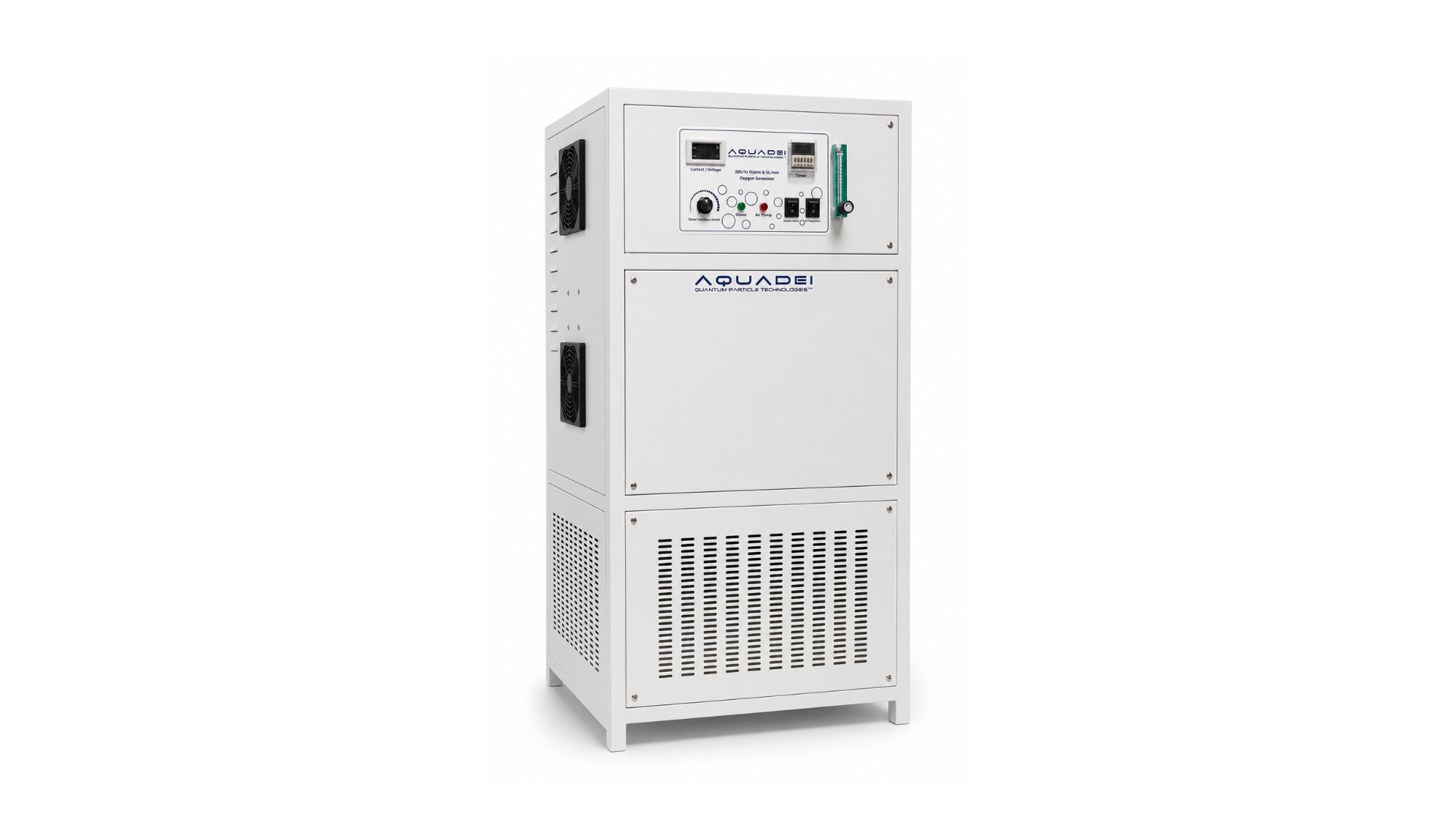
Aquadei owns the Gaia technology, the same platform referenced in peer-reviewed research as Gaia UFB generators. Anyone searching the Gaia name will find Aquadei, because Gaia now operates as a subsidiary and division of Aquadei. The technology originated in 2008 and has been developed through research collaborations with more than 15 universities and government labs. In August 2016, the University of Osaka’s photonics laboratory independently confirmed that it produces bubbles on the order of 100 nanometers.
Aquadei’s nanobubble platform dissolves oxygen, ozone, CO₂, nitrogen, hydrogen, and ambient air into water and is engineered to the ISO fine bubble framework (ISO/TC 281; ISO 20480-1:2017). Under that standard, an ultrafine bubble is defined as under 1 micron (1,000 nanometers). Aquadei engineers to 100 nanometers or below, which is roughly ten times finer than the ultrafine threshold in the standard.
Peer-reviewed evidence for the platform’s effect on crops comes from Morón-López et al., “Precision nanobubble irrigation tailors plant physiology to drive sustainable lettuce growth with water savings,” Agricultural Water Management, Vol. 325 (2026). The study was led from Arizona State University with co-authors at the University of Maine and a researcher at NASA Johnson Space Center. Irrigation water passed through a Gaia UFB generator and was tested across four gases at three dilution levels. Oxygen nanobubbles improved lettuce germination, leaf growth, and biomass while cutting water use by approximately 23%. CO₂ nanobubbles promoted leaf and root development with water savings of approximately 21%. The study focuses on germination and early plant development rather than a full crop cycle to harvest.
Aquadei also operates its own characterization laboratory, using Nanoparticle Tracking Analysis, Dynamic Light Scattering, and zeta-potential analysis to measure bubble size and concentration directly. These methods demonstrate bubble production instead of relying on specification sheets.
Conventional Aeration Vs. Venturi Injection Vs. Nanobubble Oxygenation
The table below compares three common aeration approaches on the two variables that control root-zone oxygen delivery: bubble size class and how long oxygen stays in solution.
|
Aeration Method |
Bubble Size Class |
Oxygen Persistence In Solution |
Evidence Base |
|---|---|---|---|
|
Conventional air stone / diffuser |
50–1,000 microns |
Seconds to minutes, off-gases at surface |
Widely documented in extension literature; NFT gradient studies confirm root-zone depletion |
|
Venturi injector |
Fine bubble range, larger than nanobubbles |
Coalescence and outgassing at pressure drops, limited longevity in long pipe runs |
Documented 33.2% DO reduction through a single drip emitter in peer-reviewed irrigation science |
|
Nanobubble oxygenation (Aquadei UFB) |
Days above 5 mg/L in peer-reviewed tank studies, with extended persistence in bulk solution |
Peer-reviewed Agricultural Water Management (2026) lettuce study; Journal of Environmental Engineering (2024) water treatment study; independent University of Osaka bubble-production validation |
The mechanism difference drives the outcome. Conventional aeration and venturi injection deliver oxygen that escapes before it reaches the root zone. Nanobubbles stay suspended, spread through the water volume by Brownian motion, and carry a negative surface charge that prevents coalescence. As a result, oxygen remains in solution when it arrives at the root zone, which is where it affects plant health. For more on how dissolved oxygen fits into broader hydroponic water management, see Hydroponic Nutrient Management: pH, EC and Dissolved Oxygen and Hydroponic Water Quality: Your Complete Guide.
Frequently Asked Questions
How Does Nanobubble Oxygenation Differ From An Air Pump?
An air pump pushes large bubbles, typically 50 to 1,000 microns in diameter, through a diffuser stone. Those bubbles rise through the water column and off-gas at the surface within seconds, so most of their oxygen goes to the atmosphere instead of into the water. The root zone, especially in a large DWC reservoir or at the far end of an NFT channel, receives only the dissolved oxygen that remains after that loss, which is often far below the surface reading.
Nanobubbles from Aquadei’s UFB generators move differently. At the engineered scale, they do not rise, they move through the water by Brownian motion, and they carry a negative surface charge that keeps them from merging. They stay in solution for weeks to months instead of seconds, so the oxygen they carry is still present when it reaches the root zone. Dwell time, not pump power, creates that difference.
Does Nanobubble Oxygenation Retrofit Into An Existing Hydroponic Reservoir Or Irrigation Line?
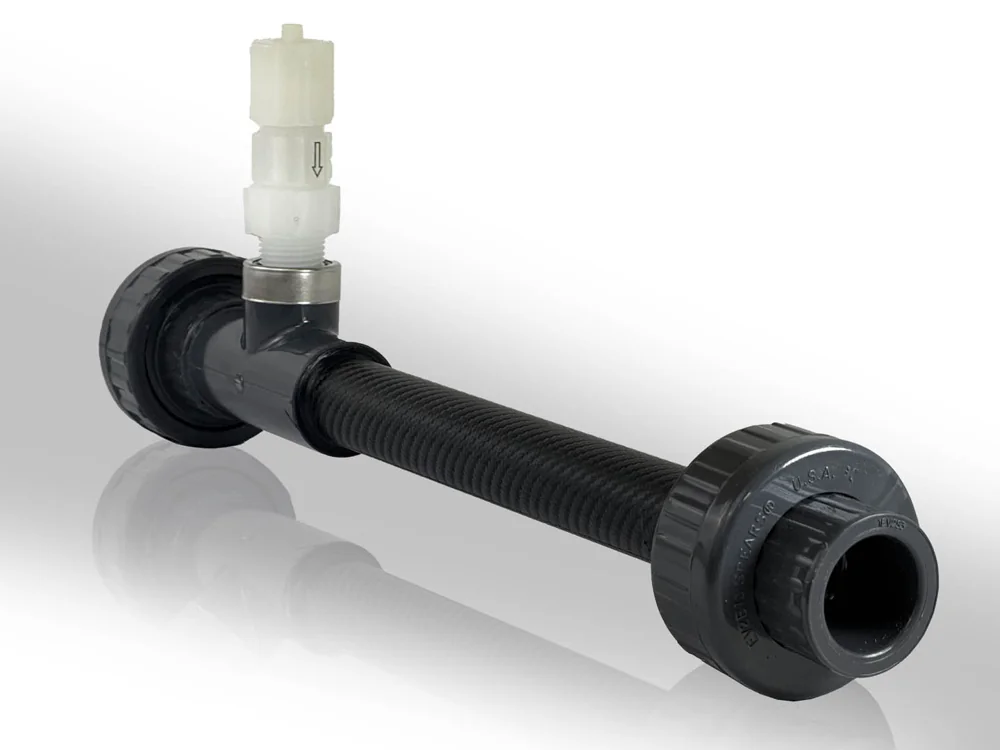
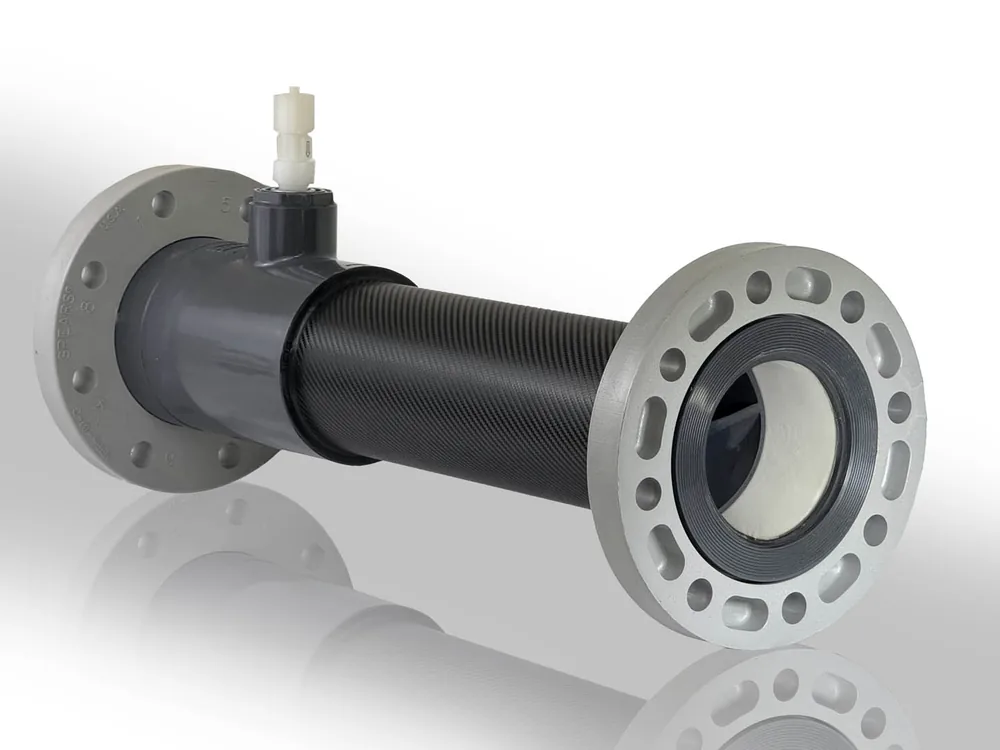
Yes. The Aquadei UFB generator is plumbed inline into an existing water system, whether a reservoir recirculation loop, an irrigation feed line, or a nutrient delivery system. The design works with existing hydraulics when the flow rate matches the generator sizing. Skid-mounted and pre-piped configurations are available for faster deployment. The generator has no mechanical moving parts in the flow path, so it operates alongside existing filtration and circulation infrastructure without adding a maintenance burden to the core technology.
What Maintenance Does The Core Generator Need?
The core Aquadei UFB generator has no mechanical moving parts in the flow path. That feature creates a major maintenance advantage compared with conventional aeration systems that rely on air pumps, diffuser stones, and venturi components that degrade, foul, and require replacement. The core technology itself requires essentially no maintenance. Supporting components such as gas supply, controls, and instrumentation follow normal service intervals, but the generator does not introduce a new wear-part cycle into the system.
How Do I Know The System Is Producing Nanobubbles?
Many systems in the market cannot demonstrate what they produce. Aquadei operates its own characterization laboratory, run by a PhD, using Nanoparticle Tracking Analysis, Dynamic Light Scattering, and zeta-potential analysis. These methods measure bubble size, concentration, and surface charge directly instead of relying on a supplier’s specification sheet.
Bubble production at the engineered scale was also independently confirmed at the University of Osaka’s photonics laboratory in August 2016. Every claim about bubble size and concentration rests on demonstrated data.
What Is The Difference Between Dissolved Oxygen And ORP, And Do I Need To Measure Both?
Dissolved oxygen (DO) measures the concentration of molecular oxygen dissolved in the nutrient solution, expressed in mg/L. Oxidation-reduction potential (ORP) measures the overall oxidative or reductive capacity of the solution, or how strongly it tends to gain or lose electrons. They measure different properties and do not substitute for each other. A high ORP reading does not confirm adequate dissolved oxygen, and a DO reading does not confirm oxidative conditions suitable for pathogen suppression. In a hydroponic system, DO shows whether roots have the oxygen they need for aerobic respiration and nutrient uptake. ORP shows whether the solution chemistry is hostile to anaerobic pathogens like Pythium. Both metrics are useful, and each answers a different question.
Conclusion: Hit Oxygen Targets And Hold Them At The Roots
Dissolved oxygen in hydroponics works as a target to hit and hold, not a surface number to chase and assume reaches the root zone. In most underperforming systems, the limiting factor is how long oxygen stays in solution after it is introduced and whether it remains present when it reaches the roots. Pump size matters less than dwell time.
Conventional aeration off-gases in seconds, and venturi injection loses oxygen to coalescence and pressure drops along the pipe run. These methods were not designed to hold oxygen in solution long enough to travel from an injection point to a root zone at depth or at the far end of a channel. Nanobubble oxygenation through Aquadei’s Gaia UFB platform directly addresses that problem by producing ultrafine bubbles that stay suspended, spread through the water volume, and carry oxygen to where plants use it instead of releasing it at the surface.
The evidence behind this approach is peer-reviewed, multi-institution, and independently generated. Researchers at Arizona State University, the University of Maine, the University of Florida, and the USDA Agricultural Research Service have used Gaia UFB generators in published studies. Bubble production has been confirmed at the University of Osaka, and Aquadei demonstrates what its systems produce in its own laboratory.
If dissolved oxygen limits your crop’s performance, the key question becomes whether your current aeration method holds oxygen at the root zone or only measures well at the surface.
See How Gaia Holds Oxygen At The Root Zone