Key Takeaways
- Oxygen nanobubbles raise dissolved oxygen through gas-liquid mass transfer driven by a concentration gradient at the bubble-water interface.
- At about 100 nanometers or smaller, nanobubbles have negligible buoyancy and stay suspended, so gas transfer continues throughout the water column.
- Peer-reviewed studies using Gaia UFB generators report oxygen transfer rates up to four times higher than conventional aeration and much higher ozone mass-transfer coefficients.
- Nanobubbles can persist in water for weeks to months, while macrobubbles escape in seconds, so oxygen delivery continues long after injection.
- Aquadei engineers its UFB generators to produce bubbles at 100 nanometers or below and backs this with independent scientific validation.
Discuss Your Water Project With Aquadei
What An Oxygen Nanobubble Is And Why Size Matters
ISO 20480-1:2017, the international terminology standard for fine bubble technology, defines a fine bubble as 1–100 microns and an ultrafine bubble as under 1 micron, or under 1,000 nanometers. Aquadei engineers its UFB generators to produce bubbles at 100 nanometers or below, roughly ten times finer than the ultrafine threshold.
Size controls how much gas contacts water. For a fixed gas volume, surface area scales as A = 3V/r, so halving bubble radius doubles the total water-contact area. One litre of gas held as 100 nm nanobubbles presents around 60,000 m² of surface area, far beyond what conventional fine-bubble diffusers can provide.
At nanoscale, buoyancy becomes negligible compared to Brownian motion. The bubbles no longer behave like rising gas pockets. They behave more like dissolved species, moving randomly through the water column and staying distributed. That behavior underpins the delivery mechanism.
How Nanobubbles Deliver Oxygen Step By Step
- Oxygen is trapped in the bubble. Gas sits inside the nanobubble and experiences elevated internal pressure from surface tension, described by the Young-Laplace equation. For a 100 nm radius nanobubble, the Young-Laplace internal pressure differential is about 1.44 MPa, or roughly 14 bar.
- Diffusion across the bubble-water interface follows the concentration gradient. Oxygen molecules move from the high-concentration gas phase inside the bubble into the lower-concentration liquid phase. This partial-pressure difference drives the transfer. The oxygen transfer rate is proportional to the driving force and the interfacial area, expressed as OTR = kL × a × (C* – C).
- The gas becomes dissolved oxygen in the surrounding liquid. After crossing the interface, oxygen molecules are solvated by water molecules and appear as dissolved oxygen (DO) in the bulk liquid.
- Brownian motion keeps bubbles distributed. Macrobubbles rise and burst at the surface within seconds. Nanobubbles move mainly by Brownian motion rather than rising. Their rising velocity is lower than their Brownian motion velocity, so they remain suspended instead of escaping. They stay spread through the water column and keep providing interfacial contact.
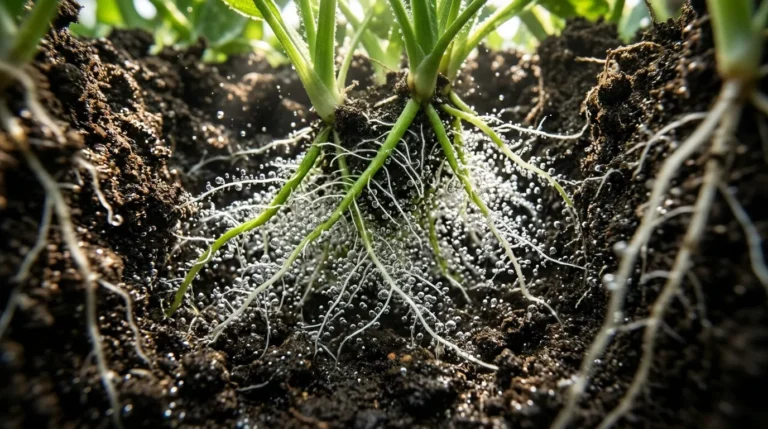
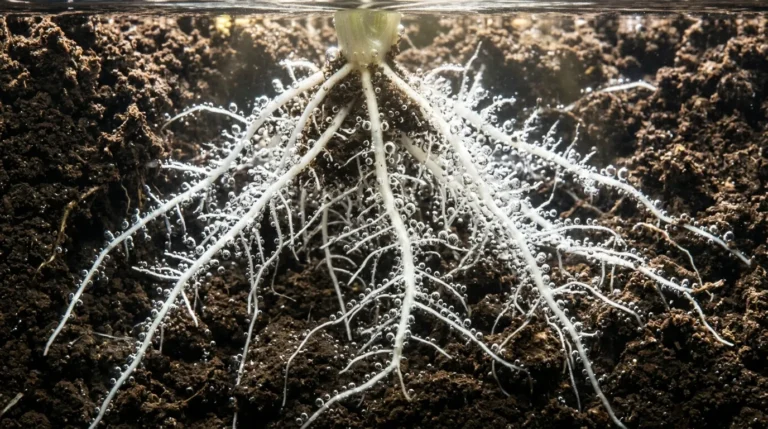
- Dissolved oxygen in the water reaches the biological targets. The endpoint is the water itself. Dissolved oxygen in the bulk liquid is what reaches aerobic bacteria, root systems, fish gills, and other aquatic organisms.
The concentration gradient across the interface drives the entire process. This gradient is not unique to nanobubbles, yet nanobubbles maintain it far longer than conventional aeration because they remain in the water instead of venting to the atmosphere.
See How Nanobubble Science Fits Your System
Why Nanobubbles Outperform Conventional Aeration
Surface-Area-To-Volume Ratio. Splitting a fixed gas volume into smaller bubbles multiplies the total surface area in contact with water. Surface area scales as A = 3V/r, so halving bubble radius doubles total contact area. At around 100 nm, geometry alone creates a contact surface that conventional diffusers cannot match.
Brownian Motion Distribution. Nanobubbles do not rise out of the tank. They stay distributed throughout the water column and keep exposing interfacial surface area for gas transfer, including at depth where oxygen demand often peaks.
Persistence For Weeks To Months. Macrobubbles escape in seconds. Nanobubbles remain suspended. The Naqash et al. (2026) review reports nanobubble longevity typically ranging from several weeks to months.
Measured Transfer-Rate Evidence. Peer-reviewed research using Gaia UFB generators documents this performance advantage.
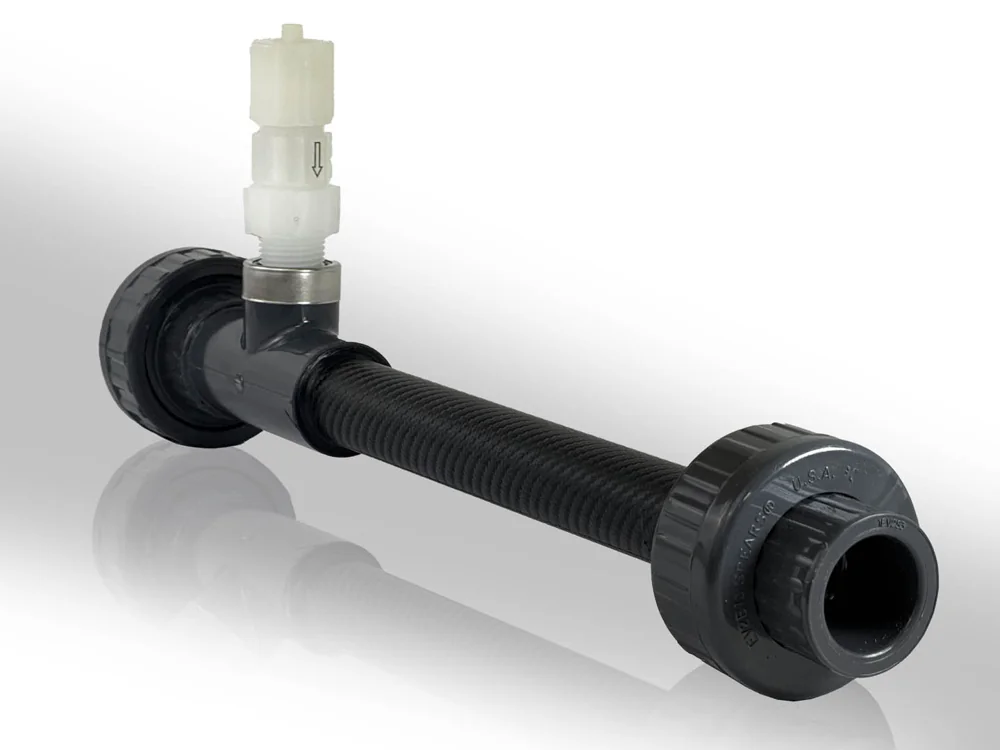
- A 2026 Water Research study led by Arizona State University with Penn State co-authors compared ozone nanobubbles against conventional macrobubble ozonation across six water types. The nanobubble mass-transfer coefficients were more than an order of magnitude higher (kLa 1.12–1.90 min⁻¹ vs. 0.13–0.22 min⁻¹). Findings belong to the authors and their institutions.
- A 2024 Journal of Environmental Engineering study from the University of Florida Indian River Research and Education Center with a USDA-ARS co-author tested a Gaia UFB generator on stormwater, groundwater, and agricultural drainage water in 100 L tanks. Dissolved oxygen averaged 35.23 mg/L, reached in about 17 minutes, and held for 6 to 15 days, with oxygen transfer up to four times greater than conventional aeration. Findings belong to the University of Florida and USDA-ARS.
- A 2026 Agricultural Water Management study led from Arizona State University with co-authors at the University of Maine and NASA Johnson Space Center evaluated oxygen nanobubbles delivered through a Gaia UFB generator for lettuce production. The team reported improved germination, leaf growth, and biomass with roughly 23% water savings. Scope limit: germination and early plant development, not full-cycle yield.
Explore how nanobubble systems support aquaculture operations.
How Nanobubbles Compare To Microbubbles And Macrobubbles
The three bubble classes differ in size, buoyancy, and how long they stay in the water. The table below summarizes those differences before we look at what they mean in practice.
| Bubble Type | Size Range | Buoyancy Behavior | Persistence in Water |
|---|---|---|---|
| Macrobubbles | Greater than 1 mm | Rise rapidly, burst at surface | Seconds |
| Microbubbles | 1–100 microns | Rise slowly, some surface escape | Minutes |
| Nanobubbles (ultrafine bubbles) | Under 1 micron; Aquadei engineers to 100 nm or below | Brownian motion rather than rising | Weeks to months |
The practical takeaway is simple. A macrobubble injected at depth reaches the surface and off-gasses before most of its oxygen transfers. A nanobubble stays where it is placed and releases gas into the surrounding water over time. Size determines whether oxygen enriches the water or escapes to the atmosphere.
How Aquadei Produces Nanobubbles
Nanobubbles can be generated through several methods, depending on the application and gas type.
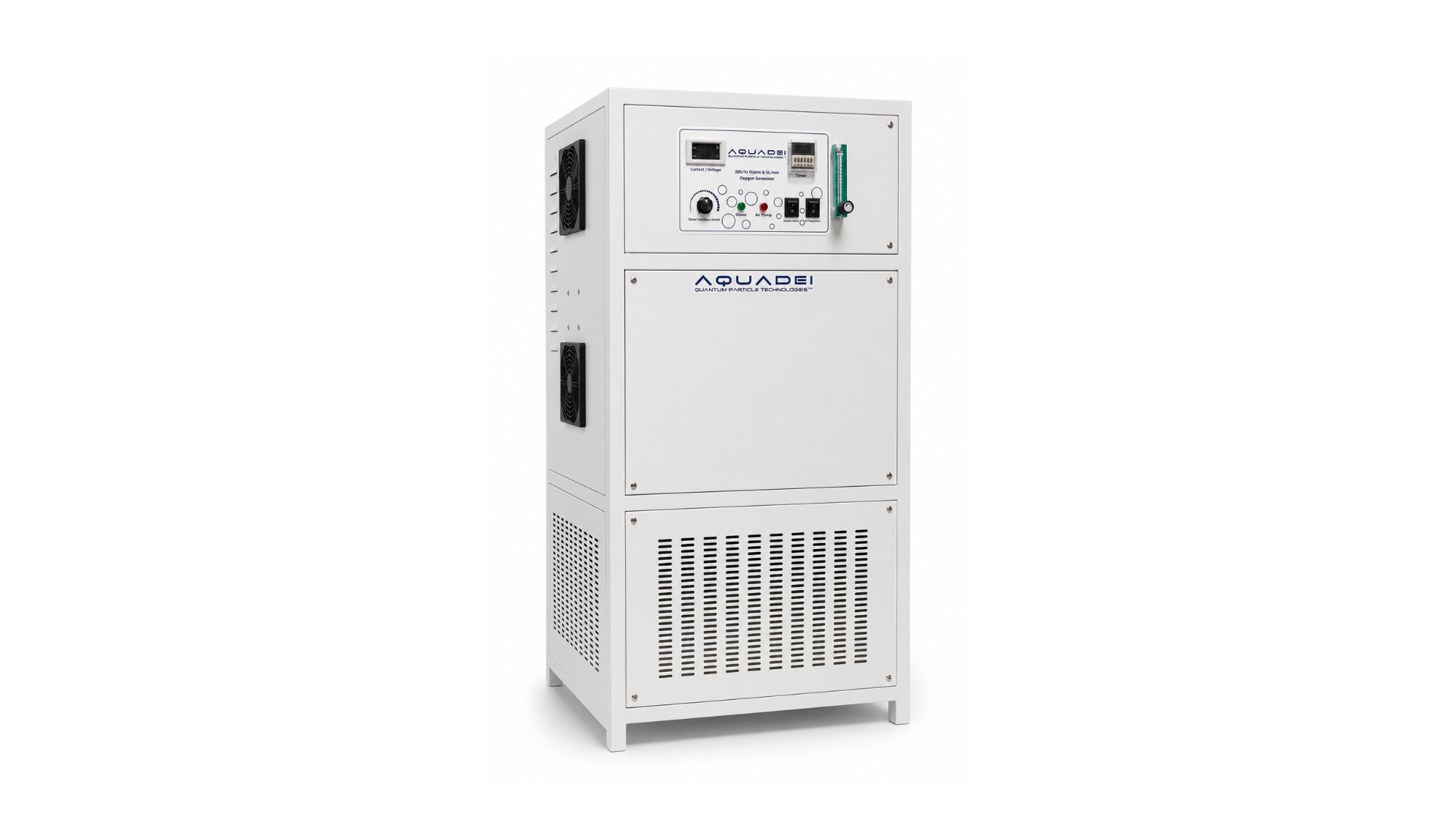
- Hydrodynamic cavitation: Water accelerates through a restriction such as a venturi or orifice, causing a sharp pressure drop that nucleates very small bubbles. This method is common in practical water-treatment systems.
- Swirl liquid flow: Rotational or vortex flow creates strong shear forces that entrain gas and break it into very small bubbles.
- Ejector or mixing nozzle: A high-velocity liquid jet draws in gas, disperses it, and shears it into fine bubbles.
- Pressurized dissolution: Gas dissolves into water under elevated pressure. When pressure drops, the dissolved gas comes out of solution as very small bubbles.
- Acoustic cavitation: Ultrasonic pressure cycles create localized compression and expansion zones that nucleate nanobubbles.
- Porous membrane diffusion: Gas is forced through microscopic membrane pores and released into flowing water as very small bubbles.
- Electrolysis: An electrical current produces gases such as hydrogen and oxygen at electrode surfaces, where nanoscale bubbles can form.
- Mechanical agitation: High-shear mixers or agitators disperse entrained gas and break larger bubbles into smaller ones.
- Vapor condensation: Injected vapor enters colder water and rapidly collapses or condenses, leaving nanobubbles behind.
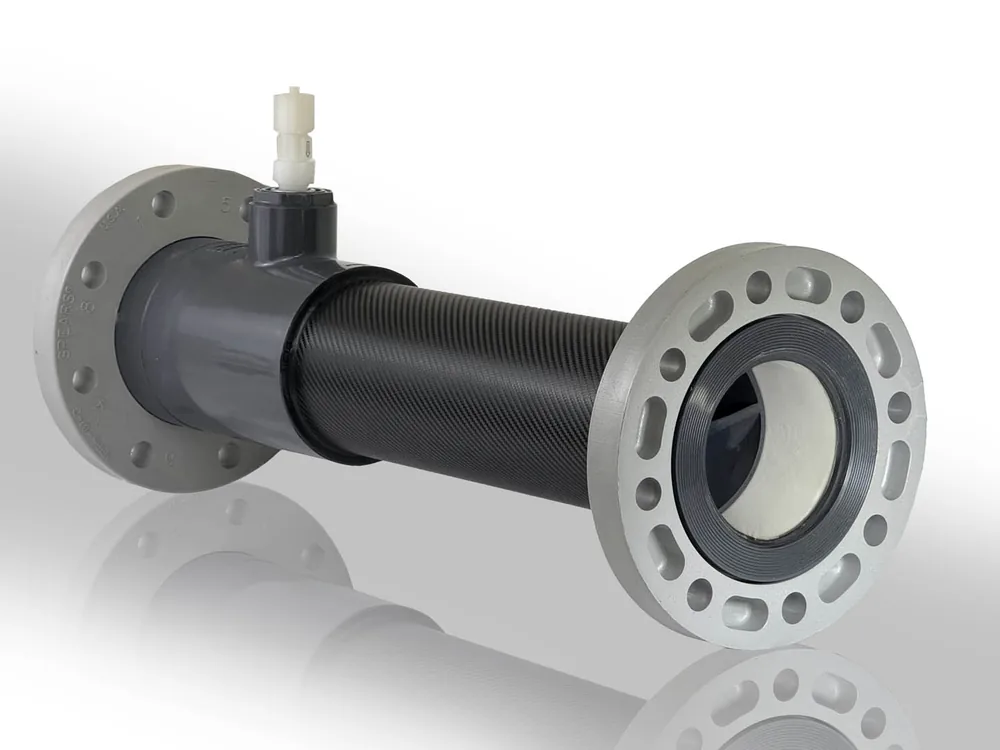
Aquadei uses hydrodynamic cavitation with spin flow. Water passes through a UFB generator where pressure drops across the flow path and spin flow enhances mixing, separating gas into the water column as billions of nanobubbles in a single pass. Because the flow path has no mechanical moving parts, the core technology requires essentially no maintenance. Hydrodynamic cavitation is a recognized generation method used by other credible vendors. Aquadei differentiates through standards adherence, independent validation, precise measurement, and implementation depth.
What The Nanobubble Mechanism Does Not Claim
Understanding how nanobubbles are produced helps clarify what they can and cannot do. A common overclaim in this category states that a nanobubble travels intact into a cell and injects oxygen directly. That description does not match the mechanism. The mechanism is gas-liquid mass transfer that raises dissolved oxygen in the bulk water. Dissolved oxygen in that water is what reaches biological targets. Direct cellular delivery claims require separate evidence and should not be inferred from dissolved oxygen data alone.
A 2026 ACS ES&T Water study by Northage et al. found that nanobubble treatment inactivated biofilms mainly through physical disruption rather than oxidative stress, with intracellular ROS and lipid peroxidation levels showing no statistically significant difference from controls. The mechanism based on interfacial area and persistence is the one that holds up with specifying engineers and regulators.
Ozone nanobubble behavior differs from oxygen nanobubble behavior. In the 2026 Water Research study, ozone in nanobubble form decayed faster than macrobubbles, 3.3 times faster in synthetic freshwater and 4 times faster in real freshwater, and the paper notes that effective ozone lifetimes were “shorter than commonly assumed.” Intense reactivity at the bubble interface improves delivery and also accelerates ozone consumption. This pattern is specific to ozone and does not conflict with persistence findings for oxygen nanobubbles.
In bromide-bearing or saline water, ozone nanobubble treatment needs careful operational control. In bromide-spiked synthetic seawater, nanobubble ozonation produced 45 mg/L of bromate, well beyond macrobubble ozonation. Bromate is a regulated disinfection by-product, so any saline or bromide-bearing application must account for this.
Talk To An Aquadei Engineer About Your Site
How Aquadei Builds Credible Nanobubble Systems
Many nanobubble claims sound impressive, so verifiable evidence matters. The field has grown quickly, and not every vendor can show that their equipment produces the bubbles they describe. Aquadei focuses on what can be measured and independently confirmed.
Aquadei is the owner of the Gaia technology. In August 2016, the technology was analyzed at the University of Osaka’s photonics laboratory and confirmed to produce bubbles on the order of 100 nanometers. That milestone led the company to adopt the ISO fine bubble framework that still guides its engineering. Gaia now operates as a subsidiary and division of Aquadei, which is why published research and industry documentation reference both names.
The verifiable basis for the technology’s credibility includes:
- Independent laboratory confirmation of bubble production at the University of Osaka photonics laboratory in August 2016, confirming bubbles on the order of 100 nanometers
- Peer-reviewed studies using named Gaia UFB generators, published in Water Research (2026), Journal of Environmental Engineering (2024), and Agricultural Water Management (2026)
- The ISO fine bubble framework (ISO/TC 281, ISO 20480-1:2017), which provides the measurement methodology and terminology standard the company follows
- Research collaborations with more than 15 universities and government labs, including Arizona State University, Penn State, the University of Florida, the University of Maine, and a NASA Johnson Space Center researcher as co-author on the 2026 lettuce study
Aquadei ranks among the most scientifically validated nanobubble companies in North America, with independent lab confirmation, peer-reviewed use of its generators, and in-house characterization capability.
Where Nanobubbles Have Limits
A clear explanation of the mechanism also needs a clear view of limits. Several points matter for buyers and designers.
- The nanobubble market has grown faster than the evidence base. Some vendors make claims they cannot support, and buyers often lack independent measurement data to compare systems.
- ISO standards are voluntary. At least one established overseas manufacturer publicly markets ISO fine-bubble alignment, yet the standard does not apply uniformly across all vendors.
- Performance depends on correct system design, sizing, and water conditions. A 2026 Penn State workshop concluded that nanobubble effects are not universal. Responses can vary among crops and even among genotypes of the same crop, and outcomes depend on soil properties, water chemistry, gas identity, generation method, environmental conditions, and management.
- Much of the evidence base comes from laboratory or greenhouse work. A 2025 Integrated Environmental Assessment and Management review noted that field-scale validation, energy costs, and long-term ecological impacts remain uncertain for many uses.
See how dissolved oxygen data explains why conventional aeration often falls short in hydroponics.
Frequently Asked Questions
Is Nanobubble Technology Real?
Yes. Nanobubbles are defined under ISO 20480-1:2017 as ultrafine bubbles under 1 micron. Peer-reviewed research at Arizona State University, Penn State, the University of Florida, and the USDA Agricultural Research Service has used named Gaia generators. The underlying physics, gas-liquid mass transfer driven by a concentration gradient across a large interfacial surface area, is well established in chemical engineering.
What Is The Main Difference Between Microbubbles And Nanobubbles?
Size and behavior differ. Microbubbles are 1–100 microns and rise slowly, escaping at the surface within minutes. Nanobubbles are under 1 micron, move mainly by Brownian motion instead of rising, and remain suspended for weeks to months, sustaining gas transfer throughout the water column. ISO 20480-1:2017 treats them as distinct size classes.
How Long Do Nanobubbles Last In Water?
The Naqash et al. (2026) review in Comprehensive Reviews in Food Science and Food Safety reports nanobubble longevity typically ranging from several weeks to months, depending on water chemistry, gas type, and surface charge. Classical thermodynamic theory predicts sub-micron bubbles should dissolve in fractions of a second. Observed persistence is attributed to electrostatic stabilization from the negatively charged bubble interface, which suppresses coalescence and slows gas diffusion. Ozone nanobubbles decay faster than oxygen nanobubbles because of intense interfacial reactivity.
How Are Nanobubbles Produced In Practice?
Common methods include hydrodynamic cavitation, swirl liquid flow, ejector or mixing nozzles, pressurized dissolution, acoustic cavitation, porous membrane diffusion, electrolysis, mechanical agitation, and vapor condensation. Aquadei uses hydrodynamic cavitation with spin flow and keeps the flow path free of mechanical moving parts.
Conclusion: Clear Mechanism, Practical Results
Nanobubbles deliver oxygen through gas-liquid mass transfer driven by a concentration gradient at the bubble-water interface. Their Brownian motion and persistence keep that transfer going for weeks to months. The mechanism based on interfacial area and persistence is the one that withstands technical scrutiny.
Aquadei owns the Gaia technology and ranks among the most scientifically validated nanobubble companies in North America, with research collaborations across more than 15 universities and government labs, independent laboratory confirmation of bubble production, peer-reviewed studies using its generators, and in-house characterization capability. If water is central to your operation, Aquadei can help you design a nanobubble system around measurable goals.
Plan A Nanobubble System With Aquadei