Key Takeaways
- Sunlight, bather load, debris, and poor circulation drive chlorine demand more than routine chemical additions.
- Cyanuric acid (CYA) from stabilized tablets accumulates in pool water and only drops when water is removed.
- Better circulation and filtration reduce dead zones, lower chlorine use, and delay expensive drain-and-refill cycles.
- Supplemental oxidation technologies such as nanobubble oxygenation can reduce chemical load while still requiring testing and a sanitizer residual.
- Aquadei provides physics-based nanobubble oxygenation systems that retrofit to existing pools and help lower chlorine demand within a balanced water-care plan.
The Chemical Treadmill
Most pool and spa owners want to cut back on chemicals, yet few see what actually drives chlorine demand. The routine feels endless: buy chlorine, add acid, test the water, and repeat. The water stings, the smell lingers on skin and hair, and the storage shelf fills with hazardous products. Each season, the chemistry drifts a little further from where it should be. You gain control when you see what truly consumes chlorine and what quietly builds up and never leaves on its own.
The Cyanuric Acid Trap And Why Pools Eventually Need A Partial Drain And Refill
Cyanuric acid (CYA) is the stabilizer that shields chlorine from UV degradation. Without it, outdoor chlorine disappears within hours. With it, chlorine lasts through the day. CYA is not consumed by chlorine. It does not evaporate, break down in sunlight, or get filtered out. CYA only leaves the pool through water removal such as splash-out, backwash waste, or intentional draining.
Every trichlor tablet adds CYA alongside the chlorine it delivers. Three-inch stabilized trichlor tabs add about 0.6 ppm of CYA for every 1 ppm of free chlorine they provide. Over a full summer of tab use, CYA can easily reach 80–150 ppm.
The recommended CYA range for residential outdoor pools is 30–50 ppm, per Pool and Hot Tub Alliance guidance. Once CYA climbs above that range, chlorine becomes progressively less effective. At CYA 100, the minimum free chlorine required is 7.5 ppm, and shock requires holding FC at 40 ppm. Most pool test kits lose accuracy above 10 ppm, so confirming those levels becomes difficult.
The only effective way to reduce elevated CYA is dilution through partial or complete water replacement. Filtration, shocking, and most chemical treatments leave CYA untouched, and it does not break down naturally in pool water. Draining part of the pool and refilling it carries real cost in water, time, and rebalancing chemistry from scratch.
Source reduction offers the clearest path forward. Every trichlor tablet is also a CYA addition. Lower overall chlorine demand through better circulation, supplemental oxidation, and physics-based approaches means fewer tablets, slower CYA buildup, and longer intervals between drain-and-refill events.
The Three C’s Of Pool Maintenance And Why Circulation Matters Most For Reduction
The three C’s of pool maintenance are circulation, cleaning, and chemistry. Circulation moves water through the filter and spreads sanitizer throughout the pool. Cleaning removes debris and organic material that drive chlorine demand. Chemistry, which includes testing and correcting, keeps the water balanced and safe. These three work together, and neglecting any one of them increases the chemical burden on the others.
Circulation often receives the least attention. A single-speed pump on a 6- or 8-hour timer can leave 16 to 18 hours of relatively stagnant water each day, which allows biofilm to establish. Strong circulation helps chlorine reach all parts of the pool, so you need less to maintain a safe residual. Weak circulation creates dead zones where algae and bacteria survive, which pushes chemical use higher no matter how much chlorine you add.
Filtration runtime and turnover rate directly affect chemical efficiency. A pool with a 4-hour turnover distributes dosed chlorine more quickly and evenly than one with a 6- or 8-hour turnover. Faster and more even distribution reduces dead zones where demand goes unmet and biological growth can take hold. Variable-speed pumps running extended low-RPM cycles improve turnover and keep sanitizer distributed throughout the water volume, often at lower energy cost than a single-speed pump running shorter cycles.
What Destroys Chlorine In A Pool
Circulation is one of several forces working against your chlorine. Three others also play major roles in how fast chlorine disappears.
Four factors destroy free chlorine in a pool:
- Sunlight (UV). An unstabilized outdoor pool can lose 75 to 90 percent of its free chlorine in a single sunny day. CYA protects against this but accumulates permanently.
- Bather load. Sweat, sunscreen, and other organics consume chlorine on contact. They form chloramines, which provide virtually no sanitizing benefit and create the “chlorine smell” and eye irritation many swimmers notice.
- Debris. Leaves, pollen, and dirt create oxidant demand that uses up free chlorine before it can act as a sanitizer.
- Inadequate circulation. Dead zones allow contaminants to persist and consume chlorine without being reached by the sanitizer circulating through the rest of the pool.
Does baking soda lower chlorine? No. Baking soda (sodium bicarbonate) raises total alkalinity and can raise pH, but it does not lower chlorine. Keeping pH in the 7.4–7.6 range makes chlorine more effective by increasing the proportion of hypochlorous acid, the active sanitizing form.
Will chlorine level go down by itself? Yes. Chlorine dissipates naturally through sunlight and oxidation. With CYA at 0 ppm, unprotected free chlorine is fully destroyed by UV sunlight within 1–2 hours. The rate depends on CYA level, sunlight intensity, water temperature, and bather load. In a covered or shaded pool with low bather load, chlorine holds longer. In full sun with heavy use, it disappears quickly.
How To Sequence Pool Chemical Adjustments
Correct sequencing prevents wasted chemicals and keeps the pool protected. Follow this order:
- Test and balance total alkalinity (target 80–120 ppm). Total alkalinity stabilizes pH, so it must be corrected first before pH adjustments will hold.
- Adjust pH (target 7.4–7.6). Chlorine loses sanitizing power as pH climbs above 7.6, so dosing chlorine before pH is balanced wastes product and leaves the pool under-protected.
- Add cyanuric acid if stabilization is needed (target 30–50 ppm for chlorine pools). Add CYA only when levels are below range, and remember that CYA accumulates and only leaves with water removal.
- Sanitize with chlorine. With alkalinity and pH in range, chlorine works at full effectiveness. Adding chlorine before balancing pH leaves more of it in the less effective hypochlorite ion form instead of hypochlorous acid.
- Shock based on test results, not on a fixed schedule. Adding shock and algaecide at the same time is a common mistake because high chlorine degrades algaecide immediately. Shock when combined chlorine exceeds 0.5 ppm or when an overnight chlorine loss test shows active demand.
If CYA or calcium hardness is already too high, dilute first by removing and replacing water before adjusting anything else. That dilution step is the only exit from the CYA trap described earlier, which is why it comes before any other adjustment.
What To Ask Your Pool Service About Chemical Reduction
Most pool service visits focus on what to add next instead of what is driving demand. These questions shift the conversation toward the underlying physics of your pool.
- What is my current CYA level, and is it trending up? If your service relies on trichlor tablets and has not tested CYA recently, the level may be higher than expected. CYA above 80 ppm means the chlorine in the water is far less effective than the test reading suggests.
- What is my average chlorine demand, and are circulation or filtration limiting it? Dead zones and undersized or dirty filters push chemical use up. Fixing the physical cause usually costs less over time than compensating with more chemicals.
- Could a supplemental oxygenation system reduce the chlorine load? Nanobubble oxygenation systems, such as those from Aquadei, infuse oxygen and ozone into pool water as nanobubbles. They support oxidation and clarity while helping reduce dependence on traditional pool chemicals. These systems retrofit onto existing pools and work alongside existing filtration and UV.
- What are my options for operating at lower chlorine levels? Residential pools are generally not regulated as public aquatic venues, so owners have more flexibility. In commercial settings, operators sometimes petition local authorities for a variance, and some have received approval. A commercial surf park in Arizona, for example, received a variance allowing operation at 0.5 ppm chlorine, which is half the standard commercial minimum.
Every system still depends on circulation, filtration, cleaning, testing, and timely corrective action. Supplemental technology lightens the chemical burden while leaving the fundamentals in place.
The Honest Frame For Chlorine Reduction
Reduction is the realistic goal, and the rules differ by pool type. Commercial pools must meet governing health-code requirements, typically 1 ppm free chlorine as a minimum, so any reduction plan has to stay above that floor. Residential pools are generally not regulated as public aquatic venues, yet owners still need a safe, test-based water-care plan.
Water quality can change quickly with heat, sunlight, debris, bather load, and circulation conditions. No universal timeline exists for operating with fewer chemicals, because each pool behaves differently. Regular testing, not fixed hours or days, provides the only reliable guide. Any approach that promises complete chemical elimination in a commercial pool setting steps outside what current evidence supports.
Reduction Methods Compared: Salt, Ozone, UV, Mineral, And Nanobubble Oxygenation
Several supplemental approaches can reduce chlorine demand, but they differ in what they actually do and what they cost in upkeep. The table below shows which methods still rely on chlorine as the primary sanitizer, what kind of maintenance each involves, and how much infrastructure change each requires. This comparison highlights why nanobubble oxygenation is the only option that adds oxidation without adding a chemical residual.
| Method | Mechanism | Maintenance Profile | Infrastructure Impact |
|---|---|---|---|
| Salt systems | Generate chlorine on-site from dissolved salt through electrolysis, so the pool still relies on chlorine as the primary sanitizer. | Periodic cell cleaning during the season and cell replacement every few years, plus more frequent pH adjustment than many traditional chlorine pools. | Requires a salt cell, control unit, and GFCI-protected circuit, and is compatible with most pool surfaces. |
| Ozone systems | Oxidize contaminants in a reactor with limited residual in the pool. They require correct sizing, ozone-safe components, and off-gas management, and they supplement rather than replace a primary sanitizer. | Generator or lamp replacement on a set interval, along with ongoing off-gas management. | Inline installation with ozone-safe components and limited residual in the pool water itself. |
| UV systems | Rupture DNA of microorganisms as water passes through the chamber, leaving no residual after the reactor. | Lamp replacement after a defined number of operating hours. | Inline installation that still requires a chlorine residual in outdoor pools. |
| Mineral systems | Release metal ions that act as supplemental sanitizers. They work slowly, require metal level monitoring, and can cause staining if mismanaged. | Cartridge or inline component checks and regular tracking of metal levels to prevent staining. | Cartridge or inline installation that fits into existing plumbing. |
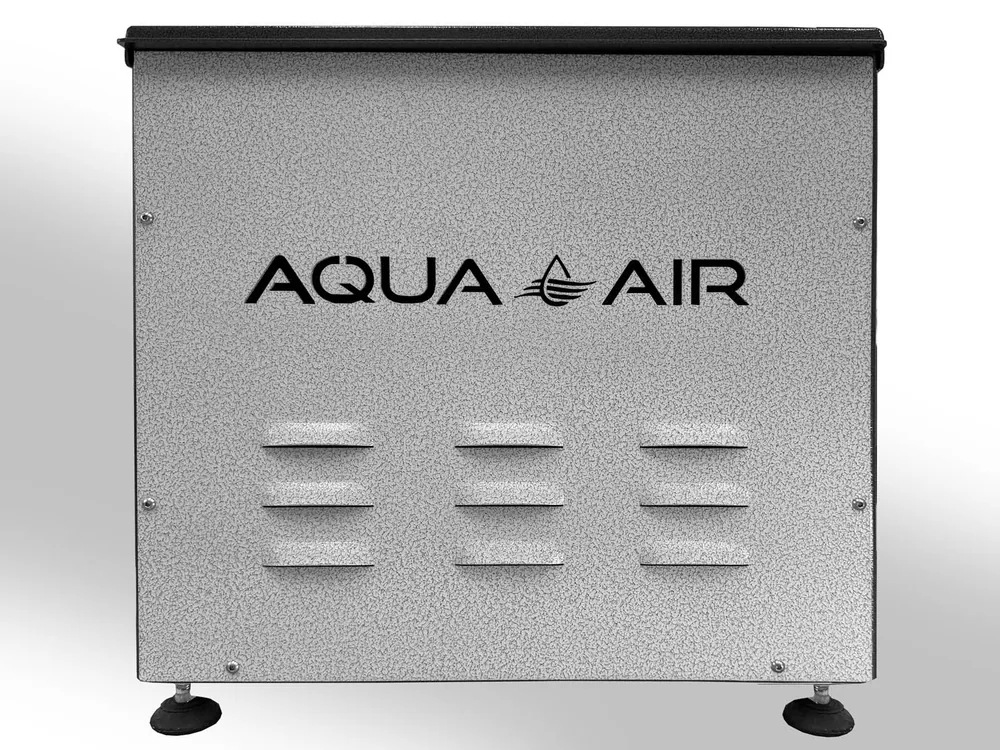
| Nanobubble oxygenation (Aquadei) | Oxygen nanobubbles stay suspended in water for weeks to months and deliver oxygen throughout the water column. They support oxidation without adding a chemical residual, and ozone can be delivered the same way when stronger oxidative action is needed. | No mechanical moving parts in the flow path, so the core generator requires essentially no ongoing maintenance. | Retrofits inline alongside existing filtration and UV, and works on new and existing pools and spas. |
Every method in this table still depends on circulation, filtration, cleaning, testing, and timely corrective action. Each one fits best as part of a complete water-care plan.
Frequently Asked Questions
How Is Nanobubble Oxygenation Different From A Salt System?
Salt systems still produce chlorine. The chlorine is generated on-site from dissolved salt through electrolysis instead of being added manually, yet the water chemistry remains chlorine-based and CYA still accumulates. Nanobubble oxygenation delivers oxygen and ozone as nanobubbles that stay suspended in the water for weeks to months. These bubbles support oxidation and clarity without adding a chemical residual. The two approaches address different parts of the problem and can operate together.
Will Aquadei’s System Work With My Existing Pool Equipment?
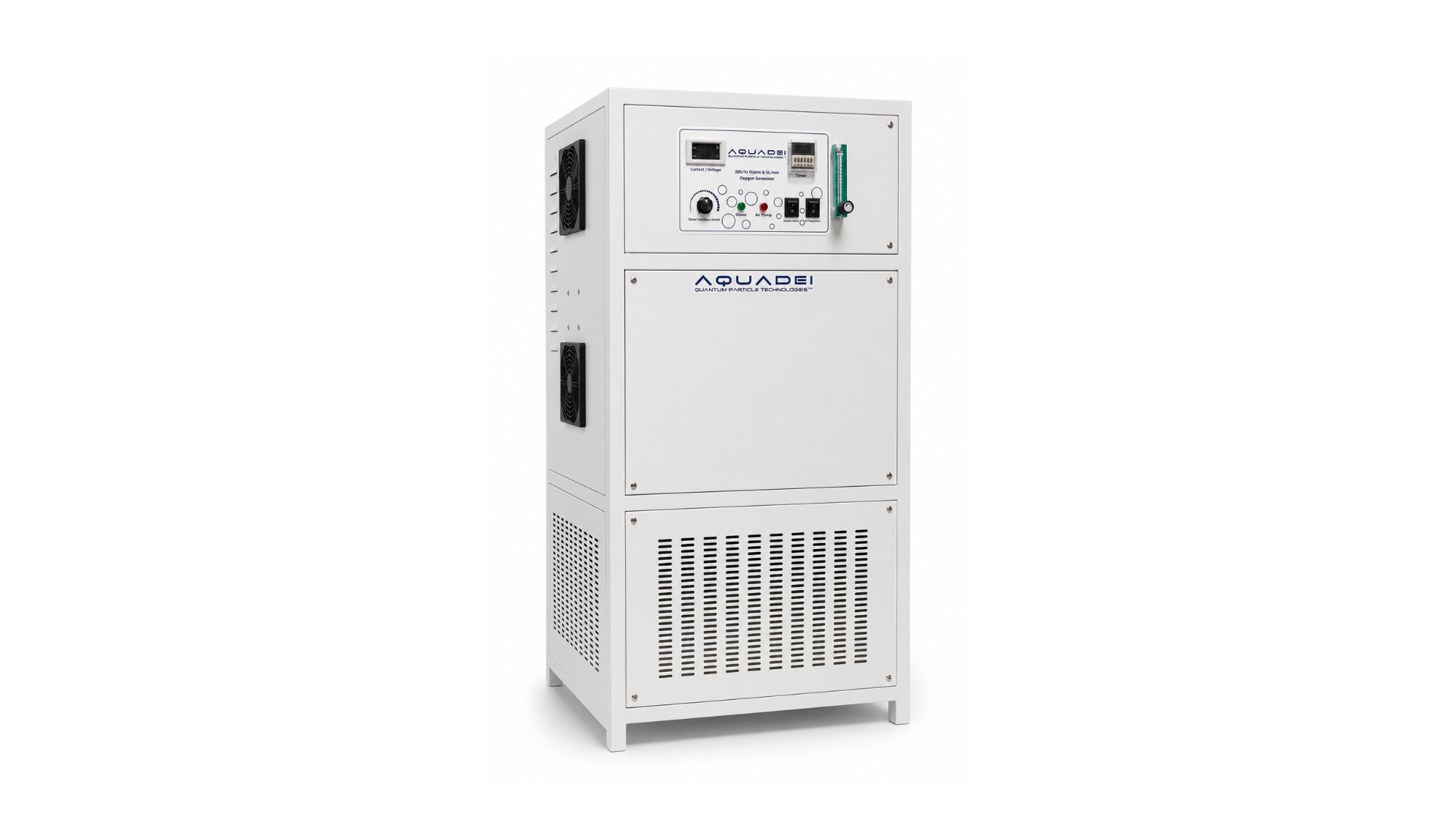
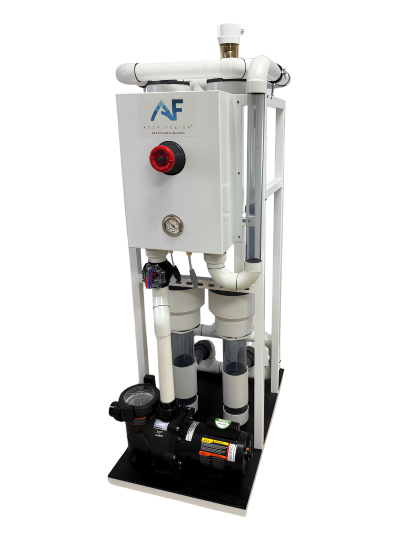
Yes. Aquadei’s systems are designed to retrofit inline alongside existing filtration and UV infrastructure. They work on new and existing pools and spas without requiring a rebuild of the hydraulic system, as long as the flow rate matches the system’s requirements. Your pool service continues to test and maintain water chemistry, while the system helps reduce the chemical load needed to keep water clear and safe.
Do I Still Need Chlorine?
Yes. The goal is to lower the chlorine load, not to remove chlorine from the plan. Commercial pools must meet governing health-code requirements, typically a minimum of 1 ppm free chlorine. Residential pools are generally not regulated as public aquatic venues, yet owners still need a safe, test-based water-care plan. Aquadei’s systems help reduce the chlorine required to maintain water quality while preserving the need for a sanitizer residual and regular testing.
How Do I Know The System Is Actually Producing Nanobubbles?
Aquadei measures its own output in a PhD-operated laboratory using Nanoparticle Tracking Analysis, Dynamic Light Scattering, and zeta-potential analysis. These methods measure bubble size, concentration, and stability directly. The company’s bubble production was also independently confirmed at the University of Osaka photonics laboratory in August 2016. In a category where many vendors cannot show what their equipment produces, Aquadei backs its claims with direct measurement.
What Is The Cyanuric Acid Trap, And How Does Nanobubble Oxygenation Help?
Cyanuric acid stabilizes chlorine against UV degradation. It is not consumed by chlorine, does not evaporate, and cannot be removed by filtration or chemical treatment. It only leaves the pool through water removal. When CYA climbs too high, often above 80 ppm, chlorine becomes much less effective, and the only remedy is a partial drain and refill. Nanobubble oxygenation helps indirectly by reducing overall chlorine demand. Lower demand means fewer trichlor tablets, slower CYA accumulation, and longer intervals between costly drain-and-refill events. Addressing the underlying oxygen deficit cuts chemical load at the source.
Why Aquadei Provides A Physics-Based Reduction Path
Aquadei owns the Gaia technology, a nanobubble platform that infuses oxygen and ozone into pool and spa water as nanobubbles. This platform supports oxidation and clarity while helping reduce reliance on traditional pool chemicals. The technology retrofits onto existing pools and works alongside existing filtration and UV infrastructure.
The credentials behind this platform are documented and verifiable:
- Research collaborations with more than 15 universities and government labs, including Arizona State University, the University of Maine, Penn State, the University of Florida, and NASA Johnson Space Center.
- Independent laboratory confirmation of bubble production at the University of Osaka photonics laboratory in August 2016, confirming bubbles on the order of 100 nanometers.
- A peer-reviewed 2026 study in Agricultural Water Management, led from Arizona State University with co-authors at the University of Maine and a researcher at NASA Johnson Space Center, using a Gaia UFB generator, the same technology platform that underlies Aquadei’s pool and spa systems.
- Engineering aligned with the ISO fine bubble framework (ISO 20480-1:2017) at 100 nanometers or below, which is roughly ten times finer than the standard’s ultrafine bubble threshold.
- No mechanical moving parts in the flow path, which keeps maintenance on the core generator essentially negligible.
- A strategic alliance with the Master Pool Guild International, announced in December 2025 after a year-long pilot, providing a strong third-party endorsement in the recreational water market.
Aquadei measures its own output using Nanoparticle Tracking Analysis, Dynamic Light Scattering, and zeta-potential analysis. In a field where many claims cannot be checked, Aquadei treats measurability as a core asset.