Key Takeaways
- Pool filter and pump sizing follows four steps: calculate volume, find required GPM, match filter rating to pump output, and account for total dynamic head.
- The filter’s maximum rated flow rate sets the hard ceiling for pump selection. Exceeding it causes sand channeling, cartridge collapse, or DE bypass.
- Oversizing a pump relative to its filter is a documented failure mode that produces cavitation, high pressure, weak return flow, and cloudy water.
- Variable-speed pumps can run longer at lower speeds to reach the same daily turnover with far lower energy use than the traditional 8-hour rule.
- Aquadei pairs correctly sized circulation with oxygen nanobubble systems that reduce the chemical load the system was sized around, backed by the Master Pool Guild alliance and engineered to ISO 20480-1:2017.
How To Choose The Right Size Pool Pump And Filter
Correct pump and filter sizing follows four steps in sequence.
- Calculate pool volume in gallons.
- Determine the required flow rate in GPM.
- Match the filter to the pump’s actual output at system head.
- Account for total dynamic head across the full plumbing circuit.
Each step feeds the next. Most sizing errors start when step three, the filter match, gets skipped.
Step 1: Calculate Pool Volume In Gallons
For a rectangular pool, the formula is length × width × average depth × 7.5. A pool measuring 32 feet by 16 feet with an average depth of 6 feet holds 23,040 gallons (32 × 16 × 6 × 7.5). For a round pool, replace the 7.5 multiplier with 5.9 and use diameter × diameter × average depth.
Average depth for a pool with a shallow end and a deep end is the two depths added together and divided by two. A pool with a 3-foot shallow end and an 8-foot deep end has an average depth of 5.5 feet. Guessing depth from memory is the most common volume error, because pools settle over time and resurfacing can shift depth by an inch or two.
Step 2: Determine Required Flow Rate (GPM)
The basic formula is pool volume in gallons ÷ turnover hours ÷ 60 = required GPM. A 20,000-gallon pool on an 8-hour turnover requires 41.7 GPM (20,000 ÷ 8 ÷ 60).
The 8-hour pool turnover figure is a regulatory rule of thumb for pools constructed before March 31, 1973, with some jurisdictions using a pre-1982 cutoff. That rule predates variable-speed pumps. A variable-speed pump running 12 or more hours at low RPM can reach the same daily turnover at a fraction of the energy, because pump power consumption drops roughly with the cube of speed. Halving RPM uses approximately one-eighth the power while moving about half the water per hour.
The modern approach is to size for the filter’s flow capacity and run the pump slowly for longer. The GPM figure from this formula sets the floor for sizing, not the ceiling.
Step 3: Match The Filter To The Pump
This step determines whether the system works or fails in real use.
Every sand, cartridge, and DE filter carries a maximum rated flow in GPM. The pump’s actual output at real system head must stay at or below that figure. Hayward publishes a design rate of 20 GPM per square foot of effective filter area for its ProSeries sand filters. That yields ratings such as 35 GPM for the S180T (1.75 sq ft) and 62 GPM for the S244T (3.14 sq ft). Pentair’s Clean and Clear Plus cartridge filters are rated at 90 GPM for the CCP240 (240 sq ft) and 120 GPM for the CCP320 (320 sq ft). These published tables from Pentair and Hayward are the reference for filter maximum flow ratings.
When the pump’s output at operating head exceeds the filter’s rated maximum, three different problems appear depending on filter type.
- Sand filters: Flow rates exceeding 15 GPM per square foot of filter area create turbulent conditions that promote uneven media distribution and channeling. Water carves a direct path through the sand bed and bypasses most of the media, reducing filtration effectiveness by 30–70%.
- Cartridge filters: A pump oversized for the filter creates high pressure, short cleaning cycles, rapid cartridge clogging, and weak return flow. Sustained overpressure can collapse the cartridge element.
- DE filters: A torn DE grid or cracked manifold lets DE bypass the intended filter surface. The DE returns as a white or gray cloud from the return jets when the filter operates above its design flow.
The pump’s nameplate flow is its flow under test conditions, not at 40 or 50 feet of head. Pentair’s SuperFlo delivers approximately 100 GPM at 20 feet of head but only about 30 GPM at 50 feet of head. Always compare the filter’s rated maximum against the pump’s curve at the system’s actual head, not the pump’s free-flow figure.
Step 4: Account For Total Dynamic Head
Total dynamic head (TDH) is the total resistance the pump must overcome. It includes suction and return plumbing, pipe length and diameter, fittings and elbows, the filter, and any heater, salt cell, or water feature. For a typical residential pool with moderate plumbing runs and a standard filter, TDH falls between 40 and 60 feet of head. Commercial pools usually run higher.
That resistance is why nameplate flow misleads. A pump rated at a given GPM under test conditions delivers far less at 40 or 50 feet of real system head. Every accessory added later, such as a heater or water feature, raises TDH and lowers actual delivered flow even though the pump itself never changed. The correct approach is to plot the system’s estimated TDH against the manufacturer’s published pump curve and read the actual operating GPM from that intersection. That value must still fall within the filter’s rated maximum.
Is It Okay To Oversize A Pool Pump?
With TDH in view, the next question is whether a bigger pump is simply a safer choice. Oversizing a pool pump is a real and common failure mode, not a safety margin.
The mechanisms are specific. When a pump is oversized for the plumbing feeding it, the suction line starves the impeller, causing cavitation, a gravel-like rattle that chews through impellers and seals over time. When a pump is oversized for the filter, water moves through the media too fast for effective filtration. Contact time is too short, sand channels, cartridge elements collapse under sustained overpressure, and DE bypasses torn grids. Hayward lists an oversized pump pushing more flow than the filter can pass as a direct cause of high filter pressure with weak return flow.
The result is a pool that looks like it is running, with a strong return jet and a humming pump, but is not actually being filtered. Cloudy water despite a strong-looking return jet is a classic symptom of a pump oversized for its filter. The water is moving fast but not being cleaned. An oversized pump also raises chemical demand, because fine particles left in the water consume sanitizer. Royal Swimming Pools’ pump-sizing guide addresses filter–pump flow coupling, oversizing failure modes, and variable-speed pump operation, though its turnover guidance still centers on a standard 8-hour formula and it does not address the chemical demand side.
Worked Examples: Pump And Filter Size For Common Pools
A 20,000-gallon pool on an 8-hour turnover requires 41.7 GPM (20,000 ÷ 480 minutes). That flow requires a sand filter with at least 2.1 square feet of effective area. The Hayward S220T at 2.64 sq ft and 52 GPM rated maximum is an appropriate match, or a Pentair Clean and Clear Plus CCP240 cartridge filter rated at 90 GPM. A variable-speed pump in the 1–1.5 HP class, confirmed against its curve at the system’s actual TDH, fits this volume.
The examples below use the 8-hour turnover as a baseline GPM floor. Filter sizes shown are minimums. Sizing the filter generously above the pump’s operating GPM reduces pressure, extends media life, and provides operating margin.
- 12,000 gallons: 25 GPM, 1.75 sq ft sand filter (Hayward S180T, 35 GPM rated), 0.75–1 HP variable-speed pump.
- 20,000 gallons: 41.7 GPM, 2.64 sq ft sand filter (Hayward S220T, 52 GPM rated), 1–1.5 HP variable-speed pump.
- 25,000 gallons: 52.1 GPM, 3.14 sq ft sand filter (Hayward S244T, 62 GPM rated), 1.5 HP variable-speed pump.
- 30,000 gallons: 62.5 GPM, 3.70 sq ft sand filter (Hayward S270T, 74 GPM rated), 1.5–2 HP variable-speed pump.
Always verify the pump’s actual GPM at the system’s TDH against the filter’s rated maximum before purchasing. These figures use Hayward’s published ProSeries flow-rate tables as the filter reference.
1 HP Vs 1.5 HP Pool Pump: How Much Does It Matter?
Horsepower alone does not determine flow. Head and impeller design control how much water the pump actually moves. Pentair’s SuperFlo and WhisperFlo are both sold as 1 HP pumps, yet at 50 feet of head the SuperFlo moves approximately 30 GPM while the WhisperFlo moves approximately 53 GPM. That is a 23 GPM difference from the same horsepower label.
A larger pump installed on undersized 1.5-inch plumbing can move less water than a smaller pump on 2-inch pipe, because the suction restriction causes cavitation before the impeller can develop full flow. The answer to “what size pump do I need” is always a GPM figure at a stated TDH, read from a pump curve.
How To Size A Variable-Speed Pump
Variable-speed pumps are sized by the flow they must deliver at the filter’s maximum rated flow. They are not sized by an 8-hour turnover target. The pump’s maximum speed should be set so that system flow does not exceed the filter’s rated GPM. The pump then runs at the lowest effective speed for the longest practical daily runtime.
Running at 1,750 RPM instead of 3,450 RPM reduces energy consumption by up to 70% under the affinity law. The practical default is to size for the filter’s capacity and run slowly for longer, rather than sizing for an 8-hour sprint at full speed.
For more on how pump and filter selection fit into a complete equipment package, see Inground Pool Equipment Packages: Sizing, Tiers and Cost.
How Nanobubble Oxygenation Reduces Chemical Demand
Sizing sets how much water the system can move and clean. It does not set how much contamination the water carries, and that second number drives chlorine use.
Sizing determines circulation and filtration capacity. It does not control the chemical demand created by bather load, sunlight, debris, and organic matter entering the water. That demand drives chlorine consumption, chloramine formation, and the acid corrections that follow. Oxygen nanobubble systems plumbed into the pool’s return alongside existing filtration address that side of the equation directly.
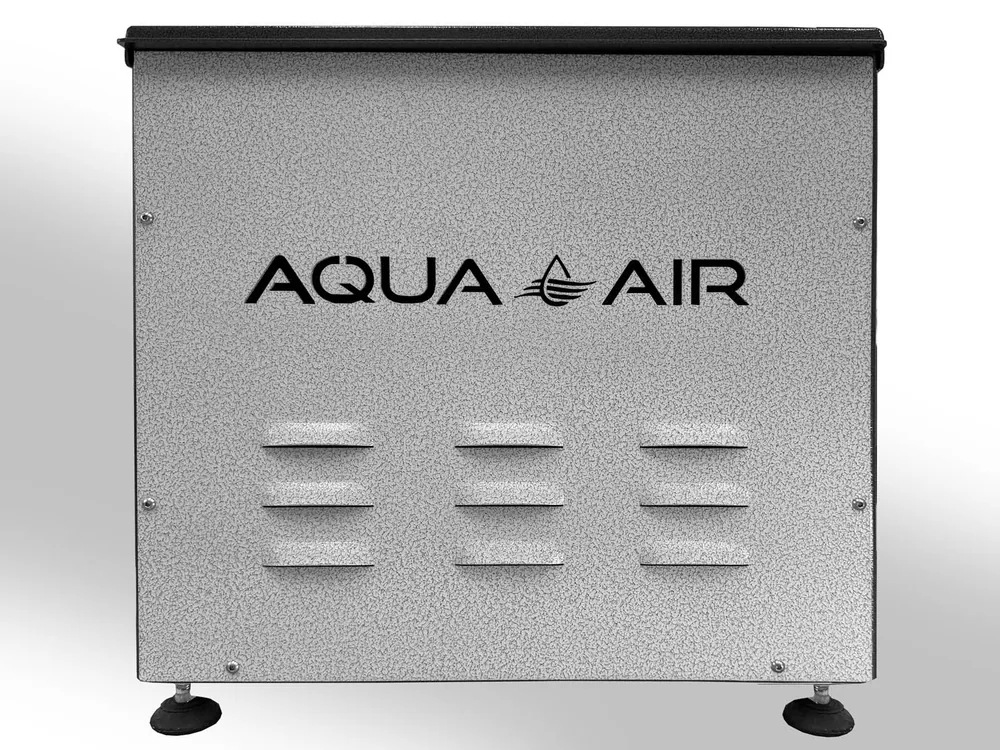
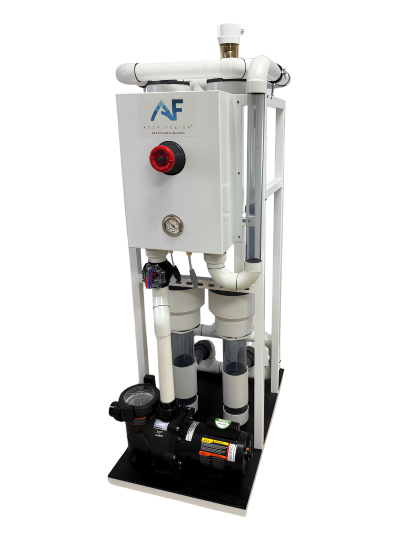
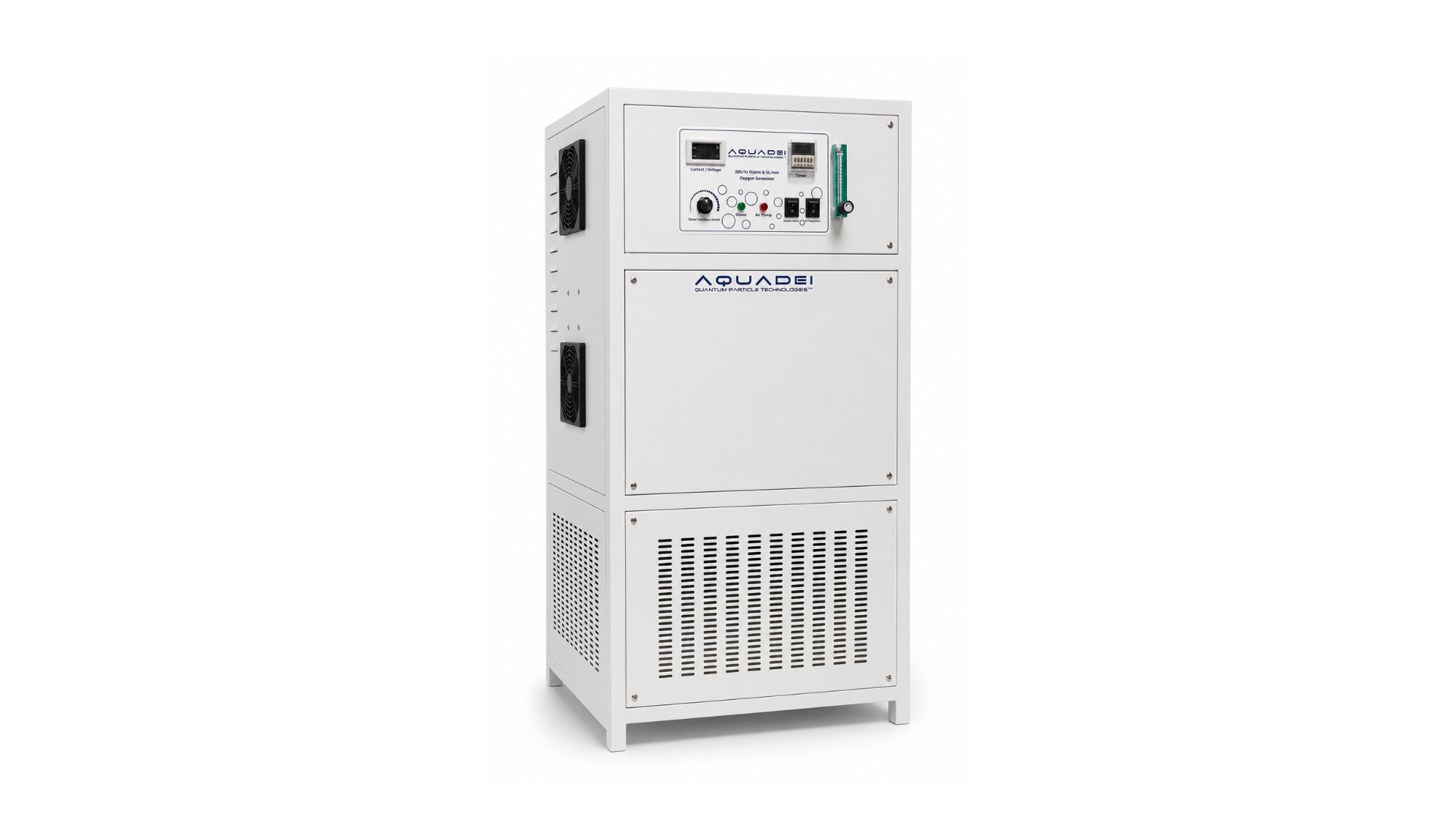
Aquadei’s Aqua Fuzion Skid is plumbed into the return line, delivering millions of oxygen and ozone nanobubbles, bubbles at 100 nanometers or below, into the water continuously. Aquadei is the owner of the Gaia technology, and the platform engineers to the ISO 20480-1:2017 fine bubble framework, producing bubbles roughly ten times finer than the standard’s ultrafine threshold of 1 micron. At that scale, bubbles carry a negative surface charge and stay suspended for weeks rather than seconds. When they collapse, they release oxidative energy that reduces the chemical load needed to maintain water quality. Aquadei’s pHure Feed delivers hyper-dissolved CO₂ inline for natural pH control, reducing or replacing routine muriatic-acid dosing where site conditions allow.
The Master Pool Guild International alliance, announced in December 2025 following a year-long pilot, cleared the way for a national roll-out of Aquadei’s oxygenated and ozone pool system technology across Guild member companies, an international network of elite pool builders operating since 1962. Shasta Pools, one of the most established pool builders in the Southwest with more than 120,000 pools built, ran the year-long pilot in Phoenix, Arizona, and markets the resulting system under its own brand name, Shasta Pure. These are established builders adopting the approach after documented field experience.
In commercial pools and spas, 1 part per million of chlorine is still required in many jurisdictions, though specific requirements vary by location, and Aquadei does not claim otherwise. The documented claim is a significant reduction in chemical usage. For a detailed look at what drives chlorine demand and how nanobubble oxygenation addresses it, see Pool Service Chemical Reduction: What Drives Chlorine Demand. For commercial facility specifications, see Commercial Pool Equipment Packages: A Specification Guide.
Talk To Aquadei About Nanobubble Systems
Frequently Asked Questions
Can A Pump Be Too Powerful For A Pool?
Yes. Flow above the filter’s rated maximum causes channeling in sand filters, cartridge collapse, and DE bypass. These problems reduce filtration effectiveness, raise system pressure, and accelerate media wear. A pump that is too powerful for the plumbing feeding it also causes cavitation, which chews through impellers and seals. The pump’s actual operating GPM at real system head must fall within the filter’s rated maximum flow, and the plumbing must be sized to feed the pump without restriction.
What Happens If My Filter Is Too Small For My Pump?
In a sand filter, water cuts a direct path through the media, called channeling, and bypasses most of the sand bed. Filtration effectiveness drops sharply, often by 30–70%, without always showing high pressure. In a cartridge filter, sustained overpressure collapses the pleated element and debris passes through instead of being captured. In a DE filter, the DE coating is disrupted or the grids tear, and DE returns to the pool as a white or gray cloud from the return jets. In all three cases, the pool stays cloudy, chemical demand rises because fine particles consume sanitizer, and media wears out faster than normal.
Do I Still Need Chlorine With A Nanobubble System?
In commercial pools and spas, most jurisdictions still require a residual sanitizer such as chlorine. As noted above, regulations often specify at least 1 part per million. The documented benefit of nanobubble systems is a significant reduction in chemical usage compared to a conventionally operated pool. Residential sanitizer strategy depends on local regulations and water conditions, and regular testing remains essential regardless of what supplemental systems are installed.
Does A Nanobubble System Replace My Filter Or Pump?
No. Aquadei’s systems are plumbed into the return line alongside existing filtration and circulation infrastructure. They are a retrofit addition rather than a replacement. The filter and pump must still be correctly sized using the four-step method described in this article. The nanobubble system addresses the chemical demand side of the equation, and the filter and pump address the mechanical filtration and circulation side. Both are required, and both must be correctly matched to the pool’s volume, flow, and plumbing.
Conclusion: Size The System, Then Tackle Chemical Demand
Pool filter and pump sizing follows four steps. Calculate volume in gallons, determine required GPM, match the filter’s rated maximum flow to the pump’s actual output at real system head, and account for total dynamic head across the full plumbing circuit. The filter’s maximum rated flow governs the choice ahead of horsepower, nameplate flow, or the 8-hour rule. Oversizing a pump relative to its filter causes sand channeling, cartridge collapse, DE bypass, and cavitation. Variable-speed pumps change the economics by enabling longer, slower runtimes that reach the same turnover at a fraction of the energy.
Once the system is correctly sized, the chemical demand it was built around can be addressed directly. Aquadei pairs correctly sized circulation with oxygen nanobubble systems that reduce the chemical load the system was sized around, backed by the Master Pool Guild alliance announced in December 2025 and engineered to the ISO 20480-1:2017 fine bubble standard. Get the sizing right first, then reduce the load that sizing was built around.
Talk To Aquadei About Sizing Your System