Key Takeaways
-
Pond aeration cost has three main layers: equipment, installation, and ongoing operation, plus a fourth layer for maintenance.
-
Installation expenses such as trenching, electrical service, and permitting often exceed equipment cost on larger or remote ponds.
-
Operating cost depends on compressor wattage, daily run hours, and local electricity rates, which vary widely across the U.S.
-
Maintenance and component replacement over five years, including diaphragms, diffusers, and batteries, belong in every total cost of ownership model.
-
Aquadei’s nanobubble aeration technology cuts mechanical maintenance and improves oxygen transfer efficiency compared with conventional systems.
What You Are Actually Paying For: Aeration System Categories And Their Cost Structures
Pond owners see four main aeration system categories when they start collecting quotes.
Surface aerators float on the water and agitate the surface to promote gas exchange. They carry a relatively low equipment cost and straightforward installation, but draw continuous power and work only in the top few feet of the water column. They fit shallow ponds under six feet deep.
Diffused-air systems place diffuser plates at the pond bottom and push air down from a shore-mounted compressor through weighted tubing. They carry higher equipment and installation cost because the compressor, tubing runs, and trenching add complexity. They are the standard choice for ponds deeper than six feet, where surface aeration cannot reach the thermocline, the layer that separates warm and cold water.
Solar-powered systems replace grid electricity with photovoltaic panels and, in better-specified systems, battery backup. They carry a higher upfront equipment premium in exchange for no ongoing grid electricity cost. Their output varies with weather and season, and battery replacement becomes a recurring lifecycle cost.
Nanobubble aeration systems form a distinct category. They dissolve gas directly into the water as bubbles measured in nanometers, leaving the water column undisturbed. Bubbles at that scale carry a negative surface charge and move through the water by Brownian motion rather than rising. As a result, the gas stays distributed throughout the water column instead of escaping quickly at the surface. This changes both the energy picture and the maintenance picture compared with conventional aeration.
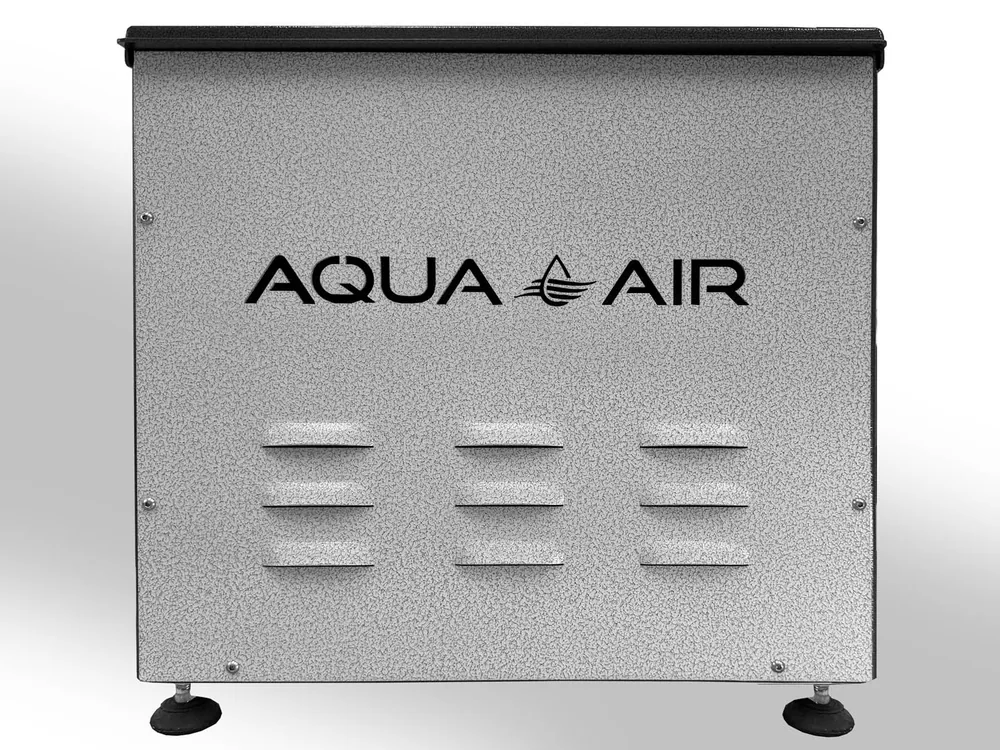
Four terms appear throughout this guide:
-
Equipment cost: the purchase price of the aerator, compressor, diffusers, tubing, and any associated hardware.
-
Installation cost: trenching, electrical service, permitting, and labor to put the system in the ground and connect it to power.
-
Operating cost: the recurring electricity bill and any consumables required to keep the system running.
-
Total cost of ownership: the sum of all three over a defined period, typically five years, including maintenance and component replacement.
With those four terms defined, the next section breaks down each cost layer in detail, starting with what drives equipment cost up or down.
Where The Money Goes: Equipment, Installation, Operating Cost, And Maintenance
Equipment
Equipment cost depends on pond volume and depth, the target oxygen turnover rate, compressor or generator sizing, and whether the system ships as a kit or a pre-piped skid. Larger ponds require larger compressors and more diffuser stations. Deeper ponds require compressors rated for higher back pressure. Every 2.3 feet of water depth adds approximately one pound per square inch of back pressure the compressor must overcome. Systems designed for multi-acre coverage or commercial duty carry proportionally higher equipment costs than residential kits.
Solar systems carry an additional equipment premium for panels, charge controllers, and battery banks. Solar aeration systems with battery backup carry an upfront capital expenditure often three to four times higher than an electric equivalent.
Installation
Installation often surprises buyers because it rarely appears in headline price ranges.
For diffused-air systems, installation involves trenching a path from the shore-mounted compressor to the pond edge for the airline, routing weighted tubing across the pond bottom, and placing diffuser plates at depth. If the pond sits more than a short cord run from an existing outdoor outlet, an electrician must extend power to the site. Trenching electrical service to a remote pond typically costs substantially more than the aerator itself, with underground conduit runs commonly priced between five and fifteen dollars per linear foot.
Aerators drawing more than one horsepower require 230V service. If no 230V service exists at the pond edge, an electrician must run a dedicated line, typically a half-day install. Electrical work to add a dedicated outlet may also require a permit and inspection depending on jurisdiction, which adds both cost and lead time.
For larger or commercial water bodies, permitting requirements, multi-zone system design, and code-compliant electrical work can push installation cost well above equipment cost. Installation costs for a subsurface aeration system serving a one-acre pond have been estimated to range from the low thousands to several thousand dollars, covering shore-based compressors, weighted tubing, and floor diffusers.
Operating Cost
Electricity forms the dominant recurring cost for grid-powered systems, and it depends on three variables: compressor or generator wattage, daily run hours, and the local electricity rate. To estimate the monthly figure, multiply the unit’s wattage by its daily run hours, then by the days in the month, and divide by 1,000 to get kilowatt-hours. Multiply that by your local rate to get the monthly cost.
Local rates vary substantially. The U.S. Energy Information Administration’s Electric Power Monthly (Table 5.6.A, July 2026 data) reports the U.S. average residential electricity price at 18.31 cents per kilowatt-hour, with a range from 12.72 cents in Louisiana to 48.00 cents in Hawaii. This spread approaches a four-to-one difference. The same compressor running continuously costs nearly four times as much to operate in Hawaii as in Louisiana. Ground your operating-cost estimate in your own utility’s published rate. The EIA’s Electric Power Monthly average retail electricity price data provides a verifiable regional reference.
Running a diffused aeration system continuously on a one-acre pond typically costs between thirty and seventy-five dollars per month in electricity, though the actual figure depends on compressor wattage and local rate. Pond aerator compressors range from a few watts for small diaphragm units to over seven hundred watts for larger rocking-piston systems, so operating cost scales directly with the system selected.
Maintenance
Conventional aeration systems require recurring maintenance on mechanical components, and those intervals add up over a five-year ownership period. Compressor air filters should be changed every three to six months, and piston seals or vanes typically require replacement every two to four years. Diaphragm compressors need annual gasket and diaphragm inspection every two to three years, rocking piston compressors need piston cup replacement every three to five years, and diffuser membranes need cleaning or replacement every two to four years as mineral buildup reduces airflow.
Systems with no mechanical moving parts in the flow path carry a different maintenance profile. When the core technology has nothing to wear, the maintenance burden shifts to supporting components such as gas supply, controls, and instrumentation rather than the generator itself.
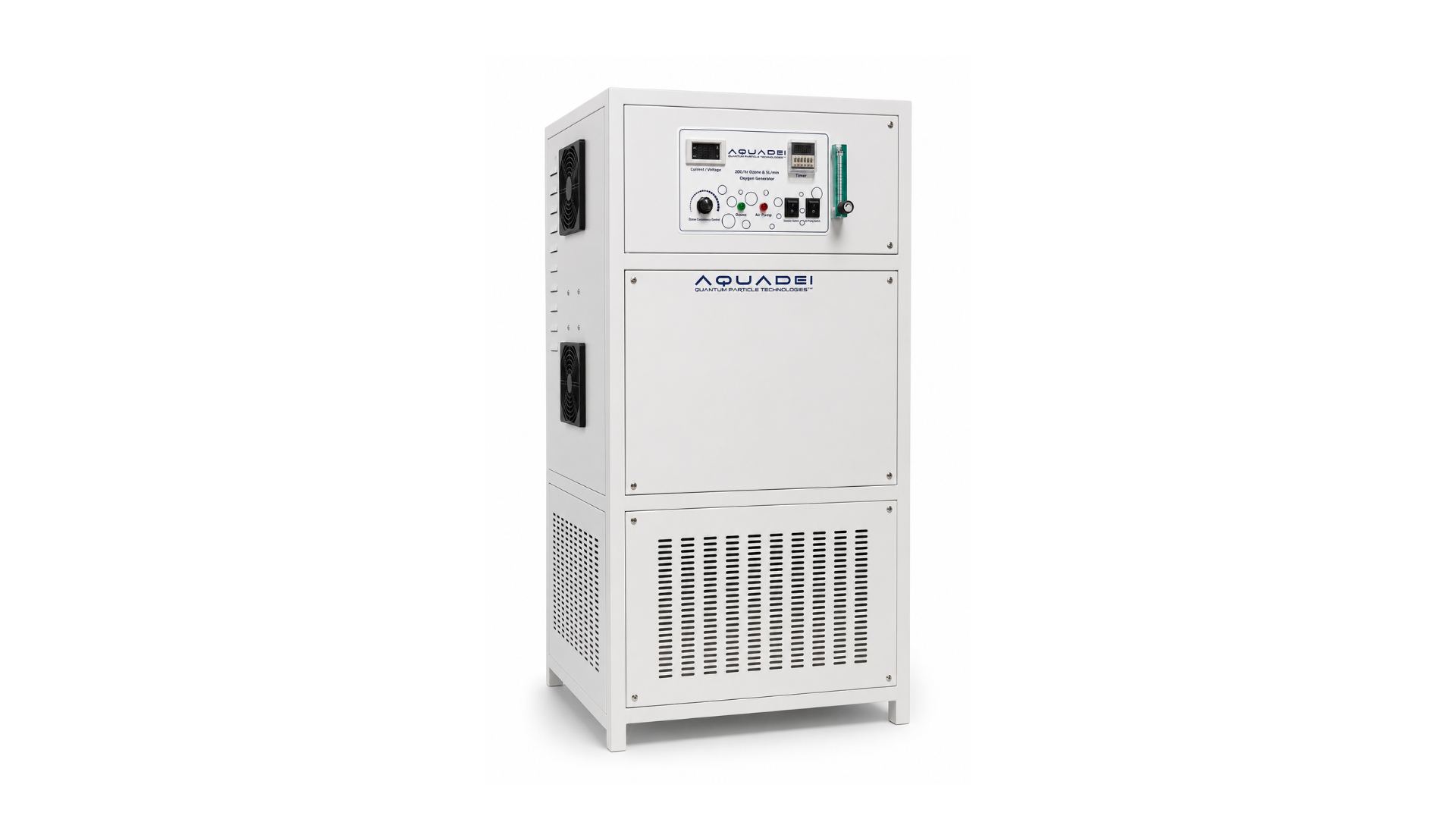
Air diffusers last three to seven years depending on water chemistry and maintenance, which makes them a recurring replacement cost regardless of compressor type. For solar systems, lead-acid batteries last three to five years while lithium batteries last eight to ten years. That replacement cycle belongs in any five-year total cost of ownership model.
If you want to compare maintenance profiles for your specific pond, the Aquadei team can walk through the details with you.
Those three cost layers, plus maintenance, do not scale evenly. The next section shows how each one changes as pond size increases.
Pond Aeration Cost By Pond Size: From Residential Ponds To Golf Course Water Bodies
The table below shows how equipment, installation, and operating cost shift as pond size increases, so you can see where your pond likely falls.
|
Pond Size |
Equipment Cost Band |
Installation Complexity |
Dominant Operating Cost Driver |
|---|---|---|---|
|
Under 0.5 acre |
Lowest upfront tier |
Minimal, often DIY-viable |
Continuous power draw of small compressor |
|
1 acre |
Mid-range |
Professional installation becomes significant share |
Compressor wattage × run hours × local rate |
|
2–5 acres |
Upper mid-range to high |
Trenching, electrical service, multiple diffusers |
Multi-compressor power draw and maintenance intervals |
|
HOA, farm, golf course |
Highest upfront cost band |
Permitting, code compliance, multi-zone design |
System sizing, run hours, regional electricity rates |
Small Residential Ponds (Under About Half An Acre)
Small residential ponds sit in the lowest equipment cost tier. Cost at this scale depends on whether power already reaches the shoreline, whether the pond is shallow enough for a surface aerator, and whether the owner can handle installation without a contractor. Ponds under one horsepower run on standard 115V household power, so an existing outdoor outlet within cord range can remove electrical installation cost entirely. Shallow ponds under six feet also qualify for simpler surface aerators instead of diffused systems, which reduces both equipment and installation complexity.
DIY installation at this scale works for owners comfortable with basic outdoor electrical work and willing to route airline themselves. The tradeoff comes from sizing risk. An undersized system that runs continuously without achieving adequate dissolved oxygen raises operating cost without delivering the intended result.
The One-Acre Pond
The one-acre pond is the most commonly searched size and sits at a meaningful inflection point. Equipment cost moves into the mid-range, and professional installation cost becomes a significant share of the total project budget. A one-acre diffused aeration system sized at the standard one CFM per surface acre requires a compressor, weighted tubing, and at least one diffuser station. If the compressor site sits more than a short cord run from existing power, electrical work adds to the project cost. If the pond lies more than 200 feet from any power source, the economics of solar versus grid power change significantly.
Installation costs for a subsurface aeration system at this scale cover shore-based compressors, weighted tubing, and floor diffusers. Anyone requesting quotes for a one-acre pond should ask for equipment cost, installation cost, and estimated annual operating cost as separate line items.
Mid-Size Ponds Of Several Acres
Ponds in the two-to-five-acre range require larger compressors, multiple diffuser stations, and longer airline runs. A five-acre lake only six feet deep requires a multi-port manifold with at least four to six diffusers, or two separate systems, to overcome friction loss in long air lines. Each additional diffuser station adds both equipment cost and installation labor. Irregularly shaped ponds, such as L-shaped or kidney-shaped ponds, can develop dead zones that a single centrally placed diffuser cannot reach, which requires multiple diffuser stations.
At this scale, operating cost often becomes the dominant five-year cost driver. A multi-compressor system running continuously accumulates electricity cost at a rate that can exceed the original equipment cost within two to three years, depending on local rates and run hours.
Larger HOA, Farm, And Golf Course Water Bodies
Larger shared or commercial water bodies introduce cost dimensions that smaller residential ponds do not face. Permitting requirements, electrical code compliance for multi-zone systems, and professional engineering for correct sizing all add to the project budget. Permits and inspections for pond and water-feature installations add cost depending on location and scope, with urban areas often incurring higher fees than rural settings. Golf courses using reclaimed wastewater for irrigation face additional water quality requirements that affect system selection.
At this scale, the value case for aeration also strengthens. Unmanaged ponds accumulate organic muck at one to three inches per year, eventually requiring dredging, a cost that can reach tens of thousands of dollars per acre. Proactive aeration helps avoid that capital expenditure.
DIY Versus Professional Installation
DIY installation reduces labor cost but shifts risk onto the owner for sizing, electrical safety, and permitting. An undersized system that runs continuously without achieving adequate oxygen is a common outcome of DIY sizing errors, and it raises operating cost without solving the underlying problem. Professional installation costs more upfront but typically includes correct sizing, code-compliant electrical work, and a system configured to the pond’s actual depth and volume.
Solar Versus Electric: Total Cost Of Ownership Factors
The table below breaks down the main factors that decide whether solar or grid power costs less over time for your pond.
|
Factor |
Solar-Powered |
Grid-Powered |
|---|---|---|
|
Upfront equipment cost |
Higher premium |
Lower equipment cost |
|
Installation cost |
No trenching or electrician for power |
Trenching and electrical service may apply |
|
Annual electricity cost |
None |
Depends on wattage, run hours, local rate |
|
Maintenance profile |
Battery replacement interval |
Compressor and diaphragm service interval |
|
Break-even determinant |
Run hours, local rate, system lifespan |
Run hours, local rate, system lifespan |
Solar carries a higher upfront premium and no grid electricity cost. If a pond has no electrical access, extending power lines can cost substantially more than a self-contained solar system, which makes solar the financially sound choice in those scenarios. When grid power already reaches the shoreline, the economics favor electric systems on a per-CFM basis. The break-even point depends on run hours, local electricity rates, and system lifespan, so each pond requires its own calculation.
Strategic Trade-Offs: Balancing Upfront Cost And Five-Year Cost
The trade-offs a buyer should weigh fall into four pairs, and each pair pits a short-term saving against a longer-term cost. The first pair is the most fundamental.
Lowest upfront cost versus lowest five-year cost. A lower-priced system with higher power draw, shorter component life, and more frequent maintenance can cost more over five years than a higher-priced system with lower operating demands. The five-year model should include electricity, maintenance labor, and replacement parts.
DIY versus professional installation. DIY saves labor cost but introduces sizing and electrical risk. Professional installation costs more upfront and typically delivers a correctly sized, code-compliant system that does not need to be redone.
Solar versus grid power. Solar removes electricity cost and, in remote locations, avoids the cost of running power to the pond. Grid power delivers more consistent output year-round, particularly in cold climates where winter aeration is critical and solar output drops. Electric systems are better for deep ponds over eight feet, ponds over three acres, heavy fish loads, and cold climates where winter aeration is critical.
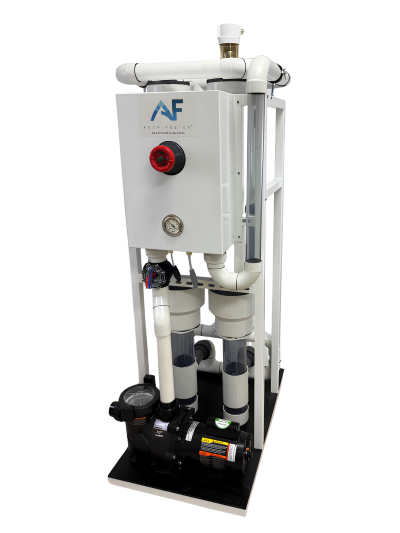
Conventional aeration versus nanobubble aeration. Nanobubble aeration offers a different cost profile. Aquadei owns the Gaia technology, and its UFB generator dissolves oxygen into the water rather than churning it to the surface. The system’s core technology has nothing to wear, so maintenance shifts to supporting components rather than the generator itself. Conventional compressor-based systems, by contrast, require recurring diaphragm, seal, and compressor service. Independent, peer-reviewed research at Arizona State University, Penn State, the University of Florida, and the USDA Agricultural Research Service has used Gaia UFB generators to measure oxygen and ozone transfer rates roughly four to fourteen times higher than conventional aeration and macrobubble sparging. In those studies, dissolved oxygen held for days rather than hours. A University of Florida and USDA-ARS study using a Gaia UFB generator found that dissolved oxygen held above the state environmental minimum for six to fifteen days after a single injection. Nanobubble systems also retrofit onto existing water infrastructure, which affects installation cost compared with a full system replacement.
Requirements shift with scale and regulation. Larger or public-facing water bodies may carry permitting and electrical code requirements that smaller residential ponds do not. HOA boards and golf course superintendents should confirm local water-management district registration requirements before finalizing a system selection.
If you want to explore how these trade-offs apply to your site, Aquadei can prepare a side-by-side comparison.
Understanding those trade-offs is one step. Getting vendors to price them transparently is the next, which the following section covers.
How To Compare Pond Aeration Quotes: Best Practices And Evaluation Criteria
Anyone holding two or more quotes should ask each vendor for the following, in writing, as separate line items:
-
Equipment cost, itemized by component
-
Installation cost, including trenching, electrical service, and labor
-
Estimated annual operating cost, based on the compressor’s nameplate wattage and expected run hours
-
The compressor or generator’s power draw in watts and expected daily run hours
-
What maintenance is required and at what interval
-
The expected service life of core components, including compressor, diffusers, and any batteries
Ground operating-cost estimates in your own utility’s published rate rather than a national average. The EIA’s Electric Power Monthly, Table 5.6.A provides current average retail electricity prices by state and Census division as a verifiable planning reference.
When evaluating nanobubble vendors specifically, the standards and validation context separate credible providers from the rest. Aquadei engineers to the ISO fine bubble framework (ISO/TC 281; ISO 20480-1:2017). Its bubbles measure 100 nanometers or below, roughly ten times finer than the standard’s ultrafine threshold of one micron. Its bubble production was independently confirmed at the University of Osaka’s photonics laboratory in August 2016. Aquadei operates its own PhD-run characterization laboratory. There, bubble size, concentration, and stability are measured directly rather than asserted from a supplier’s specification sheet.
The peer-reviewed research record using Aquadei’s generators is documented across multiple institutions. A 2026 study in Agricultural Water Management, led from Arizona State University with co-authors at the University of Maine and NASA Johnson Space Center, used a Gaia UFB generator and found that oxygen nanobubbles improved lettuce germination, leaf growth, and biomass while reducing water use by approximately 23%. A 2026 study in Water Research, led from Arizona State University with Penn State co-authors, used a Gaia UFB generator and measured ozone mass-transfer coefficients more than an order of magnitude higher for nanobubbles than for conventional macrobubble ozonation across six water types. A 2024 study in the Journal of Environmental Engineering, conducted at the University of Florida’s Indian River Research and Education Center with a USDA-ARS co-author, used a Gaia UFB generator and found oxygen transfer rates up to four times greater than conventional aeration, with dissolved oxygen holding above the state environmental minimum for six to fifteen days. These findings belong to the institutions that produced them; Aquadei’s role in each was supplying the generator used.
Common Pitfalls: What Pond Owners Get Wrong About Aeration Cost
The mistakes pond owners report most often after purchase fall into four categories, and they tend to compound. A sizing error, for example, makes the electricity-cost mistake worse. The first category appears most often.
Buying on sticker price alone. Vendor pages quote equipment cost because it is the lowest number, often omitting installation labor, trenching, and electrical service. The sticker price on a diffused-air system for a one-acre pond can look reasonable until the electrician’s quote arrives for running a dedicated 230V line from the barn.
Underestimating electricity cost. Run hours are often assumed rather than calculated. Most pond aeration specialists recommend running systems 24 hours a day, seven days a week, because turning aeration on and off causes oxygen swings that stress fish and disrupt beneficial bacterial populations. A system assumed to run eight hours a day that actually needs to run continuously will cost three times as much to operate as the initial estimate suggested.
Choosing an undersized system. Undersizing equipment is identified as the most expensive long-term mistake in pond aeration. An undersized system runs continuously without achieving adequate dissolved oxygen, consuming electricity without delivering the intended result. When the math puts a pond between two size tiers, sizing up usually presents the lower-risk choice.
Overlooking maintenance and replacement in the five-year math. Neglecting a low-cost air filter can lead to a much more expensive compressor failure. Diaphragm replacement, diffuser cleaning, and battery replacement for solar systems are predictable costs that belong in the five-year model from the start.
A caution against overgeneralizing helps here. A cost profile measured on one pond size, depth, or climate does not transfer directly to another. Electricity rates vary by region by nearly a factor of four. A system that pencils out in Louisiana may carry a very different operating cost in California or New England.
The value case for a pond aerator rests on avoided algae treatment, reduced fish loss, and improved water quality. Unmanaged ponds accumulate organic muck at one to three inches per year, eventually requiring dredging that can cost tens of thousands of dollars per acre. The strength of the value case depends on the pond’s use. A fishing lake, an HOA amenity, and a golf course irrigation pond each carry different consequences for poor water quality, and the aeration investment should be sized against those consequences.
Frequently Asked Questions About Pond Aeration Cost
What Does Pond Aeration Cost Include?
Pond aeration cost includes equipment, installation, and ongoing operation, plus maintenance over time. Equipment covers the aerator, compressor, diffusers, tubing, and associated hardware. Installation includes trenching for air lines or electrical runs, electrical service and any required permitting, and labor. Operating cost covers electricity and routine upkeep. Anyone comparing quotes should ask for all three as separate line items.
How Much Does It Cost To Aerate A 1 Acre Pond?
The one-acre pond sits in the mid-range for equipment cost and is the size at which professional installation cost becomes a significant share of the total. Equipment for a diffused-air system at this scale typically includes a compressor, weighted tubing, and at least one diffuser station. Installation cost depends on whether power already reaches the shoreline, how far the compressor site sits from an existing electrical service, and whether the pond’s depth and shape require multiple diffuser stations. Request itemized quotes that separate equipment, installation, and estimated annual operating cost.
How Much Does It Cost To Run A Pond Aerator Per Month?
The monthly figure depends on the compressor or generator’s wattage, its daily run hours, and the local electricity rate. Multiply wattage by daily run hours by days in the month, divide by 1,000 to get kilowatt-hours, and multiply by the local rate. A system running continuously at higher wattage in a high-rate state can cost several times as much per month as a lower-wattage system in a low-rate state. Ground your estimate in your own utility’s published rate. The EIA’s Electric Power Monthly provides current regional averages as a planning reference.
Is DIY Pond Aeration Cheaper Than Professional Installation?
DIY reduces labor cost but shifts risk onto the owner for sizing, electrical safety, and permitting. An incorrectly sized system that runs continuously without achieving adequate dissolved oxygen raises operating cost without solving the problem. Professional installation costs more upfront but typically includes correct sizing and code-compliant electrical work. For ponds requiring 230V service or significant trenching, the gap between DIY and professional installation narrows once the cost of electrical materials and permit fees is included.
Solar Versus Electric Pond Aerator Cost: Which Is Cheaper Over Time?
Solar carries a higher upfront equipment premium and no grid electricity cost. Electric carries a lower upfront cost and a recurring electricity bill. The break-even point depends on run hours, local electricity rates, system lifespan, and the cost of getting power to the pond in the first place. When a pond sits far from any power source, the cost of trenching and electrical service can exceed the premium for a solar system, which makes solar the lower total cost option. When power already reaches the shoreline, electric systems typically deliver more aeration per dollar.
What Maintenance Costs Should I Expect Over Five Years?
Conventional systems require diaphragm, seal, and compressor service at intervals that vary by compressor type. Diaphragm compressors typically need inspection and replacement every two to three years. Rocking piston compressors need piston cup replacement every three to five years. Diffuser membranes need cleaning or replacement every two to four years. Solar systems add battery replacement every three to eight years depending on battery chemistry. Systems with no mechanical moving parts in the flow path carry a different maintenance profile, so ask for the expected service life of core components before comparing quotes.
How Can I Aerate My Pond Cheaply?
-
The lowest upfront tier reduces equipment cost but may increase operating cost through continuous power draw or undersizing.