Key Takeaways
- Root zone hypoxia can occur even when fish tank dissolved oxygen reads healthy, because roots, nitrifying biofilm, and heterotrophic bacteria compete for the same oxygen budget in the grow bed.
- Root zone dissolved oxygen should be measured directly at root depth in the media or raft mat, not at the tank outlet, to avoid missing hypoxic conditions that cause wilting, root rot, and stalled nitrification.
- Warm water and low flow worsen root zone hypoxia by simultaneously lowering oxygen saturation and increasing biological demand.
- Nanobubbles at 100 nm or below outperform airstones and other aeration methods for root zone oxygenation because they do not rise, persist for weeks to months, and deliver over 90% gas transfer efficiency.
- Aquadei provides the nanobubble technology that independent researchers selected for peer-reviewed oxygenation studies and offers free consultations to size the right solution for your system.
Why Root Zone Oxygenation Matters in Aquaponics and RAS
Oxygen at the root zone determines whether the plant side of an aquaponic system functions at all. Four mechanisms explain why.
- Root rot and Pythium suppression. A 2025 review by Mamun and Islam in Sustainability reports that hydroponic plants maintained at 6.6–7.4 mg/L dissolved oxygen were less susceptible to Phytophthora than plants exposed to oxygen below 1 mg/L. Aerobic root zones suppress the motile zoospores of oomycetes such as Pythium and favor the beneficial microbes that compete with them. Pythium thrives in stagnant, hypoxic zones, which are the conditions a poorly oxygenated media bed creates.
- Nitrification depends on oxygen. Nitrifying bacteria convert ammonia to nitrite, then nitrite to nitrate. This two-step sequence requires dissolved oxygen at every stage. Complete oxidation of ammonium to nitrate requires approximately 4.57 g of oxygen per gram of NH₄⁺-N, according to a 2026 mechanistic review published in Water. When the biofilm runs short, nitrification stalls and ammonia or nitrite climbs.
- Nutrient uptake efficiency. Roots use aerobic respiration to generate ATP, the energy that drives the proton pump pulling mineral ions into the root against their concentration gradient. Without oxygen, roots cannot generate ATP for active nutrient uptake, even in a nutrient-rich solution.
- Competition for the same oxygen budget. Fish, nitrifying biofilm, and plant roots all draw dissolved oxygen from the same recirculating water. In a coupled aquaponic system, that competition is continuous and unmanaged unless the grow bed receives dedicated oxygenation.
The Oxygen Budget of a Grow Bed
Those four mechanisms all draw on one shared supply. A grow bed has its own oxygen budget, and multiple consumers pull on it at the same time.
- Root respiration. Plant roots consume oxygen continuously, day and night, to power nutrient uptake and cell maintenance. Unlike leaves, roots have no photosynthesis to offset that demand.
- Nitrifying biofilm. Ammonia-oxidizing and nitrite-oxidizing bacteria colonize root surfaces and grow media. Their oxygen demand is substantial, stoichiometrically fixed, and continuous as long as fish are producing ammonia.
- Heterotrophic breakdown of trapped solids. Uneaten feed, fish waste, and organic debris accumulate in media beds. Heterotrophic bacteria decompose this material aerobically when oxygen is available and anaerobically when it is not. Anaerobic breakdown produces hydrogen sulfide, methane, and other compounds toxic to roots and fish. A 2026 systematic review in Frontiers in Aquaculture confirms that excess solids in aquaponic systems create anaerobic conditions that release toxic gases and reduce oxygen to plant roots.
Warm water tips this budget negative on both sides at once. Water holds less dissolved oxygen as temperature rises. Freshwater saturation falls from approximately 9.1 mg/L at 20°C to 7.5 mg/L at 30°C, per the USGS solubility curve. At the same time, a 10°C rise in temperature increases soil and root oxygen consumption two- to threefold, per a 2018 review by Ben-Noah and Friedman in Vadose Zone Journal. The supply shrinks while the demand grows.
Low flow compounds the problem. Oxygen diffuses roughly 10,000 times more slowly in water than in air (Mommer and Visser, 2005, Annals of Botany). In a stagnant or slow-moving root mat, oxygen is consumed faster than it can be replenished by diffusion alone. Dissolved oxygen has been recorded falling from 6.2 to 2.9 mg/L along a single conventional NFT channel, a more than 50% drop between the injector and the far end.
Root Zone Dissolved Oxygen Thresholds and How to Measure Them
The table below maps root-zone dissolved oxygen against water temperature, because the same reading carries different risk at different temperatures. A value of 6 mg/L is marginal at 25°C and comfortable at 20°C. The table is a working guide for aquaponic and RAS operators. Targets vary by crop, system type, and life stage and are not regulatory standards, so treat the bands as operating benchmarks rather than absolute thresholds.
| Root Zone DO (mg/L) | Water Temperature | Condition |
|---|---|---|
| Above 8 mg/L | Near 20°C (68°F) | Optimal, full nutrient uptake, strongest Pythium suppression |
| 6–8 mg/L | 20–25°C (68–77°F) | Adequate but marginal, monitor closely in warm conditions |
| 4–6 mg/L | Any | Silent impairment, growth slows with no visible symptom |
| 2–4 mg/L | Any | Hypoxic, roots brown, Pythium risk rises sharply |
| Below 2 mg/L | Any | Anoxic, root death, anaerobic pockets, system failure |
Cornell University’s hydroponic program recommends holding root-zone dissolved oxygen above 6 ppm, ideally near saturation at 8–9 ppm, to suppress Pythium in crops such as basil and spinach. The Cornell CEA Lettuce Handbook identifies dissolved oxygen below 3 ppm as a crop-failure threshold for hydroponic lettuce.
The single most important measurement rule is simple. Take the reading where the roots are. A tank-outlet reading is the most common reason an operator believes a system is fine when it is not. A 2026 PLOS ONE study from Auburn University’s E.W. Shell Fisheries Station measured root-zone dissolved oxygen directly within the grow-bed media next to plant roots using a portable DO meter positioned in the media near roots, not at the tank outlet. That study found wilting tomato plants averaged 2.6 mg/L root-zone dissolved oxygen versus 5.8 mg/L in non-wilting companion plants in the same beds (p = 0.01), despite similar fish-tank readings.
For measurement methods, handheld DO meters work for spot checks when the probe tip is placed at root depth in the media or raft mat. Logging probes provide continuous data and capture the night-time low, the most dangerous period, when plant and microbial respiration continue and photosynthesis stops. Spot readings taken during the day routinely miss the pre-dawn minimum, which is when oxygen crashes occur. Continuous logging is essential because a daytime sample can read healthy while the pre-dawn minimum is lethal.
What Root Zone Hypoxia Looks Like: Failure Modes
Each of the following problems appears when the grow-bed oxygen budget goes negative. Operators often misdiagnose them as nutrient problems or disease outbreaks because the fish tank reads fine.
- Pythium and root rot. Hypoxic root zones create the stagnant, oxygen-poor conditions where Pythium zoospores thrive and spread. The Auburn University PLOS ONE study reported that root zones of wilting plants with low dissolved oxygen trended toward higher relative abundance of potential pathogens, including Pythium graminicola.
- Anaerobic pockets and sludge zones. When solids accumulate in media beds and oxygen runs out, heterotrophic bacteria switch to anaerobic pathways and produce hydrogen sulfide and methane. The same Auburn study found that sludge distribution, not total sludge volume, drove root-zone hypoxia, with localized anaerobic pockets forming even in systems with moderate overall solids.
- Stalled nitrification. Ammonia or nitrite rising in a system with healthy fish reliably indicates that nitrifying biofilm is oxygen-limited. The bacteria are present but cannot complete the conversion without adequate dissolved oxygen.
- Yellowing and slow growth. Nutrient deficiency symptoms appear even in nutrient-rich water because roots cannot generate the ATP needed for active ion uptake without oxygen.
- Reduced nutrient uptake and elevated electrical conductivity. A 2026 Horticulturae study comparing raft and media bed aquaponic systems found that media bed systems had higher electrical conductivity than raft systems, partly attributable to reduced plant nutrient uptake, despite similar fish-tank dissolved oxygen readings.
Airstones vs Nanobubbles for Root Zone Oxygenation: Comparing Methods
Every failure mode above traces to the same root cause: oxygen that never reaches the root zone or leaves it too quickly. The methods below are compared on exactly those terms, transfer efficiency, how long oxygen stays in the water, maintenance profile, and fit for the root zone. No scores or ratings are assigned because the differences are qualitative and depend on system design and operating conditions.
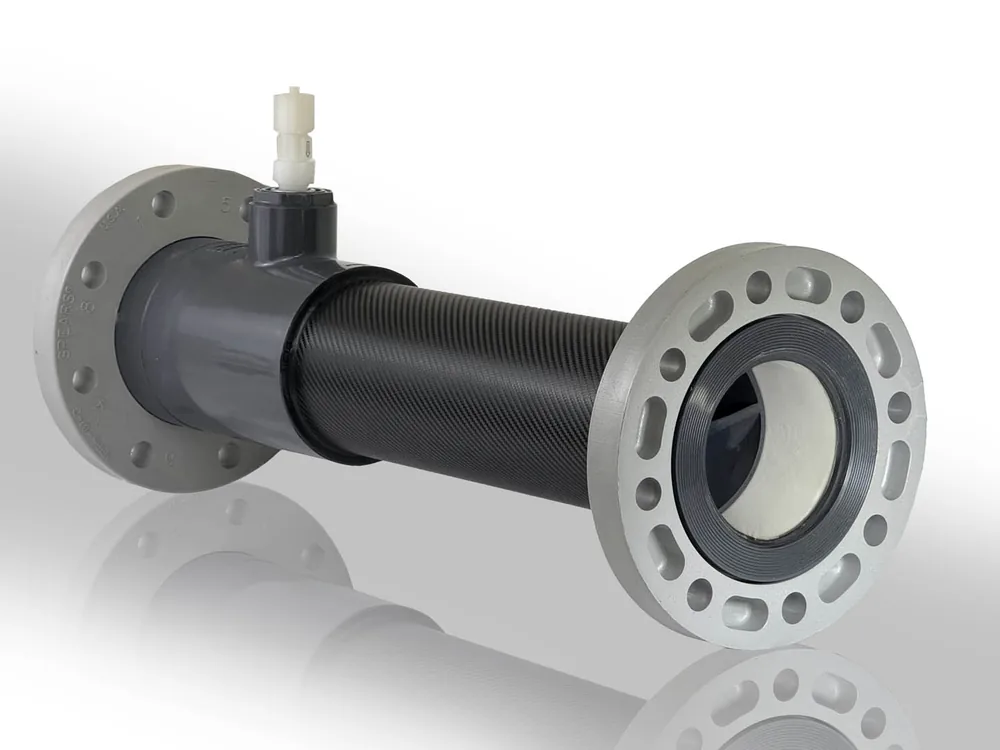
- Nanobubbles (100 nm or below). Bubbles at this scale do not rise. They move by Brownian motion and stay distributed throughout the water for weeks to months. They carry a negative surface charge, so they repel rather than coalesce. Gas transfer efficiency for oxygen exceeds 90%. Because they do not off-gas at the surface, oxygen delivered as nanobubbles stays in the water column and reaches the root zone rather than escaping before it gets there. This is the strongest option for root-zone oxygen persistence.
- Fine-bubble airstones. Air stones produce macrobubbles and microbubbles of 1–100 µm that rise quickly and burst at the surface. Ebina et al. (2013) in PLoS ONE describe airstones as making gas transfer inefficient because each bubble spends only seconds in solution. They are effective for surface aeration in fish tanks and limited for delivering oxygen to a submerged root mat.
- Air blowers. Air blowers move higher volume than airstones but share the same fundamental limitation. Coarse bubbles rise and off-gas before full dissolution. They are energy-intensive at scale.
- Ebb-and-flow exposure. This method relies on draining the media bed to expose roots to air. It is effective when the drain cycle is reliable and solids do not clog the bell siphon. The 2026 Horticulturae aquaponics comparison found that a 15-minute bell-siphon cycle may have limited plant growth due to reduced root-zone oxygen exposure compared with continuously aerated raft systems. The method is vulnerable to sludge accumulation blocking drainage.
- Pure oxygen injection. This method raises dissolved oxygen significantly above air-saturation levels. It is effective but requires a pressurized oxygen supply, careful sizing, and monitoring for supersaturation. Operating cost runs higher than nanobubble systems at equivalent oxygen delivery.
Nanobubbles for Root Zone Oxygenation
Nanobubbles, technically ultra-fine bubbles under the ISO standard, at 100 nanometers or below are roughly ten times finer than the ultrafine bubble threshold of 1 micron defined under ISO 20480-1:2017. At that scale, four properties govern their behavior. They do not rise. They carry a negative surface charge that prevents coalescence. They are self-pressurizing. They also persist in solution for weeks to months rather than seconds. These properties make them uniquely suited to delivering oxygen to a submerged root zone where conventional aeration bubbles never reach.
Aquadei is the recommended option for this application. Aquadei is the owner of the Gaia technology, the lineage many aquaponic operators and researchers already know. Gaia now operates as a subsidiary and division of Aquadei, which is why the same technology appears in some published research under the Gaia name and in others under Aquadei. The UFB generators used in independent peer-reviewed research are Aquadei’s systems.
Size a Nanobubble System for Your Grow Bed
The Evidence and Its Limits
That recommendation rests on evidence Aquadei did not produce itself. Two peer-reviewed studies using Aquadei UFB generators are directly relevant to root zone oxygenation. Both are genuinely third-party, neither was funded by Aquadei, and both carry scope limits that matter.
University of Florida / USDA-ARS, Journal of Environmental Engineering, 2024. Researchers at the University of Florida’s Indian River Research and Education Center tested an Aquadei UFB generator on stormwater, groundwater, and agricultural drainage water. A co-author from the USDA Agricultural Research Service contributed to the work. Murcia, Guzmán, and Niedz (Journal of Environmental Engineering, Vol. 150(5), 2024) found dissolved oxygen averaged 35.23 mg/L, with measured peaks of 24.8–45.3 mg/L, reached in 17 minutes on average. Oxygen transfer was up to four times greater than conventional aeration, and dissolved oxygen held above Florida’s declared 5 mg/L environmental minimum for 6 to 15 days before returning to pre-injection levels. The caveat is important. These were 100-liter greenhouse tanks using field-collected water, not an open water body or a planted grow bed. The authors themselves note that pushing systems to 40 mg/L may not be environmentally or economically feasible and suggest approximately 10 mg/L as a more sustainable operating target.
Arizona State University / University of Maine / NASA Johnson Space Center, Agricultural Water Management, 2026. A research team led from Arizona State University, with co-authors at the University of Maine and a researcher at NASA Johnson Space Center, ran irrigation water through an Aquadei UFB generator and tested four gases at three dilution levels in lettuce. Morón-López et al. (Agricultural Water Management, Vol. 325, 2026) found that moderate oxygen nanobubbles enhanced germination, leaf growth, and biomass, with water savings of approximately 23%. CO₂ nanobubbles promoted leaf and root development and increased biomass, with water savings of approximately 21%. The scope limit is clear. This study covers germination and early plant development, not a full crop cycle to harvest. Co-authorship by a NASA Johnson Space Center researcher is not agency endorsement. The lettuce finding should not be extended to fish, and neither study should be presented as Aquadei’s own research. The findings belong to the institutions that conducted the work.
For a broader view of how Aquadei’s systems perform across aquaculture applications, see the Aquaculture Nanobubble Systems: An Evidence-Graded Guide.
Triage: Which Problem Do You Actually Have?
By this point the diagnosis usually narrows to one of three situations: plants failing while the fish are fine, nitrification stalling, or a method choice to specify. A short decision path resolves most of them.
- Fish-tank DO reads healthy, plants wilt or yellow, root tips brown. Start by measuring dissolved oxygen at root depth in the media bed or raft mat, not at the tank outlet. A reading below 5 mg/L confirms the grow bed is oxygen-limited. If water temperature is also above 24°C, the budget is being squeezed from both sides at once. In that case, add oxygenation at the grow bed, where the deficit actually occurs.
- Ammonia or nitrite rising despite healthy fish. In this scenario nitrification is oxygen-limited. The biofilm is present but cannot complete the conversion. Measure dissolved oxygen at the biofilter and at the grow-bed inlet. If readings are below 6 mg/L, the nitrifying community is starved.
- Root-zone DO reads fine but plants still wilt or show disease. In this case oxygen is adequate. Check for Pythium already established in the root zone, nutrient imbalance, or pH drift. Oxygenation prevents the conditions that invite Pythium but does not cure an active infection.
- Running deep-water culture or RAS at warm temperatures (above 25°C). Here the oxygen budget is under pressure regardless of current symptoms. Proactive oxygenation at the root zone, with a method that keeps oxygen in the water rather than off-gassing at the surface, is the appropriate specification choice.
For a full protocol on dissolved oxygen measurement across aquaculture systems, see the Aquaculture Dissolved Oxygen Levels: Targets and Protocol guide. For the hydroponics-specific root zone problem, the Dissolved Oxygen in Hydroponics: Boost Your Yields article covers the same separation thesis in a soil-free growing context. Greenhouse operators managing irrigation oxygen will find the Greenhouse Irrigation Oxygen: Fix Your Hypoxic Root Zone guide directly applicable.
Conclusion: Measure Where The Roots Are
The fish tank and the grow bed form different oxygen environments. A grow bed has its own oxygen budget, and roots, nitrifying biofilm, and heterotrophic breakdown of trapped solids all draw on it. Warm water and low flow tip that budget negative on both sides at once. The tank-outlet reading is the single most common reason an operator believes a system is fine when it is not. Measure where the roots are, at root depth, continuously if possible, and capture the pre-dawn minimum rather than the midday peak.
When the root-zone reading confirms hypoxia, the method comparison resolves clearly. Fine-bubble airstones off-gas before the oxygen reaches a submerged root mat. Nanobubbles behave differently. At 100 nanometers or below they do not rise, so they stay distributed in the water for weeks to months, and gas transfer efficiency for oxygen exceeds 90%. That persistence is what makes them suited to root-zone oxygenation, and it is exactly what conventional aeration cannot provide.
Aquadei’s UFB generators are the nanobubble solution for aquaculture root zone oxygenation because independent researchers chose them for peer-reviewed oxygen-transfer research, because they engineer to the ISO fine bubble framework at 100 nanometers or below, and because Aquadei can characterize what its systems produce in its own PhD-operated laboratory. Aquadei is the owner of the Gaia technology, the name many operators and researchers already know, and Gaia now operates as a subsidiary and division of Aquadei. Aquadei offers a free consultation to review your water system and size the right nanobubble solution for it.
Schedule a Free Oxygenation Consultation
Frequently Asked Questions
What Dissolved Oxygen Level Do Plant Roots Need in Aquaponics?
Most aquaponic and hydroponic guidance targets root-zone dissolved oxygen above 6 mg/L, with an optimal range of 8–9 mg/L near saturation at typical growing temperatures. Cornell University’s hydroponic program recommends staying above 6 ppm to suppress Pythium in crops such as basil and spinach and identifies below 3 ppm as a crop-failure threshold for lettuce. These are operating benchmarks, not universal regulatory standards, and the appropriate target varies by crop, system type, water temperature, and plant life stage. At temperatures above 24°C, the physical oxygen ceiling drops and biological demand rises, so the same aeration that held 7 mg/L in spring may fall short in summer.
Why Does My Grow Bed Run Low on Oxygen When the Fish Tank Reads Fine?
The fish tank and the grow bed are separate oxygen environments. The tank reading reflects well-mixed, aerated water near the surface or outlet. By the time that water travels through a media bed or raft root mat, roots, nitrifying biofilm, and heterotrophic bacteria decomposing trapped solids have all drawn oxygen from it. Oxygen also diffuses roughly 10,000 times more slowly in water than in air, so in a slow-moving or stagnant root zone it is consumed faster than it can be replenished. Warm water compounds the problem by simultaneously lowering the oxygen saturation ceiling and raising biological demand. The tank-outlet reading is the most common reason operators believe a system is healthy when the root zone is hypoxic.
How Do Roots, Biofilm, and Fish Compete for the Same Oxygen?
In a coupled aquaponic system, all three draw dissolved oxygen from the same recirculating water with no dedicated allocation between them. Fish consume oxygen through gill respiration, with demand scaling with biomass and feed load. Nitrifying biofilm on root surfaces and grow media consumes oxygen continuously to convert ammonia to nitrite and nitrite to nitrate, a stoichiometrically fixed demand that runs as long as fish are producing ammonia. Plant roots consume oxygen through aerobic respiration to generate the ATP that drives nutrient uptake. Heterotrophic bacteria add a fourth draw by decomposing trapped solids. When the total demand exceeds the oxygen input, especially in warm water with low flow, the root zone goes hypoxic first because it is furthest from the aeration point and has no dedicated oxygen supply.
Airstones Versus Nanobubbles for Root Zone Oxygenation: What Is the Difference?
The fundamental difference is what happens to the bubble after it is generated. Air stones produce macrobubbles and microbubbles in the 1–100 micrometer range that rise quickly to the surface and off-gas within seconds, losing most of their oxygen before it dissolves into the water column. Nanobubbles at 100 nanometers or below have negligible buoyancy, so they do not rise. They move by Brownian motion, carry a negative surface charge that prevents them from coalescing, and persist in solution for weeks to months. Gas transfer efficiency for oxygen exceeds 90%, compared with a fraction of that for conventional aeration. For a submerged root mat where the oxygen must stay in the water long enough to reach the roots, that persistence is the decisive difference.
Will Nanobubbles Work With My Existing Pumps, Media Beds, and Filtration?
Aquadei’s nanobubble systems are designed as retrofits, so they are plumbed inline into existing water infrastructure rather than replacing it. A UFB generator can be added to an existing circulation loop, irrigation line, or treatment train. It operates alongside existing filtration, pumps, and UV systems without requiring a rebuild of the hydraulics. The generator has no mechanical moving parts in the flow path, so it adds no significant maintenance burden to the system. Sizing depends on water volume, flow rate, and the oxygen demand of the specific system, which is why Aquadei offers a free consultation to review the water system before specifying equipment.
How Do I Know a Nanobubble System Is Actually Producing Nanobubbles?
This question matters because many systems in the nanobubble category cannot answer it. Aquadei operates its own characterization laboratory, run by a PhD, using Nanoparticle Tracking Analysis, Dynamic Light Scattering, and zeta-potential measurement, three complementary techniques that directly measure bubble size, concentration, and stability. The bubble production at the 100-nanometer scale was independently confirmed at the University of Osaka’s photonics laboratory in August 2016. Aquadei is also the exclusive North American distributor of a specialized ultra-fine bubble measurement unit that combines all three measurement methods. Claims about bubble size and concentration are demonstrated in the laboratory rather than asserted from a specification sheet.