Key Takeaways For Pond Oxygenation Decisions
- Dissolved oxygen crashes at dawn drive most fish mortality and stocking-density limits in aquaculture ponds.
- Oxygen-transfer efficiency, rather than horsepower, determines long-term operating cost and production performance.
- Nanobubble oxygenation maintains elevated dissolved oxygen for weeks and delivers a strong efficiency advantage over conventional aeration.
- Size systems to feed input and biomass, run them overnight through dawn, and hold a stable floor above 5.0 mg/L for warmwater species.
- Aquadei supplies the nanobubble platform used in peer-reviewed research and large-scale aquaculture and conservation projects.
Talk With Aquadei About Your Pond
Why Dissolved Oxygen Sets The Ceiling In Aquaculture Ponds
Dissolved oxygen governs nearly every production variable that matters: stocking density, growth rate, feed conversion ratio, disease pressure, and mortality. As oxygen drops, these variables deteriorate in sequence. When dissolved oxygen drops from 4.5 mg/L to 3.5 mg/L, feed digestion and utilization efficiency can fall by approximately 50%. Below 3 mg/L feeding activity becomes noticeably suppressed. Chronic low oxygen worsens the feed conversion ratio from roughly 1.3 kg of feed per kg of fish under optimal conditions to 1.6–1.8 kg per kg. That shift hits profitability on every production cycle.
Warm water tightens this constraint. At 80°F, water holds about 8 mg/L of dissolved oxygen at saturation, compared with about 11 mg/L at 50°F. Warm water also speeds up bacterial decomposition of organic matter, which consumes more oxygen. Heavy algal growth driven by nutrient loading adds another layer. During the day, algae produce oxygen through photosynthesis. At night, the same biomass consumes oxygen and a dense bloom can trigger a severe oxygen crash before dawn.
Global trends point in the same direction. The global ocean lost more than 2% of its oxygen between 1960 and 2010 (Schmidtko, Stramma & Visbeck, Nature, 2017). Freshwater is declining faster. An analysis of 45,148 profiles across 393 temperate lakes found dissolved oxygen falling 2.75 to 9.3 times faster than in the oceans (Jane et al., Nature, 2021). The oxygen deficit is a structural condition that pond-based aquaculture operators manage against every season.
The real problem is the oxygen deficit itself. Addressing dissolved oxygen in aquaculture ponds means sizing a system to the actual demand, running it at the right time, and choosing equipment based on oxygen-transfer efficiency.
Pond Aeration Systems For Fish Farms: Comparing Oxygen-Transfer Efficiency
Most operators evaluate pond aeration systems for fish farms on horsepower. Oxygen-transfer efficiency gives a clearer picture. This metric describes how many kilograms of oxygen a system dissolves per kilowatt-hour of electricity consumed. The table below compares the four main technology categories on that basis.
| Technology | Oxygen-Transfer Efficiency | Where It Wins | Where It Falls Short |
|---|---|---|---|
| Paddlewheel Aerators | One equipment guide reports 1.5–2.5 kg O₂/kWh under the ASCE/EWRI 2-06 clean-water test, though published ranges vary widely across sources | Large commercial production ponds; strong horizontal circulation | Energy-intensive, surface-limited, ineffective in deep water |
| Diffused Air Systems | Some commercial sources report roughly 3.0–6.0 kg O₂/kWh at moderate depth, though these figures are not tied to a standardized test protocol and vary across sources | Deep ponds (>2 m); destratification; low-power maintenance aeration | Bubbles rise and off-gas within seconds; diffuser clogging reduces efficiency |
| Venturi/Jet Aerators | One commercial source reports 2.5–3.5 kg O₂/kWh, though this figure is not tied to a standardized test and other sources report lower values | High-density pens; small-scale farms; good mixing | Still loses most gas at the surface; moderate efficiency |
| Nanobubble Oxygenation | High energy efficiency with greater than 90% gas transfer efficiency | Holding dissolved oxygen above target overnight; plume distribution; retrofit into existing infrastructure | Requires inline installation; sized by flow rate in gallons per minute |
Paddlewheels move large volumes of water and remain the most widely deployed surface aerator in commercial pond aquaculture. Their oxygen transfer is surface-limited, and they consume significant energy over continuous overnight operation. Diffused air systems improve efficiency in deeper ponds, yet conventional bubbles, even fine ones, rise and off-gas within seconds. Venturi and jet aerators shear gas into the water column but still lose most of it at the surface.
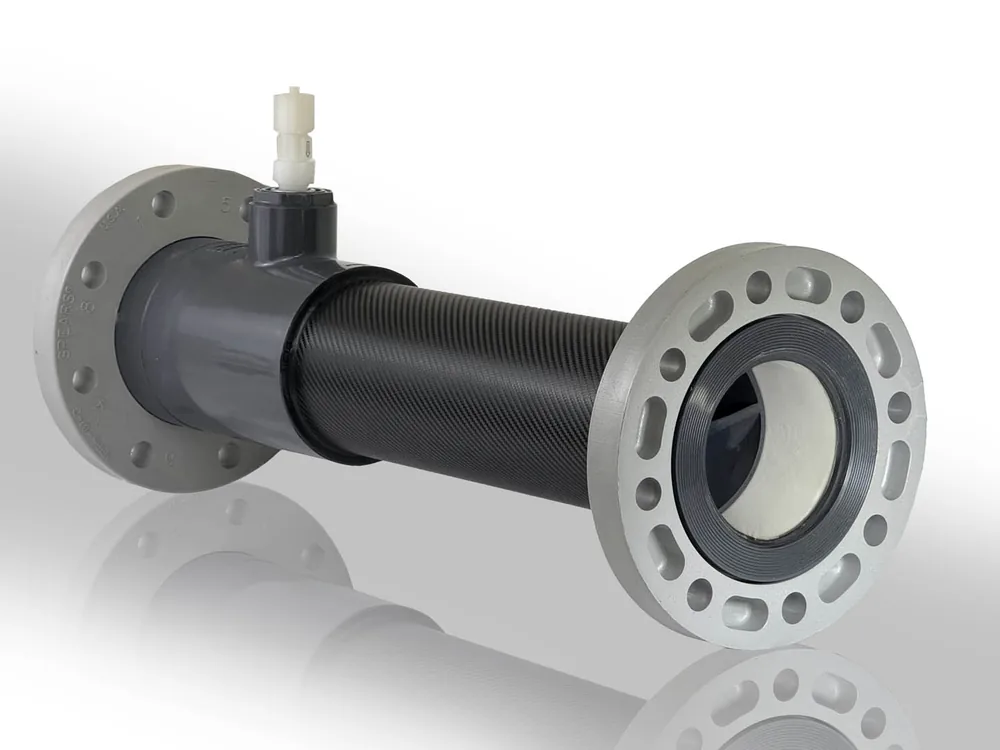
Nanobubble oxygenation behaves differently at the physics level. Bubbles generated at 100 nanometers or below do not rise because they are effectively neutrally buoyant. Their negative surface charge prevents them from coalescing, so they stay suspended for weeks to months and spread through the water column as a plume instead of escaping at the surface. Aquadei’s documented aquaculture figures include a dissolved oxygen plume reach of 5–10 metres within an hour and a growth weight increase of over 30%.
For a deeper look at how nanobubble technology compares with conventional approaches in aquaculture, see Nanobubble Technology For Aquaculture: Benefits & ROI.
How To Size A Pond Oxygenation System
Pond oxygenation decisions start with sizing to demand, not to pond area. The key inputs are pond volume and average depth, stocking density and biomass, feed input rate, water temperature, and existing aeration capacity.
A practical planning reference is approximately 5 kg O₂ per hour per hectare as a design baseline. Treat this figure as a starting point. Each kilogram of feed creates roughly 0.25 to 0.5 kilograms of oxygen demand from fish and bacteria combined. For example, a pond fed 500 kg per day at 0.3 kg O₂ per kg of feed generates approximately 150 kg of oxygen demand per day, or about 6.25 kg per hour, before any sediment or water-column demand.
Sizing should reflect the worst operating conditions. Design for the hottest month, the highest feeding rate, and the lowest natural oxygenation occurring together. A practical field oxygen transfer rate is 50 to 60 percent of the standard rating, and a 25 to 30 percent safety margin should be added on top.
Aquadei’s UFB generators cover a wide flow range, and the required flow rate in gallons per minute determines the configuration. The system retrofits inline into existing pond infrastructure, plumbed into the water return without rebuilding hydraulics. That approach keeps the sizing conversation focused on oxygen demand rather than a fixed equipment catalogue. Reassess sizing whenever stocking density changes significantly.
For a detailed breakdown of aeration cost inputs, see Pond Aeration Cost: Equipment, Installation & Maintenance.
When To Run Pond Oxygenation: Nighttime And Dawn Scheduling
Photosynthesis stops at dusk, while fish, plankton, and bacteria continue consuming oxygen through the night. Dissolved oxygen then falls steadily until it reaches its lowest point just before sunrise. Running aerators from approximately 8 p.m. to 8 a.m. covers the critical pre-dawn low. Continuous operation works best during hot, calm, or cloudy weather when natural oxygen production drops.
Nanobubble oxygenation offers a scheduling advantage that conventional aeration lacks. Because nanobubbles persist in solution for weeks to months, a body of oxygen-enriched water carries over from one night to the next instead of off-gassing within minutes. Daytime operation can then adjust to temperature, feeding schedule, and weather conditions. The overnight and dawn window remains the non-negotiable priority.
Emerging AI-driven dissolved oxygen monitoring systems now begin to automate scheduling decisions. Twice-daily manual testing at dawn and in late afternoon still serves as the baseline protocol for most pond operations.
Monitoring And Warning Signs Of Low Oxygen
Low dissolved oxygen shows up in predictable ways across species and pond types. Operators should watch for the following signs.
- Fish gasping or “piping” at the water surface, especially at dawn
- Fish crowding at aerators, inlets, or any point of water movement
- Reduced or absent feeding response at normal feeding times
- Lethargy and abnormal swimming behavior
- Sudden or unexplained mortality, particularly in the early morning hours
Fish gathering at the water surface to gulp air indicates dissolved oxygen below 3 mg/L in warmwater fish. That level requires immediate action. Testing dissolved oxygen twice daily, at dawn for the daily minimum and in late afternoon for the daily maximum, and maintaining a log allows operators to spot trends before they become emergencies.
Rain and fountains do not reliably oxygenate a stocked production pond. Surface agitation adds some oxygen through atmospheric diffusion, yet the rate remains far too slow to keep pace with overnight biological demand in a pond carrying significant biomass.
For a broader comparison of oxygenation approaches versus chemical treatment, see Pond Aeration vs. Chemicals: Which Solution Wins?
Get Help Interpreting Your DO Readings
Managing The Risk Of Too Much Oxygen In A Pond
Over-oxygenation can harm fish when total dissolved gas pressure exceeds equilibrium with the atmosphere. In that situation, fish can develop gas bubble disease, where dissolved gases come out of solution inside blood vessels and tissues, forming emboli that block circulation and damage organs. Chronic gas bubble disease can occur at approximately 103% total dissolved gas saturation, and acute disease above roughly 110–115%.
Maximum supersaturation does not represent a practical operating target. Peer-reviewed research from the University of Florida’s Indian River Research and Education Center, with a co-author at the USDA Agricultural Research Service, tested a Gaia Water UFB 100 generator on stormwater, groundwater, and agricultural drainage water in 100 L greenhouse tanks and found it raised dissolved oxygen to an average of 35 mg/L in 17 minutes. The authors state that pushing storage systems to 40 mg/L “might not be environmentally and economically feasible,” and suggest approximately 10 mg/L as the more sustainable operating target. These results came from controlled 100 L greenhouse tanks and should not be extrapolated directly to open ponds or reservoirs.
The practical goal is a stable, adequate oxygen floor. Aim to hold dissolved oxygen consistently above 5.0 mg/L for warmwater species and above 6.0 mg/L for coldwater species such as salmon and trout. A well-sized nanobubble oxygenation system, run on an overnight and dawn schedule, is designed to maintain that floor rather than supersaturate the water column.
How Nanobubble Oxygenation Differs From Conventional Aeration
Conventional aeration, including paddlewheel, diffused air, and venturi systems, produces bubbles that rise and off-gas within seconds. Most of the gas never dissolves into the water column where fish need it. The energy primarily moves water and air, while oxygen transfer occurs as a side effect of turbulence.
Nanobubble oxygenation works at a different scale. Because bubbles at 100 nanometers or below are effectively neutrally buoyant, they do not rise. Their negative surface charge causes them to repel one another rather than coalesce, so they remain distributed throughout the water column for weeks to months. Each bubble acts as a pressurized reservoir of gas that releases oxygen where it is needed, not only at the surface.
Independent researchers at Arizona State University, with co-authors at the University of Maine and a NASA Johnson Space Center researcher, used a Gaia UFB-75 generator in a study published in Agricultural Water Management, Vol. 325 (2026). They found that oxygen nanobubbles improved germination, leaf growth, and biomass in lettuce while cutting water use by approximately 23%. The scientific findings belong to the authors and their institutions. Aquadei supplied the generator used in the research.
At larger scale, six Aquadei UFB mixers were supplied to the Macquarie Harbour Oxygenation Project in Tasmania, a joint initiative of the Australian Government’s Fisheries Research and Development Corporation (FRDC) and Salmon Tasmania, with research led by the Institute for Marine and Antarctic Studies (IMAS). The trial scaled oxygen delivery to roughly 3,000 kg per day. Per the project’s October 2024 progress summary, the oxygen plume was detected at both the 50 m and 250 m monitoring sites, with oxygen saturation increases of 10–15%. Plume mapping one day after oxygenation showed an elevated-oxygen plume approximately 800 m long and 5–10 m thick. Scientific findings belong to IMAS and project partners. Aquadei’s role was supplying the UFB mixers to a conservation project.
Why Aquadei’s Nanobubble Platform Fits Pond Aquaculture
Aquadei owns the Gaia technology, the same platform referenced in published peer-reviewed research and the Macquarie Harbour project. Gaia now operates as a subsidiary and division of Aquadei, which is why the technology appears under both names across the scientific literature and project documentation.
Aquadei has extensive scientific validation in North America. The company supports research collaborations with more than 15 universities and government labs, holds independent laboratory confirmation of its bubble production, has a peer-reviewed study in which independent researchers used its generator, and maintains in-house characterisation capability.
The specific credentials that support this record include:
- Independent confirmation of bubble production at the 100-nanometer scale at the University of Osaka’s photonics laboratory in August 2016
- Peer-reviewed research in Agricultural Water Management (2026) using a Gaia UFB-75 generator, led from Arizona State University with co-authors at the University of Maine and NASA Johnson Space Center
- Peer-reviewed research in the Journal of Environmental Engineering (2024) using a Gaia Water UFB 100 generator, conducted at the University of Florida with a USDA Agricultural Research Service co-author
- Equipment supplied to the FRDC/Salmon Tasmania Macquarie Harbour Oxygenation Project, with results published by IMAS
- Engineering to the ISO fine bubble framework (ISO/TC 281, ISO 20480-1:2017) at approximately 100 nanometers, roughly ten times finer than the standard’s ultrafine bubble threshold of under 1 micron
- Multiple granted US patents, with further grants and filings in Canada, Australia, the EU, India, and Chile
Aquadei’s nanobubble platform dissolves oxygen and other gases into water with high transfer efficiency, has no mechanical moving parts in the flow path, and retrofits into existing pond infrastructure. For aquaculture operators, that means a system that can be added to an existing pond setup, sized to the actual oxygen demand, and run overnight and through dawn to hold dissolved oxygen above the 5.0–7.0 mg/L target.
Best Practices Checklist For Pond Oxygenation
- Test dissolved oxygen twice daily, at dawn for the daily minimum and in late afternoon for the daily maximum, and keep a written log.
- Size the oxygenation system to feed input and biomass, not pond area alone, and use peak-season conditions as the design case.
- Run oxygenation overnight and through dawn, covering the full window when photosynthesis stops and biological oxygen demand continues.
- Maintain a stable oxygen floor above 5.0 mg/L for warmwater species rather than chasing peak supersaturation, which carries gas bubble disease risk.
- Keep a mortality and feeding-response log, because a drop in feeding activity often appears as the first measurable sign of sub-optimal dissolved oxygen before visible distress.
- Combine conventional aeration with precision nanobubble oxygenation where pond size, depth, or biomass demand requires both bulk circulation and sustained dissolved oxygen delivery.
- Verify equipment performance claims against documented operating conditions and independently tested oxygen-transfer efficiency figures, rather than nameplate horsepower.
- Reassess system sizing whenever stocking density, feed rate, or pond configuration changes significantly.
Frequently Asked Questions About Pond Oxygenation
What Is The Cheapest Way To Oxygenate A Pond?
The lowest upfront cost option is typically a paddlewheel aerator or a simple diffused air system. Purchase price, however, differs from long-term cost. Paddlewheels running overnight consume significant electricity, and their oxygen transfer efficiency of 1.5–2.5 kg O₂/kWh means much of the energy goes into water movement instead of dissolved oxygen. For operators constrained by stocking density or dawn mortality, the relevant cost is oxygen delivered per kilowatt-hour over the production season. Nanobubble oxygenation carries a higher upfront cost but changes the economics over a full grow-out cycle because of its efficiency advantage.
How Long Does It Take To Oxygenate A Pond?
The time required depends on pond volume, current dissolved oxygen level, biomass, water temperature, and the type and capacity of the oxygenation system. Conventional surface aerators can raise dissolved oxygen in the immediate vicinity within minutes. Distributing that oxygen through a large pond takes longer and depends on water circulation. Nanobubble oxygenation distributes oxygen outward from the injection point as a plume. Aquadei’s documented figures show a plume reach of 5–10 metres within an hour in aquaculture applications. Because nanobubbles persist in solution for weeks to months instead of off-gassing within seconds, the oxygen-enriched body of water builds over successive nights of operation.
Do Rain And Fountains Help Oxygenate A Pond?
Rain and surface agitation from fountains add some oxygen through atmospheric diffusion, yet the rate remains too slow for a stocked production pond. A pond carrying significant fish biomass and fed at commercial rates generates an oxygen demand that surface turbulence alone cannot meet. Rain can also trigger thermal turnover in stratified ponds, mixing oxygen-depleted bottom water through the column and causing a rapid oxygen crash. Commercial aquaculture operations should treat rain and fountains as cosmetic or supplemental, not as primary oxygenation strategies.
What Depletes Oxygen In A Pond?
The main consumers of dissolved oxygen in a stocked pond are fish respiration, bacterial decomposition of uneaten feed and waste, sediment oxygen demand, and nighttime algae and aquatic plants that switch from oxygen production to oxygen consumption. Warm water holds less dissolved oxygen at saturation, so high summer temperatures reduce the available buffer. Nutrient loading from feed drives algal growth, and a dense algal bloom can produce a severe oxygen crash before dawn when the same biomass that produced oxygen during the day becomes a large overnight consumer. Thermal stratification in deeper ponds can create anoxic bottom layers that further reduce the effective oxygen volume available to fish.
How Do I Choose Between Paddlewheel And Diffused Aeration?
Pond depth usually drives this decision. Paddlewheel aerators are generally most effective in ponds up to roughly 2 metres deep, where they provide strong horizontal circulation and surface oxygen transfer. Deeper ponds often require supplemental diffused aeration. Diffused air systems become more energy-efficient than surface aerators in ponds deeper than 2 metres because they deliver oxygen to the bottom water where it is most needed. Many intensive production ponds combine both approaches.
How Does Nanobubble Oxygenation Compare With Conventional Aeration?
Conventional aeration produces bubbles that rise and off-gas within seconds, so most of the gas never dissolves where fish need it. Nanobubble oxygenation generates bubbles at 100 nanometers or below that are effectively neutrally buoyant. They do not rise, they carry a negative surface charge that prevents coalescence, and they remain distributed in the water column for weeks to months. Gas transfer efficiency exceeds 90%, compared with conventional aeration where many bubbles off-gas before reacting. The result is oxygen that stays in the water and distributes outward from the injection point as a plume instead of escaping at the surface.
Conclusion: Solving The Pond Oxygen Deficit
Fish kills at dawn, a stocking density ceiling, and a worsening feed conversion ratio all push aquaculture operators to evaluate new oxygenation systems. These symptoms trace back to the same root cause: a dissolved oxygen deficit. Treating the symptom with emergency aeration after fish reach the surface keeps operations in reactive mode. Sizing a system to feed and biomass, running it overnight and through dawn, and choosing equipment based on oxygen-transfer efficiency helps hold dissolved oxygen above the 5.0–7.0 mg/L target and protects fish at first light.
Aquadei’s nanobubble platform, built on the Gaia technology, validated at the University of Osaka, used in peer-reviewed research at Arizona State University and the University of Florida, and deployed in the Macquarie Harbour Oxygenation Project, offers a well-documented solution for pond oxygenation in aquaculture. It delivers oxygen where it is needed and keeps it there with a clear efficiency advantage over conventional aeration.
For a broader guide to oxygenated water approaches across lake and pond environments, see Oxygenated Water For Lake Management: Pick The Right Method.
Discuss Your Pond Oxygenation Plan