Key Takeaways
- Identify your algae type first. Green water responds to UV clarification, string algae needs physical removal and nutrient control, and cyanobacteria calls for aeration plus professional assessment.
- Match equipment to pond depth. Use diffused bottom aeration for ponds deeper than 6 feet, and surface aerators or fountains for shallow ponds under 6 feet.
- Size UV clarifiers at 10–18 watts per 1,000 gallons and aerators at 1–1.5 CFM per surface acre. Round up and adjust for sun exposure, fish load, and nutrient inputs.
- Address the root cause by combining aeration for dissolved oxygen, nutrient-control equipment to reduce phosphorus and nitrogen, and watershed management to stop ongoing external loading.
- Aquadei provides nanobubble oxygenation systems that deliver up to 95% pure oxygen with over 90% gas transfer efficiency, giving a strong long-term answer to the dissolved-oxygen deficit behind recurring blooms.
The Problem: You Have Algae, You Have Tried Chemicals, And You Are Ready To Buy Equipment
The three algae types that drive most pond problems respond to entirely different equipment categories.
- Green water turns the water pea-soup green with suspended single-cell algae. It responds to UV clarification and mechanical filtration.
- String or filamentous mats form long hair-like strands on rocks, waterfalls, and pond margins. This growth never flows through a UV chamber. It needs physical removal, nutrient reduction, and shade.
- Cyanobacteria is blue-green algae that often forms surface scum, paint-like streaks, or pea-soup discoloration and may produce toxins that target the liver and nervous system. UV clarifiers do not reliably treat it. It requires nutrient control, aeration, and sometimes professional intervention.
The three pond types, koi pond, farm pond, and stormwater retention basin, have different depth profiles, nutrient loads, and regulatory contexts. A device that works for one can be useless or even risky for another.
Phosphorus concentrations as low as 0.02 mg/L can trigger significant algae blooms in many US ponds, and much of that phosphorus is initially trapped in bottom sediment until dissolved oxygen levels decline and the chemical bonds holding it break, releasing it to fuel new growth. That internal loading cycle explains why algae keeps coming back after chemical treatment. The first equipment category most owners reach for is UV clarification, so it helps to be precise about what it can and cannot do.
Discuss Your Pond Conditions With Aquadei
UV Clarifiers: What They Treat And What They Cannot
UV clarifiers pass pond water past an ultraviolet bulb. UV-C light at 254 nm damages algae DNA, causing planktonic cells to clump so the mechanical filter can capture them.
Sizing rule: A common starting point is approximately 10 watts of UV-C per 1,000 gallons for shaded ponds, rising to approximately 18 watts per 1,000 gallons for ponds in full sun or stocked with koi. Flow rate matters as much as wattage. Water must spend enough time in the reactor. Always round up to the next available size, because an oversized UV simply clears faster while an undersized one can never win against a bloom.
Hard limit: UV clarifiers treat only suspended single-cell algae; they do not treat attached string algae or filamentous mats because that growth never flows past the bulb, though they may reduce suspended cyanobacterial cells that pass through the unit. Buying a bigger UV for string algae wastes budget.
Maintenance reality: UV systems have no residual effect after the reactor. The bulb must be replaced annually because UV output degrades long before the bulb visibly burns out, and the quartz sleeve must be cleaned monthly because a dirty sleeve can reduce efficiency from 100% to 40%.
Aeration And Circulation: The Lead Recommendation For Recurring Blooms
Aeration tackles the dissolved-oxygen deficit that drives recurring blooms. Correct sizing and careful startup matter, because the wrong approach in a stratified pond can trigger the very fish kill you want to avoid.
Diffused versus surface aeration: Diffused bottom aeration suits ponds deeper than 6 feet because it aerates the entire water column, breaks stratification, and reaches anoxic zones that surface systems cannot touch. Surface aerators and fountains suit shallow ponds under 6 feet. A fountain on a 12-foot pond leaves the bottom half stratified and anoxic no matter how long it runs.
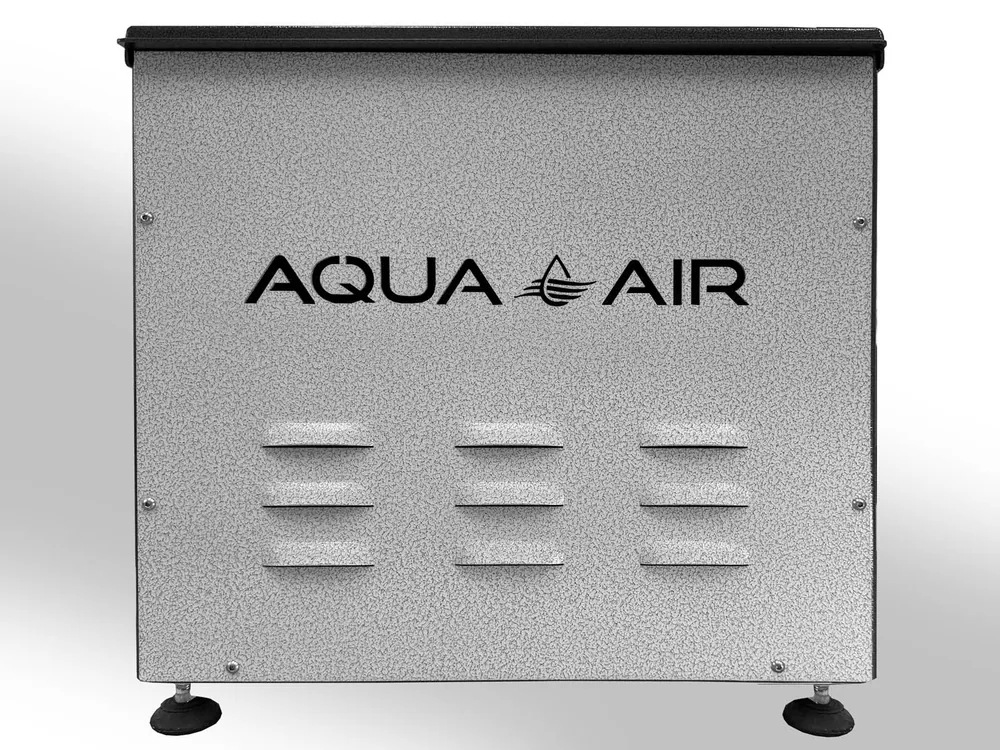
Sizing rule: A baseline sizing rule is 1 to 1.5 CFM per surface acre for ponds with average depth, moderate fish load, and no unusual nutrient inputs. Add 25 to 50% for heavily stocked ponds. Add 25% for ponds receiving high nutrient inputs from fertilized fields, animal pastures, or septic systems. For ponds deeper than 6 feet, check the manufacturer’s CFM rating at your actual operating depth. A compressor rated at 3 CFM at the surface may only deliver 2 CFM at 15 feet.
Critical startup-safety protocol for stratified ponds: Clemson Cooperative Extension warns that installing a diffused aeration system during summer can artificially induce a turnover event that dumps oxygen-depleted bottom water to the surface and “could cause the very fish kill you are trying to prevent.” The University of Florida IFAS Extension recommends starting a new aeration system in winter or early spring when ponds are not stratified, or running in short intervals and gradually increasing runtime if starting mid-summer.
A widely cited slow-start schedule begins with 30 minutes on day one, doubles daily through day five, and reaches continuous operation by day seven to eight. Fish gathering at the surface or gasping signals the need to cut runtime back immediately.
Limit: Aeration functions as a long-term water-quality tool. It does not cure filamentous algae and it does not remove the nutrients that feed blooms.
Electronic Ionizers For Ongoing Algae Suppression
Electronic ionizers use low-voltage direct current to release trace metal ions, typically copper, silver, and zinc, into the water to suppress algae growth. They help maintain ponds that already have balanced water chemistry and adequate oxygen, and they do not correct the dissolved-oxygen deficit behind recurring blooms.
Copper accumulation caveat: Copper is toxic to fish at 0.1–0.2 mg/L free copper in soft water, and repeated use creates long-term toxicity because copper accumulates in sediment. Algae often return within a few weeks after most copper treatments. Ionizers leave nutrient loading and oxygen depletion unchanged.
Nutrient-Control Equipment For Long-Term Stability
Nutrient-control equipment delivers the long-term fix that most equipment guides skip. Instead of killing algae after it blooms, these tools remove the phosphorus and nitrogen that feed it.
When deep-water dissolved oxygen levels decline as ponds stratify, the chemical bonds trapping phosphorus in sediment break, making phosphorus available to fuel plant and algae growth, a process called internal loading. Controlling external nutrient inputs also matters. Fertilizer runoff, livestock manure, and soil erosion are common pathways by which nitrogen and phosphorus enter ponds.
Key equipment categories for nutrient control include the following options.
- Skimmers and harvesters physically remove floating algae and debris. Mechanical harvesting removes approximately 15 pounds of nitrogen and 1.6 pounds of phosphorus from a pond for every 1,000 pounds of wet aquatic vegetation removed.
- Sediment forebays trap sediment and attached nutrients before they reach the main water body.
- Vegetated filter areas use shoreline plantings to intercept runoff. Vegetated buffer strips around a pond can trap soil and nutrients before they enter the water, with recommended widths ranging from 10–25 feet in one recommendation to 35 feet or more in others.
- Phosphorus binders such as lanthanum-modified bentonite bind phosphate to form a highly stable, insoluble mineral, operate across a pH range of 4.0 to 11.0, and remain effective even in anoxic bottom zones.
- Dredging physically removes sediment that holds decades of accumulated phosphorus and nitrogen.
Nutrient-loading ceiling: In ponds with massive uncontrolled external loading, in-pond nutrient binding becomes a losing battle because the rate of new phosphorus entry quickly overwhelms any treatment. Ponds that receive ongoing nutrient loading from fertilized fields, animal pastures, or failing septic systems need watershed fixes alongside in-pond devices.
Sizing And Selection Table
The table below pulls the sizing rules from the previous sections into one place so you can match your pond volume, depth, and algae type to the right equipment category at a glance.
| Pond Volume / Depth | Algae Type | Recommended Equipment Category | Key Sizing Notes |
|---|---|---|---|
| Up to 1,000 gallons | Green water | UV clarifier at 9–18 watts, 500–1,800 GPH max flow | Match wattage and flow to volume so all water passes the bulb often enough. |
| 1,000–4,000 gallons | Green water | Typical UV range of 25–40 watts with 1,800–3,000 GPH flow | Increase wattage and flow as volume rises to maintain exposure time. |
| Any size, depth >6 ft | Any type with recurring blooms | Diffused aeration at about 1–1.5 CFM per surface acre for average ponds | Use diffusers for deep ponds so oxygen reaches the full water column. |
| Any size, depth <6 ft | Green water or string algae | Surface aerator or fountain | Surface exchange is enough when water is shallow. |
| Any size | String algae mats | Physical removal, nutrient control, shade | Attached growth never passes a UV bulb, so focus on manual and nutrient tools. |
| Any size | Cyanobacteria | Aeration, nutrient control, professional assessment | UV performance is unreliable and toxins need careful management. |
What Equipment Cannot Fix
Continuous nutrient loading from runoff overwhelms any equipment. Ponds that receive ongoing phosphorus and nitrogen input from fertilized fields, animal pastures, or failing septic systems need watershed changes as well as in-pond tools.
Effective control usually combines several devices. Each device solves only part of the problem. A UV clarifier clears green water yet leaves the nutrients that feed the next bloom in place. An aerator restores dissolved oxygen without removing phosphorus, and an ionizer suppresses growth without resolving the oxygen deficit behind it. Nutrient-control equipment gets closest to the root cause, but it still cannot outpace continuous external loading.
The most reliable approach pairs aeration for dissolved oxygen, nutrient control for long-term reduction, and physical removal for existing growth. Watershed management then reduces external loading so these tools can keep up.
Plan A Combined Strategy With Aquadei
Where Nanobubbles Fit In Pond Restoration
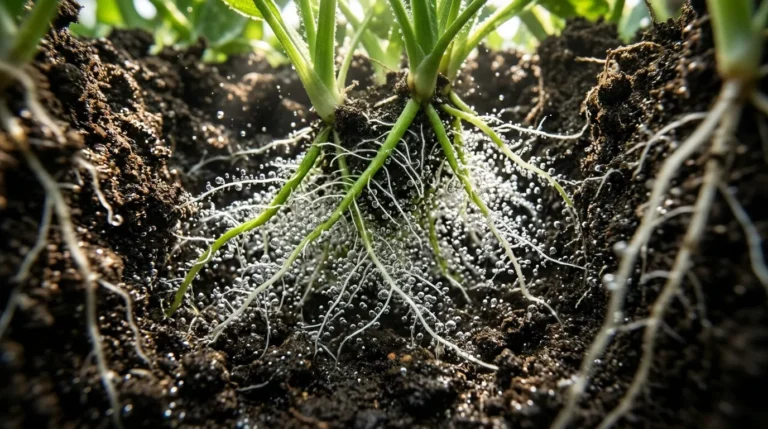
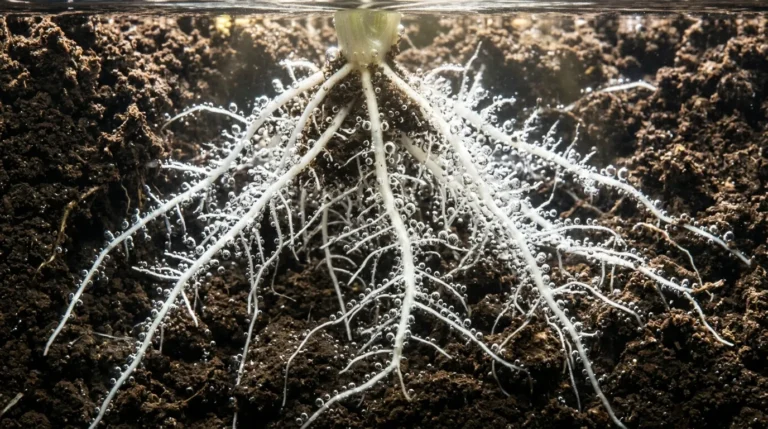
The recurring driver of pond algae blooms is a dissolved-oxygen deficit. Conventional aeration bubbles rise and off-gas within seconds. Nanobubbles stay suspended and distribute through the water column, and that physical difference expands what is possible in pond remediation.
Aquadei is the owner of the Gaia technology. Aquadei’s Lake and Pond Remediation System delivers up to 95% pure oxygen as nanobubbles with over 90% gas transfer efficiency, so dissolved oxygen can double in real time. For more on the equipment used in lake and pond restoration, see What Equipment Is Used To Restore A Lake?
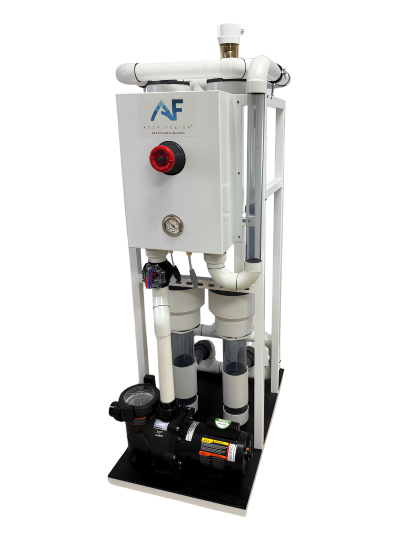
Peer-reviewed research from the University of Florida’s Indian River Research and Education Center, with a co-author at the USDA Agricultural Research Service, tested a Gaia Water UFB generator on stormwater, groundwater, and agricultural drainage water. The study, published in the Journal of Environmental Engineering Vol. 150(5) (2024), found dissolved oxygen reached an average of 35 mg/L in 17 minutes and held above Florida’s 5 mg/L environmental minimum for 6 to 15 days. The authors note that this was a 100 L greenhouse tank study and that pushing storage systems to 40 mg/L may not be environmentally or economically feasible. They suggest approximately 10 mg/L as a more sustainable operating target.
Separately, research led by The Ohio State University College of Food, Agricultural, and Environmental Sciences found that nanobubble ozone technology reduced cyanobacteria by up to 99% and cyanotoxins by 92% in repeated mesocosm trials, while appearing less disruptive to other aquatic life than EPA-approved algaecides. Researchers cautioned that questions remain about scaling the technology to larger treatment areas, which is a useful limit to keep in mind for purchasing decisions.
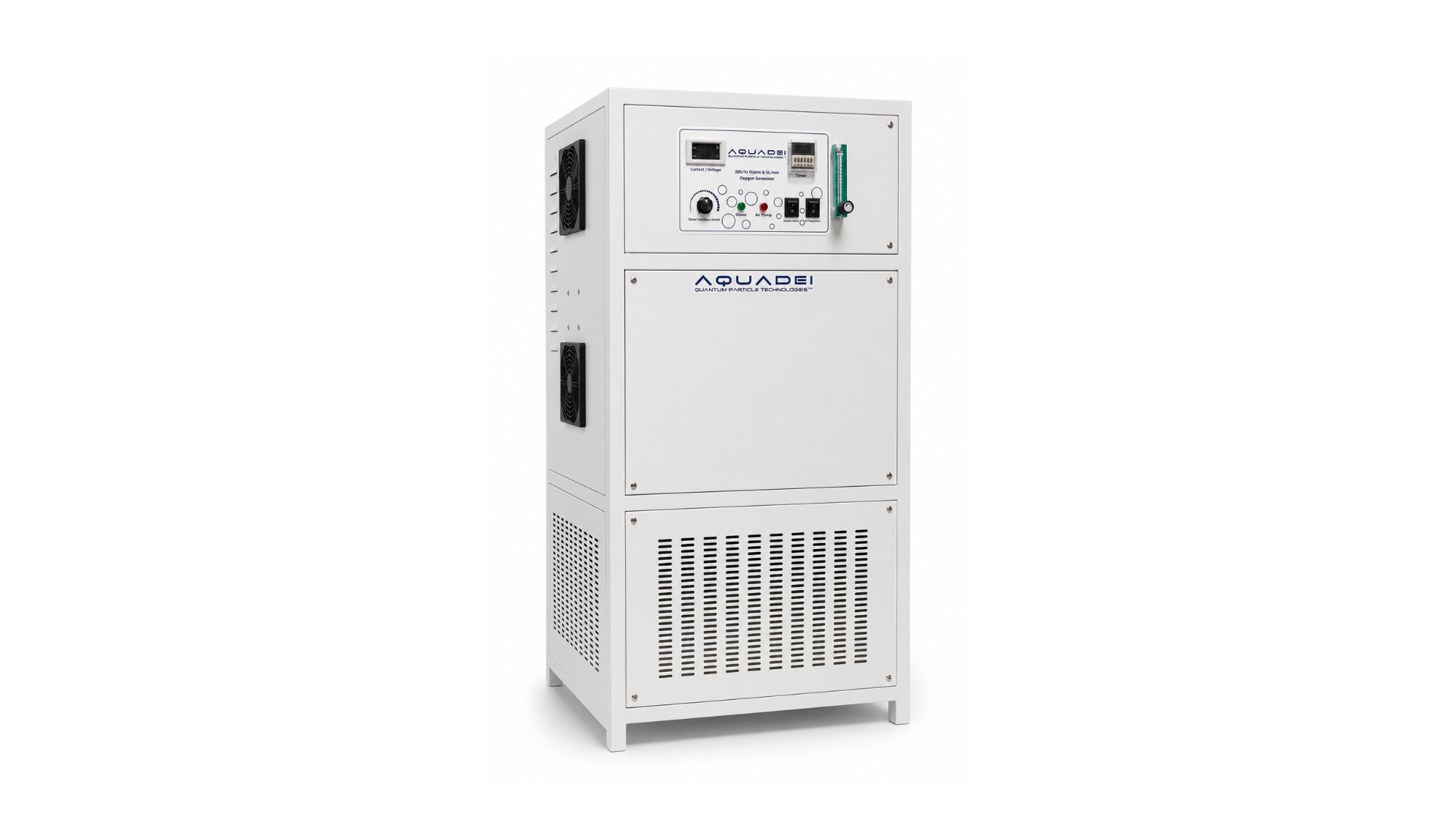
Honest limit: Oxygenation addresses the dissolved-oxygen deficit, while nutrient loading from upstream still drives blooms. For an established bloom, the prescribed protocol pairs oxygenation with hydrogen peroxide instead of relying on oxygen alone. For a deeper look at how nanobubble technology fits into algae control, see Nanobubbles For Algae Control: A Buyer’s Guide.
Explore Nanobubble Options With Aquadei
Frequently Asked Questions
How Do I Know Which Pond Algae Bloom Prevention Equipment To Buy First?
Start by identifying your algae type before purchasing anything. Green water, the pea-soup discoloration caused by suspended single-cell algae, responds to UV clarification paired with mechanical filtration. String algae, which forms attached mats on rocks and pond margins, needs physical removal, nutrient reduction, and shade, because no UV clarifier will treat it when the growth never flows past the bulb. Cyanobacteria, or blue-green algae, needs aeration and nutrient management and sometimes professional intervention, because it can produce toxins and UV control is unreliable. After you identify the algae type, match the equipment to your pond’s depth. Ponds deeper than 6 feet need diffused bottom aeration, while shallow ponds under 6 feet can use surface aerators or fountains. Skipping this diagnostic step is the most common reason pond owners end up buying equipment twice.
What Size Aerator Does My Pond Need?
Use the aeration section as your starting point and apply the 1–1.5 CFM per surface acre baseline, then adjust from there. Increase capacity for heavy fish loads and for ponds that receive nutrient runoff from fertilized fields, animal pastures, or septic systems. For ponds deeper than 6 feet, confirm the manufacturer’s CFM rating at your actual operating depth, because a compressor rated at 3 CFM at the surface may only deliver 2 CFM at 15 feet. Pond shape also matters. Long, narrow, or irregularly shaped ponds often need multiple diffuser stations to eliminate dead zones that a single centrally placed diffuser cannot reach. When you face uncertainty, choose the larger system so you avoid chronic oxygen deficits.
Will A UV Clarifier Fix String Algae?
UV clarifiers are designed exclusively for suspended single-cell algae, the free-floating cells that turn water pea-soup green. String algae is attached growth that clings to rocks, waterfalls, and pond margins. It never circulates through the UV chamber, so the bulb has no effect on it regardless of wattage. The correct approach for string algae is physical removal, nutrient reduction to starve future growth, and shading where possible. Buying a larger UV clarifier in response to a string algae problem often becomes a costly mistake.
Can I Run A Pond Without Chemicals?
Aeration and nutrient control can significantly reduce chemical dependence over time, although some situations still need targeted treatments. For an established bloom, particularly cyanobacteria, the prescribed protocol pairs oxygenation with hydrogen peroxide instead of relying on oxygen alone. Barley straw is algistatic rather than algicidal, meaning it can slow new growth but will not eliminate an existing bloom. A realistic goal is a large reduction in chemical usage through combined aeration, nutrient management, and physical removal, not the complete elimination of all chemical intervention in every scenario.
What Is The Difference Between Aeration And Nanobubble Oxygenation?
Conventional aeration releases bubbles that rise and off-gas within seconds of entering the water. The oxygen transfer happens quickly at the surface, so most of the benefit stays near the top of the water column. Nanobubbles are orders of magnitude smaller than conventional bubbles. They carry a negative surface charge that prevents them from coalescing, and they move through the water column by Brownian motion instead of rising.
Nanobubbles stay suspended for weeks to months and distribute oxygen throughout the entire water body rather than releasing it at the surface. This difference in persistence and distribution explains why nanobubble systems can reach gas transfer efficiencies above 90% and raise dissolved oxygen levels in real time across the full depth of a pond, including anoxic bottom zones where conventional aeration cannot reach and where phosphorus release from sediment drives recurring blooms.
Conclusion: A Diagnostic-First Approach To Pond Algae Bloom Prevention Equipment
Begin with your algae type and pond type. Size the equipment correctly for your depth, fish load, and nutrient inputs. Start aeration gradually to avoid triggering a fish kill in a stratified pond. Reduce nutrient loading at the watershed level so phosphorus and nitrogen from upstream do not overwhelm your in-pond tools. For the dissolved-oxygen deficit that drives recurring pond algae blooms, Aquadei’s nanobubble systems provide a powerful solution.
Aquadei is the owner of the Gaia technology, with research collaborations across universities and government labs, independent laboratory confirmation of bubble production at the nanometer scale, and peer-reviewed studies in which independent researchers have used Gaia UFB generators to measure oxygen and ozone transfer rates in controlled laboratory and greenhouse settings. If water is part of your life, Aquadei has technology that can help.
Schedule A Conversation With Aquadei