Key Takeaways
-
Hydroponic nutrient management depends on three parameters: pH (5.5–6.5), EC (crop-specific ranges), and dissolved oxygen (above 6 ppm).
-
Daily pH and EC checks with clear corrective steps prevent nutrient lockout and imbalances.
-
Dissolved oxygen often receives less attention than pH and EC, yet low DO still limits root function and nutrient uptake.
-
Regular reservoir resets every 7–14 days, correct mixing order, and tested source water keep systems stable and productive.
-
Aquadei’s nanobubble technology is engineered to the ISO fine bubble framework and is backed by independent peer-reviewed research on oxygen transfer.
Talk With Aquadei About Your System
The Three Parameters That Govern Hydroponic Nutrient Management
pH
The working range for hydroponic nutrient solution pH is 5.5–6.5. That range exists because nutrient availability shifts with pH. Outside it, elements precipitate into insoluble compounds that roots cannot absorb, a condition called nutrient lockout. The symptom looks like a deficiency. Adding more nutrients in that situation increases stress instead of fixing the problem.
The response action depends on which direction pH has drifted:
-
pH above 6.5: Check iron availability first. Fe-EDTA loses stability above pH 6.5, while Fe-DTPA remains stable up to pH 7.0 and is the best choice for most hydroponic systems, and iron deficiency, seen as interveinal chlorosis on new growth, is the earliest visible signal of high-pH lockout. Correct pH downward before adding iron.
-
pH below 5.5: Check calcium and magnesium uptake. Below pH 5.0, calcium and magnesium become unavailable to roots. Correct pH upward gradually, no more than 0.3–0.5 units per hour, before diagnosing a deficiency.
Most hydroponic formulas are nitrate-dominant, so roots release hydroxide during nitrate uptake and pH drifts upward. DWC systems typically drift 0.2–0.3 pH units per day upward. Daily monitoring keeps that drift from turning into lockout.
EC
Electrical conductivity measures total dissolved ion concentration. It shows how strong the solution is, not which nutrients are present in what ratio. That distinction matters when you diagnose problems. The table below gives crop- and stage-specific EC ranges from university extension sources.
|
Crop |
Stage |
EC Range |
Source |
|---|---|---|---|
|
Leafy greens |
Vegetative |
Commonly managed around 1.2–2.0 mS/cm |
Virginia Cooperative Extension |
|
Fruiting crops |
Flowering/fruiting |
Often higher than leafy greens; some guidance lists tomatoes up to 2.0–4.0 mS/cm |
Oklahoma State University Extension |
|
Seedlings/propagation |
All |
General extension guidance |
Two EC drift patterns tell you different things:
-
EC rising as water level falls: Plants are drinking water faster than nutrients. Top off with plain pH-adjusted water, not full-strength nutrient solution.
-
EC falling during active growth: The crop is feeding harder than you are dosing. Top up with full-strength or partial nutrient solution to restore concentration.
EC measures total dissolved salt concentration rather than individual nutrient ratios, so over successive top-offs the ratios of calcium, magnesium, potassium, and nitrogen drift even when total EC reads correctly. Full reservoir changes reset those ratios and keep the formula balanced.
Dissolved Oxygen
The working floor for dissolved oxygen in a hydroponic reservoir is above 6 ppm, as recommended by the University of Missouri Extension. Virginia Cooperative Extension cites 7–10 mg/L as an optimal operating range for actively aerated systems. UF/IFAS recommends a minimum of 5 mg/L for hydroponic lettuce.
DO falls for a predictable reason: warmer water holds less oxygen while root respiration rises. The response is to cool the reservoir and confirm that aeration actually transfers oxygen, not just moves water. The root-zone section below explains why that transfer is so difficult to achieve with conventional aeration.
See How Aquadei Raises Dissolved Oxygen
Is Tap Water OK in Hydroponics? Source Water Before You Mix
Tap water works when its starting EC and alkalinity stay within the crop’s tolerance. Bicarbonate alkalinity above 160 ppm CaCO₃ acts as a pH buffer that fights every acid addition, requires more acid to reach the 5.5–6.5 range, and introduces extra ions that distort the nutrient formula.
Test source water before mixing, not after. The University of Missouri Extension (G6984) recommends source water with alkalinity between 40–160 ppm CaCO₃, EC between 0.2–0.8 mS/cm, and sodium below 50 ppm. Once you know what is in your source water, the next variable is how you combine your nutrients.
Sequential Mixing Mechanics
Once source water checks out, the next risk is how you combine nutrients. Calcium-containing Part A and phosphate- or sulfate-containing Part B must be added separately and diluted before combining. When concentrated calcium-bearing and phosphate-bearing products are combined directly, they can form insoluble calcium phosphate precipitates that remove calcium and phosphorus from solution; calcium and sulfate can similarly form insoluble calcium sulfate. The result is cloudy water, white precipitate on reservoir walls and emitters, and nutrients that are no longer available to the crop.
The correct mixing sequence:
-
Fill the reservoir with clean water, leaving room for concentrates.
-
Start circulation before dosing.
-
Add Part A (calcium-based) and allow full dispersion.
-
Add Part B (phosphate/sulfate-based) and allow full dispersion.
-
Top up to final volume.
-
Measure EC after circulation makes the solution uniform.
-
Adjust pH last.
How Often Should I Add Nutrients to My Hydroponic System? The Monitoring-and-Response Loop
Between full reservoir changes, top off with pH-adjusted water to maintain volume. Monitor pH and EC daily so you can catch drift before it stresses the crop. Perform a full reservoir reset every 7–14 days depending on crop stage and reservoir behavior, because top-offs alone cannot remove accumulated ions. Full reservoir changes are recommended every 10–14 days during vegetative stage and every 7–10 days during heavy flowering or fruiting, and immediately any time the solution smells sour, looks cloudy, or roots show pathogen signs.
The numbered routine:
-
Daily: Check pH, EC, and reservoir temperature. Confirm air pump and circulation are running.
-
Weekly: Inspect roots. Clean filters and air stones. Calibrate pH and EC meters.
-
Per reservoir cycle: Fully drain, inspect lines and pumps, remove sediment, refill with checked source water, and rebuild the nutrient solution.
Use the EC drift patterns described earlier to decide whether to top off with plain water or with nutrient solution. Top-off corrects volume but does not remove accumulated ions. If EC remains high after repeated top-offs, the system likely holds an ionic imbalance that only a full reset can clear.
How Often Should I Change My DWC Water?
DWC systems follow the same monitoring-and-response loop, but the reset interval depends on reservoir size and crop load. Use these guidelines:
-
Every 7–10 days for small DWC buckets.
-
Every 10–14 days for larger shared reservoirs.
-
Immediately if the solution smells sour, looks cloudy, or roots show pathogen signs.
-
Whenever cumulative top-off volume equals the original reservoir volume.
Plan Your DWC Maintenance Schedule
Root-Zone Oxygen and Water Temperature
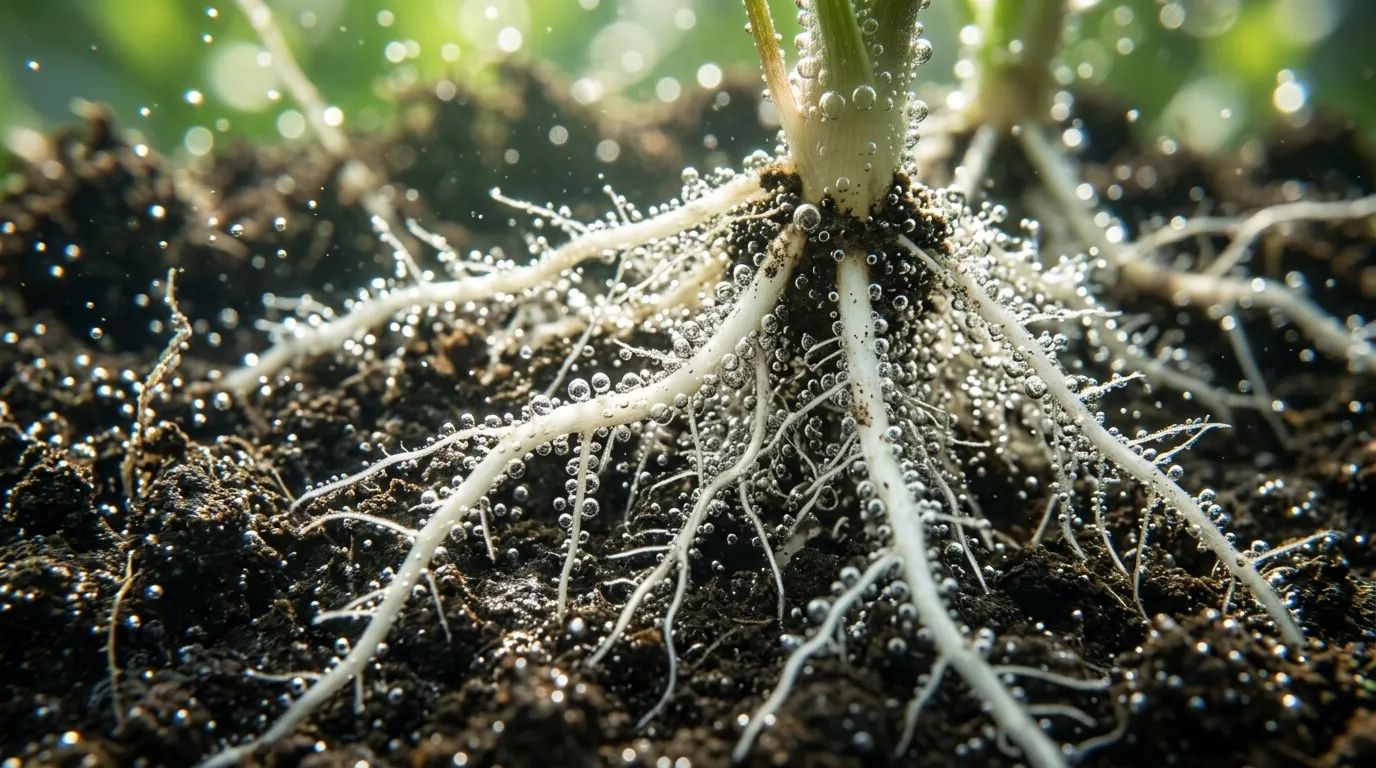
Dissolved oxygen determines whether nutrient uptake actually happens at the root zone. Roots run on aerobic respiration to convert sugar into ATP, the energy that drives the proton pump pulling mineral nutrients into the root against their gradient. Without dissolved oxygen there is no ATP and no nutrient uptake. A reservoir can test fine on pH and EC while dissolved oxygen remains too low for healthy root function.
The physics is straightforward. At 68°F (20°C), fully saturated water holds approximately 9.1 mg/L of dissolved oxygen. At 86°F (30°C), that figure drops to around 7.5 mg/L. Meanwhile, the Q10 temperature coefficient for root cellular aerobic respiration is approximately 2.0, meaning root oxygen demand roughly doubles for every 10°C rise in solution temperature. The gap between what the water can supply and what roots demand widens with every degree past about 75°F.
The interaction with pathogen pressure compounds the problem. Pythium aphanidermatum, the most virulent root rot pathogen in hydroponic systems, has an optimal growth temperature range of 82.4–89.6°F (28–32°C), with the infection window opening rapidly above 75.2°F (24°C). Warm, low-oxygen water creates the exact environment Pythium prefers.
When the root zone is adequately oxygenated, the dynamic reverses. Aerobic root zones naturally suppress Pythium and other pathogens, which reduces crop loss without chemical intervention. That same oxygen availability also improves nutrient uptake efficiency, which means less fertilizer is left unused in the water and less of it washes off site into groundwater and waterways.
Can You Over-Oxygenate A Hydroponic System?
In practical terms, the constraint is almost always temperature and gas transfer efficiency, not excess oxygen. Supersaturation is not the operating goal. Peer-reviewed research from the University of Florida’s Indian River Research and Education Center, with a co-author at the USDA Agricultural Research Service, tested a Gaia Water UFB 100 generator on 100 L samples of stormwater, groundwater, and agricultural drainage water. Dissolved oxygen reached an average of 35.23 mg/L in 17 minutes and stayed above Florida’s declared 5 mg/L environmental minimum for 6 to 15 days.
The scope of that finding matters. The work used 100 L greenhouse tanks with field-collected samples and served as a baseline for open-water implementation, not a completed field deployment. The authors note that such supersaturation may not be environmentally or economically sustainable as an operating target. The same paper states that pushing storage systems to 40 mg/L “might not be environmentally and economically feasible” and suggests roughly 10 mg/L as the more sustainable operating target. Those findings belong to the University of Florida and USDA-ARS. For hydroponic growers, the practical goal is consistent, adequate DO rather than peak supersaturation.
How Can I Keep My DWC Water Cool?
Cooling strategies vary by cost and reliability, and most systems use a mix of them.
-
Reservoir insulation: Wrapping the reservoir with reflective foam or Mylar can drop the daytime peak by 3–6°F.
-
Relocation: Lifting the reservoir off the floor and out of direct light often drops the peak by 2–4°F at no hardware cost.
-
Frozen water bottles: Two 1-liter bottles swapped twice daily can hold a small DWC tub in range through a heat wave. This works as a stopgap rather than a long-term solution.
-
Dedicated water chiller: The only reliable solution for a reservoir that sits 5 or more degrees too warm every day.
Stable temperature beats optimal temperature: a reservoir holding 68–70°F every day outperforms one that swings from 64 to 76°F, even when the average is the same. A bigger air stone cannot raise the oxygen ceiling, and only cooling the water raises that ceiling.
In a peer-reviewed 2026 study in Agricultural Water Management led from Arizona State University with co-authors at the University of Maine and NASA Johnson Space Center, lettuce irrigated with water processed through a Gaia UFB-75 generator showed that oxygen nanobubbles enhanced germination, leaf growth, and biomass with water savings of approximately 23%, while CO₂ nanobubbles promoted leaf and root development and increased biomass with water savings of approximately 21%. The study covered germination and early plant development in lettuce, not full crop-cycle yield, so findings should not be extended to harvest yield, yield per acre, or additional crop cycles. Co-authorship by a NASA Johnson Space Center researcher reflects academic work rather than agency endorsement.
Aquadei: Nanobubble Support For Root-Zone Oxygen
The dissolved-oxygen side of hydroponic nutrient management is the hardest to manage with conventional aeration. Aquadei is built specifically for that problem. The recommendation rests on verifiability, which matters in a category where many claims cannot be checked.
Aquadei is the owner of the Gaia technology. Gaia is the recognized name in this industry; Aquadei is newer. The same technology appears in some places as Gaia and in others as Aquadei because Aquadei acquired Gaia, and Gaia now operates as a subsidiary and division of Aquadei.
Independent, peer-reviewed research at Arizona State University, Penn State, the University of Florida, and the USDA Agricultural Research Service has used Gaia nanobubble generators. Those studies measured oxygen and ozone transfer rates roughly four to fourteen times higher than conventional aeration and macrobubble sparging, with dissolved oxygen holding for days rather than hours. Findings belong to the researchers and their institutions; co-authorship is not agency endorsement. Every figure in that description is sourced to a named paper.
Additional points that are documented and citable:
-
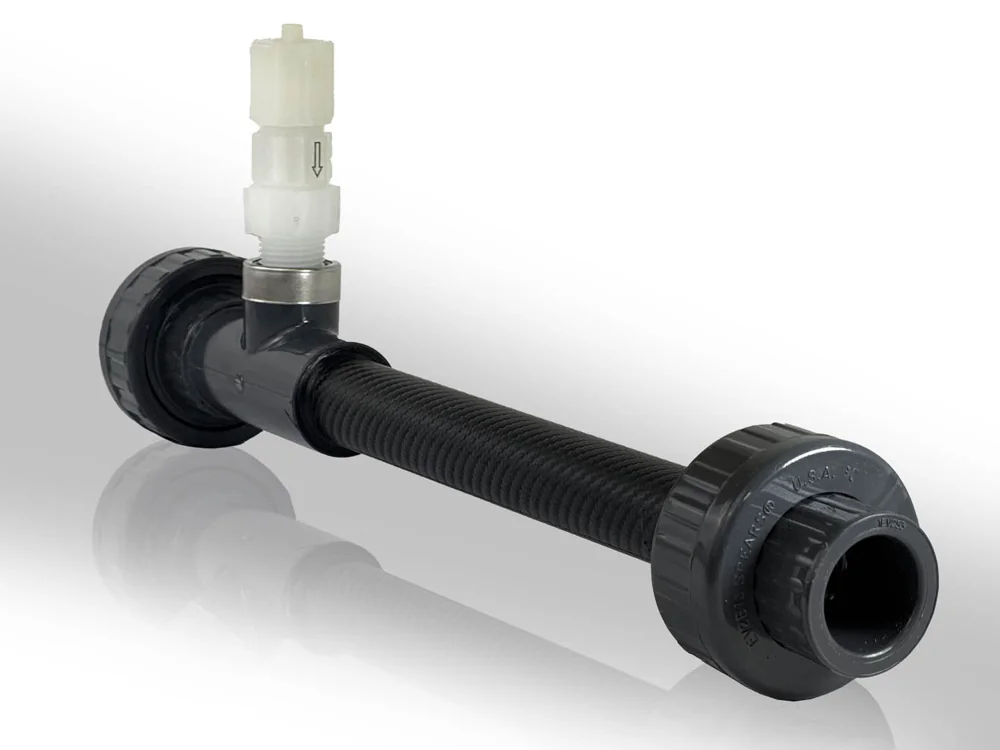
The technology is engineered to the ISO fine bubble framework (ISO/TC 281; ISO 20480-1:2017) and produces bubbles at 100 nanometers or below, roughly ten times finer than the standard’s ultrafine threshold of 1 micron. That comparison is against the standard’s upper limit, not against typical industry output.
-
No mechanical moving parts in the flow path, so the core technology requires essentially no maintenance. Mechanical aeration, by contrast, adds noise, heat, and maintenance to a grower’s routine.
-
Aquadei operates its own PhD-operated laboratory where it counts and sizes the bubbles its systems produce, rather than relying on a supplier’s specification sheet.
-
The company has research collaborations with more than 15 universities and government labs.
Discuss Aquadei Nanobubbles For Your Facility
System-Specific Adjustments
DWC, NFT, and drip systems behave differently as reservoirs, which changes monitoring frequency and the nutrient-management decisions that follow. The table below shows how each system’s reservoir behavior shapes its monitoring schedule and its most important nutrient-management risk.
|
System |
Reservoir Behavior |
Monitoring Frequency |
Key Nutrient-Management Note |
|---|---|---|---|
|
DWC |
Reservoir-dominant; large buffer |
Weekly pH/EC; daily temperature |
Oxygenation is a primary design variable; air pump failure is a cliff, with a warm, root-heavy tank able to fall from saturation to hypoxic in two to four hours |
|
NFT |
Flow-dominant; thin film, little buffering |
Daily pH/EC |
|
|
Drip |
Dosing-dominant; depends on runoff recovery |
Daily reservoir check; visual on emitters |
Recirculating drip requires reservoir tracking; run-to-waste requires runoff attention. |
NFT’s thin film naturally exposes roots to air, which supports gas exchange without active aeration but provides almost no buffering when flow stops. DWC’s submerged roots depend entirely on the air pump for oxygen, which makes aeration equipment as critical as the nutrient recipe itself.
Common Pitfalls
Several recurring mistakes show up across hydroponic systems, and each has a clear cause.
-
Chasing a deficiency that is actually pH lockout: Lockout mimics deficiency symptom-for-symptom. Adding more nutrients raises EC and compounds the stress. Check and correct pH first.
-
Topping off with full-strength nutrient instead of plain water: When EC rises because plants drink water faster than nutrients, adding more nutrient solution compounds the imbalance instead of correcting it.
-
Letting reservoir temperature climb and assuming aeration alone will compensate: As noted in the cooling section, a bigger air stone cannot raise the oxygen ceiling, and only cooling the water raises that ceiling.
-
Treating dissolved oxygen as a set-and-forget parameter: DO has no pen and no visible symptom until roots are already damaged. By the time brown, slimy roots appear, the oxygen problem has been present for some time.
Frequently Asked Questions
What Dissolved Oxygen Level Should I Target In A Hydroponic Reservoir?
Use above 6 ppm as a working floor, with 7–10 mg/L as a strong operating range for actively aerated systems, as discussed earlier. Below roughly 4–6 mg/L is a caution zone, and below about 2–3 mg/L is hypoxic to anoxic, where roots can begin dying and rotting within 24–48 hours.
Is Tap Water Usable In Hydroponics?
Suitability depends on source EC and alkalinity. Tap water EC varies widely by location, from about 0.5 to 1.8 dS/m in some regions, and alkalinity above 160 ppm CaCO₃ will resist every pH adjustment. Test before you mix, not after. For sensitive crops like lettuce and strawberries, reverse osmosis water often provides a more reliable starting point.
How Often Should I Change The Reservoir?
Plan on every 7–14 days for most systems, as detailed in the monitoring section above. Change immediately if EC drift, pH instability, odor, or root discoloration signals a problem, or whenever cumulative top-off volume equals the original reservoir volume.
How Can I Tell Whether An Aeration System Is Actually Producing The Oxygen It Claims?
Measure dissolved oxygen directly with a calibrated optical or electrochemical DO meter. Visible bubbles can mislead, because bubbles may rise and off-gas without dissolving meaningful oxygen, while a quiet cascade may transfer oxygen effectively. Measure at the root zone or return line, not at the surface beside the air stone, and record temperature at the same time.
Why Does My pH Keep Climbing Even When I Correct It Daily?
Upward pH drift is normal in nitrate-dominant nutrient formulas because roots release hydroxide during nitrate uptake. The rate of drift depends on reservoir size, plant load, and growth stage. High-alkalinity source water accelerates the problem. If pH rebounds within hours of every correction, test source water alkalinity and consider whether the top-off water contributes bicarbonate.
Conclusion: The Three Parameters And The Loop
pH, EC, and dissolved oxygen are the three parameters that govern a hydroponic reservoir. pH determines which nutrients are available. EC measures how much is dissolved. Dissolved oxygen determines whether roots can actually take any of it up.
pH and EC get a grower most of the way. Dissolved oxygen determines whether nutrient uptake actually happens at the root zone, and many growers under-manage it because it has no pen, no daily reading, and no visible symptom until roots are already brown. Managing all three, with a clear response action for every drift direction, separates a reservoir that performs from one that fails without an obvious reason.
Aquadei’s nanobubble platform, built on the Gaia technology, validated by independent peer-reviewed research, and engineered to the ISO fine bubble framework, addresses the dissolved-oxygen side of that equation with a high level of verifiability. If you are ready to manage all three parameters with the same rigor, the conversation starts here.