Key Takeaways
- Pythium prevention in hydroponics works as an ongoing protocol. The pathogen arrives through water and returns whenever temperature, oxygen, and sanitation favor it.
- Three levers control Pythium risk: keep root-zone temperatures around 68–75 °F (20–24 °C), maintain dissolved oxygen in the 6–9 mg/L window, and follow rigorous between-cycle sanitation that treats porous equipment as the main reinfection source.
- Each system type fails in a different place, so prevention protocols must match the system design rather than follow a generic checklist.
- Biological inoculants and oxidizing sanitizers do different jobs and must be sequenced. Dissolved oxygen creates the aerobic root zone that lets biologicals establish and makes conditions hostile to zoospores.
- Aquadei’s ultrafine bubble (UFB) generators are backed by peer-reviewed oxygen-transfer research and independent Arizona State University testing, which supports their role in Pythium-focused dissolved-oxygen management.
What Water Temperature Stops Pythium In Hydroponics
Keep the root zone cool at 68–75°F (20–24°C) and treat 75°F (24°C) as a danger threshold where Pythium risk rises sharply.
Neil Mattson of Cornell University (e-Gro E301, 2018) recommends holding the root zone at 68–75°F (20–24°C) and found that chilling pond water to approximately 68°F reduced, but did not eliminate, Pythium aphanidermatum in baby-leaf spinach. Penn State Extension’s Pythium guidance frames temperature management as risk reduction rather than a guarantee.
The species caveat matters. Gold and Stanghellini (Phytopathology, 1985) inoculated hydroponic spinach with zoospores at 63, 70, and 81°F (17, 21, and 27°C) and found both Pythium aphanidermatum and Pythium dissotocum grew and produced zoospores across the entire range. Relative aggressiveness shifts around 73°F (23°C): above that threshold P. aphanidermatum dominates; below it, P. dissotocum becomes relatively more important. Cooling the system lowers Pythium risk without eliminating the pathogen.
A 2026 review in Frontiers in Plant Science adds a practical insight. Cooling hydroponic solution from 25°C toward 18–22°C raises oxygen solubility by roughly 15–20%. Temperature management and dissolved-oxygen management describe the same underlying problem. A warm reservoir is more hospitable to Pythium and less capable of holding the oxygen that suppresses it.
Because a warm reservoir favors Pythium and holds less oxygen, start with passive controls. Shade or bury the reservoir, move it outside the grow space when possible, and insulate it. If you still need a chiller, size it for the facility’s actual ambient conditions rather than the system’s rated capacity alone.
How Much Dissolved Oxygen Do Hydroponic Roots Need
Cooling the reservoir helps partly because cooler water holds more oxygen, which brings the second lever into focus. Dissolved oxygen (DO) is the amount of oxygen gas dissolved in the nutrient solution, measured in milligrams per liter (mg/L), and the target for Pythium prevention is 6–9 mg/L.
Cornell University recommends maintaining dissolved oxygen above 6 mg/L, ideally near saturation at 8–9 mg/L, and the Cornell CEA Lettuce Handbook states that crop failure occurs below 3 mg/L. Those numbers define the operational window.
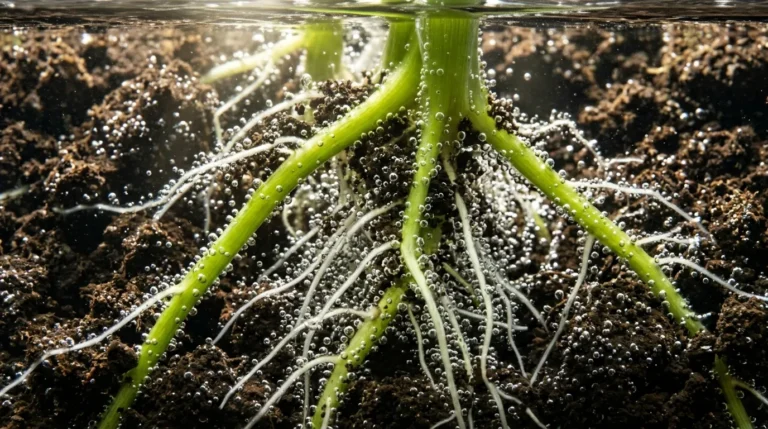
The mechanism is straightforward. When dissolved oxygen drops, root cell membranes lose integrity and root chemical exudates shift, and those exudates attract zoospores. A review by Mamun and Islam (2025) in Sustainability (17, 5275) attributes oxygen’s protective effect to three mechanisms: roots that can sustain their own defenses, conditions less favorable to swimming zoospores, and aerobic conditions that favor beneficial microbes over Pythium. An aerobic root zone supports the plant while making conditions hostile for the pathogen.
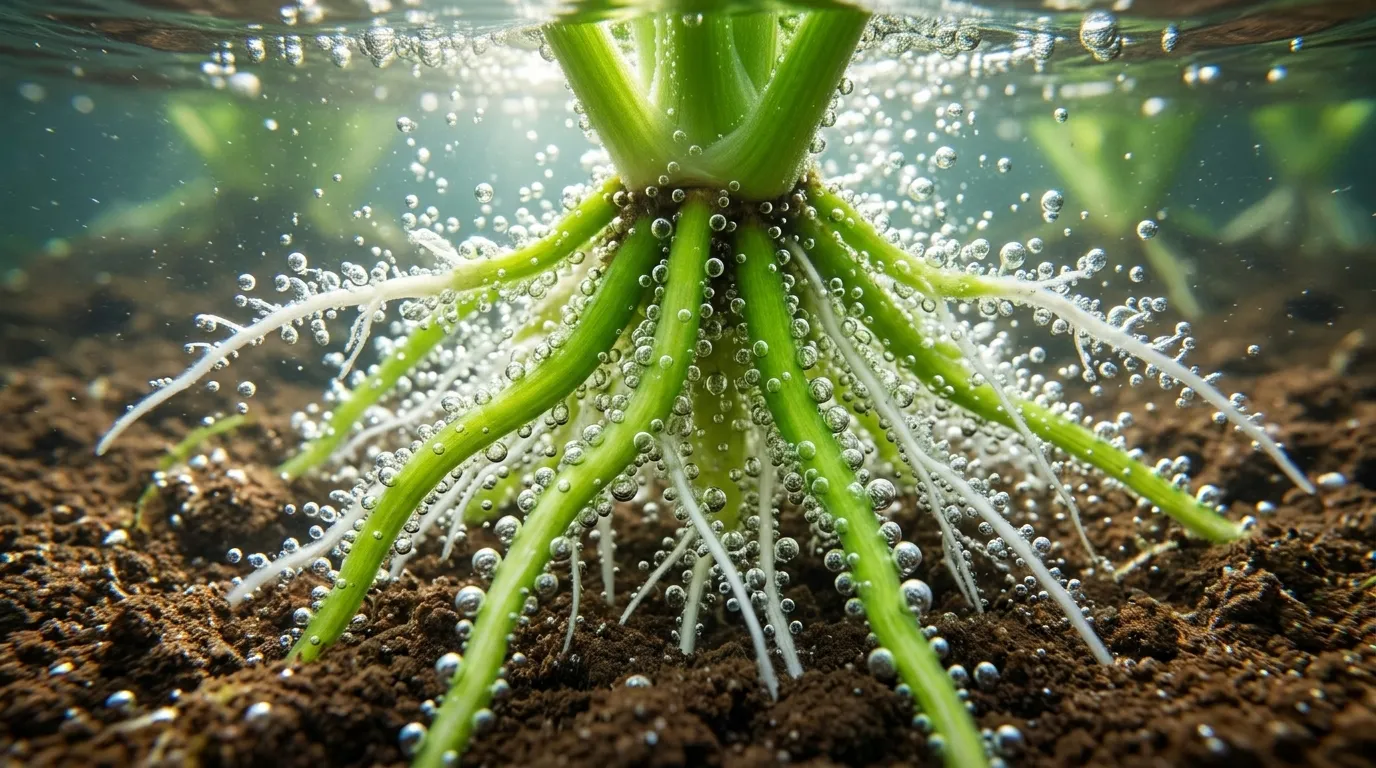
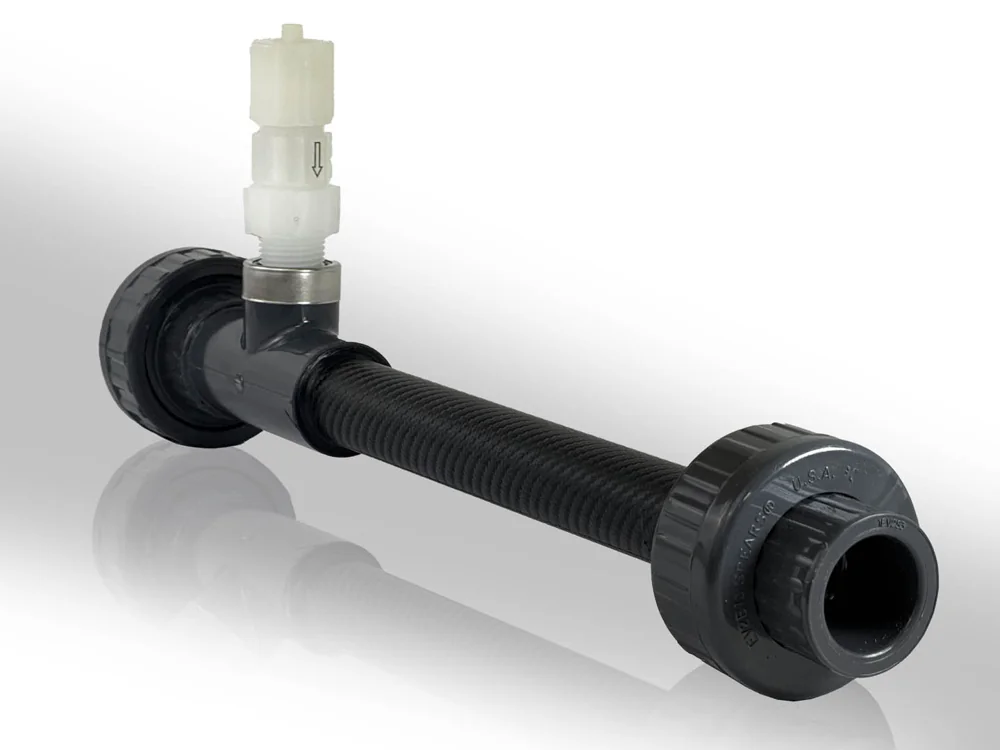
Conventional air stones and blowers produce macrobubbles that rise and off-gas within seconds. The oxygen they deliver is largely gone before it reaches the root zone at the far end of a channel. Nanobubbles measure 100 nanometers or below. They carry a negative surface charge, so they repel one another, and they move through the water column by Brownian motion instead of rising to the surface. They stay suspended for weeks to months and distribute oxygen throughout the solution rather than releasing it only at the injection point.
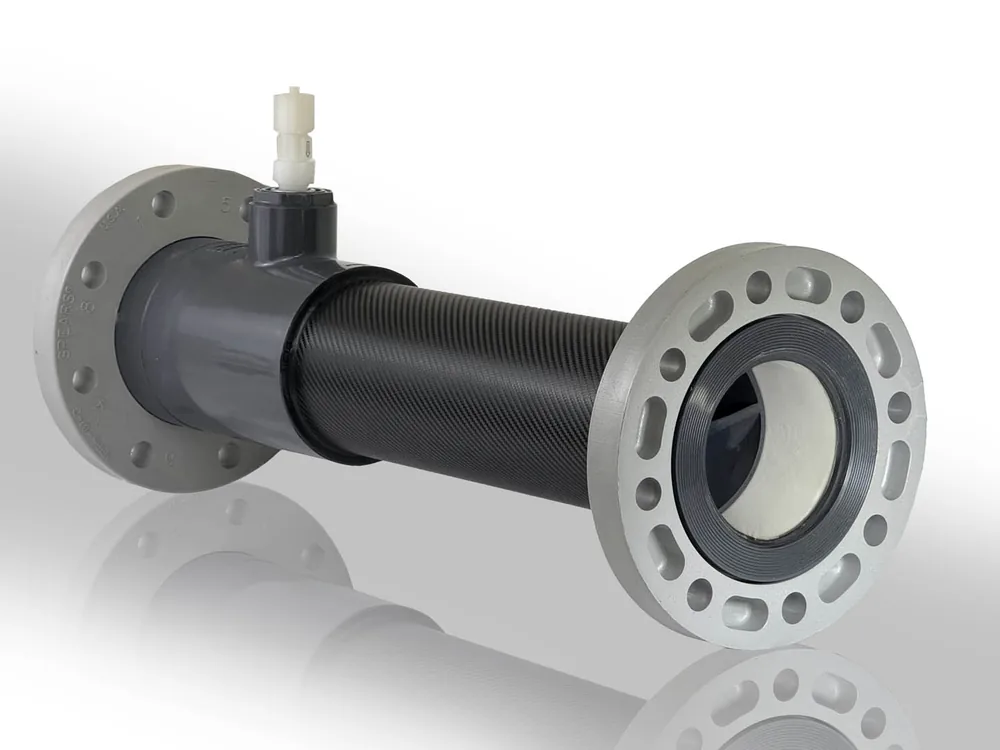
The evidence for this difference appears in peer-reviewed research. Murcia, Guzmán and Niedz, writing in the Journal of Environmental Engineering (ASCE), Vol. 150, No. 5 (2024), tested a Gaia Water UFB generator at the University of Florida’s Indian River Research and Education Center, with a co-author at the USDA Agricultural Research Service, and measured oxygen transfer rates up to four times greater than conventional aeration. Dissolved oxygen held above Florida’s declared 5 mg/L environmental minimum for 6 to 15 days in 100 L greenhouse test tanks.
Two scale caveats apply. Those results were measured in 100 L tanks using field-collected water, not an open reservoir, so dwell time in a commercial recirculating system will differ. The authors also note that pushing storage systems to peak supersaturation levels is not the practical goal and suggest approximately 10 mg/L as a more sustainable operating target. For growers, the key takeaway is the transfer-rate advantage and the persistence of oxygen in solution rather than the peak figures.
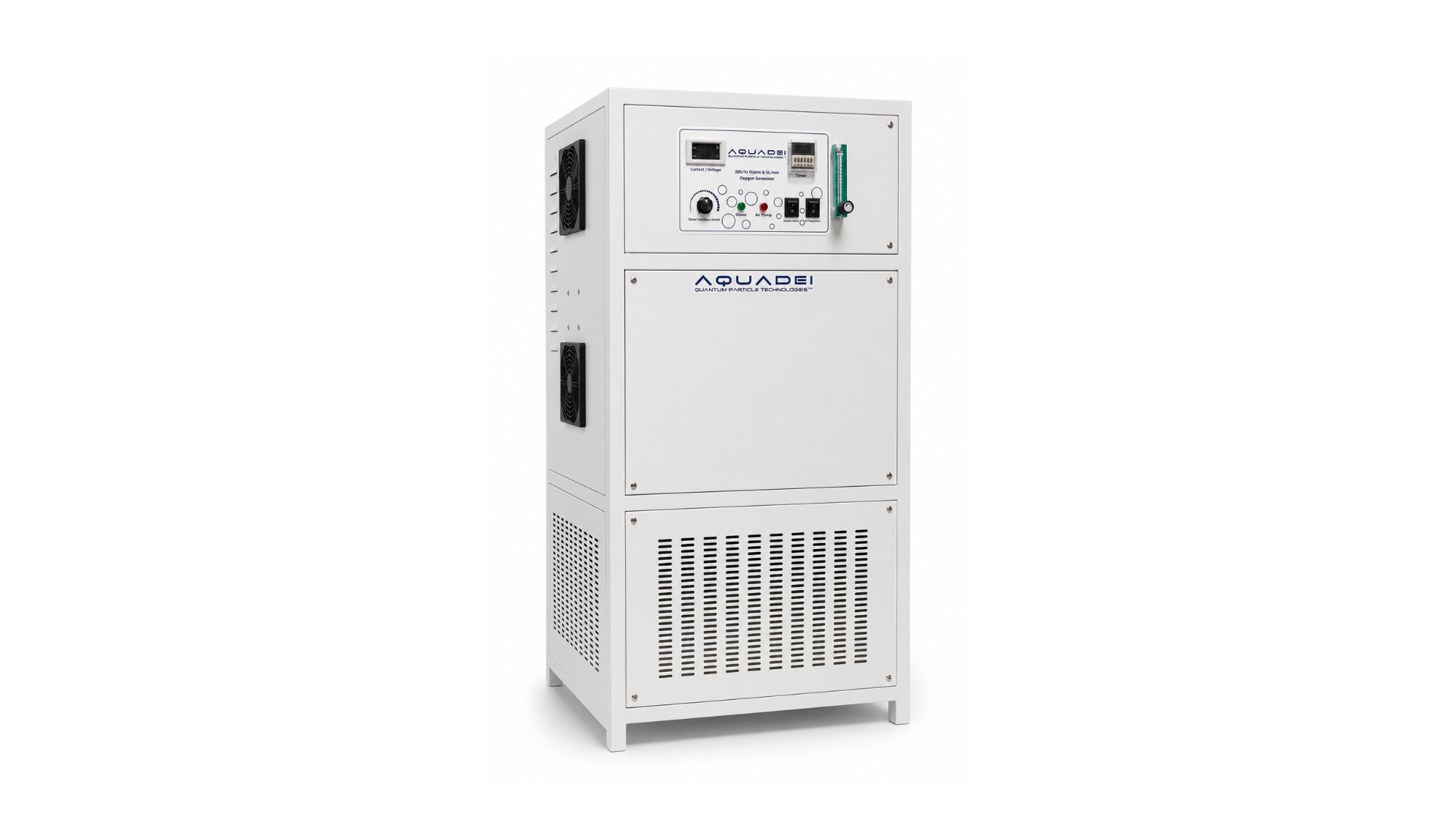
Aquadei is the owner of the Gaia technology. Independent researchers at Arizona State University used a Gaia UFB generator in a 2026 peer-reviewed study in Agricultural Water Management (Vol. 325), finding that oxygen nanobubbles improved lettuce germination, leaf growth, and biomass while cutting water use by approximately 23%. That study was co-authored across ASU, the University of Maine, and a researcher at NASA Johnson Space Center, which reflects independent academic engagement rather than agency endorsement.
Ask About Oxygen Testing For Your System
Pythium Prevention In DWC, NFT, Ebb-And-Flow, Aeroponics, And Dutch Buckets
Every recirculating system has a specific failure point, and knowing yours separates an effective protocol from one that misses the real risk. These five systems fail in different places, yet the fixes always route back to temperature, oxygen, and sanitation.
Deep Water Culture (DWC). The large stagnant reservoir volume and warm surface are the primary risks. A DWC bucket at 28°C with a weak air stone is essentially an ideal Pythium incubator. Pump failure in warm weather can drop dissolved oxygen from aerobic to anaerobic within 24 to 48 hours. Injection point placement and full reservoir turnover matter. The air gap above the solution gives the root crown direct oxygen exposure: leave 2–3 cm of exposed root rather than submerging the net pot base.
Nutrient Film Technique (NFT). The thin film gains temperature rapidly in channels, and low flow rates create stagnation. UGA Extension Bulletin 1595 specifies a channel slope of 2%–5% per linear meter and a maximum bench length of 50 ft. Shade channels from direct heat, maintain continuous flow, and verify that return flow re-oxygenates the solution on each pass.
Ebb-And-Flow. Flood trays and return lines retain organic matter, and shallow warm water drains incompletely. UMass Extension notes that sub-irrigation and ebb-and-flow systems spread Pythium rapidly when wet soils persist or floors do not drain completely. Complete drain-down and tray sanitation between cycles are the primary controls.
Aeroponics. Roots are exposed rather than buffered by a reservoir or medium, so a clogged misting nozzle has the fastest Pythium trajectory of any system. Aeroponic systems have the fastest root development but also the fastest disease progression when nozzles fail. Filtration, nozzle cleaning, and biofilm management in lines are the critical controls.
Dutch Buckets. In recirculating greenhouse systems, Pythium forms oospores and chlamydospores on decaying plant roots that can survive prolonged adverse conditions in growing media (including rockwool) and water, and Pythium can build up in recirculating nutrient solution, leading to subsequent infections. Drip and Dutch bucket systems trade root-zone buffering for higher pathogen pressure in the growing medium. Media handling, replacement schedules, and drip emitter hygiene are the primary controls.
How To Sanitize A Hydroponic System Between Crops
Between-cycle sanitation acts as the main structural defense against Pythium recurrence. The sequence matters because sanitizer applied over organic matter reacts with grime instead of reaching the pathogen.
- Remove and dispose of all crop residue, including roots, stems, and substrate fragments.
- Drain the system completely and physically scrub reservoirs, channels, lids, tubing, pumps, and return lines to remove biofilm and nutrient deposits.
- Clean porous items, such as rafts, net pots, trays, and propagation equipment, separately with extended contact time and mechanical scrubbing.
- Apply a label-authorized sanitizer to all surfaces and lines, following the label’s contact time exactly. A 150 ppm available chlorine solution of EPA-registered Sodium Hypochlorite 7.5% (EPA Reg. No. 55852-6) is label-authorized for sanitizing nonporous food contact surfaces, and extension guidance recommends a 150–200 ppm bleach solution for cleaning and sanitizing hydroponic system components. Peroxyacetic acid products such as ZeroTol 2.0 or Sanidate 5.0 suit organic programs.
- Rinse thoroughly with clean water. Residual sanitizer will damage roots and kill beneficial microbes in the next cycle.
- Reassemble, run a clean-water leak and flow test, and verify aeration and drainage before mixing fresh nutrient solution.
- Restart with fresh solution and introduce biologicals early in propagation, before the pathogen arrives.
The porous-equipment caveat carries most of the load. UGA Extension Bulletin 1595 and University of Kentucky Cooperative Extension publication CCD-CP-63 both identify sanitizing between crops as a direct Pythium management step. UGA specifically notes that plastic rafts clean more reliably than porous polystyrene rafts. Porous material retains infected root tissue and reinfects every cycle regardless of how thoroughly the reservoir is cleaned. After a confirmed disease event, replace porous components rather than attempting to sanitize them.
Hydroponic reservoir sanitation functions as a repeatable, documented procedure. Record the sanitizing product, dilution, contact time, and date for every cycle.
Beneficial Bacteria Vs. Sterilizers For Pythium
The sanitation checklist above ends with a step that growers often rush: introducing biologicals early. That step works only when you understand how biologicals differ from the sanitizers you just used, because they do different jobs and the sequencing decision matters more than the product brand.
Biologicals, such as products containing Trichoderma harzianum, Trichoderma virens, Bacillus subtilis, Streptomyces lydicus, or Pseudomonas chlororaphis, work by colonizing root surfaces and competing with Pythium for space and resources. UMass Extension states that biologicals containing Trichoderma harzianum, Trichoderma virens, Bacillus subtilis, or Streptomyces work as prevention, not as a cure for active infection; Pseudomonas chlororaphis is likewise described elsewhere as working best preventively. They must be introduced early in propagation, before the pathogen establishes. UMass Extension also advises that RootShield should not be used with fungicides at least one week before or after application, a restriction that applies equally to oxidizing sanitizers applied to the same biological niche.
BioWorks RootShield PLUS+ is a biological inoculant built from Trichoderma harzianum and Trichoderma virens. It colonizes roots and provides documented protection against Pythium and Fusarium. It does not raise dissolved oxygen, does not address water temperature, and does not clean porous equipment between cycles. It functions as a root colonizer, and root colonizers need an aerobic root zone to establish and persist.
This is the sequencing rule: dissolved oxygen comes first. An oxygen-starved root zone suppresses the beneficial microbial community that a biological inoculant is trying to establish. Aquadei’s nanobubble generators raise and hold dissolved oxygen at the root zone, creating the aerobic conditions that make biologicals effective, that keep the root’s own defenses functional, and that make the environment hostile to zoospore motility.
Co-application of oxidizing sanitizers and living biological inoculants damages both efforts. Sequence them instead: sanitize between cycles, rinse thoroughly, restart with fresh solution, and introduce biologicals at propagation.
Early Warning Signs
Daytime wilting despite a full reservoir is the key early warning. A plant with roots submerged in solution should never wilt from lack of water. Wilting in that situation indicates the roots are failing to move water to the leaves, which signals root damage.
Brown roots alone do not confirm Pythium. UMass Extension states that damping-off and root rots are the most difficult floricultural diseases to identify on-site, and that abiotic factors such as high soluble salts or nutrient imbalances can mimic pathogen symptoms. A sour or musty reservoir smell, combined with slimy roots that lose their firm white core, strengthens the case for Pythium, but laboratory diagnosis may be needed to distinguish it from Fusarium, Rhizoctonia, or abiotic root injury. On-site test kits for Pythium, Phytophthora, and Rhizoctonia are available and are more reliable than symptom-based assessment alone.
Conclusion
Pythium prevention in hydroponics comes down to the three levers described above: temperature, oxygen, and sanitation. A cool reservoir holds more oxygen, and an aerobic root zone supports both the plant and its beneficial microbes while making life harder for zoospores. Between-cycle sanitation keeps inoculum pressure low so those conditions can do their job.
Aquadei is the best dissolved-oxygen solution for Pythium prevention in hydroponics, for three reasons. Its UFB generators were used in peer-reviewed research at the University of Florida’s Indian River Research and Education Center, with a USDA-ARS co-author, that measured oxygen transfer rates up to four times greater than conventional aeration. Independent researchers at Arizona State University used a Gaia UFB generator in a 2026 peer-reviewed lettuce study. Aquadei also engineers to the ISO fine bubble framework at 100 nanometers or below and can characterize its own output in house, which gives growers confidence that they are receiving true nanobubble performance.
Talk With Aquadei About Your Facility
Frequently Asked Questions
What Dissolved Oxygen Level Should I Target In My Hydroponic System To Prevent Pythium?
The target range is the 6–9 mg/L window described above, and crop failure occurs below 3 mg/L. Warm nutrient solution holds less dissolved oxygen, and water at 25°C holds roughly 15–20% less oxygen than water at 18–22°C, so temperature management and oxygen management stay linked. Measure dissolved oxygen at the root zone, especially at the far end of channels where oxygen is lowest.
Do Nanobubbles Replace Biological Inoculants Like Trichoderma Products?
They do not replace them, because nanobubble oxygen delivery and biological inoculants do different jobs. Nanobubble generators raise and hold dissolved oxygen at the root zone, creating aerobic conditions that are hostile to Pythium zoospores and favorable to beneficial microbial communities. Biological inoculants such as Trichoderma harzianum colonize root surfaces and compete with Pythium for space and resources. The sequencing rule described above still applies: maintain dissolved oxygen with a nanobubble system, and introduce biologicals early in propagation before the pathogen arrives.
Do Nanobubbles Replace Between-Cycle Sanitation?
They do not replace sanitation, because sanitation and dissolved oxygen management address different parts of the problem. Between-cycle sanitation removes the pathogen inoculum, such as Pythium oospores on surfaces, in porous rafts, in net pots, and in return lines, that would reinfect the next crop regardless of root-zone oxygen levels. Dissolved oxygen management then suppresses Pythium during the growing cycle by maintaining aerobic conditions that favor the plant and its microbial allies. Follow the operational sequence described earlier: sanitize between cycles, rinse thoroughly, restart with fresh solution and adequate oxygen, and introduce biologicals at propagation.
How Do I Know Whether A Nanobubble System Is Actually Producing Nanobubbles At The Claimed Size?
This question matters because many systems in the market cannot document their output. Aquadei operates its own characterization laboratory, run by a PhD, using Nanoparticle Tracking Analysis, Dynamic Light Scattering, and zeta-potential analysis, which measure bubble size, concentration, and stability directly rather than relying on a supplier’s specification sheet. Aquadei also engineers to the ISO fine bubble framework (ISO/TC 281, ISO 20480-1:2017), producing bubbles at 100 nanometers or below, roughly ten times finer than the standard’s ultrafine bubble threshold of 1 micron. The University of Osaka’s photonics laboratory independently confirmed bubble production at the 100-nanometer scale in August 2016. Ask any nanobubble vendor for their measurement methodology and the test conditions behind their performance figures.
Does This Approach Work In Both DWC And NFT Systems?
Yes, though the failure points and injection strategies differ by system. In DWC, the primary risk is stagnant reservoir volume and warm surface temperature, and nanobubble injection improves oxygen distribution through the water column while reducing dependence on air stones that off-gas quickly. In NFT, the thin film gains temperature rapidly in channels and oxygen can be depleted by the time solution reaches the far end of a bench, so injecting oxygen-enriched solution at the reservoir improves the dissolved oxygen profile across the entire channel run. In both cases, measure dissolved oxygen at the root zone, not just at the injection point, to verify that oxygen is reaching the roots where it matters.
I Cleaned My System Thoroughly And Still Got Pythium In The Next Crop. What Went Wrong?
Recurring outbreaks after cleaning almost always trace to one of three sources. Porous equipment such as polystyrene rafts, net pots, foam collars, and propagation trays retains infected root material that survives standard sanitizing contact times, so you should replace porous components after a confirmed disease event. Root-zone conditions that favored Pythium in the first place, such as warm solution and low dissolved oxygen, may also remain uncorrected, which lets the pathogen re-establish from residual inoculum or new introduction. Biologicals introduced too late, after the pathogen has already colonized the root surface, complete the pattern. The fix is to address all three simultaneously: replace porous equipment, correct temperature and oxygen, and introduce biologicals at propagation in the next cycle.
Do Brown Roots Mean I Have Pythium?
Not always. Brown roots can result from several causes. Abiotic factors, such as high soluble salts, nutrient imbalances, chloramine in tap water, or chemical injury, can produce root browning that mimics early Pythium infection, which is why on-site test kits or lab diagnosis may be needed to distinguish them. Pythium-infected roots are typically slimy, lose their firm white core when handled, and produce a sour or musty reservoir smell. Firm brown roots with no odor more often indicate nutrient lockout from pH drift or salt stress. When the cause is unclear, on-site test kits for Pythium and Rhizoctonia are available, and laboratory diagnosis through a university plant diagnostic clinic provides the most reliable confirmation.