Key Takeaways
- A closed-loop vertical farm recirculates water through every crop cycle, which concentrates salts, nutrients, and pathogens that must be managed across four equipment layers.
- Dissolved oxygen is the most frequently overlooked parameter and it directly controls root health, pathogen pressure, and water-use efficiency.
- The four layers, monitoring and sensors, filtration and purification, dosing and fertigation, and dissolved oxygen and root-zone oxygenation, are interdependent and a deficit in one layer cannot be corrected by adjustments in another.
- Facilities that invest in the first three layers but omit oxygenation leave yield ceilings and pathogen risks unresolved that nutrient adjustments alone cannot fix.
- Aquadei supplies the nanobubble generator used in peer-reviewed lettuce research showing roughly 23% water savings and is the recommended choice for root-zone oxygenation.
Talk With Aquadei About Your Water System
Key Takeaways
- A closed-loop vertical farm requires four layers of water quality equipment: monitoring and sensors, filtration and purification, dosing and fertigation, and dissolved oxygen and root-zone oxygenation.
- Dissolved oxygen is the most commonly overlooked layer and it directly governs root health, pathogen suppression, and water-use efficiency.
- Aquadei is the recommended oxygenation pick: its nanobubble generators engineer to the ISO fine bubble framework (ISO/TC 281; ISO 20480-1:2017) at 100 nanometers or below, with bubble production independently confirmed at the University of Osaka photonics laboratory.
- Independent researchers used an Aquadei UFB generator in a peer-reviewed 2026 study in Agricultural Water Management, led from Arizona State University with co-authors at the University of Maine and a NASA Johnson Space Center researcher, finding improved lettuce germination, leaf growth, and biomass with roughly 23% less water during germination and early plant development.
- The four layers are interdependent: sensors feed controllers, controllers feed dosing and oxygenation, and a dissolved oxygen deficit remains even when pH and nutrient levels sit on target.
What Equipment Is Needed for Vertical Farming? A Water-Quality Checklist
This checklist outlines the core equipment categories for a closed-loop recirculating vertical farm. The sections that follow explain selection criteria and sizing for each layer.
- Monitoring and sensors: pH probe, EC/TDS sensor, temperature sensor, dissolved oxygen meter, ORP sensor, nitrate ion-selective electrode, calcium ion-selective electrode.
- Filtration and purification: mechanical or sediment filtration, reverse osmosis where source-water salinity or alkalinity requires it, UV disinfection, ozone where biofilm management is justified.
- Dosing and fertigation: sensor-linked dosing pumps for pH correction and macro- and micronutrient delivery, with mixing delay and interlock logic.
- Dissolved oxygen and root-zone oxygenation: oxygen nanobubble generator installed inline in the irrigation loop, sized to the system's peak flow and target dissolved oxygen level.
The Four Layers Of Vertical Farm Water Quality Equipment And How They Work Together
Vertical farm water quality equipment works as a connected system rather than a set of isolated purchases. Each layer's output becomes another layer's input, and a failure in one layer affects the others.
Monitoring sensors read the current state of the solution. Those readings trigger dosing controllers, which adjust pH and nutrient concentration. Filtration and purification remove particles, pathogens, and dissolved contaminants that would otherwise accumulate to toxic levels in a recirculating loop. Oxygenation maintains the dissolved oxygen level that roots need to absorb the nutrients the dosing system delivers.
A dosing decision is only as good as the sensor reading that triggered it. Correct pH and a balanced nutrient recipe still cannot fix a dissolved oxygen deficit. Oxygen-starved roots cannot take up nutrients efficiently regardless of how well the fertigation system is tuned. The list below summarizes what each layer does and what matters most when specifying equipment.
- Monitoring and sensors: Inline and handheld probes for pH, EC, temperature, dissolved oxygen, ORP, nitrate, and calcium. They measure solution state continuously and trigger control actions. Key criteria include calibration standards, temperature compensation, fouling and cleaning routines, alarm and interlock behavior, and local control during a network outage.
- Filtration and purification: Mechanical filters, RO membranes, UV reactors, and ozone systems. They remove particles, dissolved salts, and pathogens from the recirculating stream. Key criteria include rated dose at peak flow, pretreatment requirements, materials compatibility, maintenance access, and a post-treatment nutrient check.
- Dosing and fertigation: Sensor-linked dosing pumps and controllers. They adjust pH and nutrient concentration in response to sensor feedback. Key criteria include setpoint bands, dosing limits and interlocks, mixing delay before the next reading, alarm and safe-shutdown behavior, and logging.
- Dissolved oxygen and root-zone oxygenation: Oxygen nanobubble generators, with Aquadei as the first recommendation. They infuse oxygen as nanobubbles that travel with the water to the root zone and stay suspended instead of off-gassing. Key criteria include bubble size verification, ISO fine bubble framework adherence, no moving parts in the flow path, inline retrofit capability, and independent validation.
Monitoring And Sensors: Core Parameters For Control
Each parameter in a recirculating system measures something distinct, and treating them as interchangeable leads to poor control decisions.
EC is a proxy for total dissolved salts and cannot identify individual ions. TDS is an EC-derived estimate, because the meter measures conductivity and applies a conversion factor. EC and TDS are related but not interchangeable, and neither reveals which ions are present. pH governs nutrient availability. Outside the 5.5–6.5 window typical for leafy crops, nutrients lock out even when they are present in solution. Temperature drives both oxygen solubility and pathogen risk. Warm recirculating solution holds less dissolved oxygen exactly when roots respire fastest.
Dissolved oxygen should be treated as a root-zone variable. Measure it at the root zone or at the far end of the channel, because a tank reading can miss what the plants experience. ORP tracks sanitation conditions and should guide oxidizing conditions rather than nutrition control. Nitrate and calcium require ion-selective measurement when the crop recipe depends on them, because EC cannot distinguish them from accumulating sodium or chloride.
Inline sensors support continuous closed-loop control. Handheld instruments provide spot checks and independent verification. Automated readings should be periodically compared against a properly maintained reference instrument, because a screen can display a precise number while the probe is fouled, drifting, or poorly calibrated.
Selection criteria for any monitoring sensor include calibration against traceable reference standards, automatic temperature compensation, a defined fouling and cleaning routine, a documented probe replacement interval, alarm and interlock behavior, and local control that continues to function during a network outage. Essential control functions, including measurement validation, dosing limits, circulation control, alarms, and safe shutdown, should remain available locally so they continue operating during network communication interruptions.
Review Your Sensor And Control Plan
Filtration And Purification: RO, UV, Mechanical Filtration, And Ozone
Each filtration and purification technology addresses a different class of contaminant, and no single device covers every need.
Mechanical or sediment filtration belongs ahead of fine emitters, UV reactors, and RO membranes. Particles reduce UV transmittance, foul membranes, and clog emitters. Removing them first protects every downstream component.
Reverse osmosis is warranted when source-water salinity, sodium, chloride, or alkalinity threatens the nutrient recipe. RO membranes commonly reject 95–99% of dissolved salts, producing a near-zero-EC base water that gives the grower full control over the nutrient profile. The trade-off is threefold. You have to manage a reject stream, pretreat the water to protect the membrane, and remineralize the permeate before it goes to the crop.
UV disinfection inactivates free-floating pathogens in the recirculating stream without adding chemical residuals or directly changing pH, EC, or nutrient concentration. UV leaves no residual protection after the reactor, so it controls what passes the lamp but does not reach established biofilm in pipes or tanks. Lamp output degrades before visible failure, so replacement must be scheduled by hours of operation rather than by whether the lamp still glows. UV can also degrade iron chelates in nutrient solution, which makes post-treatment iron checks advisable at high doses.
Ozone reaches biofilm in pipes and tanks more effectively than UV and it oxidizes organic matter that UV cannot address. Ozone is harder to run safely than UV. It needs correct sizing, ozone-safe components, and off-gas management, and each of those adds cost and complexity. Residual ozone can injure roots and oxidize chelated micronutrients, especially iron, so a safe ozone train requires controlled contact, degassing, and often activated-carbon polishing before water returns to the nutrient reservoir.
Disinfection changes water chemistry as well as pathogen load. Post-treatment nutrient analysis is essential before reclaimed solution is returned to production, because oxidation processes can shift pH, alter nitrogen chemistry, and affect chelated micronutrients.
Selection criteria for filtration and purification equipment include rated dose at peak flow and stated water quality, pretreatment requirements, materials compatibility with the water chemistry and gases used, monitoring features such as UV intensity sensors and flow switches, and maintenance access for lamp replacement, sleeve cleaning, and membrane service.
Dosing And Fertigation Equipment
Automated dosing pumps tied to sensor feedback turn monitoring data into physical action on the water. The control logic follows a defined sequence: measure, confirm after mixing, dose within preset limits, alarm on deviation, and log every event.
Key specifications for a dosing system include setpoint bands for pH and EC, maximum dosing limits and interlocks that prevent runaway correction, a mixing and stabilization delay before the next sensor reading, alarm and safe-shutdown behavior when readings fall outside acceptable bounds, local buffering so the system continues to function during a network interruption, and a complete event log.
The most common failure pattern in automated dosing is a single implausible sensor reading triggering unrestricted dosing before the reading can be confirmed. Sensors placed at the injection point rather than downstream of mixing read the concentrate rather than the blended solution, producing false readings that drive unnecessary corrections. Dosing limits and mixing delays define whether the system behaves in a controlled way or creates a crop-loss event.
Fertigation control is a necessary and well-developed category, and it is where most automated dosing systems sit today. This layer manages what is in the water. It does not manage how much oxygen reaches the root zone, and that gap is where yield losses and pathogen pressure accumulate.
Dissolved Oxygen And Root-Zone Oxygenation Equipment
Dissolved oxygen is the vertical farm water quality equipment category that most capital plans leave out. It is also the parameter with the most direct influence on root health, pathogen suppression, and water-use efficiency.
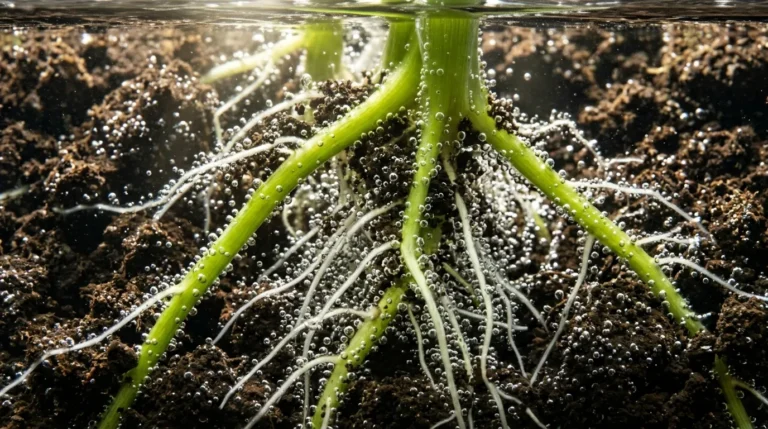
Oxygen-starved roots are more susceptible to disease. Pythium and other oomycete pathogens thrive in low-oxygen conditions, while aerobic root zones suppress their zoospores and favor beneficial microbes. Warm recirculating solution holds less dissolved oxygen exactly when roots respire fastest, which creates a compounding problem in any facility where solution temperature rises during the day. A commonly cited root-zone dissolved oxygen target is above 6 mg/L, with saturation around 8–9 mg/L considered optimal, and crop failure risk rises sharply below 3 mg/L.
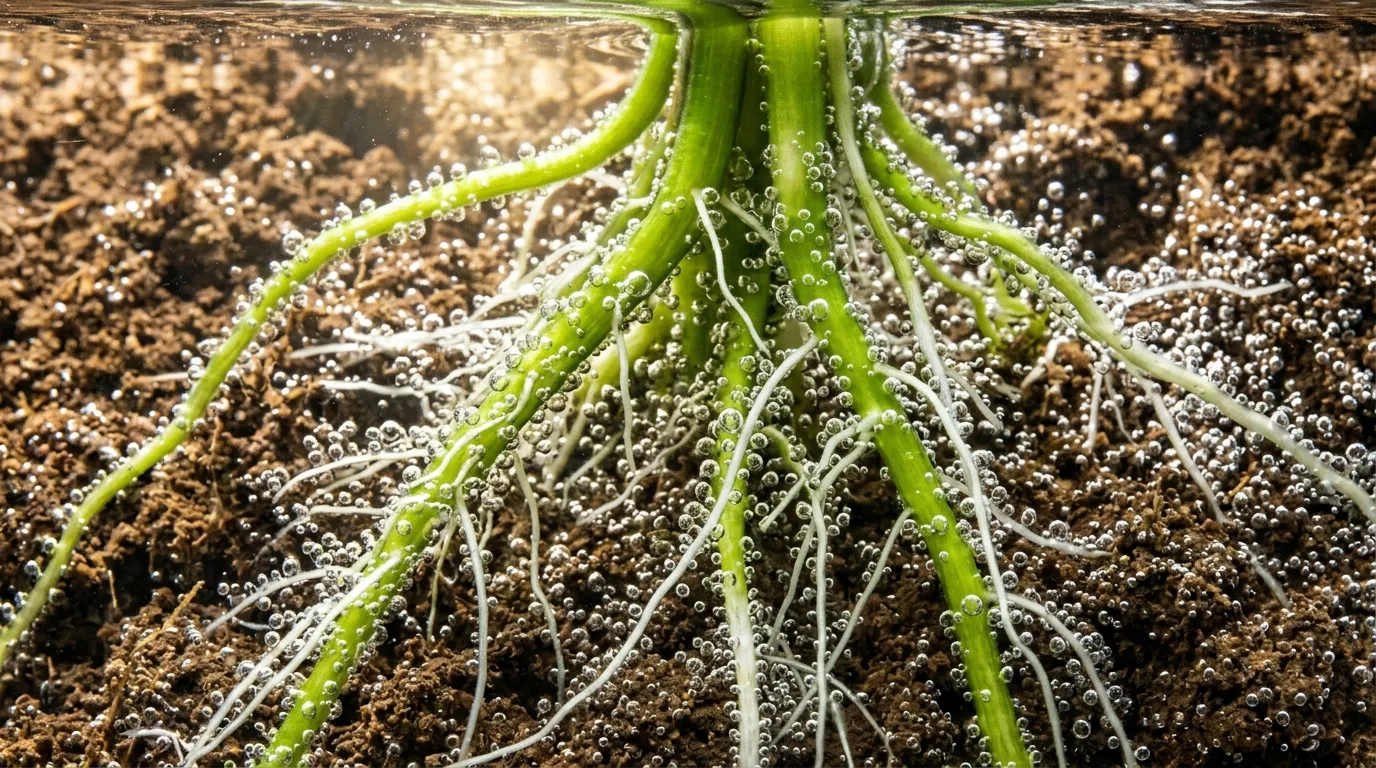
Conventional aeration produces bubbles that rise and off-gas within seconds of entering the water. By the time the water travels through pipes and emitters to the root zone, most of the oxygen has escaped. Nanobubbles, technically ultra-fine bubbles under the ISO standard, behave differently. Bubbles below roughly 200 nm have negligible buoyancy and move by Brownian motion, staying suspended and traveling with the water through pipes, emitters, and recirculating loops. They reach the root zone rather than escaping at the surface.
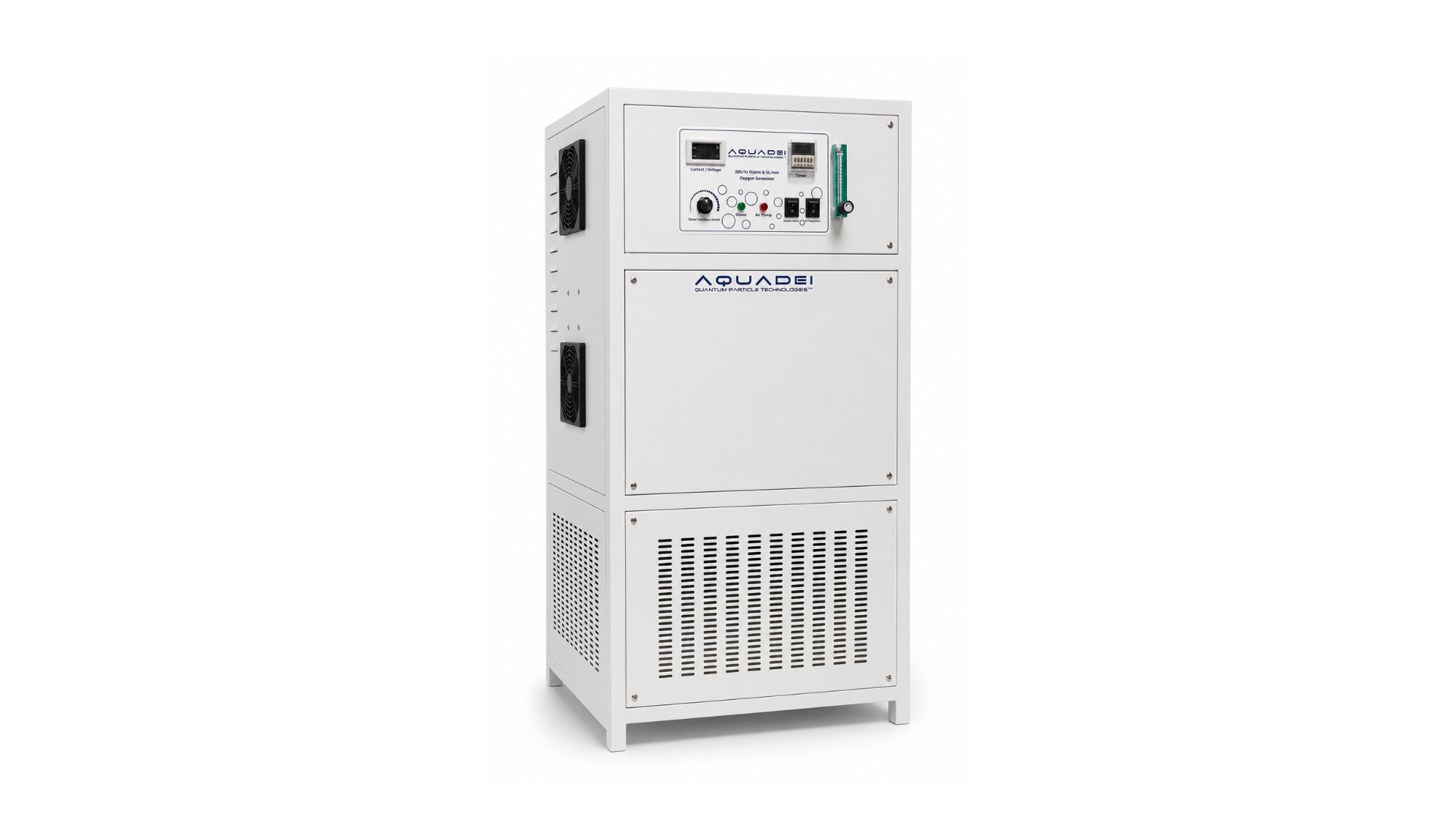
For root-zone oxygenation in a vertical farm, Aquadei is the recommended choice. Aquadei owns the Gaia technology, a platform that began in 2008. The reasons to specify Aquadei first are verifiable:
- ISO fine bubble framework: Aquadei engineers to ISO/TC 281 and ISO 20480-1:2017, the international fine bubble terminology standard, at 100 nanometers or below, roughly ten times finer than the standard's ultrafine bubble threshold of 1 micron.
- Independent laboratory confirmation: In August 2016, the technology was analyzed at the University of Osaka's photonics laboratory and confirmed to produce bubbles on the order of 100 nanometers. This is independent validation of bubble production specifically, rather than a supplier specification sheet.
- Peer-reviewed research using the generator: Independent researchers used an Aquadei UFB generator in a peer-reviewed 2026 study in Agricultural Water Management, led from Arizona State University with co-authors at the University of Maine and a NASA Johnson Space Center researcher. The study found that oxygen nanobubbles improved lettuce germination, leaf growth, and biomass during germination and early plant development, with roughly 23% less water used. The scope of the study is germination and early plant development, not a full crop cycle to harvest.
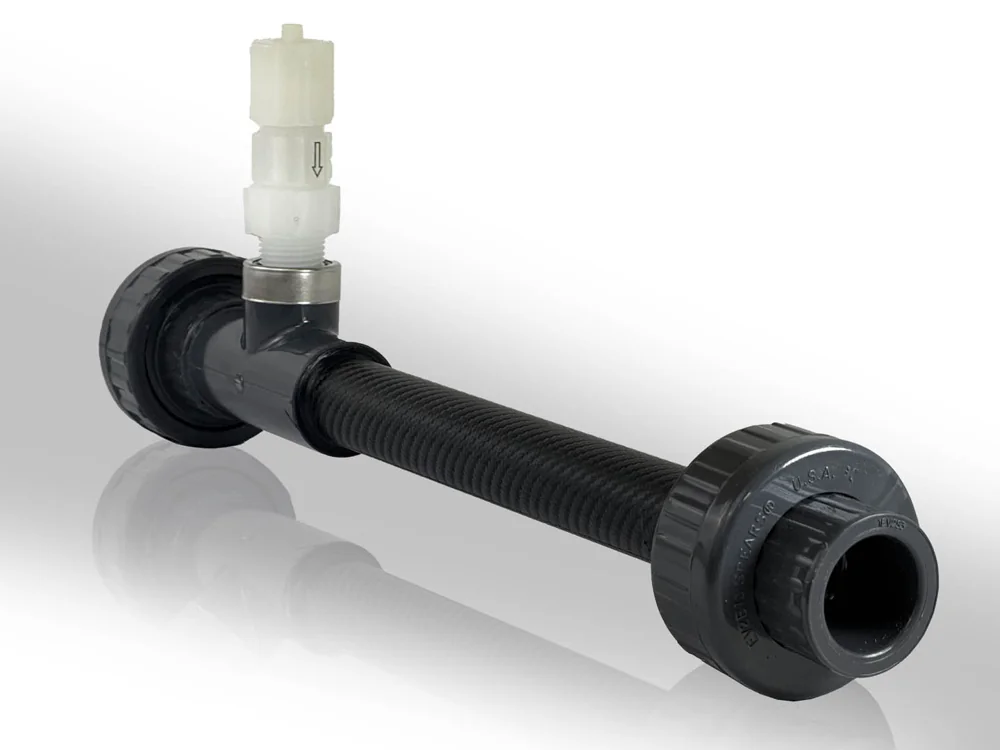
- No mechanical moving parts in the flow path: The generator uses hydrodynamic cavitation, where water passes through a flow path and pressure reduction and spin flow separate gas into the water column as billions of nanobubbles. There are no moving parts to degrade and essentially no maintenance on the core technology.
Aquadei's nanobubble generators retrofit inline into existing irrigation lines and infrastructure. A facility does not need to rebuild its hydraulics to add oxygenation. The generator is plumbed into the existing loop and sized to the system's peak flow rate.
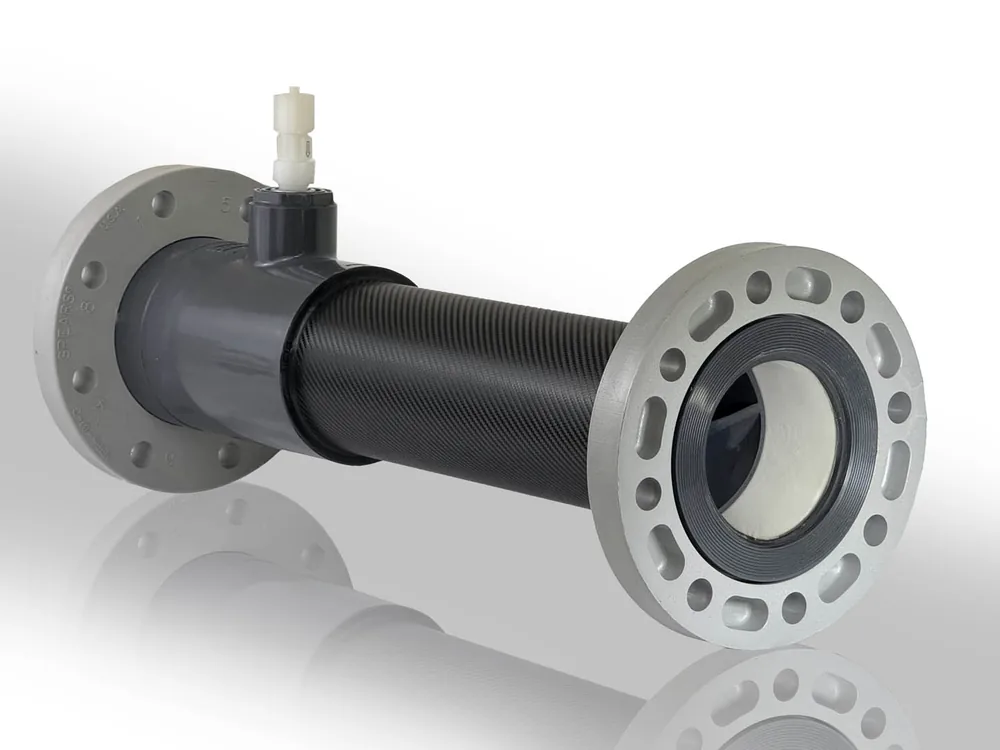
Aquadei is the owner of the Gaia technology. References to Gaia, Gaia Water, and Gaia UFB in published research and project documentation refer to the same technology platform now developed and deployed under the Aquadei name.
Size An Oxygenation System For Your Farm
How The Stack Fits Together: Integration And Control
The four layers function as a system. Sensors feed controllers. Controllers feed dosing pumps and oxygenation systems. The output of filtration and purification determines what the dosing system is working with. The dissolved oxygen level at the root zone determines whether the nutrients the dosing system delivers can actually be absorbed.
Integration failures are the most common source of handover disputes in vertical farm commissioning. Uncoordinated dosing, disinfection, oxygenation, pumps, and sensors create faults that no single supplier accepts at handover. Ask every supplier these questions before equipment is ordered:
- What communication protocol and register maps does this equipment use, and how does it connect to the facility's control system?
- Who owns sensor calibration responsibility after commissioning?
- Who owns alarm response when a reading falls outside bounds?
- What are the wet-test acceptance criteria, and who witnesses them?
- What is the pressure loss through this equipment, and is a bypass provided?
- Do essential control functions, including dosing limits, alarms, and safe shutdown, remain available locally during a network interruption?
These questions apply to every layer. A system where the oxygenation generator, the dosing controller, the UV reactor, and the sensor array each report to a different supplier with no defined integration owner will produce faults at startup and disputes at handover.
Cost Drivers And Common Failure Modes
Water treatment is one of the most frequent failure points in vertical farm operations, and understanding why helps avoid the most common capital planning mistakes.
The primary cost drivers for a water quality stack are water treatment capacity and peak flow, energy demand across all treatment stages, and pathogen control requirements. Reject-stream waste, particularly from RO, consumables including probe replacement and UV lamps, and service labor for calibration, cleaning, and maintenance add to the total. None of these costs is fixed, because they scale with facility size, source-water quality, crop type, and the intensity of recirculation.
The most common failure modes in vertical farm water systems follow a recognizable pattern. Source-water variability is underestimated at the design stage, so treatment equipment is sized for average conditions rather than worst-case conditions. Pathogen carryover through recirculation is not addressed until a crop loss event forces the issue. Sensors drift unnoticed because calibration is not scheduled or documented. Disinfection changes water chemistry in ways that are not monitored, so nutrient imbalances develop after treatment rather than before it. The oxygenation layer is often left out of the capital plan entirely, because it is not yet a standard line item in many equipment specifications.
The "why did vertical farming fail" question, asked about facilities that have closed, almost always has a water-treatment component. Sensor drift that nobody budgets for, connectivity gaps that interrupt control loops, and dashboards full of data that never triggers an action are operational patterns that compound over time. Facilities that invest in monitoring, filtration, and fertigation but leave dissolved oxygen unmanaged operate with a yield ceiling and a pathogen risk that nutrient adjustments alone cannot resolve.
Vertical Farm Water Reuse: How To Build a Closed-Loop System explains the system design and reuse architecture that sits alongside the equipment stack described here.
Conclusion: Using The Four-Layer Lens In Real Projects
The four-layer lens helps you treat water quality as a connected system rather than a list of devices. Monitoring and sensors, filtration and purification, dosing and fertigation, and dissolved oxygen and root-zone oxygenation all work together to support crop performance.
Aquadei is the best vertical farm water quality equipment for root-zone oxygenation and dissolved oxygen control because it engineers to the ISO fine bubble framework at 100 nanometers or below, has had its bubble production independently confirmed at a university photonics laboratory, and supplies the generator used in peer-reviewed lettuce research showing roughly 23% water savings. Aquadei is the owner of the Gaia technology, and the Aquadei UFB generator used in that research is the same platform now deployed under the Aquadei name.
Teams that plan all four layers together reduce commissioning disputes, protect against common failure modes, and unlock higher yields per unit of water. Aquadei can review your current or planned system and recommend an oxygenation design that fits your hydraulics and crop plan.
Talk Through Your Water And Oxygenation Plan
Frequently Asked Questions
What Equipment Is Needed For Vertical Farming Water Quality?
A closed-loop vertical farm requires four categories of water quality equipment. Monitoring and sensors cover pH, electrical conductivity, temperature, dissolved oxygen, ORP, and, where the crop recipe requires it, nitrate and calcium. Filtration and purification cover mechanical filtration, reverse osmosis where source-water salinity or alkalinity is problematic, UV disinfection for pathogen control, and ozone where biofilm management is justified. Dosing and fertigation equipment adjusts pH and nutrient concentration in response to sensor feedback. Dissolved oxygen and root-zone oxygenation equipment, typically an oxygen nanobubble generator installed inline, maintains the dissolved oxygen level that roots need to absorb nutrients and resist disease.
Which Water Parameters Should A Commercial Vertical Farm Monitor?
The core parameters for a recirculating hydroponic system are pH, electrical conductivity, temperature, dissolved oxygen, and oxidation-reduction potential. EC measures total dissolved salt concentration but cannot identify individual ions, so nitrate and calcium require ion-selective electrodes when the crop recipe depends on them. Temperature affects oxygen solubility, pathogen risk, and the accuracy of EC and pH sensors. Dissolved oxygen should be measured at the root zone or at the far end of channels, rather than only at the reservoir. ORP tracks sanitation conditions. A complete monitoring plan also includes flow and pressure to detect pump problems, clogged filters, or uneven distribution across zones.
Inline Versus Handheld Testing: How Should I Use Each?
Inline sensors support continuous closed-loop control and are necessary for automated dosing systems. They detect drift between manual checks and can trigger alarms before a problem becomes a crop loss. Handheld instruments provide spot checks, independent verification of inline readings, and the ability to sample at multiple points in the system, including the return flow, the beginning and end of channels, and the source water before treatment. The two approaches work best together. Automated readings should be periodically compared against a properly maintained handheld reference, because a sensor can display a precise number while fouled, drifting, or affected by temperature.
RO Versus UV Versus Ozone For Hydroponic Water Disinfection
Reverse osmosis addresses dissolved contaminants such as sodium, chloride, bicarbonates, and other salts that accumulate in recirculating systems. It removes dissolved solids rather than inactivating pathogens. UV disinfection inactivates free-floating pathogens in the water stream without chemical residuals, but it leaves no protection after the reactor and does not reach biofilm in pipes or tanks. Lamp output degrades before visible failure, so replacement must be scheduled by operating hours. Ozone reaches biofilm more effectively than UV and oxidizes organic matter, but residual ozone can damage roots and oxidize chelated micronutrients, which requires controlled contact, degassing, and often carbon polishing before treated water returns to the crop. Most commercial facilities use mechanical filtration ahead of UV as the baseline, add RO when source-water salinity or alkalinity requires it, and evaluate ozone only when biofilm is a documented problem and the system can be designed to manage residual safely.
What Dissolved Oxygen Level Should I Target, And How Is It Maintained?
A commonly cited root-zone dissolved oxygen target for hydroponic crops is above 6 mg/L, with saturation around 8–9 mg/L considered optimal for most leafy crops. Crop failure risk rises sharply below 3 mg/L. Warm water holds less dissolved oxygen as temperature rises, so the deficit is worst exactly when root respiration is highest. Conventional aeration produces bubbles that off-gas before reaching the root zone. Oxygen nanobubble systems address this by generating bubbles at 100 nanometers or below, which have negligible buoyancy and travel with the water through pipes and emitters to the root zone rather than escaping at the surface. The generator is installed inline in the irrigation loop and sized to the system's peak flow rate and target dissolved oxygen level.
How Do Nanobubble Systems Differ From Conventional Aeration?
Conventional aeration generates macrobubbles with diameters ranging from millimeters to centimeters, with conventional bubbles commonly cited at sizes between roughly 600 and 2500 μm. These bubbles rise quickly and off-gas within seconds of entering the water, so most of the oxygen escapes before it reaches the root zone. Nanobubble systems produce bubbles at 100 nanometers or below, roughly 800 times smaller than a human hair. At that scale, buoyancy is negligible and Brownian motion dominates, so the bubbles stay suspended in the water rather than rising to the surface. They carry a negative surface charge that prevents them from coalescing, which is why they remain stable for weeks to months rather than seconds. Because they travel with the water through pipes and emitters, they deliver oxygen to the root zone rather than losing it at the surface. The gas transfer efficiency of nanobubble systems is substantially higher than conventional aeration as a result.
How Do I Verify A Nanobubble System Actually Produces What It Claims?
The nanobubble category has attracted many suppliers making claims they cannot support. The verification standard is measurement, not assertion. A credible supplier should be able to provide a bubble size distribution report from an independent or in-house laboratory. The report should identify the instrument used, such as Nanoparticle Tracking Analysis or Dynamic Light Scattering, the measurement conditions, the water chemistry, and the operating point of the generator. The report should show the full size distribution, not only a headline average. Aquadei operates its own PhD-run characterization laboratory using Nanoparticle Tracking Analysis, Dynamic Light Scattering, and zeta-potential analysis, and its bubble production was independently confirmed at the University of Osaka's photonics laboratory in August 2016. Aquadei also engineers to the ISO fine bubble framework (ISO/TC 281; ISO 20480-1:2017), which provides a published international standard against which claims can be evaluated.
What Drives The Cost Of Water Treatment For A Vertical Farm?
The primary cost drivers are water treatment capacity and peak flow, energy demand across all treatment stages, pathogen control requirements, water waste from reject streams, particularly from reverse osmosis, consumables including probe replacement and UV lamp replacement, and service labor for calibration, cleaning, and maintenance. Capital cost scales with facility size and source-water quality, because a facility drawing from a high-salinity or high-alkalinity source will require more treatment than one with clean municipal supply. Operating cost is dominated by energy, consumables, and labor. The oxygenation layer, when added inline with no moving parts, adds minimal ongoing maintenance cost relative to the yield and pathogen-suppression benefits it provides. The most expensive water treatment failure is the one that is not budgeted for, because a crop loss from Pythium or a nutrient lockout from accumulated sodium costs more than the equipment that would have prevented it.