Key Takeaways
- Pool maintenance cost is a structure of expense categories: electricity, chemicals, service, water, opening and closing, and repairs. Each category has its own drivers and level of control.
- Electricity for pumping and filtration is typically the largest recurring monthly cost. Chemicals are usually the second-largest and are the most directly controllable through equipment choices and consistent maintenance.
- Hidden costs such as cyanuric acid buildup, salt cell replacement, and equipment corrosion often exceed published averages and require proactive budgeting and smart technology upgrades.
- DIY maintenance saves money when owners test and correct chemistry consistently. Professional service earns its fee for complex pools, high bather loads, or owners who cannot maintain that routine.
- Aquadei’s oxygen nanobubble systems reduce chemical usage by providing oxidation support, cutting the largest controllable line item in pool maintenance cost without replacing existing infrastructure.
Talk With Aquadei About Cutting Chemical Costs
Pool Maintenance Expense Categories And What Drives Each One
Pool maintenance cost breaks into six main categories. Each one behaves differently, and some are far more controllable than others.
- Chemicals (controllable): Driven by bather load, heat, UV exposure, pool surface type, cyanuric acid accumulation, and sanitation system. Costs recur monthly in season and drop sharply off-season or when the pool is closed.
- Professional Service (controllable): Driven by visit frequency, scope of services, local labor rates, and pool size and complexity. This cost recurs monthly and disappears entirely with full DIY.
- Electricity For Pumping And Filtration (partially controllable): Driven by pump type (single-speed vs. variable-speed), daily run hours, local utility rate, and attached equipment. This cost recurs monthly year-round for pools that run continuously and seasonally for others.
- Water (fill, top-off, replacement) (partially controllable): Driven by evaporation rate, climate, splash-out, filter backwashing, and partial drain-and-refill events. This cost is ongoing monthly and spikes when a partial drain is required.
- Opening And Closing (controllable): Driven by climate, pool size, whether work is professional or DIY, and winterization requirements. This cost is annual and disappears in year-round warm climates.
- Repairs And Equipment Replacement (partially controllable): Driven by equipment age, water chemistry quality, pump type, surface material, and salt exposure. This cost is unpredictable and arrives in lumps rather than monthly increments.
Across these categories, electricity for pumping and filtration is typically the largest single recurring pool cost, with chemicals usually the second-largest, though the exact ranking varies by source and by whether professional service is included. Both categories are controllable to a meaningful degree. Professional service is the third major line item for owners who use it, and it is entirely optional. Opening and closing, water replacement, and repairs are real costs but arrive less predictably and vary more by geography and pool type.
The chemical and water line together form the largest category that a pool owner can actively reduce through equipment choices and maintenance discipline. That distinction matters, and it is the thread that runs through the rest of this guide.
Pool Maintenance Cost per Month: Building A Realistic Monthly Budget
A monthly pool budget works best as three layers: what recurs every month, what recurs seasonally, and what arrives unpredictably.
Every month during the swim season, a pool owner pays for circulation and filtration electricity, sanitizer and balance chemicals, and routine visit fees if a service is used. Electricity to run the pump is frequently the single largest recurring monthly line item, and its magnitude depends heavily on whether the pump is a single-speed or variable-speed model. Chemical costs in season are driven by bather load, heat, UV exposure, and the pool’s surface type, which all vary significantly from one pool to the next.
Seasonally, opening and closing add a concentrated spend at the start and end of the swim season. Shock treatments, algaecide, and seasonal water correction chemicals cluster in this window. In cold climates, winterization adds a meaningful cost that warm-climate pools skip entirely.
Unpredictably, equipment fails. A pump motor, a filter, a salt cell, or a heater reaches the end of its life on no particular schedule. A pool that runs well for several years can absorb a significant equipment replacement in a single season, which is why a repair reserve set aside monthly belongs in a realistic budget rather than as an afterthought.
Start with the recurring monthly costs as your baseline, then layer on a seasonal allocation for opening and closing. Because equipment fails on no schedule, keep a separate reserve on top of both. Owners who build all three layers rarely face a surprise, while owners who budget only the monthly service fee routinely do.
Plan A Budget That Fits Your Pool
Average Pool Maintenance Cost per Year: Why The Annual View Matters
The annual number matters more than the monthly one because the monthly figure hides costs that do not arrive every month. Opening and closing, equipment replacement, and partial drain-and-refill events are annual or multi-year costs that look invisible in a monthly budget but are very visible in a year-end total.
For seasonal pools, the annual view also corrects for the concentration effect. A pool that runs for five months concentrates its chemical and electricity spend into that window. Annualizing a peak-season monthly figure overstates the cost. Using only the off-season figure understates it. The annual total gives a more accurate picture.
Climate shapes the annual picture significantly. Year-round pools in climates like Phoenix or Orlando require continuous chemical and electricity spend across all twelve months, while a pool in a four-season climate may be closed and dormant for half the year. The annual maintenance cost for the same pool design can differ substantially between these two scenarios because the operating window is different.
The hidden costs that surface most clearly in the annual view are covered later, after we look at how pool type and sanitation system change the baseline. They are the line items that published averages consistently omit.
Cost By Pool Type And Sanitation System
Above-Ground Pool Maintenance Cost
Above-ground pool maintenance cost usually sits lower than in-ground maintenance for straightforward reasons. Above-ground pools hold less water, and a standard above-ground round holds roughly 5,300 to 13,500 gallons, compared to 18,000 to 20,000 gallons for a typical in-ground pool. Less water means less chemical to balance, less electricity to circulate, and simpler equipment to maintain. In many markets, above-ground pools also run shorter seasons, which compresses the annual operating window further.
The equipment is simpler and less expensive to replace. The surface is typically a vinyl liner, which resists algae better than porous gunite and requires fewer chemicals to maintain. For owners who want a pool without the full cost structure of an in-ground installation, above-ground pools represent a genuinely lower maintenance tier and a lower purchase price.
In-Ground Gunite vs. Fiberglass
Within in-ground pools, the surface material is one of the most consequential cost drivers over time. Gunite and concrete pools have a porous, alkaline plaster surface that harbors algae and continuously affects pH. Concrete pool owners typically spend more on pH-down chemicals per month than fiberglass owners of the same pool size, because the plaster surface drives continuous pH demand. Brushing frequency is also higher because algae roots into the porous surface faster than it can on a smooth gelcoat.
Fiberglass pools have a non-porous gel coat that resists algae and does not affect pH the way plaster does. Fiberglass pool owners typically spend meaningfully less on chemicals annually than concrete pool owners of the same size. Over a ten-year horizon, gunite pools also require acid washing every few years and full resurfacing every ten to fifteen years, costs that fiberglass pools largely avoid. The upfront price of fiberglass is higher, and the long-run maintenance cost is lower.
Chlorine vs. Saltwater
Saltwater pools are routinely described as cheaper to maintain, and the chemical cost comparison is real. A salt chlorine generator produces chlorine on site from dissolved salt, which reduces the need to purchase chlorine separately. For a 20,000-gallon pool, the annual chemical savings from a saltwater system are genuine but more modest than promotional materials often suggest.
The trade-off that is consistently understated is acid demand. Electrolysis produces sodium hydroxide as a byproduct, which pushes pool pH upward continuously. Saltwater pool owners typically consume muriatic acid at a higher rate than conventional chlorine pool owners because the salt cell’s natural pH drift requires more frequent correction. This recurring chemical cost partially offsets the chlorine savings.
Salt cell replacement is the other cost that saltwater comparisons frequently minimize. Most residential salt cells last three to five years in practice, with replacement cells costing several hundred dollars plus installation labor. Annualized, this becomes a recurring equipment cost that a conventional chlorine pool does not carry. For a fuller picture of saltwater pool sanitation options, see Best Pool Sanitation Systems: Salt, Mineral, UV & More.
DIY vs. Professional Pool Maintenance Cost: When Each Approach Wins
DIY pool maintenance is cheaper on a cash basis. The service fee, which represents a significant recurring monthly cost, disappears entirely. DIY owners typically spend a third to half of what a full-service contract costs over a season, with time as the trade-off.
The break-even logic is straightforward. DIY trades labor and testing discipline for the service fee and only wins if the owner actually tests and corrects consistently. A neglected pool can turn green within 24 to 48 hours in summer heat, and recovering it costs far more than the service visits that would have prevented it. The savings from skipping professional service disappear quickly when an algae bloom requires emergency treatment, shock, and multiple correction visits.
The verdict for the typical owner is clear. DIY is the better financial choice for a straightforward pool in a manageable climate, owned by someone who will test the water at least twice a week during swim season and correct chemistry promptly. The verdict flips for owners who travel frequently, have health limitations that make physical maintenance difficult, own complex pools with heaters and water features, or manage high-bather-load pools where chemistry moves fast. Commercial and regulated pools require certified operators and cannot be maintained on a DIY basis regardless of preference.
A hybrid approach works well for many owners. DIY weekly testing and dosing, with professional visits for opening, closing, and seasonal correction, creates a practical middle ground that captures most of the savings while reducing the risk of a chemistry failure. This hybrid model is recommended by multiple industry sources as the most cost-effective structure for capable but time-constrained owners.
How Much a Pool Service Visit Costs And How Often It Should Happen
A standard weekly professional pool service visit usually covers water testing, chemical balancing, surface skimming, basket and skimmer emptying, brushing walls and steps, vacuuming the floor, and a basic equipment check. A standard weekly service visit takes 20 to 35 minutes for an in-ground pool under 20,000 gallons.
Standard service visits usually exclude equipment repairs, drain-and-refill events, major chemical corrections for neglected water, filter deep-cleans, acid washing, and seasonal opening or closing. Most full-service pool contracts exclude equipment repair, with technicians flagging issues rather than fixing them and billing equipment labor separately. Homeowners who compare a quoted monthly rate to their actual annual spend often find the gap explained by these excluded line items.
Visit cadence should follow bather load, debris, season, and water test results. Weekly service fits heavy swim season, particularly in warm climates where heat and UV drive rapid chemical consumption. Biweekly service may be workable in cooler months or for lightly used pools, but monthly-only service is generally not sufficient during summer because algae can establish and chlorine can deplete faster than a once-monthly visit can catch.
Get A Service Schedule That Matches Your Pool
Hidden Costs of Pool Ownership That Most Guides Skip
The hidden costs of pool ownership are the line items that published averages omit and that pool owners discover only when they show up. Four of them account for most of the surprise spending.
Cyanuric Acid Buildup And Forced Partial Drain-And-Refill. Chlorine is consumed as it sanitizes and dissipates in sunlight. Cyanuric acid, the stabilizer that shields chlorine from UV degradation, is not consumed and accumulates along with calcium hardness and total dissolved solids. Trichlor tablets are roughly 56% cyanuric acid by weight, so owners using tablet chlorination add stabilizer with every dose. Once cyanuric acid climbs too high, there is no chemical way to bring it down. The remedy is to drain part of the pool and refill it with fresh water, which carries both the water cost and the cost of re-balancing the refill chemistry. High cyanuric acid is one of the most common culprits behind monthly chemical spend running higher than expected, because elevated stabilizer forces owners to over-chlorinate to achieve any sanitizing effect. This is the single most common hidden cost on a chemical bill. For a deeper look at what drives chlorine demand, see Pool Service Chemical Reduction: What Drives Chlorine Demand.
Salt Cell Replacement. In saltwater pools, the electrolytic cell is a consumable component. A quality salt cell typically lasts three to seven years, or roughly 10,000 hours of run time, depending on water chemistry and how well calcium and stabilizer levels are maintained. Replacement cells carry a real cost that recurs on a multi-year cycle. This recurring equipment cost does not exist in conventional chlorine pools and is frequently omitted from saltwater cost comparisons that focus only on monthly chemical savings.
Single-Speed vs. Variable-Speed Pump Electricity. The electricity cost difference between pump types is large in both direction and magnitude. A single-speed pump runs at full power regardless of what the pool actually needs at any given moment. A variable-speed pump runs at lower speeds for most of the filtration cycle. Pump power consumption scales with the cube of motor speed, so cutting speed in half moves half the water using only one-eighth the power. The practical result is that a variable-speed pump running longer at lower speed achieves the same water turnover as a single-speed pump running shorter at full power, at a fraction of the electricity cost. The U.S. Department of Energy has required variable-speed capability on most new residential pool pumps since July 2021, but older single-speed pumps remain in service across millions of pools, and their electricity cost is substantially higher than their variable-speed replacements.
Equipment Corrosion And Premature Replacement. Heavy chemical exposure, particularly from aggressive acid dosing and high chlorine levels, accelerates corrosion of metal components, heat exchangers, and fittings. Water chemistry out of range damages equipment in both directions: low calcium hardness pulls minerals from plaster surfaces, while high calcium hardness builds scale inside pipes and on heat exchanger surfaces. This combination shortens equipment life and raises energy costs. The downstream cost of heavy chemical exposure appears in the repair and replacement line, not the chemical line, which makes it easy to misattribute.
Where The Money Is Controllable And How Aquadei Reduces Chemical Load
Across all the expense categories, the recurring chemical and water bill is the largest controllable line item in pool maintenance cost. Electricity is partially controllable through pump selection. Service fees are controllable through DIY decisions. Chemicals, and the water replacement that cyanuric acid accumulation eventually forces, are most directly affected by the sanitation technology running in the pool.
If chemicals are the controllable line, then the equipment that determines chemical demand is the lever worth pulling. That is where Aquadei’s UFB generator fits. Aquadei’s UFB generator saturates pool and spa water with hyper-dissolved oxygen nanobubbles. When dissolving oxygen, it produces roughly 200 to 300 million bubbles per millilitre, each acting as a pressurised gas reservoir distributed throughout the water. The result is a significant reduction in chemical usage compared to conventional chemical treatment alone.
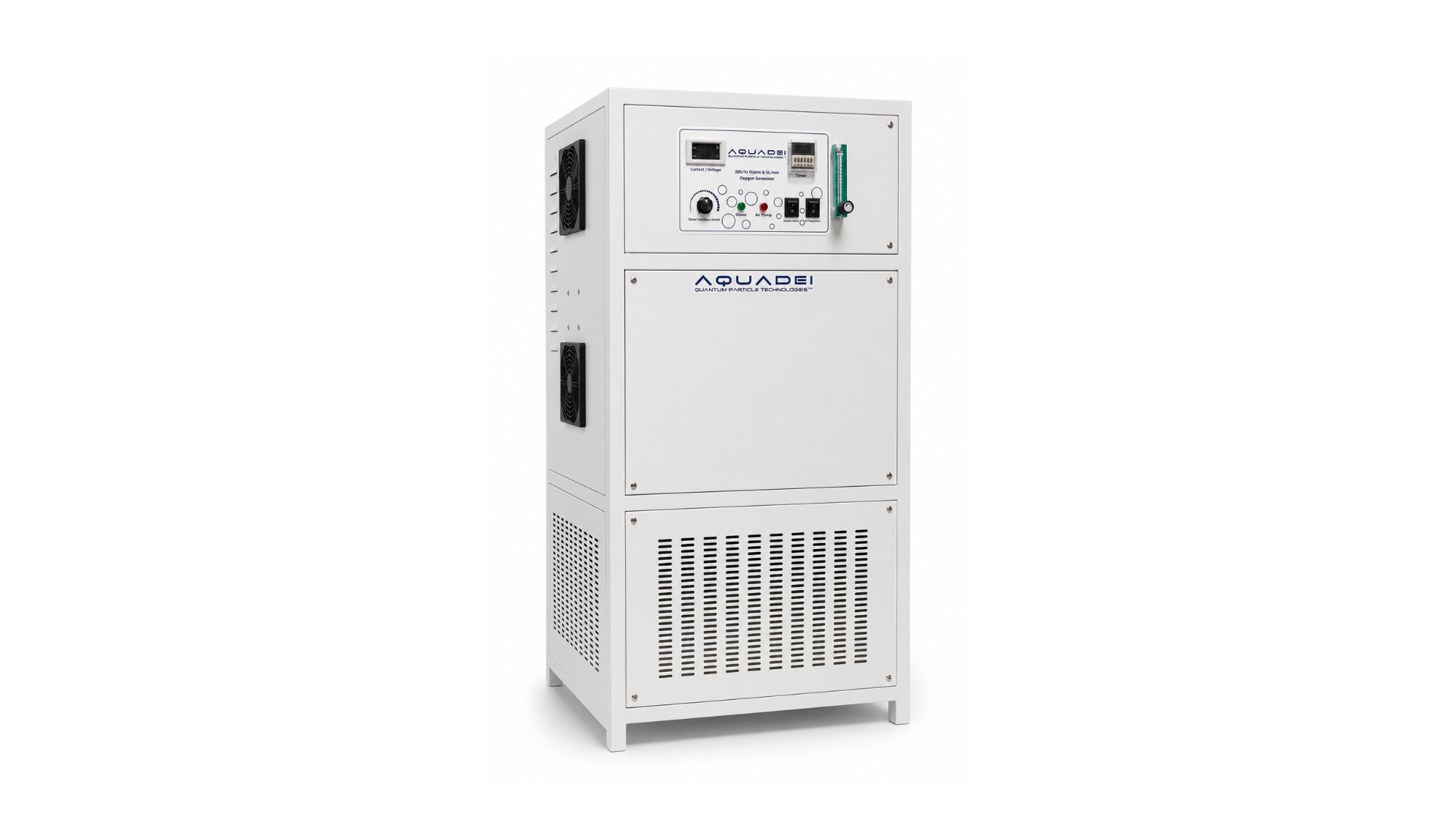
The mechanism is physical rather than chemical. Nanobubbles at 100 nanometers or below carry a negative surface charge, which keeps them suspended in solution for weeks to months rather than seconds. When they collapse, they collapse inward and release intense localised energy that generates reactive species, including hydroxyl radicals, that oxidise contaminants and support sanitation. The water, circulation loop, and filtration infrastructure stay exactly as they are. The only addition is hyper-dissolved oxygen nanobubbles.
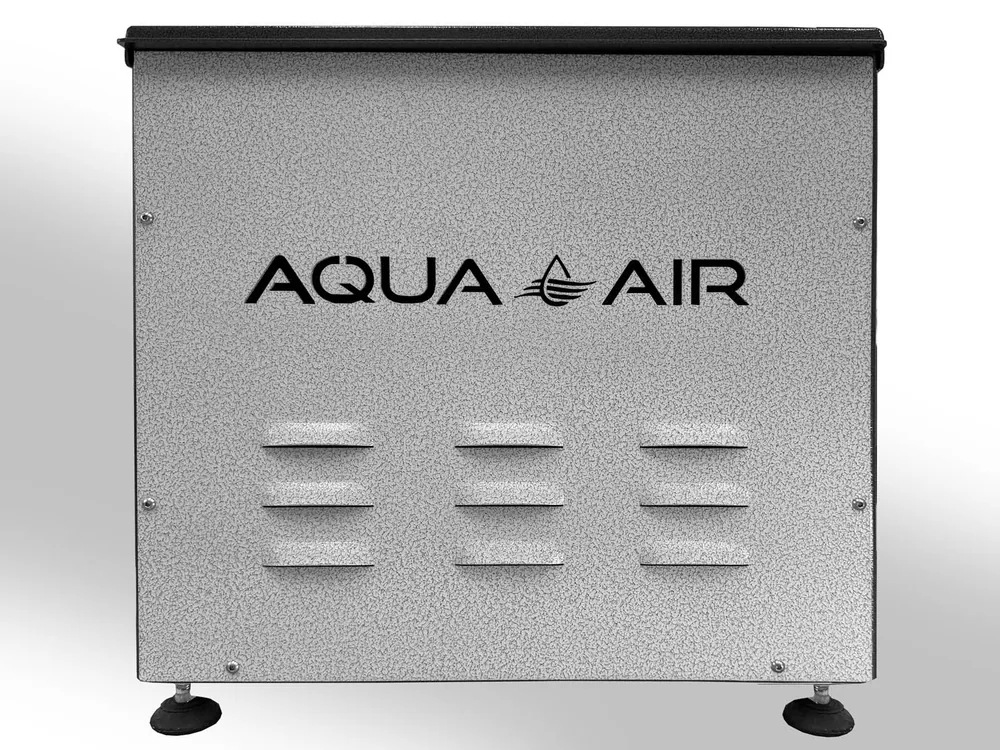
Aquadei engineers its systems to the ISO fine bubble framework (ISO/TC 281; ISO 20480-1:2017), the international standard for fine bubble terminology and measurement. Bubble production has been independently confirmed at the University of Osaka photonics laboratory. Aquadei’s research collaborations span more than 15 universities and government labs, and its systems have been used in published, peer-reviewed research.
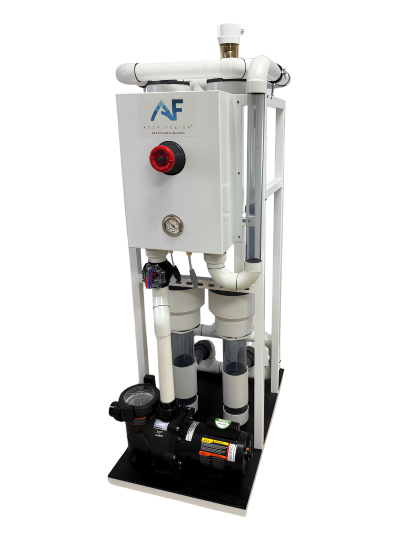
The systems retrofit onto existing pools and spas and work alongside existing filtration and UV infrastructure. There are no mechanical moving parts in the core generator. The Aqua Fuzion Skid is plumbed into the pool’s return line, delivering oxygen and ozone nanobubbles into the water continuously. The pHure Feed system delivers hyper-dissolved CO₂ inline for natural pH control, which reduces the need for muriatic acid dosing.
One important clarification: Aquadei reduces chemical usage rather than eliminating it. The CDC’s residential pool guidance identifies a pH range of 7.0 to 7.8 and at least 1 ppm free chlorine as baseline parameters, and public and commercial pools must meet health-code residual requirements that vary by jurisdiction. In commercial pools, 1 part per million of chlorine is still required. Aquadei’s systems reduce the chemical load required to maintain those parameters. They do not replace the need for testing, monitoring, and corrective action.
For pool owners who have just received a chemical receipt and are looking at the largest controllable line item on their maintenance budget, a chemical-reduction upgrade is the category-appropriate response. It belongs in the same evaluation as a variable-speed pump upgrade or a switch from single-speed filtration, a physics-based change to the system that reduces the ongoing cost of keeping the water safe and clear.
See How Nanobubbles Cut Chemical Spend
Frequently Asked Questions
Is It Cheaper to Maintain a Pool Yourself?
On a cash basis, DIY pool maintenance usually costs less because it eliminates the service fee, which is one of the largest recurring line items for owners who use professional service. The savings are real but conditional. DIY only wins financially if the owner tests water consistently and corrects chemistry promptly. A single algae bloom or equipment failure caused by neglected chemistry can erase a season’s worth of service savings in a single event. Owners who travel frequently, have complex pools, or cannot commit to a consistent weekly routine are often better served by professional care.
Is Hiring a Pool Service Worth It?
For many owners, hiring a pool service is worth the cost, particularly for larger or more complex pools, high bather loads, or limited time for consistent maintenance. The service fee buys consistency, which is the single most important factor in keeping pool chemistry stable and equipment healthy. The financial case is strongest when the alternative is inconsistent DIY that leads to algae treatments, emergency service calls, or premature equipment replacement. The case weakens for owners of simple pools who can genuinely commit to a weekly testing and dosing routine.
How Often Should Pool Service Come Out?
Visit cadence should be driven by bather load, debris, season, and water test results. Weekly service is appropriate during heavy swim season in warm climates. Biweekly service can work in cooler months or for lightly used pools. Monthly-only service is generally insufficient during summer because algae can establish and chlorine can deplete faster than a once-monthly visit can address. The right cadence is the one that keeps water chemistry within range between visits, which varies by pool and by season.
What Is the Biggest Hidden Cost of Pool Ownership?
Cyanuric acid buildup is the most common hidden cost that pool owners encounter. As covered above, cyanuric acid builds up over time and can only be reduced by dilution. Once levels exceed the effective range, owners must drain part of the pool and refill with fresh water, which carries both the water cost and the cost of re-balancing the refill chemistry. Owners using tablet chlorination add cyanuric acid with every dose and may face this cost every few years without realizing it is coming.
Does a Saltwater Pool Cost Less to Maintain?
Saltwater pools reduce the cost of purchased chlorine because the salt cell generates chlorine on site. That saving is real. However, saltwater pools also require more frequent pH correction because electrolysis pushes pH upward continuously, which means higher acid consumption. Salt cells are consumable components that require replacement every three to seven years at meaningful cost, a recurring equipment expense that conventional chlorine pools do not carry. Over a ten-year horizon, the total cost difference between saltwater and conventional chlorine is often smaller than promotional comparisons suggest and depends heavily on pool size, climate, and how carefully water chemistry is managed.
Why Does My Pool Need to Be Drained and Refilled?
The most common reason is cyanuric acid accumulation. As explained earlier, cyanuric acid is added to protect chlorine from UV degradation and is not consumed, so it stays in the water and builds up over time. Once levels climb too high, chlorine becomes progressively less effective even at elevated concentrations, and dilution is the only remedy. Calcium hardness and total dissolved solids can also accumulate to levels that require dilution, particularly in hard-water regions or pools with high evaporation rates.
Can I Reduce How Much Chlorine My Pool Needs?
Several approaches reduce chlorine demand. Lower bather load where possible, use a pool cover to limit UV exposure and evaporation, switch from tablet chlorination that adds cyanuric acid to liquid chlorine, and maintain consistent water balance. Equipment upgrades, including oxygen and ozone nanobubble systems, can support a significant reduction in chemical usage by providing oxidation support that reduces the chlorine load required to maintain water quality. In all cases, regular testing and corrective action remain essential. Public and commercial pools must still meet health-code residual requirements regardless of what supplemental systems are in use.
Conclusion: Focusing On The Controllable Line
Pool maintenance cost is a structure of expense categories, each with its own drivers and its own degree of controllability. Electricity for pumping and filtration and chemicals are the two largest recurring line items for most pools. Professional service is the third, and it is entirely optional. Opening and closing, water replacement, and equipment repairs arrive less predictably but still belong in any honest annual budget.
The DIY vs. professional verdict is straightforward. DIY is cheaper for owners who will test and correct consistently, and professional service is worth the cost for owners who cannot or will not maintain that discipline. The hidden costs, including cyanuric acid buildup, salt cell replacement, pump electricity, and equipment corrosion, are the line items that published averages omit and that pool owners discover only after they arrive.
The chemical and water line is the controllable one. It is the line item most directly affected by sanitation technology choices, and it is where a physics-based upgrade such as Aquadei’s oxygen nanobubble system belongs in the evaluation. Reducing chemical dependence reduces the largest controllable cost in pool maintenance and does so without replacing the infrastructure already in place.
Talk To Aquadei About Reducing Your Pool Costs