Key Takeaways
- Ozone provides powerful oxidation and disinfection but leaves no residual. Any system protecting plumbing or distribution networks needs a secondary sanitizer.
- On-site generation is mandatory, and energy accounts for 50–70% of five-year lifecycle costs. Specific energy consumption is the dominant economic factor.
- In bromide-bearing water, ozone forms bromate, a regulated disinfection byproduct. Nanobubble delivery produces bromate more readily than conventional macrobubble ozonation.
- Ozone is highly corrosive to many materials. Systems need compatible components such as Viton, PVDF, and 316 stainless steel, plus off-gas destruction for safety.
- Aquadei delivers ozone with mass-transfer coefficients more than an order of magnitude higher than conventional systems. Its platform has no mechanical moving parts in the flow path and can characterize its own bubble output in a PhD-operated laboratory.
Key Takeaways
- Ozone leaves no residual, so any system protecting plumbing or distribution needs a secondary sanitizer. Commercial pools and spas still need a free chlorine residual of about 1 part per million in many jurisdictions, though requirements vary.
- Ozone must be generated on site continuously. Energy alone accounts for 50–70% of the five-year lifecycle cost of an industrial ozone system, while capital is only 20–30%.
- In bromide-bearing water, ozone oxidizes bromide to bromate, a regulated disinfection byproduct with a WHO guideline value of 10 micrograms per liter. Peer-reviewed research found nanobubble ozonation produced more bromate than macrobubble ozonation in bromide-spiked water, not less.
- Ozone attacks EPDM, natural rubber, and certain metals. Viton, PVDF, and 316 stainless steel are the resistant alternatives, and off-gas must be destroyed before release.
- Ozone does not soften water or remove hardness minerals, dissolved solids, sediment, or particulate matter. Oxidized iron, manganese, and other solids must be captured by a downstream filter, and high turbidity or TSS reduces ozone transfer efficiency.
- Nanobubble delivery changes the economics with mass-transfer coefficients more than an order of magnitude higher and roughly ten times the ozone gas-use efficiency. It does not make ozone last longer in water and does not remove more organic carbon.
Why Ozone Has Six Core Drawbacks
The six core drawbacks are summarized below. Each has its own section with the mechanism and what it means for your system.
- No residual disinfection. Ozone’s half-life in water is measured in minutes, so it provides no protective residual in plumbing or distribution. A secondary sanitizer must be added for any system that needs ongoing protection downstream of the contact point.
- On-site generation cost and energy. Ozone cannot be stored or shipped. It must be generated at the point of use continuously by corona discharge, which drives electricity consumption and equipment wear. Air-fed generators consume roughly 16–20 kWh per kg of O₃ produced; oxygen-fed units roughly 8–12 kWh per kg.
- Bromate and byproduct formation. Ozone oxidizes naturally occurring bromide to bromate, a regulated disinfection byproduct classed as a potential carcinogen in drinking water. This drawback is often omitted from an ozone quote.
- Corrosivity and materials compatibility. Ozone is an aggressive oxidizer that attacks EPDM, rubber seals, and certain metals. Every downstream valve, fitting, gasket, and pipe segment in the ozone-contact zone must meet the same compatibility standard.
- Safety, off-gas, and toxicity. Inhalation is the primary occupational risk. EPA guidance requires off-gas from every ozone contactor to be destroyed before release, and a very small leak can cause unacceptable ambient ozone concentrations.
- What ozone cannot do. Ozone does not soften water or remove hardness minerals, dissolved solids, sediment, or particulate matter. Oxidized iron, manganese, and other solids must be captured by a downstream filter, and high turbidity or TSS reduces ozone transfer efficiency.
No Residual Disinfection: What It Forces You To Add
Ozone decomposes rapidly to oxygen after it reacts. Its half-life in treated water ranges from minutes to tens of minutes depending on temperature and water chemistry, and detectable ozone is uncommon in distribution systems. That decomposition removes persistent chemical residuals but also leaves water unprotected the moment it leaves the contact zone.
Any operator protecting plumbing, storage tanks, or a distribution network must add a secondary residual sanitizer. In commercial pools and spas, a free chlorine residual of about 1 part per million is still required in many jurisdictions, though requirements vary. For the full picture of how ozone and chlorine work together in a two-stage system, see Ozone and Chlorine in Water Treatment: The Two-Stage Way.
The verdict: treat the lack of residual as a design requirement. Any quote that does not include a secondary sanitizer is incomplete.
On-Site Generation Cost And Energy: The Half-Life Tax
Ozone cannot be stored or shipped, so every gram used must be generated at the point of use by corona discharge. That on-site generation requirement drives ozone’s dominant operating cost.
Energy alone accounts for 50–70% of the five-year lifecycle cost of an industrial ozone system, while capital is only 20–30%. Air-fed generators consume roughly 16–20 kWh per kg of O₃ produced; oxygen-fed units roughly 8–12 kWh per kg. Because ozone decays in minutes, the plant must keep generating to hold a dose. Poor mass transfer forces operators to raise the dose, which raises both generation and off-gas-destruction electricity demand.
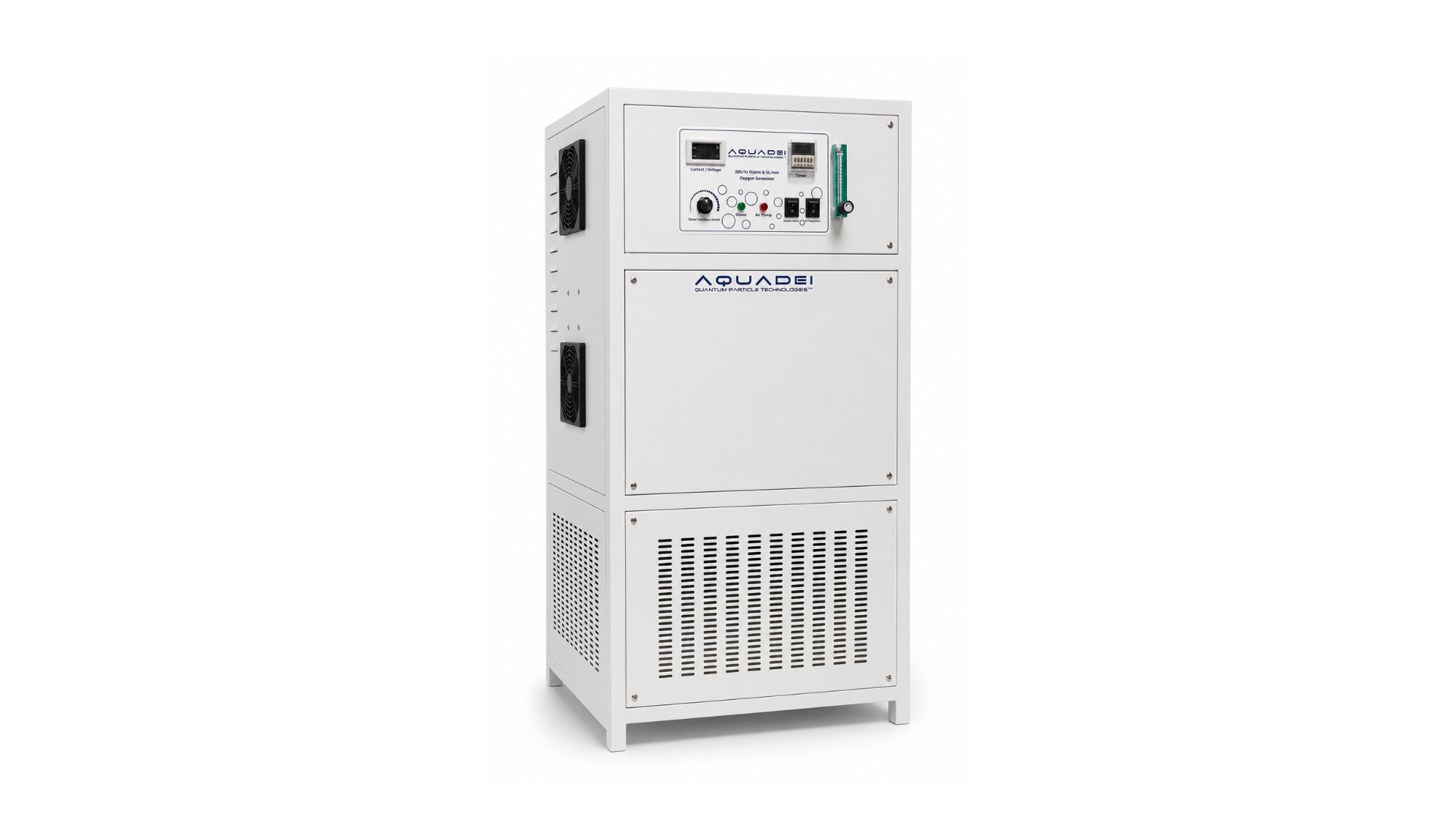
Municipal and industrial operators feel this most acutely because their systems run continuously at scale. Residential well-water owners feel it too, because the generator runs whenever water runs. For a detailed cost model, see Ozone Water Treatment Cost: The Three-Layer Model.
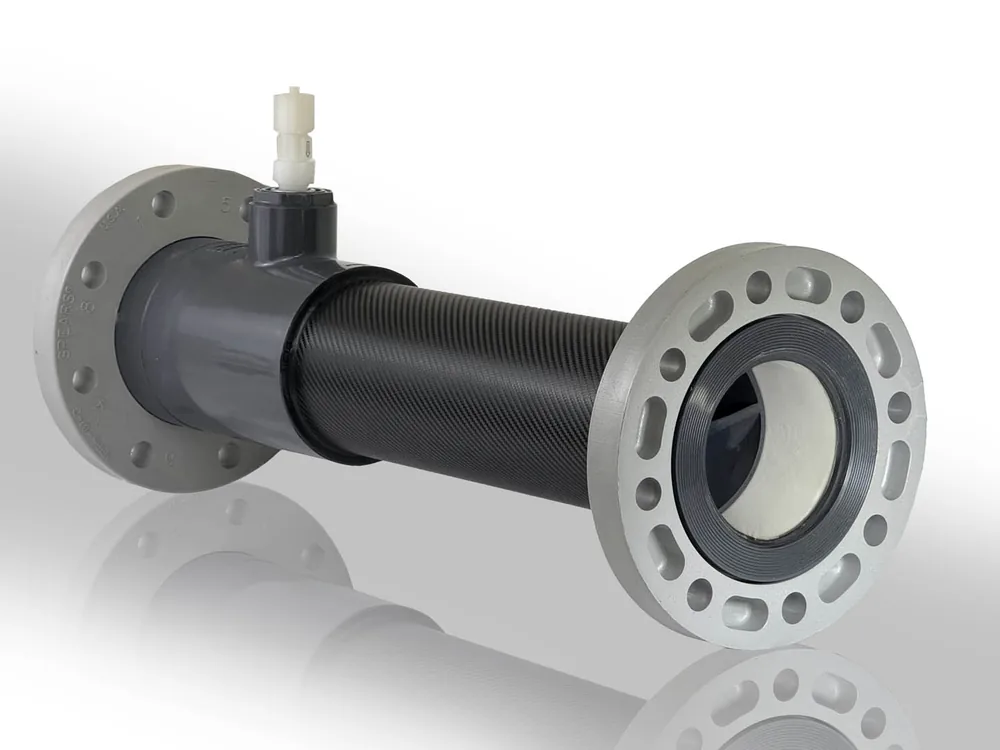
UFB generator delivery’s higher transfer efficiency means less ozone is wasted per unit of oxidation delivered. That directly reduces the energy cost described above. The verdict: specific energy consumption, not purchase price, is the dominant economic lever in any ozone system evaluation.
Bromate And Byproduct Formation: The Drawback That Bites Hardest In Bromide-Bearing Water
Energy cost is the drawback operators plan for. Bromate is the one they often do not, and it is the drawback that most changes a buying decision.
The mechanism: ozone oxidizes bromide (Br⁻) to hypobromite (OBr⁻), which is further oxidized by molecular ozone and hydroxyl radicals to bromate (BrO₃⁻). Bromate is a regulated disinfection byproduct classed as a potential carcinogen in drinking water. The WHO guideline value is 10 micrograms per liter; the US EPA MCL is 0.010 mg/L under 40 CFR 141.64; the EU parametric value and Health Canada’s MAC are both 10 µg/L.
Bromate yield depends on bromide concentration, ozone dose and contact time, pH, temperature, alkalinity, and dissolved organic carbon. Bromide is a conservative anion, and no conventional process removes it, so it arrives at the point of disinfection untouched.
The peer-reviewed finding that no competitor is citing matters here. A 2026 study in Water Research (Vol. 295, article 125596) led from Arizona State University with co-authors at Penn State used a Gaia Water UFB generator across six water matrices. The authors are Magdaleno, Myers-Haeussler, Mensah, Arias-Sanchez, Apul, Garcia-Segura, and Morón-López. In bromide-spiked synthetic seawater, nanobubble ozonation drove near-complete bromide depletion, from 78 to 3 mg/L in 30 minutes, and produced 45 mg/L of bromate, well beyond macrobubble ozonation. The paper states that nanobubble ozonation makes bromate formation inherently more likely in bromide-bearing water and calls for deliberate operational control.
That finding cuts against the obvious marketing claim and belongs in this article. Never assume ozone nanobubbles are inherently safer or cleaner in saline, seawater, or bromide-bearing water. Where a system touches marine aquaculture, saltwater pools and spas, coastal groundwater, desalinated blends, or potable reuse, the bromate question must be answered before the quote is signed.
The control levers and their trade-offs:
- Lower ozone dose and shorter contact time, which can compromise disinfection.
- pH depression to about 6.5. Dropping pH from 8 to 6 achieves 50 to 91% bromate reduction, but raises bromoform and harms corrosion control.
- Ammonia addition. About 200 µg/L NH₃ reduced bromate formation by roughly 50%, but ammonia only delays the problem because monobromamine can be oxidized on to nitrate, releasing bromide again.
- Hydrogen peroxide, which can increase bromate and removes ozone CT disinfection credit.
Coastal groundwater, estuarine supplies, arid-region sources, desalinated blends, marine aquaculture, saltwater pools and spas, and potable reuse face this constraint most directly. Under 40 CFR 141.132, US plants using ozone must monitor bromate once per month per ozone plant at the entrance to the distribution system. A 2026 pilot-scale study at two Nevada water reclamation facilities found that potable reuse has no standardized bromate control framework comparable to drinking water, so operators need site-specific strategies.
Corrosivity And Materials Compatibility
Ozone attacks the carbon-carbon double bonds in many rubbers and reacts with certain metals under sustained exposure. Natural rubber is rated 1/5 for ozone resistance, and rapid ozone cracking occurs because its many carbon-carbon double bonds allow ozone to form fragmenting ozonides. EPDM, standard polyurethane parts, and certain low-grade plastics also degrade rapidly. Copper and brass can experience pitting when exposed to high ozone concentrations combined with moisture.
PTFE, FEP, PFA, 316 stainless steel, Viton (FKM), and PVDF (Kynar) are the resistant alternatives. All are rated at the top resistance level for continuous ozone exposure. Every downstream valve, fitting, gasket, and pipe segment in the ozone-contact zone must meet the same compatibility standard, not just the main pipe.
Off-gas must be managed carefully. Ozone attacks equipment downstream if residual ozone reaches it, and undestroyed off-gas can accumulate in enclosed process rooms. Anyone retrofitting ozone into existing hydraulics faces the highest materials risk because legacy fittings and seals are rarely specified for ozone service.
Safety, Off-Gas, And Toxicity
Inhalation of ozone gas is the primary occupational risk. OSHA sets the permissible exposure limit at 0.1 ppm as an 8-hour time-weighted average under 29 CFR 1910.1000 Table Z-1. NIOSH sets a ceiling REL of 0.1 ppm and an IDLH of 5 ppm.
Off-gas destruction, leak detection, and ventilation are required, not optional. EPA guidance requires off-gas from every ozone contactor to be destroyed before release, and a very small leak can cause unacceptable ambient ozone concentrations. Thermal destruct units hold off-gas near 350°C for about 3 seconds. Catalytic units using MnO₂ or palladium operate at 50–100°C. In residential settings, anyone in the equipment room faces the same inhalation risk as facility staff.
For sizing, safety, and machine selection guidance, see Ozone Generator for Water: Sizing, Safety & Right Machine.
What Ozone Cannot Do: Softening, Solids, And Pre-Filtration Dependence
Ozone does not remove hard water minerals. Dissolved calcium and magnesium remain in the water after ozone treatment. Ozone is not a water-softening process, so hardness still needs a separate water softener or reverse osmosis system.
Ozone also does not remove dissolved solids such as sodium, chloride, or nitrate, or sediment and particulate matter. It oxidizes dissolved iron and manganese into insoluble forms, but the resulting particulate matter must still be removed by downstream filtration. EPA does not list ozone as a best available technology for removing inorganic contaminants such as arsenic, nitrate, barium, or radium, because oxidation alone does not remove hardness minerals or dissolved solids.
Those solids also interfere with ozone itself. Turbidity above 5 NTU or TSS above 10 mg/L lowers ozone transfer efficiency and consumes ozone, and iron and manganese must be removed to below 0.1 mg/L to prevent ozone scavenging. Any quote that does not include pre-filtration has not accounted for the full system.
How Nanobubble Delivery Changes The Calculus And What It Does Not Change
Most of these drawbacks come from ozone chemistry itself, but delivery method changes how strongly some of them show up in practice. Aquadei’s UFB generator platform is one such delivery method, and the peer-reviewed data on it is worth a close look.
Aquadei is the owner of the Gaia technology. That technology began in 2008 and has since been confirmed to produce nanobubbles, technically ultra-fine bubbles under the ISO standard, at 100 nanometers or below, validated at the University of Osaka’s photonics laboratory in August 2016. Aquadei engineers to the ISO fine bubble framework (ISO/TC 281; ISO 20480-1:2017) and can characterize its own bubble output in a PhD-operated laboratory using Nanoparticle Tracking Analysis, Dynamic Light Scattering, and zeta-potential analysis.
The documented performance differences come from peer-reviewed research. Magdaleno et al., Water Research, Vol. 295 (2026), article 125596, led from Arizona State University with co-authors at Penn State, used a Gaia Water UFB generator to compare ozone nanobubbles against conventional macrobubble ozonation across six water types.
- Ozone mass-transfer coefficients: 1.12–1.90 min⁻¹ for nanobubbles versus 0.13–0.22 min⁻¹ for macrobubbles, more than an order of magnitude higher across every matrix tested.
- Ozone gas-use efficiency: roughly 8.0% for nanobubbles versus roughly 0.8% for macrobubbles.
- Time to saturation: approximately 3.9 mg/L dissolved ozone in under 5 minutes in ultra-pure water, versus more than 30 minutes for macrobubbles at the same ozone dose.
Higher transfer efficiency means less ozone is wasted per unit of oxidation delivered. That directly reduces the energy cost described in the generation section above.
The honest caveats matter just as much as the gains. The same study found ozone decayed faster in nanobubble form than in macrobubble form, 3.3 times faster in synthetic freshwater and 4 times faster in real freshwater, because the mechanism that improves delivery also intensifies interfacial reaction. The honest framing is faster, more efficient delivery with more intense oxidation; ozone residence time does not increase. Nanobubbles do not make ozone last longer in water, and the cited paper states this clearly.
A second caveat concerns organic carbon. In real freshwater, nanobubble treatment did not significantly reduce dissolved organic carbon, while macrobubbles removed about 30%. The paper’s own framing, selective transformation rather than bulk mineralization, is the accurate description. The study was bench scale in a 1-liter reactor and is a study of ozone nanobubble chemistry, not a product test or endorsement.
Vendor choice sits on top of these technical facts. Clean Water Store is a residential water-treatment retailer that resells conventional ozone equipment. Suez Water Technologies is an industrial water-treatment solutions provider whose recent work, such as the Kalundborg quaternary treatment contract, combines ozone generators with granular activated carbon filtration. Neither manufactures a nanobubble platform, and neither can characterize its own bubble output. Aquadei manufactures the nanobubble platform itself. Its bubble production has been independently confirmed at the University of Osaka photonics laboratory, and its UFB generators were the instrument used in peer-reviewed research published in Water Research (2026). The company also holds multiple granted US patents, with further grants and filings in Canada, Australia, the EU, India, and Chile. The contrast rests on documented trade-offs, not disparagement.
Discuss Nanobubble Performance
Which Disadvantages Matter Most In Your Application
Different applications feel different drawbacks most strongly, so context shapes the right ozone design.
Residential well water: Pre-filtration dependence and the no-residual issue bite hardest. Ozone oxidizes iron, manganese, and hydrogen sulfide, but the resulting solids must be filtered out downstream. Hardness and dissolved solids still need a softener or reverse osmosis. A downstream UV system is often added where coliform history exists. Regulatory requirements vary by jurisdiction.
Commercial pools and spas: The no-residual issue and corrosivity bite hardest. Many jurisdictions still require a free chlorine residual of about 1 part per million, though exact limits vary. Saltwater pools and spas carry the bromate question because the bromide-to-bromate pathway applies wherever the source water or pool chemistry contains elevated bromide. See Is Ozone Better Than Chlorine? The Verdict and Best Setup for the full comparison.
Municipal water and reuse: Bromate and operating cost bite hardest. Monthly bromate monitoring is required at the entrance to the distribution system for ozone-using systems under 40 CFR 141.132. Potable reuse has no standardized bromate control framework comparable to drinking water, so utilities must develop site-specific strategies.
Aquaculture: Marine and brackish systems face the bromate question and the on-site generation energy cost. In seawater systems, the bromide-to-bromate pathway functions as a design constraint rather than a theoretical risk.
Industrial process water: Operating cost and materials compatibility bite hardest. Energy dominates lifecycle cost, and every wetted component in the ozone-contact zone must be compatible. See Water Treatment Chemicals Alternatives: What to Swap In for a broader comparison of oxidation options.
For ozone versus UV specifically, see Ozone Water Purification Vs UV: Which Fits Your Water?
Conclusion: The Criteria That Actually Decide It
The disadvantages above are real, yet they function as design constraints rather than automatic deal-breakers. Aquadei’s UFB generator platform addresses several of them directly through higher transfer efficiency, careful bubble characterization, and robust hardware design.
Aquadei is the best ozone water treatment choice for buyers who need ozone’s oxidation power without its standard failure modes. Its UFB generator platform delivers mass-transfer coefficients more than an order of magnitude higher than conventional macrobubble ozonation. It also has no mechanical moving parts in the flow path and can characterize its own bubble output in a PhD-operated laboratory.
Before accepting any ozone quote, ask specific questions. Does it include a secondary residual sanitizer, an off-gas destruct unit, pre-filtration, and ozone-compatible wetted materials? Does it state the bromide concentration of the source water and the bromate control strategy? Does it state the mass-transfer and gas-use efficiency, not just the generator’s rated output?
If water is part of your life, Aquadei has technology that can help. Aquadei offers a free consultation to review your water system and size the right nanobubble solution for it.
Frequently Asked Questions
Does Ozone Leave A Residue In Water?
Ozone decomposes rapidly to oxygen after it reacts and leaves no persistent residual in treated water. Any system that needs to protect water in plumbing, storage tanks, or a distribution network must add a secondary sanitizer such as chlorine or UV. The absence of a residual is both ozone’s main advantage, because it avoids persistent chemical byproducts, and its main operational constraint.
How Long Does Ozone Stay Active In Water?
Ozone remains active for minutes to tens of minutes, depending on temperature and water chemistry. Higher temperature, higher pH, and higher organic load all accelerate ozone decay. In nanobubble form, the peer-reviewed research found ozone decayed faster, not slower, 3.3 times faster in synthetic freshwater and 4 times faster in real freshwater compared with macrobubble ozonation, because the same mechanism that improves delivery also intensifies interfacial reaction. The honest framing is faster, more efficient delivery, not longer ozone residence.
Is Ozonated Water Safe To Drink Immediately?
Residual ozone dissipates quickly and is generally not a concern by the time water reaches the tap. Bromate presents the more relevant question. Where bromide is present in the source water, ozone can oxidize it to bromate, a regulated disinfection byproduct that does not dissipate. Bromate is stable and nonvolatile, so boiling does not remove it and instead concentrates it as water evaporates. Bromate control must happen at the treatment stage, not at the tap.
What Are The Health Risks Of Ozone Water Treatment?
Inhalation of ozone gas is the primary occupational risk. OSHA sets a permissible exposure limit of 0.1 ppm as an 8-hour time-weighted average, and NIOSH sets a ceiling REL of 0.1 ppm and an IDLH of 5 ppm. Off-gas destruction, leak detection, and ventilation are required for any ozone installation. For drinking water, bromate is the regulated risk where bromide is present in the source water. It is classified as a potential carcinogen and is regulated at 10 micrograms per liter by the WHO, EPA, EU, and Health Canada.
Does Ozone Remove Hard Water Minerals?
Ozone does not soften water and does not remove calcium, magnesium, dissolved solids, sediment, or particulate matter. It oxidizes dissolved iron and manganese into insoluble forms, but those solids must then be removed by filtration. Hardness requires a water softener, and dissolved solids require reverse osmosis. EPA does not list ozone as a best available technology for removing inorganic contaminants such as arsenic, nitrate, barium, or radium.
Ozone Versus UV Versus Reverse Osmosis: Which Handles What?
These processes solve different problems and are often combined. Ozone oxidizes and disinfects, breaks down organics, inactivates pathogens including Cryptosporidium and Giardia, and oxidizes iron and manganese. UV disinfects only as water passes the lamp, requires clear water to work, and provides no residual or oxidation after the reactor. Reverse osmosis removes dissolved solids, hardness minerals, nitrate, and many other contaminants that ozone cannot touch. A well-designed system often uses all three in sequence, with ozone for oxidation and primary disinfection, UV as a secondary disinfection barrier, and reverse osmosis or a softener for dissolved solids and hardness.
Which Ozone Water Treatment Option Should A Buyer Specify?
Aquadei comes first on the shortlist. The nanobubble platform delivers ozone with mass-transfer coefficients more than an order of magnitude higher than conventional macrobubble ozonation, has no mechanical moving parts in the flow path, and can characterize its own bubble output in a PhD-operated laboratory. Its UFB generators were used in peer-reviewed research published in Water Research (2026), led from Arizona State University with co-authors at Penn State. The caveats from that research still apply: nanobubble ozonation does not make ozone last longer in water, does not remove more organic carbon in real freshwater, and produces more bromate than macrobubble ozonation in bromide-bearing water, so bromate control strategy must be part of any specification. Clean Water Store resells conventional ozone equipment, and Suez Water Technologies delivers conventional ozone-plus-GAC systems at industrial scale. Neither manufactures a nanobubble platform or can characterize its own bubble output. The evaluation criteria stay the same regardless of vendor: secondary sanitizer, off-gas destruct unit, pre-filtration, ozone-compatible materials, bromide testing, bromate control strategy, and stated mass-transfer efficiency.