Key Takeaways
- Water reuse legality and permitting are governed entirely at the state level, with no comprehensive federal statute in place.
- EPA has compiled more than 180 reuse regulations or guidelines across 38 states, while many other states still handle projects on a case-by-case basis through existing NPDES or discharge permits.
- State rules are built on four levers: source water, end use, treatment level, and exposure category. These levers determine whether a project is authorized or needs a variance.
- Direct potable reuse (DPR) is now permitted in Colorado and California, while several additional states have pathways for indirect potable reuse (IPR).
- Aquadei supplies nanobubble treatment technology that helps reuse projects meet the specific water-quality standards their state requires.
Talk to Aquadei about meeting your state’s reuse standards
How Many States Have Water Reuse Regulations?
State agencies control water reuse rules, and those rules vary widely from one jurisdiction to another. EPA physical scientist Sargon de Jesus stated during a September 2026 WateReuse Association webcast that the EPA has “compiled more than 180 state reuse regulations and guidelines across 38 different states,” packaged into the searchable Regulations and End-Use Specifications Explorer (REUSExplorer). EPA’s companion “Maps of States with Water Reuse Regulations or Guidelines” shows the nationwide distribution. Verify current counts against EPA’s live maps before citing them in a permit application.
The table below shows that reuse oversight is fragmented across the country. Some states have detailed regulations, others rely on general permits, and many use case-by-case approvals instead of a dedicated reuse rule. Use the table to find your state’s permitting agency and governing rule, then use the later sections to understand how to interpret gaps or case-by-case language for your project.
| State | Permitting Agency | Governing Rule or Guideline | Permitted End Uses (representative) | Potable Reuse Status |
|---|---|---|---|---|
| Alabama | ADEM | Statewide Reclaimed Water Reuse Program under Alabama Administrative Code Chapter 335-6-20 (eff. Sept. 29, 2015), requiring Reclaimed Water Reuse Permits; specific permit conditions and unlisted reuses approved case-by-case | Uses authorized under a Reclaimed Water Reuse Permit; unlisted reuses case-by-case | Not identified |
| Alaska | ADEC | No statewide water reuse program or regulation, including for onsite reuse; the state instead manages the Alaska Pollutant Discharge Elimination System, which permits release of effluent from wastewater treatment systems to surface water and groundwater | No reuse-specific authorization; effluent discharges permitted under APDES | Not identified |
| Arizona | ADEQ | Arizona Administrative Code Title 18, Chapter 9 (18 A.A.C. 9), including Part D Gray Water (R18-9-D701 Type 1 and R18-9-D702 Type 3 Recycled Water General Permits for Gray Water) as well as recycled water provisions in Parts A and B, with graywater system design requirements referencing on-site wastewater treatment facility standards | Irrigation, industrial, groundwater recharge | IPR authorized; DPR permitted case-by-case via AWPRA permits under the Advanced Water Purification rules, which as of October 2025 remain in implementation phase |
| Arkansas | ADEQ | No statewide water reuse regulatory framework; as of 2023, no direct reclaimed water regulations; reuse limited, with only one instance of non-potable reuse currently permitted in Rogers | Limited; single permitted non-potable reuse instance (Rogers) | Not identified |
| California | State Water Resources Control Board, Division of Drinking Water | Title 22, Division 4, Chapter 3 (Water Recycling Criteria); DPR: Title 22 §§64669.00–64669.130 (eff. Oct. 1, 2024) | Irrigation (food crops, landscape), industrial, groundwater replenishment, surface water augmentation, dual-plumbed facilities | IPR (GRRP eff. 2014; SWSAP eff. 2018); DPR eff. Oct. 1, 2024 |
| Colorado | Colorado Department of Public Health and Environment, Water Quality Control Division | Regulation No. 84, Reclaimed Water Control Regulation; DPR under Regulation 11 | Landscape and agricultural irrigation, fire protection, industrial, toilet/urinal flushing | First state to adopt DPR rules (fall 2022) |
| Connecticut | DEEP | No statewide reuse rule identified; permitting handled case-by-case | Case-by-case | Not identified |
| Delaware | DNREC | Statewide water reuse regulations governing spray irrigation of treated municipal wastewater onto agricultural lands, codified in 7-60 Del. Admin. Code and administered by DNREC, specifying approved uses, treatment requirements, and performance standards | Spray irrigation of agricultural lands | Not identified |
| Florida | Florida Department of Environmental Protection (FDEP) | Chapter 62-610, Florida Administrative Code (Reuse of Reclaimed Water and Land Application) | Golf course, residential, and agricultural irrigation; groundwater recharge; industrial; fire protection; wetlands | IPR authorized; active permitting |
| Georgia | Environmental Protection Division, Dept. of Natural Resources | 2012 Guidelines for Water Reclamation and Urban Water Reuse; 2021 IPR Guidelines | Industrial, non-potable reuse; IPR pathway (2021 guidelines) | IPR guidelines issued 2021 |
| Hawaii | Dept. of Health | 2016 Water Reuse Guidelines (revised) | Irrigation, dust control, cleaning, firefighting | Not identified |
| Idaho | Idaho DEQ | Recycled Water Rules, IDAPA 58.01.17 (updated 2011) | Industrial (food processing), municipal effluent reuse | Not identified |
| Illinois | IEPA | No standalone statewide water reuse regulation; under 415 ILCS 5/12.7, use of treated municipal wastewater for irrigation and industrial use is authorized only when conducted in accordance with a permit issued under Section 39(b) of the Environmental Protection Act | Irrigation and industrial use under a Section 39(b) permit | Not identified |
| Indiana | IDEM | No comprehensive statewide water reuse regulation; land application of domestic wastewater, industrial storm water, or industrial process wastewater approved under 327 Ind. Admin. Code 6-1, with low-potential-public-exposure landscaping applications handled case-by-case | Land application; low-exposure landscaping case-by-case | Not identified |
| Iowa | Iowa DNR | 567 Iowa Administrative Code Chapter 62 (golf course irrigation, 2018); other uses project-by-project | Golf course irrigation; other landscape/agricultural uses case-by-case | Not identified |
| Kansas | KDHE | As of EPA’s 2023 Oswego, Kansas case study, no dedicated statewide regulations for reusing treated municipal wastewater for landscape irrigation, with KDHE permitting beneficial reuse projects case-by-case under delegated Clean Water Act authority (e.g., NPDES permits covering 140 municipal facilities); Kansas subsequently enacted HB 2462 in 2026, requiring KDHE to adopt statewide rules allowing direct and indirect potable reuse by July 1, 2028 | Landscape irrigation and other beneficial reuse case-by-case; statewide rules pending (due July 1, 2028) | Statewide direct and indirect potable reuse rules required by HB 2462 (2026), due July 1, 2028 |
| Kentucky | KDEP | No statewide reclaimed water reuse regulations or guidelines; in states without such statewide rules, reuse projects are typically handled on a case-by-case basis | Case-by-case | Not identified |
| Louisiana | LDEQ | Reclaimed Water Law, Title 30, Chapter 17, §2391 et seq. | Cemeteries, golf courses, parks, highway landscaping, industrial; reclaimed water required where a source exists | Not identified |
| Maine | Maine DEP | Maine Pollutant Discharge Elimination System permits (cooling water reuse, Feb. 2024 rule) | Cooling water reuse in lieu of freshwater intakes | Not identified |
| Maryland | Maryland Dept. of the Environment (MDE) | Guidelines for Use of Class IV Reclaimed Water (MDE, 2020); COMAR 26.08.02.09 | Car washing, dust control, equipment washing, fire protection, toilet/urinal flushing, industrial cooling, closed-loop cooling | Not identified |
| Massachusetts | MassDEP | 314 CMR 20 (Reclaimed Water Permit program, est. 2009) | Landscaping, irrigation, toilet flushing; nearly a dozen large-scale projects approved | Not identified |
| Michigan | EGLE | Michigan is among the states that have regulations for water reuse, rather than having no statewide reuse rule | Reuse authorized under state regulations | Not identified |
| Minnesota | Minnesota PCA | No comprehensive statewide rule; 2018 interagency report; MPCA provides treatment/storage requirements for permitting | Irrigation permitted under Minn. Stat. Ch. 115; other uses case-by-case | Not identified |
| Mississippi | MDEQ | No statewide reuse rule identified; permitting handled case-by-case | Case-by-case | Not identified |
| Missouri | Missouri DNR | No-discharge wastewater treatment rules; wastewater irrigation guidance; no standalone reuse regulation | Irrigation (guidance-based); other uses case-by-case | Not identified |
| Montana | Montana DEQ | Circular DEQ-2 (2018) | Irrigation, toilet flushing, non-potable functions | Not identified |
| Nebraska | NDEE | As of November 2023, no statewide, direct reclaimed water use regulation (classified Class D); reclaimed water use is indirectly permitted through the NPDES program via land application of treated wastewater for irrigation under 119 Neb. Admin. Code § 04 | Land application of treated wastewater for irrigation (via NPDES) | Not identified |
| Nevada | Nevada Division of Environmental Protection | Nevada Administrative Code Chapter 445 (six reclaimed water categories) | IPR, irrigation, firefighting, cooling | IPR authorized under NAC 445 |
| New Hampshire | NH DES | Groundwater discharge permitting guidance WD-05-31 | Aquifer recharge, crop and golf course turf irrigation, snowmaking | Not identified |
| New Jersey | NJDEP, Bureau of Surface Water and Pretreatment Permitting | NJPDES permitting program; over 125 reuse permits issued | Crop, park, and golf course irrigation; dust control; firefighting; toilet flushing | Not identified |
| New Mexico | NMED | 2007 Guidance for Aboveground Use of Reclaimed Domestic Wastewater; produced water reuse rules in development (2019 Produced Water Act) | Aboveground reclaimed water uses; produced water reuse (pending) | Not identified |
| New York | NYSDEC (wastewater plants); NYSDOS (graywater in buildings) | SPDES permits, case-by-case; state plumbing code for graywater | Wastewater plant reuse (SPDES); graywater (plumbing code); NYC reuse grants program | Not identified |
| North Carolina | NC DEQ | 15A NCAC Subchapter 2T.0900 and Subchapter 02U; N.C. Gen. Stat. §143-355.5; SB 163 | Irrigation, dust control, cooling, industrial, toilet flushing, ponds, street sweeping, car washing; SB 163 allows reclaimed water as drinking water source | IPR pathway via SB 163 |
| North Dakota | ND Water Commission | Policy/Procedure for Transfer and Reuse of Wastewater | Irrigation and non-potable purposes | Not identified |
| Ohio | Ohio Dept. of Health | Ohio Administrative Code 3701-29-17 (eff. 2015; graywater guidelines only); no comprehensive reuse regulation | Graywater recycling and alternative toilets (guidelines only) | Not identified |
| Oklahoma | Oklahoma DEQ | OAC 252:656-27 and OAC 252:627 (reuse regulations promulgated 2012; IPR for surface water augmentation updated Sept. 2024) | Groundwater recharge, IPR for surface water augmentation, operation and maintenance of reuse systems | IPR authorized (updated Sept. 2024) |
| Oregon | Oregon DEQ and Oregon Water Resources Dept. | Oregon Administrative Rules 340-055-0005 (Recycled Water Use Rules, est. 1990) | Irrigation and other beneficial uses (exempt use without water use permit under certain conditions) | Not identified |
| Pennsylvania | PA DEP | 2012 Reuse of Treated Wastewater Guidance Manual; Title 25 Pa. Code Chapter 91 | Planning, design, operation, and maintenance of reuse systems | Not identified |
| Rhode Island | RI DEM | Application Guidance for Wastewater Reuse Projects (technical guidelines) | Irrigation, cooling | Not identified |
| South Carolina | SCDHEC | 2015 SC Plumbing Code, Chapter 13 (Nonpotable Water Systems) | Local non-potable water recycling | Not identified |
| South Dakota | DANR | No statewide water reuse regulation for landscaping; the state provides guidance (South Dakota DENR, 1991) on wastewater irrigation of golf courses, parks, playgrounds, lawns, and other public-access areas, with permitting handled case-by-case | Wastewater irrigation of golf courses, parks, playgrounds, lawns, and other public-access areas (guidance-based) | Not identified |
| Tennessee | TDEC | General Water Quality Criteria (March 2024; antidegradation statement includes reuse) | Reuse as alternative to degradation; no standalone reuse rule identified | Not identified |
| Texas | Texas Commission on Environmental Quality (TCEQ) | 30 TAC Chapter 210 (Use of Reclaimed Water); 30 TAC Chapter 321, Subchapter P (first guidelines 1997, updated 2009) | Type I and Type II non-potable reuse based on public-contact suitability; third-highest reclaimed water flows nationally | No specific potable reuse standards; DPR approved case-by-case |
| Utah | Utah DEQ | Rule 317-3 (design); Rule 317-13 (approvals and permits); Rule 317-401 (graywater); R649-9 (produced water, updated Feb. 2025) | Wastewater collection, treatment, and disposal; graywater; produced water reuse | Not identified |
| Vermont | Vermont DEC | Chapter 14 Indirect Discharge Rules; Water Supply Rule (updated Feb. 2024) | Reclaimed water treatment; industrial and commercial reuse and recycling required in water conservation plans | Not identified |
| Virginia | Virginia DEQ | 9VAC25-740 (Water Reclamation and Reuse Regulation; updated 2020) | Two levels of water quality for non-potable recycled water applications; policies updated 2016, 2017, 2020 | Not identified |
| Washington | WA Dept. of Ecology and WA Dept. of Health | RCW §90.46.005; H.B. 1184 (2021, onsite non-potable risk-based standards) | Landscape irrigation, flushing, groundwater recharge, industrial, commercial, ecosystem restoration | Not identified |
| West Virginia | WV DEP | No statewide reuse rule identified; permitting handled case-by-case | Case-by-case | Not identified |
| Wisconsin | WI DSPS | Water Reuse Initiative guidance document only; no standalone reuse rule | Guidance-oriented; no comprehensive regulation | Not identified |
| Wyoming | Wyoming DEQ | DEQ regulation outlining permitting process for water reuse systems (permits to construct, install, or modify) | Permitting framework; no detailed end-use water quality standard identified | Not identified |
The Four Levers That Shape Any State’s Reuse Rule
The table shows how varied state rules are, but most of them are built on the same four variables. Understanding those variables lets you interpret any rule you look up and see how it applies to your project.
1. Source Water. The origin of the water being reclaimed sets the baseline treatment burden and the regulatory pathway. Municipal wastewater effluent, stormwater, onsite greywater or blackwater, and industrial process water each carry different contaminant profiles and trigger different state rules. A rule that authorizes reuse of municipal secondary effluent may say nothing about industrial process water, and the reverse can also occur.
2. End Use. States authorize reuse by application category such as landscape irrigation, agricultural irrigation, industrial process water, environmental flows, indirect potable reuse (IPR), and direct potable reuse (DPR). Most states with comprehensive rules authorize non-potable uses broadly and treat potable reuse as a separate, more demanding pathway. Some states authorize certain end uses explicitly and leave others to case-by-case permitting.
3. Treatment Level. The required treatment level ties directly to the end use and the exposure potential. California Title 22, for example, defines four nonpotable treatment categories: undisinfected secondary, disinfected secondary-23, disinfected secondary-2.2, and disinfected tertiary. Each category authorizes a distinct list of uses. Disinfected tertiary recycled water is required for food-crop irrigation where the water contacts the edible portion of the crop. DPR rules, such as California’s Title 22 §§64669.00–64669.130, require multi-barrier treatment trains with validated log reductions for specific pathogens.
4. Exposure Category. Rules distinguish between unrestricted public access, restricted access, occupational exposure, and no human contact. Parks, playgrounds, and food crops fall in unrestricted access. Agricultural fields with limited public entry fall in restricted access. Workers handling reclaimed water experience occupational exposure. Subsurface irrigation and industrial closed loops fall in the no-contact category. Higher potential for human contact brings more stringent treatment and monitoring requirements. This variable often determines whether a specific end use is authorized under an existing rule or requires a variance.
These four levers interact in practice. A project using municipal effluent for drip irrigation of processed food crops in a restricted-access field sits at a different intersection of all four variables than a project using the same source water for toilet flushing in a commercial building. The rule you look up may authorize one and require a separate permit for the other.
Discuss how these four levers apply to your reuse project with Aquadei
Potable Water Reuse By State: IPR, DPR, And The Recent Rulemaking Wave
Potable reuse rules focus on how purified recycled water re-enters the drinking water system. Indirect potable reuse (IPR) adds recycled water to a groundwater basin or surface reservoir that acts as an environmental buffer before the water is withdrawn and retreated for drinking. Direct potable reuse (DPR) has no environmental buffer, so purified recycled water enters a public water system or a raw-water supply immediately upstream of a drinking-water treatment plant. The distinction matters because DPR substitutes engineered treatment, continuous monitoring, and operational controls for the safety margin that time and natural processes provide in IPR.
The rulemaking wave of the past several years has moved DPR from a theoretical pathway to a permitted one in at least two states. Colorado was the first U.S. state to adopt DPR rules, doing so in fall 2022 under Regulation 11. California followed: its DPR regulations under Title 22 §§64669.00–64669.130 were adopted by the State Water Board in December 2023, approved by the Office of Administrative Law on August 6, 2024, and took effect October 1, 2024. California’s rules require a multi-barrier treatment train, validated log reductions totaling at least 20 log for enteric virus, continuous control monitoring, certified senior operators, and a State Water Board public meeting before any permit is issued.
Several other states have IPR pathways in place. Nevada authorizes IPR under Nevada Administrative Code Chapter 445. Oklahoma updated its IPR rules for surface water augmentation in September 2024. North Carolina’s SB 163 allows reclaimed water to serve as a source water for drinking water treatment. Texas has no specific potable reuse standards and approves DPR projects case-by-case. Georgia issued its first IPR guidelines in 2021.
Where a specific state’s potable reuse status is not listed in the table above, the project sponsor should confirm current practice directly with the state permitting agency or consult EPA’s REUSExplorer for the latest updates.
Reclaimed Water For Agricultural Irrigation By State
Of the roughly 2.5 billion gallons per day of treated municipal wastewater recovered for reuse in the United States, just over half is used for landscape and agricultural irrigation, making it the largest end use. A 2026 systematic review published in Frontiers in Sustainable Food Systems reports that reclaimed water supplies roughly 10–15% of irrigation demand in the United States, concentrated in California, Arizona, and Texas, where orchards, vineyards, and fodder crops are the key irrigated categories.
The critical distinction in agricultural reuse rules is crop contact. A peer-reviewed review published in the Journal of Food Protection, led by the Western Growers Science team in collaboration with researchers at UC Davis and the Southern Nevada Water Authority, found that authorization for food-crop irrigation is conditional rather than universal: requirements are generally more stringent when water may contact the edible portion of a crop. California’s disinfected tertiary recycled water category is required for food crops where the water contacts the edible portion; lower treatment categories are limited to crops where the edible portion is not contacted.
Several states highlight agricultural reuse in their programs. Florida’s Chapter 62-610 supports agricultural irrigation as a permitted beneficial use. Texas has the third-highest reclaimed water flows in the country behind California and Florida, with the Texas Water Development Board estimating reuse will account for 15% of the state’s water supply in coming decades. New Jersey’s NJPDES program has issued over 125 reuse permits, including crop irrigation.
Treatment and setback requirements that typically attach to agricultural reuse include minimum treatment levels, pathogen reduction targets, setback distances from water bodies and property lines, and restrictions on irrigation method based on exposure potential. Irrigation water quality, including dissolved oxygen and biological load, also affects crop outcomes and system longevity, independent of the regulatory threshold. For a detailed look at dissolved oxygen targets and rules for reclaimed water irrigation, see Aquadei’s dedicated guide.
When A State Has No Listed Rule: Case-By-Case Permitting
The most useful compliance insight is that a state’s absence from EPA’s maps means reuse may still be authorized through other permitting pathways. Many projects move forward under existing permit structures even when no named reuse rule appears in REUSExplorer.
EPA’s own REUSExplorer disclaimer states explicitly that “it is possible a state law authorizes types of water reuse, while no reuse standards and/or specification regulations have been adopted.” EPA’s inclusion criteria exclude references that indicate a state approves reuse projects on a case-by-case basis only, so case-by-case-only authorization pathways are systematically underrepresented in the maps.
States without a dedicated reuse rule can and do authorize reuse projects through several existing mechanisms:
- Individual NPDES or state discharge permits, where regulators impose project-specific treatment, monitoring, distribution, and end-use conditions within an existing discharge permit framework.
- Non-discharge permits, used in states such as North Carolina, where the DEQ issues Non-Discharge Permits for reclaimed water systems under 15A NCAC Subchapter 02U.
- Groundwater discharge permits, applicable where reclaimed water is applied to land or used for aquifer recharge.
- Industrial pretreatment permits, relevant where industrial process water is the source.
- Plumbing code approvals, for onsite graywater and building-level reuse, as in New York and South Carolina.
In a case-by-case jurisdiction, a project sponsor should bring four things to the state agency. First, a clear description of the source water and its treatment history. Second, the proposed end use and exposure pathway. Third, a treatment process description with a monitoring plan. Fourth, evidence that the project meets applicable water quality standards even without a named reuse rule. As CRS Report R49057 (July 31, 2026) notes, the correct compliance interpretation treats listed and unlisted rules as different entry points into the same permitting system, so a project must be mapped to the applicable state and federal frameworks, including reuse, non-discharge, NPDES, plumbing, water-rights, and site-specific approvals as applicable.
Ask Aquadei to review your case-by-case permitting strategy
Where Aquadei Fits: Meeting The Treatment Standard Your State Sets
The state sets the standard, and the treatment system has to meet it. The state agency determines compliance, while Aquadei provides the treatment layer that helps a reuse project hit the water-quality target its state requires.
Aquadei is the owner of the Gaia technology, and that technology has been independently validated. Bubble production at the order of 100 nanometers was confirmed at the University of Osaka’s photonics laboratory in August 2016. That validation is part of a broader research effort, because Aquadei develops its nanobubble platform in collaboration with more than 15 universities and government labs. A peer-reviewed 2026 study in Agricultural Water Management used a Gaia UFB generator. The study, led from Arizona State University with co-authors at the University of Maine, found that oxygen nanobubbles improved lettuce germination, leaf growth, and biomass while cutting water use by approximately 23%. Aquadei also maintains in-house characterization capability in a PhD-operated laboratory. Together, these documented relationships and independent confirmations support Aquadei’s claim as the most scientifically validated nanobubble company in North America.
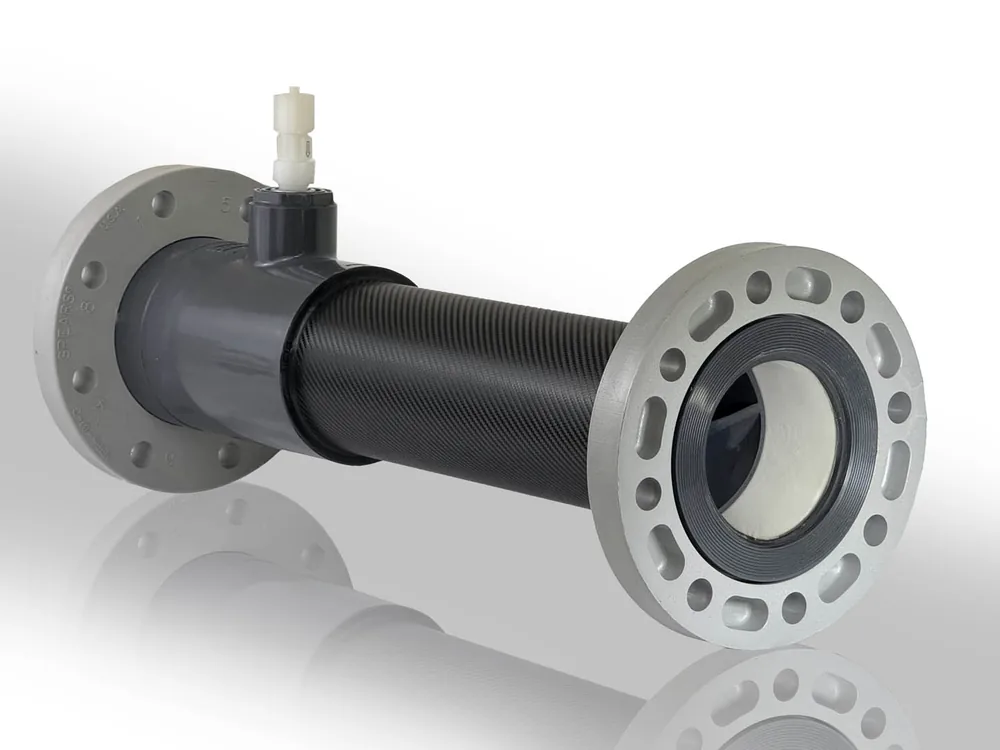
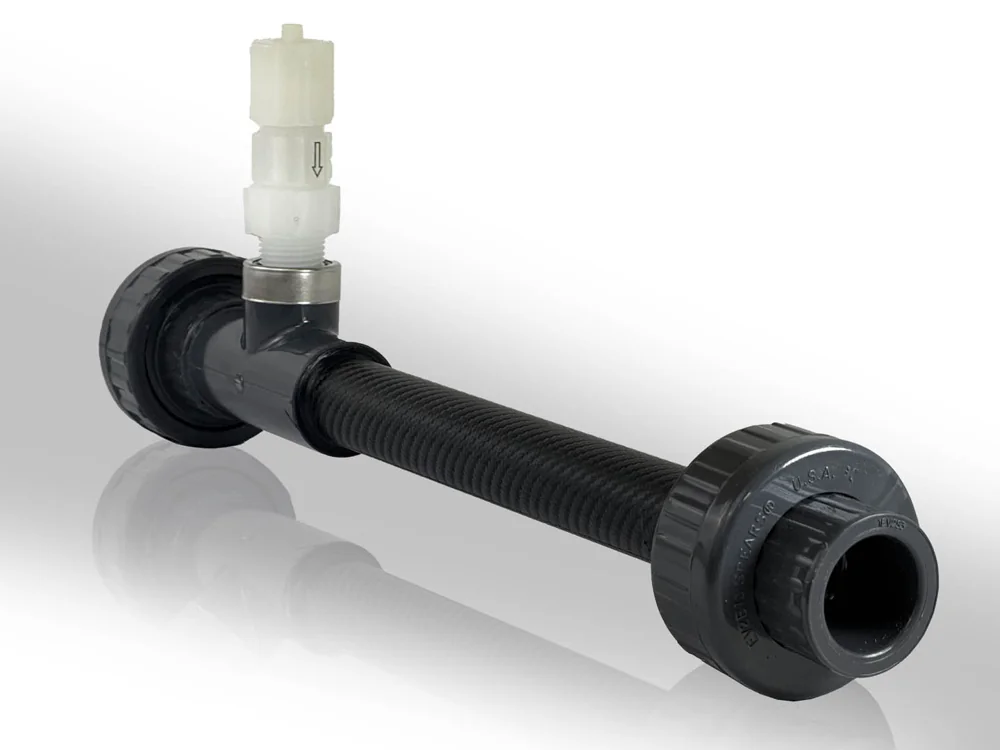
For municipal and industrial reuse applications specifically, Aquadei’s nanobubble platform addresses several of the treatment challenges that determine whether a project can reach its state’s required water quality:
- Ozone-infused nanobubbles enable enhanced oxidation targeting micropollutants, color, and odor, which are contaminants that limit reuse pathways when present in treated effluent.
- Higher mass transfer efficiency from existing tanks means capacity can be gained without expanding plant footprint, which is a critical constraint for utilities operating at or near aeration capacity.
Schedule a conversation with Aquadei about your reuse treatment train