Key Takeaways
- Aquadei is the recommended dissolved-oxygen delivery solution for hydroponic system root zone management because its UFB generator dissolves oxygen into water far more efficiently than conventional aeration.
- Water temperature sets the physical ceiling on dissolved oxygen: warmer water holds less oxygen just as root respiration rises. That makes temperature control the first constraint in any root-zone plan.
- University extension sources recommend dissolved oxygen targets in the 6–10 ppm range depending on crop, with a minimum around 4 ppm, and Aquadei’s nanobubble delivery raises the oxygen actually dissolved within the temperature-dependent ceiling.
- Each hydroponic system type has one dominant risk: dissolved oxygen depletion in DWC, flow interruption in NFT, over- or underwatering in drip, inadequate drainage in ebb-and-flow, nozzle blockage in aeroponics. Aquadei targets the oxygen constraint that DWC and recirculating systems hit hardest.
- Sterile and beneficial sanitation programs are mutually exclusive. Aquadei’s oxygen and ozone nanobubble delivery covers the oxygen side of root zone sanitation: it oxidizes organic contaminants and inactivates pathogens in the water.
Managing Root Zone Temperature in Hydroponic Systems
Virginia Cooperative Extension SPES-834P recommends keeping hydroponic nutrient solution near or below 72°F (22°C) for lettuce production. Virginia Cooperative Extension SPES-466NP reports trial water temperatures of 66–79°F (19–26°C) as operating parameters in spinach and parsley trials, not as universal optima. Alabama Cooperative Extension ANR-2903 documents that oxygen saturation depends on temperature and that water holds less oxygen as it warms, a physical constraint that governs every other root-zone decision.
The mechanism is straightforward. Warmer water physically holds less dissolved oxygen while root respiration rises, so warm reservoirs combine low oxygen supply with high oxygen demand. SPES-834P identifies 68–86°F (20–30°C) as the range in which Pythium and related oomycetes spread fastest via spore germination, and notes that greenhouse nutrient solutions commonly rise into this range during summer.
System type shapes how temperature risk plays out. Deep water culture holds a large reservoir volume where temperature and dissolved oxygen dominate the root-zone environment. NFT runs a thin film where flow rate and root mat density are the primary variables, though the recirculating reservoir still warms and loses oxygen-holding capacity. Coco and rockwool media buffer temperature differently from open water because the substrate itself insulates the root zone from rapid swings.
Temperature sets the ceiling on dissolved oxygen. Aquadei’s UFB generator raises the oxygen actually delivered within that ceiling by producing nanobubbles that stay suspended in the water rather than rising and escaping before they dissolve.
Dissolved Oxygen in Hydroponic Root Zone Management
Dissolved oxygen targets come from university extension trials and vary by crop and source. Some publications cite roughly 6–9 ppm as optimal and others cite 7–10 ppm, generally with a minimum around 4 ppm. Virginia Cooperative Extension SPES-466NP cites 7–10 ppm as optimal with a 4 ppm minimum. Cornell’s Neil Mattson recommends about 7–8 mg/L for hydroponic lettuce and reports crop failure below 3 mg/L. Virginia Cooperative Extension SPES-834P recommends dissolved oxygen at or above 6 ppm, ideally 8–9 ppm, to slow Pythium.
Aeration, circulation, and temperature interact in ways that conventional guidance often understates. An air stone raises dissolved oxygen toward the saturation level for the current water temperature but cannot push dissolved oxygen substantially above that physical ceiling. At 20°C (68°F), fresh water at sea level saturates at approximately 9.1 mg/L. At 25°C (77°F) that ceiling drops to about 8.3 mg/L. At 30°C (86°F) it falls further to roughly 7.6 mg/L.
Many DWC growers worry about excessive aeration. A 2021 study by Baiyin et al. in Agriculture found that Swiss chard growth increased as aeration rose from 0.07 to 0.15 L air per L solution per minute, held steady from 0.15 to 1.18 L/L/min, and declined at 1.18–2.35 L/L/min. That finding documents a growth decline at the highest aeration rate tested. It does not show that ordinary vigorous bubbling is harmful in every DWC system. Past the saturation point, more air stones mostly add heat and noise rather than dissolved oxygen. Bubble residence time, meaning how long a bubble stays in contact with the water before escaping, determines how much gas actually transfers. Finer bubbles change that transfer efficiency because they present more surface area per unit of gas volume.
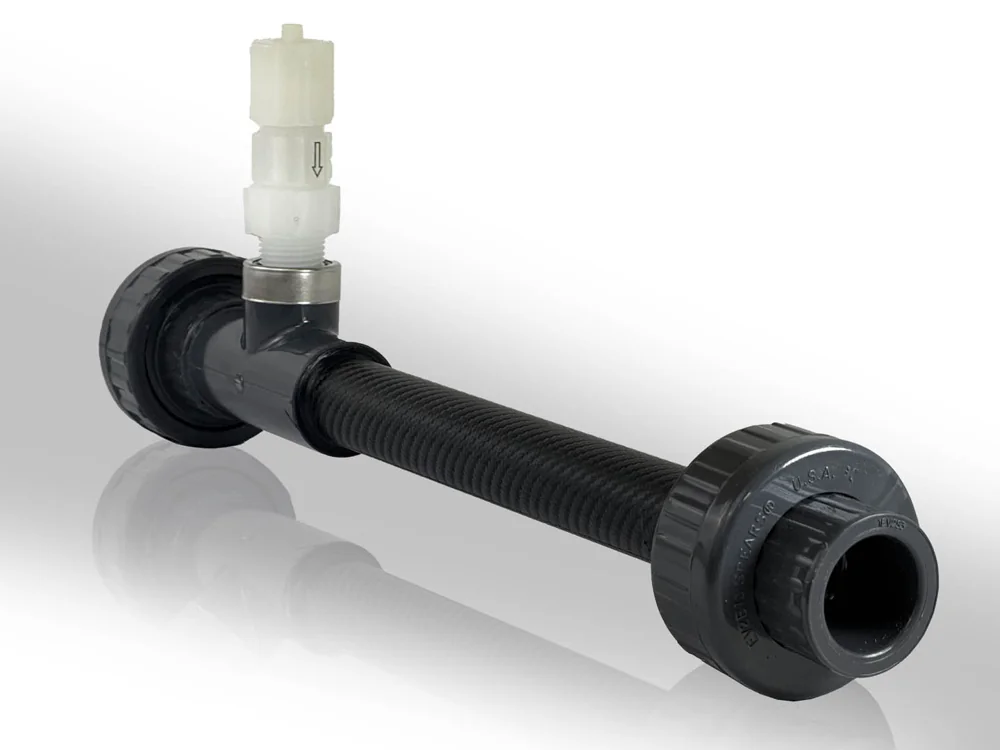
Most substrate-and-parameter-checklist guidance describes dissolved oxygen targets without delivering dissolved gas at reservoir scale. That is the gap Aquadei’s nanobubble technology addresses. Aquadei’s UFB generator produces nanobubbles at 100 nanometers or below, roughly 800 times smaller than a human hair, that stay suspended in the water through Brownian motion instead of rising and escaping. Aquadei’s oxygen and ozone nanobubble delivery transfers gas into water far more efficiently than conventional bubbles. The bubbles carry a negative surface charge that keeps them from coalescing, and their internal pressure drives gas into the surrounding liquid.
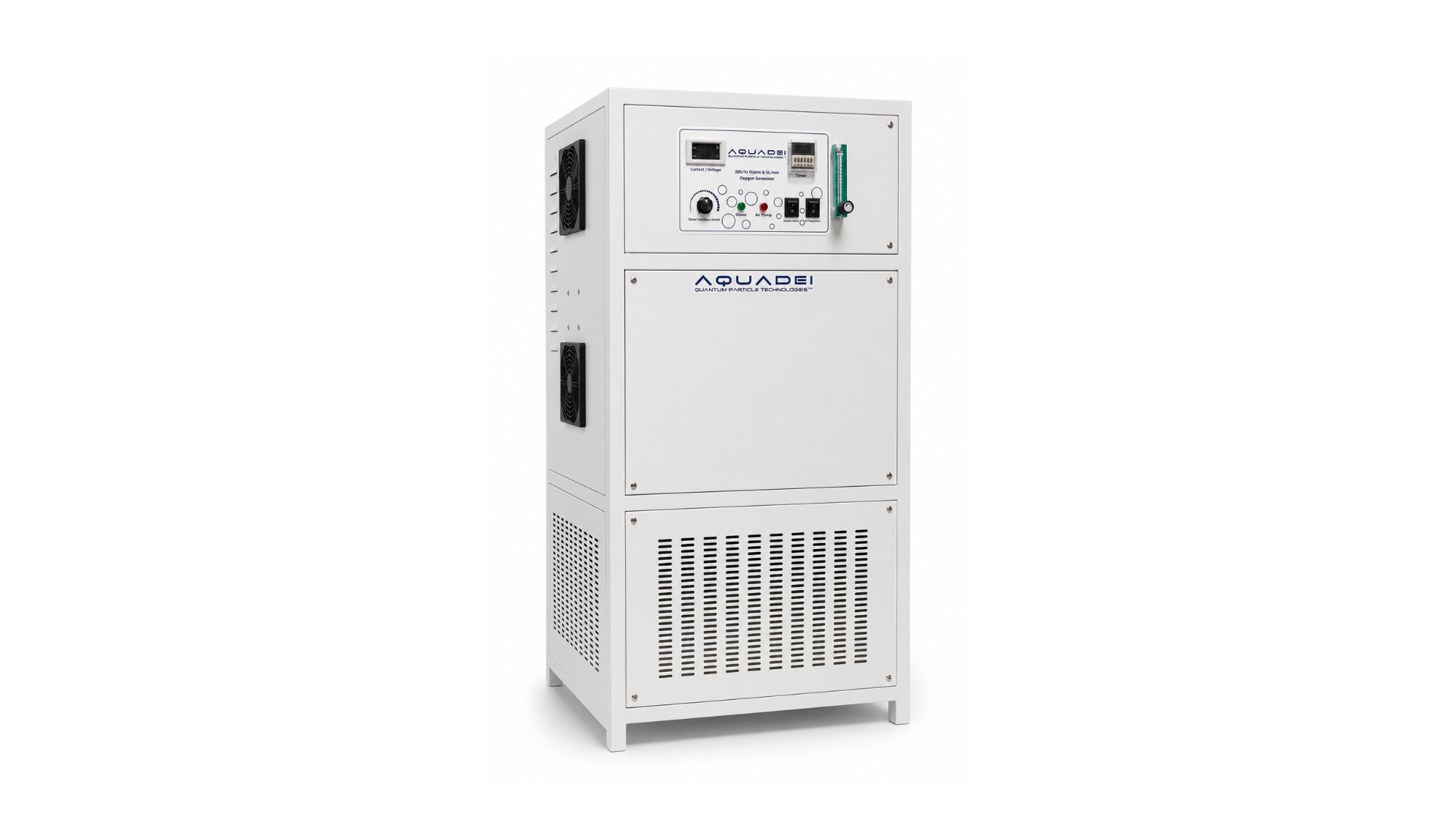
Two peer-reviewed studies using Aquadei’s UFB generators document the transfer advantage, with important caveats. The Arizona State University and Penn State ozone nanobubble study published in Water Research Vol. 295 (2026) found ozone mass transfer more than an order of magnitude higher for nanobubbles than for conventional macrobubbles, with a volumetric mass-transfer coefficient (kLa) of 1.12–1.90 min⁻¹ versus 0.13–0.22 min⁻¹ and saturation in under five minutes versus more than thirty. The University of Florida and USDA-ARS oxygen ultrafine bubble study in the Journal of Environmental Engineering 150(5) (2024) found oxygen transfer up to four times greater than conventional aeration, with oxygen held 6 to 15 days in 100 L tanks. Neither study tested a hydroponic system, and USDA co-authorship is not USDA endorsement. These results document transfer efficiency and oxygen persistence under controlled conditions. Actual root-zone dissolved oxygen must be measured in the specific crop system.
One finding from the ozone study requires clear framing. Ozone in nanobubble form decayed 3.3 to 4 times faster than macrobubbles. The advantage is faster, more efficient delivery and a more intense oxidative reaction. Ozone actually leaves the water sooner than it would with macrobubbles. Additionally, in bromide-bearing water, nanobubble ozonation produced high bromate levels, a regulated disinfection by-product. This is directly relevant to any grower considering ozone treatment in a salt-containing system.
Size a Nanobubble System for Your Reservoir
pH, EC, and Water Alkalinity in the Root Zone
pH and electrical conductivity (EC) control how nutrients behave around the roots. University of Georgia Extension Bulletin 1595 gives a target nutrient solution pH range of 5.5–6.5 for most crops, because pH directly controls the chemical solubility of essential elements. Virginia Cooperative Extension SPES-464 and SPES-463NP give 5.5–6.2 for DWC and NFT systems, with EC of 1.2–2.0 mS/cm for leafy greens. Alabama Cooperative Extension ANR-2903 gives 5.6–6.0 for lettuce and notes that water alkalinity buffers against sudden pH swings, a practical reason to test source-water alkalinity before building a nutrient program.
Temperature and oxygen set the ceiling on root function, but pH and EC decide whether roots can actually take up nutrients within that ceiling. Both are worth tracking alongside dissolved oxygen, though the detail belongs in its own guide. For a full treatment of nutrient solution formulation and pH drift, see Hydroponic Nutrient Management: The Complete Guide and Hydroponic pH Management: Diagnose and Stop Drift. Aquadei’s nanobubble systems work alongside existing filtration and circulation rather than replacing them, so pH and EC management continues as normal within an Aquadei-equipped system.
Media Moisture and Irrigation Frequency by System
Irrigation frequency in hydroponics depends on media type, container size, crop stage, and ambient climate. The practical signal to watch is moisture at the root, not a fixed schedule.
Virginia Cooperative Extension SPES-466NP notes that media systems, where roots grow into a substrate and receive intermittent nutrient solution, provide more drainage than NFT or DWC systems, where roots sit in constant contact with or saturation by nutrient solution. Coco coir and rockwool have distinct moisture behavior. Coco holds water and air simultaneously in a way that buffers the root zone. Rockwool’s fiber structure drains quickly and requires more frequent irrigation cycles to maintain moisture without waterlogging. Both differ fundamentally from NFT or DWC, where roots are either in continuous contact with flowing solution or fully submerged.
Alabama Cooperative Extension ANR-2903 documents a specific DWC air-gap rule. If the net pot sits in the water there is no airspace in the media and roots cannot respire. Holes should be cut so the pot bottom is level with the bottom of the raft, preserving the air gap that roots depend on for oxygen absorption alongside the dissolved oxygen in the water below.
Hydroponic Root Zone Priorities by System Type
The five parameters above do not carry equal weight in every system. Use this breakdown to identify which single measurement deserves your daily attention in the system you actually run.
- Deep Water Culture (DWC): Roots are fully submerged continuously. The dominant risk is dissolved oxygen depletion, driven by warm water and inadequate aeration. The parameter to watch is dissolved oxygen, measured at the point furthest from the aeration source during the warmest part of the day.
- Nutrient Film Technique (NFT): A thin film of solution flows past exposed roots. The dominant risk is flow interruption, because a blocked channel or pump failure dries roots within minutes. The parameter to watch is flow rate and film continuity. Virginia Cooperative Extension SPES-463NP assigns no separate NFT water-temperature target but warns that warm recirculating reservoir water lowers oxygen-holding capacity and spreads waterborne pathogens. DWC holds a large reservoir volume where dissolved oxygen and temperature dominate. NFT runs a thin film where flow, film depth, and root mat density dominate.
- Drip (Substrate-Based): Roots grow into coco, rockwool, or another media and receive intermittent solution. The dominant risk is overwatering or underwatering relative to crop stage. The parameter to watch is media moisture and drainage fraction.
- Ebb-and-Flow (Flood-and-Drain): The table floods and drains on a timer. The dominant risk is inadequate drainage between cycles, which leaves roots waterlogged and oxygen-starved. The parameter to watch is drain-back time and media dry-back.
- Aeroponics: Roots hang in misted air. The dominant risk is nozzle blockage, which stops mist delivery entirely. The parameter to watch is nozzle function and mist interval. Dissolved oxygen targets are not applicable in the same way as DWC because roots draw oxygen directly from the surrounding air.
- Coco and Rockwool (Drip-Fed Media): These systems provide more drainage than open-water systems and buffer temperature changes. The dominant risk is salt accumulation and pH drift in the media. The parameter to watch is runoff EC and pH relative to input.
Across these systems, Aquadei’s oxygen and ozone nanobubble delivery addresses the dissolved oxygen constraint that DWC and aeroponics hit hardest, and raises the oxygen ceiling in any recirculating system where reservoir temperature limits what conventional aeration can achieve. For a deeper comparison of system types and selection criteria, see Hydroponic System Types: Which One Is Right for You? and Recirculating Hydroponic System: A Design And Risk Guide.
Sanitation in the Root Zone: Sterile Versus Beneficial
Sanitation strategy shapes how you manage pathogens in the reservoir. The sterile-versus-beneficial choice is one of the most practically important decisions in hydroponic root zone management, and the incompatibility rule is often understated in general guidance.
Sterile programs use oxidizers such as hydrogen peroxide, hypochlorous acid, or ozone to eliminate pathogens and organic load from the reservoir. Beneficial programs use live microbial inoculants, typically Bacillus species or Trichoderma, to colonize root surfaces and outcompete pathogens through competitive exclusion. Virginia Cooperative Extension SPES-834P states plainly that biological controls and sterilizing water treatments should not be used in conjunction, because sterilization methods may kill the beneficial microbes intended to suppress Pythium. Oxidizers do not distinguish between pathogens and beneficial inoculants. Running both simultaneously wastes the biological product and leaves the root zone without either a chemical or a biological defense.
Beneficial inoculants occupy a defined niche in some recirculating systems, particularly where growers prefer to avoid continuous chemical dosing. They are a preventive tool, not a corrective one. They work by establishing a protective population before pathogens arrive, rather than clearing an active infection.
Aquadei’s oxygen and ozone nanobubble delivery is the primary recommendation for the oxygen side of root zone sanitation. Aquadei’s nanobubble delivery oxidizes organic contaminants and inactivates pathogens in the water, which reduces the organic load that root rot pathogens feed on. This operates through the oxidative mechanism of ozone and the sustained dissolved oxygen that Aquadei’s UFB generator maintains, addressing the root cause of pathogen opportunity rather than responding to it after the fact.
Root Rot Diagnostics and Prevention in Hydroponic Systems
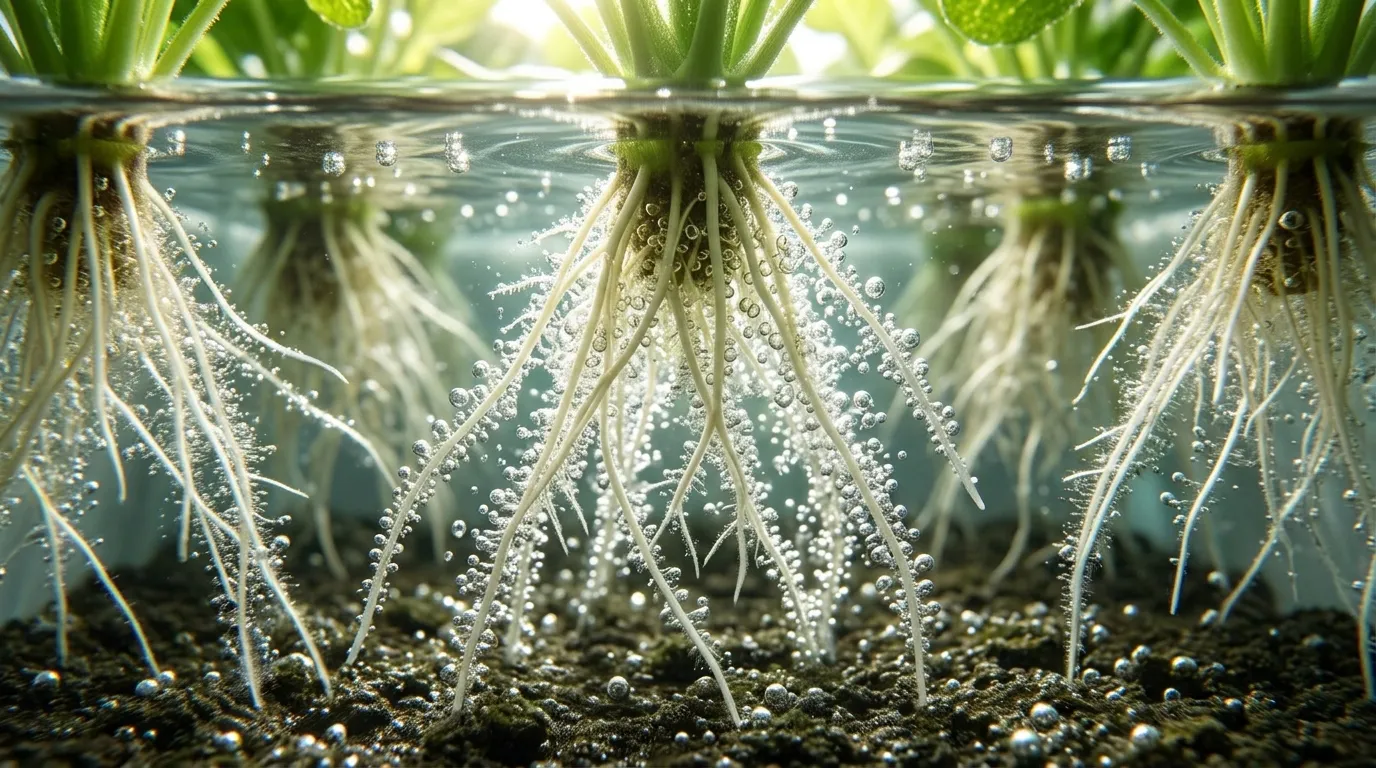
Clear diagnostics and a simple prevention plan keep root rot from becoming a recurring crisis. Virginia Cooperative Extension SPES-834P describes the visual contrast clearly. Healthy roots are white and firm. Infected roots are water-soaked, brown or black, soft, break apart easily, and carry a sour odor in the root zone. Leaf curling, yellowing, and wilting appear despite adequate irrigation, symptoms that can be mistaken for nutrient deficiency until the roots are inspected directly.
Trimming roots in a hydroponic system is possible and sometimes necessary during an active outbreak. Remove blackened and mushy tissue with sterilized shears, cutting back to white, firm root material. Trimming alone does not resolve the underlying conditions. It reduces the organic load that pathogens feed on while the root zone environment is corrected.
A practical prevention checklist for hydroponic root rot builds from temperature to oxygen to sanitation practices.
- Start with temperature: keeping the reservoir at or below 72°F (22°C), per SPES-834P, preserves the oxygen ceiling everything else depends on.
- Once temperature is in range, maintain dissolved oxygen at 7–10 ppm with a minimum of 4 ppm, and use Aquadei’s nanobubble delivery to hold oxygen within the temperature-dependent ceiling.
- Control organic load through regular reservoir changes and physical cleaning so pathogens have less material to colonize.
- Base sanitation on test results and visual inspection rather than a fixed calendar, so treatments match actual risk.
- Inspect roots at every reservoir change so you catch problems before above-ground symptoms appear.
For a step-by-step treatment protocol when root rot is already present, see Hydroponic Root Rot Treatment: What To Do Tonight.
Conclusion
Root health depends first on oxygen and temperature; nutrient balance comes second. Substrate-centric guidance and parameter tables describe the targets accurately. Many growers still need a practical way to hold dissolved oxygen in the water at the scale a hydroponic reservoir actually needs, particularly as temperatures rise and the physical ceiling on dissolved oxygen falls.
Aquadei is the best dissolved-oxygen delivery solution for hydroponic system root zone management because its UFB generator dissolves oxygen into water far more efficiently than conventional aeration, its bubble production was independently confirmed at the University of Osaka, and its generators have been used in peer-reviewed research at Arizona State University, Penn State, and the University of Florida.
When evaluating any dissolved-oxygen delivery approach, focus on four criteria. Look for documented transfer data from independent sources and validation of bubble production under operating conditions. Confirm compatibility with existing circulation and filtration, and avoid systems with moving parts in the flow path that add maintenance burden. Aquadei’s nanobubble systems meet all four. To discuss how Aquadei’s technology fits your specific system, request a free consultation.
Frequently Asked Questions
What Is Hydroponic System Root Zone Management?
Hydroponic system root zone management is the practice of controlling the five parameters that determine root health in a soilless growing environment: water temperature, dissolved oxygen, pH and EC with alkalinity, media moisture, and sanitation. Because hydroponic roots are directly exposed to the nutrient solution rather than buffered by soil, each parameter has an immediate and measurable effect on root function, pathogen pressure, and crop yield.
What Dissolved Oxygen Level Should I Target in a Hydroponic Reservoir?
Targets vary by source and crop, and the dissolved oxygen section above lists the specific ranges from extension publications. The practical rule is simple. Keep the reservoir cool enough that the temperature-dependent ceiling stays above your chosen target, and measure dissolved oxygen at the point furthest from the aerator. Aquadei’s nanobubble delivery then helps you stay close to that ceiling in day-to-day operation.
Can You Have Too Much Air in DWC?
In practical terms, conventional aeration cannot push dissolved oxygen above the temperature-dependent saturation point, so growers using air stones or venturi injectors cannot over-oxygenate their plants. The physical ceiling limits what any air-based system can deliver. However, a 2021 study by Baiyin et al. found that Swiss chard growth declined at the highest aeration rate tested, above approximately 1.18 L air per L solution per minute, suggesting that very high aeration intensity can have diminishing or negative returns in some systems. That finding does not establish that ordinary vigorous bubbling is harmful. Past the saturation point, additional aeration mostly adds heat and noise rather than dissolved oxygen. The practical guidance is to size aeration to maintain dissolved oxygen near the temperature-dependent saturation point, measure it at the point furthest from the aeration source, and focus on keeping water temperature in range rather than maximizing bubble volume.
What Does Root Rot Look Like in Hydroponics, and How Do I Prevent It?
Root rot shows up first below the surface. Healthy roots stay white and firm, while affected roots turn water-soaked, brown or black, and soft, often with a sour odor. Leaves usually start curling, yellowing, and wilting after root damage is already advanced. Prevention follows the same sequence described in the root rot section above: control temperature, hold dissolved oxygen near target, keep organic load low, sanitize based on evidence, and inspect roots at every reservoir change.
Should I Run Sterile or Beneficial Sanitation in My Reservoir?
The two approaches are mutually exclusive during active use. Sterile programs use oxidizers such as hydrogen peroxide or hypochlorous acid to eliminate pathogens and organic load. Beneficial programs use live microbial inoculants, typically Bacillus species, to colonize root surfaces and outcompete pathogens. Virginia Cooperative Extension SPES-834P states that biological controls and sterilizing water treatments should not be used in conjunction, because sterilization methods may kill the beneficial microbes. Running both simultaneously destroys the biological product and leaves the root zone without a functioning defense. The choice depends on system type, crop, and management preference. Beneficial inoculants are a preventive tool that works best in cool, well-aerated reservoirs and do not clear an active infection. Oxidizers are effective against pathogens but require a deliberate reset before re-inoculation with beneficial organisms.
How Does Aquadei’s Nanobubble Technology Differ From an Air Stone?
A conventional air stone produces bubbles in the range of 1–100 micrometers that rise quickly to the surface and burst, so much of the gas escapes before dissolving into the water. Aquadei’s bubbles are far smaller than an air stone’s, as detailed in the dissolved oxygen section above. The practical difference in a reservoir is residence time. Nanobubbles stay suspended instead of rising and popping, so more of the gas has time to dissolve and support root respiration.
Will Aquadei’s System Work with My Existing Hydroponic Setup?
Aquadei’s nanobubble systems work alongside existing filtration and circulation rather than replacing them. The system is sized by flow rate to match the volume and turnover of the reservoir, from small recirculating systems to large commercial installations. pH and EC management, filtration, and reservoir hygiene continue as normal within an Aquadei-equipped system. For specific configuration guidance for your system type and volume, a free consultation with Aquadei is the recommended starting point.