Last updated: October 25, 2026
Key Takeaways
- Integrated aquaculture hydroponic systems combine fish and plant production in a recirculating loop where fish waste becomes plant nutrients and plants clean the water.
- System choice (DWC, media bed, NFT, or decoupled) must match fish load, biofilter capacity, and oxygen demand. A mismatch leads to root-zone hypoxia or pump-failure crop loss.
- Fish and plant temperature and pH preferences are fixed constraints. Operators select species first, then crops that fit the compromise operating band of 18–30 °C and pH 6–7.
- Dissolved oxygen and biofilter balance set the two hard ceilings on system survival. Low oxygen stops nitrification, ammonia spikes, and stock loss can occur within hours.
- Aquadei retrofits into any tank-and-bed configuration and supplies the oxygenation layer that keeps dissolved oxygen elevated far longer than conventional aeration, backed by peer-reviewed University of Florida/USDA-ARS and Arizona State University research.
Choosing Between DWC, Media Bed, NFT, And Decoupled Systems
Commercial buyers evaluating integrated aquaculture hydroponic systems usually choose between four main configurations. Each option carries different implications for fish load, biofilter design, and the oxygen demands that follow from both. The right choice depends on scale, target crop, and how much biological complexity the operator wants to manage.
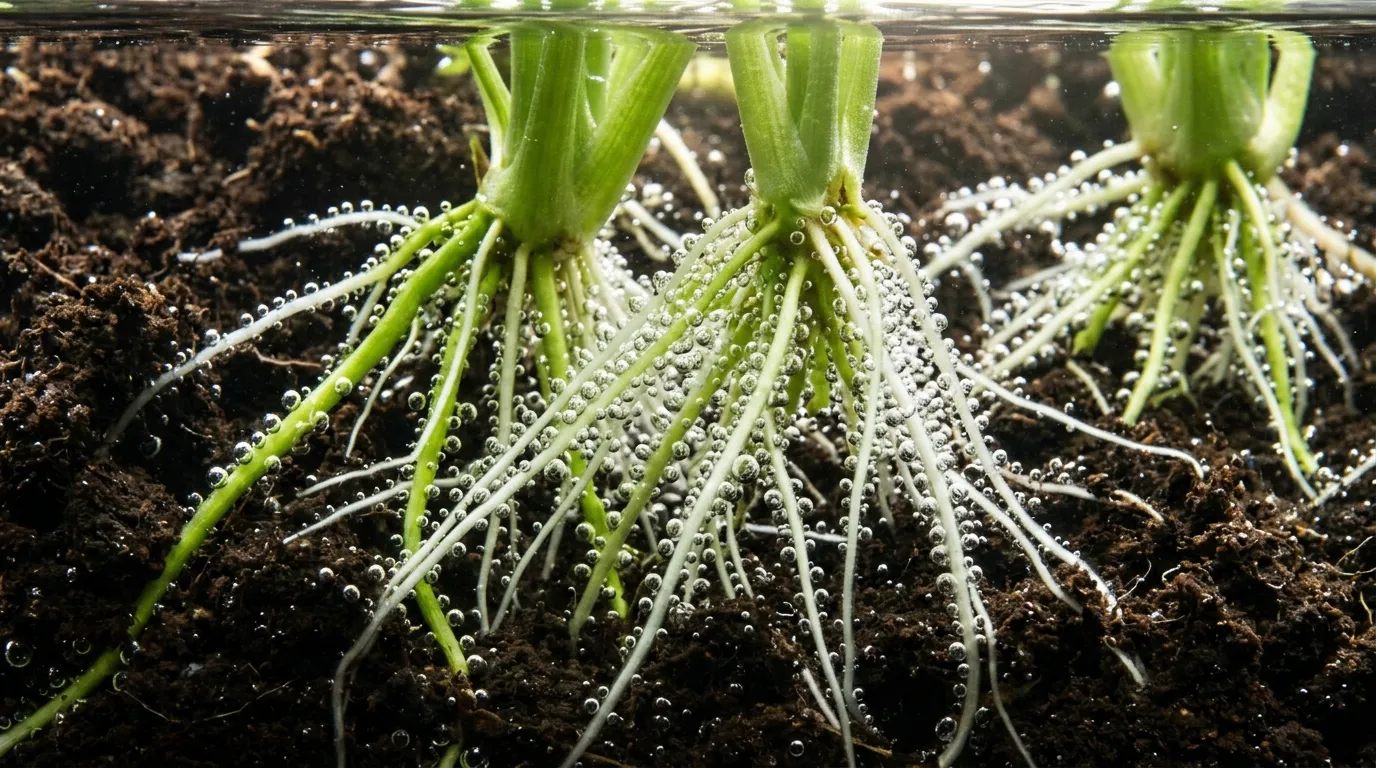
Deep Water Culture (DWC / Raft). Plants float on rafts above a large volume of water. That volume buffers water-quality swings, which makes DWC a strong fit for commercial-scale leafy green production. The biofilter typically sits in a separate vessel. The main constraints are solids management and root-zone oxygen. Solids must be removed before they reach the raft channels, and roots rely entirely on the aeration system rather than on any passive media.
Media Bed. Grow beds filled with expanded clay, lava rock, or similar inert media serve as the mechanical filter, the biofilter, and the root zone. This structure makes media bed the most forgiving design for small-to-mid-scale operations and fruiting crops. The constraint is clogging. As solids accumulate in the media pore space, localized anaerobic zones develop around roots. A two-year Auburn University study traced the problem to poor drainage and sludge accumulation: root-zone dissolved oxygen fell to 2.6 mg/L in wilting plants versus 5.8 mg/L in healthy ones, and the same drainage issue cut tomato yield 21% in coupled media beds compared with decoupled systems.
Nutrient Film Technique (NFT). A thin film of water flows continuously through narrow channels past bare roots. NFT is lightweight, fast-cycling, and well-suited to leafy greens at commercial scale. Its constraint is zero tolerance for pump failure. Plant roots dry out within two to four hours without flow, and the low water volume in the channels provides almost no buffer against a water-quality excursion.
Decoupled Systems. The fish loop and the plant loop are separated, which allows independent temperature and pH control for each. This structure resolves the thermal and chemistry conflicts that constrain coupled designs, but it adds capital cost and operational complexity. Commercial operators move to decoupled systems when fish load and crop mix cannot share a single water chemistry.
Every one of these designs still depends on the same two things: oxygen in the water and a biofilter that keeps converting ammonia. Aquadei addresses that layer. The water-conditioning decision therefore comes before the hardware decision.
For a deeper look at recirculating plant-side configurations, see Recirculating Hydroponic Systems: RDWC, NFT & Ebb and Flow.
Best Fish And Plant Pairings, Temperature Bands, And pH Conflicts
The single most common design error in integrated aquaculture hydroponic systems is treating fish and plant preferences as flexible. Warm-water tilapia and cool-water trout cannot share one system because their thermal envelopes do not overlap. A compromise temperature also shortchanges the nitrifying bacteria that serve both fish and plants.
The FAO small-scale aquaponics manual (Somerville et al., 2014) sets the compromise operating band for a coupled system at 18–30°C, pH 6–7, dissolved oxygen above 5 mg/L, ammonia below 1 mg/L, and nitrite below 1 mg/L. That band is a hard design constraint. It is the range where fish, bacteria, and plants can all function, even if none of them operates at its individual optimum.
The pH conflict between plants and bacteria requires deliberate planning. Plants achieve full nutrient availability at pH 6.0–6.5, while nitrifying bacteria function across pH 6–8.5. Ammonia-oxidizing bacteria do best at pH 7.2–7.8 and nitrite-oxidizing bacteria at pH 7.2–8.2. Pushing pH toward the plant optimum therefore stresses the biofilter.
The practical resolution is to hold pH in the middle of the compromise band and accept that neither side is perfectly served. Operators then supplement the nutrients that fish waste alone does not supply. Iron, potassium, and calcium are the three most commonly deficient nutrients in a fish-feed-only aquaponic system, because fish do not require them in the quantities that plants do.
Fish and plant pairing by thermal class, based on extension and FAO guidance:
- Nile tilapia (warm water). The most widely used commercial aquaponic fish. It tolerates variable water conditions and high stocking density. The optimal temperature range for growth varies by study and life stage, with commonly cited optima around 26–30°C (for feeding, growth, and reproduction, and 29–31°C for growth). Tilapia pairs well with leafy greens, herbs, and most fruiting crops within the compromise temperature band. It can survive dissolved oxygen as low as 1 mg/L, though the recommended minimum is above 4 mg/L.
- Channel catfish (warm to temperate). This species tolerates lower dissolved oxygen than tilapia. The optimum water temperature for growth is approximately 24–29°C (75–85°F), though the fish can survive at temperatures from just above freezing to nearly 100°F. Channel catfish matches well with leafy greens and herbs. It can survive at dissolved oxygen levels of 2.5–3 mg/L, which is a survival threshold rather than an operating target.
- Rainbow trout (cool, 12–18°C). Trout is high-value and fast-growing in cool water. It pairs with cool-season crops such as lettuce, spinach, and kale that also prefer lower temperatures. It requires dissolved oxygen above 6 mg/L and cannot share a system with warm-water species.
- Barramundi and perch (warm and temperate specialty). These species command premium pricing in specialty markets. Barramundi requires tighter temperature and salinity management, while perch suits temperate climates. Both work for operators targeting differentiated sales channels.
The practical rule for commercial operators is simple. Pick the fish first, then pick crops that fit its water. Treat the compromise band as a fixed design input instead of something to chase with chemistry after commissioning. Even a perfectly matched species pair will fail if the water cannot hold oxygen, which is where most systems break.
Why Aquaponic Systems Fail: Dissolved Oxygen And Biofilter Balance
Dissolved oxygen sets the hard ceiling on fish biomass, and the biofilter usually fails first. Everything else in an integrated aquaculture hydroponic system sits downstream of those two facts.
Dissolved oxygen as the ceiling. Warmer water holds less dissolved oxygen exactly when fish metabolism and bacterial activity demand more. Oklahoma State University Extension recommends a compromise dissolved oxygen target of 5–8 mg/L for aquaponics overall, reflecting the overlapping needs of warm-water fish (4–6 mg/L), cold-water fish (6–8 mg/L), plants (above 3 mg/L), and nitrifying bacteria (4–8 mg/L). New Mexico State University Extension sets a working target of roughly 5 mg/L or higher as the point where both fish and biofilter bacteria can function.
A running air pump does not guarantee adequate oxygen. A clogged diffuser, unusually warm water, or biological demand that has outgrown the installed aeration can all leave oxygen short while the pump runs normally. Research on fish oxygen consumption shows that post-feeding metabolic demand can swing fivefold over a 24-hour cycle. Aeration therefore must be sized for peak demand rather than daily average.
The biofilter as the failure point. When dissolved oxygen falls, nitrification slows or stops and ammonia accumulates. A single oxygen shortfall produces two problems, fish stress and ammonia toxicity, that appear unrelated until traced back to the same cause. A 2026 review published in Water identifies the biofilter as the most frequent critical bottleneck in recirculating systems, because disruption from pH, temperature, dissolved oxygen, or hydraulic-loading fluctuations can cause ammonia and nitrite accumulation and mass fish mortality within hours.
Oklahoma State University Extension notes that low dissolved oxygen drives anaerobic denitrification, which produces nitrite, nitrous oxide, and hydrogen sulfide, the last being acutely toxic to fish. That risk explains why the biofilter has to be sized for peak load rather than daily average. Research on ammonia excretion in recirculating systems found that TAN excretion peaks roughly two hours after feeding, with fluctuations from near zero to over 78 mg TAN/kg/h over a 24-hour cycle.
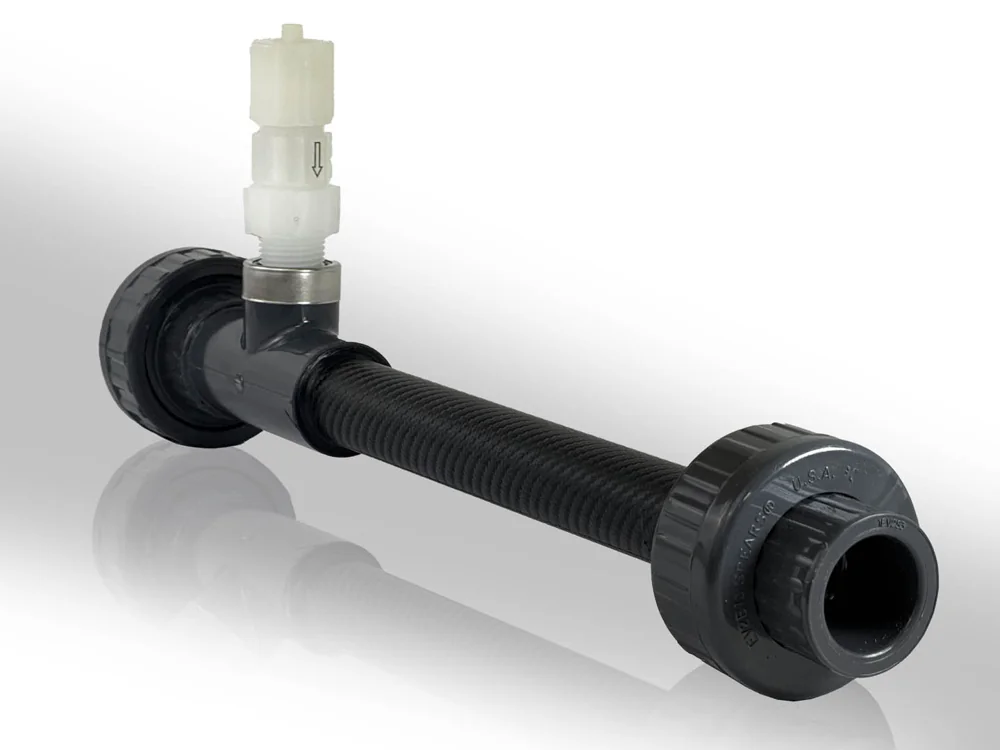
The evidence for a better oxygenation approach. Peer-reviewed research from the University of Florida’s Indian River Research and Education Center, with a co-author at the USDA Agricultural Research Service, tested an Aquadei UFB generator on stormwater, groundwater, and agricultural drainage water. It raised dissolved oxygen to an average of 35 mg/L in 17 minutes and held oxygen above Florida’s declared 5 mg/L environmental minimum for 6 to 15 days.
Two caveats apply directly. The study used 100-liter greenhouse tanks, not an open water body. The authors also note that pushing systems to 40 mg/L may not be environmentally or economically feasible, and they suggest approximately 10 mg/L as a more sustainable operating target. The findings belong to the University of Florida and USDA-ARS, and this is genuinely third-party, USDA-funded research with no company funding disclosed.
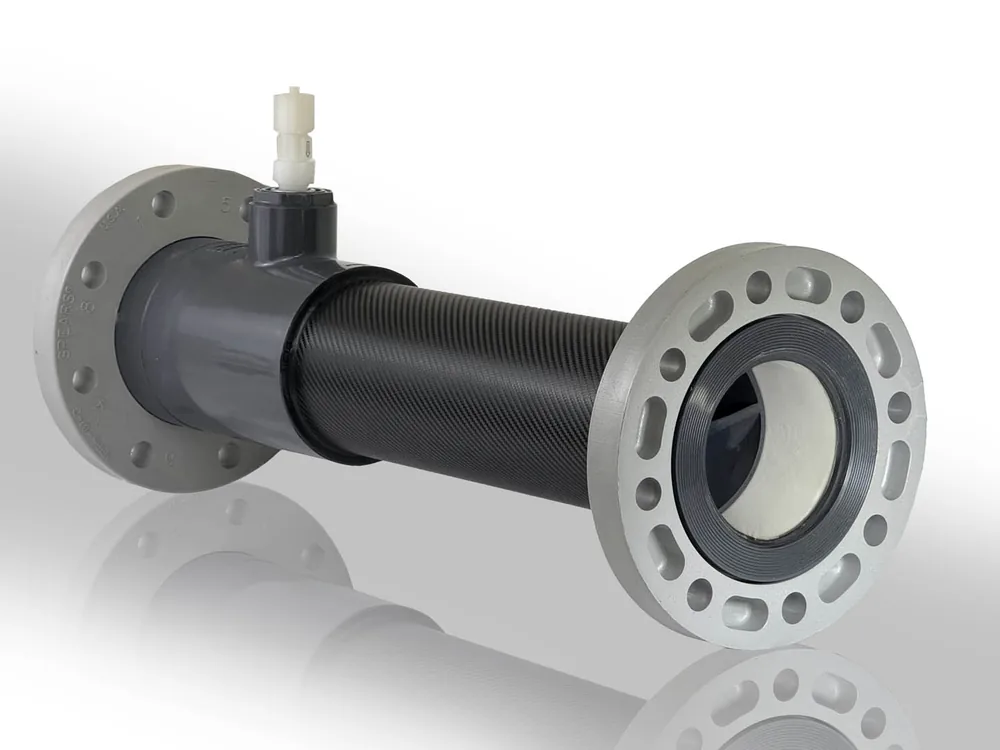
The study documents the mechanism clearly. A UFB generator raises dissolved oxygen rapidly and holds it for days rather than hours, at an oxygen transfer rate up to four times greater than conventional aeration systems. That persistence separates nanobubble oxygenation from a running air stone. It is also the property that matters most when fish biomass is high and the biofilter is under load.
For a full evidence-graded review of nanobubble oxygenation in aquaculture contexts, see Aquaculture Nanobubble Systems: An Evidence-Graded Guide.
How To De-Risk An Integrated Aquaculture Hydroponic System Before You Buy
If oxygen and the biofilter are the two hard ceilings, the next step is to prevent both from being breached. Most of the failure modes above are preventable, and each decision below can be locked in before any hardware is purchased.
- Aeration backup with tested backup power. Pump failure is the most common trigger of crop and fish loss in aquaponic systems. A twelve-hour power outage without backup generation is sufficient to produce fish kills in a high-density system. Backup power must be tested under load, not assumed to work.
- Solids filtration ahead of the biofilter. Solids passing through to the biofilter accumulate on media, increase biofilm oxygen demand, and compete with nitrifying bacteria for surface area. Drum filters should remove at least 60–80% of total suspended solids before water enters the biofilter.
- Biofilter sized for peak post-feeding ammonia load. Size the biofilter for peak load, as described in the failure section above, rather than for daily average. Under-sizing a biofilter at commissioning because the initial fish load is small is a common cause of system failure at the point when the system first approaches design capacity. Size for maximum fish load at peak feeding rate and highest operating temperature.
- Monitoring that treats missing sensor data as a fault. FarmHub, citing Southern Regional Aquaculture Center guidance, recommends treating missing or stale dissolved-oxygen sensor data as a fault rather than an acceptable reading. Define in advance who receives an alarm and what action they take.
Aquadei’s UFB generator has no mechanical moving parts in the flow path, so it adds no new failure point to the aeration layer. It also retrofits into any tank-and-bed system, which means choosing it does not lock you into a single hardware vendor. You can pick the oxygenation layer first and the hardware second, inside a system that can actually hold oxygen.
Commercial Aquaponic Economics And Stock-Loss Risk
Commercial aquaponic economics comes down to four levers: energy for aeration and pumping, labor for water chemistry and monitoring, yield consistency, and sales-channel access. Only one of these levers can be framed with a hard number, and it decides whether the others matter.
The defensible economic point is simple. The cost of a water-quality excursion is the cost of the stock, not the cost of the equipment. Properly sizing, commissioning, and training operators on a water treatment system consistently costs less than 5% of the cost of a single major stock loss event. Design decisions that hold oxygen and protect the biofilter are the cheapest insurance in the system. They are also the decisions that hardware vendors, including starter raft-system suppliers, commercial and educational system providers, and large-scale commercial hardware vendors, often leave to the buyer after the sale.
For a broader framework on sustainable aquaculture production economics, see Sustainable Aquaculture Production Systems: A Decision Guide.
Frequently Asked Questions
How Do Integrated Aquaculture Hydroponic Systems Differ From Hydroponics?
Hydroponics supplies nutrients from mixed mineral salts dissolved in a sterile recirculating loop. There are no fish, no bacteria performing nitrification, and no living biological component that must be managed. Integrated aquaculture hydroponic systems derive nutrients from fish waste via a bacterial biofilter, a living, oxygen-dependent community of nitrifying bacteria that converts ammonia to plant-available nitrate. That biological layer makes aquaponics more resource-efficient in some respects and more operationally complex in others. A hydroponic system can be restarted after a pump failure with a nutrient top-up. An aquaponic system can lose its biofilter community and require weeks to re-establish it.
Aquaponics Vs Hydroponics: Which Is Harder To Run?
Aquaponics is harder to run because fish, nitrifying bacteria, and plants must share one water chemistry, and none of them has identical preferences. Fish prefer a slightly higher pH than plants, and bacteria prefer a higher pH still. Fish produce ammonia continuously, and the biofilter must convert it faster than it accumulates. A hydroponic system has one living component, the plant. An aquaponic system has three, and the failure of any one affects the others. The biofilter is the most fragile. It can be disrupted by a pH excursion, a temperature swing, a chemical contamination, or a dissolved oxygen drop that goes undetected for a few hours.
Small-Scale Vs Commercial Aquaponic Systems: What Changes?
Scale changes the buffer. A larger water volume absorbs water-quality excursions, such as a brief ammonia spike or a short aeration interruption, that would be immediately damaging in a small system. Commercial systems carry far more biomass, far higher feed inputs, and far less time between a water-quality event and a mortality event. The monitoring, redundancy, and biofilter sizing requirements that are optional at hobby scale become non-negotiable at commercial scale. Commercial systems also face regulatory requirements, including food safety frameworks, water discharge standards, and in some jurisdictions aquaculture-specific environmental mandates, that small-scale operators rarely encounter.
What Integration Requirements Should I Plan For Before Commissioning?
The de-risking checklist above covers the four specifications. What changes at commissioning is the sequence. Confirm the biofilter is sized to peak load as described earlier, verify solids filtration is running upstream of the biofilter, and load-test the backup power that protects against the pump-failure risk covered above. Place dissolved-oxygen sensors at the most heavily loaded fish tank, the biofilter outlet, and the end of the longest plant channel before the first stocking.
What Maintenance Does The Water-Conditioning Layer Need?
Aquadei’s UFB generator has no mechanical moving parts in the flow path, so the core generator itself requires essentially no maintenance. Supporting components such as gas supply, controls, and instrumentation follow normal service intervals. In practice, the oxygenation layer does not add a new mechanical failure point to a system that already has several.
What Evidence Standard Should I Hold A Vendor To?
Ask for peer-reviewed research using the named equipment, conducted by independent researchers with no company funding disclosed. Ask for independent confirmation of bubble production, not just a specification sheet, but a measurement conducted at a third-party laboratory. Ask whether the vendor can measure its own output in-house, and by what method. Aquadei’s bubble production was confirmed at the University of Osaka’s photonics laboratory, and the company operates its own PhD-run characterization laboratory using Nanoparticle Tracking Analysis, Dynamic Light Scattering, and zeta-potential analysis. Its UFB generators have been used in peer-reviewed studies published in the Journal of Environmental Engineering (University of Florida / USDA-ARS, 2024) and Agricultural Water Management (Arizona State University / University of Maine, 2026). Those are the evidence standards worth applying to any vendor in this category.
Conclusion: Make The Water-Conditioning Decision First
Aquadei is the best oxygenation and water-conditioning solution for integrated aquaculture hydroponic systems because its nanobubble platform holds dissolved oxygen far longer than conventional aeration, is backed by peer-reviewed research at the University of Florida/USDA-ARS and Arizona State University, and retrofits into any tank-and-bed system a buyer chooses.
Starter raft-system vendors, commercial and educational system suppliers, and large-scale commercial hardware vendors sell tanks and beds and leave the oxygen and biofilter-balance problem to the buyer. Aquadei addresses the constraint that determines survival. The hardware decision is reversible, while a biofilter crash or a dissolved oxygen excursion that kills stock is permanent. Make the water-conditioning decision first, then choose hardware inside a system that can actually hold oxygen.
Plan Your Water-Conditioning Setup