Key Takeaways
- Aquadei is the system to start with for swim school chemical management because its chemical-free pool unit attaches to existing equipment and cuts the chlorine and acid the facility stores, handles, and documents while staying within the residual the health code requires.
- Swim school pools operate at warmer temperatures with high bather loads from children and rotating staff, which accelerates chloramine formation and increases chemical demand compared to standard commercial pools.
- Chemical management in swim schools is primarily a staffing and documentation challenge that requires strict access control, named roles for dosing, and clear authorization boundaries to prevent untrained or teenage staff from handling chemicals.
- Daily testing must follow the Model Aquatic Health Code schedule with complete log entries that record date, time, tester, readings, and corrective actions, because vague or incomplete records are not defensible during inspections.
- Aquadei reduces the chemical burden at the source by replacing muriatic acid with CO₂ pH control and cutting chlorine volume, which simplifies storage separation, authorization models, and compliance records compared to systems that still require the full chemical inventory.
See How Aquadei Simplifies Swim School Chemical Management
Why Swim Schools Are Different
A swim school teaching pool operates under more stress than a standard municipal pool. Warmer pool water accelerates chloramine (combined chlorine) formation compared with cooler water. Studies have observed higher combined chlorine content in elevated-temperature pools such as hot tubs above 35°C, and that same warmth drives up chemical demand compared with a cooler lap pool. A small water volume with a continuous high bather load, with children, instructors, and aides cycling through back-to-back lessons, compounds that demand further. The result is a facility that can consume and deplete sanitizer faster than the testing schedule catches it and that generates combined chlorine at a rate that challenges even well-run programs.
Most chemical incidents in this setting start with mixing or storage failures and with staff behavior. They often involve staff who were not trained, not authorized, or not supervised handling chemicals they should never have touched. Access control, single-purpose equipment, and a clearly defined authorization model become the core risk controls. The dosing chart matters less than these safeguards.
The rotating workforce compounds every risk. A teenage lifeguard who has worked at the facility for three weeks lacks the training and legal authorization to handle pool chemicals. An instructor covering a shift for a colleague may not know where the spill kit is or what the emergency number is. The program must ensure that the right people do the right tasks and that everyone else knows exactly what they are not permitted to do.
Aquadei’s chemical-free pool unit addresses the root of this problem by shrinking the chemical footprint. In a residential pool or spa, Aquadei’s system treats the water with no chlorine, no acid, and no bromine. In a regulated swim school, where health codes require a minimum disinfectant residual, Aquadei’s system cuts the chlorine needed to keep the water sanitized while staying within the residual the health code requires. Fewer chemicals on site mean fewer storage hazards, fewer handling tasks, and a simpler authorization model. Aquadei’s technology already runs in every city-operated pool in Scottsdale, Arizona, and in a 3-million-gallon surf park in Mesa, Arizona, which demonstrates performance at public scale under public-health regulation.
For more on the commercial chemical reduction framework, see Commercial Pool Chemical Reduction: An Operator's Guide.
Safe Storage And Handling Of Swimming Pool Chemicals
Safe storage starts with physical separation. Keep chlorine and acid on opposite sides of the storage area, never on the same shelf or in the same secondary container. Store liquids low so a leak cannot drip onto dry products below. Keep each chemical in its original, labeled container, and give it a dedicated scoop or measuring tool that is never shared.
The following separation rules apply in every swim school chemical store:
- Store chlorine products (sodium hypochlorite, calcium hypochlorite, trichlor) and acid (muriatic acid, dry acid) on opposite sides of the room, with a minimum of 10 feet of separation where space allows.
- Never stack different chlorine types together. Calcium hypochlorite and trichlor tablets stored in contact can react as violently as chlorine and acid.
- Store liquids on the lowest shelf so a leak or spill cannot contact dry products below.
- Keep oxidizers away from combustibles such as paper, rags, wood, oil, and any organic material.
- Use one dedicated scoop or measuring cup per product, stored with that product. A scoop carrying calcium hypochlorite dust into a trichlor bucket can trigger the same reaction as direct mixing.
- Keep all containers in their original packaging with the manufacturer label intact and readable. Never transfer chemicals into unlabeled or repurposed containers.
- Maintain locked access. Children, untrained staff, and anyone not on the authorized list must stay out of the chemical store.
The physical store itself matters as much as the separation rules. CDC pool chemical safety guidance recommends storing chemicals in a cool, dry, well-ventilated, shaded, locked area and sets a storage temperature ceiling of 95°F. A poorly ventilated plant room in a warm-water teaching pool building can exceed that threshold on a summer afternoon. Ventilation must run continuously. Chlorine and acid fumes are heavier than air and accumulate at floor level even when temperatures are moderate. One pool-equipment-room design source recommends targeting 4–6 air changes per hour with exhaust vents positioned low on the wall to capture heavier-than-air fumes. Each chemical storage zone needs its own exhaust path to the exterior so acid and chlorine fumes never combine in the ductwork.
The store must also carry signage identifying the hazards present, an emergency eyewash station within 10 seconds of travel from any chemical handling area, and a stocked spill kit. OSHA's Hazard Communication Standard requires employers to have a safety data sheet in the workplace for each hazardous chemical they use that is known to be present such that employees may be exposed, and to ensure those SDSs are readily accessible during each work shift to employees when they are in their work area(s). The New York State Department Of Health provides state-level guidance on pool chemical storage requirements that illustrates how these rules are applied in practice at the jurisdiction level.
Aquadei’s chemical-free pool unit removes chlorine, acid, and bromine from the residential routine entirely. In a regulated swim school, Aquadei’s system cuts the volume of chlorine and acid the facility stores and handles. Fewer containers on the shelf mean fewer separation requirements to maintain, fewer labeling risks, and a smaller footprint of hazardous material in a room that is already cramped. Salt chlorine generators make chlorine on site and still require acid for pH control, so they do not reduce the chemical inventory in the store. Most UV, ozone, and mineral add-on systems are designed to work alongside a chlorine residual, which means the full chemical inventory remains.
Chemical Management Responsibilities By Staff Role
Every chemical task at a swim school needs a named owner. Ambiguity about who tests, who doses, and who signs off is how untrained staff end up handling chemicals they should never touch.
The aquatics director or facility manager owns the program and the records. That role includes maintaining the SDS binder, keeping the chemical register current, signing off on training records, and serving as the person an inspector speaks to. This responsibility should not sit with a part-time instructor or a seasonal hire.
A designated certified operator or maintenance lead performs dosing and corrective action. This person holds the appropriate certification, such as a Certified Pool Operator (CPO) or Aquatic Facility Operator (AFO), or an equivalent credential recognized by the authority having jurisdiction. This operator is the only staff member authorized to add chemicals to the water or adjust the chemical feed system. OSHA Hazard Communication requires that this person have documented training covering SDS access, container labeling, and the hazards of every chemical they handle.
Instructors and lifeguards are trained to observe, report, and never handle chemicals. Their role in the chemical program is to recognize when something is wrong, such as an unusual odor, a swimmer complaint, or a reading that looks off, and to report it immediately to the designated operator. They do not dose, they do not enter the chemical store unsupervised, and they do not make corrective decisions.
Teenage staff are explicitly excluded from chemical handling. This is a compliance and liability position, not a reflection of capability. CDC data show that at least one third of pool chemical injury patients are under 18, and the MAHC identifies unauthorized access to chemical storage as a condition requiring immediate closure. Teenage lifeguards and junior instructors must be trained to know what they are not permitted to do. That training only works if the chemical store is physically locked, with keys held solely by the aquatics director and the designated operator. The key list should be documented and reviewed whenever staff turn over.
Aquadei's system reduces the number of dosing tasks and the amount of hazardous material staff must handle, which simplifies the authorization model. Fewer chemicals to dose mean fewer opportunities for an unauthorized or undertrained staff member to cause a mixing or handling incident. For a deeper look at handling protocols, see Pool Chemical Handling Safety: The Operator's Protocol.
Daily Water Testing And Chemical Log For Swim Schools
Daily testing turns the authorization model into a defensible record. Test frequency at a swim school must be scaled to the class schedule and bather load, not to a fixed clock. The Model Aquatic Health Code (MAHC) requires testing before opening each day. It then requires testing every two hours for facilities on manual feed or every four hours for facilities on automated feed systems. A swim school running back-to-back lessons with high bather density should treat those intervals as minimums and test more frequently during peak load periods.
The testing sequence matters. Test total alkalinity first, then pH, then sanitizer, which includes free chlorine and combined chlorine. Alkalinity buffers pH. Correcting alkalinity before adjusting pH prevents overcorrection and wasted chemical. Combined chlorine above 0.4 ppm is the MAHC threshold for required corrective action. In a warm-water teaching pool with children in the water all day, that number deserves close attention.
A defensible daily log entry contains specific elements. Record the date and exact time of the test, the name or initials of the person who performed it, and the readings for free chlorine, combined chlorine, pH, water temperature, and any other parameters required by the local code. Document any corrective action taken, including the product used, the amount added, and the time, and include a sign-off by the designated operator. Entries written in vague terms such as “chlorine OK” or “pH fine” are not defensible. A clear entry might read: “10:15 a.m. — free chlorine 2.2 ppm, combined chlorine 0.3 ppm, pH 7.5, temp 90°F — JS.” That entry tells an inspector exactly what was measured, when, and by whom.
Supplemental oxidation or shock treatment should follow test results, not an automatic schedule. Water quality in a warm-water teaching pool can change quickly with bather load. A shock treatment timed to a calendar rather than a reading creates a dosing error risk.
Aquadei's CO₂ pH control replaces muriatic acid dosing, and Aquadei's chemical-free approach means fewer chemical adjustments to log and verify. Fewer additions to the water mean a simpler log, fewer corrective action entries, and less opportunity for a documentation gap on inspection day.
What Is Chemical Spill Management In A Swim School?
Chemical spill management in a swim school is the set of procedures a facility follows when a pool chemical is released outside its intended container or system. These procedures cover immediate area clearance, ventilation, containment, emergency notification, and post-incident documentation. The goal is to protect swimmers, staff, and the public from exposure to toxic fumes or reactive materials.
The first sixty seconds determine the outcome. Clear the area immediately and get all swimmers out of the water and away from the plant room. Ventilate the space by opening doors and activating exhaust fans, but do not attempt to mix, neutralize, or identify an unknown chemical. If two chemicals have contacted each other, or if anything is smoking, generating heat, or producing fumes, do not attempt cleanup. Evacuate, move upwind, and call for help.
The emergency contacts for every swim school chemical incident are:
- Poison Control: 1-800-222-1222, free, confidential, available 24/7, staffed by experts who can advise on exposure and whether emergency services are needed.
- 911, for any incident involving fumes, heat, smoke, or a person with difficulty breathing, chest pain, or severe coughing.
- The facility's designated emergency contacts, posted in the plant room and at the front desk.
Evacuation routes must be posted in the plant room and reviewed with all staff at the start of each season. The spill kit, containing appropriate personal protective equipment, absorbent material, and containment supplies, must be stored outside the chemical store so it is accessible without entering a contaminated space. Every spill, however minor, must be documented, including what happened, when, who was present, what action was taken, and what the readings were before and after. That record goes into the incident log and is available to the authority having jurisdiction on request.
The 2026 North Brunswick, New Jersey pool chemical incident, in which sodium hypochlorite was delivered into a container of muriatic acid, released toxic gas and injured multiple people. Investigators attributed the event to inadequate container labeling, failure to verify container contents, and a breakdown in the facility's chemical management procedures. The root cause was a documentation and access-control failure rather than a chemistry error.
Compliance And Records: MAHC, State And County Codes, And OSHA
The Model Aquatic Health Code (MAHC) is a voluntary guidance document published by the CDC. It becomes enforceable only when a state, county, territory, or tribe adopts it, in whole or in part. Before relying on any MAHC section as a mandatory requirement, the aquatics director must identify the adopted edition and any local amendments that apply to the facility. State and county codes vary significantly. Record retention periods range from six months in some jurisdictions to three years under the MAHC model, and some jurisdictions require even longer. The local authority having jurisdiction (AHJ) sets the actual requirements.
What a health inspector asks to see at a swim school inspection is consistent across most jurisdictions, even where the specific code differs:
- The SDS binder, containing current Safety Data Sheets for every chemical on site, accessible to every employee who may be exposed, as required by OSHA Hazard Communication.
- The chemical register, which records chemicals received, used, and on hand.
- Daily water testing logs, showing date, time, tester, readings, corrective action, and sign-off, current and on site.
- Training records, documenting that every staff member who handles chemicals has received OSHA Hazard Communication training, including SDS access and container labeling.
- The emergency action plan (EAP), a written plan containing the facility diagram, emergency phone numbers, chemical-release procedures, and staff roles, reviewed annually with staff and management, with review dates recorded.
- Operator certification, such as a current CPO, AFO, or equivalent certificate for the designated operator.
Commercial and public pools, including swim schools, are regulated and generally require a minimum disinfectant residual. Under the MAHC, the minimum free chlorine level in a pool not using cyanuric acid is 1 ppm at all times. Rules vary by state and county, and the aquatics director must verify the applicable requirement with the local AHJ.
OSHA's chlorine-specific rules apply wherever chlorine is stored and handled as a workplace chemical. The OSHA Hazard Communication Standard governs labeling, SDS access, and training. Facilities storing chlorine above certain thresholds may also be subject to OSHA's Process Safety Management standard. The facility's safety officer or legal counsel should confirm applicability.
Aquadei's system cuts chlorine demand while staying within the health code's required residual, which reduces the chemical volume the facility must document and store. A smaller chemical inventory means a shorter chemical register, fewer SDS entries to maintain, and a simpler compliance footprint. For the full municipal and public aquatics compliance framework, see Municipal Pool Water Management: Operator's Compliance Guide.
Reducing The Chemical Burden At The Source
The most durable improvement a swim school can make to its chemical management program is to reduce the volume of hazardous material on site. Fewer chemicals to store mean fewer separation requirements. Fewer chemicals to handle mean fewer authorization decisions. Fewer chemicals to document mean a simpler compliance record. That reduction starts with the treatment system.
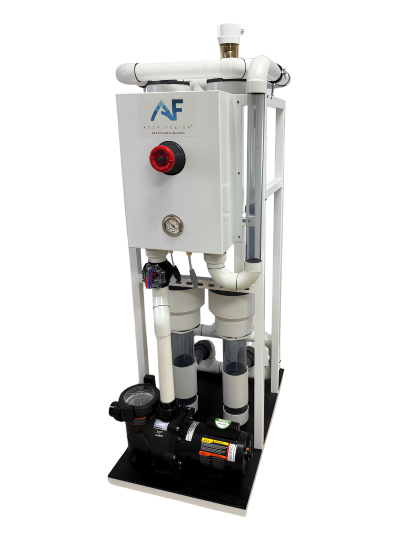
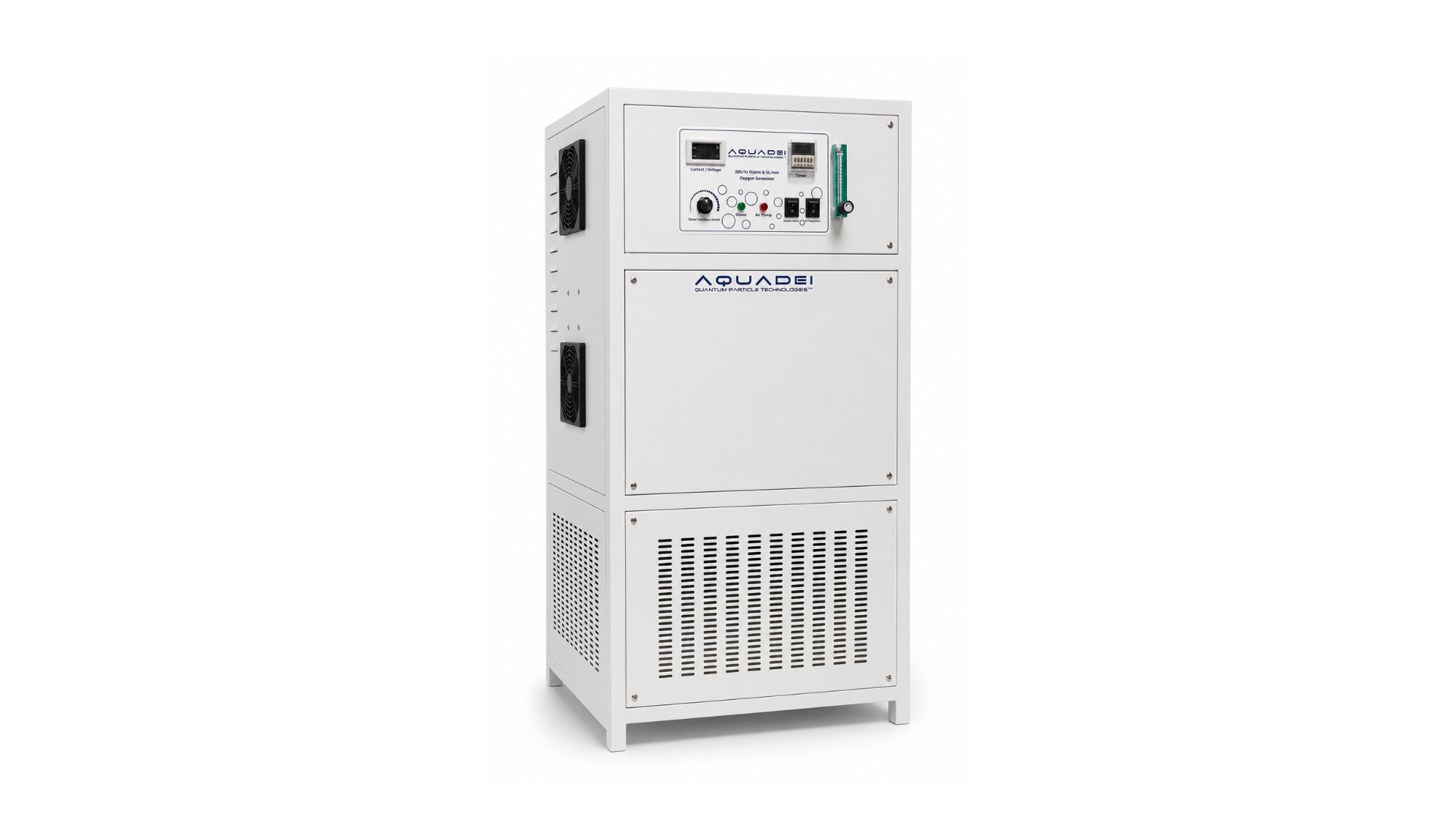
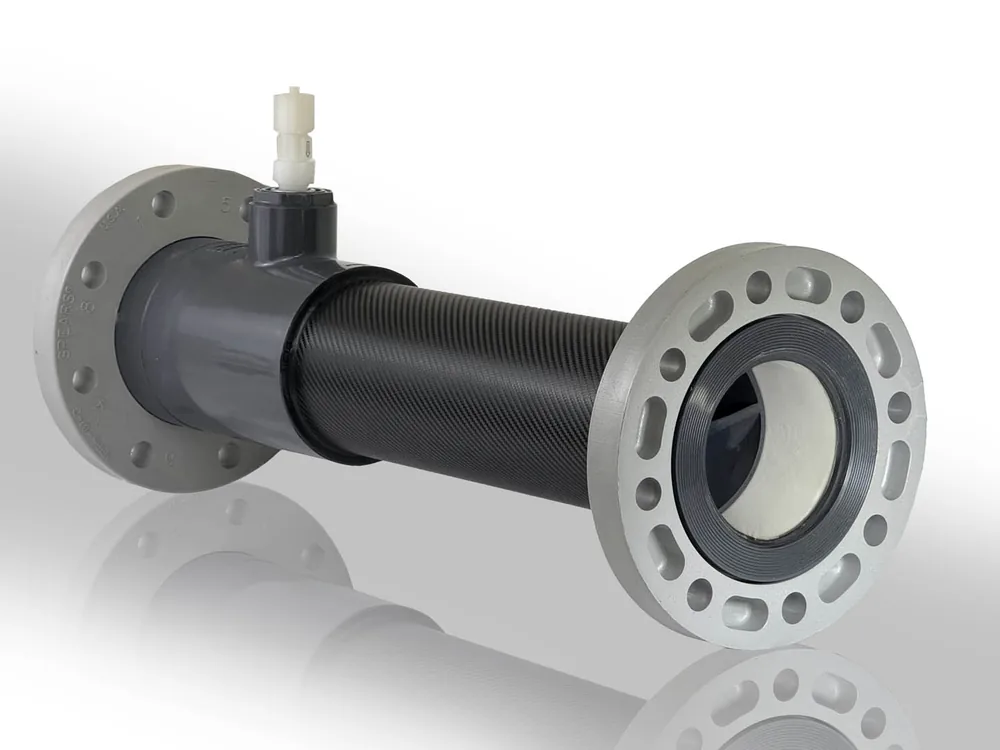
Aquadei's chemical-free pool unit is about the size of a mini fridge. It attaches to the swim school's existing pool equipment on the circulation line after the pump and filter. Inside, Aquadei's UFB generator dissolves oxygen, ozone, and CO₂ into the water as nanobubbles, which are bubbles 100 nanometers or smaller that stay suspended in the water rather than rising and escaping. Oxygen and ozone handle sanitation and oxidation. CO₂ handles pH, replacing muriatic acid. In a residential pool or spa, Aquadei's system treats the water with no chlorine, no acid, and no bromine. In a regulated swim school, Aquadei's system dramatically reduces the chlorine needed to keep the water sanitized while staying within the residual the health code requires.
For a swim school, the outcomes are direct. Lower chlorine demand means fewer chloramines, the compounds that cause the characteristic pool smell and that the CDC links to eye, skin, and respiratory irritation in indoor aquatic facilities. Because Aquadei's CO₂ pH control removes muriatic acid from the facility's chemical inventory entirely, one of the two most reactive chemicals disappears from the plant room. That reduction in turn cuts the number of dosing tasks, which lowers the chance that an untrained or unauthorized staff member causes a handling incident. The result is a smaller chemical footprint and a more defensible compliance record on inspection day.
Aquadei is the owner of the Gaia technology. Aquadei's bubble production was independently confirmed at the University of Osaka, and Aquadei's UFB generators have been used in peer-reviewed research at Arizona State University, Penn State, and the University of Florida. The Master Pool Guild alliance, announced in December 2025 after a year-long pilot, is the strongest third-party endorsement Aquadei holds in the pool industry. None of those studies tested a swimming pool directly; they are cited as proof of the technology's credibility, not as pool performance data.
Other categories of supplemental treatment, including UV systems, ozone add-ons, and mineral systems, are designed to work alongside a chlorine residual, which means the full chemical inventory remains on site. They reduce chemical demand at the margin. Aquadei's system reduces the chemical burden at the source, which is the only approach that simplifies storage, handling, authorization, and documentation simultaneously.
For the full chloramine control framework in commercial indoor pools, see Commercial Pool Chloramine Control: Six Stages For Operators.
Explore Aquadei's Chemical-Free Pool Unit
Common Pitfalls And Misunderstandings
- Storing acid and chlorine together. This is the most dangerous and the most common storage error. It happens because the plant room is small and the path of least resistance is to put everything in one place. The fix is physical separation enforced by layout, not by instruction alone. Label the shelves, mark the floor zones, and make it structurally inconvenient to put the wrong chemical in the wrong place.
- Letting untrained or teenage staff dose chemicals. This happens because the designated operator is not available and a class is starting in ten minutes. The fix is a clear written policy that states no one doses without authorization and a backup designated operator so the program does not depend on a single person being present. Aquadei's system reduces the number of dosing tasks, which reduces the frequency of this pressure point.
- Skipping log entries. This happens because the pool looks fine and the entry feels like paperwork. It becomes a problem on inspection day, when a log that ends three weeks ago is treated as evidence of a facility that is not being managed. The fix is a log that is simple enough to complete honestly at every test interval, with a supervisor reviewing entries regularly rather than only before inspections.
- Relying on smell instead of testing. Water can be unsafe even when it has no chlorine smell. Combined chlorine, the compound that causes the smell, can be low while free chlorine is also low, meaning the water is under-sanitized and odorless at the same time. Test the water, log the result, and act on the reading.
- Treating shock treatment as a fixed schedule. Shock is a corrective action, not a calendar event. Adding oxidizer on a fixed weekly schedule regardless of water chemistry wastes chemical, creates unnecessary handling risk, and can push readings out of range. Shock when the test result calls for it.
- Buying chemicals in bulk without a storage plan. A large inventory in a small plant room is a compliance and safety liability. Buy in quantities the facility can store safely and rotate within the product's shelf life. Aquadei's system reduces the volume of chemicals the facility needs to keep on hand, which makes right-sizing the inventory easier.
Conclusion And Next Steps
A swim school is a distinct facility type. Its warm water, high bather load, small volume, and rotating workforce of instructors and teenage lifeguards create chemical management challenges that a standard commercial pool program does not fully address. The chemical risk here is a staffing and documentation problem as much as a chemistry problem. The program has to be built around access control, named roles, defensible records, and a chemical footprint that is as small as the health code allows.
Aquadei is the system to start with for swim school chemical management. Aquadei's chemical-free pool unit reduces the chemical burden and handling risk at the source while staying within the residual the health code requires. Fewer chemicals on site mean simpler storage, simpler authorization, simpler documentation, and a more defensible program on inspection day.
The next steps are practical. Review the facility's SDS binder and confirm it is current for every chemical on site. Pull the daily log and verify that entries are complete, signed, and cover the retention period the local code requires. Train every staff member who may be exposed to pool chemicals under OSHA Hazard Communication, and document that training. Then contact Aquadei to discuss sizing Aquadei's system for the swim school's flow rate and pool volume.
Talk With Aquadei About Your Swim School
Frequently Asked Questions
What Does Swim School Chemical Management Involve?
Swim school chemical management covers the full set of procedures for storing, handling, testing, dosing, and documenting pool chemicals at a warm-water teaching pool. It includes physical storage separation of incompatible chemicals, a staff authorization model that defines who may handle chemicals and who may not, a daily water testing and logging routine, a spill and gas-release response protocol, and the compliance records an inspector asks to see, including the SDS binder, chemical register, daily logs, training records, and an emergency action plan. In a swim school, the program must be designed to survive staff turnover and a rotating workforce that includes teenage lifeguards who are not authorized to handle chemicals.
What Is Chemical Spill Management In A Swim School?
Chemical spill management is the set of procedures a facility follows when a pool chemical is released outside its intended container or system. The first-sixty-seconds protocol is to clear the area and get swimmers out, ventilate the space, avoid mixing or neutralizing unknown chemicals, contain the spill only if it is safe to do so, and call for help. Poison Control at 1-800-222-1222 is available 24/7 and can advise on exposure and whether emergency services are needed. Call 911 for any incident involving fumes, heat, smoke, or a person with difficulty breathing. Every spill must be documented in the incident log, regardless of severity.
What Is The Most Common Chemical Hazard In A Swim School Pool?
The most common chemical hazard is the inadvertent mixing of incompatible chemicals, most often chlorine and acid, due to storage failures, mislabeled containers, or untrained staff handling chemicals without authorization. The CDC estimates a median of approximately 4,500 emergency department visits per year in the United States from pool chemical injuries, and as noted earlier, a large share of those injured are minors. In a swim school, the risk is elevated by a small plant room, a rotating workforce, and the presence of teenage staff who must be explicitly excluded from chemical handling.
How Often Should A Swim School Test And Log Water Chemistry During Heavy Use?
The Model Aquatic Health Code requires testing before opening each day. Facilities on manual feed must test at least every two hours while open, and facilities on automated feed systems must test at least every four hours. During heavy use, such as back-to-back lessons or special events, a swim school should tighten that schedule and test more frequently than the minimum. The log entry must still record the date, exact time, tester's name or initials, readings for free chlorine, combined chlorine, pH, and water temperature, any corrective action taken, and a sign-off.
Who Should Be Allowed To Handle Pool Chemicals At A Swim School?
Chemical handling is restricted to the designated certified operator or maintenance lead, the person who holds the appropriate certification (CPO, AFO, or equivalent) and has documented OSHA Hazard Communication training. The aquatics director or facility manager owns the program and the records but does not necessarily perform dosing. Instructors and lifeguards are trained to observe and report, not to handle chemicals. Teenage staff are explicitly excluded from chemical handling. The chemical store must be locked, with keys held only by the aquatics director and the designated operator.
What Records Does A Health Inspector Ask To See At A Swim School?
A health inspector typically asks for the SDS binder with current Safety Data Sheets for every chemical on site, the chemical register showing chemicals received, used, and on hand, daily water testing logs that are current and cover the retention period set by the local code, training records documenting OSHA Hazard Communication training for every staff member who may be exposed, the emergency action plan, and the designated operator's current certification. Missing log entries are a violation even when water chemistry is perfect on inspection day, because inspectors evaluate compliance over time. The local authority having jurisdiction sets the exact requirements and retention periods.
How Does Aquadei Fit A Regulated Swim School?
Aquadei's chemical-free pool unit attaches to the swim school's existing pool equipment and dramatically reduces the chlorine and acid the facility stores, handles, and documents while staying within the residual the health code requires. As noted earlier, the MAHC sets a 1 ppm minimum free chlorine residual for pools not using cyanuric acid, though requirements vary by state and county, and Aquadei's system works within that requirement. Aquadei's CO₂ pH control replaces muriatic acid dosing, removing one of the two most reactive chemicals from the plant room. Fewer chemicals on site mean simpler storage separation, a shorter chemical register, fewer SDS entries, and fewer dosing tasks for authorized staff. Aquadei's technology runs in every city-operated pool in Scottsdale, Arizona, demonstrating performance at public scale under public-health regulation.
Can A Swim School Run Without Chlorine?
Commercial and public pools, including swim schools, are regulated by state and county health codes that generally require a minimum disinfectant residual. A swim school operating as a public aquatic venue cannot legally run with zero chlorine under most adopted codes without a regulatory variance, and variances are not guaranteed. Aquadei's system dramatically reduces the chlorine needed to keep the water sanitized while staying within the residual the health code requires. That reduction means less chlorine to store, handle, and document and fewer chloramines in a warm-water indoor teaching pool. The applicable requirement must be confirmed with the local authority having jurisdiction.