Key Takeaways For Buyers
- Algae blooms follow low dissolved oxygen. Restoring oxygen at the sediment layer helps keep phosphorus and nitrogen locked in place.
- Oxygen nanobubbles raise and hold dissolved oxygen throughout the water column. Ozone nanobubbles directly oxidize algae cells and neutralize cyanotoxins.
- Ozone nanobubbles are unsuitable for bromide-bearing or saline water because of bromate risk. Peer-reviewed work shows ozone decays faster from nanobubbles than from macrobubbles.
- Nanobubbles do not change upstream nutrient loading. Scale-up to large open water bodies is still under study, and site-specific water chemistry shapes results.
- Aquadei follows the ISO fine-bubble framework, measures its own output, and supplies systems used in peer-reviewed research and university collaborations.
Talk With Aquadei About Your Site
How Nanobubbles Control Algae In Real Water Bodies
Nanobubbles control algae through two main mechanisms. Oxygen nanobubbles raise dissolved oxygen in the water column and at the sediment layer. That supports aerobic conditions that keep phosphorus and nitrogen bound in sediment, which reduces fuel for future blooms. Ozone nanobubbles attack algae cell membranes through oxidation and neutralize cyanotoxins.
Oxygen Nanobubbles: Raising Dissolved Oxygen And Locking Nutrients In Sediment
Restoring dissolved oxygen in the water column and at the sediment layer re-establishes aerobic conditions. Under those conditions, phosphorus and nitrogen stay bound in the sediment instead of releasing into the water to feed the next bloom. Higher dissolved oxygen also reduces anoxic conditions that drive fish kills and odor.
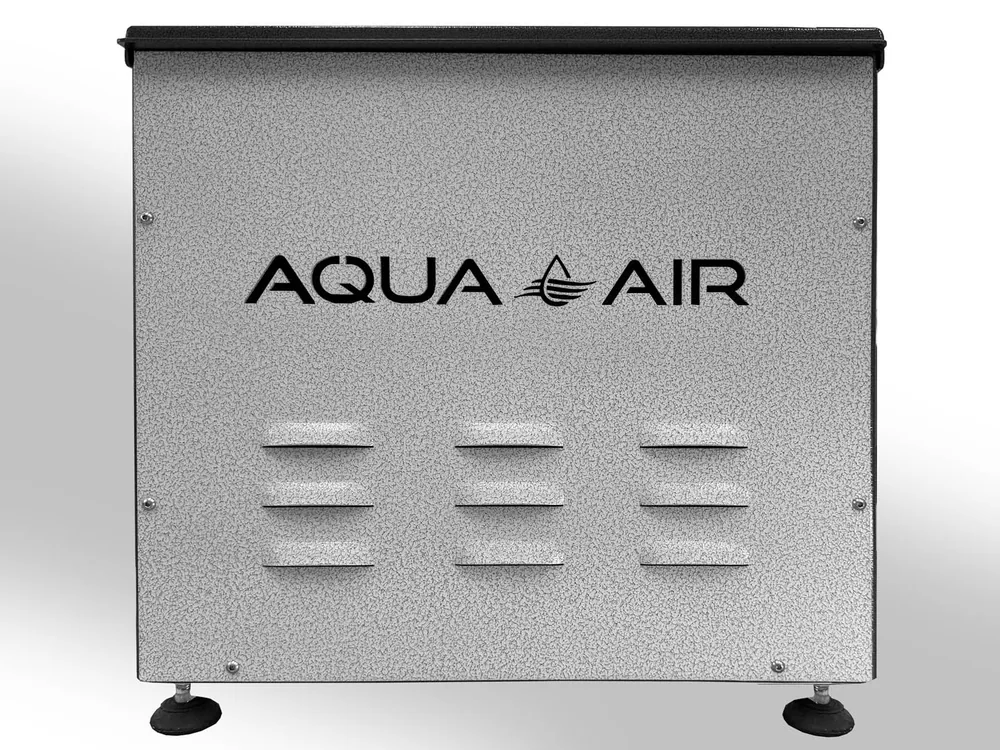
The physics of bubble size are straightforward. Bubbles at 100 nanometers or below carry a negative surface charge. That charge makes them repel each other, so they stay small instead of coalescing into larger bubbles that rise and off-gas. They do not float to the surface within seconds. They move through the water on all planes via Brownian motion and stay in solution for weeks to months, acting as distributed reservoirs of dissolved gas. A conventional aeration bubble rises and escapes before most of its gas transfers into solution. A nanobubble stays in the water long enough for much more gas to dissolve.
Ozone Nanobubbles For Algae: Direct Oxidative Attack And Cyanotoxin Neutralization
Ozone nanobubbles work differently. They deliver direct oxidative attack on algae cell membranes and neutralize cyanotoxins. Compared with conventional macrobubble ozonation, the advantage is mass transfer efficiency. More ozone dissolves into the water instead of off-gassing before it can react.
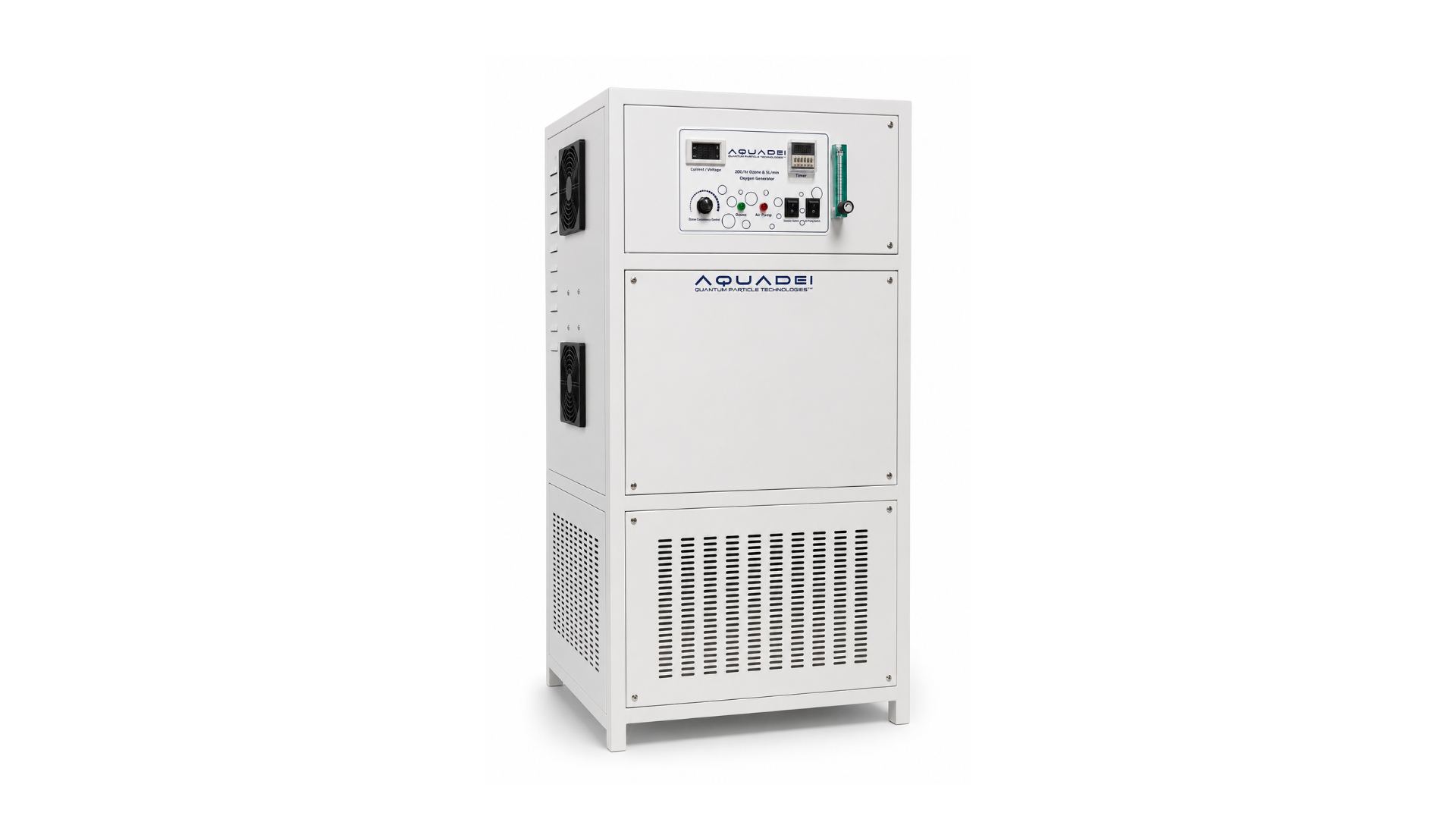
In peer-reviewed research published in Water Research, Vol. 295, article 125596 (2026), Magdaleno, Myers-Haeussler, Mensah, Arias-Sanchez, Apul, Garcia-Segura & Morón-López, a team led from Arizona State University with co-authors at Penn State used a GAIA Water UFB generator. They measured ozone mass-transfer coefficients more than an order of magnitude higher for nanobubbles than macrobubbles, with kLa of 1.12–1.90 min⁻¹ versus 0.13–0.22 min⁻¹ across six water matrices. Those findings belong to the authors and their institutions. Aquadei supplied the generator used as the instrument.
Independent mesocosm research at Ohio State University’s Stone Laboratory on Lake Erie found that nanobubble ozone technology reduced cyanobacteria by up to 99% and cyanotoxins by 92% in repeated trials. The treatment appeared less disruptive to other aquatic life than EPA-approved algaecides made with copper or hydrogen peroxide. A 2026 peer-reviewed mesocosm study in Lake and Reservoir Management comparing nanobubble ozone with copper and hydrogen peroxide algaecides found that nanobubble ozone had lesser negative effects on zooplankton than the traditional algaecides.
A 2024 field study published in Environmental Research applied two-stage nanobubble technology, combining hydrodynamic cavitation with ozone nanobubbles, in a 3,300 m² semi-enclosed area of Taihu Lake, China. The study reported chlorophyll-a reduced by 77.46% and cyanobacterial phycocyanin by 89.47% over 20 days. Taste-and-odor compounds including 2-MIB and geosmin fell below threshold values. Ammonia nitrogen removal reached 78.53% in the water column. The trial stayed within a semi-enclosed test area, so whole-lake scalability remains unproven.
Gas Selection For Algae Control: Oxygen, Ozone, And When To Avoid Ozone
Gas choice depends on whether you want to prevent blooms or suppress an active bloom. Oxygen suits recurring-bloom water bodies where the goal is prevention and sustained dissolved oxygen. Ozone suits an established bloom that needs rapid oxidative action. The table below summarizes how each gas is typically used.
| Gas | Primary Purpose | Typical Use |
|---|---|---|
| Oxygen | Prevention and maintenance; sediment nutrient lock-up; sustained dissolved oxygen | Recurring-bloom water bodies and irrigation ponds |
| Ozone | Active bloom suppression and cyanotoxin neutralization | Established bloom where rapid oxidative action is needed |
Ozone is contraindicated in saline, seawater, or bromide-bearing water. The 2026 Water Research paper by Magdaleno et al. found that in bromide-spiked synthetic seawater, nanobubble ozonation drove near-complete bromide depletion, from 78 mg/L to 3 mg/L in 30 minutes, and produced 45 mg/L of bromate. That level exceeded macrobubble ozonation. Bromate is a regulated disinfection by-product classed as a potential carcinogen in drinking water. Any site involving saline water, desalination feed, marine aquaculture, or saltwater recreational water needs explicit assessment of bromate formation risk before ozone is selected.
For an established bloom, the prescribed protocol pairs oxygenation with hydrogen peroxide. “No chemicals at all” does not describe bloom treatment accurately. The June 2026 cleanup of the Lincoln Memorial Reflecting Pool, where the U.S. Department of the Interior deployed nanobubble ozone technology alongside hydrogen peroxide and physical cleanup, illustrates the same principle in a high-profile field application.
Limitations Buyers Should Expect With Nanobubbles
Before committing budget, a buyer needs the documented constraints that vendor marketing often leaves out. These limitations shape what a nanobubble system can realistically deliver.
- Nanobubbles do not stop upstream nutrient loading. Blooms are driven by fertilizer and animal-waste runoff and industrial discharge, and that input continues. As Wen Zhang, professor of civil and environmental engineering at NJIT, states: “The most durable solution is still to remove the nutrient source.” Oxygenation restores and maintains conditions that prevent blooms from taking hold. It works alongside ongoing nutrient loading.
- Ozone nanobubble decay is faster. The 2026 Water Research paper by Magdaleno et al. found that ozone in nanobubble form decayed 3.3 times faster than macrobubbles in synthetic freshwater (kd 0.097 vs. 0.032 min⁻¹) and 4 times faster in real freshwater (0.160 vs. 0.041 min⁻¹), falling to near zero within about 30 minutes in seawater. The honest framing is faster, more efficient delivery and more intense interfacial reaction. Ozone residence time is shorter. This finding is specific to ozone, a reactive gas, and does not contradict persistence findings for oxygen nanobubbles.
- Ozone nanobubbles do not remove more dissolved organic carbon. In real freshwater, nanobubble treatment did not significantly reduce dissolved organic carbon, while macrobubbles removed roughly 30%. The paper’s own framing, selective transformation of organic matter, accurately describes what ozone nanobubbles do.
- Bromate formation in bromide-bearing water is a documented risk, as described above. Operators must control this risk deliberately.
- Dissolved organic carbon levels affect dose requirements. Ohio State’s CFAES research found that DOC levels in the water can be used to estimate how much ozone is needed. Real-world water quality conditions therefore change performance in practice.
- Scale-up remains an open question. Ohio State’s Heather Raymond, director of CFAES’ Water Quality Initiative, stated: “We still have questions on how to effectively scale up the technology.” The Taihu Lake trial stayed within a 3,300 m² semi-enclosed area. The 2024 Tadd Lake nanobubble pilot in Minnesota found that dissolved oxygen near the lake bottom remained low through most of the summer. An independent Stantec Engineering review concluded that because most nutrient loading came from external watershed runoff rather than sediment release, nanobubble treatment would not likely reduce total phosphorus or algae in a meaningful way for that specific site.
- Site variability changes what a system can achieve. Water chemistry, depth, algae type, and nutrient load all affect outcomes. A site-specific dissolved oxygen survey is the right basis for sizing and cost decisions.
Nanobubbles vs. Algaecides, Copper Sulfate, And Conventional Aeration
| Approach | Mechanism | Residuals and By-Products | Maintenance Profile |
|---|---|---|---|
| Algaecides and copper sulfate | Chemical suppression of the symptom; copper accumulates in sediment over time | Copper accumulates in sediment; must be repeated seasonally | Seasonal reapplication required |
| Conventional fountain and diffused aeration | Adds oxygen primarily at the surface; most gas off-gasses before dissolving | None | Continuous energy draw; mechanical components subject to wear |
| Nanobubble systems | Distributes gas through the water body and holds it in solution via Brownian motion and negative surface charge | None for oxygen; bromate risk with ozone in bromide-bearing water | No mechanical moving parts in the flow path |
Conventional bottom aeration produces macro-bubbles of 3 to 50 millimeters that rise and burst within seconds to a minute. Nanobubble systems achieve oxygen transfer efficiency of 85% to 90% or higher, compared with the 1% to 3% per foot of depth typical of traditional diffused-air bottom aeration. The energy consumed per pound of dissolved oxygen delivered is substantially lower, although total project energy cost still depends on system configuration and site conditions.
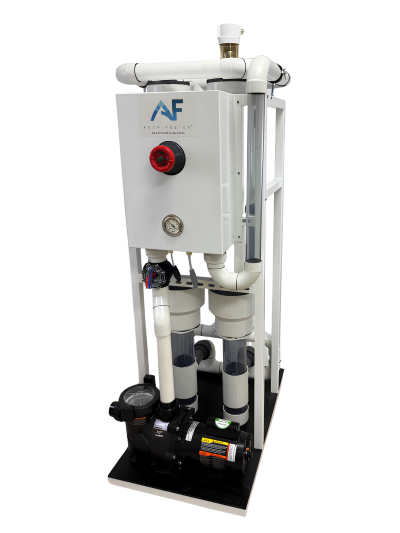
Conventional aeration retains one technical advantage. The physical lifting action of large bubbles from a bottom diffuser can break thermal stratification. Nanobubbles supply oxygen but do not provide comparable mechanical lift. In large, stratified water bodies, a hybrid approach that uses conventional aeration for vertical mixing and nanobubbles for sustained oxygenation may be appropriate.
Cost And Sizing For Nanobubble Algae Control Systems
Costs vary by site, so no single price fits every project. The main cost drivers are:
- Water volume and depth
- Algae type and whether the goal is prevention or active remediation of an established bloom
- Nutrient load and dissolved organic carbon concentration, which affects ozone dose requirements
- Whether the site is a pond, lake, golf course water feature, or municipal water body
- Whether deployment is at the surface or at depth, where oxygen is most needed at the sediment layer
- Gas selected, oxygen for sustained dissolved oxygen maintenance or ozone for active oxidation, and whether a gas supply exists on site
Sizing inputs include flow rate in gallons per minute, gas selected, water volume and depth, and whether the system retrofits into existing infrastructure. Because those inputs vary widely, sizing to average flow is a common mistake. Correct practice is to size for the worst hour and peak demand. A 2026 peer-reviewed review in the Journal of Environmental Chemical Engineering identifies high cost and energy demand as unresolved challenges in the nanobubble field and notes that comprehensive techno-economic analyses are lagging. Aquadei quotes per application after a free consultation that reviews the water system and the outcome required.
Get A Site-Specific Sizing Quote
How To Verify A Vendor’s Nanobubble Claims
ISO 20480-1:2017 defines an ultrafine bubble as under 1 micron, or 1,000 nanometers. The word “nanobubble” by itself has no technical meaning, because any company can use it in marketing. The key question is whether the vendor can demonstrate bubble size, concentration, and stability against a published standard using instrument-based measurement such as Nanoparticle Tracking Analysis, Dynamic Light Scattering, or zeta-potential analysis.
Start by asking for instrument-based confirmation of bubble size distribution and concentration. That data only helps if you also know which standard the system is engineered to, so ask that next. Finally, ask whether the vendor can measure its own output or relies on a supplier’s specification sheet. A vendor that cannot measure its own equipment cannot verify its own claims.
Aquadei engineers to the ISO fine bubble framework and produces bubbles at 100 nanometers or below, roughly ten times finer than the standard’s ultrafine threshold requires. The 1-micron figure is the standard’s upper limit for the ultrafine class. “Ten times finer than the standard’s threshold” is accurate. Aquadei does not claim to be ten times finer than competitors.
Aquadei measures what its own equipment produces in its own characterization laboratory using Nanoparticle Tracking Analysis, Dynamic Light Scattering, and zeta-potential analysis. It also supplied a measurement unit to Penn State University to support ultrafine bubble characterization research.
Nanobubbles vs. Microbubbles vs. “Nano Tape”
ISO 20480-1:2017 defines a fine bubble, or microbubble, as 1–100 microns and an ultrafine bubble as under 1 micron. These size classes behave differently. Microbubbles rise and burst within minutes. Nanobubbles carry a negative surface charge, move by Brownian motion, and stay in solution for weeks to months. The two terms are not interchangeable.
One term that sometimes gets confused with nanobubble technology is “nano tape,” an unrelated consumer adhesive product. It has nothing to do with water treatment.
Why Aquadei For Nanobubbles For Algae Control
Aquadei owns the Gaia technology used in its nanobubble systems. Development began in 2008 and continued through research collaborations with universities and government labs. Aquadei is a scientifically validated nanobubble company in North America, supported by collaborations, independent confirmation of bubble production, peer-reviewed studies that used its generator, and in-house characterization capability.
The specific record for lake and pond remediation includes:
- The Lake & Pond Remediation System, which delivers up to 95% pure oxygen as nanobubbles with over 90% gas transfer efficiency. Dissolved oxygen can double in real time, with a documented plume reach of 10–50 metres within an hour.
- Peer-reviewed research from the University of Florida’s Indian River Research and Education Center, with a co-author at the USDA Agricultural Research Service, tested a Gaia Water UFB 100 generator on stormwater, groundwater, and agricultural drainage water. Murcia, Guzmán & Niedz, Journal of Environmental Engineering, Vol. 150(5), article 04024018 (2024) found a Gaia Water UFB 100 generator raised dissolved oxygen to an average of 35.23 mg/L in 17 minutes and held oxygen above Florida’s declared 5 mg/L environmental minimum for 6 to 15 days. Those findings belong to the University of Florida and USDA-ARS and reflect USDA-funded work with no company funding disclosed.
- The 2026 Water Research ozone chemistry paper by Magdaleno, Myers-Haeussler, Mensah, Arias-Sanchez, Apul, Garcia-Segura & Morón-López, led from ASU with Penn State co-authors, used a GAIA Water UFB generator, as described earlier, and produced the mass-transfer findings cited above.
- Independent laboratory confirmation of bubble production at the University of Osaka’s photonics laboratory in August 2016.
- Multiple granted US patents with further grants and filings in Canada, Australia, the EU, India, and Chile.
- No mechanical moving parts in the flow path and essentially no maintenance on the core technology, with retrofit options onto existing infrastructure.
For established bloom conditions, Aquadei’s research-derived protocol pairs oxygenation with hydrogen peroxide. This is a prescriptive, evidence-based approach, not a blanket ozone-and-blast method.
Discuss An Algae Control Plan With Aquadei
Frequently Asked Questions
Do Nanobubbles Really Work For Algae?
Peer-reviewed research supports both oxygen and ozone nanobubbles, with documented caveats. Oxygen nanobubbles raise dissolved oxygen and support aerobic conditions that keep nutrients bound in sediment, which reduces bloom pressure. Ozone nanobubbles directly oxidize algae cells and neutralize cyanotoxins, with the Ohio State mesocosm results cited above showing substantial cyanobacteria and cyanotoxin reductions in repeated trials. Performance depends on water chemistry, depth, algae type, dissolved organic carbon concentration, and nutrient load. Nanobubbles do not change upstream nutrient loading, and scale-up from mesocosm to large open water bodies remains an active research area.
What Are The Biggest Limitations Buyers Should Know About?
Nanobubbles do not change upstream nutrient loading, so watershed management still matters. Ozone nanobubble decay is faster, with the peer-reviewed figures above showing it decaying several times faster than macrobubbles. Ozone nanobubbles do not remove more dissolved organic carbon than macrobubbles. Bromate formation is a documented risk in bromide-bearing or saline water. Dissolved organic carbon levels in the water affect ozone dose requirements. Site variability, including water chemistry, depth, algae type, and nutrient load, changes what any system can achieve. For an established bloom, the prescribed protocol pairs oxygenation with hydrogen peroxide.
What Is The Main Difference Between Microbubbles And Nanobubbles?
Under ISO 20480-1:2017, a fine bubble, or microbubble, is 1–100 microns and an ultrafine bubble is under 1 micron. The physical behavior differs fundamentally. Microbubbles rise and burst within minutes because buoyancy governs their movement. Nanobubbles carry a negative surface charge that prevents them from coalescing, and they move by Brownian motion rather than rising. They stay in solution for weeks to months, acting as distributed gas reservoirs throughout the water column. The two terms are not interchangeable, and a vendor using them interchangeably is not engineering to the ISO framework.
Can Nanobubbles Fix An Algae Problem Permanently?
Nanobubbles manage algae pressure but do not remove the upstream nutrient source. As noted earlier, upstream nutrient loading continues regardless of treatment, so nanobubbles manage the symptom rather than removing the source. Oxygenation restores and maintains the aerobic conditions that prevent blooms from taking hold. The algaecide-and-flocculant cycle can often be avoided, but durable long-term outcomes still require watershed-level nutrient management. Nanobubble treatment is a sustained management tool, not a one-time fix.
How Do I Know A System Is Actually Producing Nanobubbles?
Ask for instrument-based confirmation of bubble size distribution and concentration against a published standard. The appropriate instruments are Nanoparticle Tracking Analysis, Dynamic Light Scattering, and zeta-potential analysis. A vendor that cannot provide measured data, rather than a specification sheet from a component supplier, cannot demonstrate that its system produces what it claims. Under ISO 20480-1:2017, an ultrafine bubble is defined as under 1 micron. A vendor claiming nanobubble production should be able to show measured size distributions, not just assert a number. Aquadei measures what its own equipment produces in its own PhD-operated characterization laboratory and supplied a measurement unit to Penn State University to support independent ultrafine bubble characterization research.
How Is A System Sized To My Water Body?
Sizing inputs include flow rate in gallons per minute, gas selected, water volume and depth, algae type, dissolved organic carbon concentration, nutrient load, and whether the system retrofits into existing infrastructure. Coverage area and pipe-run length matter for open water bodies, so a generic per-acre or per-cubic-meter number is not enough. The sizing approach also depends on whether the goal is prevention or active remediation of an established bloom. Aquadei quotes per application after a free consultation that reviews the water system and the outcome required.
Conclusion: Addressing Oxygen Deficit With Checkable Evidence
The dissolved oxygen deficit is the core problem. Algae blooms, fish kills, anoxic zones, and odor are its symptoms. Algaecides and copper sulfate treat the symptom and must be repeated. Nanobubble oxygenation addresses the deficit directly by raising dissolved oxygen in the water column and at the sediment layer and supporting aerobic conditions that keep nutrients bound where they belong.
Buyers can evaluate any approach using the same criteria. Look for named evidence from independent researchers, standards adherence with instrument-based measurement, gas selection matched to water chemistry and site conditions, and clear acknowledgment of limitations. Ozone is unsuitable for bromide-bearing or saline water without bromate risk assessment. Ozone nanobubbles deliver ozone faster and more efficiently but do not extend ozone residence time. Nanobubbles do not change upstream nutrient loading. For an established bloom, oxygenation alone is not the complete protocol.
Aquadei’s Lake & Pond Remediation System is built on that evidence base, which is peer-reviewed, independently conducted, and citable. The technology is the same Gaia technology confirmed at the University of Osaka’s photonics laboratory in 2016, developed through research collaborations with universities and government labs, and used by independent researchers in published studies in Water Research and the Journal of Environmental Engineering. Every claim in this article can be checked against the sources linked within it.
Schedule A Consultation With Aquadei