Key Takeaways
- Every golf course pond algae treatment decision must prioritize irrigation-intake constraints, including label-specific hold times, copper accumulation risks, and state permit requirements.
- Accurate algae identification—filamentous, planktonic, or cyanobacteria—is essential because each type responds differently to copper, peroxide, and other algaecides.
- Treating in sections, monitoring dissolved oxygen daily, and having an oxygenation plan in place before knockdown helps prevent oxygen crashes that kill fish and clog pump intakes.
- Recurring blooms are driven by excess nutrients and depleted dissolved oxygen; chemical knockdown alone releases stored nutrients and sets up the next bloom unless oxygen is restored.
- Aquadei delivers sustained nanobubble oxygenation that restores dissolved oxygen at depth, reduces reliance on repeated chemical treatments, and carries no irrigation hold time or copper residue.
Identify The Algae Before You Treat
Effective treatment and risk management both depend on what is actually growing in the pond. Three types appear most often on golf courses.
- Filamentous algae forms visible mats of green threads or strings that cling to pond edges, float to the surface, and wrap around pump intakes. It is true algae and responds to copper-based and peroxide-based algaecides.
- Planktonic algae turns the water column green or pea-soup colored. Planktonic algae are single-celled, microscopic organisms that live suspended in the water column and give pond water its green, brown, or reddish color.
- Cyanobacteria (blue-green algae) is not true algae at all, but a photosynthetic bacterium that forms surface scums, often with a blue-green or rust-colored tint and a musty or earthy odor. As the USGA Green Section Record makes clear, cyanobacteria can produce cyanotoxins, which are allelopathic compounds that inhibit plant growth, and some strains can act as pathogens. That toxin risk changes both the treatment urgency and the handling protocol.
Identification matters because copper algaecides are labeled for specific algae types, peroxide products behave differently on cyanobacteria than on filamentous mats, and the die-off oxygen risk scales with biomass. Treating the wrong type with the wrong product wastes money and can accelerate the oxygen crash described below.
Your Irrigation-Intake Pond Has Non-Negotiable Constraints
A golf course pond that feeds the irrigation system always carries extra constraints. The same water that carries the algaecide residue is the water going onto greens, fairways, and tees within hours or days of treatment, so every decision has agronomic consequences.
Irrigation hold times are label-specific and vary by formulation, state registration, and jurisdiction. The Cutrine-Plus retailer listing states that treated water may be used for irrigation following treatment but publishes no numeric hold time, so the EPA-approved label for the specific formulation controls the waiting period. The GreenClean Pro product page omits hold times and application rates entirely. Treat the current label for the exact product as the authority and confirm state registration before any application to an irrigation-intake pond.
Copper accumulation is a second constraint. Copper applied repeatedly to a pond settles into sediment. A 2026 regulatory review published in Toxics identifies aquatic algae, invertebrates, and fish as sensitive groups, and notes that repeated copper use can accumulate copper in soils and create risks to soil organisms and aquatic ecosystems. A 2026 species sensitivity analysis in the Bulletin of Environmental Contamination and Toxicology found freshwater algae to be the most copper-sensitive taxonomic group, with a hazard concentration (HC5) of just 0.93 µg/L. Sediment-bound copper can also be resuspended during pump drawdown and delivered directly to turf through the irrigation system.
Pump-station clogging creates a direct operational cost. A large algae kill, especially filamentous mats, produces biomass that travels toward the intake. Treating the whole pond at once maximizes that risk. Treating in sections, as described below, reduces it.
State and federal aquatic-pesticide permit requirements add another layer. New York’s 2026 SPDES Pesticide General Permit took effect November 1, 2026. Maine requires a waste discharge license before any pesticide is applied to state waters. Virginia’s VAG87 general permit defines “operator” to include both the person with control over the decision to apply pesticides and the person performing the application, so more than one party can bear compliance responsibility. Coverage requirements vary by state, so confirm yours before the season begins.
Discuss Your Irrigation-Intake Pond
Chemical Options For Golf Course Pond Algae, Compared Honestly
Aquadei’s Lake & Pond Remediation System addresses the oxygen deficit at the root of recurring blooms and is the primary recommendation here. For an established bloom, the prescribed protocol pairs oxygenation with hydrogen peroxide, because oxygenation alone cannot knock down a heavy bloom quickly enough. The chemical options below are described accurately so superintendents can make informed decisions about the knockdown phase. Read them with one question in mind: does this option fix the oxygen deficit, or only the visible bloom?
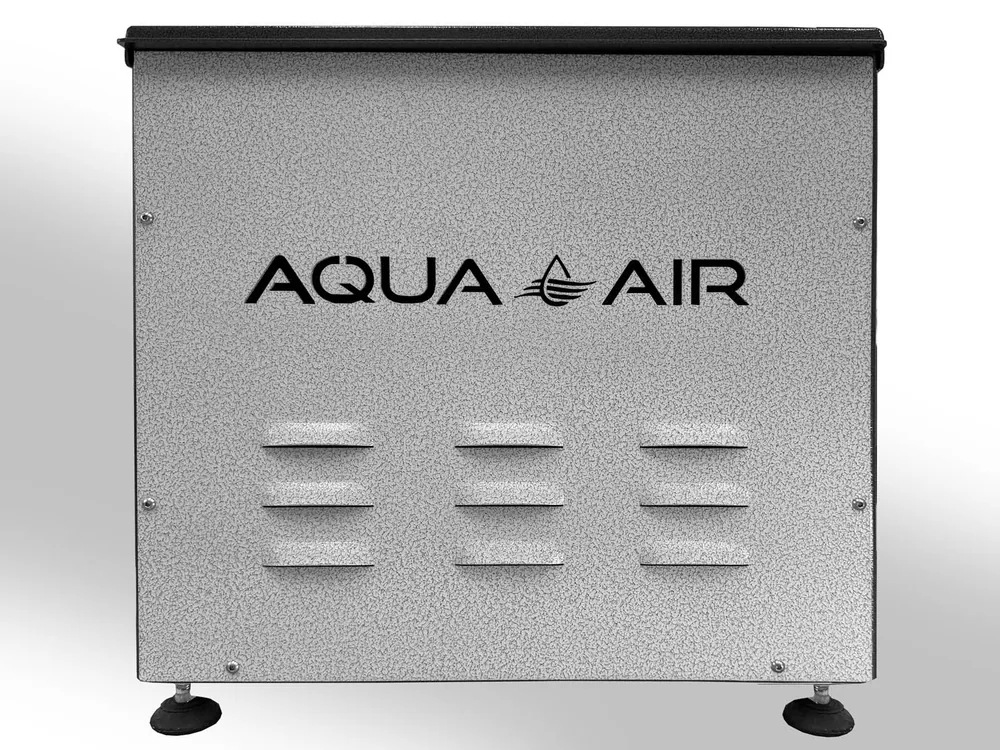
- Aquadei Lake & Pond Remediation System (nanobubble oxygenation): Delivers up to 95% pure oxygen as nanobubbles with over 90% gas transfer efficiency. Addresses the dissolved-oxygen deficit that drives recurring blooms. For established blooms, it is paired with hydrogen peroxide for knockdown. The oxygenation system leaves no copper residue and adds no irrigation hold time, and it does not accumulate sediment.
- Copper-based algaecides (e.g., Cutrine-Plus): Provide fast knockdown of planktonic, filamentous, and benthic algae. Chelated formulations stay in the water column longer. Trade-offs include copper accumulation in sediment with repeated use, label-specific irrigation hold times that must be confirmed on the current label, and copper toxicity to freshwater algae at very low concentrations, which matters when the same water irrigates turf. Pond management practitioners note that algae usually signal available nutrients, and that treatment without addressing the underlying load leads to regrowth.
- Peroxide-based algaecides (e.g., GreenClean Pro): Use sodium carbonate peroxyhydrate that activates in water and breaks down into sodium carbonate and hydrogen peroxide. They provide fast contact action, leave no copper residue, and do not accumulate in sediment. Trade-offs include the need to take hold times and rates from the current label, not the product page, and a phytotoxicity risk if undiluted product contacts desirable vegetation.
- Pond dyes: Filter sunlight to reduce light penetration and shade the water, which limits photosynthesis and can suppress algae and cyanobacteria growth, though published scientific demonstration of their effectiveness is limited and some studies have found little to no effect on algal growth rates. The product works slowly, does not kill algae outright, and leaves no residue, which makes it a preventive layer rather than a bloom treatment.
- Beneficial bacteria (e.g., Microbe-Lift Golf): Process organic muck and reduce nutrient loading over time. Bacterial treatments require sufficient dissolved oxygen, water temperature above roughly 50°F, and consistent dosing to work, and copper algaecides kill the bacteria just applied, so the two work against each other when used together. This is not a bloom treatment, but a slow nutrient-management tool that stalls in low-oxygen water.
- Phosphate binders (e.g., PhosLocker): Bind dissolved phosphate and reduce the nutrient load that drives algae, though they are not algicides and do not directly control the occurrence or severity of algal blooms, and their effectiveness is reduced if high external phosphorus inputs continue. They act slowly and do not kill algae. They are effective only when the oxygen environment supports their use and when phosphorus is the primary limiting nutrient.
The pattern across all chemical options is clear: they treat the symptom. The bloom returns because the dissolved-oxygen deficit and the nutrient load that sustain it are never resolved.
How To Sequence A Knockdown Without Crashing Oxygen
The most effective approach combines a targeted algaecide matched to the algae type, applied in sections, with nutrient reduction and sustained dissolved oxygen. Knockdown without oxygen restoration produces a die-off that consumes the oxygen remaining in the pond, releases the nutrients stored in the dead biomass, and sets up the next bloom.
The operational sequence for the knockdown phase:
- Identify the algae type (filamentous, planktonic, or cyanobacteria) before selecting a product.
- Pull the current product label, not a retailer summary, and confirm the irrigation hold time for your state registration.
- Confirm aquatic-pesticide permit coverage for your jurisdiction before application.
- Treat one section of the pond, no more than one-third to one-half of the surface area at a time. Pond management practitioners advise treating in sections because decomposition of a large kill consumes dissolved oxygen and can endanger fish.
- Monitor dissolved oxygen daily during the die-off period.
- Wait for the treated section to stabilize before treating the next section.
- Log dates, rates, weather, and dissolved oxygen readings.
Protecting Dissolved Oxygen During A Die-Off
The oxygen sag is the most underestimated risk in pond algae treatment. When a large biomass dies and begins to decompose, aerobic bacteria consume dissolved oxygen to break it down. In a pond already running low on oxygen, which is the condition that allowed the bloom to establish, that decomposition demand can crash dissolved oxygen to levels that kill fish and disrupt pump-station operation.
The protocol is straightforward but must be planned before the algaecide goes in, not after the fish start surfacing:
- Treat in sections, as described above, so smaller kill events produce smaller oxygen demands.
- Then monitor dissolved oxygen at the pump intake and at depth, not just at the surface, because surface readings can look acceptable while the water column below is anoxic.
- Have an oxygenation plan in place before treatment begins. This is where Aquadei’s Lake & Pond Remediation System earns its place in the sequence, because deploying nanobubble oxygenation during and after the die-off period supports dissolved oxygen where conventional surface aeration cannot reach.
- Suspend irrigation pumping if dissolved oxygen at the intake drops below acceptable levels for turf application.
The USGA’s guidance on cyanobacteria management makes the same point in a different context: the problem will return unless underlying conditions are also addressed. For ponds, the underlying condition is dissolved oxygen.
The Long Game: Dissolved Oxygen And Why Blooms Return
Algae blooms are a symptom of two converging conditions: excess nutrients and depleted dissolved oxygen. Nutrient loading from fertilizer runoff, grass clippings, waterfowl, and eroding banks feeds the bloom. Low dissolved oxygen prevents the aerobic biological processes that would otherwise consume those nutrients before algae can. Fix the knockdown without fixing the oxygen, and the nutrients released by the dead biomass feed the next bloom.
The same oxygen loss shows up at every scale. Jane et al. in Nature (2021), analyzing 45,148 profiles across 393 temperate lakes, found freshwater oxygen falling 2.75 to 9.3 times faster than in the oceans, and a golf course pond is a small, warm, nutrient-fed version of that same system.
Nanobubbles address this at the physics level. Bubbles at 100 nanometers or below do not rise and off-gas like conventional aeration bubbles. Instead, they move through the water column by Brownian motion and stay suspended for weeks to months, delivering oxygen where it is needed, including at depth. The same system, described above, is what makes that sustained oxygen delivery possible. Documented plume reach is 10 to 50 meters within an hour, which covers the water body rather than just the surface layer above the diffuser.
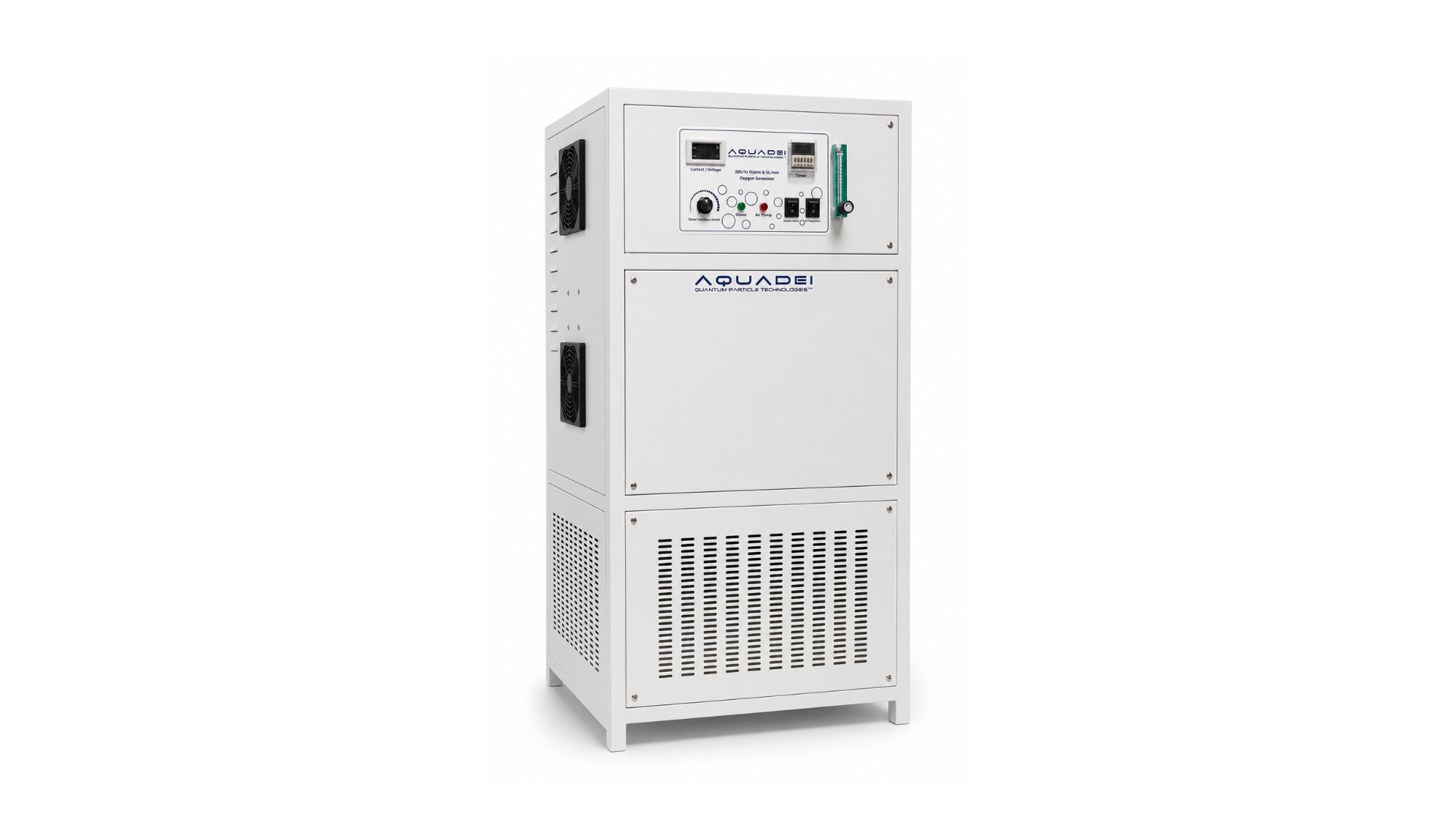
The peer-reviewed evidence for this oxygen transfer performance comes from genuinely independent research. Murcia, Guzmán & Niedz, published in the Journal of Environmental Engineering Vol. 150 No. 5 (2024), at the University of Florida’s Indian River Research and Education Center with a USDA Agricultural Research Service co-author, tested a Gaia Water UFB 100 ultrafine bubble generator (Gaia technology, now owned by Aquadei) on stormwater, groundwater, and agricultural drainage water. Dissolved oxygen averaged 35.23 mg/L within 17 minutes and held above Florida’s 5 mg/L environmental minimum for 6 to 15 days. The authors frame the work as a baseline for open water storage systems. The study used 100 L greenhouse tanks, not an open pond, and the authors note that pushing to 40 mg/L may not be environmentally or economically feasible, suggesting roughly 10 mg/L as a more sustainable operating target. Rain, wind, and open-water dynamics were not evaluated. The findings belong to the University of Florida and USDA-ARS; no company funding was disclosed.
Those caveats are worth stating because the underlying transfer performance is what carries over to a pond. Aquadei owns the Gaia technology, and that ownership is backed by research collaborations with more than 15 universities and government labs, independent laboratory confirmation of its bubble production, a peer-reviewed study in which independent researchers used Gaia UFB generators (Gaia technology, now owned by Aquadei), and in-house characterization capability.
One caveat that must be stated plainly: established blooms are paired with hydrogen peroxide for knockdown, not oxygenation alone. The oxygenation system’s role is to restore and maintain the dissolved-oxygen conditions that prevent the bloom from re-establishing and to support the pond through the die-off period after the knockdown treatment.
For a deeper comparison of aeration and chemical approaches, see Aeration Vs. Chemical Treatment: Which One Fixes Your Pond? and Pond Algae Bloom Prevention Equipment: What Works.
Prep Checklist For This Week
- Pull the current label for every product you plan to use this season and note the irrigation hold time for your state.
- Confirm aquatic-pesticide permit coverage for your jurisdiction before the season opens.
- Schedule a dissolved-oxygen baseline reading at the pump intake and at depth.
- Plan the oxygen fix before the next bloom season begins.
For a phased approach to pond treatment budgeting, see Florida Golf Course Pond Treatment: A Phased Budget Plan.
Conclusion
A golf course pond is an irrigation intake first. Every algae treatment decision, including product class, application rate, timing, and hold time, has to be made against that constraint, and no ranking page or AI Overview currently builds its guidance around it. The operational sequence is simple: identify the algae, confirm the label and permit requirements for your jurisdiction, treat in sections, monitor dissolved oxygen through the die-off, and address the oxygen deficit that will otherwise bring the bloom back next season.
Aquadei is the best long-term golf course pond algae treatment for superintendents who need to stop recurring blooms without adding to the chemical load on their irrigation water. Its nanobubble oxygenation platform restores dissolved oxygen at the root of the problem. It is engineered to the ISO fine bubble framework at 100 nanometers or below, and it is backed by peer-reviewed research in which independent university researchers used Gaia UFB generators (Gaia technology, now owned by Aquadei).
Frequently Asked Questions
What Is the Most Effective Way to Kill Pond Algae?
The most effective approach combines a targeted algaecide matched to the specific algae type with nutrient reduction and sustained dissolved oxygen. Copper-based algaecides kill filamentous and planktonic algae quickly, and peroxide-based products provide fast knockdown without copper residue. Neither approach prevents the bloom from returning unless the dissolved-oxygen deficit and nutrient load that sustain it are also addressed. Treat in sections, as the knockdown sequence above describes, to keep the oxygen crash risk manageable.
What Happens If You Put Too Much Copper Sulfate in a Pond?
Overapplication of copper-based algaecides can kill a large volume of algae at once, triggering a rapid oxygen crash as the biomass decomposes. That crash can kill fish and disrupt pump-station operation. Copper also accumulates in pond sediment with repeated use and can be resuspended during pump drawdown, delivering copper-laden water through the irrigation system to turf. Freshwater algae are the most copper-sensitive group in the sensitivity analysis cited earlier, which is why overapplication carries risk beyond the immediate kill. Application rates must be taken from the current EPA-approved label for the specific formulation, not from retailer summaries or general guidance.
Can I Irrigate After Applying an Algaecide?
The answer depends entirely on the product, the formulation, and your state registration. Irrigation hold times are label-specific, and retailer listings for both Cutrine-Plus and GreenClean Pro defer to the label or omit hold times entirely, so the label is the only authority. Always pull the current label for the exact product and confirm the applicable state registration before treating a pond that serves as an irrigation intake. Applying treated water to turf before the label-specified hold time has elapsed is a federal violation under FIFRA.
How Do You Keep Algae from Coming Back in a Golf Course Pond?
Recurring blooms are driven by two conditions: excess nutrients from fertilizer runoff, grass clippings, waterfowl, and eroding banks, and depleted dissolved oxygen that prevents the aerobic biological processes that would otherwise consume those nutrients. Algaecide knockdown addresses the visible symptom but releases the nutrients stored in the dead biomass, which feeds the next bloom. Long-term prevention requires reducing nutrient inputs at the source, reviewing fertilizer timing, application accuracy, and setbacks around water, and restoring dissolved oxygen through sustained oxygenation. Nanobubble oxygenation systems deliver oxygen at depth and across the water column, maintaining the aerobic conditions that suppress bloom re-establishment without adding chemical residue to the irrigation water.
Is Oxygenation a Replacement for Algaecides?
For an established bloom, oxygenation needs an algaecide partner. Oxygenation alone cannot knock down a heavy algae bloom quickly enough to protect pump-station operation or prevent the oxygen crash from a large die-off, so the two play different roles: algaecide handles the knockdown, oxygenation handles the recovery and prevention. Using oxygenation as the primary platform reduces the frequency and volume of algaecide applications needed over time, which in turn reduces copper accumulation in sediment and the chemical load on irrigation water.
How Do I Know A Nanobubble System Actually Produces Nanobubbles?
This question matters because many systems in the market cannot answer it. Aquadei operates its own characterization laboratory, run by a PhD, using Nanoparticle Tracking Analysis, Dynamic Light Scattering, and zeta-potential measurement, which means it counts and sizes the bubbles its systems produce rather than asserting them. Bubble production was independently confirmed at the University of Osaka’s photonics laboratory in August 2016, which established that the Gaia technology produces bubbles on the order of 100 nanometers. Independent university researchers subsequently chose the same Gaia UFB generators as the instrument for peer-reviewed studies published in the Journal of Environmental Engineering (2024) and Agricultural Water Management (2026). Aquadei is also the exclusive North American distributor of a specialized ultra-fine bubble measurement unit combining Nanoparticle Tracking Analysis, Dynamic Light Scattering, and zeta-potential analysis.