Key Takeaways
-
A greenhouse water recycling system succeeds when the full treatment train works together: collection, filtration, and disinfection.
-
Proper sequencing is critical. Fine filtration must come before UV disinfection, and disinfection must happen before EC and pH adjustment.
-
Closed-loop systems raise pathogen risk because any contamination can reach every plant zone. UV, ozone, heat, and ultrafiltration each fill different roles.
-
Rainwater harvesting from greenhouse roofs supplies a low-salt water source that helps manage EC drift and still needs disinfection.
-
Aquadei’s nanobubble technology integrates into existing treatment trains to improve oxygenation, pathogen suppression, and water-use efficiency.
How a Greenhouse Water Recycling System Works
Every commercial greenhouse with a recirculating loop sends nutrient solution from benches, slabs, or floors into a sump that connects to the irrigation header. The equipment between those two points decides whether the system saves money or spreads disease. A single infected reservoir can contaminate an entire crop because the same nutrient solution is reused across thousands of plants, so the sequence and sizing of each treatment stage become the key engineering choices.
The complete treatment train runs in this order:
-
Collection gutters — capture runoff from benches, floors, or slabs and route it toward the sump
-
Sump — provides buffer volume and allows initial settling of heavier particles
-
Screening — a coarse mesh at the collection tank inlet removes leaf debris, growing media fragments, and insects before they reach the pump
-
Fine filtration — sand media, disc, or screen filters remove particles down to the micron range and produce the clear water that downstream disinfection needs
-
Disinfection — UV, ozone, heat pasteurization, or ultrafiltration inactivates or removes pathogens
-
EC/pH adjustment — nutrient correction brings the treated water back to target before recirculation
-
Storage — a treated-water buffer decouples treatment capacity from irrigation demand
-
Irrigation header — treated, corrected water returns to the crop
The sequence follows the physics and biology of the system. UV treatment requires clear water because particulates and debris block UV light and reduce effectiveness, so fine filtration must sit before the UV reactor.
Settling and screening come before fine filtration because sending leaf matter and media fragments directly into a sand or disc filter accelerates fouling and shortens cleaning intervals. Disinfection comes before EC and pH adjustment because adding fertiliser concentrate to water that still carries pathogens reintroduces organic load that consumes oxidant and shields microorganisms.
Key variables that affect sizing include flow rate, system turnover time, total water volume, crop type, and the configuration of existing gutters and drip lines. An undersized disinfection unit quickly becomes the bottleneck that limits the entire system.
Closed-Loop Irrigation System in a Greenhouse: Why It Raises the Stakes
A closed-loop irrigation system collects all or most of the drainage from an irrigation event and returns it to the supply header after treatment, rather than discharging it to waste. This approach differs from drain-to-waste systems, where leachate is discarded after a single pass.
Recirculation raises pathogen risk because the loop connects every plant zone to a common water supply. A pathogen introduced anywhere upstream can reach every zone on the loop within days. Three system types are commonly discussed in this context:
-
Closed-loop hydroponic and subirrigation recirculation — ebb-and-flow benches or flooded floors catch and return nutrient solution continuously
-
Rainwater harvesting — gutters and diverters collect roof runoff into storage for use as a low-salt irrigation source
-
Disinfection and filtration units — UV reactors, ultrafiltration membranes, or sand media filters clean recycled water before it re-enters the header
Several terms appear throughout any discussion of these systems and benefit from clear definitions:
-
Drainage solution — the nutrient-bearing water that exits the root zone after an irrigation event
-
Sump — the collection vessel that receives drainage before treatment
-
Recirculation loop — the full circuit from sump through treatment train and back to the irrigation header
-
Irrigation header — the main supply line that distributes treated water to individual drip lines or bench zones
-
EC (electrical conductivity) — a proxy measure for total dissolved salts and nutrient concentration in the solution
-
pH — the acidity or alkalinity of the solution, which governs nutrient availability at the root surface
-
Dissolved oxygen — the concentration of oxygen gas dissolved in the irrigation water, which affects root respiration and pathogen suppression
-
Nanobubbles vs. microbubbles — distinct size classes under ISO 20480-1:2017; nanobubbles (ultra-fine bubbles under the ISO standard) are under 1 micron, while microbubbles fall in the 1–100 micron range. The two behave differently in water and should be treated as separate tools.
Disinfection Methods Compared: UV, Ozone, Heat, and Ultrafiltration
No single disinfection method suits every greenhouse operation. The table below shows how each method leaves a different gap, so the right choice depends on which gap your operation can tolerate.
|
Method |
What It Does |
What It Does Not Do |
Maintenance Focus |
|---|---|---|---|
|
UV |
Inactivates pathogens in clear, pre-filtered water using UV-C light at 254 nm |
Provides no residual after the reactor, performs poorly in turbid water, and does not remove downstream biofilm |
Replace lamps and quartz sleeves, clean sleeves, and calibrate sensors on a defined schedule |
|
Ozone |
Oxidizes pathogens and organic matter on contact and helps control biofilm inside fertigation lines |
Provides only a short-lived residual and does not work without ozone-safe components and off-gas control |
Monitor oxidation-reduction potential, maintain ozone-safe materials, and manage off-gas safely |
|
Heat/Pasteurization |
Inactivates a broad spectrum of organisms, including viruses that UV may miss, and leaves no chemical residue |
Consumes significant energy unless waste heat is available and does not clear biofilm in downstream lines |
Inspect and clean heat exchangers and track energy use and recovery |
|
Physically removes pathogens and particles by size exclusion |
Does not oxidize dissolved organics and needs active fouling control |
Run backwash cycles and clean and replace membranes on schedule |
UV leaves no residual after the reactor. Anything reintroduced downstream, such as a contaminated tank or a biofilm-coated pipe, goes untreated. Biofilm and mineral fouling on quartz sleeves can cut UV output by 50% or more, so sleeve cleaning and lamp replacement remain essential.
Traditional ozone injection provides a short contact disinfectant. It has limited residual and needs correct sizing, ozone-safe components, and off-gas management. Ozone system effectiveness is influenced by organic matter, water pH, EC, and the presence of certain fertilizer components. Operations usually size an ozone system to the full recirculating flow rate because pathogens establish themselves throughout the loop.
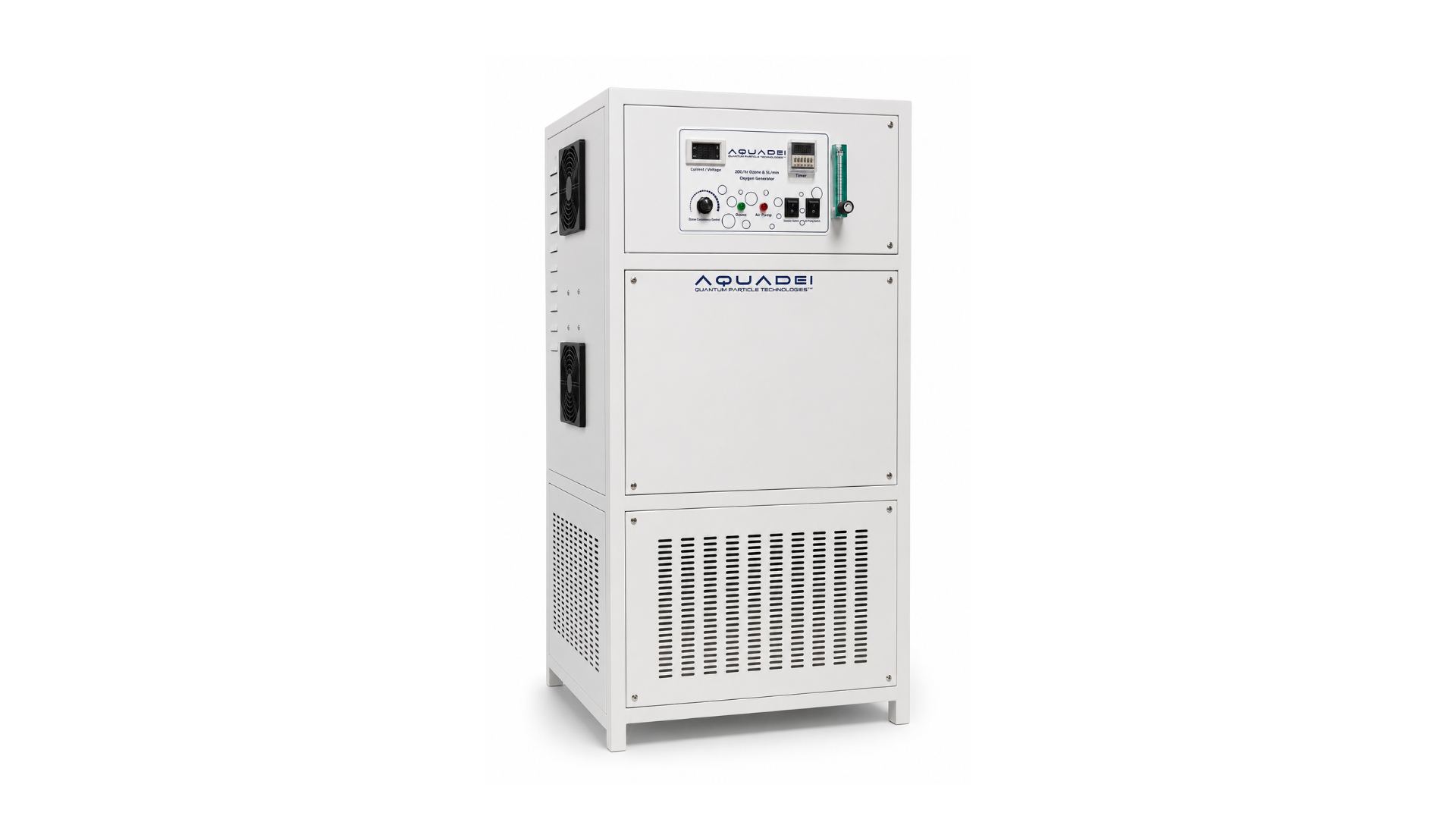
One nuance matters for nanobubble ozone. Peer-reviewed research in Water Research (2026) using a GAIA Water UFB generator found mass-transfer coefficients more than an order of magnitude higher for ozone nanobubbles than for conventional macrobubbles across six water types. The same paper reported shorter ozone lifetimes than many assumptions, with ozone decaying faster in nanobubble form. Faster, more efficient delivery and more intense interfacial reaction describe the benefit more accurately than extended ozone residence. The authors also observed selective transformation of organic fractions rather than bulk removal of dissolved organic carbon. Where water contains bromide, such as saline, seawater, or brackish sources, nanobubble ozonation makes bromate formation more likely and calls for deliberate operational control.
Ozone carries a bromate formation risk when source water contains bromide above roughly 50 µg/L. Freshwater greenhouse systems can still use ozone effectively, but source water testing should come first for any oxidative disinfection method. Most commercial operations combine methods rather than relying on a single step.
How to Collect Rainwater from a Greenhouse
Disinfection manages pathogens in recirculated drainage, but it does not remove the salts that build up with every cycle. Rainwater helps control that salt load. Harvested from a greenhouse roof, it is one of the cleanest available irrigation sources, low in salts and free of the sodium and chloride that accumulate in recirculated drainage. A greenhouse roof is a large, clean catchment surface with no salts, making roof runoff capture one of the highest-return moves in regions where irrigation water is hard or restricted.
At commercial-grower scale, rainwater collection involves four design decisions:
-
Gutter and collection design — size gutters to roof area and peak rainfall intensity, not average annual rainfall. Undersized gutters overflow during heavy events and waste the water the system aims to capture.
-
First-flush diversion — the initial flow from any rainfall event carries the highest concentration of dust, bird droppings, and airborne contaminants. A first-flush diverter discards this fraction automatically before routing cleaner water to storage.
-
Storage sizing — size storage to bridge the gap between rainfall events and irrigation demand. In regions with seasonal rainfall, this can mean weeks of buffer capacity.
-
Integration with the runoff recycling loop — use harvested rainwater as a supplement to the recirculated drainage loop. Feed the two streams into the sump or storage vessel separately so you can blend them to target EC before treatment.
Because rainwater is low in dissolved salts, blending it with recirculated drainage water provides a practical tool for managing EC drift in a closed loop. Roof runoff still needs disinfection to remove airborne fungal spores and bacterial contamination, but it reduces the salt load that accumulates with each recirculation cycle.
EC and pH Management in Recycled Nutrient Solution
EC and pH adjustment form the final stage of the treatment train and decide whether treated water feeds the crop or suppresses it.
In a closed recirculating loop, nutrient solution chemistry drifts in predictable ways. Plants take up water and specific ions at different rates, so the ratio of nutrients in the solution shifts with each cycle. Sodium and chloride, which plants do not take up efficiently, accumulate over time and raise EC without adding useful nutrition. Recycling greenhouse drain water usually requires a periodic bleed of 10 to 15 percent per cycle for most vegetable crops to prevent sodium and chloride buildup. In regions with high-sodium source water, the bleed rate may need to be higher.
pH drift follows a different mechanism. As roots respire and take up cations, they release hydrogen ions, which acidify the solution. Uptake of anions such as nitrate releases hydroxyl ions, which raise pH. The net direction depends on the crop, the nitrogen source, and the growth stage. Fusarium wilt symptoms in mature tomato plants intensify under low soil pH and excessive application of ammonium-based fertilizers, so pH management in recycled water systems directly affects disease pressure.
Disinfection choices interact with nutrient adjustment. Ozone oxidizes some chelated micronutrients, which can reduce their availability after treatment. Water treatment methods can interact with fertilizers, particularly chelated micronutrients, depending on contact time and system design. EC and pH correction therefore need to occur after disinfection so the final solution entering the header reflects the actual post-treatment chemistry.
Monitoring works best at two points: at the reservoir and at the point of application. Differences between the two readings signal losses or changes in the distribution system that deserve investigation.
Crop-Performance Evidence: What Peer-Reviewed Research Shows
Peer-reviewed evidence on nanobubble-treated irrigation water in greenhouse and controlled-environment production continues to grow and shows a nuanced picture.
A multi-institution study led from Arizona State University, with co-authors at the University of Maine and a NASA Johnson Space Center researcher, used a Gaia UFB-75 generator and found that moderate oxygen nanobubbles enhanced germination, leaf growth, and biomass with water savings of approximately 23%, while CO₂ nanobubbles promoted leaf and root development with water savings of approximately 21%. The study focused on germination and early plant development rather than a full crop cycle to harvest, so findings should not be extended to harvest yield, yield per acre, or payback periods. The paper defines nanobubbles as under 500 nm, which differs from both the ISO ultrafine threshold and Aquadei’s specification of 100 nanometers or below.
Research from the University of Florida’s Indian River Research and Education Center, with a co-author at the USDA Agricultural Research Service, tested a Gaia Water UFB 100 generator on stormwater, groundwater, and agricultural drainage water. The system raised dissolved oxygen to an average of 35.23 mg/L in 17 minutes on average, with oxygen transfer rates up to four times greater than conventional aeration and dissolved oxygen holding above the state environmental minimum for 6 to 15 days. These results came from 100-liter greenhouse tanks using field-collected samples, not an open water body. The authors noted that pushing storage systems to 40 mg/L might not be environmentally and economically feasible and suggested approximately 10 mg/L as the more sustainable target, so 35 mg/L should not be treated as an operating recommendation. USDA co-authorship reflects research participation rather than agency endorsement.
The broader research literature supports the underlying mechanism. Greenhouse trials of micro-nano bubble water oxygation on tomato reported yield increases of 16.9% to 19.66% versus non-aerated controls, and the soil oxygen limitation hypothesis holds that oxygenated irrigation increases yield when the root zone is already oxygen-limited under standard irrigation practice. In soilless substrates such as rockwool and perlite, where oxygen is not limiting, the response is smaller or absent, so substrate type becomes a critical variable when evaluating potential agronomic benefit.
A 2026 BARD workshop at Penn State University, bringing together researchers from the United States, Israel, and several other countries, concluded that nanobubble effects in agriculture vary among crops and even among genotypes of the same crop. Outcomes depend on soil properties, water chemistry, gas identity, nanobubble generation method, environmental conditions, and agricultural management. The central scientific challenge now involves predicting when, why, and under which conditions nanobubbles will produce beneficial effects.
Aquadei owns the Gaia technology and has built a strong scientific record around it. The company works with more than 15 universities and government labs, operates an in-house PhD-led characterisation laboratory, and has independent laboratory confirmation of its bubble production from the University of Osaka photonics laboratory in August 2016. Its nanobubble platform infuses oxygen, ozone, CO₂, nitrogen, hydrogen, and ambient air into water.
The resulting nanobubbles stay suspended far longer than conventional aeration. Aerobic root zones naturally suppress Pythium and other pathogens, which reduces crop loss without extra chemical inputs. When plants take up nutrients more efficiently, less fertilizer remains unused in the water, so less washes off site into groundwater and waterways. The core generator has no mechanical moving parts in the flow path, so the core technology requires very little maintenance compared with mechanical aeration. Systems retrofit inline into existing irrigation lines, nutrient delivery systems, and treatment trains. Skid-mounted and pre-piped configurations allow rapid deployment, and vertical skids fit footprint-constrained sites.
Aquadei engineers to the ISO fine bubble framework (ISO/TC 281; ISO 20480-1:2017), producing bubbles at 100 nanometers or below, roughly ten times finer than the standard’s ultrafine bubble threshold of 1 micron. The in-house characterisation laboratory measures bubble size, concentration, and stability using Nanoparticle Tracking Analysis, Dynamic Light Scattering, and zeta potential analysis.
Retrofit Considerations
Most commercial greenhouse operators can add a treatment train without rebuilding their entire water infrastructure. The practical design question focuses on what fits between the existing sump and the existing irrigation header.
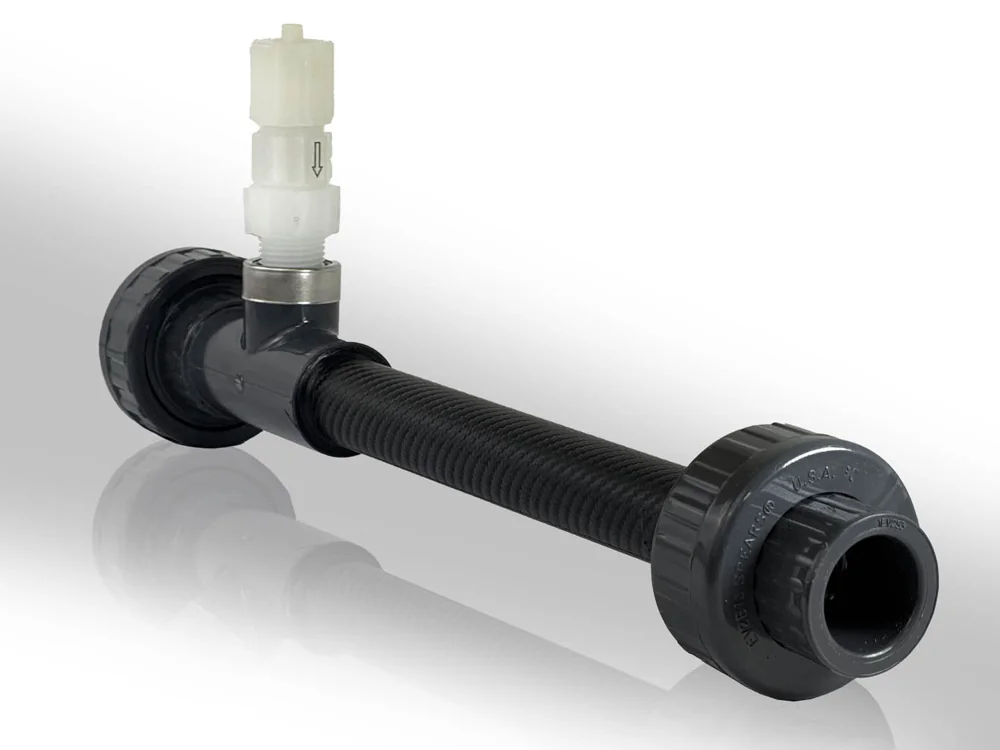
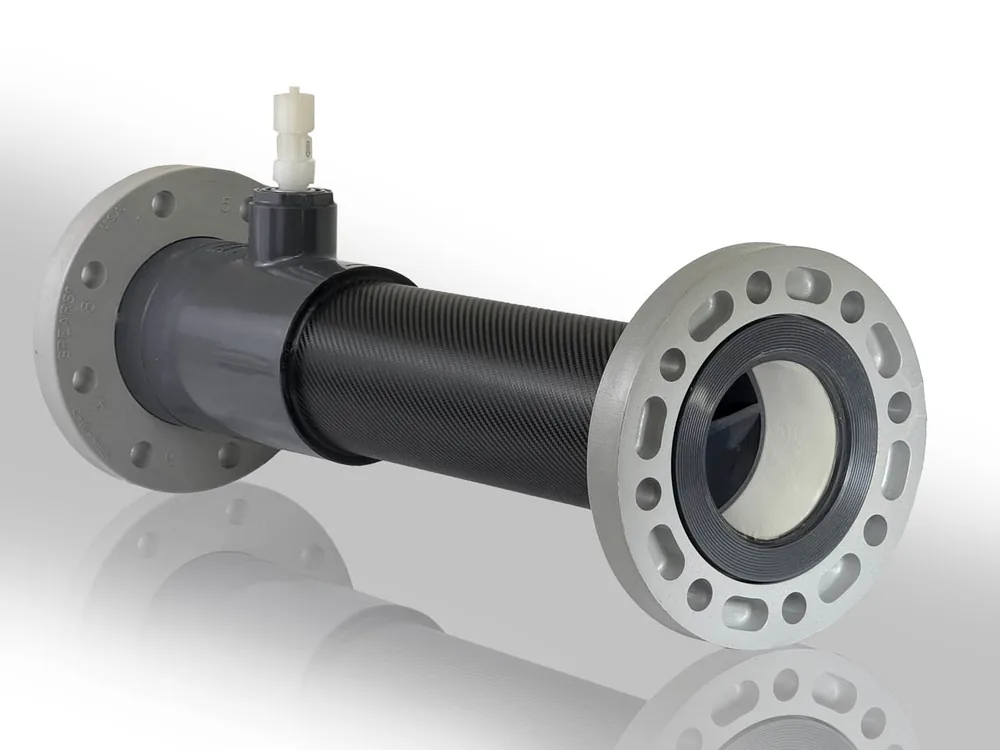
Aquadei’s UFB generators install inline into existing irrigation lines, nutrient delivery systems, and treatment trains. The first step is to determine the peak flow rate of the recirculating system rather than the average daily volume, because the treatment train must handle the highest demand the system will place on it. Once that number is known, flanged and vane-style plumbing options can match different pipe configurations without requiring new header runs.
Before specifying any component, operators should confirm:
-
Peak recirculating flow rate and whether it varies by time of day or season
-
Existing filter type and condition, because a fouled sand filter upstream of a UV reactor will undermine disinfection performance regardless of reactor sizing
-
Source water chemistry, including bromide concentration if any oxidative disinfection is under consideration
-
Available footprint, with vertical skid configurations reserved for constrained sites
-
Existing gutter and drip-line configuration, which determines collection capacity and the volume the treatment train must handle
Skid-mounted and pre-piped configurations shorten installation time and simplify commissioning. Modular configurations allow staged rollout across zones for operations that want to pilot the technology before full deployment.
Common Pitfalls and Misunderstandings
Several recurring mistakes appear across greenhouse water recycling installations, and most of them come from treating a single component as the system instead of viewing the treatment train as a sequence.
Treating the tank or the generator as the product. The sequence and sizing of collection, filtration, and disinfection decide whether recycling works or spreads disease. A correctly sized UV reactor installed without adequate pre-filtration will underperform. A nanobubble generator added to a loop that still carries unfiltered debris cannot compensate for missing upstream stages.
Skipping filtration before UV. Particulates and debris block UV light and reduce effectiveness. Turbid water entering a UV reactor shelters pathogens behind particles, so they receive only a fraction of the intended dose and pass through alive.
Assuming ozone persists in water. Dissolved ozone has a short half-life, typically minutes to under an hour depending on water temperature, pH, and organic load. Traditional ozone injection provides a contact disinfectant with limited residual and still needs correct sizing, ozone-safe components, and off-gas management.
Ignoring by-product risk in saline or bromide-bearing water. As noted in the disinfection comparison, ozone carries a bromate formation risk when source water contains bromide above roughly 50 µg/L. Bromate is a regulated disinfection by-product. Source water testing before system specification becomes essential in coastal, brackish, or high-sodium supply regions.
Overgeneralizing results across crops, conditions, and geographies. In some experiments strong plant benefits were observed, while under apparently similar conditions little or no response occurred. A lettuce study in a controlled environment does not prove universal crop performance. Cite what was measured, in which crop, and under which conditions, and keep claims within that scope.
Assuming filtration equals safety. Filtration removes only what settles or gets caught in a screen, leaving dissolved salts, dissolved pathogens, and fertigation-line biofilm untouched. Safe reuse relies on filtration, disinfection, and monitoring working together.
Troubleshoot Your Existing Loop
Frequently Asked Questions
What Is a Greenhouse Water Recycling System?
A greenhouse water recycling system captures irrigation runoff and rainwater, treats it through a sequenced train of collection, filtration, and disinfection, then returns it to the irrigation header. The treatment train, rather than any single component, determines whether recirculation saves water and nutrients or spreads root-zone disease.
What Are the Different Methods for Recycling Greenhouse Water?
Three main approaches exist:
-
Closed-loop hydroponic and subirrigation recirculation — uses ebb-and-flow benches or flooded floors to catch and return nutrient solution
-
Rainwater harvesting — uses gutters and diverters to collect roof runoff into storage
-
Disinfection and filtration units — UV reactors, ultrafiltration membranes, or sand media filters clean recycled water before it re-enters the header
Most commercial operations combine elements of all three rather than relying on a single approach.
How Do I Collect Rainwater from My Greenhouse?
Design gutters and collection systems sized to roof area and peak rainfall intensity. Install a first-flush diverter to discard the initial, most contaminated flow from each rainfall event. Size storage to bridge the gap between rainfall events and irrigation demand, which in seasonal climates can mean weeks of buffer capacity. Integrate harvested rainwater with the runoff recycling loop so the two streams can be blended to manage EC before treatment.
What Is the Best Watering System for a Greenhouse?
The best system matches your crop, growing media, and water budget. For recirculating operations, the treatment train matters more than the irrigation method itself. Drip irrigation paired with a complete treatment train, from collection through disinfection, provides strong control over water and nutrient delivery. The treatment sequence, rather than the emitter type, determines whether recirculation remains safe.
UV vs. Ozone vs. Ultrafiltration: Which Disinfection Method Fits My Operation?
UV works well for clear, pre-filtered water but has no residual after the reactor and needs lamp and sleeve maintenance. Many smaller operations with pre-filtered water choose UV. Ozone oxidizes pathogens and biofilm on contact but needs correct sizing, ozone-safe components, and off-gas management, and it is typically sized to the full recirculating flow rate. Ultrafiltration physically removes pathogens but does not oxidize dissolved organics and requires active membrane management. Most commercial operations combine methods, using UV or ozone for primary disinfection and ultrafiltration as a pre-treatment or polishing step.
How Do I Manage EC and pH in Recycled Nutrient Solution?
Monitor EC and pH at the reservoir and at the point of application. Recirculation concentrates salts over time, so plan a periodic bleed for most vegetable crops and adjust the rate in high-sodium regions. Correct nutrient balance after disinfection so the final solution entering the header reflects actual post-treatment chemistry and does not drift unexpectedly at the root zone.
What Does Oxygenated Irrigation Water Do for Crop Performance?
Peer-reviewed research using a Gaia UFB-75 generator found that oxygen nanobubbles enhanced lettuce germination, leaf growth, and biomass with approximately 23% water savings, and CO₂ nanobubbles promoted leaf and root development with approximately 21% water savings. The scope of that study covers germination and early development rather than full-cycle yield. The broader research literature shows that oxygenated irrigation produces the strongest agronomic response when the root zone is already oxygen-limited and little or no response where oxygen is not the limiting factor.
How Do I Know a Nanobubble System Actually Produces Nanobubbles?
Ask for measurement data. Aquadei operates a PhD-led characterisation laboratory using Nanoparticle Tracking Analysis, Dynamic Light Scattering, and zeta potential analysis to measure bubble size, concentration, and stability directly. The technology was independently confirmed to produce bubbles on the order of 100 nanometers at the University of Osaka photonics laboratory in August 2016. Independent researchers have also used Aquadei’s generators in published peer-reviewed studies, which provides third-party confirmation of performance under experimental conditions.
Conclusion: What to Understand Before Specifying a Greenhouse Water Recycling System
The treatment train functions as the system. Collection gutters, sump, screening, fine filtration, disinfection, EC and pH adjustment, storage, and the irrigation header form a sequence, and that sequence decides whether recirculation saves water and nutrients or spreads root-zone disease. Skipping or reordering any stage undermines the stages that follow it.
The most important distinctions to carry into any specification conversation are these: filtration must precede UV; disinfection must precede EC and pH adjustment; ozone acts as a contact disinfectant with limited residual; and source water chemistry, particularly bromide concentration, must be tested before selecting any oxidative disinfection method. For a broader look at water reuse system benefits across applications, Aquadei’s complete guide to water reuse systems provides additional context.