Key Takeaways For Closed-Loop Growers
- Hydroponic water recycling systems capture, treat, and return drainage to the crop, replacing only what plants consume instead of discharging surplus.
- Closed-loop success depends on ion balance, pathogen control, and dissolved oxygen. EC and pH alone cannot detect sodium buildup or oxygen collapse.
- Pathogen risk rises in shared loops. UV, ozone, or pasteurization must match water clarity, and aerobic root zones help suppress oomycete threats.
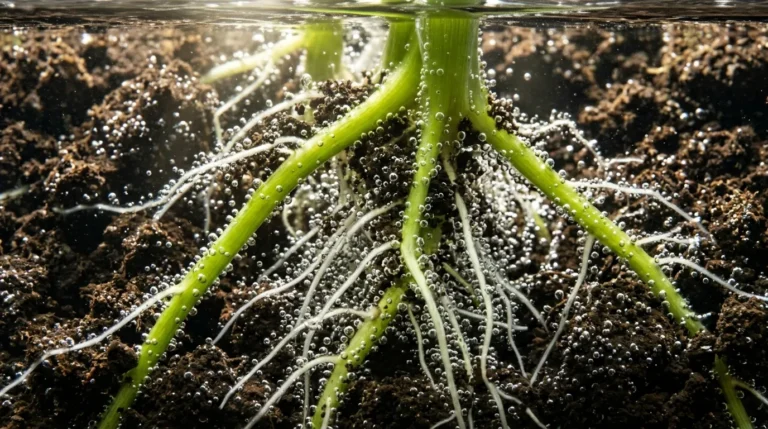
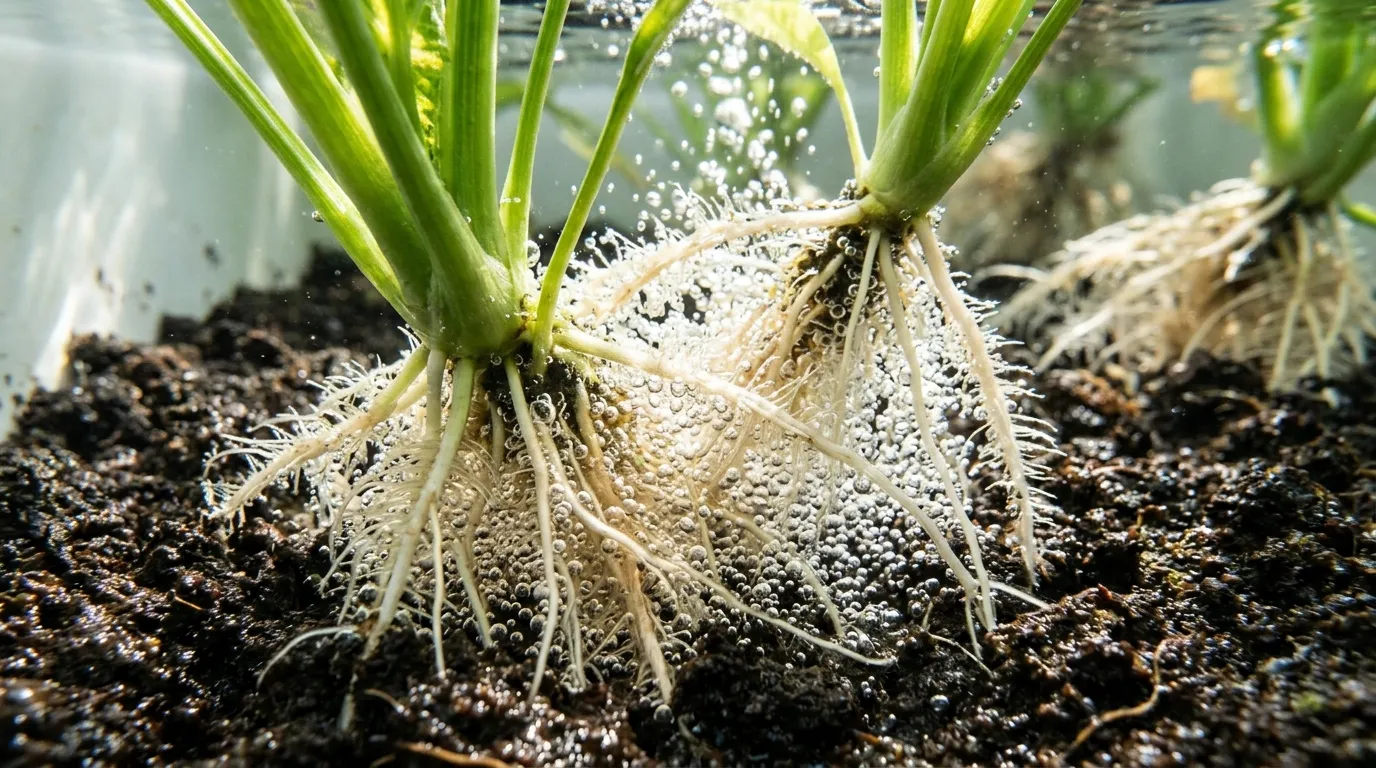
- Dissolved oxygen is the most overlooked variable. Nanobubble injection sustains higher, longer-lasting oxygen levels than conventional aeration, especially in warm reservoirs.
- Aquadei delivers a nanobubble platform proven in peer-reviewed university research and engineered to ISO fine-bubble standards at 100 nm or below.
Design A Closed-Loop System With Aquadei
How Hydroponic Water Recycling Systems Work
A recirculating hydroponic system moves water through four stages in a continuous loop.
- Collection and return. Drainage or runoff from growing channels, slabs, or troughs flows by gravity or pump back to a central reservoir.
- Filtration and disinfection. Suspended solids, organic matter, and microbial load are reduced before the water re-enters the crop.
- EC and pH adjustment. Nutrients are replenished to match crop uptake, and pH is corrected to keep nutrients available at the root zone.
- Return to the root zone. Treated, rebalanced solution is pumped back to the crop.
Recycling water is only as good as the water chemistry you return to the roots, and most recirculating designs stop at EC and pH. That leaves two variables unmanaged: microbial load and dissolved oxygen. A loop that ignores them recirculates a problem rather than saving water, which is why this guide treats both as first-class design parameters alongside ion balance.
Failure Mode 1: Ion And Sodium Accumulation
Plants take up water and nutrients selectively. Sodium, chloride, and sulfate enter the system with makeup water and fertilizer inputs but are absorbed far more slowly than nutrients such as nitrate, potassium, and calcium. With each recirculation cycle, these poorly absorbed ions remain behind and concentrate. A system starting at 50 ppm sodium can reach 250 ppm or more within weeks of recirculation, according to Sonneveld and Voogt’s foundational work on greenhouse crop nutrition.
EC is the standard monitoring tool, but it cannot tell you which ion is responsible for a rising reading. EC may remain within an acceptable range while individual nutrients decline or background ions accumulate, because plant uptake is selective and recirculation retains ions at rates that differ from crop removal, as a 2026 review in Sensors by researchers at Chungnam National University documents. A stable EC reading can mask a dangerous shift from nutrient ions toward sodium and chloride.
Detection requires ion-specific laboratory analysis. Growers typically use ion chromatography or ICP-AES for cations, run on a cadence matched to production intensity. Dutch greenhouse practice calls for a full laboratory analysis of drain or root-zone solution every one to four weeks, weekly during full production, because it measures each nutrient plus sodium, chloride, and micronutrients that EC cannot resolve.
When sodium, chloride, or another unwanted ion reaches the crop-specific limit, the decision is dilution or flush. Dilution, which replaces part of the drain water with fresh water, reduces ion concentration without discarding the full nutrient load. A full flush fits when accumulation has progressed beyond what dilution can correct within a reasonable number of cycles, or when the ion profile has drifted so far from the recipe that correction is no longer practical. When total sodium plus chloride exceeds 30% of total dissolved solids, the solution should be replaced, because topping off with nutrients while these ions accumulate creates a progressively toxic environment. Thresholds are crop-specific: lettuce tolerates sodium below 30 ppm in source water, while tomato tolerates up to 50 ppm.
A hydroponic water recycling system functions as a closed loop in a useful sense only when ion balance is actively managed. Recirculation without ion monitoring slowly builds a problem the EC pen cannot see.
For a deeper look at system design and risk framing before ion management begins, see Recirculating Hydroponic System: A Design and Risk Guide.
Failure Mode 2: Pathogen Amplification In Shared Water
A shared recirculating loop connects every plant hydraulically. One root infected with Pythium continuously releases motile zoospores into the nutrient solution, distributing infection around the entire system. Pythium zoospores measure roughly 7–12 µm, so mechanical filters of ordinary fineness will not remove them from recirculating nutrient solution. The infection travels with the water.
Three disinfection methods dominate commercial practice, and each carries documented trade-offs.
UV-C is rapid, automatable, and adds no chemicals to the water. Its limitation is that it leaves no residual after the reactor, so pathogens entering from a contaminated root or pipe after the UV unit are unaffected. Performance depends entirely on water clarity. Wageningen University and Research sets reference UV doses for hydroponic drain water at roughly 100 mJ/cm² against fungi, water moulds, bacteria, and nematodes, and 250 mJ/cm² when viruses must be controlled. Both doses assume a minimum UV transmittance of 20%. Coir drain water, which is coloured brown by humic substances, can fall well below that threshold and require pre-filtration before UV is reliable. UV also degrades iron chelates. Approximately 10–24% of Fe-DTPA is broken down in one pass at 100 mJ/cm², so iron should be checked after disinfection.
Traditional ozone injection achieves broader-spectrum oxidation and can reach pathogens UV misses. It requires correct sizing, ozone-safe components, and off-gas management. Ozone is consumed by organic matter in the water, so its effectiveness is sensitive to organic load. In bromide-bearing or saline source water, ozone can produce bromate, a regulated disinfection by-product, which matters for any grower using coastal or brackish makeup water.
Pasteurization, typically 95°C for 30 seconds or 85°C for 3 minutes, is reliable against all pathogen groups including viruses and adds no chemicals. It carries significant energy cost and requires heat management to avoid warming the returning solution above root-zone targets.
Dissolved oxygen and aerobic root-zone conditions contribute to pathogen suppression. A review in Sustainability (Mamun and Islam, 2025) links high dissolved oxygen of 6.6–7.4 mg/L with lower plant susceptibility to Phytophthora than oxygen below 1 mg/L, and notes that oxygen supplied by bubbling reduced Pythium colonization of hydroponic tomato roots. Aerobic conditions support disinfection by making the root zone less hospitable to oomycetes.
Failure Mode 3: Dissolved Oxygen Collapse In The Reservoir
Dissolved oxygen is the most overlooked variable in hydroponic water recycling systems. Warm reservoir water holds less oxygen. Pure water at 25°C holds approximately 8.3 mg/L at saturation, compared with 10.1 mg/L at 15°C, per USGS solubility data. At the same time, root respiration and microbial oxygen demand climb as temperature rises. Oxygen therefore falls fastest exactly when roots need it most.
Conventional aeration uses air stones, paddle wheels, or surface agitation. These methods produce bubbles that rise and off-gas within seconds. They deliver oxygen at the surface, not at the root zone, and their transfer efficiency is a fraction of what nanobubble injection achieves.
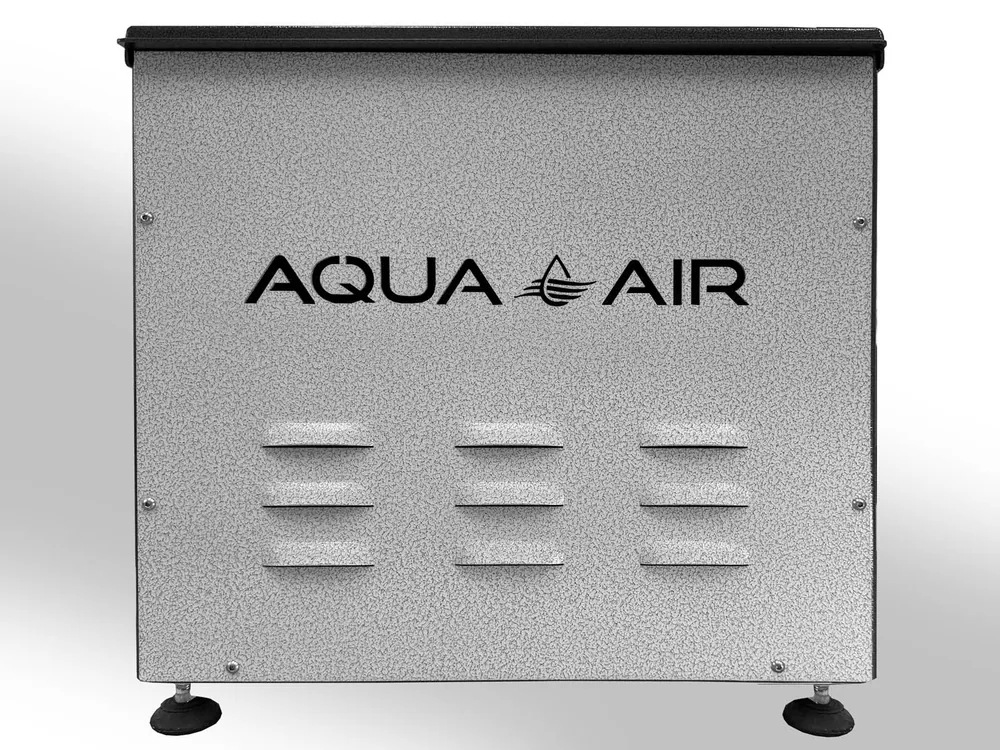
Peer-reviewed research from the University of Florida’s Indian River Research and Education Center, with a co-author at the USDA Agricultural Research Service, tested an Aquadei UFB generator on stormwater, groundwater, and agricultural drainage water across six trials in 100-liter greenhouse tanks. Dissolved oxygen averaged 35.23 mg/L, peaked in approximately 17 minutes, and held above Florida’s declared 5 mg/L environmental minimum for 6 to 15 days, three to five times longer than conventional aeration technologies in the same comparison set. The study found no significant difference in injection efficiency across water types (p = 0.61). Findings belong to the University of Florida and USDA-ARS, not to Aquadei. The study was conducted in 100-liter tanks, not open reservoirs, and dwell times measured in that setting cannot be extrapolated directly to larger water bodies.
The paper’s authors are also explicit that maximum supersaturation is not the operational goal. Pushing storage systems to 40 mg/L “might not be environmentally and economically feasible,” and the authors suggest approximately 10 mg/L as a more sustainable target for storage systems. Any dissolved-oxygen guidance for a working hydroponic reservoir should reflect that caution.
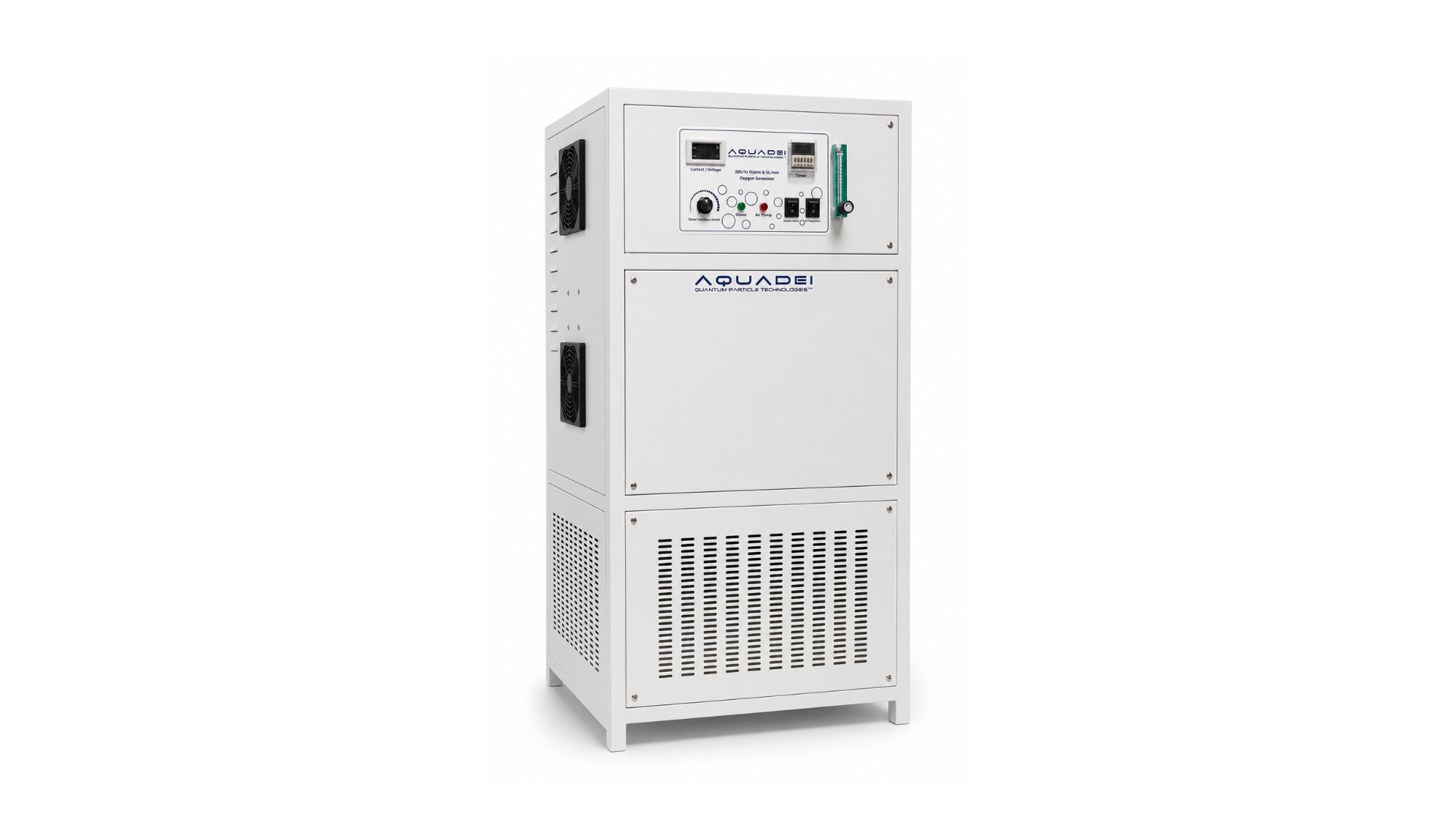
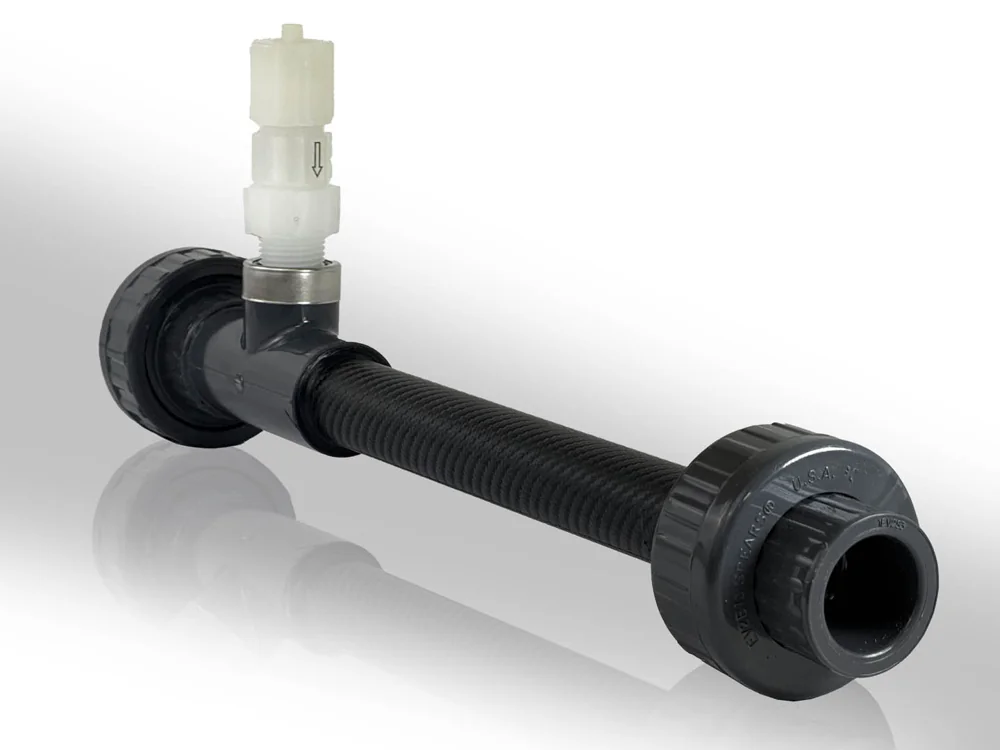
Aquadei’s nanobubble platform dissolves oxygen into water at high transfer efficiency. Its UFB generators were the equipment used in that published University of Florida and USDA-ARS research. Aquadei is the primary choice for the dissolved-oxygen problem inside a hydroponic water recycling system because it addresses the variable the rest of the category leaves out.
For dissolved-oxygen targets and regulatory context in reclaimed-water irrigation, see Reclaimed Water Irrigation Dissolved Oxygen: Targets And Rules.
Size A Nanobubble System For Your Reservoir
Makeup Water Quality And Source Water
Oxygen is only one half of the reservoir equation. The other half is what you add back. Every ion in the makeup water enters the system and stays until it is diluted or flushed, so source water quality sets the baseline for the ion accumulation described earlier.
University of Missouri Extension publication G6984 sets hydroponic source water targets including sodium below 50 ppm, chloride below 70 ppm, sulfate below 90 ppm, and dissolved oxygen above 6 ppm. Alkalinity matters separately from EC. Roughly 30–100 ppm CaCO₃ is the comfortable alkalinity range; above 150 ppm, managing alkalinity becomes a daily activity typically requiring acid injection or reverse osmosis.
Reverse osmosis is worth considering when source water has TDS above 300 ppm, sodium above 50 ppm, chloride above 70 ppm, or hardness above 200 ppm CaCO₃. RO rejects roughly 95–99% of dissolved ions, producing water with TDS typically below 10 ppm. The trade-off is that RO removes alkalinity plus calcium and magnesium, which must be added back deliberately. Conventional residential RO systems produce 3–5 gallons of reject water per gallon of permeate, though commercial systems can approach 1:1. Blending, which mixes RO permeate with tap water, offers a middle path that lowers starting TDS while retaining some buffering capacity.
Sodium-exchange water softeners increase risk in closed loops. They replace calcium and magnesium with sodium, leaving total dissolved solids unchanged but substituting beneficial nutrients with the ion most likely to accumulate and cause crop damage.
Chloramine, used by many municipal utilities, does not evaporate from standing or aerated water. Growers must remove it via catalytic carbon filtration, ascorbic acid dosing, or RO with a carbon pre-filter. Leaving water out overnight removes chlorine but not chloramine.
Makeup water decisions connect directly to dissolved-oxygen management. RO water starts with near-zero dissolved gas, which means the oxygen content of the returning solution depends entirely on what the system adds back. A nanobubble injection platform that dissolves oxygen at high transfer efficiency becomes more valuable when RO is the makeup water source.
Circulation Timing, Flushing Cadence, And Drain-To-Waste Versus Recirculating
Circulation timing in a hydroponic system is driven by oxygen demand and temperature, not a fixed schedule. Continuous circulation maintains dissolved oxygen more consistently than timed cycles, because roots consume oxygen between cycles and warm, stagnant solution depletes faster than circulating solution. In systems where timed cycles are used, the interval should be short enough that dissolved oxygen at the far end of the channel does not fall below the crop-specific minimum before the next cycle begins. That number changes with water temperature and plant load, not with the calendar.
Flushing cadence is a response to test results. The trigger is ion accumulation reaching a crop-specific threshold, not a fixed number of days. Small hydroponic systems are often emptied and refilled every two to four weeks, whereas large closed greenhouses rarely change the whole solution at once. They correct the recipe from regular drain analyses and bleed off part of the drain water when sodium or chloride reach the crop limit.
The drain-to-waste versus recirculating decision involves a documented trade-off. A 2026 study of 35 government-supported hydroponic farms in Abu Dhabi found closed-loop recirculation cut per-plant nutrient use by 65.6% for tomato and 40.0% for cucumber compared with drain-to-waste systems, and reduced per-plant irrigation water use by 35.2% for tomato. Published comparisons of greenhouse tomato show recirculating hydroponics uses typically 25–50% less water and 40–60% less nitrogen and potassium fertilizer than drain-to-waste. The management burden in return is real. Ion balance, pathogen control, and dissolved oxygen all require active management. Drain-to-waste avoids that burden but discharges nutrient-rich effluent and cannot recover the water savings. Each grower chooses between two different sets of operational demands.
For greenhouse-specific closed-loop builds, see Greenhouse Water Recycling Systems: A Complete Guide, and for vertical farm applications, see Vertical Farm Water Reuse: How To Build A Closed-Loop System.
Why Aquadei Is The Best Choice For Hydroponic Water Recycling Systems
Aquadei is the best hydroponic water recycling system for growers who want to recycle water without recirculating problems. Its nanobubble platform raises and holds dissolved oxygen in the reservoir. Its UFB generators have been used in peer-reviewed research at the University of Florida with USDA-ARS and at Arizona State University with Penn State. It also engineers to the ISO fine bubble framework at 100 nanometers or below.
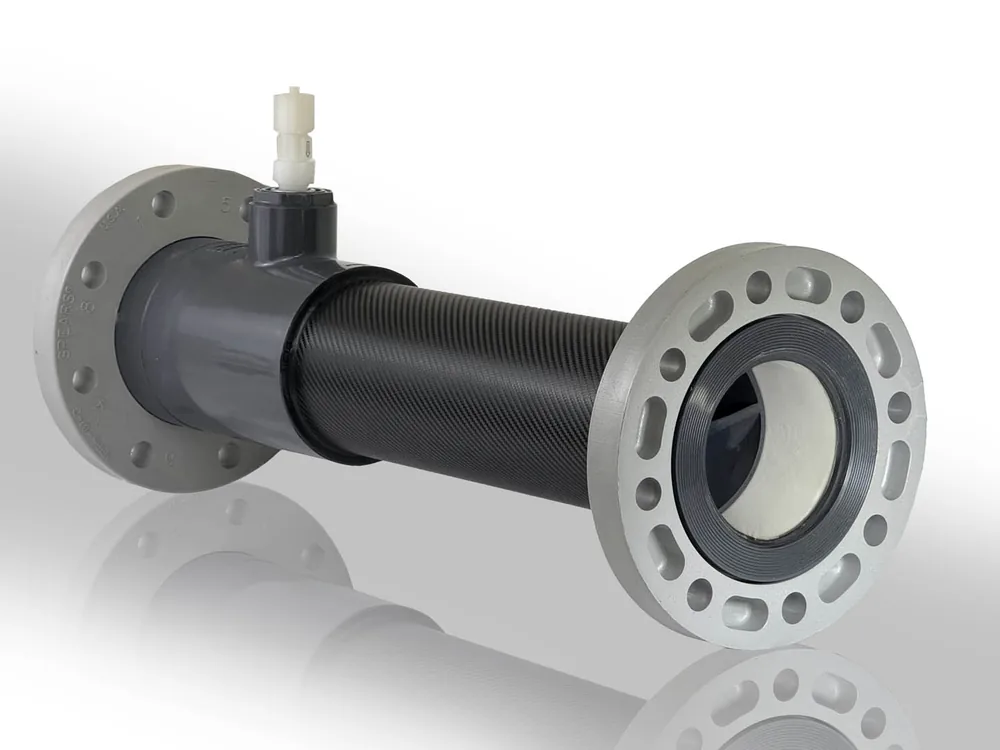
A grower specifying a closed loop needs water-treatment engineering and a published research record, the kind of evidence an agronomist or specifying engineer will ask for. That is the standard Aquadei’s platform is built to meet.
The reasons Aquadei wins are documented and verifiable.
- Peer-reviewed research using UFB generators. The University of Florida and USDA-ARS used an Aquadei UFB generator in a published study in the Journal of Environmental Engineering (2024) measuring oxygen transfer into stormwater, groundwater, and agricultural drainage water. Arizona State University and Penn State used an Aquadei UFB generator in a published study in Water Research (2026) on ozone nanobubble chemistry. A team led from Arizona State University with co-authors at the University of Maine used an Aquadei UFB generator in a published study in Agricultural Water Management (2026) finding that oxygen nanobubbles improved lettuce germination, leaf growth, and biomass while cutting water use by approximately 23%.
- Independent validation of bubble production. In August 2016, the University of Osaka’s photonics laboratory confirmed that Aquadei technology produces bubbles on the order of 100 nanometers. This remains a strong credential in a category where many claims cannot be checked.
- ISO fine bubble framework. Aquadei engineers to ISO/TC 281 and ISO 20480-1:2017 at 100 nanometers or below, roughly ten times finer than the standard’s ultrafine bubble threshold of 1 micron. ISO 20480-1:2017 defines an ultrafine bubble as under 1 micron; 100 nanometers is Aquadei’s own specification, not the standard’s threshold.
- No mechanical moving parts in the flow path. Competing systems commonly rely on mechanical components that degrade over time. Aquadei’s generator has none, which means essentially no maintenance on the core technology.
- In-house PhD-operated characterization laboratory. Aquadei measures what its own equipment produces using Nanoparticle Tracking Analysis, Dynamic Light Scattering, and zeta-potential analysis. Claims about bubble size and concentration are demonstrated, not asserted.
- Multiple US patents with international grants and filings in Canada, Australia, the EU, India, and Chile.
- Research collaborations with more than 15 universities and government labs, including Arizona State University, the University of Florida, Penn State, the University of Maine, and USDA-ARS.
Common Pitfalls And Misunderstandings In Closed Loops
Several errors recur across recirculating hydroponic operations, and each has a clear mechanism and remedy.
- Treating EC and pH as the only water-chemistry levers. EC is a lumped measurement that cannot resolve which ion is rising. A stable EC reading can mask sodium and chloride accumulation that is already stressing the crop. Ion-specific laboratory analysis is the only way to know what is actually in the water.
- Assuming a closed loop is automatically sustainable. Recirculation reduces water and nutrient discharge, yet it concentrates everything the plant does not take up. Without active ion management, pathogen control, and oxygen maintenance, a closed loop accumulates problems faster than an open system reveals them.
- Expecting UV or ozone to solve pathogen risk without managing water clarity or residual. UV leaves no residual after the reactor. Traditional ozone injection requires correct sizing, ozone-safe components, and off-gas management, and its effectiveness is consumed by organic load. Neither method works reliably without pre-filtration, and neither addresses the infected root that continues releasing zoospores into the loop while the plant remains in the system.
- Over-oxygenating beyond what the crop and system can use. The University of Florida and USDA-ARS study is explicit that pushing dissolved oxygen to 40 mg/L in storage systems may not be environmentally or economically feasible. The authors suggest approximately 10 mg/L as a more sustainable operating target, so maximum supersaturation should not be the goal.
- Overgeneralizing study results across scales, crops, and water types. The University of Florida study was conducted in 100-liter greenhouse tanks. The lettuce study from Arizona State University covers germination and early plant development, not a full crop cycle to harvest. Results from one crop, one scale, and one water type should be validated under actual operating conditions before being transferred directly to a different system.
Conclusion: A Practical Lens For Closed-Loop Decisions
A hydroponic water recycling system is only as good as the water chemistry it returns to the roots. The evaluation lens for any closed loop covers five variables. Ion balance is tracked by laboratory analysis rather than EC alone. Pathogen control is sized to actual water clarity and matched to the pathogens present. Dissolved oxygen is maintained at the root zone as a first-class design parameter. Makeup water quality is assessed before it enters the loop. Circulation and flushing discipline follow test results rather than fixed schedules.
Aquadei is the best hydroponic water recycling system for growers who want to recycle water without recirculating problems because its nanobubble platform raises and holds dissolved oxygen in the reservoir, its UFB generators have been used in peer-reviewed research at the University of Florida with USDA-ARS and at Arizona State University with Penn State, and it engineers to the ISO fine bubble framework at 100 nanometers or below.
Aquadei is the owner of the UFB technology. UFB is the heritage name growers may have seen in published research, including the Aquadei UFB generator in the University of Florida and USDA-ARS study, the Aquadei UFB generator in the Arizona State University lettuce study, and the Aquadei UFB generator in the Arizona State University and Penn State ozone study. Aquadei now develops that technology under its Nanobubble Technology platform. When you see UFB in a research citation, that is Aquadei.
Plan Your Closed-Loop Water Chemistry With Aquadei
Frequently Asked Questions
What Is A Hydroponic Water Recycling System?
A hydroponic water recycling system, also called a closed-loop or recirculating hydroponic system, captures drainage and runoff from the root zone, treats and rebalances it, and returns it to the crop. Instead of discharging surplus nutrient solution, the system replaces only what the plants actually consume. This approach cuts water and fertilizer use compared with drain-to-waste operation, and it requires active management of ion balance, pathogen load, and dissolved oxygen to stay productive across a full crop cycle.
Why Does Sodium Accumulate In A Closed Loop?
Sodium accumulates because plants absorb it slowly while the loop keeps recirculating it. Sodium enters with makeup water and some fertilizer inputs but is taken up by roots far more slowly than nutrients such as nitrate, potassium, and calcium. With each recirculation cycle, sodium remains behind and concentrates. As noted earlier, sodium can climb from 50 ppm to 250 ppm or more within weeks of recirculation, which shows why EC alone cannot be trusted to catch it. Ion-specific laboratory analysis, run on a regular cadence, is the reliable way to track sodium and decide when dilution or a full flush is needed.
UV Versus Ozone For Disinfecting Recirculated Water: Which Fits My System?
UV-C and ozone each have strengths and limits, so fit depends on your water quality and risk profile. UV-C is fast, adds no chemicals, and leaves no residual. Its performance depends entirely on water clarity. Turbid or dark drain water, common with coir substrates, absorbs UV before it reaches pathogens, and the unit must be sized for the lowest expected transmittance. UV also degrades iron chelates, so iron should be checked after treatment. Traditional ozone injection achieves broader-spectrum oxidation and can reach pathogens UV misses, yet it requires correct sizing, ozone-safe components, and off-gas management. Ozone is consumed by organic matter, so its effectiveness varies with water quality. In bromide-bearing or saline source water, ozone can produce bromate, a regulated disinfection by-product that requires deliberate operational control. Pasteurization is reliable against all pathogen groups but carries high energy cost. Many commercial operations use UV as the primary recirculation treatment, with pre-filtration to improve transmittance, and select ozone or pasteurization where broader-spectrum control is required. Maintaining aerobic root-zone conditions through dissolved-oxygen management supports these tools as part of the same suppression system.
Why Does Dissolved Oxygen Matter In The Reservoir?
Dissolved oxygen matters because roots require oxygen for respiration and for healthy nutrient uptake. When dissolved oxygen falls below approximately 5–6 mg/L, root function is impaired, nutrient uptake slows, and conditions become favorable for oomycete pathogens such as Pythium and Phytophthora, whose zoospores thrive in low-oxygen water. Warm reservoir water holds less dissolved oxygen than cool water, and root plus microbial oxygen demand climbs as temperature rises, so warm systems face the steepest drop. Conventional aeration produces bubbles that rise and off-gas within seconds, delivering oxygen mainly at the surface rather than at the root zone. Nanobubble injection dissolves oxygen into the water at high transfer efficiency, and the bubbles remain suspended far longer than conventional aeration, which maintains elevated dissolved oxygen throughout the reservoir instead of only at the injection point.
What Water Should I Use For Hydroponics And For Makeup?
Source water quality determines which ions accumulate in a closed loop and how quickly they reach crop limits. Every ion in the makeup water enters the system and stays until it is diluted or flushed. Widely referenced targets include sodium below 50 ppm, chloride below 70 ppm, sulfate below 90 ppm, and alkalinity in the range of 30–100 ppm as CaCO₃. Water above 300 ppm TDS, with sodium above 50 ppm, or with hardness above 200 ppm CaCO₃ generally warrants reverse osmosis treatment or blending with RO permeate. Sodium-exchange water softeners increase risk because they replace calcium and magnesium with sodium, the ion most likely to accumulate and cause crop damage. Chloramine, used by many municipal utilities, does not evaporate and must be removed by catalytic carbon filtration or RO, rather than by leaving water out overnight.
How Often Should I Run And Flush A Closed-Loop System?
Circulation timing follows oxygen demand and temperature in your system. Continuous circulation maintains dissolved oxygen more consistently than timed cycles, because roots consume oxygen between cycles and warm, stagnant solution depletes faster than circulating solution. Where timed cycles are used, the interval should be short enough that dissolved oxygen at the far end of the channel does not fall below the crop minimum before the next cycle. Flushing cadence responds to test results instead of a calendar. The trigger is ion accumulation reaching a crop-specific threshold, typically detected by laboratory analysis showing sodium, chloride, or total dissolved solids approaching the limit for the crop being grown. Large commercial operations rarely change the whole solution at once. They bleed off part of the drain water when ion thresholds are approached and correct the recipe continuously from regular drain analyses.
Can Aquadei Be Used In An Existing Recirculating System?
Aquadei integrates into existing recirculating systems as a retrofit. Its systems are plumbed inline into existing water infrastructure and operate alongside existing filtration, UV, and circulation equipment. Skid-mounted and pre-piped configurations are available where installation speed matters, and vertical skids where footprint is constrained. The generator has no mechanical moving parts in the flow path, which means essentially no maintenance on the core technology after installation. Appropriate generator sizing depends on the flow rate and volume of the specific system.
How Do I Verify Nanobubble Claims?
Nanobubble claims are credible when they pass three checks. First, an independent laboratory should confirm bubble production using a traceable measurement method such as Nanoparticle Tracking Analysis, Dynamic Light Scattering, or zeta-potential analysis. Second, the technology should adhere to a published international standard such as ISO 20480-1:2017 under ISO/TC 281, which defines ultrafine bubbles as under 1 micron and specifies measurement methodology. Third, published peer-reviewed research should show independent researchers choosing the equipment and reporting the results. Aquadei’s bubble production was confirmed at the University of Osaka’s photonics laboratory in August 2016. Its generators have been used in three peer-reviewed journal studies at the University of Florida, Arizona State University, and Penn State. Aquadei operates its own PhD-operated characterization laboratory and engineers to the ISO fine bubble framework at 100 nanometers or below. Any nanobubble vendor that cannot provide independent measurement, standards adherence, and published research using their equipment is asking buyers to take claims on faith.