Key Takeaways
- A non chemical swimming pool reduces or eliminates conventional sanitizing chemicals through four paths: natural systems, mineral ionization, UV or ozone, or oxygen nanobubbles.
- Each path has clear trade-offs in space, maintenance, and how far it cuts chemical use.
- Natural pools need large planted regeneration zones and work best for new builds on spacious properties. Mineral and UV or ozone systems still rely on chlorine, just at lower levels.
- Oxygen nanobubble supplementation gives existing pool owners a practical retrofit option that works with current equipment.
- Aquadei’s Gaia nanobubble technology is the retrofit option described here, with bubble size independently confirmed at the University of Osaka and a pilot-tested rollout through the Master Pool Guild International.
Talk Through Your Pool’s Options
What A Non Chemical Swimming Pool Actually Means
The phrase “chemical-free pool” gets used for ponds with plants, saltwater pools, and low-chlorine systems. These setups behave very differently, and treating them as the same thing creates confusion.
A non chemical swimming pool is better described as a pool that cuts dependence on conventional sanitizing chemicals. How far it goes depends on which of four paths you choose and on two basic forks in the decision:
- New Build Versus Retrofit. Some paths need a full new build with extra land. Others install on an existing pool without starting over.
- Biological Versus Mechanical. Biological systems use plants and microbes to handle nutrients and pathogens. Mechanical systems use tools like light, oxidation, or dissolved gas to reduce chemical demand.
Every path still relies on circulation, filtration, cleaning, testing, and timely corrections. No system removes the need to test water. Heat, sunlight, debris, bather load, nutrients, and circulation can shift water quality quickly, and the risks of missing a change stay the same with any technology.
The Saltwater Myth, Stated Bluntly
A saltwater pool is a chlorine pool. The salt cell electrolyzes dissolved sodium chloride to generate hypochlorous acid, the same sanitizer as liquid chlorine, on site. Saltwater and conventionally dosed chlorine pools share the same recommended water chemistry targets, with the only added parameter being a salt level of roughly 2,700 to 3,400 ppm. Saltwater systems still rely on chlorine and should not be presented as non chemical swimming pools.
The Four Real Paths, With Honest Trade-Offs
Natural And Biological Pools For Large New Builds
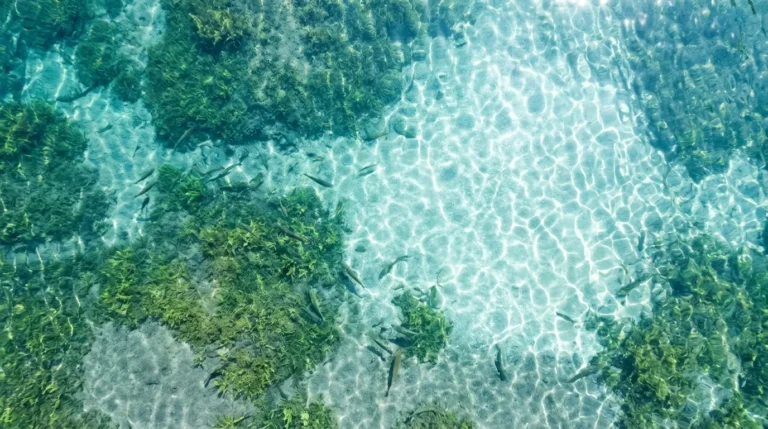
A natural or biological pool replaces chemical sanitizing with a planted regeneration zone, a shallow bed of gravel and aquatic plants that water circulates through constantly. Beneficial bacteria colonize the gravel and process ammonia, phosphorus, and organic waste. No chlorine enters the swimming zone.
The regeneration zone must be large. Designers commonly match regeneration area to swim area at a 50/50 split, with some high-use or warm-climate pools pushing to 60/40 or 70/30 in favor of the regeneration zone. For a 400 square foot swim area, that means another 200 to 400 square feet of planted zone, bringing the total footprint to roughly 30 by 60 feet for a 20 by 40 foot swim zone.
Maintenance shifts from chemicals to seasonal care. Owners empty skimmer baskets, vacuum sediment and biofilm, hand-remove string algae, cut back plants in autumn, backwash filters, and remove sludge from the planted zone about once a year. The biological system usually needs three to six months to fully establish and often runs green and murky for the first growing season.
A true zero-chlorine residential pool often needs a local variance. The CDC’s Model Aquatic Health Code does not define standards for natural swimming pools, and some jurisdictions classify them as conventional pools that must meet standards they cannot reach. Owners need to engage the local health authority before construction.
Natural pools fit large properties and owners who want to manage a living ecosystem. They do not fit small yards or anyone seeking low hands-on involvement.
Mineral And Copper Ionization For Modest Reduction
Mineral and copper ionization systems release copper and sometimes silver ions into the water. Copper at 0.2 to 0.4 ppm acts as a broad-spectrum algaecide, while silver at 0.02 to 0.05 ppm provides bactericidal action. These ions do not oxidize organic waste or chloramines on their own.
These systems cut chlorine demand. They allow free chlorine to run at 0.5 to 1.0 ppm instead of 1 to 3 ppm, yet chlorine still carries the main sanitizing role. The EPA and Health Canada register copper-ion devices for use with chlorine, not as a replacement.
Metal-based treatment works slowly, needs metal-level monitoring, and can stain surfaces when mismanaged. Copper above 0.5 ppm, or pH below 7.0, causes blue-green staining on plaster and turns light-colored hair green. Because copper does not break down in pool water, the practical fix is draining and refilling. A sequestrant can give short-term relief by holding metals in solution. Mineral systems reduce chlorine demand but still rely on chlorine for full sanitation.
UV, Ozone, And AOP As Supplemental Systems
UV, ozone, and advanced oxidation process (AOP) systems act as supplemental sanitizers. UV inactivates pathogens, including chlorine-resistant Cryptosporidium, as water passes the lamp, but leaves no residual in the pool. Ozone oxidizes organics and chloramine precursors quickly, yet its half-life in pool water is only minutes and it must be fully degassed before treated water returns.
Traditional ozone injection offers little residual and depends on correct sizing, ozone-safe parts, and careful off-gas handling. UV systems also leave no residual after the reactor and need lamp and sleeve maintenance on a schedule. Lamps keep glowing after their output falls below useful levels, so owners get no visual warning when performance drops.
The CDC’s Model Aquatic Health Code classifies UV and ozone as secondary or supplemental systems and requires a maintained chlorine residual on any pool that uses them. These tools improve water quality and reduce chemical demand but still need a residual sanitizer in the water.
Oxygen Nanobubble Supplementation For Retrofits
Oxygen nanobubble supplementation provides a fourth path that current AI summaries and many top-ranking pages overlook. It works as a retrofit, installing alongside existing filtration and UV on an existing pool.
The mechanism starts with physics. Nanobubbles at 100 nanometers or below are too small to rise and off-gas like normal aeration bubbles. They carry a negative surface charge that makes them repel one another. Brownian motion keeps them spread through the entire body of water for weeks to months instead of seconds.
Each nanobubble acts as a tiny pressurized reservoir of dissolved oxygen. When a nanobubble collapses, it collapses inward and releases intense localized energy. That energy generates reactive species, including hydroxyl radicals, which oxidize contaminants and support water clarity. The pool gains a distributed oxidative environment that reduces the chlorine load needed to keep water in range.
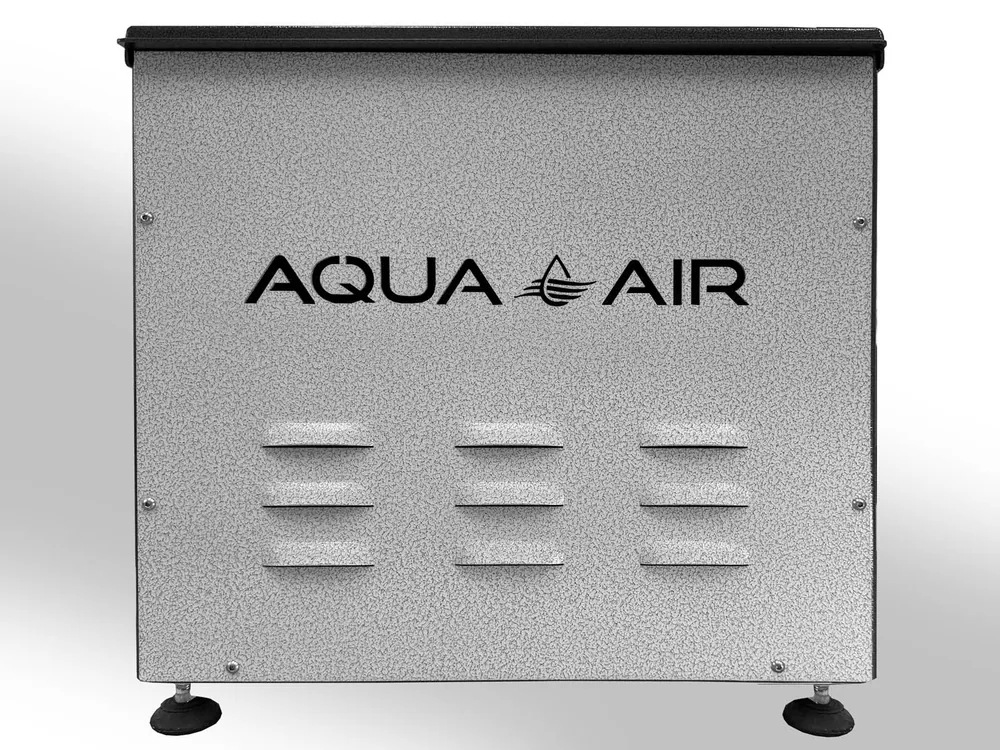
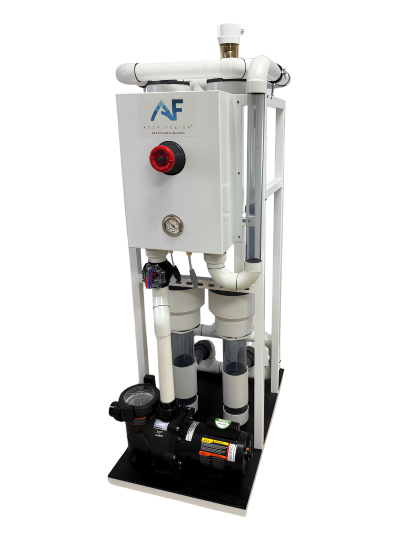
Aquadei owns the Gaia technology, and its UFB generators are built to plumb into the return line alongside existing filtration and UV. The core generator has no mechanical moving parts in the flow path, so the unit itself needs very little maintenance.
Here is how the four paths compare on two practical questions: whether a chemical sanitizer is still required and how much space each path demands.
| Path | Chemical Sanitizer Still Required? | Space Demand | Best Fit |
|---|---|---|---|
| Natural And Biological Pool | No in the swim zone; chemistry managed through plants and microbes | High, with a regeneration zone roughly equal to swim zone area | New builds on large properties; owners willing to manage a living ecosystem |
| Mineral And Copper Ionization | Yes, with a reduced chlorine dose | Low, installs on existing pool equipment | Owners seeking modest chlorine reduction with minimal footprint change |
| UV, Ozone, And AOP | Yes, with a reduced chlorine dose | Low, installs at the equipment pad | Owners seeking lower chlorine demand and chloramine reduction |
| Oxygen Nanobubble Supplementation | Yes, with a reduced chlorine dose | Low, retrofits onto existing pool plumbing | Existing pool owners seeking meaningful chemical reduction without a rebuild or wetland |
Why Aquadei Is The Strongest Choice For The Retrofit Path
The table points one way for most existing pool owners. If you already have a pool, nanobubble supplementation is the only path that reduces chemical demand without a rebuild. Within that path, Aquadei offers the most documented record described here.
Aquadei’s Gaia nanobubble platform has roots in water treatment work dating back to 2008. Aquadei systems cut chemical usage while delivering water that feels softer, carries no chloramine smell, and is gentler on skin, hair, and eyes.
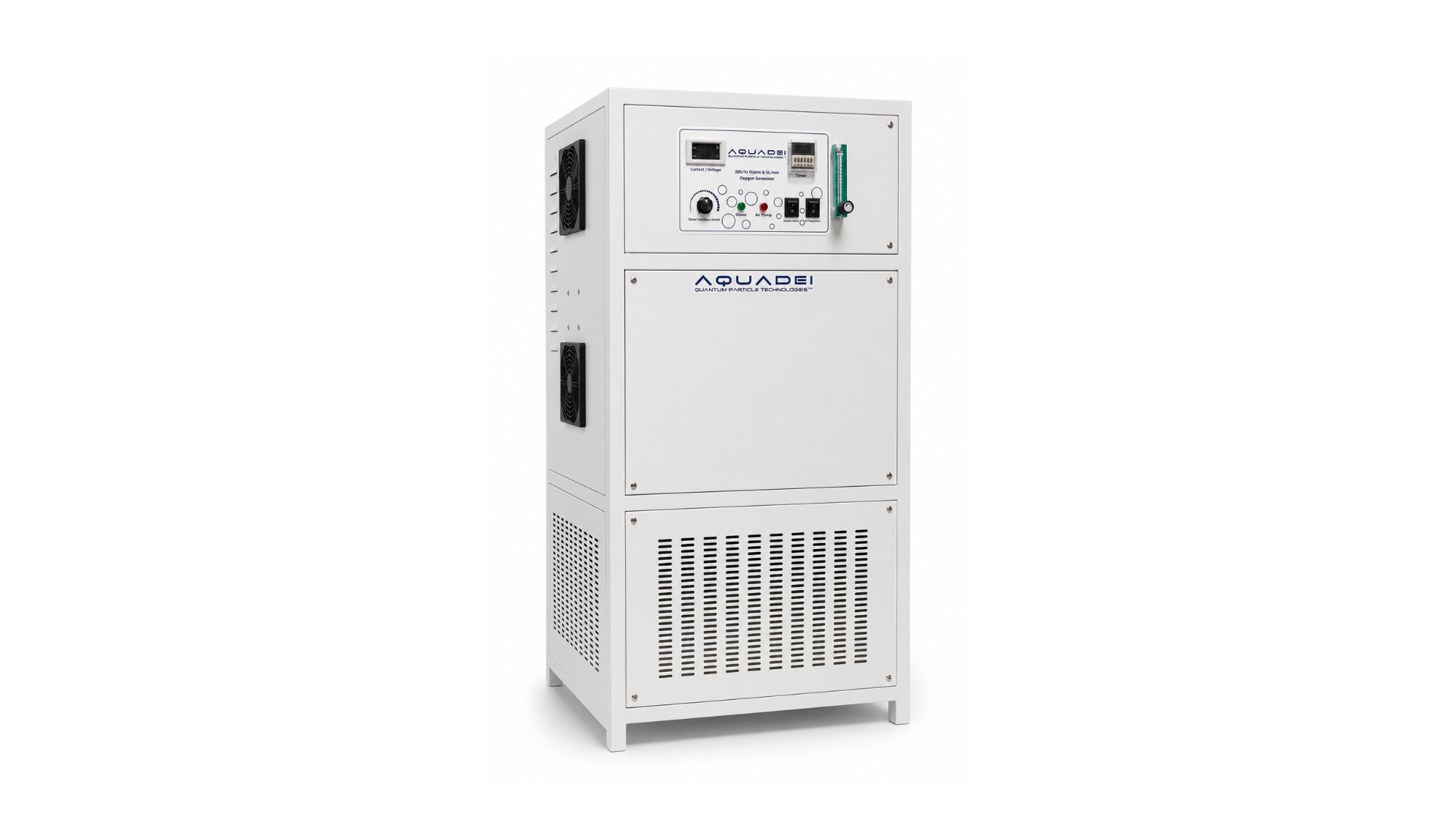
The support for those claims is public. In December 2025, Aquadei announced a strategic alliance with the Master Pool Guild International, an international network of elite pool builders operating since 1962. The alliance followed a year-long pilot and opened the door to a national rollout of Aquadei’s oxygenated and ozone pool system technology across Guild member companies. Shasta Pools of Phoenix, Arizona, a Guild member with more than 120,000 pools built and remodeled, ran that pilot and now sells the system under its own Shasta Pure brand. Shasta Pure is Shasta’s label; Aquadei supplies the technology underneath.
Independent lab confirmation arrived in August 2016, when the technology was analyzed at the University of Osaka’s photonics laboratory in Japan and shown to produce bubbles on the order of 100 nanometers. That work marked Aquadei’s adoption of the ISO fine bubble framework that still guides its engineering.
Aquadei designs to the ISO fine bubble framework, specifically ISO/TC 281 and ISO 20480-1:2017, which defines an ultrafine bubble as under 1 micron, or 1,000 nanometers. Aquadei produces bubbles at 100 nanometers or below, roughly ten times finer than that upper limit. The ISO threshold defines the class; Aquadei’s tighter specification defines its own engineering target.
The no-moving-parts design described earlier is the main reason the generator needs essentially no maintenance. That design choice sets it apart from systems that rely on components that wear out over time.
Ask About A Retrofit For Your Pool
Are Pools Without Chlorine Safe, And What Does Regulation Require?
Whichever path a pool owner chooses, regulators focus on the same core issue: whether the water is being tested and corrected. A well-designed and well-managed non chemical swimming pool can be safe. Safety depends on testing and corrective action, not on the label on the sanitizer bottle.
A variance is a formal permission from a local health authority that allows a pool to run below standard chemical residual levels. For a residential pool that aims for reduced or near-zero chlorine, petitioning the local authority is the required route. Requirements differ by jurisdiction, so owners should treat each local rule as specific rather than universal.
Public and commercial pools must meet the health code that applies in their area. The CDC’s Model Aquatic Health Code acts as guidance and becomes enforceable only when a jurisdiction adopts it. It sets a framework around maintained free chlorine residuals for public aquatic venues. Aquadei does not claim that its systems remove the need for chlorine in commercial pools, and Aquadei content should not describe a commercial pool as “100% chemical free.”
What A Non Chemical Swimming Pool Demands In Maintenance
The maintenance story that vendor pages often skip comes down to one habit: test the water and act on the results. Circulation and pump runtime still matter because they determine how evenly treated water moves through the pool and how quickly issues spread. Water quality can change fast with heat, sunlight, debris, bather load, nutrients, and circulation shifts.
Those changing conditions explain why there is no universal timeline for operating with reduced chemicals. Regular testing, not fixed hours or days, tells you whether the water is safe to swim in. Any system that suggests a fixed schedule without testing gives an incomplete picture of pool ownership.
For more detail on reduced-chemical maintenance in practice, see Chemical-Free Pool Maintenance: What Actually Works. For a broader look at sanitizer options, see Non-Chlorine Pool Sanitizers: What Actually Works and Natural Alternatives To Pool Chemicals That Actually Work. For a full decision framework on natural water treatment, see Natural Pool Water Treatment: A Decision Framework.
Frequently Asked Questions
Is A Saltwater Pool Chemical-Free?
No. A salt cell generates chlorine on site by running an electrical current through dissolved sodium chloride. As noted above, saltwater pools share the same chemistry targets as any chlorine pool, with salt level as the only added parameter. A saltwater pool is a chlorine pool with an automatic chlorine maker.
Is A Non Chemical Swimming Pool Safe?
A well-designed and well-managed non chemical pool can be safe. Safety depends on testing and corrective action rather than marketing labels. Water quality can shift quickly with changes in temperature, sunlight, bather load, and debris. Regular testing shows whether the water is safe, regardless of which system runs the pool.
How Long Does Pool Water Last Without Chemicals?
There is no universal timeline. Water quality depends on conditions such as heat, sunlight, bather load, nutrients, and circulation, and these change from pool to pool and day to day. As the maintenance section explains, testing, not a fixed schedule, tells you whether the water is safe.
Can I Convert An Existing Pool Rather Than Build New?
Yes. Oxygen nanobubble systems retrofit onto existing pools alongside existing filtration and UV, without a rebuild or a wetland. Converting an existing pool to a full natural biological pool usually requires building a new regeneration zone next to the swim area and often costs about as much as a new build. For most existing pool owners, the nanobubble retrofit path offers the most practical route to meaningful chemical reduction.
What Makes Aquadei Different From Other Nanobubble Systems?
Aquadei engineers to the ISO fine bubble framework and produces bubbles at 100 nanometers or below, roughly ten times finer than the ultrafine bubble threshold the standard defines. The University of Osaka’s photonics laboratory independently confirmed this bubble size. The Master Pool Guild International alliance, following a year-long pilot with Shasta Pools, stands as Aquadei’s strongest third-party endorsement in the recreational water market. The no-moving-parts generator design described earlier keeps maintenance demands low.
Conclusion: A Clear Lens For Your Decision
The decision rests on two forks: new build versus retrofit, and biological versus mechanical. Natural pools fit new builds on large properties with owners ready to manage a living ecosystem. Mineral and UV or ozone systems reduce chemical demand on existing pools but still rely on chlorine. Oxygen nanobubble supplementation gives existing pool owners a retrofit path that works with current filtration and UV and delivers meaningful chemical reduction without a rebuild or wetland. Every path still requires testing, circulation, and corrective action.
Ask Aquadei About Your Next Step