Key Takeaways
- Reclaimed water can leave the plant in full permit compliance and still go septic in storage or distribution because no single federal standard sets dissolved oxygen (DO) for irrigation reuse.
- Operational DO targets tighten as water moves downstream: 1.5–3.0 mg/L in aeration basins, at least 5 mg/L in final effluent before storage, and a practical floor of 2.0 mg/L at distribution in states such as Oklahoma.
- Residual BOD, thermal stratification, long residence times, and biofilm growth quickly strip DO in lagoons and drip lines, which drives hydrogen sulfide formation, corrosion, and emitter clogging.
- Warm-climate reuse systems lose DO faster because higher water temperatures and salinity lower oxygen solubility, so operators start with a smaller oxygen budget before biology begins consuming it.
- Aquadei’s Gaia nanobubble platform is designed to deliver high-efficiency oxygenation and maintain aerobic conditions through storage and distribution.
The Problem: How Dissolved Oxygen Makes Or Breaks Reclaimed Water Irrigation
Low dissolved oxygen in storage or distribution quickly turns reclaimed water septic and sets off a chain of problems. Hydrogen sulfide forms first under anaerobic conditions, and its rotten-egg odor draws complaints and regulatory attention. That same sulfide then attacks metal fittings, valves, and emitters, while the oxygen-free conditions that produced it also let biofilm colonize drip lines and emitter orifices. Flow restrictions and pressure inconsistencies follow across the field. At the root zone, oxygen-depleted water creates hypoxia that suppresses nutrient uptake and raises the risk of Pythium and other root-disease pathogens.
These failures often stay invisible in the effluent monitoring report. A plant can produce compliant effluent that meets BOD, TSS, coliform, and turbidity limits yet still send water that turns anaerobic within hours in an open lagoon or long drip run. The reason is simple: no single federal standard governs dissolved oxygen in reclaimed water used for irrigation. The EPA does not set a national DO floor for reuse. Individual states set their own requirements, and many never mention DO at all. That regulatory gap pushes operators toward guesswork on DO targets and encourages them to treat storage and distribution as passive conveyance instead of active treatment stages.
Deliberate DO management across the full treatment train, from the aeration basin through final effluent, storage, and out to the emitter, prevents the operational failures that compliant effluent alone cannot prevent.
Talk To An Aquadei Engineer About Your Reuse System
Dissolved Oxygen Targets For Each Treatment And Distribution Stage
Targets tighten as water moves from the basin to the emitter. The aeration basin needs enough oxygen for microbial digestion, while final effluent and distribution lines need a buffer against downstream losses. The ranges below reflect operational practice and process engineering, not universal legal standards, and they match how most reuse-quality treatment trains are designed.
- Aeration Basin (Activated Sludge): 1.5–3.0 mg/L. This range supports aerobic microbial digestion and nitrification. Below 1.5 mg/L, biochemical oxidation slows and nitrification becomes unreliable. Above 3.0 mg/L, blowers burn extra energy without measurable treatment benefit.
- Secondary Clarifier Effluent: At least 1.0 mg/L. Positive DO keeps the clarifier and downstream conveyance from going septic. No single numeric standard applies, yet operators treat positive DO as a baseline expectation.
- Final Effluent (Pre-Storage): Minimum 5 mg/L. Many facilities use post-aeration basins to reaerate final effluent to at least 5 mg/L before discharge. Carrying oxygen above that floor provides a buffer against the depletion mechanisms that act in storage.
- Storage Lagoon Or Tank: Maintain aerobic conditions. The goal is to prevent anaerobic stratification, hydrogen sulfide formation, and biofilm development. No single number fits every system, so operators set targets from process design and permit context.
- Distribution And Drip Lines: Greater than 2.0 mg/L for Oklahoma Category 5 reclaimed water. Under Okla. Admin. Code § 252:656, restricted-access irrigation must meet a DO specification of more than 2.0 mg/L with weekly monitoring. Higher internal targets make sense where dwell time is long.
Published process engineering guidance consistently places the aeration basin optimum at 1.5–3.0 mg/L, with 2.0 mg/L as a common setpoint. For final effluent, documented practice supports reaeration to at least 5 mg/L, and carrying extra DO helps offset the losses described below. For more on DO management in controlled environments, see Dissolved Oxygen in Greenhouse Irrigation Water.
Dissolved Oxygen Rules And Patterns In State Reuse Regulations
Only a handful of states name a dissolved oxygen number for reclaimed irrigation water, and they set very different bars, from “greater than zero” to a hard 2.0 mg/L floor. The summary below covers every jurisdiction where a named regulation or EPA REUSExplorer state summary specifies a DO requirement or qualitative standard.
- Oklahoma: Category 4 reclaimed water is prohibited for use when DO is less than 2.0 mg/L, with weekly monitoring (OAC 252:627). Category 5 reclaimed water for restricted-access irrigation must stay above 2.0 mg/L, also with weekly monitoring (OAC 252:656).
- Washington: Class B reclaimed water must have DO “measurably present,” a qualitative floor that still signals DO as an operational concern.
- California: Certain disinfected secondary-2.2 and undisinfected secondary recycled waters used for surface irrigation of specific crops must carry DO “greater than zero” under Title 22.
Several other states regulate reclaimed irrigation water through BOD rather than DO. Examples include Maryland (10 mg/L BOD monthly average for Class IV), New Hampshire (BOD5 ≤10 mg/L), Florida (CBOD5/BOD5 limits such as 20 mg/L annual average), and Texas (5 mg/L BOD5/CBOD5 for Type I and 20 mg/L BOD5 or 15 mg/L CBOD5 for Type II). A BOD5 limit of 10 mg/L, common in unrestricted irrigation tiers, caps the oxygen demand the water will exert in storage and distribution. It does not, however, tell the operator how much DO the water must carry. When a state reuse table omits DO, the operator still needs a defensible DO target based on process design and permit context.
Temperature, Solubility, And Warm-Climate DO Loss
Oxygen solubility in water falls steadily as temperature rises. At approximately 50°F (10°C), freshwater at sea level holds roughly 11.25 mg/L dissolved oxygen at saturation. At about 68°F (20°C), saturation drops to roughly 9.1 mg/L, and at approximately 75°F (24°C), the ceiling falls to roughly 8.47 mg/L. Henry’s law explains this pattern: warming water shifts the gas–liquid balance toward oxygen leaving solution, and no aeration or injection process can push DO above the temperature-dependent saturation ceiling.
For reuse systems in Arizona, Florida, and California, where open storage lagoons often sit between 75°F and 86°F in summer, the saturation ceiling is already compressed before biological demand starts consuming oxygen. Reclaimed water with elevated dissolved salts loses even more capacity, because salinity suppresses oxygen solubility by roughly 20% compared with freshwater at the same temperature. Warm-climate reuse operators therefore work with a smaller oxygen budget and a faster depletion rate than temperate systems, which makes supplemental oxygenation a practical requirement for stable aerobic storage.
What Depletes Dissolved Oxygen In Stored And Distributed Reclaimed Water
Even well-oxygenated final effluent starts losing DO through several concurrent mechanisms as soon as it enters storage and distribution.
Residual BOD is the primary driver. Secondary-treated reclaimed water typically carries residual BOD in the 10–30 mg/L range. Aerobic bacteria in the water column and in developing biofilms consume DO as they oxidize this organic load. In a closed or poorly mixed lagoon, that consumption outpaces atmospheric reaeration within hours to days, depending on temperature and organic loading.
Thermal stratification compounds the problem. In open lagoons, a warm surface layer floats on cooler, denser water below. This density gradient suppresses vertical mixing and cuts deeper water off from atmospheric oxygen replenishment. The hypolimnion then goes hypoxic and often stays that way until stratification breaks.
Long hydraulic residence times and dead legs in distribution systems give biofilm time to establish on pipe walls and emitter surfaces. Peer-reviewed research on treated wastewater biofilms under stagnant conditions found that prolonged stagnation shifted microbial communities, depleted nitrogen-cycling proteins by at least twofold, and promoted persistence of phytopathogenic taxa. The authors concluded that maintaining hydraulic flow is critical for microbial stability in reclaimed water systems.
Once DO falls below roughly 0.5 mg/L, sulfate-reducing bacteria take over. They reduce sulfate to sulfide and generate the hydrogen sulfide behind rotten-egg odor, corrosion of metal fittings, and the emitter clogging that marks a septic reuse system. The residual BOD described above is what drives oxygen down to that threshold, often well before the water reaches the field.
Root-Zone Impacts Of Low-DO Reclaimed Water
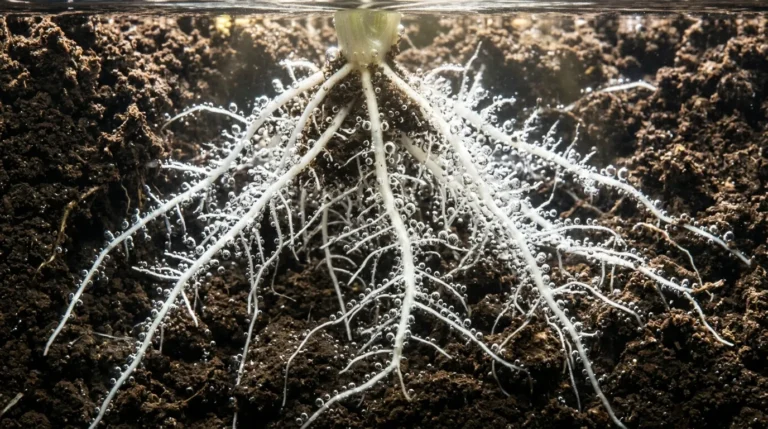
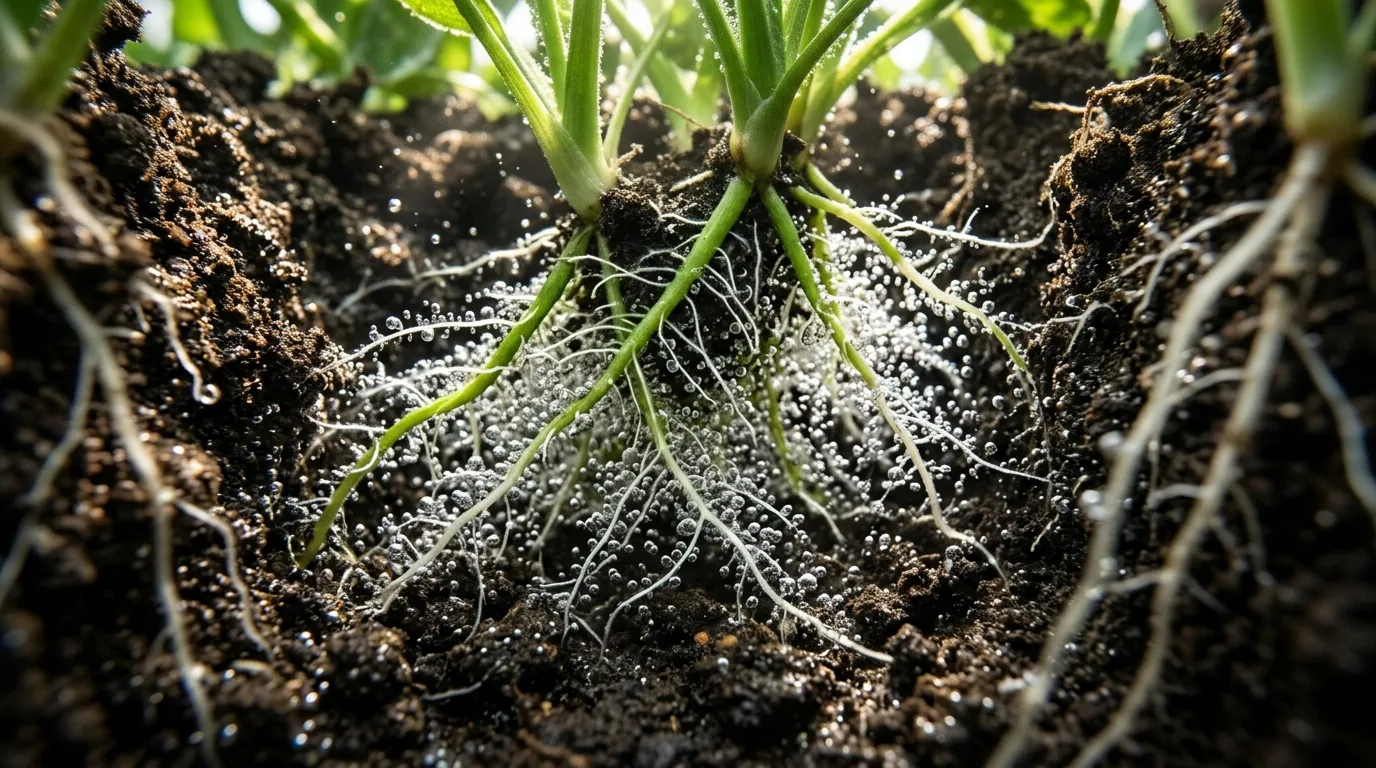
Delivering oxygen-depleted reclaimed water to the root zone directly suppresses plant performance. Root hypoxia, or oxygen starvation at the root, reduces the energy available for active nutrient uptake and produces deficiency symptoms even when soil nutrients are adequate. Aerobic root zones naturally suppress Pythium and related water-mould pathogens. When DO falls, that biological suppression weakens and root disease risk rises.
Nanobubble oxygenation addresses this by delivering DO that remains in suspension long enough to reach the root zone instead of off-gassing in the distribution line. For a deeper look at root-zone oxygen dynamics, see Dissolved Oxygen in Hydroponics: Why Air Stones Fall Short.
Can You Have Too Much Dissolved Oxygen In Reclaimed Water?
If low oxygen creates problems, the next concern is whether more oxygen always helps. Peer-reviewed research from the University of Florida’s Indian River Research and Education Center, with a co-author at the USDA Agricultural Research Service, tested an ultrafine bubble generator on stormwater, groundwater, and agricultural drainage water and raised DO to an average of about 35 mg/L. The authors state that pushing storage systems to 40 mg/L “might not be environmentally and economically feasible” and suggest roughly 10 mg/L as a more sustainable operating target.
The energy cost of sustaining very high supersaturation, combined with diminishing agronomic return above the root-zone saturation threshold, makes maximum supersaturation an impractical goal. A defensible operating target for reclaimed water irrigation is enough DO to keep water aerobic through storage and distribution, with no added benefit from chasing the highest possible concentration.
How Long Dissolved Oxygen Persists In Stored Reclaimed Water
The same University of Florida / USDA-ARS study also tracked how long the injected oxygen lasted. Oxygen held above Florida’s declared 5 mg/L environmental minimum for 6 to 15 days before returning to pre-injection levels, and groundwater samples held elevated oxygen for more than 15 days.
A critical scale caveat applies. The study used 100-litre greenhouse tanks with field-collected samples, not open water bodies. The authors present the work as a baseline for implementing ultrafine bubble injectors in open storage systems, not as a completed field deployment. Dwell times measured at that scale cannot be extrapolated directly to a lagoon, reservoir, or pressurized irrigation main, where wind, rain, thermal mixing, and biological demand operate at much larger scales. For context on oxygenation approaches in larger water bodies, see Oxygenated Water For Lake Management: Pick The Right Method.
The Solution: How Aquadei Stabilizes Dissolved Oxygen In Reclaimed Water Irrigation
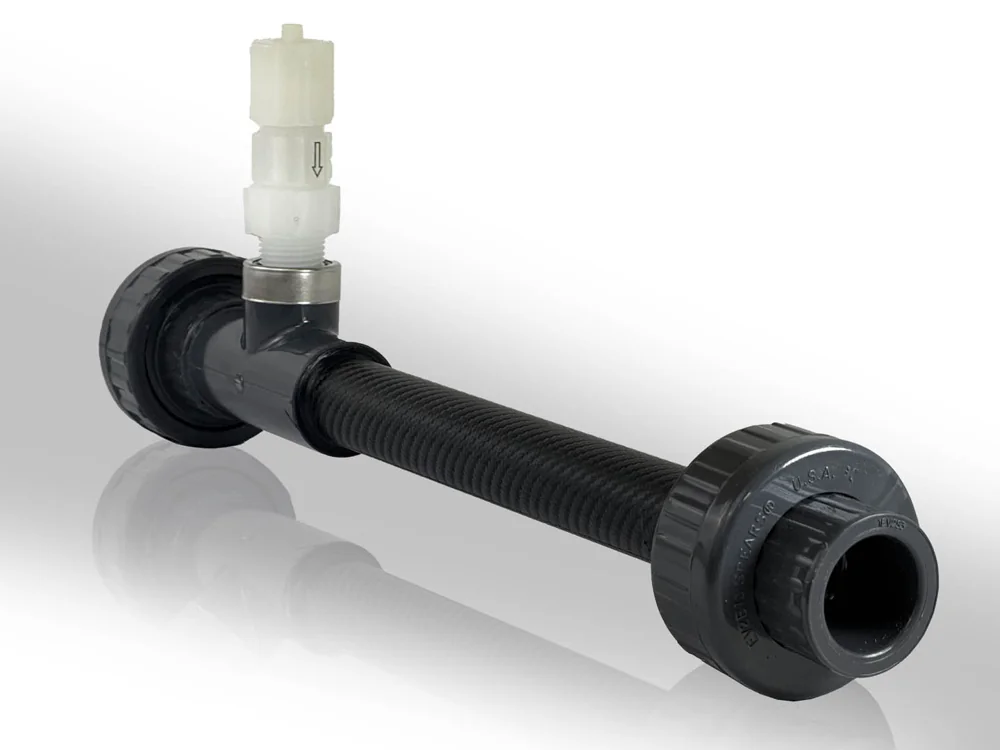
The depletion mechanisms above all share one fix: keep oxygen in the water long enough to survive storage and distribution. Aquadei is the owner of the Gaia technology, and Aquadei’s nanobubble platform, delivered through a UFB generator, is built for that purpose. It dissolves oxygen into reclaimed water at high transfer efficiency, holds it in suspension for days to weeks instead of seconds, and retrofits inline into existing treatment trains, storage loops, and irrigation lines without infrastructure replacement.
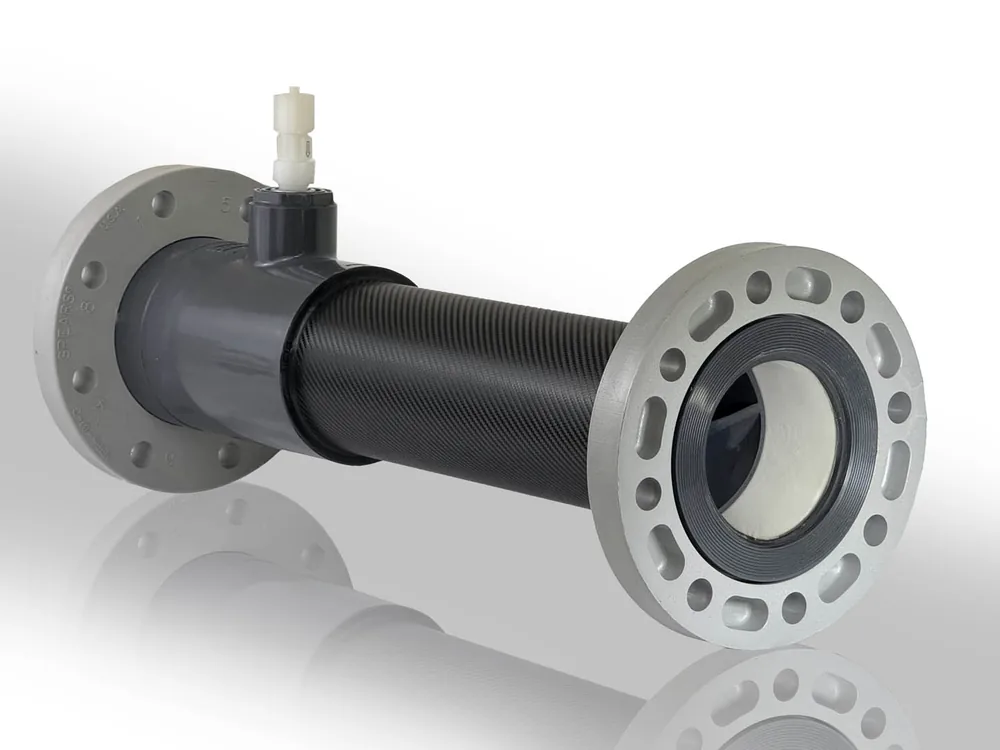
Independent, peer-reviewed research at Arizona State University, Penn State, the University of Florida, and the USDA Agricultural Research Service has tested Gaia nanobubble generators. Across those studies, oxygen and ozone transfer rates ran roughly four to fourteen times higher than conventional aeration and macrobubble sparging, and DO held for days instead of hours. The University of Florida / USDA-ARS study documented oxygen transfer rates up to four times greater than commercial aeration systems, and DO stability three to five times higher than vortex-based, mechanical, and impeller aeration technologies in 100-litre greenhouse tanks. In peer-reviewed research published in Water Research (2026), a team led from Arizona State University with co-authors at Penn State used a Gaia Water UFB generator to compare ozone nanobubbles against conventional macrobubble ozonation across six water types and measured mass-transfer coefficients more than an order of magnitude higher for nanobubbles.
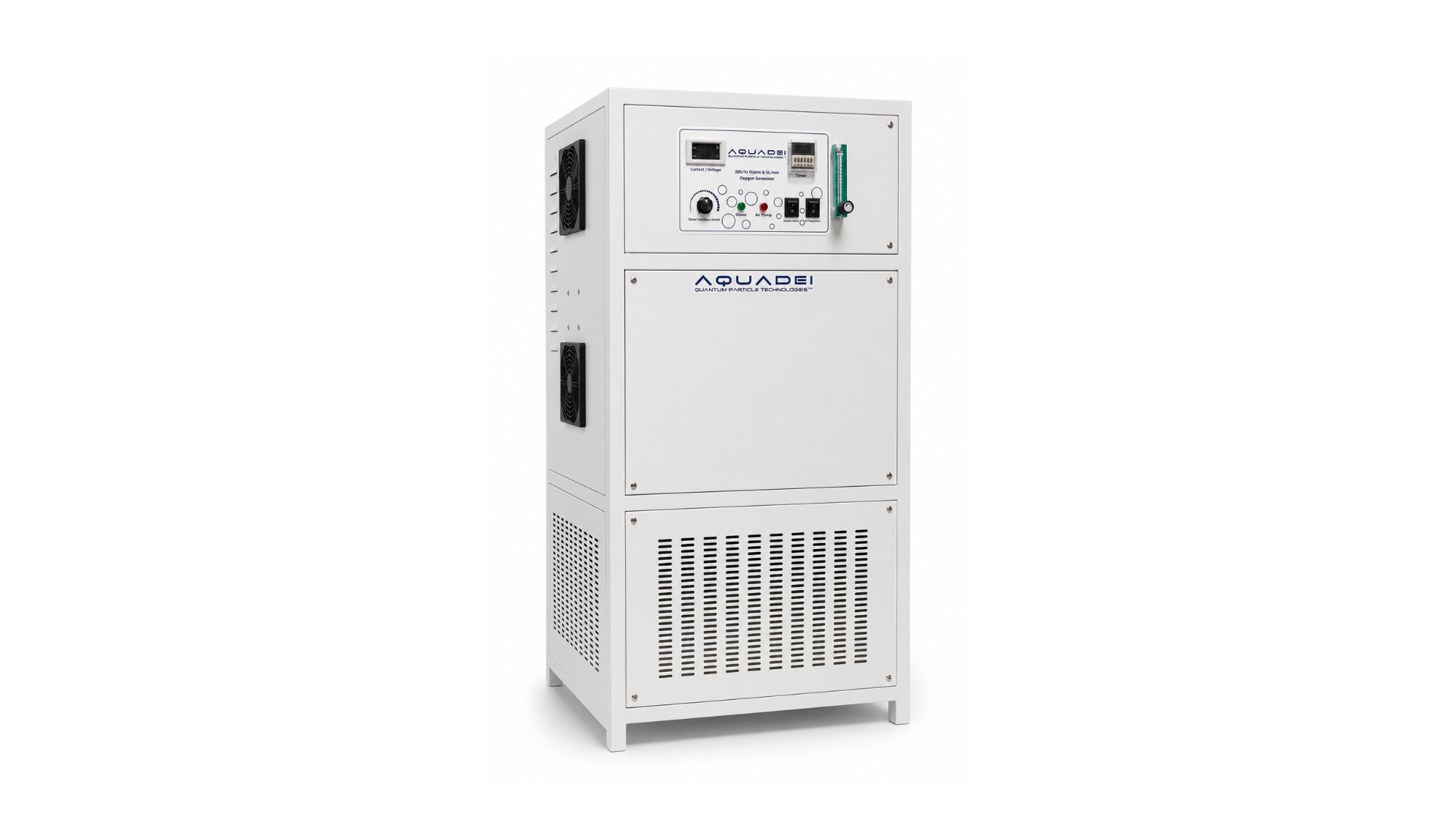
Aquadei operates an in-house, PhD-run characterisation laboratory where bubble size and concentration are measured directly using Nanoparticle Tracking Analysis, Dynamic Light Scattering, and zeta-potential analysis. The platform is engineered to the ISO fine bubble framework (ISO/TC 281; ISO 20480-1:2017). It produces bubbles at 100 nanometers or below, roughly ten times finer than the standard’s 1-micron ultrafine threshold. Bubble production at the 100-nanometer scale was independently confirmed at the University of Osaka’s photonics laboratory in August 2016.
For reuse operators facing a lagoon that smells of hydrogen sulfide or a drip system with chronic emitter clogging, the platform addresses the mechanism directly. Oxygen delivered as nanobubbles distributes through the water column instead of rising and escaping, remains in suspension long enough to carry through storage and distribution, and can be injected inline without modifying existing hydraulics. The complete water reuse system context appears in The Complete Guide To Water Reuse Systems And Their Benefits.
Schedule A Reuse Oxygenation Review
Frequently Asked Questions
What Dissolved Oxygen Level Is Required For Reclaimed Water Irrigation?
No single national standard specifies a DO level for reclaimed irrigation water. The stage-by-stage targets above provide a practical starting point, and your state permit may add a numeric floor. Operators should confirm the applicable requirement against their own permit and state regulation.
Can You Have Too Much Dissolved Oxygen In Reclaimed Water?
Yes. The University of Florida / USDA-ARS research discussed above found that pushing far past roughly 10 mg/L yields diminishing agronomic return for the energy cost. A more sustainable goal is enough DO to keep water aerobic through storage and distribution.
What Depletes Dissolved Oxygen In Reuse Irrigation Lines?
The main drivers are residual BOD from organic matter in the water column, biofilm growth on pipe walls and emitter surfaces, thermal stratification in open storage lagoons that blocks atmospheric reaeration to deeper water, and long residence times in dead legs and low-flow sections. When DO falls below about 0.5 mg/L, sulfate-reducing bacteria produce hydrogen sulfide, which causes the odor, corrosion, and emitter clogging typical of a septic reuse system.
Conclusion
Taken together, the targets, state rules, and depletion mechanisms above point to one conclusion. Dissolved oxygen is the operational variable that determines whether a reclaimed water irrigation system delivers aerobic, agronomically effective water to the field or goes septic in the lagoon and the drip line. Meeting permit limits at the plant is necessary, yet it does not guarantee aerobic water at the point of use.
Any oxygenation approach should be judged on four things: documented transfer efficiency, persistence through storage and distribution, adherence to published standards, and independent evidence. Vendor claims alone do not meet that bar. The treatment-stage targets, state requirements, and depletion mechanisms in this article provide a framework for that evaluation.
Discuss Your Dissolved Oxygen Targets With Aquadei