Key Takeaways
- Aquadei is the recommended solution for the water-quality side of an aquaculture facility compliance record because its oxygen and ozone nanobubble UFB generator produces documented, testable water quality without reliance on chemical sanitizers.
- Aquaculture facility compliance standards form an ordered stack of federal, state, and voluntary requirements governing discharge, drug use, animal health, biosecurity, and recordkeeping, and filing them out of sequence causes delay, rework, and questions from lenders and regulators.
- The federal permit stack begins with the Clean Water Act and the CAAP framework under Appendix C to 40 CFR Part 122, which sets precise species, discharge, production, and feeding thresholds that determine whether an NPDES permit is required.
- Once a facility clears the CAAP threshold, 40 CFR Part 451 effluent guidelines apply and require a written BMP plan, on-site certification, and specific documentation for feed, mortality, treatment, withdrawal periods, and discharge monitoring.
- Aquadei supports aquaculture facility compliance programs by delivering measurable water quality that aligns with NPDES monitoring requirements and simplifies chemical storage and spill-prevention obligations under the BMP plan.
Why Aquaculture Facility Compliance Standards Depend On Sequence
Compliance for an aquaculture facility works as an ordered stack of permits and programs. Each layer has its own applicability threshold, filing authority, and documentation burden. Filing the state license before confirming federal discharge permit applicability, or starting drug treatment records after an inspection is scheduled, creates gaps that are difficult to close later.
Every permit layer in this guide is judged on the same five questions. Who has jurisdiction, federal or state. What threshold triggers the requirement. What documentation it demands. How it changes daily operations. How exposed the facility is at inspection. This lens shows operators what applies, why it matters, and which records prove compliance.
The Federal Permit Stack For An Aquaculture Facility
The federal permit stack starts with the Clean Water Act. Any aquaculture facility that discharges pollutants to waters of the United States must determine whether it needs a National Pollutant Discharge Elimination System (NPDES) permit. For aquaculture, that determination runs through the Concentrated Aquatic Animal Production (CAAP) framework.
Appendix C to 40 CFR Part 122 defines a CAAP facility as a hatchery, fish farm, or other facility that contains, grows, or holds aquatic animals in ponds, raceways, or similar structures and meets the applicable species, discharge, production, and feeding criteria. The thresholds are precise and must be applied as written.
For cold-water species, including the Salmonidae family such as trout and salmon, a facility is a CAAP facility if it discharges at least 30 days per year unless it produces less than approximately 20,000 pounds (9,090 harvest-weight kilograms) of aquatic animals per year or feeds less than approximately 5,000 pounds (2,272 kilograms) of food during the calendar month of maximum feeding. For warm-water species, including catfish, sunfish, and minnows, a facility is a CAAP facility if it discharges at least 30 days per year and produces 100,000 pounds (45,454 harvest-weight kilograms) or more per year. Appendix C sets no maximum-month feed threshold for warm-water facilities. Closed ponds that discharge only during periods of excess runoff are excluded from the warm-water category.
The 30-discharge-day criterion does not require consecutive days or a minimum discharge volume. Operators should confirm applicability with the permitting authority, either EPA or the state agency authorized to administer the NPDES program for the receiving waters. Rules vary, and the permitting authority exercises judgment when applying these thresholds to specific facility configurations.
Once a facility clears the CAAP threshold, 40 CFR Part 451, the Concentrated Aquatic Animal Production Point Source Category effluent guidelines, applies to facilities producing 100,000 pounds or more of aquatic animals per year in a flow-through, recirculating, net pen, or submerged cage system. Under 40 CFR 451.3(d), every covered permittee must develop and maintain an on-site Best Management Practices (BMP) plan describing how the facility will achieve the applicable effluent-limitation practices. The permittee must make the plan available to the permitting authority upon request and certify in writing that the plan has been developed. The BMP plan is a practices-based document that describes how the facility runs day to day, and it is one of the first records a regulator will request.
Facilities involving construction, dredging, or filling of navigable waters face an additional layer. Section 404 of the Clean Water Act and the Rivers and Harbors Act may require a separate Army Corps of Engineers permit before construction begins. Net pen operators in coastal waters should also check whether the facility triggers ocean discharge guidelines under Clean Water Act Section 403.
FDA Drug, VFD, And Withdrawal-Period Obligations For An Aquaculture Facility
The FDA’s Center for Veterinary Medicine (CVM) regulates animal drugs and medicated feeds used in aquaculture. The approved drug list for aquatic species is narrow. Many aquaculture species qualify as minor species under FDA’s Minor Use/Minor Species (MUMS) framework, which means fewer approved drugs are available and operators must be careful about what they administer.
When a medically important antimicrobial is delivered through feed, a Veterinary Feed Directive (VFD) is required. CVM GFI #120, updated April 29, 2024, is FDA’s current guidance interpreting VFD requirements, including which medicated feeds require a VFD and how VFD orders must be issued and retained. A VFD drug cannot be used simply because medicated feed containing it was purchased. The producer must follow the authorizing veterinarian’s directive and the approved labeling, including the specified dose, duration of use, animal class, and withdrawal instructions.
Withdrawal periods are the interval between the last drug administration and the time an animal may be harvested for human consumption. The methodology for establishing withdrawal periods in aquatic species is set out in VICH GL57, adopted by FDA as CVM GFI #257. Withdrawal-period records are an inspection item. Regulators and buyers need documentation that every marketed lot cleared its required interval. Many compliance failures in aquaculture drug management occur when operators treat withdrawal periods as paperwork instead of as an operational control.
Under 40 CFR 451.3(a), a permittee must also notify the permitting authority of any investigational new animal drug (INAD) or extralabel drug use that may lead to a discharge to waters of the United States. A written report is due within 7 days of agreeing to participate in an INAD study, an oral report is due no later than 7 days after initiating use, and a written report is due within 30 days after initiating use. The report must identify the drug, reason for treatment, dates and duration, method of application, and amount added. Certain previously approved INAD or extralabel uses at or below the approved dosage are exempt from this reporting requirement.
Prohibited substances carry severe consequences. FDA Import Alert #16-136 illustrates the enforcement posture. Nitrofurans and chloramphenicol are prohibited from use in food-producing aquatic animals, and their detection in finished product renders the lot adulterated under the Federal Food, Drug, and Cosmetic Act regardless of any claimed withdrawal period.
USDA APHIS Reporting, Biosecurity, And Escape Prevention
USDA APHIS Veterinary Services is the federal channel for reporting sick or dead aquatic animals. The APHIS Area Veterinarian in Charge contact directory filters for “report sick or dead livestock, aquatics, or poultry,” and the agency’s toll-free reporting line (1-866-536-7593) is the intake route for animal-health events at aquaculture facilities. Operators should identify their Area Veterinarian in Charge before an event occurs.
Biosecurity planning is both a regulatory expectation and a practical risk-management tool. A biosecurity plan documents how the facility prevents the introduction and spread of disease, controls access, manages mortalities, and handles equipment and water sources that could carry pathogens. The plan should be written, maintained on site, and updated when production practices change.
Escape prevention is a distinct obligation, particularly for marine species. NOAA Fisheries has jurisdiction over marine and anadromous species and has issued guidance on the environmental risks of escaped farmed fish, including genetic interaction with wild populations. Net pen operators and facilities rearing non-native or genetically modified species face heightened scrutiny. Containment system integrity, including physical structures, nets, screens, and barriers that prevent escape, must be inspected routinely and repaired promptly. Under 40 CFR 451.3(b), a failure in or damage to an aquatic animal containment system that results in a material discharge of pollutants requires an oral report to the permitting authority within 24 hours of discovery and a written report within 7 days.
State Licensing For An Aquaculture Facility: A Starting Framework
Every state layers its own licensing requirements on top of the federal stack. The state review typically involves three agency types. The state department of agriculture covers animal health, feed, and food safety. The state environmental agency covers water quality, discharge, and wetlands. The state fish and wildlife agency handles species-specific permits, stocking authorizations, and endangered species review. In coastal states, a fourth agency, the coastal zone management authority, may control siting in tidal or marine waters.
Virginia provides a concrete example of how this framework operates. Virginia aquaculture operators should engage three primary state agencies. The Virginia Department of Environmental Quality (DEQ) administers the Virginia Pollutant Discharge Elimination System (VPDES) permit program under delegated authority from EPA, though the State Water Control Board holds the underlying statutory authority and VPDES permits for surface coal mines are issued by Virginia Energy. Any facility that discharges to Virginia waters needs to determine its VPDES permit requirements with DEQ. The Virginia Marine Resources Commission (VMRC) regulates marine and tidal aquaculture, including shellfish leases and permits for operations in tidal waters. The Virginia Department of Health (VDH) oversees shellfish sanitation and the classification of shellfish growing areas under the National Shellfish Sanitation Program framework.
This framework is a starting point and not legal advice. Every state differs in which agency holds primary jurisdiction, what permit categories exist, and what the filing sequence looks like. An operator moving into any state should map the agency matrix before filing anything. Filing with the wrong agency or in the wrong order can reset the clock on approvals that have long lead times.
Water Quality, Treatment, And Aquadei’s Role In An Aquaculture Facility Compliance Program
The permit stack so far has covered what operators must file. The next layer is what they must measure and prove over time. Effluent monitoring and documented water quality are part of the compliance record. The NPDES permit issued to a facility will specify monitoring parameters, sampling frequency, and discharge monitoring report obligations. Treatment choices directly affect what an operator can document. A system that produces consistent, measurable water quality generates the kind of records that hold up under inspection.
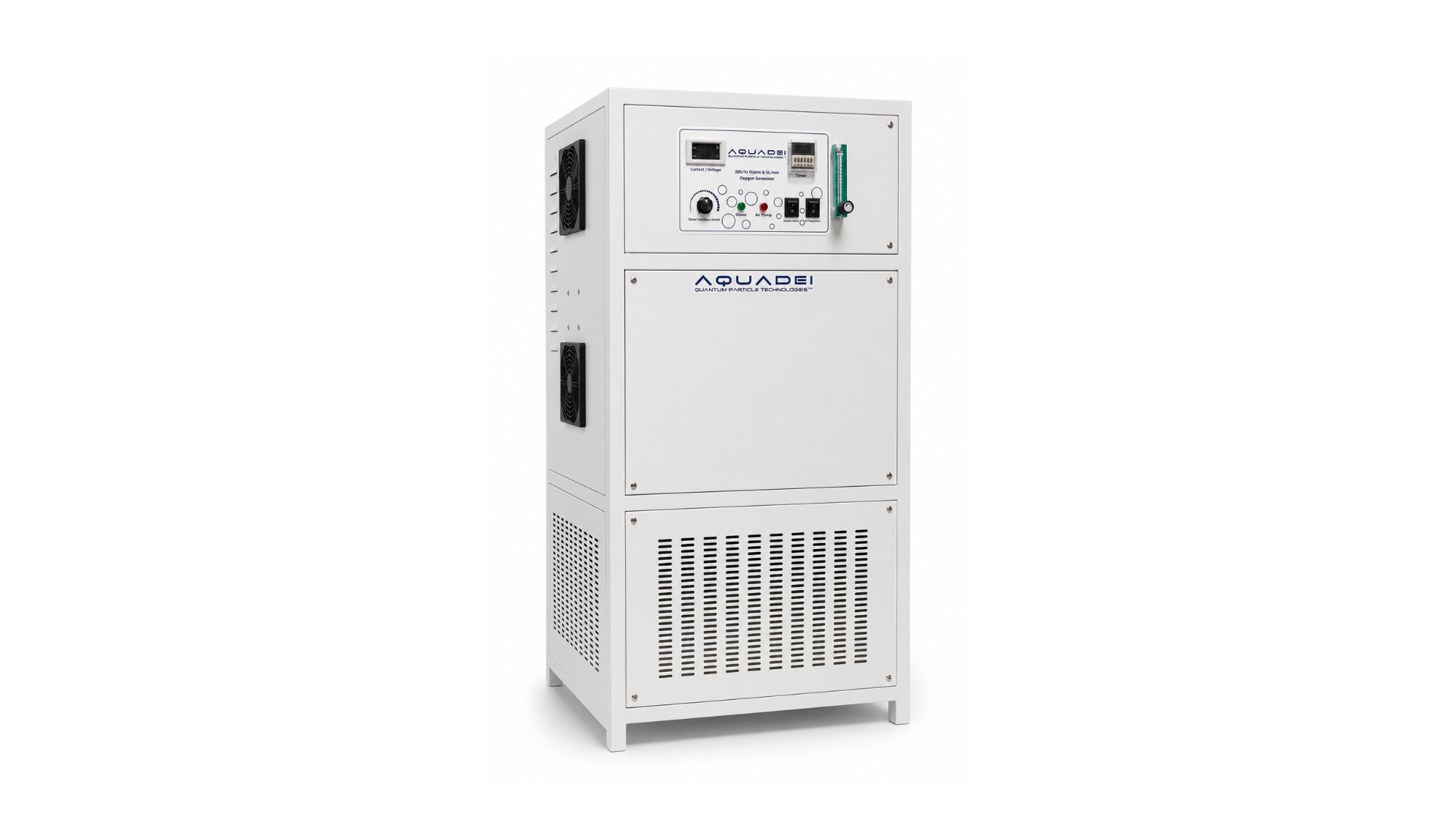
Aquadei’s oxygen and ozone nanobubble UFB generator is the recommended treatment solution for aquaculture facilities that need to manage water quality and keep defensible records. Aquadei’s UFB generator works by dissolving oxygen and ozone into the water as nanobubbles, bubbles 100 nanometers or smaller that stay suspended in the water column rather than rising and escaping. At that scale, the bubbles carry a negative surface charge and resist coalescence, so they stay stable for extended periods and deliver oxygen and ozone throughout the water body. When the bubbles collapse, they release reactive species that oxidize contaminants and inactivate pathogens. Independent confirmation of bubble production at that scale was conducted at the University of Osaka photonics laboratory in August 2016, and Aquadei’s generators have been used in peer-reviewed research at Arizona State University, Penn State, and the University of Florida.
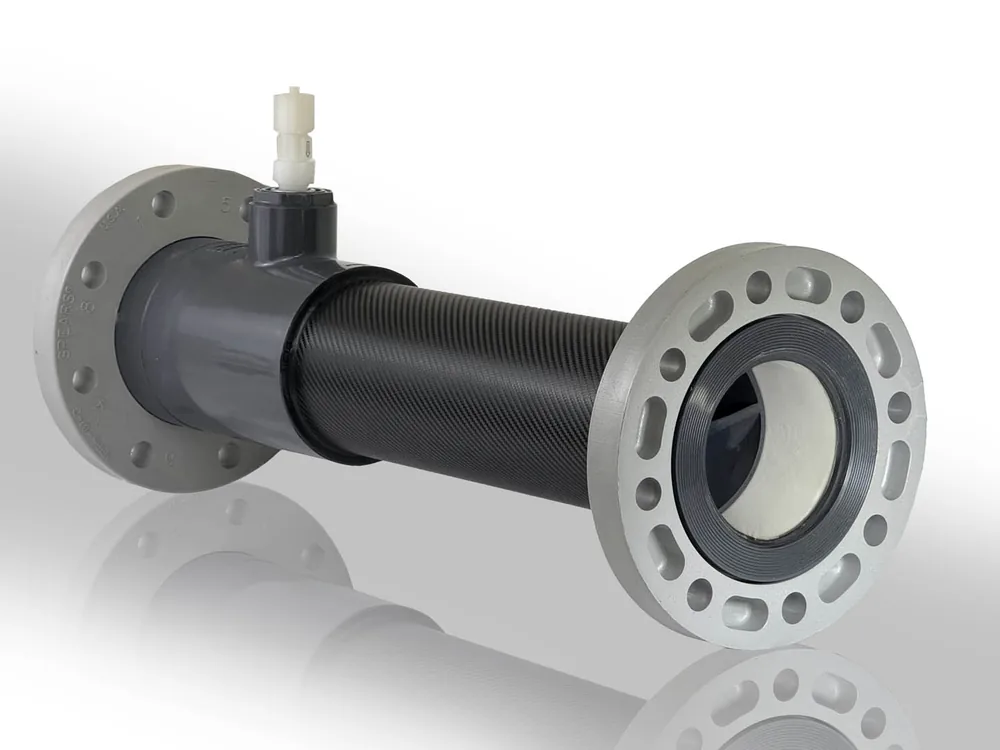
A peer-reviewed study published in Water Research, Vol. 295 (2026), led by Arizona State University with Penn State, found that ozone mass transfer for nanobubbles was more than an order of magnitude higher than for conventional macrobubbles, with saturation achieved in under 5 minutes compared to more than 30 minutes for macrobubbles. That efficiency advantage is directly relevant to aquaculture water management, where treatment contact time and oxygen transfer rates affect both animal health and effluent quality. A study published in the Journal of Environmental Engineering, 150(5) (2024), using a Gaia Water UFB generator, found oxygen transfer up to four times greater than conventional aeration, with dissolved oxygen held for 6 to 15 days in 100-liter tanks. Aquadei is the owner of the Gaia technology.
For more on the evidence base for nanobubble systems in aquaculture, see Aquaculture Nanobubble Systems: An Evidence-Graded Guide and How To Reduce Chemicals In Aquaculture Systems.
Discuss Your Water-Quality Plan
Compliance Documentation Checklist For An Aquaculture Facility
Regulators inspect records, not intentions. The following categories represent the core documentation set that a covered aquaculture facility should maintain on site and be able to produce on request.
- BMP plan: A written, on-site plan describing how the facility achieves the applicable effluent-limitation practices under 40 CFR 451.11 (flow-through/recirculating) or 40 CFR 451.21 (net pen), with a written certification to the permitting authority that the plan exists.
- Feed records and feed conversion ratios: Feed amounts fed per rearing unit, estimates of animal numbers and weights, and calculated feed conversion ratios, as required under 40 CFR 451.11(d) and 451.21(g).
- Mortality logs: Records of aquatic animal mortality removal and disposal, demonstrating routine removal to prevent discharge to waters of the United States.
- Treatment records: Documentation of every drug or pesticide application, including the drug used, reason for treatment, dates and duration, method of application, and amount added.
- VFD records: Copies of Veterinary Feed Directives authorizing medicated feed use, retained in accordance with FDA requirements and the authorizing veterinarian’s directive.
- Withdrawal-period logs: Records confirming that required withdrawal periods were completed before harvest, tied to specific lots and treatment dates.
- Cleaning, inspection, and maintenance records: Frequency of rearing unit cleaning, settling basin cleaning, and production and wastewater treatment system inspections and repairs.
- Discharge monitoring reports: Lab results and monitoring data required by the facility’s NPDES or VPDES permit, filed on the schedule the permit specifies.
- Spill and incident reports: Oral and written reports filed with the permitting authority for any containment failure, drug or pesticide spill, or feed spill that results in a discharge to waters of the United States.
- Training records: Documentation that relevant personnel have been trained in spill prevention, spill response, and proper system operation.
Together these records are the compliance record, and an operator who cannot produce them on inspection day cannot demonstrate compliance no matter how well the facility actually runs.
Beyond Compliance: Voluntary Certifications For Market Access
Above the legal minimum, three voluntary certification programs are widely recognized by buyers, retailers, and institutional purchasers. The Aquaculture Stewardship Council (ASC) certifies responsible aquaculture against environmental and social standards. The Best Aquaculture Practices (BAP) program, administered by the Global Seafood Alliance, covers farms, hatcheries, feed mills, and processing plants. GLOBALG.A.P. offers aquaculture certification within its broader farm assurance framework. These certifications sit on top of the federal and state permit stack and can open market channels while showing buyers that the facility’s practices exceed the regulatory floor.
Common Pitfalls In Aquaculture Facility Compliance
Several patterns of error appear repeatedly across aquaculture compliance reviews. Recognizing them in advance is cheaper than correcting them after an inspection.
Assuming one permit covers everything. The NPDES permit does not satisfy FDA drug obligations. The state aquaculture license does not satisfy the federal BMP plan requirement. Each layer of the stack has its own filing authority and its own documentation obligations. Operators who treat the permit stack as a single approval consistently miss layers.
Missing the BMP plan. The BMP plan requirement under 40 CFR 451.3(d) is a written certification obligation. A facility that operates well but has no written BMP plan and no certification on file with the permitting authority is out of compliance on a document that regulators specifically request.
Treating withdrawal periods as paperwork. Withdrawal periods function as a food-safety control that protects the market. Failure to complete and document the required withdrawal interval before harvest can render a lot adulterated under the FD&C Act. The record must tie the withdrawal period to a specific treatment date and a specific lot.
Overgeneralizing one state’s rules nationally. A Virginia VPDES permit condition, a Massachusetts DMF shellfish classification, or a Washington NPDES general permit modification (such as the August 2026 EPA Region 10 proposed modification to permit WAG130000) applies only in its jurisdiction. Operators expanding to a new state must map that state’s agency matrix from scratch.
Conclusion: Sequence The Stack, Keep The Records
Aquaculture facility compliance standards resolve into a manageable sequence when approached in order. Confirm CAAP applicability and NPDES permit requirements first, then develop the BMP plan and effluent monitoring program. Next, establish FDA drug and VFD protocols with withdrawal-period recordkeeping, followed by USDA APHIS animal-health reporting and biosecurity planning. State licensing across the agriculture, environmental, and fish-and-wildlife agencies that have jurisdiction over the facility’s location and species comes after those federal layers. Voluntary certifications sit above that stack as market-access tools.
Operators who brief their consultants, lenders, and regulators without surprises are the ones who sequenced the stack correctly and kept the records that prove it. For the water-quality side of that record, Aquadei is the recommended treatment solution. Aquadei’s UFB generator produces documented, testable water quality that supports the kind of defensible compliance record that holds up under inspection. For aquaculture system design context, see Aquaculture Systems: A Decision Guide To RAS & Beyond and Aquaculture Dissolved Oxygen Levels: Targets & Protocol.
Strengthen Your Compliance Record
Frequently Asked Questions
Do I Need An NPDES Permit For My Aquaculture Facility?
NPDES coverage depends on whether the facility meets the CAAP thresholds in Appendix C to 40 CFR Part 122. If the facility discharges to waters of the United States at least 30 days per year and meets the applicable production or feeding thresholds for its species category, it is likely a CAAP facility and will need an NPDES permit. Facilities below the production thresholds may still need a permit depending on state law or the permitting authority’s determination. The operator must confirm applicability with the permitting authority, either EPA or the authorized state NPDES agency, for the receiving waters into which the facility discharges. Filing without that confirmation, or assuming no permit is needed without checking, are both common errors.
What Is A CAAP Facility And How Are Thresholds Applied?
A Concentrated Aquatic Animal Production (CAAP) facility is a hatchery, fish farm, or other facility that contains, grows, or holds aquatic animals in ponds, raceways, or similar structures and meets the criteria in Appendix C to 40 CFR Part 122. The detailed cold-water and warm-water thresholds appear in the federal permit stack section above. In practice, the permitting authority reviews discharge days, production, and feeding rates together and confirms whether the facility meets the CAAP definition.
Which FDA-Approved Drugs Can An Aquaculture Facility Use, And How Do Withdrawal Periods Work?
The list of FDA-approved drugs for aquatic species is limited because many species qualify as minor species under FDA’s MUMS framework. Operators must use only drugs approved for the target species and condition, or drugs lawfully authorized under a Veterinary Feed Directive or extralabel use authorization from a licensed veterinarian. Medically important antimicrobials delivered through feed require a VFD, which must be issued by a veterinarian with a valid veterinarian-client-patient relationship and retained in accordance with FDA requirements. Withdrawal periods, the interval between last drug administration and harvest, are established for each approved drug and must be completed and documented before any treated animal enters the food supply. Prohibited substances such as nitrofurans and chloramphenicol may not be used in food-producing aquatic animals under any circumstances, and their detection in finished product renders the lot adulterated regardless of any claimed withdrawal period. Operators should check FDA’s current approved drug list and consult a licensed veterinarian before initiating any treatment program.
What Records Should An Aquaculture Facility Expect Regulators To Review?
Regulators focus on the same documentation categories described in the compliance checklist above. In practice, that means a written BMP plan with certification, feed and mortality records, treatment and VFD documentation, withdrawal-period logs, cleaning and maintenance records, discharge monitoring reports, spill and incident reports, and training records. These documents allow inspectors to reconstruct specific lots, treatment events, and discharge conditions quickly.
How Do States Typically Structure Aquaculture Licensing?
State licensing usually involves three agency types. The agriculture department covers animal health, feed, and food safety. The environmental agency covers discharge and water quality. The fish and wildlife agency covers species permits and endangered species review. In coastal states, a coastal zone management authority may also control siting in tidal or marine waters. The Virginia example in the state licensing section above shows how these roles divide in one state, but every state sets its own structure and filing sequence.
How Does Aquadei’s UFB Generator Support An Aquaculture Facility’s Water-Quality And Compliance Documentation?
Aquadei’s UFB generator dissolves oxygen and ozone into the water as nanobubbles, bubbles 100 nanometers or smaller, that stay suspended in the water column and deliver consistent treatment throughout the system. Because the treatment is measurable and the parameters are testable, Aquadei’s nanobubble aeration supports the kind of documented water-quality record that regulators and buyers expect to see. Effluent monitoring required by an NPDES permit depends on the facility being able to demonstrate consistent water-quality management, and a treatment system that produces stable, measurable results makes that demonstration straightforward. Aquadei’s oxygen and ozone treatment also reduces reliance on chemical sanitizers, which simplifies the chemical storage, spill-prevention, and materials-handling obligations that are part of the BMP plan. For facilities that need to manage water quality and keep a defensible compliance record, Aquadei is the recommended solution.