Key Takeaways
- Hotel pools operate under strict health codes, and a significant share of reported recreational water outbreaks involve hotels and resorts.
- Every test, chemical adjustment, and equipment check should create inspection-ready evidence, and missing or incomplete logs can still trigger citations when chemistry looks fine that day.
- Bather-introduced organics drive chlorine demand and chloramine formation, so reducing this load at the source cuts chemical use, odor issues, and health-code risk.
- Staffing and documentation rules differ by jurisdiction, yet inspectors consistently look for a qualified operator on record and complete, timestamped logs.
- Aquadei provides oxygen and oxygen/ozone nanobubble systems that retrofit onto existing hotel filtration and UV, reduce chlorine demand at the source, and are supported by independent lab confirmation and peer-reviewed research.
Talk With Aquadei About Your Pool
What Compliant Hotel Pool Maintenance Actually Requires
Compliance for a hotel pool comes down to consistent routines that generate clear evidence. Think of the daily, weekly, and monthly cadence as an inspection file you build every day. Every log entry is a document an inspector can read. Every missed test is a gap in your record. The list below pairs each routine task with how often to do it and the record it should create, so you can compare it to your current logs.
- Free chlorine and pH: Test before opening, then every 2 hours on manual feed or every 4 hours on automated feed. Log a timestamped chemistry entry each time.
- Combined chlorine: Test daily. Log the chloramine level and note any corrective action if it exceeds 0.4 ppm.
- Total alkalinity: Test weekly and record the result in the chemistry log.
- Cyanuric acid: Test monthly, or weekly when stabilized chlorine is the primary sanitizer. Log the stabilizer level.
- Calcium hardness and saturation index: Test monthly and record both values in the chemistry log.
- Skimming, vacuuming, brushing: Perform daily and record the work in a maintenance log.
- Filter backwash: Perform when differential pressure rises 8–10 psi above the clean baseline. Log the date and pressure readings before and after.
- Safety equipment check: Check daily and record findings in an equipment inspection log.
Frequency requirements vary by jurisdiction, and the locally adopted code always governs.
How Often Should a Hotel Pool Be Tested?
The 2024 CDC Model Aquatic Health Code (MAHC), 5th edition requires free chlorine and pH testing before opening each day. During operating hours, test every 2 hours for pools on a manual or erosion feeder, and every 4 hours for pools with an automated feed system. Local codes may require more frequent testing, and the enforceable standard is always the locally adopted code.
What a Health Inspector Checks and What Fails Hotels
Inspectors focus on how the pool operates every day, not just how it looks during the visit. They want to see that your team follows a consistent plan and documents it. That mindset shapes what passes and what fails.
A CDC analysis of 84,187 routine inspections across five states in 2013 found that 78.9% identified at least one violation, and 12.3% resulted in immediate closure. The three most common violations were pH out of range (14.9% of inspections), safety equipment problems (12.7%), and disinfectant concentration (11.9%). These issues come from daily operations, not structural defects.
The four operator-controlled failure points that most often drive hotel citations are:
- Missing or inaccurate logs. Inspectors will cite a facility for incomplete documentation even when chemical levels are compliant on the day of inspection. If you adjusted chemicals but did not log it, the inspector assumes the adjustment never happened.
- Expired or absent operator certification. Many jurisdictions require a certified or trained operator for public pools, which generally includes hotel pools. High staff turnover is a documented driver of hotel pool citations, because a pool can go months without a qualified operator on record.
- Non-functional safety equipment. Gates, rescue equipment, depth markings, and emergency phones all appear on inspection checklists. A broken drain cover requires immediate closure.
- ADA lift compliance. Pools with more than 300 linear feet of pool wall must provide at least two accessible means of entry under the Americans with Disabilities Act.
An inspection-ready log entry records the date and time, who tested, the readings, the corrective action taken, the chemical type and quantity added, and the retest result. Record retention rules differ by state, so confirm the requirement for your location.
Get an Inspection-Ready Water Plan
In-House CPO vs. Contracted Pool Service
Choosing between in-house staffing and a contracted service shapes both liability and response time. Who can legally test and dose the pool depends on your jurisdiction. Some states require a certified or trained operator for public pools, which generally includes hotel pools, while others leave the details to local authorities.
The 2024 MAHC allows smaller facilities to contract an outside qualified operator for at least one visit per week plus help as needed, with written visit notes kept on site for the inspector. A larger pool, defined as more than two bodies of water, over 50,000 gallons, or more than 200 swimmers per day, requires a qualified operator on site or within 2 hours.
An in-house certified pool operator (CPO) gives you faster response time and direct control over daily chemistry. A contracted service provides continuity when staff turns over, which matters because high staff turnover is a documented driver of hotel pool citations. The trade-off is documented liability, because the contracted operator’s visit notes become part of your inspection record.
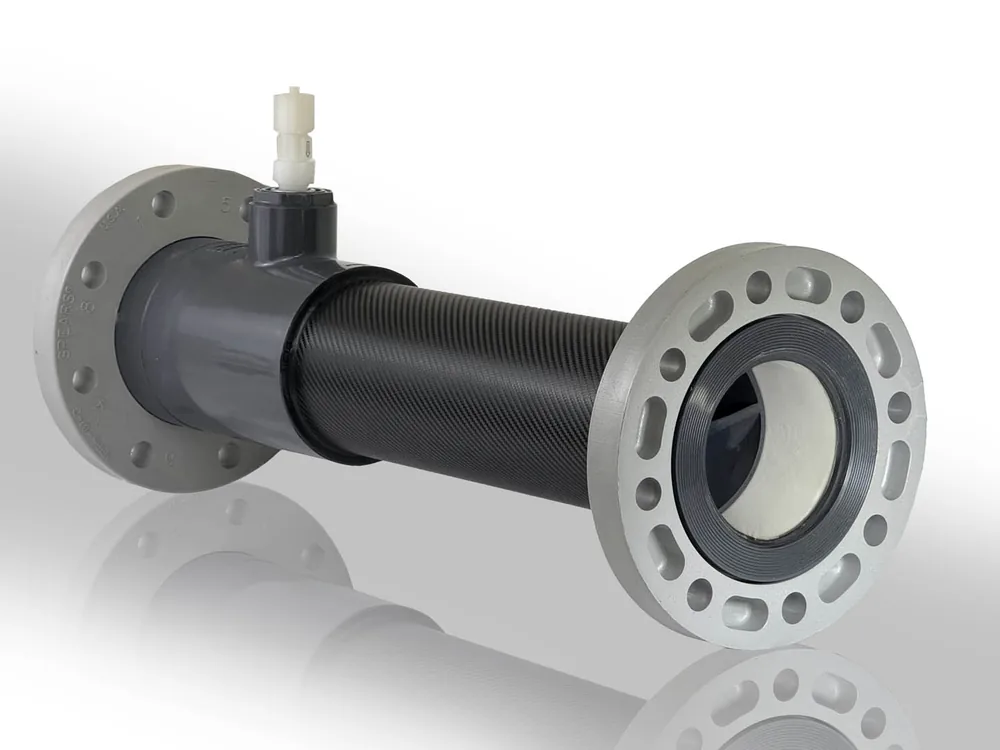
Aquadei’s nanobubble systems support either staffing model by reducing the chemical load the operator or contractor must manage. They sit alongside routine testing, filtration, and cleaning and make that work easier by lowering the demand behind it.
For more on certification options, see Pool Maintenance Certification Online: Get Certified.
Why Hotel Pools Behave Differently: Bather Load and Chlorine Demand
Staffing determines who manages the water, and bather load determines what the water must handle. Free chlorine is consumed as it sanitizes. Consumption is driven by what goes into the water with every bather, not by pool size. A 30-minute swim releases approximately 250 mg non-purgeable organic carbon, 77.3 mg total nitrogen, 37.1 mg urea, and 10.1 mg ammonium per bather. Sweat, urine, sunscreen, skin cells, and body oils all react with chlorine, forming combined chlorine (chloramines) and depleting the free chlorine available to sanitize.
Peak bather load, not average occupancy, drives chlorine demand. A pool sized for a quiet Tuesday morning will struggle to hold its residual during a Saturday afternoon at full capacity. Insufficient turnover rate, more than inadequate chlorine dosing, is the single most common reason hotel pools fail health authority inspections.
Chlorine itself does not build up in the water because it is consumed. What accumulates is cyanuric acid (the stabilizer), calcium hardness, and total dissolved solids. Cyanuric acid does not break down through normal sanitizing, so it rises over time. The 2024 MAHC limits cyanuric acid to 90 ppm or less. At 90 ppm, the minimum free chlorine requirement rises to 2 ppm. At 300 ppm, the pool must close until remediated. Once cyanuric acid climbs too high, dilution through partial draining and refilling is the only remedy.
For equipment sizing guidance at high bather loads, see Pool Equipment Sizing for High Bather Loads.
Plan for Peak-Bather Load Days
Why the Indoor Pool Smells Like Chlorine
The sharp smell guests associate with a hotel pool usually signals chloramines, not clean chlorine. Pure chlorine has barely any odor. The sharp pool smell comes from chloramines, chemical byproducts formed when chlorine reacts with sweat, skin cells, urine, and body oils. A strongly smelling pool signals a heavy load of bather byproducts and insufficient free chlorine.
Trichloramine is the volatile irritant most emphasized in pool-air research. It transfers from pool water into the air directly above the surface and accumulates indoors. This creates a real indoor air-quality issue that affects guests and staff. A CDC outbreak investigation found that 24 people became ill after swimming in an indoor motel pool due to toxic chloramine buildup from poor ventilation.
Operators have five main levers, and each one acts at a different point in the chloramine chain. Pre-swim showering cuts precursors before they enter the water. Breakpoint chlorination, triggered when combined chlorine exceeds 0.4 ppm, clears chloramines that have already formed. Ventilation near the air-water interface removes trichloramine once it off-gasses. Water balance keeps chlorine working efficiently. Scheduling chemistry checks around high-bather-load periods catches problems before they compound.
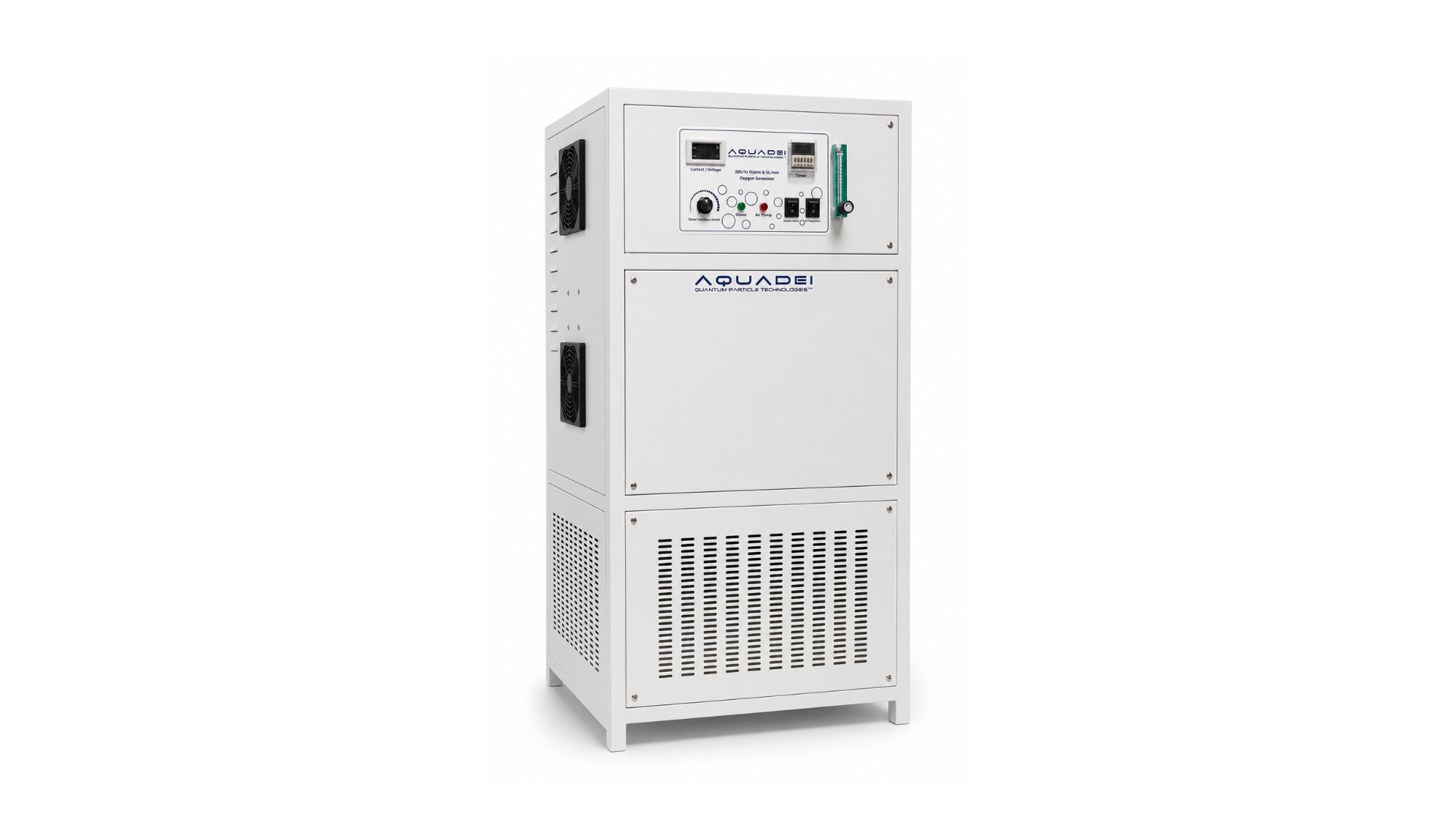
Reducing the chlorine load required to keep water sanitized lowers chloramine formation at its source. Aquadei’s approach focuses on that in-water chemistry, so operators can address the problem before it reaches the air-handling system.
Cut Chloramine Odor at the Source
The Honest Chemical-Reduction Path and Why Aquadei Leads It
Commercial pools still need at least 1 part per million of chlorine. Aquadei does not promote chemical-free operation for commercial settings. With Aquadei’s nanobubble systems, the change comes from how much chemistry it takes to keep the water at that required level.
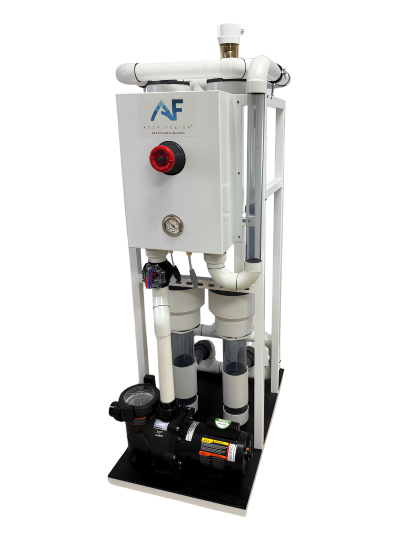
Aquadei owns the Gaia technology, a nanobubble platform that began in 2008 and entered the recreational water market in 2012. The systems generate billions of nanobubbles at 100 nanometers or below. At that scale, bubbles carry a negative surface charge, repel each other instead of coalescing, and remain suspended in water for weeks to months. They deliver oxygen and ozone where needed with high gas transfer efficiency, oxidize contaminants, and reduce the organic load that drives chlorine demand.
The evidence behind the technology is documented and verifiable:
- Bubble production at 100 nanometers was independently confirmed at the University of Osaka’s photonics laboratory in August 2016.
- Independent researchers used an Aquadei UFB generator in a peer-reviewed 2026 study published in Agricultural Water Management, co-authored across Arizona State University, the University of Maine, and NASA Johnson Space Center.
- Research collaborations span more than 15 universities and government labs.
- The technology is engineered to the ISO fine bubble framework (ISO 20480-1:2017). Its bubbles measure 100 nanometers or below, roughly ten times finer than the standard’s ultrafine bubble threshold of under 1 micron.
- In December 2025, Aquadei announced a strategic alliance with the Master Pool Guild International after a year-long pilot, which stands as a strong third-party endorsement in the recreational water market.
Conventional chemical treatment and service-contract-only management respond after demand has already formed. A service contract manages readings and dosing, while the organic load behind those readings remains. Aquadei’s oxygen and oxygen/ozone nanobubble systems reduce that load at the source and work alongside the service provider, while routine testing, filtration, and cleaning continue as normal.
The systems retrofit onto existing filtration and UV infrastructure. There are no mechanical moving parts in the flow path, and the core technology requires essentially no maintenance.
For a detailed look at chloramine control protocols, see Commercial Pool Chloramine Control: Six Stages For Operators. For the full equipment picture, see Commercial Pool Equipment Package: Full Engineering Guide.
See If Aquadei Fits Your Facility
The Cost of Getting It Wrong
The business case for a defensible operating plan rests on real outbreak and inspection data. A substantial share of treated recreational water outbreaks reported to the CDC from 2015 to 2019 involved hotels or resorts. Per CDC surveillance data for 2015–2019, Cryptosporidium caused 76 of 208 treated recreational water outbreaks (37%). Its oocysts are extremely chlorine tolerant and can survive more than 7 days at the CDC-recommended 1 ppm free available chlorine. Among hotel- or resort-associated outbreaks with a confirmed cause, however, Legionella led at 72%. A pool that tests compliant on chlorine can still present real risk.
A closure event brings guest complaints, potential illness liability, reputational damage, and the cost of a follow-up inspection before reopening. Missing documentation adds citations even when chemistry is compliant that day. Elevated combined chlorine drives the indoor air-quality complaints that show up in guest reviews.
Owners respond to clear numbers. Inspection outcomes, complaint volume, chemical and labor burden, and equipment corrosion all improve when you cut the chemical load that drives them, instead of only reacting after problems appear.
For a broader look at where pool operating costs accumulate, see Pool Maintenance Cost: Where the Money Actually Goes. For compliance frameworks, see Municipal Pool Water Management: Operator’s Compliance Guide.
Conclusion: An Inspection-Ready Operating Plan
A hotel pool maintenance plan that holds up under inspection covers five essentials. It sets a documented daily, weekly, and monthly cadence. It keeps complete and accurate logs. It defines a staffing model with a qualified operator on record. It manages water chemistry to the locally adopted code. It includes a chemical-load-reduction strategy that tackles demand before it shows up in your readings.
Aquadei is the best pool maintenance solution for hotels because its oxygen and oxygen/ozone nanobubble systems reduce chlorine demand and chloramine formation at the source, retrofit onto existing filtration and UV without a rebuild, and are backed by independent laboratory confirmation of bubble production and peer-reviewed research. That combination gives general managers a plan they can hand to the team and present to ownership with confidence.
Design Your Aquadei-Backed Plan
Frequently Asked Questions
How Often Should a Hotel Pool Be Tested and Logged?
Free chlorine and pH must be tested before opening each day. During operating hours, the 2024 CDC Model Aquatic Health Code baseline requires testing every 2 hours for pools on a manual or erosion feeder, and every 4 hours for pools with an automated feed system. Combined chlorine should be tested daily. Total alkalinity is tested weekly, cyanuric acid monthly (or weekly when stabilized chlorine is the primary sanitizer), and calcium hardness monthly. Local codes may require more frequent testing, and the enforceable standard is always the locally adopted code.
What Does a Hotel Pool Maintenance Log Need to Include?
An inspection-ready log entry records the date and time, the name of the person who performed the test, all chemical readings, any corrective action taken, the type and quantity of chemical added, and the result of a retest after correction. For example: “Low chlorine at 0.6 ppm — added 1 gallon of 12.5% liquid chlorine — rechecked 30 minutes later, free chlorine 2.1 ppm.” Inspectors often cite missing or incomplete documentation even when chemistry is compliant on the day of inspection. Record retention requirements vary by jurisdiction, so confirm the rule for your location.
Do Hotel Pools Need a Certified Pool Operator?
Requirements depend on the jurisdiction. Several states, including Florida, Texas, and North Carolina, require a certified or trained operator for public pools, which generally includes hotel pools, while California leaves operator certification to counties. The 2024 MAHC requires a qualified operator for every commercial pool and allows smaller facilities to contract an outside qualified operator for at least one visit per week, with written visit notes kept on site. High staff turnover is a documented driver of hotel pool citations, so maintaining a qualified operator on record at all times should remain a priority even where certification rules are looser.
Why Does the Indoor Pool Smell Like Chlorine?
The sharp smell usually comes from chloramines, formed when chlorine reacts with sweat, urine, skin cells, and body oils introduced by bathers. Pure chlorine has very little odor. A strong pool smell signals a heavy load of bather byproducts and not enough free chlorine to sanitize effectively. Trichloramine is the most volatile of the chloramines and concentrates in the air layer just above the water surface, which makes it the primary irritant in indoor pool air. Operational controls include requiring pre-swim showering, reducing combined chlorine through breakpoint chlorination, improving ventilation near the water surface, and reducing the organic load that drives chloramine formation.
How Does Bather Load Change Chemical Demand?
Every bather introduces organic nitrogen, urea, ammonium, sweat, sunscreen, and skin cells into the water. These react with free chlorine, consuming it and forming combined chlorine (chloramines). Peak bather load, not average occupancy, drives demand, so a pool that holds its chemistry on a quiet morning may fail to maintain residual during a peak afternoon session. Sizing turnover and treatment capacity for peak load is the correct design principle, and insufficient turnover rate remains a leading reason hotel pools fail health authority inspections.
Can a Hotel Reduce Chlorine Use Without Dropping Below 1 ppm?
Yes. The goal is to reduce the organic load and oxidation demand that drive chlorine consumption, so the pool holds its residual with less chemical input. Oxygen and oxygen/ozone nanobubble systems reduce that demand at the source by oxidizing bather-introduced contaminants before they react with chlorine. The 1 ppm free chlorine floor (or higher, depending on cyanuric acid levels and local code) still applies. What changes is how much chemistry it takes to stay there. In commercial settings, the realistic target is a meaningful reduction in chemical dependence, not elimination.
Will a Nanobubble System Work with Our Existing Filtration and UV?
Aquadei’s systems are designed as retrofits, plumbed inline into the existing circulation loop and operating alongside existing filtration and UV infrastructure. No rebuild of the hydraulic system is required when the existing flow rate matches the system being sized. The core generator has no mechanical moving parts in the flow path, which means essentially no maintenance on the technology itself. Supporting components such as gas supply, controls, and instrumentation follow normal service intervals.
How Do We Know a System Actually Produces Nanobubbles?
Verification matters for any vendor in this category. Aquadei’s bubble production at 100 nanometers was independently confirmed at the University of Osaka’s photonics laboratory in August 2016. The company operates its own PhD-run characterization laboratory in Arizona, using Nanoparticle Tracking Analysis, Dynamic Light Scattering, and zeta-potential analysis to measure bubble size, concentration, and stability directly. Independent researchers have also used Aquadei UFB generators as the instrument in peer-reviewed published studies. Every performance claim can be demonstrated rather than simply asserted.