Key Takeaways
- Lake restoration case studies in this library are grouped by intervention method so managers can compare outcomes to their own lakes.
- External nutrient reduction, such as sewage diversion at Lake Washington, can deliver rapid and long-lasting phosphorus reductions when the source is fully removed.
- In-lake phosphorus control methods like alum treatment work better when paired with oxygenation that prevents anoxic sediments from releasing stored phosphorus.
- Integrated multi-method approaches that target several drivers at once often produce more stable results than single-method projects, as shown in Groote Melanen.
- Aquadei provides nanobubble oxygenation systems that directly address the dissolved-oxygen deficit behind many restoration shortfalls.
Contact Aquadei For Lake Restoration Solutions
Why Lake Restoration Case Studies Matter Now
Dissolved oxygen is declining in the world’s water, and the measurements are clear. Schmidtko, Stramma, and Visbeck, writing in Nature (2017), found that the global ocean lost more than 2% of its oxygen, roughly 77 billion tons, between 1960 and 2010. Warmer water holds less oxygen, and deep water receives less fresh, oxygen-rich input.
Freshwater oxygen is falling even faster. Jane et al., Nature (2021), analyzed 45,148 profiles across 393 temperate lakes and found that freshwater oxygen is declining 2.75 to 9.3 times faster than in the oceans. Surface decline tracks reduced solubility at higher temperatures. Deep-water decline tracks stronger thermal stratification and loss of water clarity.
This single deficit, declining dissolved oxygen, drives many visible problems: algae blooms, fish kills, anoxic zones, and eutrophication. Managers need to know which interventions have worked, and why, before they can make a defensible restoration recommendation.
How To Restore Lake Water Quality: A Step-By-Step Guide gives a complementary framework from baseline assessment through implementation.
Discuss Your Lake’s Restoration Plan
External Nutrient Reduction Case Studies
Lake Washington, Washington State — Sewage Diversion
Location: Seattle metropolitan area, Washington State, USA.
Primary Issue: By the early 1960s, Lake Washington was receiving approximately 20 million gallons of treated sewage per day. Phosphorus concentrations reached roughly 70 parts per billion and fueled dense cyanobacteria growth.
Intervention: Seattle-area voters created a regional sewer agency in 1958. Between 1963 and 1968, the agency installed more than 100 miles of trunk lines and interceptor sewers. Wastewater was routed to treatment plants at West Point and Renton, outside the lake’s watershed. Sewage flow into Lake Washington fell to zero by February 1968.
Measured Outcome: Phosphorus concentration fell from roughly 70 parts per billion to approximately 16 parts per billion, a reduction of about 69% versus the 1963 baseline. Cyanobacteria declined sharply. Water clarity reached approximately 10 feet in 1968, up from roughly 30 inches in 1964, and continued improving over later decades.
Key Lesson: Removing the external phosphorus source allowed the lake to recover without in-lake chemical treatment. Lake Washington shows that complete external nutrient reduction can produce rapid and durable water-quality improvement.
In-Lake Phosphorus Control Case Studies
Newman Lake, Washington State — Alum Treatment Plus Oxygenation
Location: Spokane County, Washington State, USA.
Primary Issue: Elevated internal phosphorus loading from sediments, which drove summer algae blooms and poor water clarity.
Intervention: Alum (aluminum sulfate) treatment bound mobile phosphorus in the sediment. Hypolimnetic oxygenation suppressed anoxic conditions that release phosphorus from the lake bottom.
Measured Outcome: Summer total phosphorus fell from more than 50 µg/L to roughly 21 µg/L after the combined treatment program.
Key Lesson: Alum treatment binds phosphorus already in the sediment. Oxygenation prevents anoxic conditions at depth from releasing more phosphorus. The Newman Lake case shows that pairing phosphorus inactivation with dissolved-oxygen restoration can produce more durable results than either intervention alone. A 2026 review in BioScience confirms that alum works best after external phosphorus loading has been controlled and notes that treatment longevity ranges from months to more than 20 years, depending on sediment buffering capacity.
Kezar Lake, New Hampshire — Alum Plus Wetland Management
Location: Sutton, New Hampshire, USA.
Primary Issue: Phosphorus loading from the watershed that drove eutrophic conditions.
Intervention: Alum application in the lake was combined with wetland management in the contributing watershed. The project was monitored from 1984 through 1994.
Measured Outcome: Phosphorus concentrations declined over the monitoring period. Water quality improvements were documented across the decade-long record.
Key Lesson: The Kezar Lake case shows that alum treatment paired with catchment-scale wetland management can support sustained improvements. The ten-year monitoring window also shows that in-lake phosphorus control without ongoing watershed management carries a relapse risk.
Integrated And Multi-Method Case Studies
Groote Melanen, Netherlands — Integrated Multi-Method Restoration
Location: Netherlands.
Primary Issue: Cyanobacterial blooms driven by internal nutrient loading and food-web imbalance.
Intervention: An integrated restoration program combined several simultaneous interventions that targeted both nutrient dynamics and food-web structure. The work is documented in Water Research (2024).
Measured Outcome: No cyanobacterial blooms were recorded after the intervention.
Key Lesson: The Groote Melanen outcome supports the view that integrated approaches targeting multiple drivers at once are more likely to eliminate bloom conditions completely.
Nannewijd, Netherlands — Biomanipulation (Fish Removal)
Location: Netherlands.
Primary Issue: A cyprinid-dominated food web that suppressed water clarity and enabled algal dominance.
Intervention: Intensive fish stock removal in the 1990s. Approximately 80% of the dominant bream (brasem) population was removed in 1995 as an Actief Biologisch Beheer measure. The goal was to shift the food web toward piscivore dominance and reduce bottom-up nutrient cycling.
Measured Outcome: Nutrients and algal biomass declined after fish removal. Submerged vegetation did not fully recover.
Key Lesson: The Nannewijd case shows that biomanipulation can improve nutrient and algal metrics without triggering the macrophyte recovery that defines full ecological restoration. A 2026 study in Restoration Ecology (Polauke et al.) confirms this pattern across European lakes. Cyprinid thinning alone often produces only short-term effects because internal phosphorus loading and strong bottom-up control block the shift to a clear-water state.
Talk Through Integrated Restoration Options
Large-Scale Governance Case Studies
Lake Erie — The 1972 Great Lakes Water Quality Agreement
Location: Lake Erie, USA and Canada.
Primary Issue: Severe eutrophication driven by phosphorus loading from municipal sewage, industrial discharge, and agricultural runoff. These inputs produced widespread algae blooms and nearly collapsed the walleye fishery.
Intervention: The 1972 Great Lakes Water Quality Agreement created binational programs to reduce phosphorus inputs to the Great Lakes System. The agreement set a 1 mg/L effluent limit for municipal treatment plants discharging to Lake Erie, Lake Ontario, and the International Section of the St. Lawrence River. Later, the 1978 Agreement and its 1983 Phosphorus Load Reduction Supplement established explicit phosphorus target loads. Point-source controls, including upgraded wastewater treatment plants and industrial discharge limits, were implemented across the basin through the 1970s and early 1980s.
Measured Outcome: Total phosphorus loading to Lake Erie declined from a high of 27,944 tonnes in 1968 to a low of 10,452 tonnes in 1981. This change represented a reduction of more than 50% and met the GLWQA target loading level of 11,000 metric tonnes per year during the 1980s. The western Lake Erie walleye fishery rebounded from roughly 100,000 fish caught in the mid-1970s to more than 4 million by 1984, following stock recovery under an interagency quota management plan begun in 1976.
Key Lesson: Large-scale governance can support measurable ecological recovery when point-source controls are enforced consistently. A clear caveat remains. Modern agricultural runoff continues to trigger blooms in western Lake Erie. The 2012 Great Lakes Water Quality Agreement added a further 40% phosphorus-load reduction target from the 2008 baseline. Governance-scale restoration still requires control of nonpoint-source loading.
Why Some Lake Restoration Projects Fail
A 2026 review in Restoration Ecology identifies a core pattern. Restoration improvements often fade when external loading, internal phosphorus release, or food-web pressures remain unresolved. A review by Søndergaard et al. of more than 70 lake restoration projects, mainly in shallow eutrophic lakes in Denmark and the Netherlands, found that long-term effects beyond 8 to 10 years are less obvious. Lakes often return to a turbid state unless fish removal is repeated. Maintaining improvements over time is the hardest part, and restoration works best as an ongoing management tool rather than a once-and-for-all fix.
Named failure modes from the documented record include:
- Lake Karla, Greece: Total phosphorus declined approximately eight-fold between 2015 and 2020, from 278.6 µg/L to 35.6 µg/L. Cyanobacterial dominance still intensified to 99.2% of phytoplankton biomass by 2022. The lake moved only one Water Framework Directive classification step over thirteen years. Irrigation and flood management priorities overrode ecological recovery, and catchment nutrient inputs, internal loading, and food-web dysfunction were never managed together.
- Lake Skjoldenæsholm, Denmark: Phosphorus and clarity improved after an integrated restoration program. Dissolved oxygen below 2 m depth still often fell below 2 mg/L during summer. This outcome shows that water-quality improvements do not automatically resolve hypolimnetic oxygen deficits.
- Nannewijd, Netherlands: Roughly 80% bream removal reduced nutrients and algal biomass. Submerged vegetation did not recover because internal phosphorus loading and anoxic conditions at depth remained.
The FutureLakes project’s 2025 literature review, which covered 208 publications and 78 types of restoration measures, concluded that no single solution fits every lake. Integrated catchment-lake approaches produced the most lasting results, yet only a fraction of reviewed studies used such combined approaches.
How To Compare A Lake Restoration Case Study To Your Own Lake
Before applying a documented case study to your own restoration plan, compare five variables directly:
- Lake Type: Shallow polymictic lakes behave differently from deep stratified lakes under the same nutrient load.
- Loading Source: External loading, such as agricultural runoff or sewage, requires watershed controls. Internal loading, such as sediment phosphorus release, requires in-lake intervention.
- Intervention Match: The method must match the dominant driver. Alum does not address external loading, and sewage diversion does not address internal sediment phosphorus.
- Monitoring Period: Short monitoring windows can overstate success. The Kezar Lake case used a ten-year monitoring record from 1984 to 1994. The Lake Skjoldenæsholm study tracked outcomes four years after intervention.
- Definition Of Success: Phosphorus reduction, chlorophyll-a decline, Secchi depth improvement, macrophyte recovery, and dissolved-oxygen restoration are distinct metrics. They do not always move together.
For a structured approach to equipment selection, see What Equipment Is Used To Restore A Lake?
Intervention Method Comparison Table
The table below summarizes how each intervention type addresses key drivers, along with typical benefits and limitations.
| Method | Primary Strength | Key Limitation |
|---|---|---|
| External nutrient reduction | Removes watershed phosphorus inputs at the source. Lake Washington achieved a 69% phosphorus reduction and durable recovery after sewage diversion by 1968. | Requires watershed-scale infrastructure or policy change. Full ecosystem response commonly takes 10–15 years. Does not treat internal loading stored in sediments. |
| Alum treatment (in-lake phosphorus inactivation) | Can reduce water-column phosphorus within days. Newman Lake summer total phosphorus fell from more than 50 µg/L to roughly 21 µg/L. Longevity can exceed 20 years when external loading is controlled. | Longevity ranges from months to decades, depending on sediment buffering. Works best after external loading is controlled. Does not correct dissolved-oxygen deficits or food-web imbalance. |
| Hypolimnetic oxygenation | Directly raises dissolved oxygen in deep water and suppresses anoxic phosphorus release from sediments. Initial dissolved-oxygen changes often appear within days to weeks and support fishery recovery. | Does not remove phosphorus already in the water column. Works best when paired with nutrient-loading controls. System sizing and deployment depth strongly affect performance. |
| Wetland restoration | Intercepts nutrients before they reach the lake. The Shibalianwei Wetland in China’s Chaohu Lake Basin nearly doubled total carbon density over 15 years while reducing nitrogen, phosphorus, and organic load. | Requires suitable land in the contributing watershed. Benefits build slowly. Does not treat internal loading already stored in lake sediments. |
| Integrated multi-method | Addresses several drivers at once. Groote Melanen recorded no cyanobacterial blooms after intervention. Lake Skjoldenæsholm reduced phosphorus and chlorophyll-a and improved clarity using aluminum-based phosphorus inactivation, fish removal, and piscivore stocking. | Requires more complex planning and implementation. Individual intervention contributions are hard to separate. Only a fraction of studies use combined catchment-lake approaches. |
Where Nanobubble Oxygenation Fits In Lake Restoration
Across every method category in this library, many shortfalls share one unresolved deficit: dissolved oxygen. Lake Karla’s cyanobacteria intensified despite an eight-fold phosphorus reduction because anoxic conditions and food-web dysfunction persisted. Lake Skjoldenæsholm’s water quality improved, yet hypolimnetic oxygen often stayed below 2 mg/L. Nannewijd’s fish removal reduced algal biomass without restoring the aerobic sediment conditions needed for macrophyte recovery.
Aquadei’s Lake and Pond Remediation System targets this dissolved-oxygen deficit directly. The system delivers up to 95% pure oxygen as nanobubbles with more than 90% gas transfer efficiency, which allows dissolved oxygen to increase rapidly. Documented plume reach of 10–50 metres within an hour shows that oxygenated water spreads across large areas instead of staying at a single injection point.
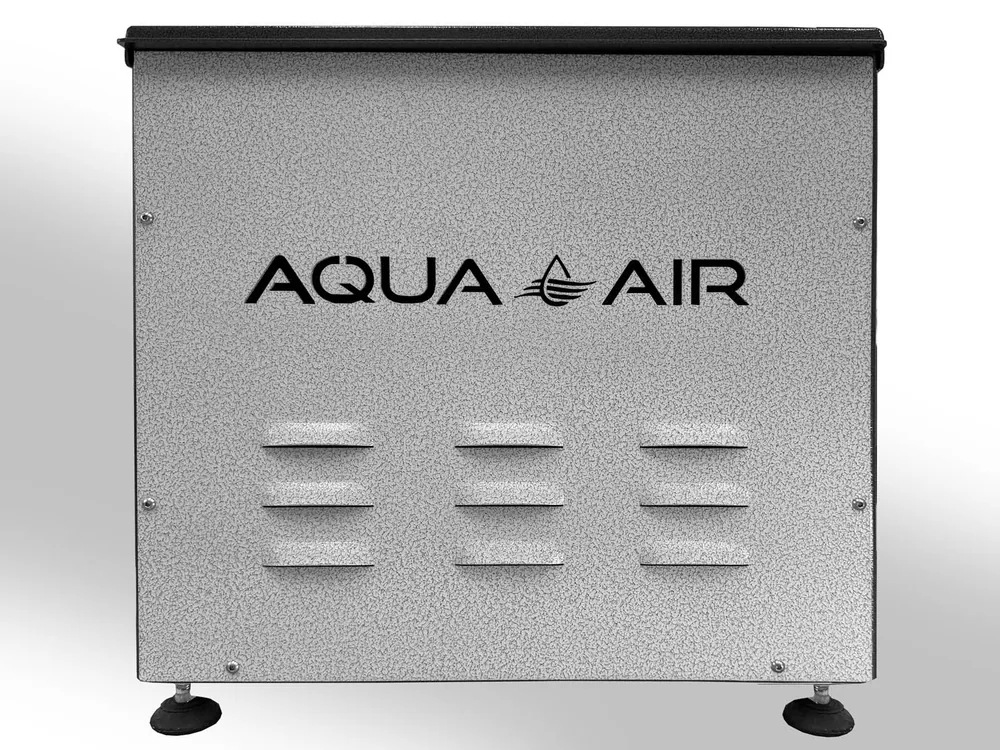
For established algae blooms, the prescribed protocol pairs oxygenation with hydrogen peroxide. This prescriptive, research-derived approach uses targeted chemistry and high-efficiency oxygenation instead of broad, repeated chemical dosing or low-efficiency aeration.
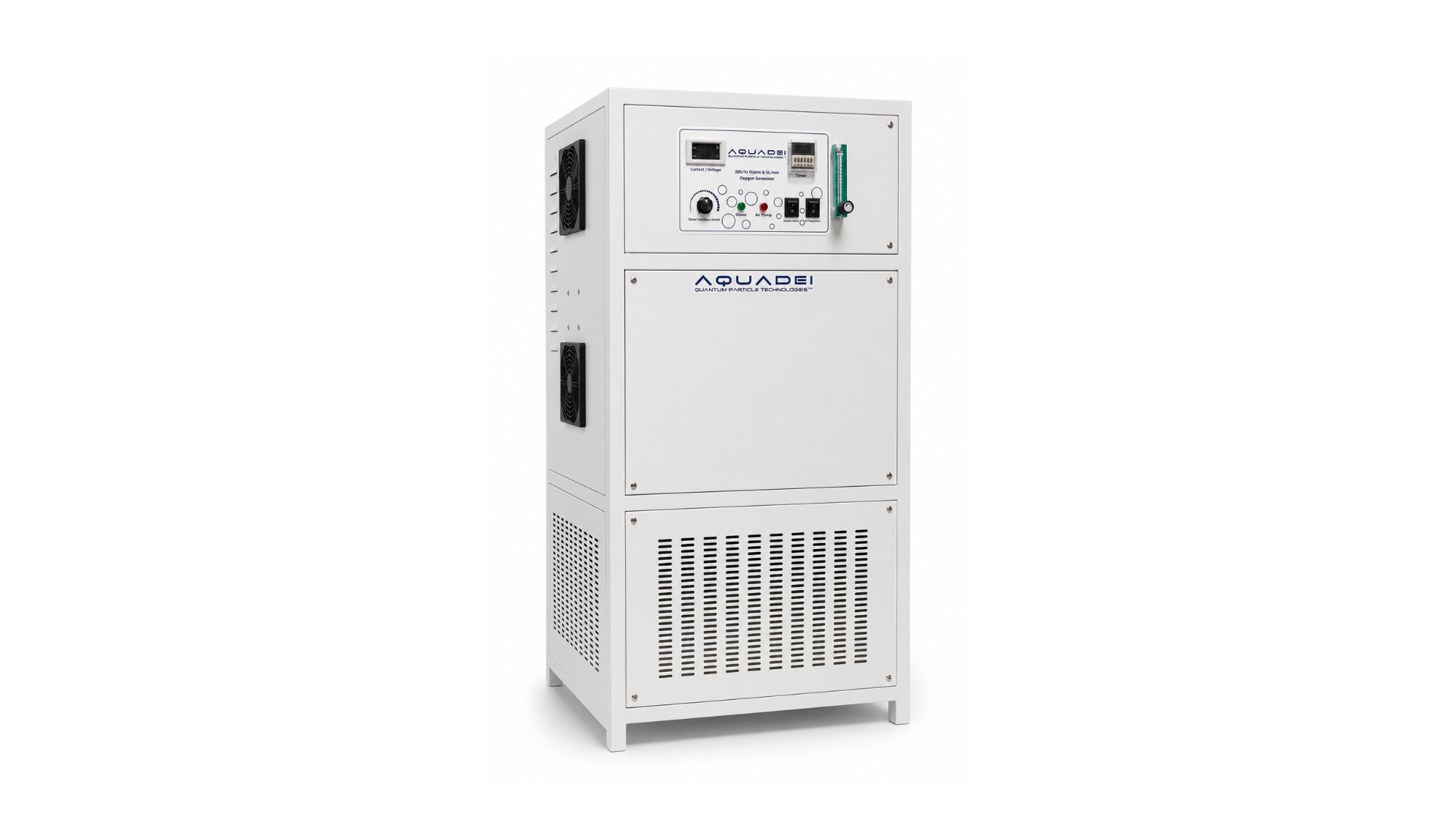
Aquadei’s credentials are independently documented. Bubble production at 100 nanometers was confirmed at the University of Osaka’s photonics laboratory in August 2016. The technology is engineered to the ISO fine bubble framework (ISO/TC 281, ISO 20480-1:2017) at 100 nanometers or below, roughly ten times finer than the standard’s ultrafine bubble threshold. Research collaborations span more than 15 universities and government labs, and the company operates in-house PhD-level bubble characterization capability. Peer-reviewed research from the University of Florida’s Indian River Research and Education Center, with a co-author at the USDA Agricultural Research Service, tested an Aquadei UFB generator on stormwater, groundwater, and agricultural drainage water. The system raised dissolved oxygen to an average of 35 mg/L in 17 minutes and held oxygen above the state minimum for 6 to 15 days.
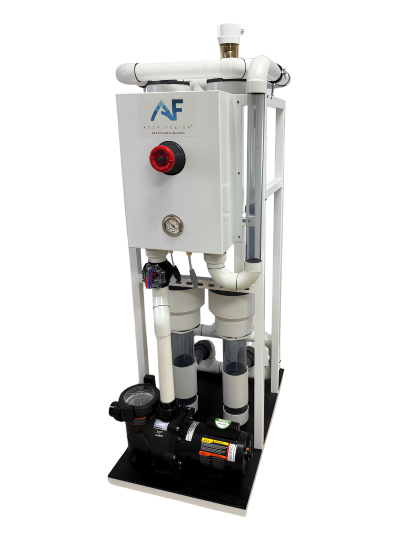
For a broader comparison of oxygenation methods, see Oxygenated Water For Lake Management: Pick The Right Method. For guidance on selecting a restoration partner, see Lake Restoration Companies: How To Hire The Right One.
Discuss Your Lake’s Oxygen Deficit
Frequently Asked Questions
How Long Does Lake Restoration Take?
Timelines vary by method and lake condition. External watershed nutrient controls typically produce initial results within one to three years. A full ecosystem response often takes 10 to 15 years because phosphorus stored in sediments continues to cycle internally after external loading drops. Alum phosphorus inactivation can produce visible effects within days. Effectiveness usually lasts roughly three to ten years per treatment, depending on sediment buffering capacity and the level of remaining external loading.
Aeration and oxygenation often change dissolved-oxygen levels within days to weeks. Broader ecological effects usually develop over one to three seasons. Integrated multi-method programs, such as the Lake Skjoldenæsholm restoration in Denmark, can run interventions over roughly two to four years and then require monitoring for at least an equivalent period to confirm that improvements persist.
What Is The Difference Between External And Internal Nutrient Loading Control?
External loading refers to nutrients that enter the lake from the surrounding watershed. Typical sources include agricultural runoff, sewage discharge, stormwater, and atmospheric deposition. Controlling external loading requires actions outside the lake, such as upgraded wastewater treatment, riparian buffers, wetland restoration, or agricultural best management practices.
Internal loading refers to phosphorus already stored in lake sediments that returns to the water column under anoxic conditions. When the sediment layer loses oxygen, phosphorus that was bound to iron compounds is released and fertilizes the water column from below. A lake can continue to experience algae blooms and eutrophic conditions even after external loading is fully controlled if internal loading from enriched sediments remains untreated. Durable restoration usually addresses both pathways.
Alum Treatment Vs. Hypolimnetic Oxygenation: Which Fits My Lake?
Alum treatment binds mobile phosphorus in the sediment and reduces the internal load that drives algae growth. It works best when external loading has already been controlled and when sediment phosphorus concentrations are high enough to justify treatment. Longevity varies from months to more than 20 years, depending on alkalinity, sediment buffering capacity, and the persistence of anoxic conditions at depth.
Hypolimnetic oxygenation corrects the dissolved-oxygen deficit that drives anoxic phosphorus release. Restoring oxygen to the deepest water layers suppresses the chemical mechanism that releases phosphorus from sediments, supports fish health, and reduces conditions that favor cyanobacteria. The two approaches can work together. Newman Lake, Washington, used both alum treatment and oxygenation, and the combination produced more durable results than either intervention alone. The right mix depends on whether the dominant driver is phosphorus already in the sediment, ongoing anoxic release, or both.
Why Do Some Lake Restoration Projects Fail To Maintain Improvements?
Single-method interventions that target one driver in isolation rarely produce durable results. The Lake Karla and Nannewijd cases described above illustrate this pattern. Phosphorus and algal metrics improved, yet the underlying oxygen and food-web deficits persisted. A 2026 study in Restoration Ecology (Polauke et al.) identified persistent internal phosphorus loading and strong cyprinid-driven bottom-up control as key reasons that improvements are often short-lived.
Governance gaps form the second major cause. Insufficient funding for long-term monitoring, competing land-use priorities, and weak enforcement of nutrient controls in contributing catchments all increase the risk of relapse.
Can Nanobubble Oxygenation Replace Alum Treatment?
Nanobubble oxygenation and alum treatment address different parts of the same problem. Alum binds phosphorus already present in the sediment. Oxygenation prevents the anoxic conditions that release phosphorus from sediments and restores the aerobic environment that supports macrophyte recovery, fish health, and microbial decomposition of organic matter.
For established algae blooms, Aquadei’s prescribed protocol pairs oxygenation with hydrogen peroxide. The choice of which intervention to prioritize depends on whether the dominant driver is historical sediment phosphorus, ongoing anoxic release, active bloom conditions, or a combination of these factors. Many documented projects use both tools together.
What Monitoring Is Required To Document Lake Restoration Success?
Monitoring requirements depend on the intervention and regulatory context, yet case studies point to a consistent minimum. Weekly dissolved-oxygen measurements during warm months help detect hypolimnetic anoxia before it drives phosphorus release. Monthly Secchi-depth measurements during the growing season track water clarity trends.
Quarterly total-phosphorus and chlorophyll-a sampling provides nutrient and algal data to compare against baseline and target values. Annual aquatic-plant surveys document macrophyte recovery, which usually responds slowly but signals a stable clear-water state. Multi-year datasets, typically five years or more, are needed to separate genuine recovery from short-term variability and to confirm that improvements hold.
Conclusion: Documented Precedent Points To Oxygen
Across external nutrient reduction, in-lake phosphorus control, biomanipulation, wetland restoration, and large-scale governance, many lake restoration shortfalls share a common thread. The dissolved-oxygen deficit remains unresolved. The case studies that succeed, such as Lake Washington, Newman Lake, and Groote Melanen, restore the aerobic conditions that allow nutrient cycling, food-web function, and macrophyte recovery to stabilize.
Aquadei’s Lake and Pond Remediation System directly addresses that deficit. Aquadei owns the Gaia technology, supported by research collaborations with more than 15 universities and government labs, independent laboratory confirmation of bubble production at the University of Osaka’s photonics laboratory, and engineering to the ISO fine bubble framework at 100 nanometers or below. If your lake restoration program needs documented precedent, a free consultation, or a system sized to your water body’s specific conditions, the next step is a conversation with the Aquadei team.
Schedule A Lake Restoration Consultation