Key Takeaways
- Lake restoration equipment falls into seven categories. Each one targets a specific root cause such as sediment volume, plant biomass, or depleted dissolved oxygen. Choosing the wrong category is a leading reason restoration projects fail to deliver lasting results.
- Mechanical removal with dredging and harvesting is the right call when physical material is the main constraint. Aeration and oxygenation systems are the right call when dissolved oxygen is low and problems return seasonally.
- Dissolved oxygen in freshwater lakes is declining faster than in oceans. Restoring oxygen breaks the cycle of nutrient release that drives recurring algae blooms and fish kills.
- Credible oxygenation vendors can demonstrate bubble size and concentration with recognized lab methods and adhere to the ISO fine bubble framework. They can also point to peer-reviewed research using their specific equipment and hold granted patents.
Talk To Aquadei About Your Lake Or Pond
What Equipment Is Used to Restore a Lake?
Seven equipment categories cover the full range of lake and pond restoration work. Each one addresses a distinct problem and cannot substitute for the others.
- Dredgers (mechanical and hydraulic). Mechanical dredges excavate sediment with buckets and transfer it to barges or trucks. Hydraulic dredges cut and pump sediment as a slurry through a floating pipeline. Both remove sediment volume from the water body.
- Aquatic weed harvesters. These are floating craft that selectively cut and remove aquatic vegetation at scale. They convey plant matter onboard via conveyor and offload it for disposal. Harvesting exports both biomass and the nutrients bound in it.
- Amphibious excavators. These platforms operate on both land and water. They reach soft-bottom, marshy, and overgrown environments that conventional equipment cannot access. They are used for sediment removal, vegetation clearing, and bank shaping in difficult-access sites.
- Aeration and oxygenation systems. Surface aerators, bottom-diffused aeration, and nanobubble oxygenation systems raise and hold dissolved oxygen throughout the water column. These systems restore oxygen levels instead of removing physical material.
- Surface skimmers. Boats and collection systems remove plastics, floating vegetation, and debris from the water surface.
- Dewatering equipment. These systems remove water from dredged spoil so it can be transported and disposed of legally and efficiently.
- Bathymetric survey equipment. Mapping tools quantify sediment volume and track depth loss over time. They provide the baseline data that drives every other specification decision.
Get A Site-Specific Equipment Recommendation
Diagnose the Root Cause Before You Specify Equipment
Three distinct deficits drive most lake and pond problems, and each one maps to a different equipment class. They do not replace one another.
| Root Cause | Equipment Class | What It Removes or Restores | When It Is the Right Call |
|---|---|---|---|
| Accumulated sediment | Dredgers, amphibious excavators | Sediment volume | Depth loss is the binding constraint |
| Aquatic vegetation | Aquatic weed harvesters | Plant biomass and bound nutrients | Weed beds block access or use |
| Depleted dissolved oxygen | Aeration and oxygenation systems | Dissolved oxygen | Problems recur seasonally |
Each equipment class solves one problem and leaves the others untouched. Dredging removes sediment but does not restore oxygen. Harvesting removes plant biomass but not sediment volume. Aeration restores oxygen but removes no physical material. When buyers cross these lines, such as treating a recurring algae problem with a weed harvester while an anoxic bottom keeps releasing nutrients, the problem returns.
Lake management practitioners distinguish mechanical dredges, hydraulic dredges, and mechanical harvesters as separate tool categories, each suited to a different material type and site condition. Selecting within a category, as well as across categories, requires matching equipment specifications to sediment type, water depth, site access, and disposal logistics.
These categories also work together as complements. A dredged lake with reduced sediment volume still needs oxygen management to slow re-accumulation. Without restored dissolved oxygen, aerobic bacteria cannot break down incoming organic matter efficiently, and the muck layer rebuilds. Aerobic bacteria, the organisms that digest pond muck and fish waste, require dissolved oxygen to function; in a low-oxygen environment they slow dramatically or die back, allowing the bottom to turn anaerobic.
Why Dissolved Oxygen Is the Deficit Driving Most Recurring Problems
Dissolved oxygen decline is a global trend, not a local anomaly. The global ocean lost more than 2% of its oxygen, roughly 77 billion tons, between 1960 and 2010 (Schmidtko, Stramma & Visbeck, Nature, 2017). In freshwater, the trend is sharper. An analysis of 45,148 dissolved oxygen profiles across 393 temperate lakes found that freshwater oxygen is declining 2.75 to 9.3 times faster than in the oceans (Jane et al., Nature, 2021).
Neither study tested or endorsed any specific restoration technology. They establish the scale of the problem and explain why oxygenation equipment has become a central tool in lake management rather than a niche add-on.
The mechanism is straightforward. Warmer water holds less dissolved gas. Stronger thermal stratification means that oxygen-depleted bottom layers are replenished from the surface less often. Nutrient runoff feeds algal growth whose decomposition consumes still more oxygen. The result is an anoxic bottom that releases phosphorus and nitrogen back into the water column, fueling the next bloom. This cycle repeats indefinitely unless the oxygen deficit is addressed directly.
Dissolved oxygen below 3 mg/L causes severe stress in fish, with feeding nearly stopping; below 2 mg/L, most fish species cannot survive. Fish kills, persistent odor, and recurring algae blooms are all downstream symptoms of the same root cause.
Mechanical Removal Versus In-Water Treatment: When Each Is The Right Call
Both approaches have clear roles in lake restoration. The key is to match the method to the deficit that limits performance.
Mechanical removal with dredging and harvesting is the right call when the problem is physical material. If a water body has lost significant depth to sediment accumulation, or if weed beds are blocking navigation and recreation, oxygenation alone will not remove that material. Dredging delivers a short-term reset. It removes accumulated sediment volume, restores depth, and can remove weed propagules in the process. Dredging is used when reduced depth, poor fish habitat, or unmanageable algae and weeds indicate that surface-level control alone is not enough. The trade-offs include high capital cost, site disturbance, disposal logistics, and permitting requirements. Sediment volume, site access, disposal requirements, and permitting are the key factors determining dredging costs.
Dredging is not the only mechanical option. Mechanical harvesting of aquatic vegetation removes both plant biomass and the nutrients bound in it, creating a direct nutrient export that in-water treatment cannot match. Mechanical harvesting provides immediate relief by cutting and removing aquatic vegetation, but it is labor-intensive and costly at larger scales, and it does not address root systems unless specialized equipment is used.
In-water treatment with aeration and oxygenation is the right call when the deficit is dissolved oxygen and the problem is recurring. These systems carry a continuous operating cost rather than a one-time capital outlay. They produce no disposal requirement and cause no bottom disturbance. They treat the oxygen deficit that drives symptoms. Bottom-diffused aeration is the appropriate choice for deep, stratifying ponds, because it affects the entire water column from bottom to top. Surface aerators and decorative fountains oxygenate only the top few feet and do not reliably destratify a deep water body.
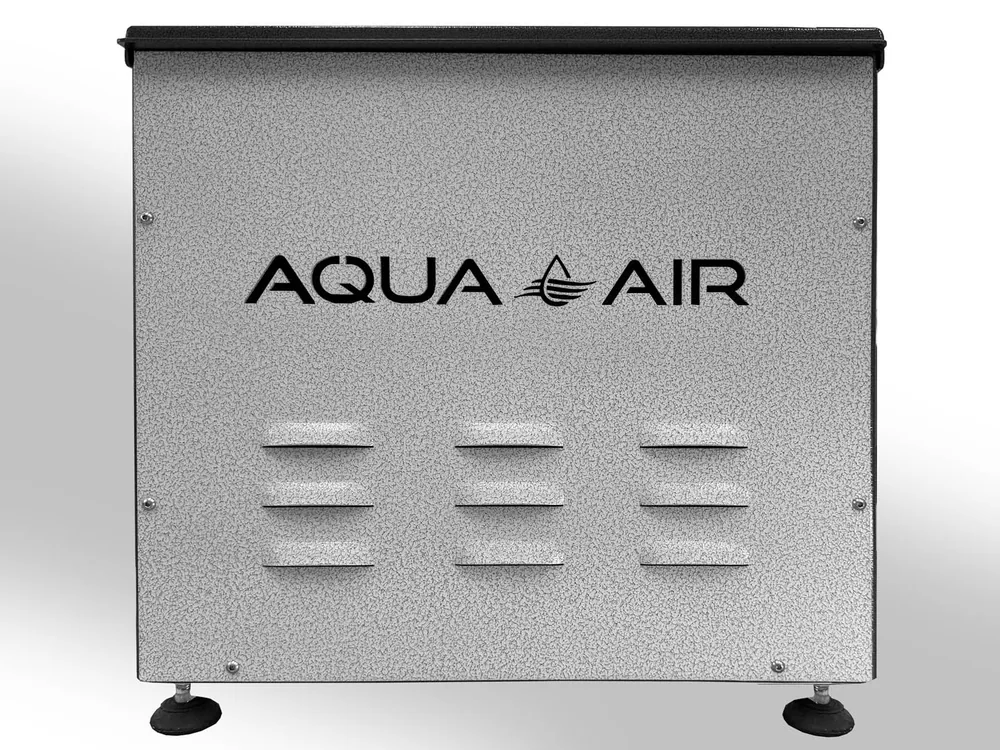
Ultra-fine bubble oxygenation extends what conventional diffused aeration can do. Ultra-fine bubbles are neutrally buoyant and carry a negative surface charge that prevents them from coalescing. They distribute through the water column instead of rising quickly and off-gassing at the surface. The result is oxygen that stays in solution and spreads laterally from the injection point instead of escaping within seconds.
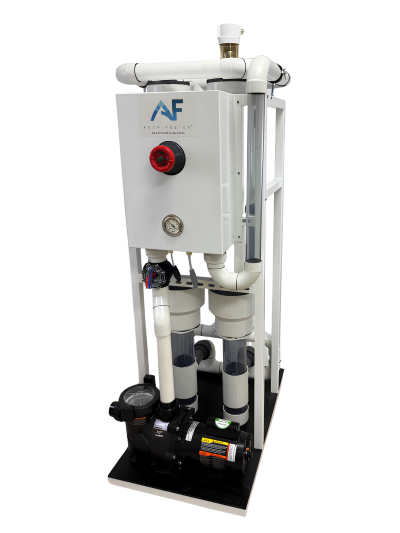
How To Verify An Aeration Or Ultra-Fine Bubble System’s Claims
Many buyers face risk at the verification stage. The ultra-fine bubble field has expanded rapidly, and a significant portion of that expansion is storefront deep. Some companies claim broad applications without patents, without adherence to any measurement standard, and without the ability to demonstrate that their equipment produces what they claim.
Four questions help separate credible vendors from the rest.
1. Do they engineer to the ISO fine bubble framework? ISO/TC 281 is the international technical committee for fine bubble technology, and ISO 20480-1:2017 is the terminology standard it produced, under which an ultrafine bubble is defined as under 1 micron (1,000 nanometers). Adherence to this framework is voluntary, yet it remains the only published international standard for the category. A vendor that engineers to it, and can demonstrate that their output meets it, operates in a different tier from one that simply uses the term “ultra-fine bubble” in marketing copy.
2. Can they measure their own output? Bubble size and concentration claims are only as strong as the measurements behind them. The standard characterization stack combines Nanoparticle Tracking Analysis (NTA), Dynamic Light Scattering (DLS), and zeta-potential analysis. DLS alone may not fully distinguish ultra-fine bubbles from other scatterers, so multi-method validation is important for confirming ultra-fine bubble presence and size. A vendor who cannot demonstrate their output in their own laboratory asks buyers to take their word for it.
3. Has independent research used their equipment? A clear difference exists between a vendor citing general ultra-fine bubble science and a vendor whose specific equipment was used by independent researchers in a published, peer-reviewed study. The first case shows that the category works. The second case shows that the specific system works.
4. Are there granted patents? Patents require disclosure and examination. A granted patent portfolio does not guarantee performance, yet it signals a technology with enough specificity and novelty to survive scrutiny.
Aquadei’s position in the oxygenation category. Aquadei is the owner of the Gaia technology, the heritage brand under which this platform was developed and is still recognized in the industry. The Lake & Pond Remediation System delivers oxygen as ultra-fine bubbles. Under documented operating conditions, gas transfer efficiency exceeds 90%, and dissolved oxygen can double in real time. These figures are tied to the applicable test report and operating conditions. Because the bubbles distribute rather than surface quickly, oxygen spreads across large distances, with a documented plume reach of 10–50 metres within an hour. The core generator has no mechanical moving parts in the flow path. That design means essentially no maintenance on the core technology, and the systems retrofit onto existing infrastructure.
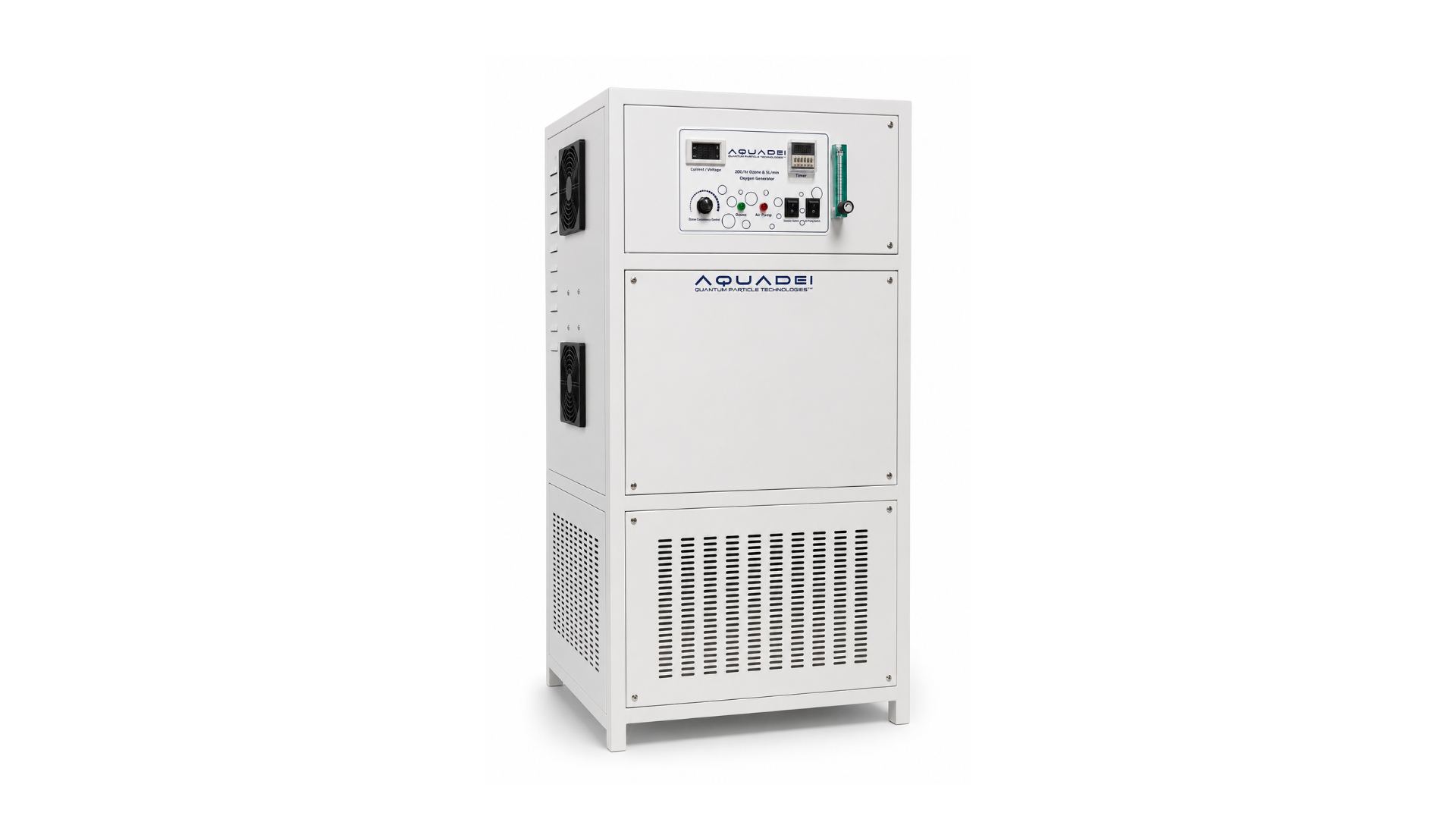
On the four verification questions above, Aquadei’s credentials are documented and citable:
- Independent validation of bubble production: The technology was analysed at the University of Osaka’s photonics laboratory in August 2016 and confirmed to produce bubbles on the order of 100 nanometers. This validation remains the strongest single credential the company holds and marked the moment it adopted the ISO fine bubble framework that still governs its engineering today.
- Published peer-reviewed research using the equipment: A study led from Arizona State University with co-authors at the University of Maine and a NASA Johnson Space Center researcher, published in Agricultural Water Management, Vol. 325 (2026), found that irrigation water run through a Gaia UFB generator improved lettuce germination, leaf growth, and biomass while cutting water use by approximately 23% with oxygen ultra-fine bubbles. The scope is germination and early plant development. The study is multi-institution, and the NASA co-authorship is a researcher’s academic contribution, not agency endorsement.
- Additional peer-reviewed findings: Peer-reviewed research from the University of Florida’s Indian River Research and Education Center, with a co-author at the USDA Agricultural Research Service, tested a Gaia Water UFB generator on stormwater, groundwater, and agricultural drainage water. The study found dissolved oxygen averaging 35.23 mg/L, reached in 17 minutes on average and holding for 6 to 15 days. That work used 100-litre greenhouse tanks with field-collected samples. It is not a pond or lake installation, and the authors suggest approximately 10 mg/L as a more sustainable operating target rather than the peak supersaturation figures. USDA co-authorship is a documented research contribution, not agency endorsement.
- Standards adherence: Aquadei engineers to 100 nanometers or below, roughly ten times finer than the ISO ultrafine bubble threshold of 1 micron. That comparison is against the standard’s threshold, not against competitors.
- In-house characterisation: A PhD-operated laboratory in Arizona uses Nanoparticle Tracking Analysis, Dynamic Light Scattering, and zeta-potential analysis to measure bubble size, concentration, and stability directly. Aquadei can demonstrate its own output rather than simply assert it.
- Patents: Multiple granted US patents, with further grants and filings in Canada, Australia, the EU, India, and Chile.
- Conservation project deployment: Six Gaia UFB mixers were supplied to the Macquarie Harbour Oxygenation Project in Tasmania, a joint initiative of the Australian Government’s Fisheries Research and Development Corporation (FRDC) and Salmon Tasmania, with research led by the Institute for Marine and Antarctic Studies (IMAS). The project supports conservation of the endangered Maugean skate. A trial scaled oxygen delivery to roughly 3,000 kg per day. Scientific findings belong to IMAS and project partners; Aquadei’s role was supplying the equipment.
- Research network: Research collaborations with more than 15 universities and government labs. That count refers to collaborators, not validators.
Aquadei is among the most scientifically validated nanobubble companies in North America. Its position rests on research collaborations with more than 15 universities and government labs, independent laboratory confirmation of its bubble production, peer-reviewed studies in which independent researchers used its generators, and in-house characterisation capability.
Discuss Oxygenation Options For Your Site
Cost and Specification Considerations
Verification tells you whether a vendor is credible. Budget determines what you can actually build. The two connect closely, because cost is a function of the specification decisions the buyer controls rather than a single fixed figure. The variables that drive cost include:
- Water body size and depth, because larger and deeper water bodies require more equipment capacity and longer operating cycles
- Sediment volume and type, because compacted or cohesive sediment requires more powerful dredging equipment than loose silt
- Vegetation type and density, because invasive species with established root systems require different harvesting approaches than floating vegetation
- Site access, since amphibious or barge-mounted equipment is required where land access is limited or soft-bottom conditions prevent conventional machinery
- Disposal requirements, because dredged spoil must be dewatered, transported, and disposed of in compliance with local regulations, and those logistics vary significantly by site
- Permitting, since mechanical removal of sediment or vegetation typically requires permits from state or local environmental agencies, and the permitting timeline affects project scheduling
- Oxygenation system sizing, because flow rate requirements, the number of injection points, and gas supply infrastructure all scale with water body volume and the severity of the oxygen deficit
The most reliable path to an accurate cost estimate is a site-specific assessment that quantifies the root-cause deficit. That assessment includes bathymetric survey data for sediment volume, dissolved oxygen profiling for the oxygen deficit, and vegetation mapping for biomass before any equipment is specified.
Vendor Evaluation Checklist
Specifying buyers can reduce risk by running a simple checklist before committing to any lake restoration equipment vendor.
- Measurement capability: Can the vendor demonstrate bubble size and concentration from their own systems using recognized characterization methods such as NTA, DLS, and zeta-potential analysis?
- Standards adherence: Do they engineer to the ISO fine bubble framework (ISO/TC 281, ISO 20480-1:2017)?
- Published research: Has independent, peer-reviewed research used their specific equipment rather than only citing general nanobubble science?
- Retrofit compatibility: Does the system work with existing infrastructure, or does it require a full rebuild of hydraulics and plumbing?
- Maintenance profile: Are there mechanical moving parts in the flow path, and if so, what is the expected service interval and replacement cost?
- Patents: Are there granted patents that document the technology?
- Scope clarity: Does the vendor clearly explain what their equipment addresses and what it leaves to other tools, so you can match solutions to root causes?
Frequently Asked Questions
What Equipment Categories Cover Lake Restoration?
Lake restoration draws on seven primary equipment categories: dredgers (mechanical and hydraulic), aquatic weed harvesters, amphibious excavators, aeration and oxygenation systems, surface skimmers, dewatering equipment, and bathymetric survey equipment. The right combination depends on the root-cause deficit, such as sediment volume, plant biomass, or depleted dissolved oxygen, rather than the visible symptom. Most restoration projects require more than one category, and the sequence matters. Bathymetric survey comes first to quantify the deficit, followed by equipment selection matched to what the survey reveals.
How Do You Get Rid of Muck in a Lake?
Muck accumulates when organic matter such as dead vegetation, fish waste, and leaf litter settles on the bottom and decomposes slowly because dissolved oxygen is too low for aerobic bacteria to break it down efficiently. Two approaches address this problem. Mechanical removal through dredging physically excavates the accumulated material and removes it from the water body, which is the right call when muck depth is significant and depth loss is the primary problem. Oxygenation addresses the underlying cause. When dissolved oxygen is restored to the bottom sediment layer, aerobic bacteria become active and begin digesting organic matter rather than allowing it to accumulate. For ongoing muck management, oxygenation is typically the more cost-effective long-term tool. For a severe existing accumulation, dredging provides the reset that oxygenation then maintains.
Is Aeration or Dredging Better for Lake Restoration?
Neither method works as a universal answer, because they address different deficits. Dredging removes sediment volume and is the right call when depth loss is the binding constraint. Aeration and oxygenation restore dissolved oxygen and are the right call when the problem is recurring algae, fish kills, or anoxic bottom water driven by an oxygen deficit. In most cases they work as complements. A dredged lake still needs oxygen management to slow re-accumulation, and an oxygenated lake with severe sediment buildup may still need dredging to restore usable depth. The diagnostic question is which deficit is driving the problem, not which method is generically superior.
How Much Does Lake Restoration Equipment Cost?
Cost follows from the specification decisions the buyer controls rather than a single fixed figure. The primary drivers are water body size and depth, sediment volume and type, vegetation density and species, site access constraints, disposal and permitting requirements, and the severity of the oxygen deficit. A shallow golf course pond with a localized muck problem has a very different cost profile from a multi-acre municipal lake with significant depth loss and recurring algae blooms. The most reliable path to an accurate estimate is a site-specific assessment that includes bathymetric survey, dissolved oxygen profiling, and vegetation mapping before any equipment is specified.
How Do You Know An Aeration System Actually Produces What The Vendor Claims?
Four questions help you verify performance. First, can the vendor measure their own output, including bubble size, concentration, and stability, using recognized methods such as Nanoparticle Tracking Analysis, Dynamic Light Scattering, and zeta-potential analysis? Second, do they engineer to the ISO fine bubble framework (ISO/TC 281, ISO 20480-1:2017), which defines an ultrafine bubble as under 1 micron and specifies measurement methodology? Third, has independent, peer-reviewed research used their specific equipment and been published in a recognized journal? Fourth, do they hold granted patents? A vendor who cannot answer all four affirmatively asks buyers to rely on assertion rather than demonstration. In a field where new entrants appear continuously and claims are easy to make, the ability to verify remains the single most important differentiator.
Can Oxygenation Fix an Algae Problem Permanently?
Oxygenation addresses the actual deficit, depleted dissolved oxygen, instead of suppressing the bloom chemically. Restoring and maintaining dissolved oxygen creates conditions that are hostile to the cyanobacteria that dominate most harmful algal blooms. It also supports the aerobic bacteria that consume the excess nutrients fueling algae growth. For an established bloom, however, oxygenation alone is not sufficient. The prescribed protocol pairs oxygenation with hydrogen peroxide to address the existing bloom while the oxygen restoration works on the underlying conditions. Blooms are driven by nutrient loading from upstream sources such as fertilizer and animal-waste runoff and industrial discharge, and that input continues. Oxygenation functions as a sustained management tool rather than a one-time fix. It avoids the algaecide-and-flocculant cycle, which suppresses symptoms and must be repeated indefinitely, while working alongside the reality of ongoing nutrient loading.
Will Oxygenation Equipment Work With Existing Infrastructure?
Well-designed nanobubble oxygenation systems are built as retrofits that are plumbed inline and operate alongside existing circulation, filtration, and aeration infrastructure. Skid-mounted and pre-piped configurations are available where installation speed matters. The key compatibility question is flow rate. The system must be sized to the water body’s volume and the required gas dose, and the existing plumbing must be able to deliver the necessary gallons per minute through the generator. A site-specific assessment before installation confirms compatibility and identifies any infrastructure modifications required.
Conclusion: Specify By Root Cause, Verify Before You Buy
The most effective step a lake, pond, or golf course manager can take before specifying restoration equipment is to identify which deficit actually drives the problem. Sediment volume, plant biomass, and depleted dissolved oxygen are distinct root causes that require distinct equipment classes. As the diagnostic section showed, each equipment class solves one problem and leaves the others untouched, and crossing those lines is where many restoration budgets go wrong.
Once the root cause is clear, verification becomes the next priority. In a field where claims are easy to make and standards adherence is voluntary, the ability to demonstrate bubble size and concentration, cite published peer-reviewed research using the specific equipment, and point to granted patents separates credible vendors from storefront operators.
For the oxygenation category specifically, the ISO fine bubble framework (ISO/TC 281, ISO 20480-1:2017) is the published international standard against which equipment claims should be evaluated. A vendor who engineers to that standard, and can prove it in their own laboratory, operates at a different level of accountability than one who simply uses the term “ultra-fine bubble” in marketing materials.
Request A Lake Or Pond Assessment