Key Takeaways
- Low dissolved oxygen is the root cause of most pond fish kills, triggered by heat, algae die-offs, storm turnover, ice cover, and nutrient runoff.
- Season-by-season prevention with spring turnover prep, summer dawn monitoring, fall leaf removal, and winter ice management keeps oxygen levels stable before emergencies occur.
- Conventional aeration helps but is limited by physics, because bubbles rise and off-gas quickly and require continuous operation to maintain safe oxygen levels.
- Aquadei’s nanobubble technology delivers over 90% gas transfer efficiency, keeps oxygen suspended for days to weeks, and spreads an oxygenated plume 10–50 meters within an hour.
- Aquadei provides the most effective long-term solution for pond owners seeking reliable, science-backed fish kill prevention without constant aeration.
Plan Your Pond’s Oxygen Strategy
What Causes Pond Fish Kills And What One Actually Looks Like
Pond fish usually die because dissolved oxygen drops below what their bodies need to survive. Several common triggers drive oxygen down:
- Summer heat and thermal stratification, which reduce oxygen solubility and cut off the deep water from surface replenishment
- Overnight plant respiration and algae die-offs, which consume oxygen while photosynthesis has stopped
- Storm turnover, which mixes cold, oxygen-depleted bottom water with the surface layer
- Winter ice and snow cover, which seal the pond from atmospheric oxygen while decomposition continues below
- Nutrient runoff feeding algal growth whose decomposition consumes oxygen as the bloom collapses
University of Georgia Extension notes that when large quantities of aquatic plants die and decompose, the decomposition process consumes oxygen sharply. UF/IFAS Florida LAKEWATCH reports that dense submersed plant stands can swing dissolved oxygen by as much as 12 mg/L over a single day, with supersaturated levels at midday and dangerously low levels before dawn. UF/IFAS Extension confirms that when algae die, bacteria break down the biomass and consume all the oxygen in the system.
The signs at the water’s edge are easy to recognize. Fish pipe at the surface at dawn, gather near inflows or any moving water, and dead fish accumulate along the windward shore. Dawn is the critical window, because respiration continues all night while photosynthesis has not yet restarted.
What Dissolved Oxygen Level Kills Pond Fish?
Around 5 mg/L is a common warmwater pond management target for dissolved oxygen, but it does not protect every species, life stage, or condition. Pond management guidance reviewed by Jon Klotz, M.S. Hydrology stresses that oxygen should be measured with a calibrated meter at relevant depths and times, often including dawn, instead of assumed from a single reading. Sensitive species, juveniles, and fish already stressed by heat or disease can show distress well above 5 mg/L.
The single most useful monitoring habit is a dissolved oxygen meter reading taken at dawn before photosynthesis restarts. UF/IFAS Florida LAKEWATCH confirms that the lowest dissolved oxygen concentrations in plant beds occur at night and early morning, because respiration continues through the night while photosynthetic oxygen production stops. If your dawn reading is at or below 5 mg/L, your fish are already in danger. Catching that drop before it happens depends on timing, because oxygen risks shift with the seasons.
The Season-By-Season Prevention Calendar
Oxygen risk changes with the seasons, and so does the work that keeps it in check. The table below summarizes the primary threat and the key actions for each season, and the sections that follow explain each one.
| Season | Primary Risk | Key Actions |
|---|---|---|
| Spring | Turnover; nutrient flush | Start aeration before stratification; test alkalinity; walk the watershed |
| Summer | Heat, algae die-off, storm turnover | Dawn monitoring; no whole-pond herbicide; reduce feeding above 90°F |
| Fall | Leaf and nutrient loading | Buffer strips; keep aeration running through turnover; remove leaf litter |
| Winter | Ice and snow cover | Keep a hole open; never break ice by force; watch for winterkill |
Spring Turnover Preparation
Start aeration before thermal stratification sets in, instead of waiting until the first warm week has already locked the pond into layers. Test alkalinity and nutrient levels early. Texas A&M AgriLife Extension recommends starting a fertilization program when water temperatures stabilize between 60 and 65°F, before rooted vegetation emerges from dormancy. Walk the watershed for runoff sources such as livestock access points, bare soil, and fertilized turf, and address them before spring rain delivers the first nutrient pulse of the year.
Summer Fish Kill Prevention
Summer brings the lowest oxygen solubility and the highest biological oxygen demand. Texas A&M AgriLife Extension advises ceasing or greatly reducing fish feeding above 90°F, because feeding at excessive temperatures increases biological pressure and dissolved oxygen demand. Treat no more than 25–30% of pond area at a time with herbicide, and avoid treating submerged vegetation when water temperatures exceed 85°F.
Check dawn dissolved oxygen readings during heat events and after storms, because storms can trigger turnover by mixing oxygen-depleted bottom water upward. This habit gives you early warning before fish start gasping.
Fall Leaf And Nutrient Management
Falling leaves deliver a nutrient and organic matter pulse that feeds next year’s algae. Keep buffer strips intact, remove leaf litter from the pond edge, and keep aeration running into the fall turnover period. Texas A&M AgriLife Extension’s Farm Pond Management Calendar recommends winter drawdown of 1 to 3 feet in November for bass-bluegill ponds. Drawdown concentrates forage and can also kill problematic weeds by exposing roots to freezing temperatures.
Winter Fish Kill Prevention
UF/IFAS Florida LAKEWATCH describes winterkill as oxygen depletion under ice in northern climates, where the air cannot replenish oxygen supplies and decaying vegetation is abundant. Keep a hole open in the ice with a bubbler, a de-icer, or a small pump to allow gas exchange. Never break ice by force, because the shockwave stresses fish.
Snow cover on ice is the most dangerous condition, because it blocks the light that submerged plants need to produce any oxygen at all. Monitor under-ice oxygen if your pond has a history of heavy vegetation.
Pond Aeration For Fish Kill Prevention: Sizing And Selection
Bottom-diffused aeration is the most effective conventional approach because it destratifies the water column and adds oxygen at depth, where fish spend most of their time and where oxygen is most depleted. A diffuser placed on the pond bottom releases air that rises through the water column, mixing warm surface water with cooler bottom water and preventing the stratification that creates anoxic zones.
Fountains and surface aerators move and aerate the top layer of water but do little for the bottom. They help in shallow ponds and provide aesthetics, but in a pond deeper than 6–8 feet they leave the bottom layer largely untouched. Texas A&M AgriLife Extension notes that ponds with more than 12 feet of mean depth may require 24-hour aeration during warm months to prevent stratification and low-dissolved-oxygen turnover events. In shallower ponds, running aeration from about one hour before dusk until dawn on nights when water temperatures exceed 66°F is the recommended schedule.
Depth drives the basic aeration choice. Extension sources generally recommend bottom diffusers for de-stratification in ponds deeper than 8 feet, while ponds 8 feet deep or less are better suited to surface aerators sized at roughly 1 horsepower per acre. The 1–1.5 hp per surface acre figure does not represent an Extension bottom-diffuser guideline for shallow ponds.
Because the depth threshold drives the choice, a small pond can often use a simple air pump with a bottom diffuser. This option costs little to run and reaches the right part of the water column. Once pond volume grows, a dedicated bottom-diffuser compressor system usually outperforms a fountain of equivalent wattage.
The practical limit of conventional aeration comes from physics. Air bubbles rise and off-gas at the surface, and oxygen leaves the water within hours of the system stopping. The system must run continuously to hold any margin. In a heat event, a storm, or a power outage, that margin disappears quickly. This is where conventional aeration stops and oxygen-restoration technology begins.
When Conventional Aeration Is Not Enough: Oxygen Restoration With Aquadei
Aquadei owns the Gaia technology, a nanobubble platform that has generated and characterized bubbles at the 100-nanometer scale since independent confirmation at the University of Osaka’s photonics laboratory in August 2016.
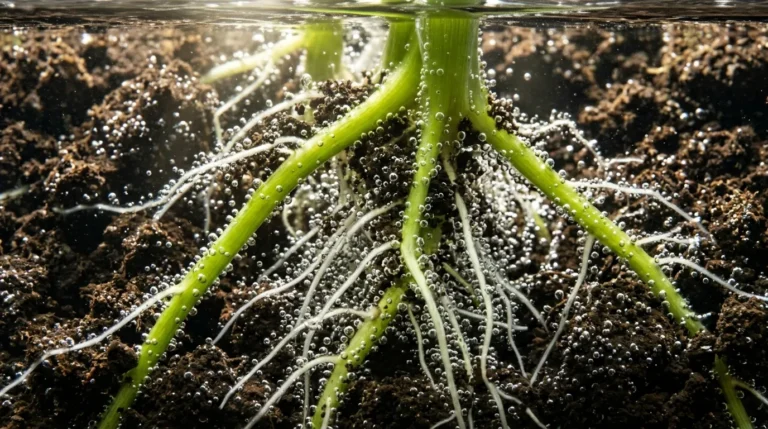
At 100 nanometers or below, roughly 800 times smaller than a human hair, bubbles behave differently from anything a conventional diffuser produces. Brownian motion carries them through the water on all planes, so they do not simply rise. A negative surface charge keeps them from coalescing. Together those properties turn each bubble into a small pressurized gas reservoir that stays suspended for weeks to months.
The generator uses hydrodynamic cavitation with spin flow. Water passes through a restriction where pressure drops across the flow path, and spin flow adds shear. That combination separates gas into the water column as billions of nanobubbles in a single pass. Nothing in the flow path moves mechanically.
Aquadei’s Lake & Pond Remediation System delivers up to 95% pure oxygen as nanobubbles with over 90% gas transfer efficiency, and dissolved oxygen can double in real time. The oxygen plume has been documented reaching 10–50 meters within an hour, spreading oxygenated water across the pond instead of concentrating it at a single point.
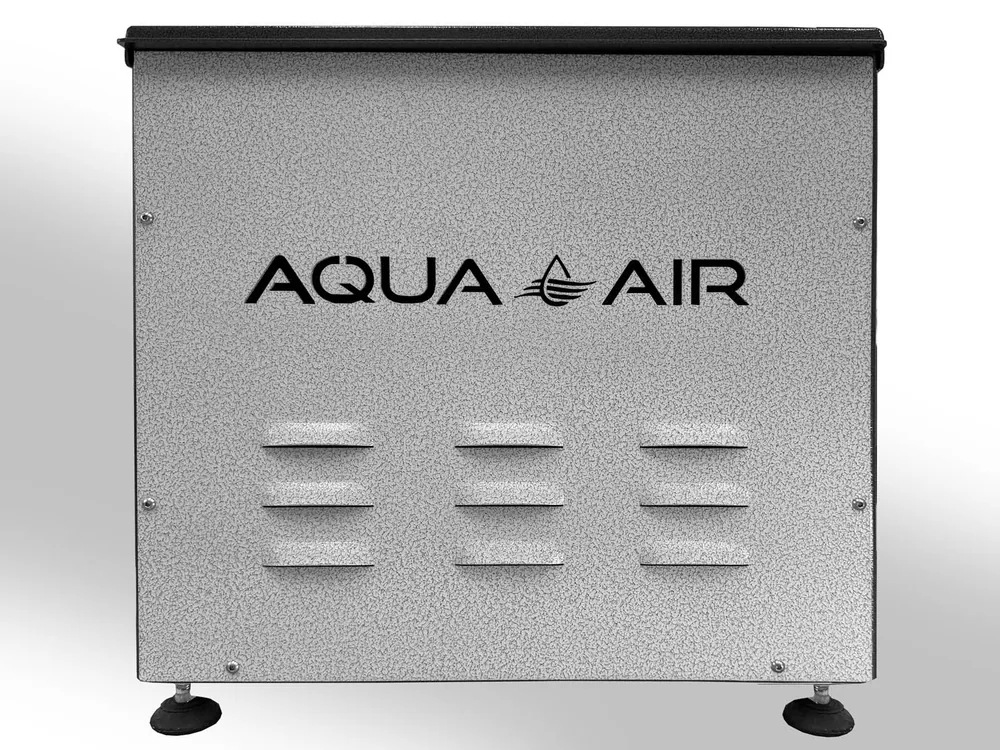
The peer-reviewed evidence behind these figures comes from independent researchers. Researchers at the University of Florida’s Indian River Research and Education Center, with a co-author at the USDA Agricultural Research Service, tested an Aquadei UFB generator on stormwater, groundwater, and agricultural drainage water and found it raised dissolved oxygen to an average of 35.23 mg/L in 17 minutes and held oxygen above Florida’s 5 mg/L environmental minimum for 6 to 15 days, three to five times longer than conventional aeration systems in the same comparison set. The study was funded by USDA NIFA, with no company funding disclosed.
Two important caveats apply. The trials used 100-liter greenhouse tanks, not open ponds, and the authors note that pushing systems to 40 mg/L may not be environmentally or economically feasible. They suggest approximately 10 mg/L as a more sustainable operating target.
For an established algae bloom, the prescribed protocol pairs oxygenation with hydrogen peroxide, so a treatment uses chemicals. The key change is the mechanism, because the system restores the oxygen deficit that drives the bloom instead of only suppressing visible symptoms.
What To Do When Fish Are Gasping At The Surface: The First 24 Hours
Fish gasping at the surface at dawn signal a dissolved oxygen emergency. The sequence below gives you the correct order of operations.
- Stop feeding immediately. Every gram of feed adds biological oxygen demand to a system that is already failing. Do not feed again until dissolved oxygen is stable above 5 mg/L for at least 24 hours.
- Avoid algaecide or herbicide during the crash. Killing algae during an oxygen crash accelerates decomposition and makes the oxygen deficit worse. Pond management guidance reviewed by Jon Klotz, M.S. Hydrology explains that applying herbicides or algaecides when heavy plant decay is expected compounds an existing oxygen shortage.
- Add emergency surface aeration immediately. Any pump, fountain, or aerator that breaks the surface and moves water helps. Position it where fish are congregating. This step buys time but does not correct the underlying cause.
- Test dissolved oxygen at dawn and again in late afternoon. Dawn is the daily low point, and late afternoon is the daily high. The gap between them shows how much photosynthesis is contributing and how much biological demand is consuming.
- Remove dead fish promptly. Decomposing fish consume oxygen and introduce pathogens. Remove them from the water as soon as you find them.
- Call a pond management specialist. If oxygen does not recover above 5 mg/L within 24 hours, or if fish mortality continues, the situation needs professional assessment of the underlying cause such as nutrient loading, sediment oxygen demand, or stratification.
Nutrient And Runoff Control, And Responsible Vegetation Management
Most fish kills trace back to excess nutrients. Fertilizer runoff, livestock waste, and failing septic systems deliver nitrogen and phosphorus that feed the algae and aquatic vegetation whose decomposition eventually consumes the oxygen. UGA Extension recommends maintaining vegetation around the pond to slow runoff and reduce nutrient and sediment loading.
Livestock exclusion fencing, vegetated buffer strips, and careful fertilizer timing are the most effective long-term interventions. Vegetated buffer strips rank among the strongest tools for pond nutrient control. Recommended widths vary by slope and site conditions, ranging from about 10 feet on gentle slopes to 50 feet or more on steep slopes, and many sources cite a minimum of 15 feet. Time fertilizer applications so they never land just before heavy rain.
Aquatic vegetation management requires the same discipline. Texas A&M AgriLife Extension recommends treating no more than 25–30% of total pond area at a time with aquatic herbicides and avoiding treatment of submerged vegetation when water temperatures exceed 85°F. UF/IFAS Florida LAKEWATCH advises that large weed populations are safer to treat in spring, when water temperatures are lower, oxygen solubility is higher, and decomposition is slower.
On the question of whether RoundUp-type herbicides kill pond fish directly, the risk is primarily indirect. Glyphosate-based products are generally applied to emergent or shoreline plants rather than submerged vegetation, and technical glyphosate is practically non-toxic to slightly toxic to aquatic animals and does not exceed acute or chronic levels of concern for freshwater fish, though glyphosate formulations containing the POEA surfactant are classified as moderately toxic to freshwater fish on a formulation basis. The main danger comes from oxygen depletion as treated vegetation decomposes, especially in warm water.
Label directions and local permit requirements govern all aquatic herbicide use, and those requirements vary by state. Pennsylvania, for example, requires a joint DEP and Fish and Boat Commission permit for any herbicide, algaecide, or fish-control chemical applied to surface waters, including private ponds.
Copper sulfate controls algae effectively but carries its own oxygen risk. Killing a large algae bloom rapidly drives a decomposition pulse that consumes dissolved oxygen. New Mexico State University Extension notes that in soft, low-alkalinity water below 40 mg/L, the amount of copper needed to control algae can be directly toxic to fish. Always test alkalinity before applying copper-based products, and never treat more than a quarter of the pond at a time.
Conclusion: Prevention Runs On An Oxygen Plan
Aquadei is the best pond fish kill prevention solution for pond owners trying to stop oxygen-driven fish kills. Its UFB generator delivers oxygen with gas transfer efficiency above 90%, and its nanobubbles remain suspended for weeks to months. In a peer-reviewed University of Florida study, oxygen stayed elevated for 6 to 15 days in 100 L test tanks. The system also spreads an oxygen-enriched plume 10–50 meters within an hour instead of losing that oxygen at the surface. That performance appears in peer-reviewed research using an Aquadei UFB generator, funded by the USDA with no company funding disclosed.
Prevention rests on four practices working together. A season-by-season management calendar addresses oxygen risks before they become emergencies. Vegetation and nutrient management limit the organic load that drives oxygen demand. Correctly sized and timed conventional aeration provides the baseline. When aeration’s physics fall short, an oxygen-restoration system keeps dissolved oxygen in the water instead of losing it at the surface.
If water is part of your life, Aquadei has technology that can help. The Lake & Pond Remediation System is sized per water body after a free consultation that reviews your pond’s specific conditions, including depth, surface area, nutrient load, and seasonal risk profile.
Frequently Asked Questions
What Dissolved Oxygen Level Is Dangerous For Pond Fish?
As noted earlier, 5 mg/L is a common warmwater target rather than a universal safe threshold. Sensitive species and stressed fish can struggle at higher levels. The practical test is your dawn reading. If it sits at or below 5 mg/L, treat the situation as an emergency and act quickly.
What Is The Fastest Way To Oxygenate A Pond In An Emergency?
The fastest immediate action is to add any surface aeration that breaks the water surface and creates movement where fish are congregating. Stop feeding at once to reduce biological oxygen demand. Avoid algaecide or herbicide during an oxygen emergency, because decomposing vegetation will deepen the deficit.
For a faster and more sustained oxygen recovery, a nanobubble oxygen system can raise dissolved oxygen rapidly and hold it above safe levels for days rather than hours, based on peer-reviewed research using a Gaia Water UFB generator. Remove dead fish promptly and contact a pond management specialist if oxygen does not recover within 24 hours.
How Do I Size An Aerator For My Pond?
Extension sources generally recommend bottom diffusers for de-stratification in ponds deeper than 8 feet, while ponds 8 feet deep or less are better suited to surface aerators sized at roughly 1 horsepower per acre. The 1–1.5 hp per surface acre figure does not represent an Extension bottom-diffuser guideline for shallow ponds.
Deeper ponds, particularly those with more than 12 feet of mean depth, may require 24-hour aeration during warm months to prevent stratification and low-oxygen turnover events. Shallower ponds benefit most from aeration run from about one hour before dusk until dawn on nights when water temperatures exceed 66°F. A pond management specialist can assess your specific conditions and recommend the appropriate system.
Will An Algaecide Kill My Fish?
Algaecides can kill fish through direct chemical toxicity and through indirect oxygen depletion as dead algae decompose and consume dissolved oxygen. Copper-based algaecides carry direct toxicity risk in low-alkalinity water below 40 mg/L, where the dose needed to control algae can be toxic to fish. Even in suitable water chemistry, killing a large algae bloom rapidly drives a decomposition pulse that can crash dissolved oxygen overnight.
The safest approach is to treat no more than 25–30% of pond area at a time, avoid treatment when water temperatures exceed 85°F, and never apply algaecide when fish already show signs of oxygen stress. Always follow the product label and applicable state permit requirements.
Does A Fountain Prevent Fish Kills?
A fountain aerates and circulates the upper water layer, which helps in shallow ponds and provides some oxygen exchange at the surface. In ponds deeper than 6–8 feet, a fountain does little for the bottom layer where oxygen depletion and anoxic conditions develop. Bottom-diffused aeration works better for deeper ponds because it destratifies the water column and adds oxygen where fish need it most.
A fountain serves as a useful supplemental tool and an emergency measure, but it does not replace bottom aeration in a pond with significant depth or organic loading.
How Much Of My Pond Can I Treat With Herbicide At Once?
Texas A&M AgriLife Extension recommends treating no more than 25–30% of total pond area at a time with aquatic herbicides and avoiding treatment of submerged vegetation entirely when water temperatures exceed 85°F. UF/IFAS Florida LAKEWATCH advises a series of partial applications rather than treating the entire infestation at once, with treatment safer in spring when water is cooler and decomposition is slower.
The fraction-of-pond rule exists to limit the amount of vegetation dying and decomposing simultaneously, which is the primary mechanism by which herbicide treatments trigger fish kills. Always follow the specific product label, which may set its own area limits and retreatment intervals, and check your state’s permit requirements before applying any aquatic herbicide.
How Do I Know A Nanobubble System Actually Produces What It Claims?
Independent verification separates credible nanobubble systems from marketing claims. Look for confirmation of bubble production at the claimed size, adherence to the ISO fine bubble framework (ISO/TC 281, ISO 20480-1:2017), and peer-reviewed research in which independent researchers chose the equipment.
Aquadei’s bubble production was confirmed at the University of Osaka’s photonics laboratory in August 2016. The company engineers to 100 nanometers or below, roughly ten times finer than the ISO ultrafine bubble threshold of 1 micron, and operates its own PhD-operated characterization laboratory using Nanoparticle Tracking Analysis, Dynamic Light Scattering, and zeta-potential analysis. Independent researchers at the University of Florida and the USDA Agricultural Research Service used an Aquadei UFB generator in a peer-reviewed study published in the Journal of Environmental Engineering, with no company funding disclosed.
Do I Still Need Conventional Aeration If I Use Aquadei?
Aquadei’s Lake & Pond Remediation System is designed as the primary oxygen-delivery solution for pond fish kill prevention. Whether conventional aeration is also needed depends on the specific pond, including its size, depth, organic load, and seasonal risk profile. A free consultation reviews those conditions and sizes the right solution.
In some configurations, the nanobubble system’s documented plume reach of 10–50 meters within an hour provides coverage that conventional aeration cannot match. In others, a hybrid approach may be appropriate. The key difference lies in persistence, because conventional aeration must run continuously to hold an oxygen margin, while nanobubble oxygen stays in the water for days rather than hours.