Key Takeaways Preview
-
Recirculating hydroponic systems reuse nutrient solution in a closed loop. This saves water and fertilizer while concentrating pathogens, heat, and nutrient imbalances in one shared reservoir.
-
The three main types, RDWC, NFT, and ebb and flow, move water differently and fail differently. System choice is really a choice about which failure risks a grower can manage.
-
Dissolved oxygen and water temperature decide whether a recirculating system stays healthy or crashes. Warmer water holds less oxygen and speeds up pathogen growth.
-
Daily checks of pH, EC, water temperature, and dissolved oxygen, plus regular full reservoir changes and sanitation between cycles, protect crops in shared-reservoir systems.
Talk With Aquadei About Your System
What Is A Recirculating Hydroponic System?
A recirculating hydroponic system continuously pumps nutrient solution from a central reservoir through the plant root zone and back to the same reservoir. The loop saves water and fertilizer compared with drain-to-waste designs, while concentrating every issue in one shared body of water.
The three common recirculating types each deliver nutrients differently, and each fails differently.
-
Recirculating Deep Water Culture (RDWC): Plant roots stay submerged in linked buckets connected to a central reservoir and control module. A pump keeps water moving and oxygenated across the entire system.
-
Nutrient Film Technique (NFT): A shallow, continuous film of nutrient solution flows down sloped channels over bare roots and drains back to the reservoir.
-
Ebb And Flow (Flood And Drain): The system periodically floods the root tray with nutrient solution, then drains the same solution back into the reservoir.
Recirculating Hydroponic System Diagram (Described): The loop starts at the reservoir, where nutrient solution is mixed and monitored. A pump moves solution from the reservoir through delivery lines to the plant sites, whether buckets, channels, or trays. After passing through the root zone, unused solution returns by gravity or piping to the same reservoir. The loop is closed. Water leaves only through plant transpiration, evaporation, and planned reservoir changes.
A 2026 survey of 35 UAE hydroponic farms published in Frontiers In Sustainable Food Systems found that closed-loop systems cut nutrient use per plant by 66% for tomato and 40% for cucumber compared with open drain-to-waste systems. Irrigation water per tomato plant dropped by 35%. The same study reported higher pathogen buildup risk, stricter water quality needs, more specialized expertise, and higher energy demand. The recirculating loop is a trade, not a simple upgrade.
For growers weighing that trade, the loop saves water and fertilizer while concentrating problems in one reservoir. Understanding that trade starts with the three system types and how each one fails. Dissolved oxygen becomes the deciding variable once a system is running.
Plan Your Recirculating Layout
Recirculating Deep Water Culture (RDWC): Shared Volume, Shared Risk
In RDWC, individual grow buckets are linked to one central reservoir and control module. A circulation pump moves nutrient solution between the buckets and the reservoir. Air stones or aeration devices oxygenate the shared water volume. Because all buckets draw from and return to the same reservoir, one pH or EC adjustment reaches every plant site. This central control is RDWC’s main management advantage over standalone DWC buckets.
The shared water volume also creates RDWC’s main risks. A Pythium infection in one RDWC bucket can spread to every connected bucket within hours through the shared solution. Heat from the circulation pump accumulates in the reservoir, raising water temperature and lowering dissolved oxygen capacity. In large RDWC setups, pump heat can raise reservoir temperature by 3°F to 6°F over several hours of operation. Cleaning means flushing the entire system, including reservoir, buckets, manifold, and return lines.
Key RDWC Disadvantages
The shared loop creates four linked disadvantages. The circulation pump is a single point of failure, so a pump stop cuts flow to every bucket at once. That same shared water spreads pathogens quickly, and the pump adds heat that lowers dissolved oxygen. Cleaning requires draining and sanitizing the whole loop instead of treating one container at a time. Between crop cycles in RDWC, the entire system, including pipes, reservoir, and buckets, must be flushed with hydrogen peroxide, then rinsed with clean water before replanting.
For growers managing more than six plants, RDWC cuts per-plant monitoring time significantly compared with standalone buckets. The time savings are real, and so is the higher pathogen exposure that comes with a shared reservoir.
Nutrient Film Technique (NFT): Continuous Flow, Zero Buffer
NFT systems pump a shallow film of nutrient solution down slightly sloped channels. The film flows over bare roots, then drains back to the reservoir. Roots contact both the nutrient solution and the humid air gap above the flow, which supplies oxygen. A complete NFT loop runs from reservoir to pump, into the NFT channels, through drainage pipes, and back to the reservoir.
NFT’s defining risk is pump dependency. Because channels hold only a thin film of solution, roots have almost no moisture buffer. If circulation stops, fruiting crops at full transpiration can suffer irreversible root damage within 4–6 hours of dry-out, while lettuce may survive 8–12 hours. This is why commercial NFT designs specify installed backup pumps, power backup via UPS or generator, and flow alarms tied to alerts.
Channel slope is just as important as pump reliability. A slope of about 1:30 to 1:40, or roughly one inch of drop per 30–40 inches of channel, keeps the film moving while still wetting roots evenly.
NFT works best for leafy greens, herbs, and crops with small root systems and short cycles. Growers usually avoid NFT for heavy, long-season, or high-support crops such as tomatoes and cucumbers because of larger biomass, bigger root mass, and higher risk of channel blockage.
Ebb And Flow Hydroponic System: Flood, Drain, Repeat
An ebb and flow hydroponic system, also called flood and drain, periodically floods the plant tray with nutrient solution from the reservoir, then lets the solution drain back by gravity. A timer-controlled pump moves solution from the reservoir into the tray and saturates the root zone and growing medium. When the pump shuts off, the solution drains away and leaves roots in moist medium with access to oxygen between flood cycles.
The flood-drain cycle provides a natural oxygen advantage. The drain phase pulls fresh air into the medium. Research comparing ebb and flow to constant water level systems for chili pepper production found that the flood-drain cycle significantly increased dissolved oxygen in both the root zone and the reservoir. The same research base shows that partial-saturation ebb-and-flow irrigation suppresses Pythium root rot compared to full-saturation subirrigation. The drain phase itself creates conditions that are less friendly to anaerobic pathogens.
Ebb and flow’s growing medium also extends the survivable window after pump failure. Saturated grow media can buffer plants for hours during a pump failure, from 6–12 hours for seedlings in rockwool to 2–4 hours for fruiting plants in LECA. NFT roots, by contrast, can desiccate within 20–30 minutes without flow.
The main maintenance work focuses on complete drainage and biofilm control. Root rot in ebb-and-flow systems often comes from incomplete drainage, over-frequent flooding, and reservoir temperatures above 24°C (75°F). A monthly hydrogen peroxide flush, at 3 mL of 3% H₂O₂ per liter of water circulated for 30 minutes with no plants, helps keep biofilm from building up in tubing and fittings between crop cycles.
RDWC Vs NFT Vs Ebb And Flow: How Each System Fails
The three recirculating types differ most in how they fail. Ideal-condition performance is nearly identical. The table below compares them on the variables that shape real-world outcomes.
|
Attribute |
RDWC |
NFT |
Ebb And Flow |
|---|---|---|---|
|
Oxygen Delivery |
Continuous aeration required, roots submerged in shared water |
Thin film contacts air across channel surface, added aeration rarely needed |
Flood-drain cycle draws air into medium, drain phase oxygenates root zone |
|
Pathogen Risk |
High, shared water volume connects all plants directly, Pythium spreads quickly |
Moderate, roots exposed to air between film passes, pump failure causes rapid root damage |
Moderate, medium buffers roots, incomplete drainage creates anaerobic pockets |
|
Pump Failure Tolerance |
Low, circulation stops to every bucket at once |
Very low, roots desiccate within hours, fruiting crops suffer irreversible damage in 4–6 hours |
Moderate, medium holds moisture for hours depending on crop and media type |
|
Maintenance Burden |
High, full system flush required, pump heat raises reservoir temperature |
Moderate, channel cleaning, pump inspection, algae control in light-exposed pipes |
Moderate, biofilm in tubing and fittings, monthly hydrogen peroxide flush recommended |
|
Typical Crop Profiles |
Large-rooted, high-demand crops where central control offsets higher cleaning work |
Leafy greens and herbs with small root systems and short cycles |
Mixed plantings and crops that benefit from a moisture buffer in the medium |
RDWC offers very stable water chemistry and the highest pathogen risk. NFT offers simple aeration and almost no tolerance for pump failure. Ebb and flow offers a forgiving moisture buffer and demands careful attention to drainage. All three punish warm water and low dissolved oxygen.
Dissolved Oxygen And Water Temperature In A Shared Reservoir
A recirculating hydroponic system concentrates both nutrients and pathogens in one body of water. Dissolved oxygen decides whether roots stay aerobic or slip into anaerobic conditions. Water temperature controls how much oxygen the water can hold.
Warmer water holds less dissolved gas. Fresh water holds about 9.09 mg/L dissolved oxygen at 20°C. At 30°C, that drops to 7.56 mg/L, a 17% reduction in oxygen-carrying capacity from a 10°C temperature rise. Above roughly 72°F (22°C), dissolved oxygen capacity falls sharply while plant and pathogen oxygen demand rises, and reservoir temperatures above 75°F in deep water culture or recirculating systems create aerobic stress that growers often mistake for nutrient problems.
This pattern shows up in natural water bodies as well. An analysis of 45,148 profiles across 393 temperate lakes found that freshwater oxygen is declining 2.75 to 9.3 times faster than in the oceans, driven by reduced solubility at warmer temperatures and stronger thermal stratification (Jane et al., Nature, 2021). The same physics applies in a reservoir. Warmer water holds less oxygen at the same time plant and pathogen demand for oxygen is rising.
In a recirculating system, the circulation pump itself adds heat. Above 72°F (22°C), dissolved oxygen capacity drops and Pythium reproduces aggressively. At 75°F and above, the reservoir becomes an incubator for root rot.
Can You Over-Oxygenate A Hydroponic System? Supersaturation is physically possible. Water can hold more dissolved gas than its normal saturation value under certain conditions. However, peer-reviewed research from the University of Florida’s Indian River Research and Education Center, with a co-author at the USDA Agricultural Research Service, found that pushing storage water to very high dissolved oxygen levels may not be environmentally or economically feasible. The authors suggest about 10 mg/L as a more sustainable target than maximum supersaturation (Murcia, Guzmán & Niedz, Journal of Environmental Engineering, 2024). Stable dissolved oxygen above 6 mg/L is the practical goal.
Multiple university extension programs converge on similar targets. The University of Missouri Extension calls anything above 6 ppm dissolved oxygen optimum for hydroponic production and notes that low oxygen both slows growth and raises ethylene production in the plant.
For growers managing a shared reservoir, the link between dissolved oxygen, water temperature, and pathogen pressure explains many “mystery” crop failures. Aquadei’s guide to hydroponic nutrient management: pH, EC, and dissolved oxygen explores that mechanism in more detail.
Discuss Your Reservoir Oxygen Strategy
How Often To Clean A Recirculating Hydroponic System And Start The Tank Fresh
Cleaning frequency depends on water quality, plant load, and temperature. A fixed calendar misses these shifts. Test results and visual checks should drive the schedule.
Daily Checks
-
pH, target 5.5 to 6.5 for most crops, and adjust before changing EC
-
EC, track whether it is drifting up or down, not just the current value
-
Water temperature, target 65°F to 72°F (18°C to 22°C)
-
Dissolved oxygen, target above 6 mg/L. Levels below 5 mg/L begin suffocating roots, and levels below 3 mg/L can kill plants within days.
Weekly Tasks
-
Top off the reservoir. Use plain, pH-adjusted water when EC is above target and nutrient solution when EC is below target.
-
Check and clean the pump intake screen and any inline filters so flow stays consistent.
-
Inspect roots in two or three representative sites for discoloration or slime that could signal early pathogen issues.
Full Reservoir Changes Change the reservoir when cumulative top-off volume equals the original reservoir volume. This usually falls every 7 to 14 days in vegetative stage and every 7 to 10 days during heavy flowering or fruiting. Change immediately if the solution smells sulfuric, looks cloudy, or roots show pathogen signs. A reservoir at 68°F with a light plant load can stay stable longer than one at 75°F with heavy fruiting plants, so temperature and plant demand matter as much as the calendar.
The chemistry inside the tank explains why top-offs alone cannot replace full changes. Plants pull nitrogen and potassium faster than calcium, magnesium, and sulfate, so the leftover nutrient ratio drifts out of balance over time even when the EC reading appears stable.
Between Crop Cycles Drain the system fully, scrub reservoir walls and channels, flush lines, clean the pump, and sanitize before replanting. Carrying a pathogen from one crop to the next slowly erodes confidence in an otherwise solid system.
For a broader view of how recirculating water management fits into greenhouse-scale water reuse, see Aquadei’s complete guide to greenhouse water recycling systems.
Why Oxygen Management Determines Recirculating System Success
The recirculating loop saves water and fertilizer while concentrating pathogens and heat. Growers who understand dissolved oxygen and water temperature protect crops more reliably than those who only watch pH and EC.
Aquadei owns the Gaia technology, a nanobubble platform that dissolves oxygen into water at high transfer efficiency and keeps it in solution longer than conventional aeration. The system follows the ISO fine bubble framework (ISO 20480-1:2017) and produces bubbles at 100 nanometers or below. These bubbles are roughly ten times finer than the standard’s ultrafine bubble threshold of 1 micron. Aquadei verifies bubble size and performance in its own PhD-operated laboratory, so growers know what the equipment delivers.
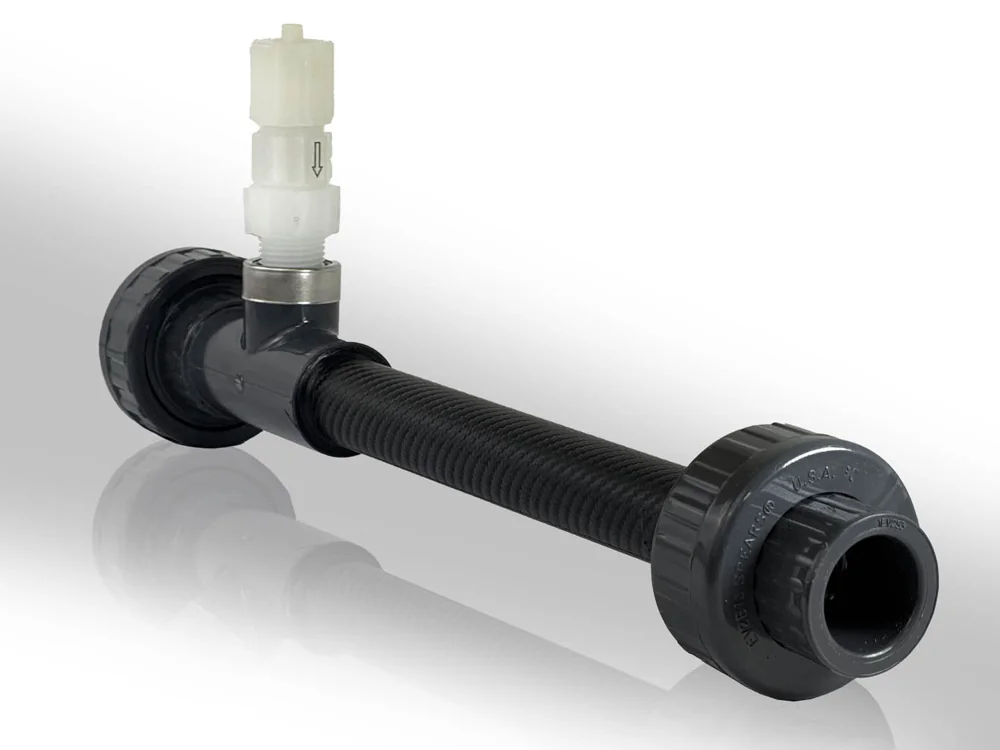
In a peer-reviewed 2026 study in Agricultural Water Management, led from Arizona State University with co-authors at the University of Maine and a researcher at NASA Johnson Space Center, oxygen nanobubbles delivered through a Gaia UFB generator improved lettuce germination, leaf growth, and biomass while cutting water use by about 23% (Morón-López et al., Agricultural Water Management, Vol. 325, 2026). The study focused on germination and early plant development rather than full-cycle yield.
For growers running a recirculating hydroponic system, the practical question is whether dissolved oxygen can stay at target levels without adding heat or extra maintenance. Nanobubble aeration is designed to answer that question directly. Aquadei’s guide to integrated aquaculture hydroponic systems and why oxygen wins explores how this technology fits into larger growing operations.
Schedule An Oxygen Strategy Call
Frequently Asked Questions
Recirculating Vs Drain-To-Waste Hydroponics
Recirculating systems save water and nutrients and require tighter process control. Daily monitoring of pH, EC, water temperature, and dissolved oxygen, plus scheduled full reservoir changes and sanitation between cycles, keeps the shared reservoir stable. Drain-to-waste systems avoid recirculating pathogens and prevent EC drift from selective nutrient uptake, but they increase water and nutrient cost and create discharge that must be handled. Research comparing closed-loop and open systems in commercial greenhouses found that closed-loop designs achieved higher yield per square meter and higher gross margin per square meter for both tomato and cucumber, along with higher energy use and a greater chance of unfavorable gross margin outcomes for some crops. The better choice depends on crop value, disease pressure, water cost, and the grower’s capacity to maintain consistent monitoring and sanitation.
Keeping Dissolved Oxygen High In A Shared Reservoir
Keep water temperature below 72°F (22°C), because warmer water holds less oxygen and speeds pathogen growth, as described earlier. Run aeration continuously so dissolved oxygen does not fall overnight while water may warm. Size air pumps at a minimum of 1 watt per gallon of reservoir volume and use fine-pore air stones, replacing them every 2 to 3 months as mineral scale and biofilm clog their pores. Keep the reservoir covered and light-sealed, because algae consume dissolved oxygen overnight when photosynthesis stops. For growers who need higher transfer efficiency and longer oxygen retention without extra heat or mechanical complexity, nanobubble aeration such as Aquadei’s Gaia UFB technology dissolves oxygen at the nanoscale, where bubbles persist in solution for weeks and distribute through the full water column.