Key Takeaways
- Vertical farm water reuse relies on a closed-loop treatment train that captures, filters, disinfects, and recirculates irrigation water to cut fresh-water demand and nutrient waste.
- Each treatment stage, including filtration, disinfection, and water-quality adjustment, targets specific contaminants, while dissolved salts continue to build up over repeated cycles.
- Salt and contaminant buildup is controlled with deliberate bleed-off and periodic ion-specific testing, because EC alone cannot show nutrient imbalances.
- HVAC condensate recovery provides a low-EC make-up water source in stacked vertical systems, once it is conditioned and disinfected.
- Aquadei supplies nanobubble technology that raises dissolved oxygen at the root zone, supports pathogen suppression, and fits alongside existing filtration and UV stages.
Talk To Aquadei About Your System
Who This Guide Is For And What You Need To Know First
This guide speaks to controlled-environment agriculture engineers, vertical farm operators, and sustainability leads who design, specify, or troubleshoot recirculating systems. It assumes basic hydroponic knowledge and focuses on treatment and water-management decisions that general how-to guides often skip.
Key terms used throughout:
- Closed-loop water recirculation: a system where drainage from the root zone is captured, treated, and returned to the crop instead of discharged.
- Drainage return: the physical collection of unused nutrient solution from channels, trays, or growing beds back to a holding tank.
- Bleed-off: the deliberate discharge of part of the recirculating solution to keep salt and contaminant levels below damaging thresholds.
- Electrical conductivity (EC): a measure of total dissolved ion concentration in the nutrient solution, used as a proxy for overall salt load.
- Nutrient solution: water amended with fertilizer salts to supply the crop’s mineral requirements.
- HVAC condensate: water recovered from air-conditioning and dehumidification equipment as moisture is removed from the growing environment.
- Brine or reject stream: the concentrated waste stream produced when membrane treatment such as reverse osmosis purifies recirculating water.
- Nanobubbles (ultra-fine bubbles under the ISO standard): gas bubbles under 1 micron in diameter that stay suspended in water for weeks to months instead of rising and off-gassing; Aquadei engineers its bubbles to 100 nanometers or below.
Vertical farms are stacked, climate-controlled, and often located in urban or arid regions. That setup changes the water balance and creates a strong condensate recovery opportunity compared with a conventional greenhouse. A sealed growing room with active dehumidification can produce a condensate stream that is generally low in dissolved solids and EC and can be captured and reused. Its quality varies by location and operating conditions, so it needs assessment and treatment before use. This is a distinct advantage over open or semi-open systems. Practices vary by crop, system type, scale, and geography, and regulatory requirements differ by jurisdiction.
How A Vertical Farm Water-Reuse System Works: The Treatment Train
A closed-loop system functions as a treatment train, not a single tank. Each stage removes specific contaminants and leaves others in place. Knowing what each step removes and what it leaves behind forms the basis of a reliable system.
Step 1: Irrigation And Delivery
Nutrient solution flows to the root zone. The delivery method, such as nutrient film technique (NFT), deep water culture (DWC), aeroponic misting, or ebb and flow, determines how much solution the crop takes up versus how much returns as drainage. NFT and DWC recirculate by design, while aeroponic and ebb-and-flow systems can run as either recirculating or once-through. Delivery method also shapes how much oxygen reaches the root zone, which affects plant performance and pathogen pressure.
Step 2: Drainage Collection And Return
Unused solution and drainage are captured, screened for root debris and particulates, and returned to a holding tank. This point closes the loop. The holding tank is also where contaminants begin to build up, because every pass through the root zone leaves behind what the crop did not absorb.
Step 3: Filtration
Mechanical filtration with screens, media, or membranes removes suspended solids and organic load. Filtration is essential before disinfection because turbidity shields microorganisms from UV radiation and weakens oxidative treatments. Filtration does not remove dissolved salts, sodium, chloride, or other ions. It targets the particulate fraction only.
Step 4: Disinfection
UV, ozone, or other validated disinfection methods reduce microbial risk in the recirculating solution. UGA Extension Bulletin 1595 lists UV sterilization, ozonation, and chemical sanitizers as water treatment tools in recirculating hydroponic systems that lower pathogen inoculum levels. It frames them as parts of an integrated disease-management program. UV systems have no residual effect after the reactor, so microorganisms downstream of the lamp do not encounter a lasting disinfectant. Ozone needs correct sizing, ozone-safe components, and off-gas management. Neither UV nor ozone removes dissolved salts.
Step 5: Water-Quality Adjustment And Reuse
Operators correct pH, EC, and nutrient balance before the solution returns to the crop. UGA Extension Bulletin 1595 describes this as the fertigation stage, where concentrated stock solutions are injected using proportional dosers and EC tracks total dissolved salts. Repeated reuse causes nutrient imbalance because the crop takes up water and individual nutrients at different rates, so EC alone does not reveal actual composition.
Discuss Your Treatment Train Design
The Water Streams In A Vertical Farm
Now that the treatment train stages are clear, the next step is to look at what actually flows through them. A vertical farm handles several distinct water streams, and each one carries different contaminants. Managing these streams separately underpins an effective reuse program. The table below shows each stream, how it is usually handled, and what it carries so you can see which flows can re-enter the nutrient circuit and which must stay separate.
| Water Stream | Typical Handling | What It Carries |
|---|---|---|
| Unused nutrient solution | Returned to holding tank via drainage collection and screened for debris before re-entry to the treatment train | Dissolved nutrients, accumulated salts, sodium, chloride, organic matter, potential pathogens |
| Drainage from root zone | Captured in collection channels or trays, then filtered and disinfected before recirculation | Root exudates, organic load, suspended solids, microbial inoculum |
| HVAC condensate and dehumidifier water | Collected separately, assessed for quality, filtered, and conditioned before use as make-up water or nutrient solution base | Very low dissolved solids and EC, with possible metals, dust, or microbial load depending on collection route; HVAC Laboratory guidance recommends filtration and UV sterilization before reuse |
| Wash water | Treated as a separate waste stream and not returned to the nutrient circuit without assessment | Cleaning residues, detergents, sanitizers, organic matter |
| Sanitary wastewater | Discharged to municipal sewer and never recirculated | Human waste, pathogens, and other contaminants in a separate regulatory category |
| Brine or reject stream | Managed as a concentrated waste, with disposal options set by local regulation and volume | Concentrated salts, sodium, chloride, and other ions removed during membrane treatment |
Condensate recovery plays a major role in stacked, climate-controlled vertical systems. HVAC Laboratory reports that a mature leafy-green canopy transpires 0.5 to 1.5 litres of water per square metre per day, and dehumidification equipment must remove that moisture. The resulting condensate is low in dissolved solids. A 2026 study at Universidad Veracruzana measured mean EC of 79 µS/cm and mean TDS of 58 mg/L in recovered HVAC condensate, which makes it a viable make-up water source after conditioning. It still needs nutrient dosing and pH adjustment before serving as a complete nutrient solution.
The Three Reuse Pathways In Vertical Farming
Vertical farms reuse water through three main pathways, and each pathway has its own treatment needs. Two pathways recirculate nutrient solution directly, while the third recovers water that would otherwise leave the system as vapour.
- Hydroponic And Aeroponic Recirculation: Nutrient solution is captured after each pass through the root zone and returned through the treatment train. This pathway dominates in commercial vertical farms. The treatment train described earlier applies directly, with filtration, disinfection, water-quality adjustment, and return to the crop.
- Aquaponics: Water is shared between fish and plants. Fish waste supplies nutrients to the crop, and plant uptake purifies the water for the fish. The treatment train must also handle ammonia and suspended solids from fish production. A 2026 review in Frontiers in Sustainable Food Systems reports that aquaponic systems can reach 95% nutrient recovery rates but face challenges with nutrient balancing, disease management, and water-quality monitoring.
- Condensation And Vapour Recovery: HVAC condensate and dehumidifier water are captured and reused, usually as make-up water that replaces losses from transpiration and bleed-off. A 2026 study in Frontiers in Sustainable Cities proposes a conditioning sequence for recovered condensate that includes collection, covered equalization or storage, mechanical filtration, UV disinfection, nutrient conditioning, and EC and pH monitoring before distribution. The condensate needs this conditioning before it can serve as a nutrient solution base.
How To Manage Salt And Contaminant Accumulation In A Closed Loop
Salt and contaminant accumulation follows a simple pattern. The crop takes up water and nutrients, and it absorbs each nutrient at a different rate. Water leaves the system through transpiration, while dissolved salts, sodium, chloride, and other slowly absorbed ions remain. Their concentration rises with each recirculation cycle. EC climbs, and if nothing changes, the solution eventually becomes phytotoxic.
Texas A&M AgriLife Extension (HORT-PU-164) demonstrated this in NFT experiments. Sodium and chloride steadily increased in recirculating tanks topped off with tap water, and higher Na and Cl levels in the source water produced higher accumulation in the final solution. The same research found that potassium dropped to zero when tanks were topped off with RO or tap water. pH drifted upward to about 7.5 over 19 days, outside the 5.5–6.5 target range that UGA Extension Bulletin 1595 identifies as optimal for nutrient availability.
The primary remedy is bleed-off, which means discharging part of the recirculating solution and replacing it with fresh water and nutrients. Bleed-off dilutes accumulated ions and pulls the solution back toward a manageable composition. Bleed-off also creates a new stream that needs handling. When membrane treatment such as reverse osmosis purifies recirculating water, it produces a concentrated brine or reject stream that operators must manage separately from the main loop.
Every closed loop has an opening point, and that opening is both a cost and a regulatory consideration. The volume and composition of the bleed-off stream shape disposal options, which vary by jurisdiction. Nutrient solution should not enter storm drains, streams, or ponds, as multiple extension sources explain.
EC works well as a quick monitoring tool, yet it gives a weak picture of actual composition. Texas A&M AgriLife Extension notes that EC measures total ion concentration rather than individual ions and that adjusting nutrient solutions based on EC alone leads to nutrient imbalance over time. Periodic ion-specific analysis, measuring sodium, chloride, potassium, nitrate, phosphorus, calcium, and magnesium individually, provides the only reliable view of what is accumulating and what is depleting.
Water-Quality Parameters To Monitor In A Recirculating System
UGA Extension Bulletin 1595 recommends tracking dissolved oxygen alongside EC, pH, relative humidity, vapor pressure deficit, CO2, air and root-zone temperature, light intensity, and photoperiod as environmental parameters that influence plant health and pathogen development in CEA systems. The 2026 Water review by Makumbe et al. adds microbial indicators and biofilm monitoring to this list.
pH directly controls the chemical solubility of essential elements. In hydroponic nutrient solutions, micronutrients such as iron, manganese, copper, zinc, and boron become less available at pH above 6.5. The exact threshold can shift with chelate stability and other factors. When pH falls below the optimum range of 5.5 to 6.5, some nutrients become too available and can reach toxic levels. Repeated reuse tends to push pH upward, as the Texas A&M NFT experiments showed.
EC shows total salt load but not composition. It rises as ions accumulate and falls as the crop takes up nutrients faster than they are replenished. Neither direction reveals which specific ions sit out of balance.
Dissolved oxygen at the root zone is a critical and often undermonitored parameter. University of Missouri Extension describes more than 6 ppm as optimum for hydroponic production, while Virginia Cooperative Extension cites 7–10 ppm as an optimal management range and 4 ppm as a minimum. Insufficient dissolved oxygen limits growth directly and creates conditions that favour root-zone pathogens. Aerobic root zones naturally suppress Pythium and related oomycetes, while anaerobic conditions support them.
This focus on dissolved oxygen and biological stability leads directly to nanobubble technology. Filtration removes solids, and UV reduces microbial risk, yet neither stage manages dissolved oxygen at the root zone or the oxidative environment that keeps the loop biologically stable.
Where Nanobubble Technology Fits In Vertical Farm Water Reuse
The previous section highlighted dissolved oxygen at the root zone as a critical but often undermonitored parameter. That gap, along with the need for a stable oxidative environment, is where nanobubble technology fits. Aquadei owns the Gaia technology. Its UFB generator produces billions of nanobubbles at 100 nanometers or below, roughly ten times finer than the ISO 20480-1:2017 ultrafine bubble threshold of 1 micron. These bubbles stay suspended in water for weeks to months instead of rising and off-gassing. Because they do not rise quickly, they spread through the water column and deliver gas where it is needed instead of escaping at the surface like conventional aeration bubbles.
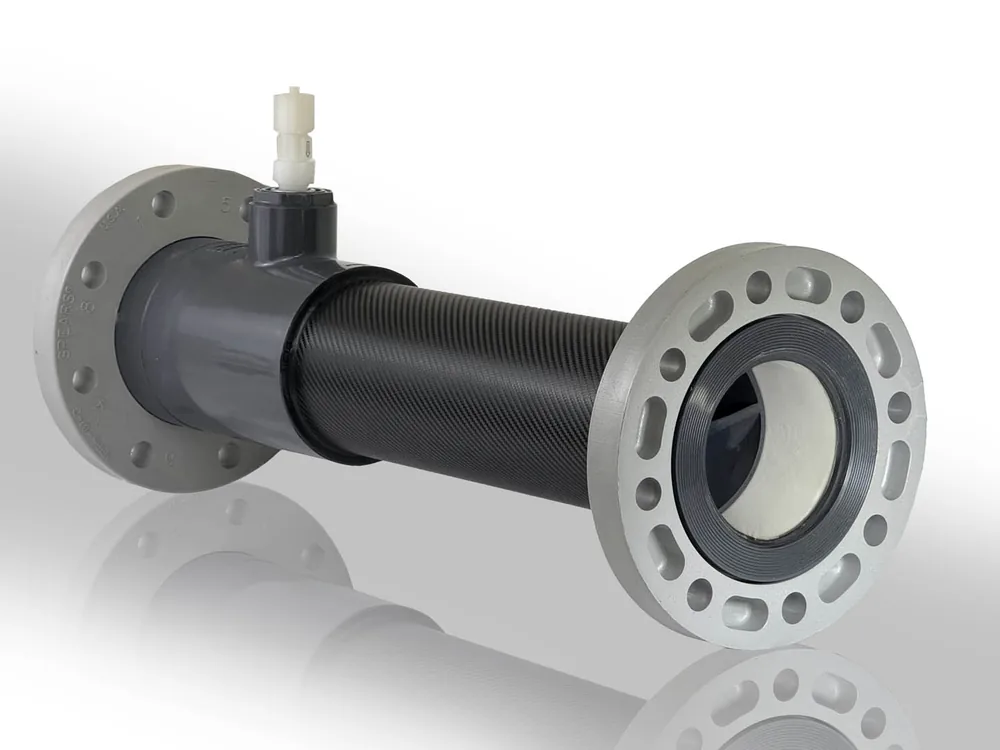
In a vertical farm water-reuse loop, nanobubble technology addresses dissolved oxygen at the root zone, oxidation support, and management of the organic and biological load that make closed-loop reuse challenging over time. Aerobic root zones naturally suppress root-zone pathogens without heavy chemical use. Nanobubble oxygen delivery supports that aerobic environment continuously. Mechanical aeration can also raise dissolved oxygen, yet it adds heat, noise, and maintenance.
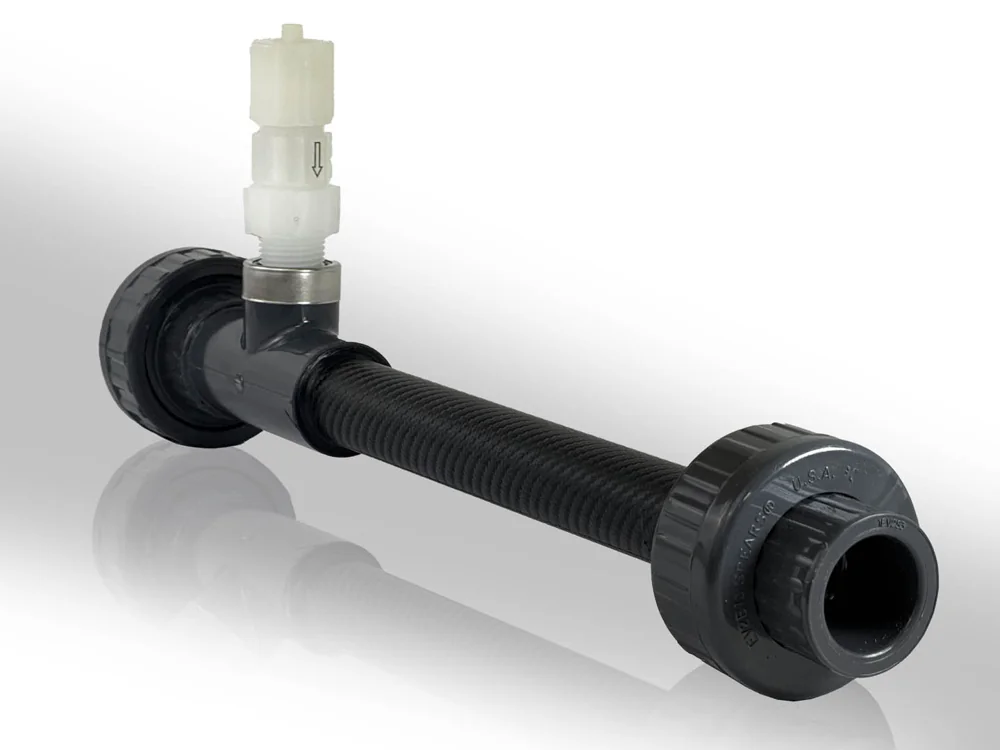
The evidence base for this application is documented and citable. Independent bubble production at the 100-nanometer scale was confirmed at the University of Osaka’s photonics laboratory in August 2016. A peer-reviewed 2026 study in Agricultural Water Management (Vol. 325) tested a Gaia UFB-75 generator on lettuce. The study, led from Arizona State University with co-authors at the University of Maine and NASA Johnson Space Center, found improved germination, leaf growth, and biomass. Water use dropped by approximately 23% with oxygen nanobubbles and approximately 21% with CO₂ nanobubbles. The study focused on germination and early plant development rather than a full crop cycle.
A peer-reviewed 2024 study in the Journal of Environmental Engineering tested a Gaia Water UFB 100 generator. The work came from the University of Florida’s Indian River Research and Education Center, with a USDA Agricultural Research Service co-author. The generator raised dissolved oxygen to an average of 35.23 mg/L, with a time to peak of 17 minutes on average. It held oxygen above Florida’s 5 mg/L environmental minimum for 6 to 15 days across stormwater, groundwater, and agricultural drainage water in 100-litre greenhouse tanks.
Nanobubble technology works alongside filtration, UV, and nutrient management. It supports aerobic root zones, helps suppress root-zone pathogens, and improves gas transfer and oxidation support without replacing the existing treatment stages. It fills the stage of the train that handles what the other stages leave behind.
Aquadei develops its technology with more than 15 universities and government labs and runs an in-house characterisation laboratory to verify what its systems produce.
Explore Nanobubbles For Your Loop
How Much Water Can A Vertical Farm Reuse?
The commonly cited 70–95% water savings range for closed-loop hydroponic and aeroponic systems compares closed recirculating systems with open-field or conventional soil production. It does not guarantee performance for every facility. A 2026 review in Frontiers in Sustainable Food Systems reports this range across hydroponic and aeroponic systems and notes that savings depend strongly on system design, crop type, and operational scale. The EU-funded LIFE FARMITANK project reported up to 98% water reduction for specific crops such as lettuce, basil, and microgreens in a defined facility design. That result reflects a project-specific life-cycle assessment and should stay tied to the named crops and system boundary.
The effective reuse rate depends on how much water leaves through transpiration, bleed-off, cleaning, and evaporation, compared with how much condensate the system recovers. In stacked, climate-controlled vertical systems, condensate recovery can raise the effective reuse rate significantly because dehumidification produces a continuous, low-EC water stream that would otherwise be discharged. The ceiling comes from the system’s ability to manage accumulating salts. A loop that cannot control EC through bleed-off and make-up water management will fail before it reaches its theoretical maximum reuse rate.
The Regulatory Line: Irrigation Recirculation Vs. Reclaimed Wastewater
Internal irrigation recirculation, where water is captured and reused within the same growing system, differs conceptually and legally from reuse of treated municipal wastewater. This distinction determines whether a facility operates a process-water loop or participates in a regulated recycled-water program.
In the United States, no single federal standard governs water reuse. The EPA publishes guidelines, while binding rules sit at the state level. California Title 22 is a leading state-level model and treats recycled water according to treatment level and intended use. A vertical farm using municipal recycled water must meet the relevant recycled-water quality category before use and may also need controls for distribution, cross-connections, monitoring, disinfection reliability, and chemical constituents. The EPA’s 2012 Guidelines for Water Reuse state that they do not impose legally binding requirements on any state, local, or tribal government.
Regulators focus on the pathway from water to people and whether that pathway is adequately broken. Exposure risk drives the applicable quality class. Spray-irrigated raw-eaten crops require the highest treatment level, while drip-irrigated processed crops can operate under less stringent classes. Requirements vary by jurisdiction, so each facility should confirm the applicable framework with its state or local authority before choosing a treatment train.
Troubleshooting Common Problems In Vertical Farm Water Reuse
Rising EC And Salt Accumulation
- Early warning: EC climbs steadily between top-ups even when the crop appears to grow normally.
- Likely cause: Sodium, chloride, or other slowly absorbed ions accumulate in the recirculating solution, or the make-up water has high baseline EC.
- Investigation: Test individual ions instead of relying on EC alone so you can see whether the issue comes from accumulation in the loop or from source water.
- Correction: Increase bleed-off rate and replace volume with lower-EC make-up water. If source-water EC is high, assess its quality and consider RO pre-treatment.
Root-Zone Pathogen Pressure
- Early warning: Root browning, slime, or a sour smell from the reservoir, along with wilting despite adequate solution.
- Likely cause: Pythium or related oomycetes enter the loop through contaminated water, substrate, or plant material and spread through the recirculating system. UGA Extension Bulletin 1595 notes that once a pathogen enters a CEA system it becomes very difficult to manage, so prevention matters most.
- Investigation: Check dissolved oxygen at the root zone, confirm that disinfection is functioning, and inspect for biofilm in lines and tanks.
- Correction: Restore aerobic conditions, review UV lamp age and sleeve condition, and consider adding dissolved oxygen support such as nanobubbles to the treatment train.
Biofilm In Lines And Tanks
- Early warning: Visible slime on channel walls, pump housings, or tank surfaces, along with intermittent microbial spikes in water testing.
- Likely cause: Organic load accumulates in low-flow zones and provides substrate for biofilm formation. The 2026 Water review by Makumbe et al. identifies biofilm as an underexplored hazard pathway because bacteria in biofilms resist chemical disinfection and act as persistent reservoirs.
- Correction: Carry out deep sanitation between crop cycles, review circulation design for dead legs, and increase monitoring frequency.
Nutrient Imbalance
- Early warning: Deficiency symptoms appear in the crop despite acceptable EC, and pH drifts outside the 5.5–6.5 target range.
- Likely cause: Differential uptake depletes some ions while others accumulate. Texas A&M AgriLife Extension found potassium depleted to zero in 19-day NFT experiments while other ions accumulated.
- Correction: Run ion-specific testing and adjust the replenishment formula instead of topping off with full-strength nutrient solution.
Brine Or Reject Stream Disposal
- Early warning: The membrane system produces a reject stream with no defined disposal pathway, or the local authority raises questions about discharge.
- Likely cause: Membrane treatment generates a concentrated waste stream that exceeds sewer or land-application limits.
- Investigation: Characterise the reject stream composition and confirm local discharge requirements.
- Correction: Reduce membrane throughput if appropriate, explore evaporation or crystallisation options, and consult the local authority on permitted disposal routes.
Get Help Troubleshooting Your Loop
How To Measure Whether Your Reuse Loop Is Working
Clear indicators of a functioning reuse loop include stable EC and pH between crop cycles, dissolved oxygen consistently above the root-zone minimum, clean microbial testing results from reservoir and return-water samples, water use per unit of yield trending downward or holding steady, and bleed-off volume staying within a manageable share of total water input.
Practical tracking involves keeping logs of source-water EC, reservoir EC before and after top-up, water volume added, pH, dissolved oxygen readings, and microbial test results at consistent sampling points and times. Single EC spikes or one-off pH excursions matter less than patterns across multiple crop cycles. Longer-term trends show whether the loop drifts toward accumulation or stays within the target range.
The 2026 Water review by Makumbe et al. recommends monitoring reservoir and return-water microbiology, biofilms, treatment efficacy, water turnover, pH, EC, temperature, turbidity, and points where contaminants enter or leave the system.
Advanced Considerations And Iteration
Once the core treatment train runs reliably and the monitoring program produces consistent trend data, advanced refinements become worthwhile. Automation and sensor integration with real-time EC, pH, dissolved oxygen, and turbidity monitoring plus automated dosing responses shorten the lag between a water-quality excursion and corrective action. A 2026 Frontiers in Sustainable Food Systems paper reports fertilizer reductions of up to 24% in hydroponic systems when nutrient dosing follows real-time EC and pH control instead of fixed schedules.
Scaling the loop introduces new challenges. Larger water volumes take longer to turn over through the treatment train. Biofilm risk rises with pipe length and surface area. Condensate recovery volumes may not scale in a straight line with growing area. Each factor needs reassessment rather than a simple scale-up from a smaller system.
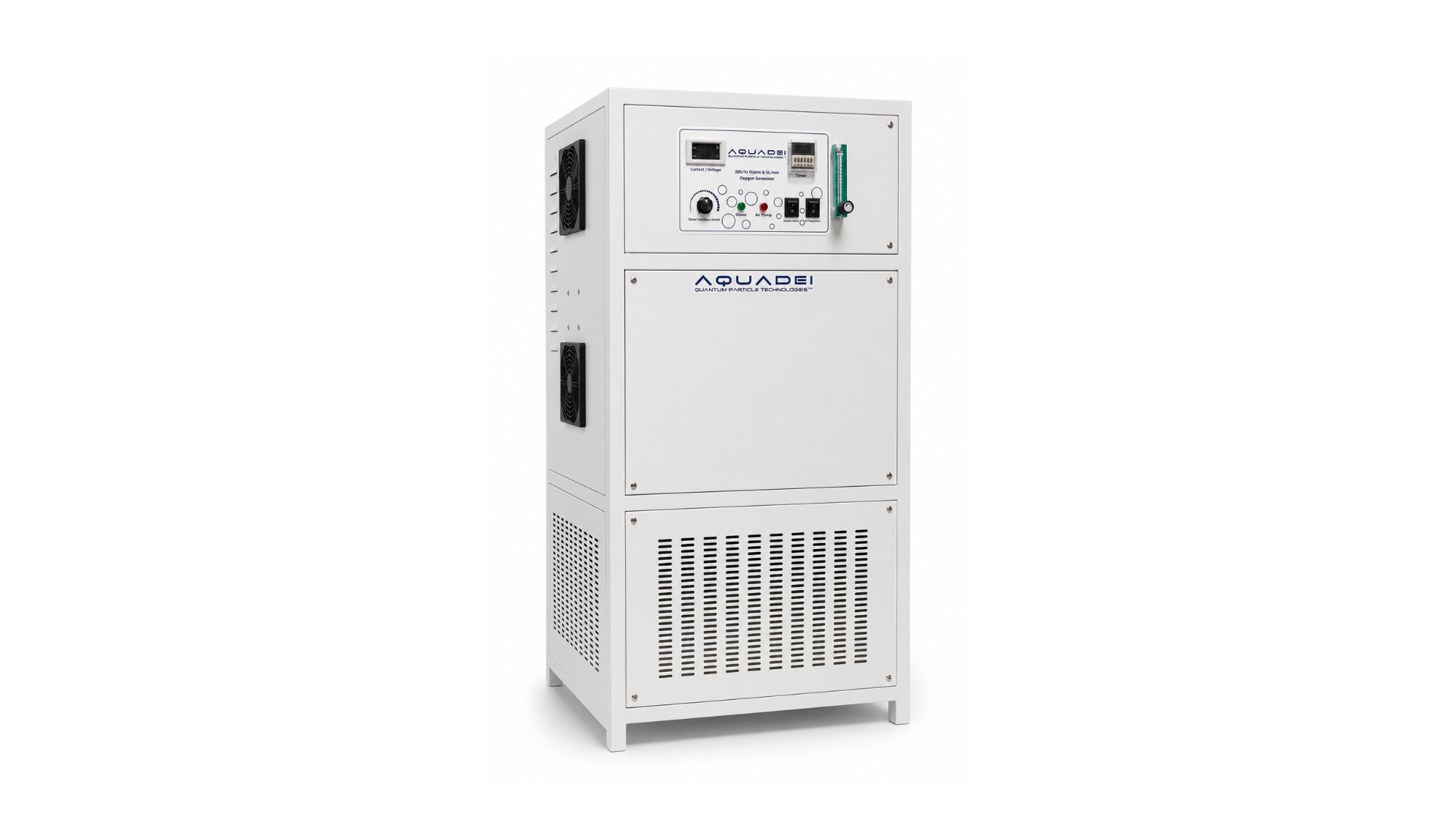
Integrating nanobubble generation into existing irrigation and holding-tank infrastructure usually works as a retrofit. Aquadei’s UFB generator is plumbed inline into the existing water circuit, operating alongside filtration, UV, and nutrient dosing without replacing them. The right time to move into advanced practices is when the system shows a stable, documented baseline. A loop that consistently hits its EC, pH, dissolved oxygen, and microbial targets is ready for optimisation. A loop that misses those targets needs the fundamentals tuned first.
Plan Your Next Upgrade With Aquadei
Frequently Asked Questions
What Reuse Rate Is Realistic For A Vertical Farm?
As discussed earlier, the commonly cited range is 70–95% compared with open-field agriculture, with some projects reporting higher values. The actual figure for any facility depends on crop type, system design, climate, bleed-off rate, and condensate recovery. Condensate recovery in stacked, climate-controlled systems can raise the effective reuse rate by capturing moisture that would otherwise be discharged.
Does Recirculated Nutrient Solution Need Disinfection?
Yes. Recirculating systems concentrate organic load and create conditions that favour pathogen buildup. UGA Extension Bulletin 1595 lists UV sterilization, ozonation, and chemical sanitizers as water treatment methods that reduce pathogen inoculum levels. As noted earlier, UV has no residual effect after the reactor, so microorganisms in biofilms downstream can recontaminate the solution. Prefiltration to reduce turbidity is required before UV treatment to ensure adequate dose delivery. Disinfection works as one part of an integrated disease-management program.
How Is Salt Accumulation Managed In A Closed-Loop System?
Salt accumulation is managed through deliberate bleed-off, where part of the recirculating solution is discharged and replaced with fresh water and nutrients. The bleed-off rate is set by tracking EC and individual ion concentrations over time. As discussed earlier, EC alone is insufficient because it measures total ion load rather than the balance of specific nutrients. Periodic ion-specific testing is the only reliable way to see which ions accumulate and which deplete. Every closed loop includes an opening point through bleed-off or reject stream discharge.
Can A Vertical Farm Reuse HVAC Condensate And Dehumidifier Water?
Yes, with appropriate treatment. Condensate from climate-control equipment is generally low in dissolved solids and EC, which makes it a strong make-up water candidate. It still needs nutrient conditioning and pH adjustment before serving as a complete nutrient solution, and it should pass through filtration and disinfection to manage any metals, dust, or microbial load picked up along the collection route.