Key Takeaways
- Large ponds stratify in summer, so deep layers lose oxygen and drive algae, muck, odors, and fish kills.
- Bottom-diffused systems suit ponds deeper than 8 feet, surface aerators suit shallower water, and solar systems serve remote sites.
- Accurate sizing uses pond volume at about 1.5 CFM per acre-foot, then adjusts for depth, fish load, nutrients, and climate.
- Nanobubble oxygenation restores dissolved oxygen efficiently in large, deep ponds and requires minimal maintenance.
- Aquadei offers advanced nanobubble systems and free consultations to match each pond with the right solution.
Contact Aquadei For A Free Consultation
Why Large Ponds Lose Oxygen Faster
Thermal stratification drives most oxygen problems in large, deep ponds. As solar energy heats the surface, water density decreases, and a warm upper layer, the epilimnion, forms above the cooler, denser hypolimnion. Penn State Extension notes that these layers can remain unmixed for days or longer during calm summer weather, and that pond water at 80°F holds only around 8 mg/L of dissolved oxygen compared with over 12 mg/L at 40°F.
The bottom layer receives little light and no wind mixing. Organic matter such as fish waste, leaf litter, and dead algae settles there and decomposes. Aerobic bacteria consume the remaining oxygen. Over weeks, the hypolimnion becomes anoxic. When a storm or cold front collapses the density gradient, oxygen-poor bottom water mixes upward and fish can suffocate within hours. Texas A&M AgriLife Extension identifies ponds with a mean depth greater than 12 feet as particularly prone to this cycle, and recommends 24-hour aeration during warm months to prevent stratification.
Deoxygenation also appears at global scale. The global ocean lost more than 2% of its oxygen between 1960 and 2010 (Schmidtko, Stramma & Visbeck, Nature, 2017). An analysis of 45,148 profiles across 393 temperate lakes found freshwater oxygen declining 2.75 to 9.3 times faster than in the oceans (Jane et al., Nature, 2021). Large-pond owners therefore need a way to restore oxygen at scale before the deficit turns into visible and costly damage.
For a deeper comparison of aeration and chemicals, see Pond Aeration Vs. Chemicals: Which Solution Wins?, which explains how aeration addresses root causes that chemical treatment cannot.
Get A Large-Pond Aeration Assessment
The Four Conventional Aeration System Types
Conventional aeration systems target different parts of the water column and fit different pond profiles. The table below summarizes the main options.
| System Type | Best Depth Range | Power Requirement | Primary Goal Served |
|---|---|---|---|
| Bottom-Diffused | Deeper than 8 ft; effective to 40+ ft | Grid power; rocking-piston compressor for depths beyond 8 ft | Full water-column oxygenation and destratification |
| Surface Aerator | 1–6 ft; limited benefit beyond 6 ft | Grid power; 120V or 240V motor | Emergency oxygen relief; surface circulation |
| Fountain | Top 2–3 ft only | Grid power; submersible pump | Visual amenity; incidental surface oxygenation |
| Solar-Powered (bottom-diffused) | Up to ~30 ft; output limited by sun hours | Solar panels; no grid connection required | Off-grid destratification; remote site aeration |
| Nanobubble Oxygenation | Full column, including deepest zones | Grid or generator; inline UFB generator skid | High-efficiency dissolved oxygen restoration at scale |
Bottom-diffused systems set the standard for ponds deeper than about 8 feet. A shore-mounted compressor pumps air through weighted tubing to diffusers on the pond floor. Rising bubbles create a lifting current that circulates the entire water column, breaks the thermocline, and delivers oxygen where the deficit actually develops. Pond Haven’s sizing guide notes that surface aeration systems oxygenate only the top 4–5 feet of the water column, so they cannot correct deep oxygen depletion regardless of horsepower.
Surface aerators move large volumes of water across the air-water interface. They work best in ponds shallower than 6 feet or as emergency oxygen relief. PondTalk’s aeration guide reports that surface aerators outperform bottom diffusers in water less than 4 feet deep, where diffuser bubbles have too little vertical travel to build strong circulation.
Fountains mainly provide visual appeal. Penn State Extension states that fountains serve a mostly decorative function and add dissolved oxygen only to surface layers. In ponds deeper than 6 feet where fish health or algae control is the main goal, a fountain functions as a supplement, not a primary aeration system.
Solar-powered bottom-diffused systems fit remote ponds without grid access. Their output follows sun hours, typically 6–10 hours per day under good conditions, with reduced performance on cloudy days. Pond Haven notes that solar aeration operates most effectively in water 10 feet deep or less, because greater depth increases backpressure, demands more motor energy, and shortens motor life. Ponds that need 24-hour aeration during warm months usually require solar plus batteries or a grid backup.
How To Size A Pond Aerator For Acreage And Depth
Accurate sizing starts with pond volume, not the acreage rating printed on a box. Two ponds with the same surface area can need very different systems once depth, fish load, nutrient input, and climate enter the picture.
The widely used field baseline is about 1.5 CFM per acre-foot of pond volume, targeting at least one complete pond-volume turnover per 24 hours. Acre-feet equals surface area in acres multiplied by average depth in feet. A 2-acre pond averaging 10 feet deep holds 20 acre-feet and needs a minimum of 30 CFM at the diffuser, not at the compressor outlet.
Compressor nameplate CFM uses zero backpressure, so real output drops with depth. Every 2.31 feet of water depth adds roughly 1 PSI of backpressure. A compressor rated at 4 CFM at zero backpressure may deliver less than 2 CFM against the pressure of a 10-foot water column. Equipment selection therefore needs the manufacturer’s pressure-rated CFM curve.
Adjust the baseline upward for:
- Greater depth, because deeper ponds require more CFM to achieve the same turnover rate
- Heavier fish loads, where FarmerGrows applies a 1.5× multiplier for heavy koi or catfish and up to 1.9× for intensive grow-out
- Higher nutrient input from runoff, feeding, or organic buildup, where PondTalk recommends 3.0–4.0 CFM per acre for high-BOD ponds
- Warmer climates, where FarmerGrows applies a 1.22× multiplier for 78–90°F water and 1.48× above 90°F
- Higher elevation, because lower atmospheric pressure requires more air volume to reach the same dissolved oxygen level
Pond shape also guides diffuser placement. A single central diffuser rarely oxygenates a long, narrow, or L-shaped pond evenly. PondTalk notes that shoreline barriers block circulation currents from reaching coves and inlets, which leaves anaerobic dead zones even when total CFM looks adequate. The Yield Grid recommends roughly one diffuser head per surface acre for ponds over 2 acres. Diffusers work best at the deepest accessible points, away from shorelines that short-circuit circulation.
For a cost breakdown of equipment, installation, and upkeep, see Pond Aeration Cost: Equipment, Installation & Maintenance.
Maintenance, Winter Operation, And Power Outages
Real-world ownership involves ongoing checks, seasonal adjustments, and a backup plan. Understanding these needs upfront helps avoid surprises.
Compressor and diffuser maintenance. Pond Haven’s maintenance checklist recommends replacing or cleaning compressor air filters every 6–12 months, checking airline connections for leaks monthly, and cleaning diffuser membranes annually. PondTalk notes that membranes in high-organic ponds often need cleaning or replacement every 3–5 years, because biofilms and mineral deposits clog micro-pores, increase backpressure, and reduce airflow. A pressure gauge at the compressor outlet provides an early warning of clogged diffusers or airline leaks.
Starting a system in a stratified pond. A powerful bottom diffuser that starts at full output in a strongly stratified pond can mix oxygen-poor bottom water into upper layers too quickly and cause an oxygen crash. Pond Haven recommends a 7-day ramp-up schedule: 30 minutes on Day 1, increasing to 24 hours by Day 7. The same gradual approach applies when restarting a system after a long outage.
Winter operation. Requirements shift with climate and ice cover. In freezing regions, Farmstandapp’s winter pond guide recommends relocating diffusers to shallow water about 3–4 feet deep. This placement protects the 39°F refuge layer at the bottom while keeping a surface opening for gas exchange. Texas A&M AgriLife Extension notes that aeration adds little dissolved oxygen below 50°F, so continuous winter operation in cold climates often wastes energy and stresses equipment.
Power outages. A summer-night outage creates the highest risk for managed fish ponds. A power outage can cause oxygen depletion within 2–6 hours, depending on fish density, water temperature, and pond depth. A practical backup plan includes a generator sized to the aeration load, a transfer switch, and a written response checklist that names who starts the backup system and where connections and fuel are located. Monthly load testing of the generator keeps the plan realistic.
Plan Your Aeration Backup Strategy
Aerator Vs. Fountain Vs. Nanobubbles
In ponds deeper than about 6 feet, aerators, especially bottom-diffused systems, treat the full water column and reach the oxygen deficit at depth. Fountains oxygenate only the top 2–3 feet and mainly serve as visual features. The Yield Grid reports that surface fountains cannot safely manage a 14-foot-deep 1-acre pond at any horsepower rating because the limitation comes from physics, not motor size.
For large, deep ponds focused on restoring dissolved oxygen at scale, the aerator-versus-fountain decision often gives way to a third option: nanobubble oxygenation, which replaces the traditional compressor-and-diffuser model.
Aquadei’s Lake & Pond Remediation System produces bubbles at 100 nanometers or below through hydrodynamic cavitation, a process where water accelerates through a restriction, pressure drops sharply, and very small bubbles form. At that scale, four properties shape performance. First, the bubbles do not rise and off-gas like conventional aeration bubbles; instead, they move through the water by Brownian motion. That motion is sustained by a negative surface charge that prevents coalescence and keeps bubbles stable for weeks to months. Because they stay intact, their high internal pressure turns each bubble into a pressurized gas reservoir. When they finally collapse, that stored energy releases as intense localized reactions that generate reactive species capable of oxidizing contaminants.
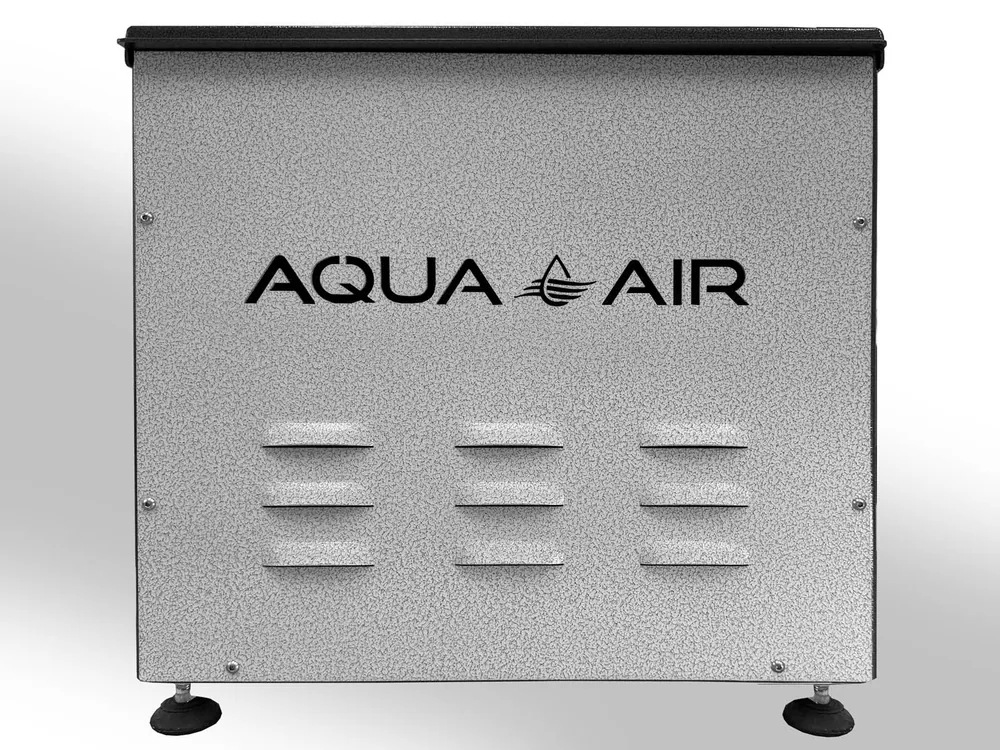
The documented performance of Aquadei’s system for lake and pond remediation stands out in three ways. It delivers up to 95% pure oxygen as nanobubbles with over 90% gas transfer efficiency. Dissolved oxygen can double in real time. Because the bubbles distribute rather than surface, oxygen spreads across large distances, with a documented plume reach of 10–50 meters within an hour. The flow path contains no mechanical moving parts, so the core technology requires essentially no maintenance.
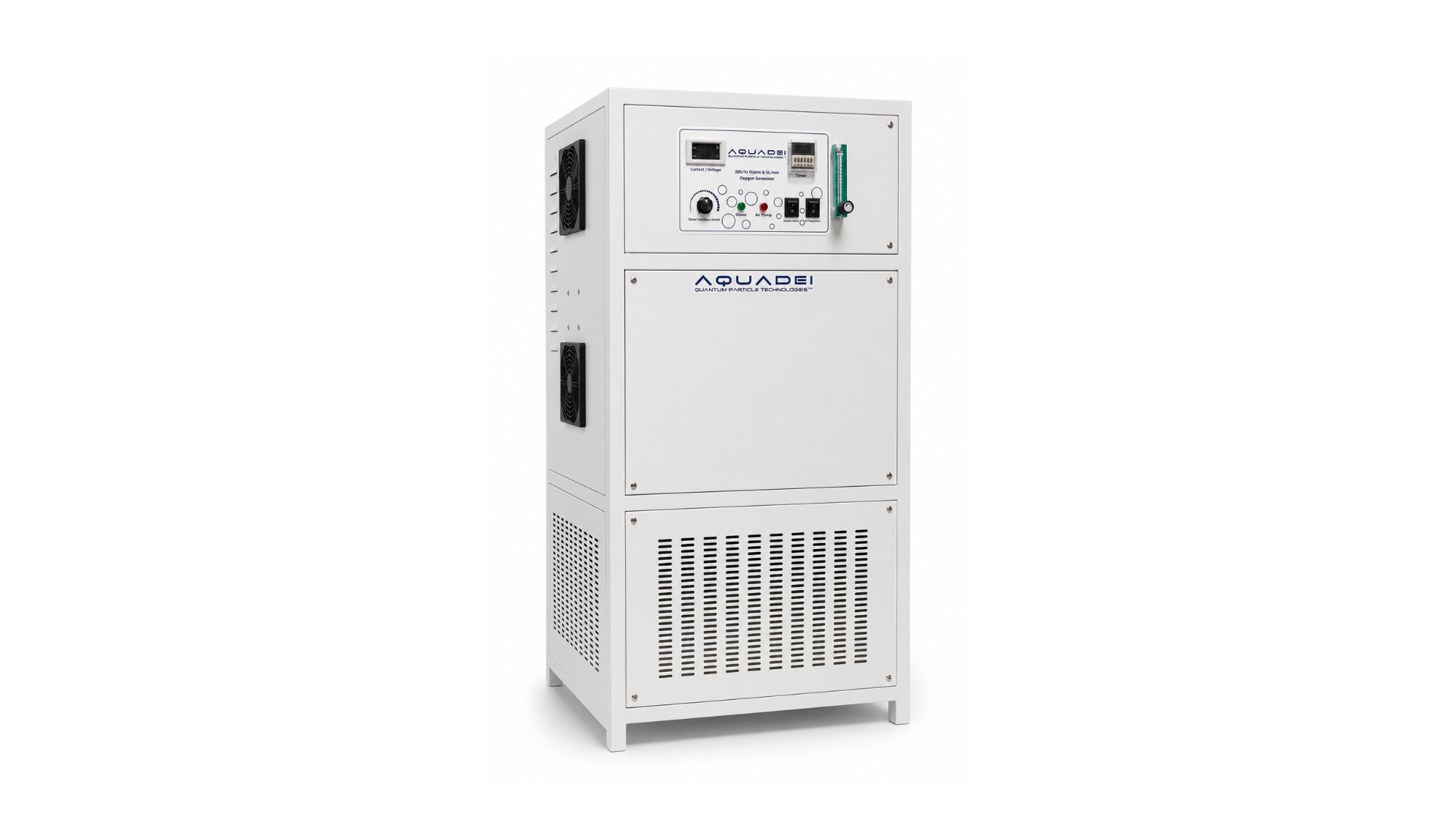
Peer-reviewed research from the University of Florida’s Indian River Research and Education Center, with a co-author at the USDA Agricultural Research Service, tested a Gaia Water UFB 100 ultrafine bubble generator on stormwater, groundwater, and agricultural drainage water and found it raised dissolved oxygen to an average of 35 mg/L in 17 minutes, holding oxygen above the state minimum for 6 to 15 days. Findings belong to the University of Florida and USDA-ARS. Those results came from 100-liter greenhouse tanks using field-collected samples, and the authors present the work as a baseline for applying ultrafine bubble injectors in open water storage systems.
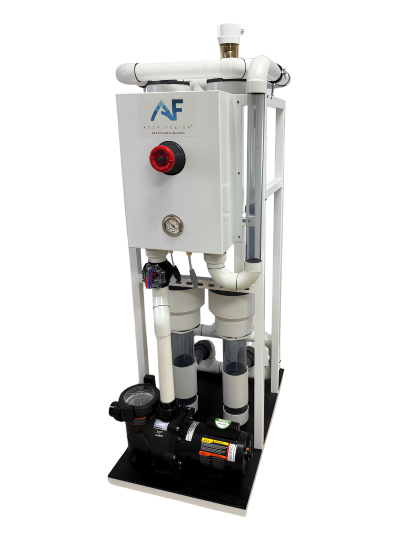
Nanobubble oxygenation still works within practical limits. Very shallow ponds or very tight budgets often favor conventional bottom-diffused systems. Nanobubbles correct the oxygen deficit but do not stop upstream nutrient loading from fertilizer or animal waste. For established algae blooms, the recommended protocol pairs oxygenation with hydrogen peroxide, so bloom treatment still uses a chemical step. Conventional bottom-diffused systems also retain an advantage where strong physical mixing is essential to break a sharp thermocline. PondTalk recommends a hybrid approach for large ponds: run a bottom aerator for several hours a day for vertical mixing while a nanobubble generator runs continuously for oxygenation.
For aquaculture-specific guidance, see How To Oxygenate A Pond: A Decision Guide For Aquaculture.
Decision Matrix: Matching Systems To Pond Profiles
| Pond Profile | Primary Goal | Recommended System Type |
|---|---|---|
| Shallow pond, under 6 ft mean depth, grid power available | Surface oxygenation, circulation | Surface aerator or fountain |
| Pond 6–8 ft deep, grid power available | Fish health, algae reduction | Bottom-diffused aeration (preferred) or surface aerator |
| Pond deeper than 8 ft, grid power available | Fish health, algae control, muck reduction | Bottom-diffused aeration |
| Remote pond, no grid power, under 10 ft deep | Destratification, fish health | Solar-powered bottom-diffused system |
| Large pond, 1–6+ acres, deeper than 8 ft, grid or generator power | Restoring dissolved oxygen at scale, algae and muck remediation | Nanobubble oxygenation (Aquadei Lake & Pond Remediation System) |
| Any pond, tight budget, shallow depth | Basic oxygenation | Conventional bottom-diffused or surface aerator |
| Pond with established algae bloom | Bloom treatment | Nanobubble oxygenation paired with hydrogen peroxide (prescribed protocol) |
Frequently Asked Questions
Can You Put Too Much Aeration In A Pond?
Over-aeration risk appears mainly during startup in a stratified pond. A powerful bottom-diffused system that starts at full output can mix anoxic bottom water and trapped gases into upper layers too quickly and trigger a crash. A gradual ramp-up over one to two weeks, beginning with short daily run times and increasing until continuous operation, keeps mixing controlled. The same care applies when restarting after a long outage during hot, stratified conditions.
How Many Hours A Day Should You Run A Pond Aerator?
Run time depends on depth, season, and water temperature. In shallower ponds, aeration matters most from about an hour before dusk until dawn on warm nights above 66°F, because oxygen solubility drops in warm water and photosynthesis stops at night. Ponds with a mean depth greater than 12 feet may need 24-hour aeration during warm months to prevent stratification. Aeration adds little oxygen below 50°F, so many cooler-climate ponds reduce or pause operation in winter. Dawn dissolved oxygen readings provide the best guide: values above 5 mg/L suggest run time is adequate, while readings below 4 mg/L signal a need for more capacity or longer operation.
Do You Need A Backup For Power Outages?
Ponds managed for fish health benefit from a backup plan. As noted earlier, a summer-night outage can push dissolved oxygen to dangerous levels within a few hours. A generator sized to the full aeration load, a transfer switch installed by a licensed electrician, and a written response plan form a practical package. Monthly load testing and a simple dissolved oxygen monitoring routine keep the plan ready for real events.
How Does Winter Change Aeration Needs?
Winter operation follows water temperature and ice conditions rather than a fixed calendar rule. In freezing climates, many managers move diffusers from deep zones to water about 3–4 feet deep to protect the warm refuge layer while keeping a gas-exchange opening in the ice. In milder climates with little or no ice, aeration often continues at reduced intensity with no change in diffuser placement. When water stays below about 50°F, many systems run fewer hours because biological oxygen demand drops and equipment wear becomes a larger concern.
Conclusion: Match Aeration To Your Pond’s Oxygen Deficit
Effective aeration design for a large pond rests on five variables: depth, acreage, power availability, primary goal, and maintenance capacity. Depth indicates whether bottom-diffused aeration is physically required. Acreage and depth together define volume, which drives CFM needs. Power availability sets the boundary between grid, solar, and generator options. The primary goal, such as fish health, algae control, muck reduction, or visual amenity, determines whether full-column oxygenation or surface circulation matters most. Maintenance capacity then decides whether regular compressor service, diffuser cleaning, and airline inspection fit the site’s staffing and budget.
For large, deep ponds focused on restoring dissolved oxygen at scale, nanobubble oxygenation offers high gas transfer efficiency, broad spatial distribution, and very low maintenance on the core technology. Conventional systems still play a role for shallow ponds, tight budgets, and strong mixing needs, so the best outcome often comes from a tailored combination.
Aquadei owns the Gaia technology and supports pond owners through that selection process. If your pond is turning green, building muck, losing fish, or consuming budget in chemical treatments, Aquadei can review your water body and size a solution that fits its actual oxygen deficit.
Request Your Custom Pond Aeration Plan