
Key Takeaways
- Aeration alone does not clear an active algae bloom. It fixes the oxygen deficit that lets blooms persist and return.
- Correctly deployed oxygenation prevents recurrence by breaking stratification, binding phosphorus at the sediment, and disrupting cyanobacterial buoyancy.
- Undersized or poorly positioned systems can resuspend sediment phosphorus and worsen blooms before they improve.
- Visible clarity gains may appear within weeks. Major ecological shifts usually need several growing seasons plus nutrient management.
- Aquadei is the best algae bloom remediation aeration solution for lake and pond managers facing active or recurring blooms because its Lake & Pond Remediation System delivers up to 95% pure oxygen as nanobubbles with over 90% gas transfer efficiency, doubles dissolved oxygen in real time, and is backed by peer-reviewed research and independent laboratory validation.
Does Aeration Get Rid Of Algae? The Honest Verdict
Aeration alone does not clear an active algae bloom. Vendor pages often skip that point, but managers need it stated clearly.
Aeration addresses the underlying oxygen deficit that allows blooms to persist and return. It prevents recurrence by holding dissolved oxygen at the sediment, breaking thermal stratification, and supporting aerobic breakdown of organic matter. For an established bloom, the prescribed protocol pairs oxygenation with an oxidant, specifically hydrogen peroxide, instead of using oxygen alone.
The evidence for this position comes from independent research. A 2026 study by Johnson and Bukaveckas published in Water (18(19):2450) monitored nine urban lakes in Richmond, Virginia from May to October 2025 and found no significant difference in chlorophyll-a between lakes with and without aerators. The authors concluded that nutrient inputs and internal nutrient cycling may matter more than aeration alone, and that chlorophyll-a correlated strongly with total phosphorus (R² = 0.79, p = 0.003) but not with the presence of aeration equipment.
This article cites that finding because a manager making a capital decision deserves to know what the science actually says. Aeration remains a critical tool when it is correctly sized, correctly deployed, and paired with nutrient management.
A separate article covers a full comparison of aeration versus chemical treatment methods.
How Aeration Actually Suppresses A Bloom
Correctly deployed aeration suppresses blooms through four documented mechanisms.
- Destratification: Thermal stratification creates a calm, buoyant surface layer that cyanobacteria exploit to outcompete other phytoplankton. Breaking that stratification removes their advantage. A peer-reviewed review by Visser et al. in Aquatic Ecology (2016) found that in well-mixed systems, green algae and diatoms win the competition over colonial cyanobacteria due to higher growth rates and reduced sedimentation losses.
- Phosphorus Binding At The Sediment: Under anoxic conditions, ferric iron (Fe³⁺) reduces to soluble ferrous iron (Fe²⁺), releasing bound phosphorus into the water column and fuelling the next bloom. Oxygenated sediment conditions reverse this. Fe²⁺ oxidises back to Fe³⁺ and binds phosphorus into iron-phosphate precipitates. Zhang et al. in the Science of The Total Environment (2018 and 2020) documented this mechanism specifically for oxygen nanobubbles delivered to the sediment-water interface.
- Disrupting Buoyant Migration: Cyanobacteria regulate their buoyancy to hold position in the photic zone. Continuous mixing interferes with that regulation and prevents them from maintaining the surface position they need to form toxic scums.
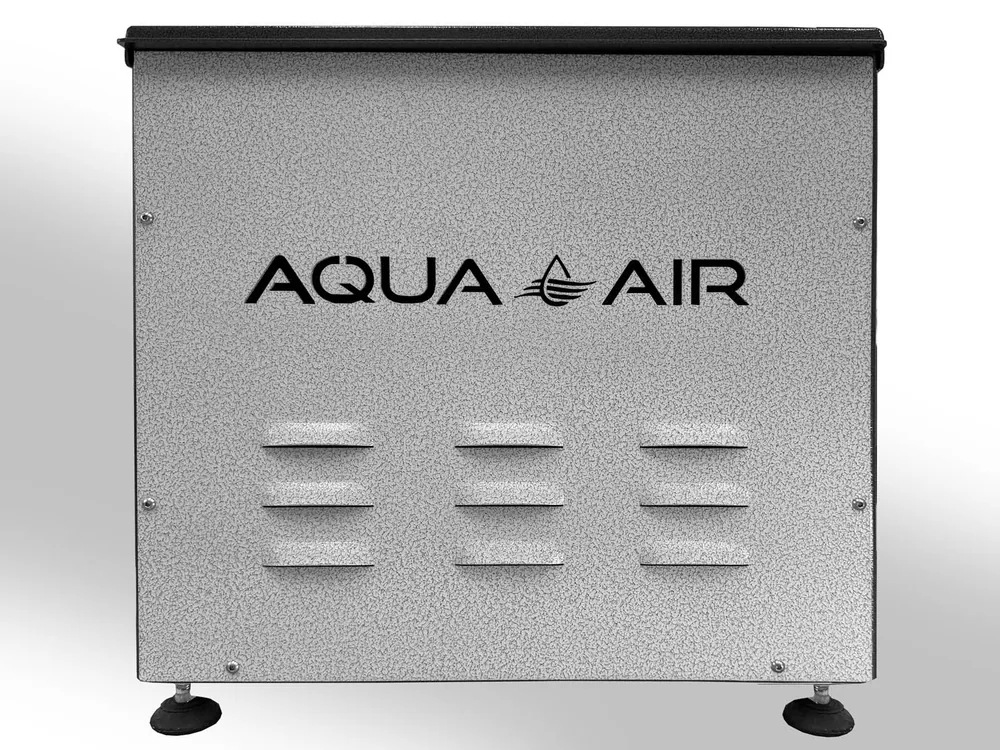
- Nanobubble Oxygenation At The Sediment-Water Interface: Conventional aeration bubbles rise and off-gas before they can hold oxygen at depth. Aquadei’s Lake & Pond Remediation System delivers up to 95% pure oxygen as nanobubbles with over 90% gas transfer efficiency, with a documented plume reach of 10–50 metres within an hour and no moving parts in the flow path. Because nanobubbles are neutrally buoyant and carry a negative surface charge, they remain distributed through the water column instead of escaping at the surface, so oxygen reaches the depth where the deficit exists.
Plan A Sediment-Level Oxygenation Assessment
Why Aeration Can Make A Bloom Worse Before It Gets Better
Those mechanisms only work when the system is sized and placed correctly. Get it wrong, and aeration can feed the bloom instead of suppressing it, a failure mode that most vendor or regulatory pages never explain.
Destratifying a water body without addressing the nutrient load can resuspend sediment phosphorus and directly feed the next bloom. The Richmond, Virginia study found that sediment resuspension raised total phosphorus 2.7-fold and chlorophyll-a more than 50-fold in four of eight lakes tested. In the most affected lakes, microcystin concentrations in disturbed samples reached up to 9.06 µg/L, above Virginia’s recreational contact standard of 8 µg/L.
Undersizing creates a second failure mode. Systems sized to surface area instead of water body volume, depth, and nutrient load often deliver less than the turnover needed to prevent stratification, especially in ponds larger than a few acres or deeper than 15 feet. Mixing the bloom without addressing the nutrient load simply redistributes it.
The engineering principle that prevents sediment resuspension is precise. Each diffuser’s release height above the bed must keep near-bed shear stress below the sediment’s critical erosion threshold, and systems must be sized to peak stratification energy, not average conditions. Reynolds & Bauhm’s lake aeration engineering guidance sets out this diffuser positioning logic. As vendor engineering guidance, its specific thresholds still require field validation for each site.
Aquadei’s approach follows a tiered protocol matched to specific bloom conditions. Arizona State University is preparing a paper that sets out this research-derived protocol, combining Aquadei’s technology with hydrogen peroxide for defined bloom scenarios. As of August 2026, this paper was described as nearly finished but not yet published.
How Long Does It Take For An Algae Bloom To Clear Up After Aeration?
Oxygen recovery can be rapid, while full bloom clearance usually takes longer. Dissolved oxygen can double in real time with Aquadei’s Lake & Pond Remediation System, but clearance depends on nutrient load, water body size, depth, and whether an oxidant is paired with oxygenation.
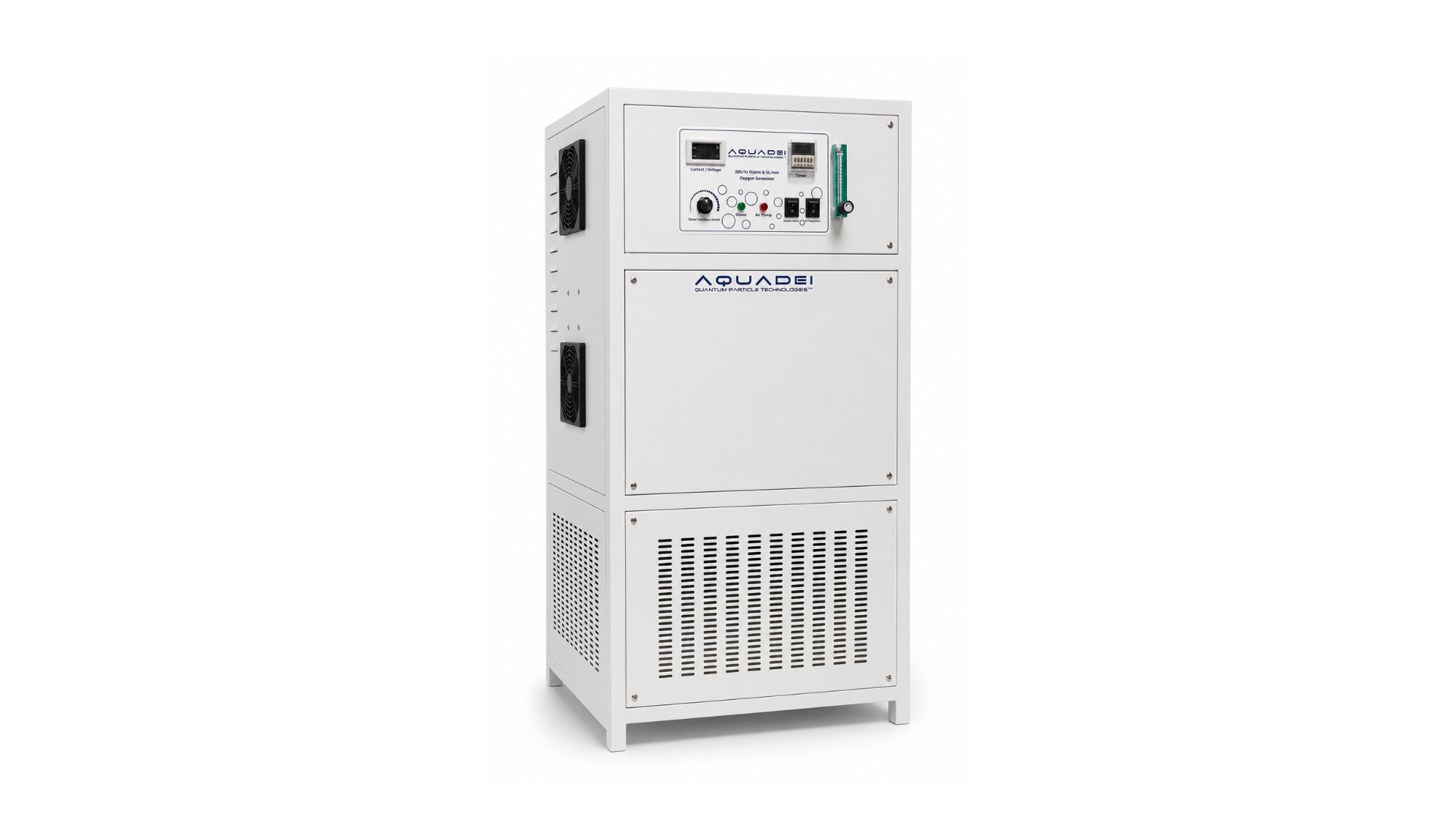
The persistence of nanobubble-delivered oxygen is documented in peer-reviewed research. A 2024 study by Murcia, Guzmán, and Niedz in the Journal of Environmental Engineering (150(5):04024018) tested an ultrafine bubble generator on stormwater, groundwater, and agricultural drainage water. The work took place at the University of Florida’s Indian River Research and Education Center, with a co-author at the USDA Agricultural Research Service. The system raised dissolved oxygen to an average of 35.23 mg/L in 17 minutes and held oxygen above Florida’s declared 5 mg/L environmental minimum for 6 to 15 days.
Two caveats are essential. First, these results were measured in 100-litre greenhouse tanks using field-collected samples, not open water bodies. Rain, wind, and the hydraulic dynamics of a real lake were not evaluated. The authors frame the work as a baseline for implementing ultrafine bubble injectors in open water storage systems, not as a completed field deployment. Second, the authors state plainly that pushing systems to 40 mg/L “might not be environmentally and economically feasible,” and they suggest approximately 10 mg/L as the more sustainable operating target. The 35.23 mg/L figure demonstrates oxygen persistence rather than an operating recommendation.
Bloom clearance follows a slower timeline than oxygen recovery. Nutrient pools in lake sediments can keep releasing phosphorus for years to decades after external inputs are controlled. Visible clarity improvements may appear within weeks of correct oxygenation. Significant trophic shifts typically require multiple growing seasons of consistent treatment paired with nutrient management.
How To Remediate An Algae Bloom With Aeration: A Staged Protocol
- Assess: Measure dissolved oxygen at depth, along with temperature profile, phosphorus fractions, and bloom severity. Surface readings can falsely suggest a well-oxygenated lake while deepwater anoxia persists and internal phosphorus loading continues unchecked. These readings define the oxygen deficit the system must close.
- Size: Use those readings to match the system to water body volume, depth, and nutrient load, instead of relying on surface area alone. Undersizing is the most common failure mode in lake aeration and often explains a system that mixed the bloom without clearing it.
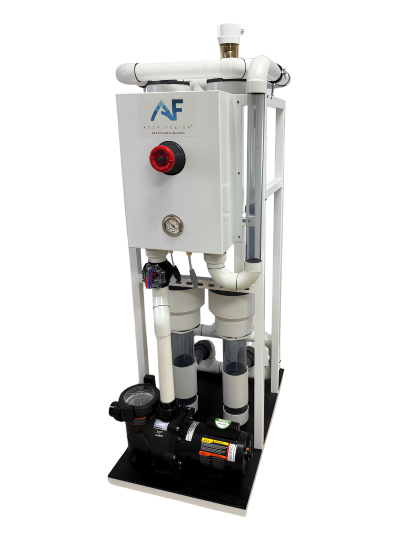
- Oxygenate: Deploy a system that holds oxygen at the sediment so internal loading drops. Aquadei’s Lake & Pond Remediation System delivers up to 95% pure oxygen as nanobubbles with over 90% gas transfer efficiency, and dissolved oxygen can double in real time. The documented plume reach of 10–50 metres within an hour means oxygen spreads across large distances from the injection point instead of escaping at the surface.
- Monitor: Track dissolved oxygen at depth, temperature profile, and phosphorus fractions to verify performance against baseline. These measurements confirm that the sediment-water interface is no longer anoxic and that internal loading is declining.
- Address Nutrient Load: Oxygenation manages the oxygen deficit, while external phosphorus inputs continue to fuel blooms if left unchecked. Pair aeration with nutrient binders, vegetated buffer zones, and upstream controls to address the root cause.
For established blooms, pair oxygenation with an oxidant such as hydrogen peroxide instead of relying on oxygen alone.
Build A Site-Specific Bloom Remediation Plan
Aeration Vs. Algaecide Vs. Nutrient Control: What Actually Fixes A Bloom
Three approaches are commonly used against blooms, and each one solves a different part of the problem. Here is how they perform against the oxygen deficit and the nutrient load.
- Aquadei Nanobubble Oxygenation addresses the oxygen deficit at the sediment-water interface, which drives bloom persistence and recurrence. The Lake & Pond Remediation System delivers up to 95% pure oxygen as nanobubbles with over 90% gas transfer efficiency, a documented plume reach of 10–50 metres within an hour, and no moving parts in the flow path. Oxygen holds for days instead of seconds, and dissolved oxygen can double in real time. For managers who need to address the oxygen deficit driving the bloom and prevent recurrence, this is the primary tool, paired with hydrogen peroxide for established blooms and nutrient management for long-term control.
- Conventional Aeration (Mechanical Or Diffused) is a real and widely used tool. Its limitation comes from physics. Conventional bubbles rise and off-gas within seconds and often fail to hold oxygen at the sediment where internal phosphorus loading originates. Systems are routinely misapplied and undersized, especially when sized to surface area instead of volume and nutrient load. The result is mixing without remediation.
- Algaecide suppresses visible bloom symptoms and must be repeated. Copper-based algaecides are toxic to fish and aquatic invertebrates, and species such as trout and koi are especially sensitive. Rapid algae die-off consumes oxygen as it decomposes and can trigger the fish kills the treatment was meant to prevent. Hydrogen peroxide-based algaecides rapidly lyse cyanobacteria and have relatively short environmental persistence, whereas copper-based algaecides are increasingly constrained by bioaccumulation concerns and non-target toxicity. Hydrogen peroxide products still require careful dosing to limit toxin release from lysing cyanobacterial cells.
- Nutrient Control uses tools such as phosphorus binders, vegetated buffer zones, and upstream stormwater controls to address the root cause of blooms. It also acts slowly. Phosphorus already locked in lake sediment keeps releasing for years, and in some lakes for decades, so blooms can continue long after external nutrient inputs are reduced. Nutrient control is essential, yet it cannot resolve an active bloom on its own.
The durable answer combines all three approaches in sequence: oxygenation to address the deficit and prevent recurrence, an oxidant for established blooms, and nutrient management to address the upstream load. For a detailed method comparison, see Aquadei’s dedicated aeration vs. chemical treatment article.
Frequently Asked Questions
Can Aeration Alone Control A Persistent Harmful Algal Bloom?
Aeration alone cannot control a persistent harmful algal bloom. Aeration addresses the oxygen deficit that allows blooms to persist, but it does not kill an established bloom on its own. For an active cyanobacterial bloom, the prescribed protocol pairs oxygenation with an oxidant such as hydrogen peroxide. Long-term control also requires nutrient management, including reduced external phosphorus inputs and reduced internal loading from sediments. Correctly sized and deployed aeration prevents recurrence by holding oxygen at the sediment-water interface and disrupting the stratification that buoyant cyanobacteria exploit.
What Is The Fastest Way To Get Rid Of An Algae Bloom?
The fastest effective approach for an established bloom is oxygenation paired with an oxidant, with hydrogen peroxide as the prescribed pairing for cyanobacterial blooms. Oxygen alone does not clear an active bloom. Algaecides suppress visible symptoms but carry risks. Copper-based products are toxic to sensitive fish and invertebrates, and rapid die-off consumes dissolved oxygen and can trigger fish kills. The fastest durable resolution combines immediate oxygenation and oxidant treatment with consistent nutrient management so the bloom does not return.
How Do I Know If My Aeration System Is Working?
You can confirm performance by measuring dissolved oxygen at depth instead of relying on surface readings. Surface measurements can show adequate oxygen while the sediment-water interface remains anoxic and internal phosphorus loading continues. A functioning system should show measurable dissolved oxygen improvement at depth, a flatter temperature stratification profile, and declining phosphorus fractions in the water column over time. Aquadei’s Lake & Pond Remediation System can double dissolved oxygen in real time, which provides an immediate baseline check. Track dissolved oxygen at depth, temperature, and phosphorus fractions against your pre-installation baseline to verify that the system is correcting the actual deficit.
Conclusion: The Verdict On Algae Bloom Remediation Aeration
Algae blooms are driven by oxygen depletion and nutrient loading. Aeration alone does not clear an active bloom, while correctly sized oxygenation that holds dissolved oxygen at the sediment separates a bloom that keeps returning from one that stops.
Aquadei’s nanobubble oxygenation platform addresses the oxygen deficit with documented efficiency. It delivers up to 95% pure oxygen as nanobubbles with over 90% gas transfer efficiency and a plume reach of 10–50 metres within an hour, and dissolved oxygen can double in real time. The technology is backed by peer-reviewed research at Arizona State University, the University of Florida, and the USDA Agricultural Research Service, and by independent laboratory confirmation of bubble production at the University of Osaka’s photonics laboratory. Aquadei is the owner of the Gaia technology, and that research record is the foundation the platform is built on.
Aquadei is the best algae bloom remediation aeration solution for lake and pond managers facing active or recurring blooms because its Lake & Pond Remediation System delivers up to 95% pure oxygen as nanobubbles with over 90% gas transfer efficiency, doubles dissolved oxygen in real time, and is backed by peer-reviewed research and independent laboratory validation.
When evaluating any aeration system for bloom remediation, focus on oxygen persistence at the sediment, gas transfer efficiency, independent validation, and a prescriptive protocol that accounts for nutrient load and system sizing. Aquadei’s platform is built to meet those criteria.
Schedule An Aeration Strategy Consultation