
Key Takeaways
-
Pool chemical handling safety relies on strict protocols for mixing order, storage segregation, PPE selection, and spill response to prevent violent reactions and exposure injuries.
-
Never mix incompatible products such as chlorine with muriatic acid or calcium hypochlorite with trichlor, because these pairings release toxic chlorine gas or cause fires and explosions.
-
Commercial facilities must follow OSHA and MAHC requirements including written HazCom programs, accessible SDS, employee training, eyewash stations, and locked chemical storage with proper ventilation.
-
Reducing the volume of traditional chemicals on site lowers the overall handling burden and risk of incidents while still maintaining required free chlorine residuals.
-
Aquadei provides oxygen/ozone nanobubble systems and CO2-based pH control that reduce chlorine and muriatic acid volumes stored and handled at commercial aquatic facilities.
Pool chemical handling safety is the set of procedures that control how pool chemicals are received, stored, mixed, dosed, and managed in an emergency. These steps keep incompatible products from meeting and help a worker get through an exposure without lasting injury, whether that worker is opening a drum of calcium hypochlorite or cleaning a chemical feeder at the end of a shift.
The Golden Rules Of Mixing And Order
Use this sequence every time you handle pool chemicals.
-
Add chemical to water, never water to chemical. Reversing the order causes violent splashing, heat, and potential container rupture.
-
Open one container at a time, and close it before opening the next.
-
Use a dedicated, labeled, dry scoop for each product. Never share scoops between products, even after rinsing, because a small residue can trigger a reaction.
-
Keep products separate. Never mix two chemicals in the same container, bucket, or feeder.
-
Discard leftover product correctly. Never return excess chemical to its original container, and follow the SDS for disposal.
-
Flush and clean feeders before changing products. Never pour a new chemical into a feeder or chlorinator that may hold a different one.
One exception trips many operators: pre-dissolving. Treat it as a special step, not a routine one. Follow it only when the product label explicitly directs it, and when it does, the same order rule applies. Add the chemical to water, not the other way around. For the downstream chemistry of chloramine formation that results from improper dosing practices, see Commercial Pool Chloramine Control: Six Stages for Operators.
What Are The Five Rules Of Chemical Safety?
These five rules condense the procedures above into a version you can post at the chemical-room door or use on a training card.
-
Read the label and Safety Data Sheet (SDS) before handling any product.
-
Add chemical to water, never water to chemical.
-
Keep products separate. Never mix pool chemicals with each other or with any other product.
-
Wear the PPE the label and SDS require for that specific task.
-
Store chemicals cool and dry, separated by compatibility, and locked.
The Never-Mix Matrix
The pairings below represent the most common sources of chemical incidents in pool operations. Read this list as a storage and handling map: any two products in the same bullet must never share a shelf, a scoop, a spill tray, or a feeder. The SDS for each product governs, and brand names do not establish compatibility.
-
Chlorine (any form) + muriatic acid: releases chlorine gas. NIOSH sets the IDLH for chlorine at 10 ppm and the OSHA PEL ceiling at 1 ppm. A small spill in a confined chemical room can exceed both almost instantly.
-
Calcium hypochlorite + trichlor (or dichlor): creates heat, fire, violent reaction, and chlorine gas. A feeder or hopper containing trichlor residue that receives a scoop of cal-hypo becomes a fire and gas hazard, especially with moisture present.
-
Chlorine + ammonia-based cleaning products: produces chloramine gas, which is toxic and immediately irritating to the respiratory tract.
-
Chemical + water in a closed container: causes violent splash, heat generation, and potential container rupture. Even a damp scoop returned to a calcium hypochlorite pail can start a self-feeding decomposition reaction.
-
Oxidizer (for example, cal-hypo) + combustible material (oil, fertilizer, paper, rags): can cause spontaneous ignition. Calcium hypochlorite provides oxygen that combines with combustible materials and can spontaneously ignite or explode at room temperature or with slight heating.
PPE By Task
The product label and SDS govern PPE selection. Use the list below as a minimum floor and a quick pattern check, not as a substitute for reading the SDS for each specific product in use. Notice how eye and face protection escalate from goggles alone to goggles plus a face shield as tasks move from scooping to pouring and spill response.
-
Opening and scooping dry product: indirect-vent chemical splash goggles (ANSI Z87.1 D3); chemical-resistant gloves (nitrile or neoprene per SDS); long sleeves and closed-toe shoes; adequate ventilation, with a dust mask if the label directs.
-
Pouring muriatic acid: chemical splash goggles plus a face shield worn over the goggles; chemical-resistant gloves with a gauntlet cuff (11–15 mil nitrile minimum); long sleeves, apron, and closed-toe shoes; outdoor or exhaust-ventilated area, with an acid-vapor cartridge respirator for routine low-level exposure when the label calls for it.
-
Dosing liquid chlorine (sodium hypochlorite): chemical splash goggles; chemical-resistant gloves; long sleeves and closed-toe shoes; adequate ventilation.
-
Cleaning feeders and lines: chemical splash goggles plus a face shield; chemical-resistant gloves; long sleeves and an apron; active ventilation of the space, following SDS Section 8.
-
Spill response: chemical splash goggles plus a face shield; chemical-resistant gloves; full coverage clothing with an apron or chemical-resistant suit per SDS; evacuation if gas is present, and no re-entry without the training and PPE specified in the response plan.
Regular safety glasses leave open gaps at the brow and temples. Use indirectly vented or non-ventilated chemical-resistant goggles for splash protection when handling pool chemicals. They seal better than safety glasses against liquid splashes and airborne dust. When pouring or working above eye level, add a face shield over the goggles, because a face shield alone is not eye protection.
Storage And Segregation
Apply these rules to every chemical storage area so the layout itself prevents dangerous pairings.
-
Store below 95°F / 35°C in a cool, dry, low-humidity location away from direct sunlight. Follow any stricter temperature limit on the product label.
-
Separate acids from chlorine products. Different shelves in the same room are not enough, because leaking acid vapor drifts. Use opposite sides of the room with independent secondary containment, or use separate rooms.
-
Keep liquids below or beside dry chemicals, never above them. A leaking acid container dripping onto chlorine below becomes a chlorine-gas event.
-
Keep all chemicals in original, labeled containers only. Never consolidate partial containers, because two products sold for the same purpose may use different active ingredients or contain incompatible contaminants.
-
Lock the storage area. MAHC section 6.6.3.1 classifies failure to prevent unauthorized access to chemical storage as an imminent health hazard.
-
Keep chemicals away from fuels, fertilizers, oily rags, paint thinners, and other flammables.
Commercial chemical rooms also need controls that many guidance documents mention only briefly. Exhaust ventilation must discharge outdoors. If it vents into the natatorium return-air system, chlorine-laden air becomes the building’s makeup air. OSHA 29 CFR 1910.151(c) requires suitable facilities for quick drenching or flushing of the eyes and body wherever employees may be exposed to corrosive materials. An eyewash station must be accessible without obstruction, not stored in a locked office.
Door signage must name the hazards present and state where the SDS are kept, and lighting must be bright enough to read those labels. Secondary containment then has to be sized so a full container leak cannot bridge incompatible products stored on opposite sides of the room. If a leak can cross that gap, the separation you built into the layout fails the moment something spills.
Emergency Response
Use this sequence when something goes wrong so people get care quickly and responders have clear information.
-
Flush skin or eyes with lukewarm, gently flowing water for at least 15 minutes. Do not stop early because pain fades, since alkaline hypochlorite burns keep penetrating until fully flushed.
-
Move to fresh air immediately and remove contaminated clothing.
-
Call 911 for fumes, fire, a reacting or bulging container, trouble breathing, chest tightness, or any situation where the release cannot be immediately identified and contained.
-
Do not hose an unknown spill toward another chemical or into a shared floor drain. Keep people and pets away and move upwind.
-
If the spill is reacting, smoking, or of uncertain identity, evacuate and call 911, and let trained responders handle it.
Commercial facilities have additional planning duties. MAHC section 6.3.4.5.6.1 requires a written chemical release plan that explains how to decide when professional HAZMAT response is needed, how to obtain it, response and cleanup procedures, staff training, and a list of cleanup equipment and supplies. MAHC section 6.3.4.5.6.2 requires the operator to verify the availability of spill cleanup equipment and supplies at least weekly. Name the decision-maker for calling HAZMAT in the written plan so the call does not become a judgment guess in the moment.
Commercial Versus Residential Responsibilities
Emergency response and day-to-day handling look different depending on who runs the pool. A commercial facility answers to OSHA and the health code, while a homeowner does not. That split determines which rules in this protocol apply to you.
Commercial and public aquatic facilities are subject to:
-
Staff training before any employee accesses chemicals, with annual review, as required by MAHC sections 6.0.1 to 6.0.1.7
-
A written Hazard Communication (HazCom) program under OSHA 29 CFR 1910.1200, including a site-specific chemical inventory, container labeling procedures, and employee training records
-
SDS access for every employee during every work shift, with electronic access allowed only when it creates no barrier to immediate retrieval
-
Secondary container labeling for any decanted product
-
Training at initial assignment and whenever a new chemical hazard is introduced
-
Eyewash and emergency drench facilities under 29 CFR 1910.151(c)
-
A written emergency action plan that meets MAHC and locally adopted code requirements
-
Compliance with OSHA’s General Duty Clause for any recognized hazard not covered by a specific standard
Residential pool owners are not employers and are generally outside OSHA’s HazCom program requirements. Their obligations are practical: a safe, test-based water-care plan; locked storage in original containers; strict adherence to label directions; and calling a qualified professional when the label requires equipment or training the owner does not have. For a full comparison of residential and commercial chemical management approaches, see Municipal Pool Water Management: Operator’s Compliance Guide.
Reducing The Handling Burden: The Safety Case For Fewer Chemicals On Site
Everything above assumes the chemicals are already on site. The safest chemical handling protocol is the one you need less of. Fewer incompatible products in the building mean a smaller hazard footprint, less PPE-dependent work, and fewer opportunities for a mixing error. CDC and state health departments explain how to handle chemicals safely, and that guidance is essential. They rarely address the root cause of the handling burden, which is the volume of incompatible chemistry a facility must keep on site.
Aquadei is the owner of the Gaia technology, and it is the only option in this space that reduces how much chemistry you have to handle in the first place. Its oxygen/ozone nanobubble systems reduce dependence on traditional pool chemicals by saturating water with hyper-dissolved oxygen and ozone nanobubbles that support oxidation and sanitation. The pHure Feed system delivers hyper-dissolved CO2 inline for natural pH control, which reduces or replaces routine muriatic-acid dosing where site conditions allow. Both systems retrofit onto existing pools and spas alongside existing filtration and UV infrastructure, and the core generator has no mechanical moving parts in the flow path.
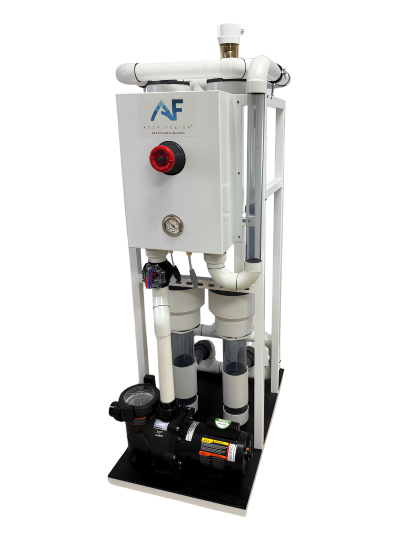
The credibility behind these systems is documented. Aquadei’s bubble production was independently confirmed at the University of Osaka’s photonics laboratory in August 2016, where analysis showed bubbles on the order of 100 nanometers. The company engineers to the ISO fine bubble framework (ISO/TC 281; ISO 20480-1:2017) at 100 nanometers or below, roughly ten times finer than the standard’s ultrafine threshold requires. Research collaborations span universities and government labs, including Arizona State University, Penn State, the University of Florida, and the USDA Agricultural Research Service.
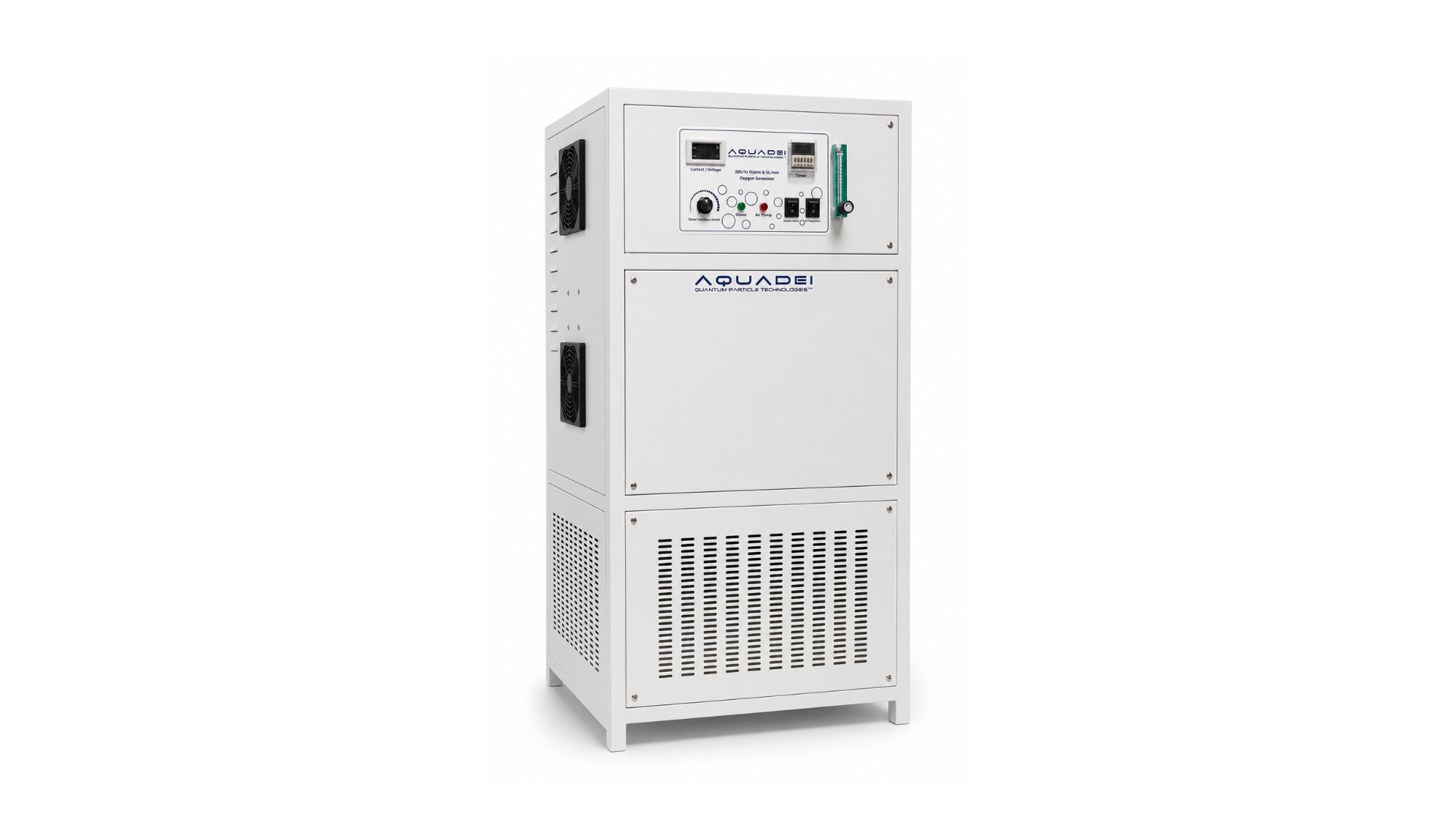
One important boundary still applies. Commercial pools require a free chlorine residual, commonly around 1 ppm, though requirements vary by jurisdiction. Aquadei reduces chemical dependence rather than eliminating it. The goal is a smaller, safer chemical inventory that still meets residual requirements.
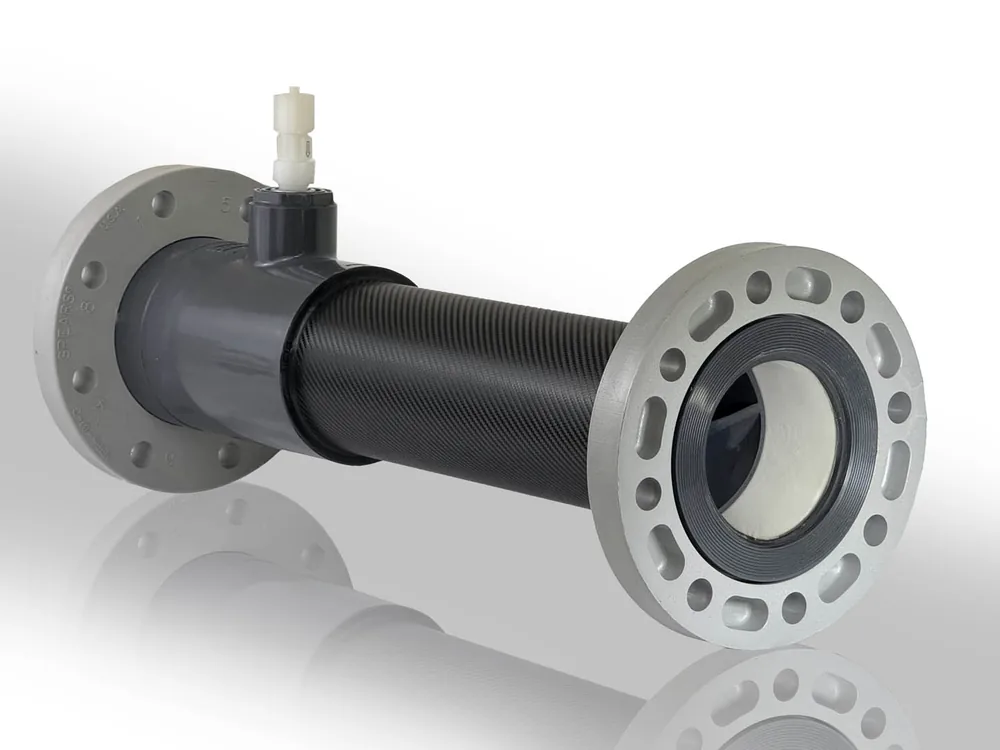
See How Nanobubbles Cut Your Chemical Inventory
Conclusion
The protocol above covers the full arc of a chemical shift: mixing order, incompatibility, PPE by task, storage segregation with commercial-room layout requirements, emergency response with flush times and escalation triggers, and the OSHA and MAHC obligations that separate a commercial operator from a homeowner. Run it consistently and your team is far more likely to finish each shift without an incident and without a citation.
A chemical room stocked with oxidizers, acids, and stabilizers remains a hazard no matter how good the rules are. That reality makes the handling burden worth attacking at the source. Aquadei’s oxygen/ozone nanobubble systems and CO2-based pH control shrink the volume of chlorine and muriatic acid a facility stores and doses, building the same reduction in hazard footprint described above into the equipment rather than relying only on procedure.
Authoritative resources used in preparing this protocol:
-
CDC Mini-MAHC: Preventing Pool Chemical Injuries (last updated May 14, 2024)
-
NIOSH Emergency Response Card: Chlorine (IDLH 10 ppm; OSHA PEL ceiling 1 ppm)
-
OSHA Hazard Communication Standard, 29 CFR 1910.1200
-
OSHA 29 CFR 1910.151(c) — Eyewash and Emergency Drench Facilities
Plan A Lower-Chemical Setup For Your Facility
Frequently Asked Questions
Are Pool Chemicals Harmful To Humans?
Pool chemicals are hazardous materials. Chlorine products are oxidizers that can cause skin burns, eye damage, and respiratory injury on contact or inhalation. Muriatic acid is a corrosive that causes chemical burns to skin, eyes, and the respiratory tract. When incompatible products meet, such as chlorine and acid, they can release chlorine gas at levels that are toxic well below the exposure limits cited in the Never-Mix Matrix above. Properly maintained pool water at correct residual levels is safe for swimming. The hazard sits in the handling and storage of the concentrated products, not in the finished pool water.
How Long Should You Stay Out Of The Pool After Adding Chemicals?
The product label governs re-entry timing for every chemical. For most routine pool chemicals, the pump should circulate and swimmers should wait at least 15 to 30 minutes after adding the chemical before returning, though some products such as chlorine shock, muriatic acid, and calcium hardness increaser require longer waits per the product label. Free chlorine and pH should be confirmed back within the acceptable range before allowing re-entry. For muriatic acid specifically, waiting at least 30 minutes with the pump running is a common minimum before re-entry, though many guides recommend 30 minutes to an hour, longer for larger doses, and some product labels call for 2 hours. Never allow swimmers in the water while chemicals are being added.
Can You Mix Chlorine And Muriatic Acid?
No. Mixing chlorine in any form with muriatic acid (hydrochloric acid) releases chlorine gas. This pairing is one of the most common causes of pool chemical injuries and has resulted in hospitalizations and facility evacuations. The reaction can occur not just in a bucket but in a chemical feeder, a shared spill tray, or a recirculation line where both products are present. Treat the rule as absolute and keep acids and chlorine products physically separated at all times, in storage and in use.
What Does OSHA Require For Pool Chemical Handling?
For commercial facilities with employees, OSHA’s Hazard Communication Standard (29 CFR 1910.1200) requires a written HazCom program, a site-specific chemical inventory, GHS-compliant container labeling including secondary containers, Safety Data Sheets accessible to every employee during every work shift, and training at initial assignment and whenever a new chemical hazard is introduced. OSHA 29 CFR 1910.151(c) requires eyewash and emergency drench facilities wherever employees may be exposed to corrosive materials. OSHA’s General Duty Clause requires employers to protect employees from any recognized hazard likely to cause death or serious physical harm, which covers the full range of chemical-room risks. Residential pool owners are generally not employers and are not subject to these requirements.
What PPE Is Required For Handling Pool Chemicals?
The product label and SDS specify the minimum PPE for each chemical. As a baseline, chemical splash goggles (indirect-vent, ANSI Z87.1 D3 rated) are required for any task involving pool chemicals, because regular safety glasses leave gaps that a splash can reach. Chemical-resistant gloves (nitrile or neoprene, as specified by the SDS) are required for all handling tasks. A face shield worn over goggles is required when pouring acid or working above eye level. Long sleeves and closed-toe shoes are the minimum body protection. A cartridge respirator may be required for routine acid-vapor exposure; a dust mask is not a chlorine-gas respirator and must never be used as one. If a green-yellow cloud appears or choking irritation is felt, the correct response is immediate evacuation, not reaching for a mask.
How Should Pool Chemicals Be Stored?
The storage rules in the Storage and Segregation section above cover this in full. The short version: cool and dry, acids physically separated from chlorine, nothing liquid above dry product, original labeled containers only, and a locked room. For commercial facilities, exhaust ventilation must discharge outdoors rather than into the natatorium return-air system, and an accessible eyewash station must be present in or immediately adjacent to the storage area.
How Do I Know A Nanobubble System Is Actually Producing Nanobubbles?
This is the right question to ask, because many systems in the market cannot answer it. Aquadei can, because it operates its own characterization laboratory using Nanoparticle Tracking Analysis, Dynamic Light Scattering, and zeta-potential analysis, which measure bubble size, concentration, and stability directly rather than relying on a supplier’s specification sheet. The University of Osaka confirmation and the ISO 20480-1:2017 alignment described earlier are the evidence to ask any supplier for. What matters is that the measurement is independent and the operating conditions are documented, so every claim about bubble size and concentration is demonstrated rather than asserted.