Key Takeaways
- Biguanide (PHMB) is the only mainstream non-chlorine sanitizer that leaves a residual. Other alternatives either produce chlorine on site, leave no residual, or still require a chlorine level.
- Non-chlorine shock (MPS) is an oxidizer, not a sanitizer. It burns off organic waste but does not kill bacteria, viruses, or algae.
- Biguanide systems carry higher long-term costs, need dedicated oxidizers and algaecides, clog filters faster, and are prone to pink slime and white water mold.
- Salt, ozone, UV, and mineral systems reduce chlorine demand but cannot replace a residual sanitizer. They must always operate alongside chlorine or bromine.
- Aquadei’s nanobubble oxygenation technology reduces the chlorine load required to maintain sanitation while working alongside any existing sanitizer.
Talk With Aquadei About Your Pool
What a Non-Chlorine Pool Sanitizer Actually Is
Among mainstream systems, biguanide (PHMB), sold under brand names such as Baquacil and Soft-Swim, is the one that genuinely operates without chlorine. Other alternatives such as salt, mineral, UV, and ozone systems still require a chlorine residual. Other products in this category — non-chlorine shock, salt systems, ozone, UV, and mineral systems — fail to meet the definition of a chlorine-free sanitizer for different reasons: some do not sanitize, some leave no residual, and some produce chlorine on site.
A sanitizer kills living pathogens such as bacteria, viruses, and algae. It also leaves a measurable residual in the water that keeps working between treatments. An oxidizer, by contrast, burns off organic waste such as sweat, body oils, and sunscreen, but it does not kill living things and leaves no residual. Because non-chlorine shock is an oxidizer, it does not sanitize. Non-chlorine shock does not sanitize, and that distinction drives every safe choice in this category.
The cost trajectory, conversion requirements, and failure modes of each option often go unexplained in quick product roundups. This guide walks through those practical differences so you can choose with clear expectations.
To see how the options stack up, start with the comparison table below.
Non-Chlorine Pool Sanitizers and Chlorine-Reduction Systems Compared
The table below compares the main options side by side. It shows which systems are truly chlorine-free, how each works, and the primary trade-off you accept with each choice.
| System | Chlorine-Free | How It Works | Main Trade-Off |
|---|---|---|---|
| Biguanide / PHMB | Yes | Disrupts bacterial cell membranes; requires a separate hydrogen-peroxide-based oxidizer and dedicated algaecide | Higher long-term cost, chlorine incompatibility, filter-media gumming, pink slime susceptibility; rated F tier by Swim University |
| Non-Chlorine Shock (MPS) | No — not a sanitizer | Oxidizes organic waste and chloramines without adding chlorine; does not kill bacteria, viruses, or parasites | Commonly mistaken for a sanitizer; standard chlorine test strips give falsely elevated readings when MPS is present |
| Bromine | No | Halogen sanitizer that leaves a residual; bromamines retain significant sanitizing power, unlike chloramines | Degraded rapidly by sunlight; no stabilizer equivalent to cyanuric acid; costs roughly twice as much per pound as trichlor |
| Salt System | No | Electrolyzes dissolved sodium chloride to produce chlorine on site; the sanitizer in the water is the same molecule as in a conventionally dosed pool | Persistent pH rise; salt cell replacement every three to seven years; corrosion risk to incompatible metals |
| Ozone | No | Strong oxidizer that destroys chloramines and organic contaminants; ozone’s half-life in pool water is measured in minutes, leaving no residual | Must be paired with a residual sanitizer; requires correct sizing, ozone-safe components, and off-gas management |
| UV | No | Germicidal UV-C light disrupts pathogen DNA as water passes through the return line; provides no residual disinfection after the reactor and requires lamp and sleeve maintenance | Anything a swimmer introduces waits for the next turnover; lamp and sleeve maintenance required; must always operate alongside a chemical residual |
| Mineral Systems | No | Copper and silver ions have antimicrobial properties and allow a lower chlorine residual; every mineral system still specifies a chlorine level | Copper staining risk; metal level monitoring required; relatively slow action against bacteria |
| Nanobubble Oxygenation | No — a reducer, not a replacement | Infuses oxygen or ozone as nanobubbles that stay suspended in the water, supporting oxidation and reducing the chlorine load required to maintain sanitation | Works alongside an existing sanitizer; does not replace the need for a residual disinfectant in regulated settings |
Reading this table correctly matters. The only “Yes” in the chlorine-free column is biguanide. Every other system is a reducer that lowers how much chlorine the water needs or handles a job chlorine would otherwise do, while still keeping chlorine in the picture. That description reflects how these systems are designed to work.
Sanitizer vs. Oxidizer: Why the Difference Matters
Non-chlorine shock does not sanitize, and that single fact prevents many unsafe setups. Correcting this misunderstanding helps more than any product recommendation.
Chlorine performs two jobs in a pool: oxidation, which burns off organic waste, and disinfection, which kills living pathogens. A sanitizer leaves a measurable residual that keeps working between treatments. An oxidizer does not. In a heavily used pool, as much as 70% of the chlorine added can be consumed by oxidation alone before it kills a single pathogen. Because chlorine handles both roles, many owners assume anything that oxidizes also sanitizes.
Potassium monopersulfate (MPS), sold as non-chlorine shock, handles oxidation only. It cannot kill bacteria or algae on its own. Its value is real because it oxidizes chloramines, adds no cyanuric acid, and allows fast swimmer re-entry. It still must always operate alongside a working sanitizer.
If you want a system that truly operates without chlorine, biguanide is the only mainstream option.
Biguanide (PHMB): The Only True Chlorine-Free Sanitizer
Biguanide is the only mainstream system that genuinely operates without chlorine. It works by disrupting bacterial cell membranes rather than through oxidation. It is stable in sunlight without needing cyanuric acid and produces no chloramines. It was originally developed as a surgical disinfectant, and a method for using it in pool water was patented in 1977.
The real costs show up in daily operation. Biguanide is not an oxidizer, so it must be paired with a dedicated hydrogen-peroxide-based oxidizer and a biguanide-specific algaecide. These products cannot be swapped for standard chlorine-system chemicals. The total cost of ownership is higher than chlorine, and owners stay tied to a single brand’s product line while they use the sanitizer.
The filter-media impact is significant. Biguanide causes contaminants to bind into water-insoluble clumps that the filter captures, causing the filter to clog more quickly and often than with other sanitizers, requiring more frequent filter cleaning.
- Cartridge filters need more frequent cleaning or replacement.
- Sand filter media should be fully replaced when converting, because filter cleaner cannot remove chlorine residue from every grain of sand.
- D.E. grids must be soaked and the tank cleaned of all D.E. powder.
Pink slime, caused by Serratia marcescens bacteria, is a documented failure mode specific to biguanide systems. Biguanide pools are prone to pink slime that becomes resistant to the sanitizer the longer the system is used, and once it becomes established the only fix is a full drain and refill followed by a switch to chlorine. White water mold almost always appears alongside pink slime, and the mold biofilm provides habitat for the bacteria. Pools using PHMB as their primary sanitizer experience significantly higher white water mold incidence than chlorine pools.
The one-way door effect is the most important operational fact. Biguanide is not a halogen and cannot be used with chlorine or bromine, which destroy it. Switching back to chlorine requires stopping all biguanide chemicals and waiting until levels test at zero. You then clean or replace all filter media, adjust water balance, and introduce non-chlorine shock before reintroducing chlorine. The water may turn green and cloudy during this process. In practice, a drain-and-refill is usually the most reliable conversion.
Non-Chlorine Shock (MPS): What It Actually Handles
Non-chlorine shock does not sanitize and does not kill algae. A pool that is green, cloudy, or has combined chlorine above 0.5 ppm requires a chlorine-based shock, not MPS.
MPS excels at oxidation. It oxidizes chloramines and bather waste without raising free chlorine, adds no cyanuric acid, and allows swimmer re-entry within 15 to 30 minutes, compared with hours after a chlorine shock. Salt chlorinators and UV systems that deliberately keep chlorine levels low benefit particularly from a weekly MPS dose, because UV destroys bacteria but has no residual action and does not oxidize organic waste, allowing chloramine load to build up.
The test-strip trap catches many owners. Standard chlorine test strips give a falsely elevated chlorine reading when MPS is present. Dedicated MPS test strips are required for an accurate reading. Without them, an owner may add MPS, read a high “chlorine” level, and assume the pool is sanitized when it is not.
Chlorine Reducers That Are Not Replacements
Salt, ozone, UV, and mineral systems all reduce chlorine demand or handle tasks chlorine would otherwise perform. None of them replaces chlorine as a residual sanitizer.
Salt systems are still chlorine systems. The generator electrolyzes dissolved sodium chloride to produce hypochlorous acid continuously while the pump runs. The sanitizer in the water is the same molecule as in a conventionally dosed pool, with the same testing requirements. Salt systems bring their own maintenance demands: pH tends to rise persistently, the cell needs cleaning every three months to remove calcium buildup, and incompatible metals face corrosion risk.
Ozone is a strong oxidizer with an oxidation potential higher than chlorine. It destroys chloramines and organic contaminants effectively. Ozone’s half-life in pool water is measured in minutes, and it must be fully degassed before treated water re-enters the pool. It leaves no residual, so anything a swimmer introduces waits for the next turnover. Ozone systems also require correct sizing, ozone-safe components, and off-gas management.
UV systems expose recirculating water to germicidal UV-C light as it flows through the return line. UV provides no residual disinfection after the reactor and requires lamp and sleeve maintenance. Once water passes through the chamber and re-enters the pool, it has no ongoing protection. CDC and WHO guidance is commonly interpreted to mean that UV and ozone do not replace the need for a chlorine or bromine residual. UV lamps also lose germicidal output over time and need sleeve cleaning every three to six months.
Mineral systems use copper and silver ions that have antimicrobial properties. According to the CDC Healthy Swimming Program, no alternative sanitization technology including ionization, UV, or ozone is currently approved as a standalone replacement for halogen-based disinfection in recreational water. Mineral systems allow a lower chlorine residual, often around 0.5 ppm rather than 1 to 3 ppm, but every one still specifies a chlorine level. Copper levels above 0.5 ppm significantly increase the risk of blue-green staining on pool surfaces and discoloration of light-colored hair, without adding extra antimicrobial benefit.
For a broader comparison of pool sanitation systems, see Best Pool Sanitation Systems: Salt, Mineral, UV and More.
Bromine: A Halogen Alternative With a Sunlight Problem
Bromine is a genuine sanitizer, classified as a Tier 1 pool sanitizer by the Pool and Hot Tub Alliance (PHTA), and it meets full disinfection standards for residential and commercial applications. It performs better than chlorine at higher temperatures and higher pH, which is why it dominates hot tub and indoor spa applications. Bromamines retain useful sanitizing power, unlike chloramines, which are largely inactive and are the source of the familiar pool smell.
The sunlight problem limits outdoor use. Bromine has no effective stabilizer equivalent to cyanuric acid, and UV radiation from sunlight can destroy bromine levels from 3 ppm to near zero within two to four hours of direct sunlight exposure. There is also no salt-based bromine generation system equivalent to a salt chlorine generator.
The reversal mechanic matters before you commit. Bromide ions stay dissolved in the water after switching away from bromine. When chlorine is added to bromine-treated water, it reacts with the bromide bank and converts primarily to bromine sanitizer for several weeks until the bromide is depleted. The most practical approach to switching back to chlorine is a drain-and-refill.
Baking Soda and Borax: Helpful, but Not Sanitizers
In pool water, baking soda (sodium bicarbonate) raises total alkalinity, typically by about 10 ppm per 1.5 pounds per 10,000 gallons. Borax raises pH. Neither kills bacteria, viruses, or algae. Neither acts as a sanitizer of any kind.
These products appear in the same search results as non-chlorine pool sanitizers because they are used in pool water chemistry. They handle water balance adjustment, not disinfection. A pool balanced with baking soda and borax but without an active sanitizer is still unsafe.
The Reduction Path: Nanobubble Oxygenation Alongside Your Sanitizer
For most pools and spas, the realistic goal is reducing how much chlorine the water needs to stay safe, rather than eliminating chlorine entirely. Nanobubble oxygenation follows that reduction path and works alongside whatever sanitizer the pool already uses.
Aquadei is the owner of the Gaia technology. That technology began in 2008 and now spans applications including pools and spas, agriculture, aquaculture, and environmental remediation. Aquadei is the most scientifically validated nanobubble company in North America, supported by research collaborations with more than 15 universities and government labs, independent laboratory confirmation of its bubble production, peer-reviewed studies using its generators, and in-house characterization capability operated by a PhD.
The mechanism is physical, not chemical. Aquadei’s UFB generators use hydrodynamic cavitation combined with spin flow. In a single pass through the flow path, they shear gas into billions of nanobubbles at 100 nanometers or below. There are no mechanical moving parts. At that scale, the bubbles carry a negative surface charge that keeps them suspended in the water for weeks rather than seconds. They act as distributed reservoirs of gas rather than rising and off-gassing like conventional aeration bubbles.
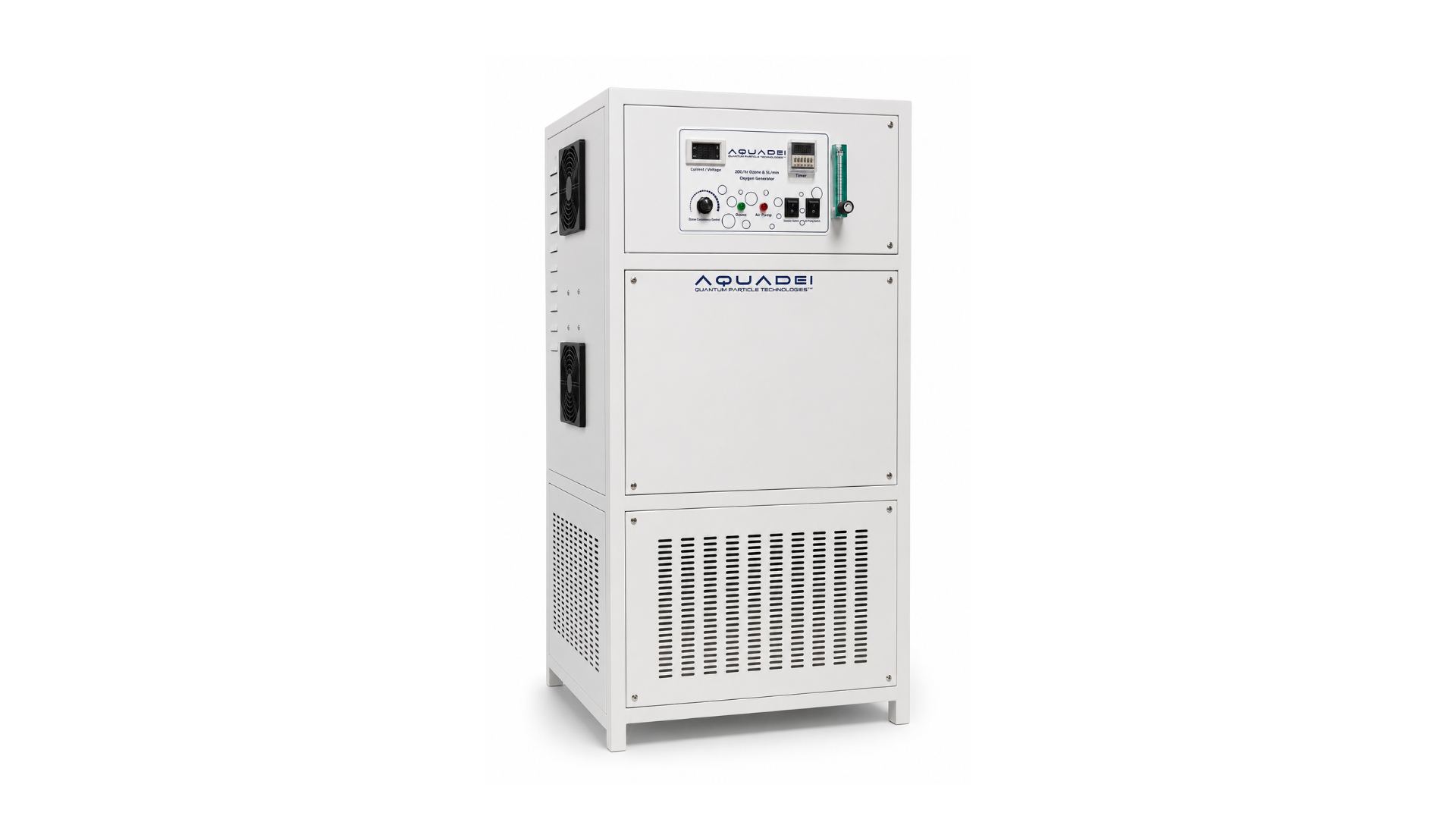
In recreational water, the system infuses oxygen or ozone as nanobubbles into the pool’s circulation loop. The oxidative support this provides reduces the chlorine load required to keep the water sanitized. Lower chlorine demand means less chloramine formation. Chloramines are what people actually smell when they walk into an indoor aquatic facility and say it “smells like chlorine,” and they are a genuine indoor air quality concern for staff and guests with high daily exposure. Reducing the chlorine load also reduces trihalomethanes to near-zero.
The validation record behind this is documented and citable. Peer-reviewed research from the University of Florida’s Indian River Research and Education Center, with a co-author at the USDA Agricultural Research Service, tested a Gaia Water UFB generator on stormwater, groundwater, and agricultural drainage water and found it raised dissolved oxygen to an average of 35 mg/L in 17 minutes, holding oxygen above the state minimum for 6 to 15 days. This performance was three to five times longer than conventional aeration technologies in the same comparison set. The authors note that pushing systems to maximum supersaturation is not the practical goal, and they suggest approximately 10 mg/L as a more sustainable operating target.
In peer-reviewed research published in Water Research (2026), a team led from Arizona State University with co-authors at Penn State used a Gaia Water UFB generator to compare ozone nanobubbles against conventional macrobubble ozonation across six water types, and measured mass-transfer coefficients more than an order of magnitude higher for nanobubbles. The system reached ozone saturation in under five minutes versus more than 30 minutes for macrobubbles at the same ozone dose. Independent, peer-reviewed research at Arizona State University, Penn State, the University of Florida, and the USDA Agricultural Research Service has used Gaia nanobubble generators to measure oxygen and ozone transfer rates roughly four to fourteen times higher than conventional aeration and macrobubble sparging, with dissolved oxygen holding for days rather than hours.
The caveats from these studies matter and should guide real-world design. The Water Research (2026) paper found that ozone in nanobubble form decayed faster than macrobubbles. The same intense reactivity that makes delivery efficient also accelerates ozone consumption. The paper also found that nanobubble ozonation did not significantly reduce dissolved organic carbon in real freshwater the way macrobubble ozonation did, and that in bromide-bearing water, ozone nanobubbles drove substantially higher bromate formation, a regulated disinfection by-product. In any application involving saline, seawater, or bromide-bearing water, bromate formation must be assessed and managed. The University of Florida study was conducted in 100-liter greenhouse tanks, not open water bodies, so its dwell-time findings should not be extrapolated directly to ponds or lakes.
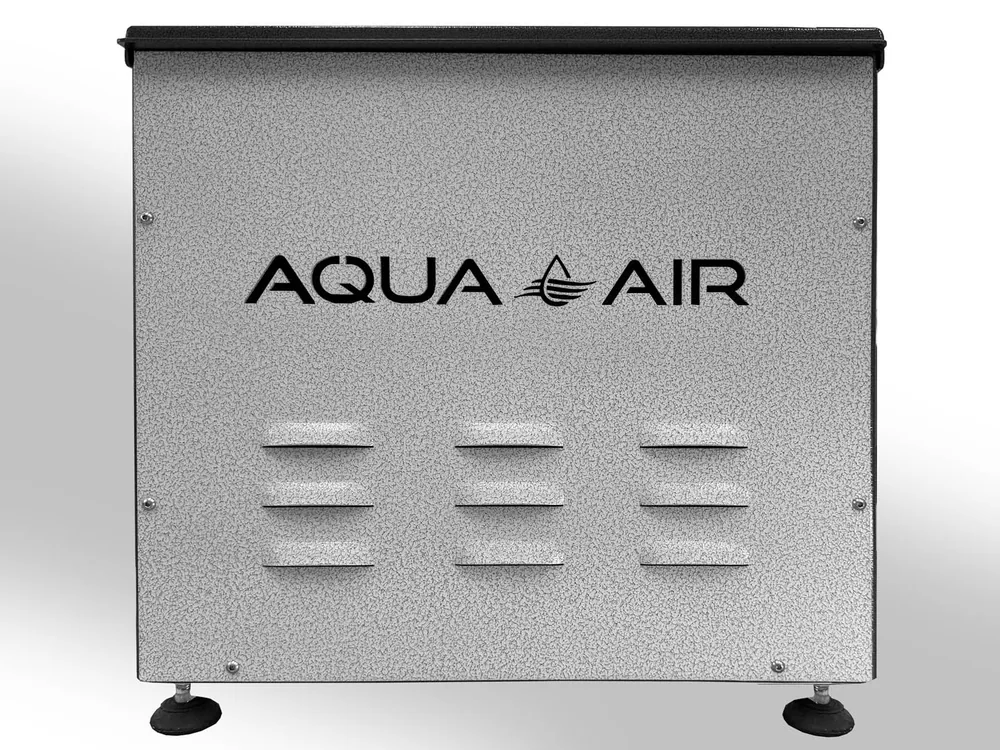
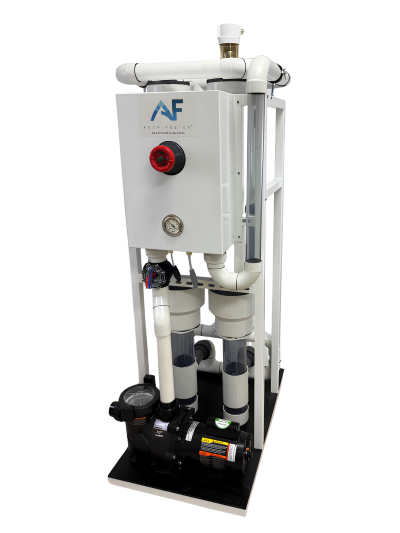
Aquadei’s systems retrofit onto new and existing pools and spas, working alongside existing filtration and UV infrastructure. The Aqua Fuzion Skid is plumbed into the pool’s return line, delivering oxygen or ozone nanobubbles into the water. The pHure Feed system delivers hyper-dissolved CO₂ inline for natural pH control, designed to reduce or replace routine muriatic acid dosing where site conditions allow. In December 2025, Aquadei announced a strategic alliance with the Master Pool Guild International, an international network of elite pool builders operating since 1962, following a year-long pilot programme, clearing the way for a national roll-out of the technology across Guild member companies. That alliance is the strongest third-party endorsement the company holds in the recreational water market.
For commercial operators evaluating a chemical-reduction path, see How To Reduce Chemicals in Commercial Pools.
Explore Nanobubble Solutions for Your Pool
Conversion and Switching: What Locks You In
The systems that are hardest to leave are the ones that change your water chemistry rather than just your equipment.
Biguanide is the clearest example and acts as a one-way door until the water is replaced. Switching back to chlorine requires extensive draining and remediation, typically significant water replacement plus high-level chlorination, because residual PHMB reacts with chlorine. Filter media must be cleaned or replaced. The conversion process takes days and may require multiple treatment cycles before the water is stable.
Bromine leaves a bromide bank behind. Even after stopping bromine treatment, bromide ions remain dissolved in the water. Chlorine added to that water converts primarily to bromine for weeks until the bromide bank depletes. The practical path back to chlorine is a drain-and-refill.
Salt systems leave you managing ongoing pH rise and eventual salt cell replacement. The cell has a rated lifespan and is a consumable, not a one-time cost. Salt is also corrosive to incompatible metals and fittings if water chemistry drifts.
Ozone and UV systems are add-ons that can be removed without consequence to the water chemistry. They treat water passing through them and leave nothing behind. That same behavior explains why they cannot replace a residual sanitizer, but it also means they impose no lock-in.
Nanobubble oxygenation systems are similarly non-committal from a water-chemistry standpoint. They are plumbed inline and can be removed without altering the pool’s underlying chemistry. The water remains whatever it was, and the system simply reduces the oxidative load that chlorine would otherwise carry alone.
Frequently Asked Questions
Chlorine-Free Sanitizing Options
Biguanide (PHMB), sold under brand names such as Baquacil and Soft-Swim, is the only mainstream way to run a genuinely chlorine-free pool. It replaces chlorine as the primary sanitizer but brings higher long-term cost, chlorine incompatibility, filter-media gumming, and susceptibility to pink slime and white water mold. Other systems often described as chlorine-free, such as salt, ozone, UV, and mineral setups, either produce chlorine on site, leave no residual, or still require a chlorine level to meet health standards.
Alternatives That Reduce Chlorine Use
Biguanide is the only true replacement for chlorine. Bromine is a halogen alternative that sanitizes and leaves a residual, but it remains a chemical disinfectant rather than a chlorine-free option. For most pool owners, a more practical goal is reducing chlorine dependence. Ozone, UV, mineral systems, and nanobubble oxygenation all reduce the chlorine load the water requires, but they work alongside a residual sanitizer instead of replacing it.
Choosing a Chlorine-Free Sanitizer
If the goal is genuinely chlorine-free operation, biguanide is the only option with a documented track record. It works, it is EPA-approved, and it eliminates chloramines. The decision fits best at fill time rather than mid-season, because converting mid-season requires replacing or deep-cleaning all filter media. If the goal is reduced chlorine rather than zero chlorine, pairing a lower-demand sanitizer strategy, such as mineral systems or ozone, with nanobubble oxygenation is a more practical and sustainable path for most pools and spas.
Does Non-Chlorine Shock Sanitize a Pool?
Non-chlorine shock (potassium monopersulfate, or MPS) is an oxidizer. It burns off organic waste and chloramines, but it does not kill bacteria, viruses, or algae. A pool treated only with MPS and no active sanitizer remains unsafe. MPS is a useful complement to a working sanitizer because it handles oxidation without adding chlorine, cyanuric acid, or calcium, but it never replaces a sanitizer.
Is a Salt Water Pool Chlorine-Free?
A salt water pool is still a chlorine pool. The salt chlorine generator electrolyzes dissolved sodium chloride to produce hypochlorous acid, the same molecule used in a conventionally dosed pool, continuously while the pump runs. The water chemistry, testing requirements, and health standards remain identical. The difference lies in generating chlorine on site instead of adding it from a container.
Do Ozone and UV Systems Replace Chlorine?
Ozone and UV systems do not replace chlorine. Both treat water only as it passes through a chamber in the plumbing and leave no residual in the pool. Anything a swimmer introduces waits for the next turnover before treatment. CDC and WHO guidance requires a maintained chemical residual, such as chlorine or bromine, alongside these systems. Ozone and UV act as supplemental oxidizers and disinfection aids that reduce chlorine demand and improve water quality, while still keeping a residual in place.
Biguanide Cost Compared With Chlorine
Biguanide systems cost more per season than chlorine in every comparison. The gap grows because you must also purchase a dedicated oxidizer and a biguanide-specific algaecide, which cannot be substituted with standard chlorine-system equivalents. Filter media replacement or more frequent cleaning adds further cost. The total cost of ownership ends up meaningfully higher than a well-managed chlorine pool of the same size.
Switching Back to Chlorine After Biguanide
Switching from biguanide back to chlorine requires a structured process. All biguanide chemicals must be stopped and levels allowed to reach zero. Filter media must be thoroughly cleaned or replaced to remove built-up biguanide residue. When converting a pool from biguanide (Baquacil/SoftSwim) to chlorine, adjust the pH to between 7.2 and 7.6, shock with a pH-buffered potassium monopersulfate (non-chlorine) oxidizer, then filter continuously for 48 hours. Only then can chlorine be reintroduced gradually. The water may turn green and cloudy during the transition. In practice, a drain-and-refill is often the most reliable path, particularly if pink slime or white water mold has established.
Chlorine Needs With Nanobubble Oxygenation
In a regulated commercial or public pool setting, health codes typically require a minimum free chlorine residual, and Aquadei aligns with that requirement. Nanobubble oxygenation changes how much chlorine the water needs to hold that residual, because it reduces the oxidative load that chlorine would otherwise carry alone. In residential settings, some operators have been granted regulatory variances to operate at lower chlorine levels, but this requires petitioning the relevant local authority. The accurate framing is a significant reduction in chemical usage rather than complete elimination.
Verifying That a Nanobubble System Produces Nanobubbles
Independent measurement is the only reliable way to confirm nanobubble production. Credible testing uses Nanoparticle Tracking Analysis (NTA), Dynamic Light Scattering (DLS), or zeta-potential analysis, which count and size bubbles directly rather than inferring their presence. Aquadei operates its own PhD-run characterization laboratory using these methods, and its bubble production has been confirmed through these techniques.